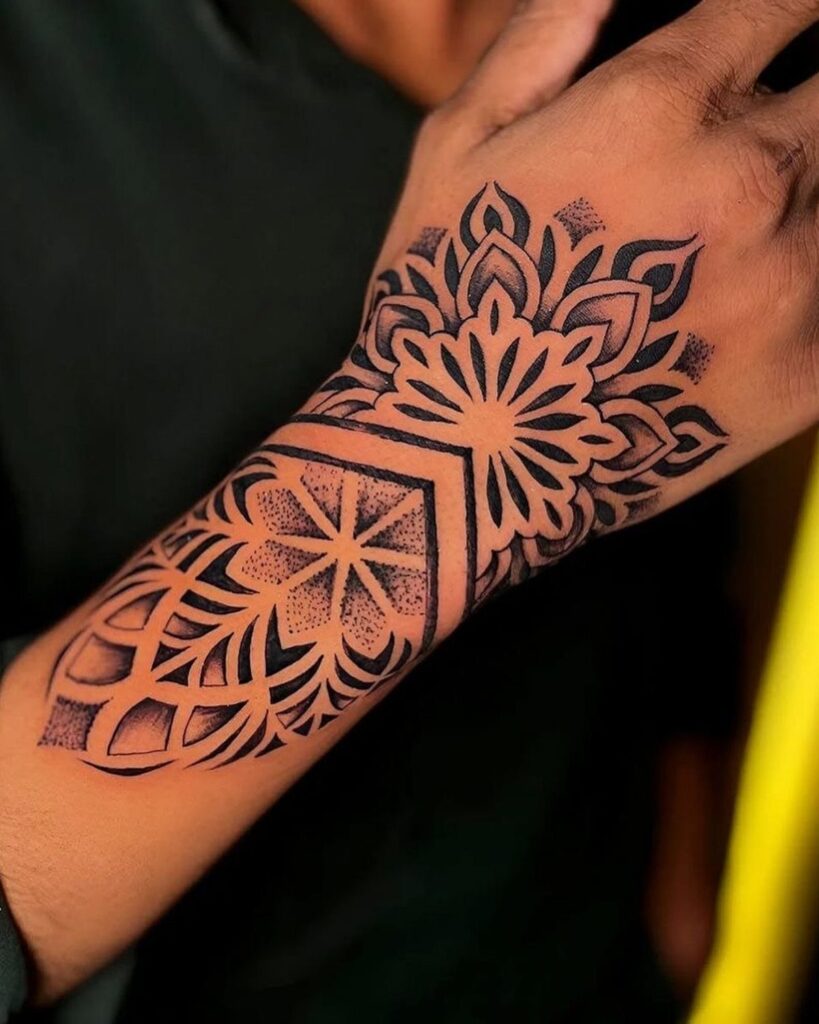
A hand is one of the hardest spots to hide, so the idea you pick has to match how visible you’re willing to be, whether that’s a tiny finger mark or a full Mandala Across the Back of the Hand.
The list runs from small Minimalist Finger Tattoos up to Traditional Hand Landscape Scenes, and the more color and area a design covers, the harder it is to hide and the sooner it needs a touch-up.
If you want the option of keeping it low-key, start small and black; if your hands are already part of how people know you, the larger pieces earn their space.
1. Minimalist Finger Tattoos
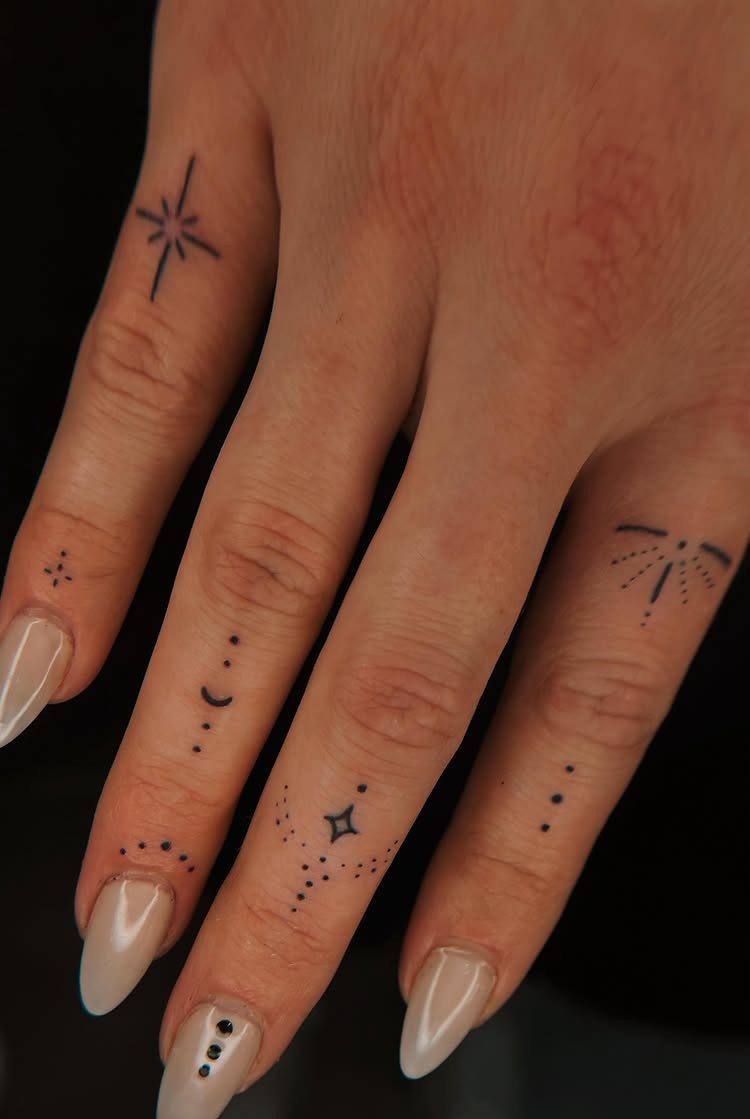
A single small symbol on a finger asks very little of the design, and that is why it works. Stars, dots and a crescent moon read clearly at a tiny size because each shape is simple.
A single black ink works best for the set, with generous space left between the pieces. Crowding them turns the cluster into a smudge on a part of the body that is always in view.
Start with one symbol. You can add the next later without redrawing anything.
2. Mandala Across the Back of the Hand
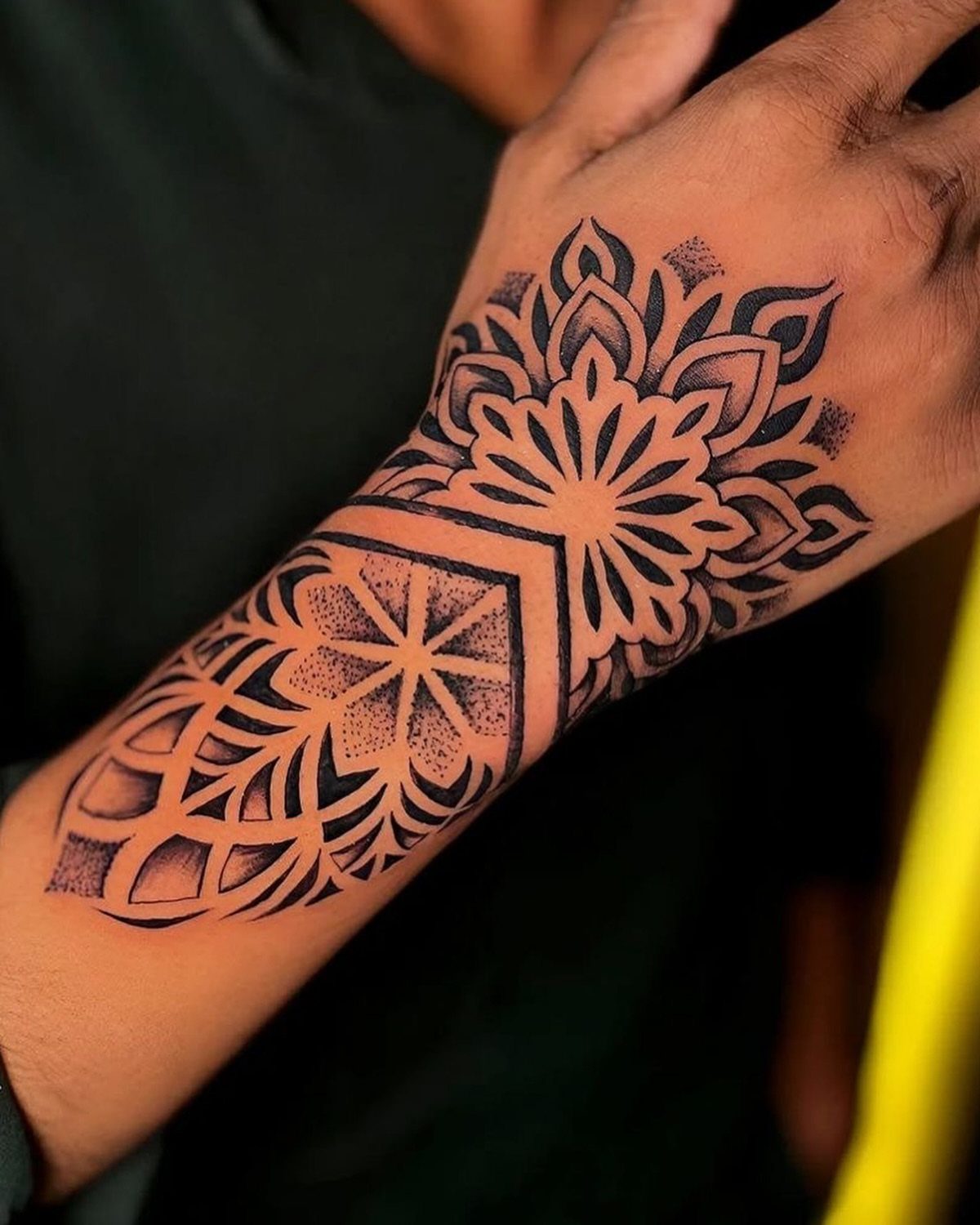
Symmetry does the heavy lifting on a hand mandala. The back of the hand is a broad, nearly flat surface, so a centered circle of linework sits there naturally and can run onto the wrist.
Black ink alone is my pick. Fine lines and solid fills give the pattern contrast without any color to fade or clash.
The cost is commitment: a mandala this size is hard to hide, and any slight asymmetry in the stencil shows. Before anything is inked, have the stencil placed on your hand and check how it sits.
3. Butterfly Tattoo
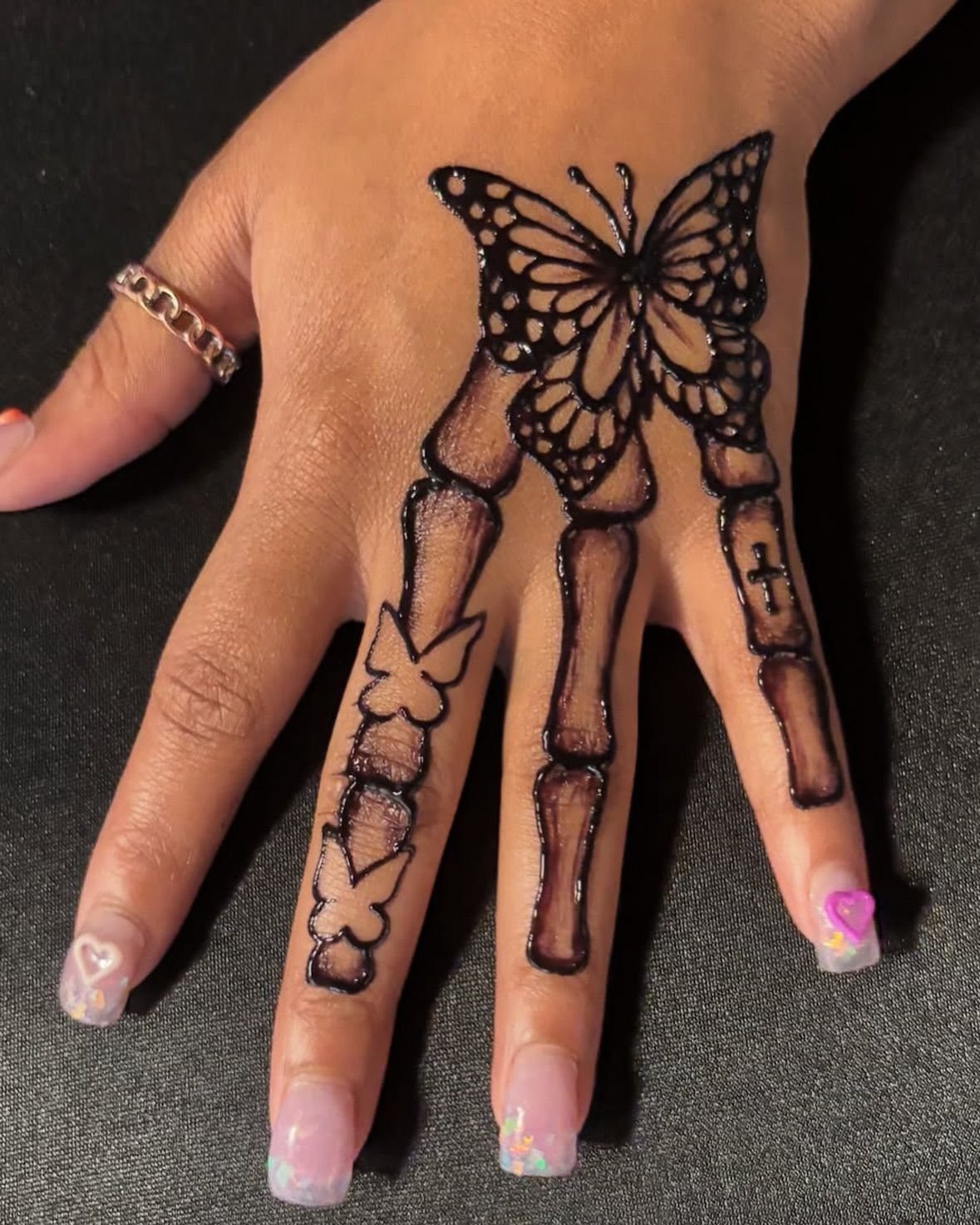
A butterfly that melts into finger bones is a more interesting take on a familiar motif. The wings carry the softness; the skeletal fingers add a darker edge.
Because the bone detail follows the actual fingers, the design depends on your hand’s proportions. Have the artist draw it directly on you, not trace a flat template.
If you are unsure about permanence, a henna version is a low-risk way to test the idea first.
4. Traditional Skull Tattoo
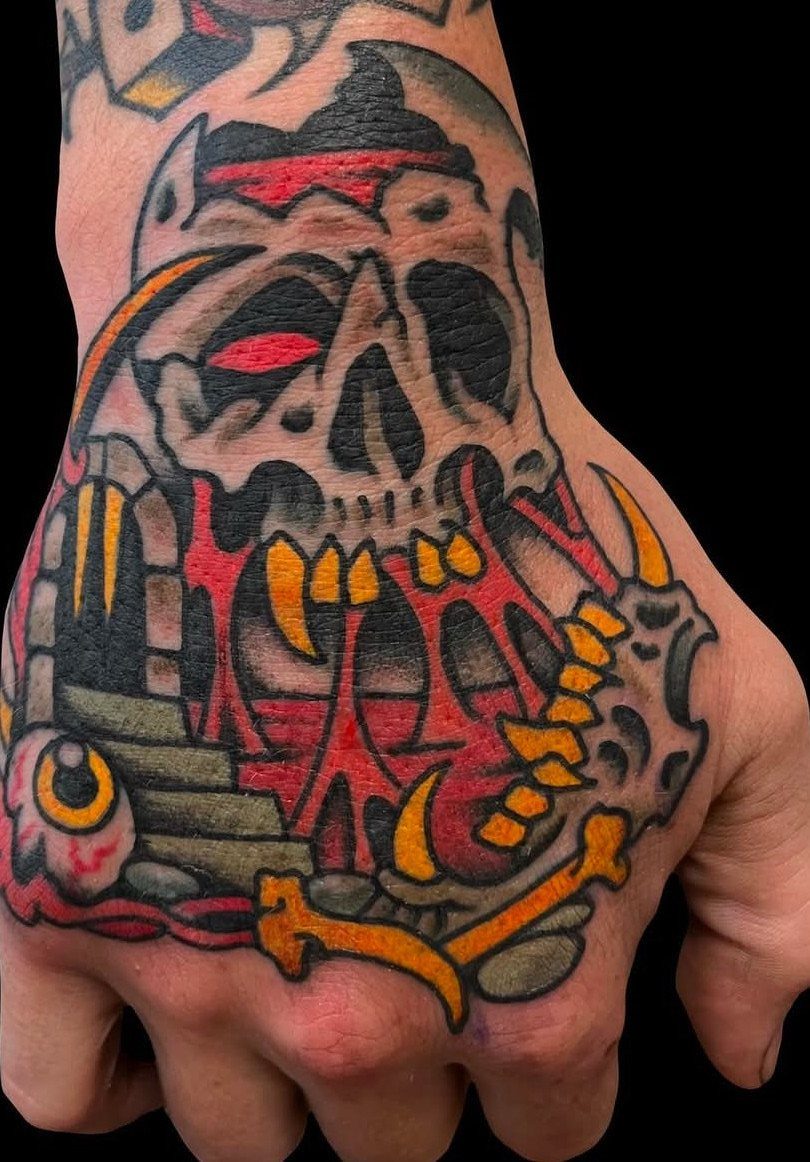
Bold outlines and a limited palette are what make a traditional skull hold up on a hand. Red and yellow accents against solid black give it punch that reads from across a room.
I like this style for the back of the hand because the skull fills the space and the shapes stay legible as the lines soften with age.
Pick an artist whose portfolio shows clean, even linework. Thick lines have no room to hide wobble.
Hand tattoos are bold, personal, and powerful. As one of the most visible areas to ink, they carry a certain weight, whether you’re making a style statement or marking something meaningful.
5. Tribal and Cultural Designs
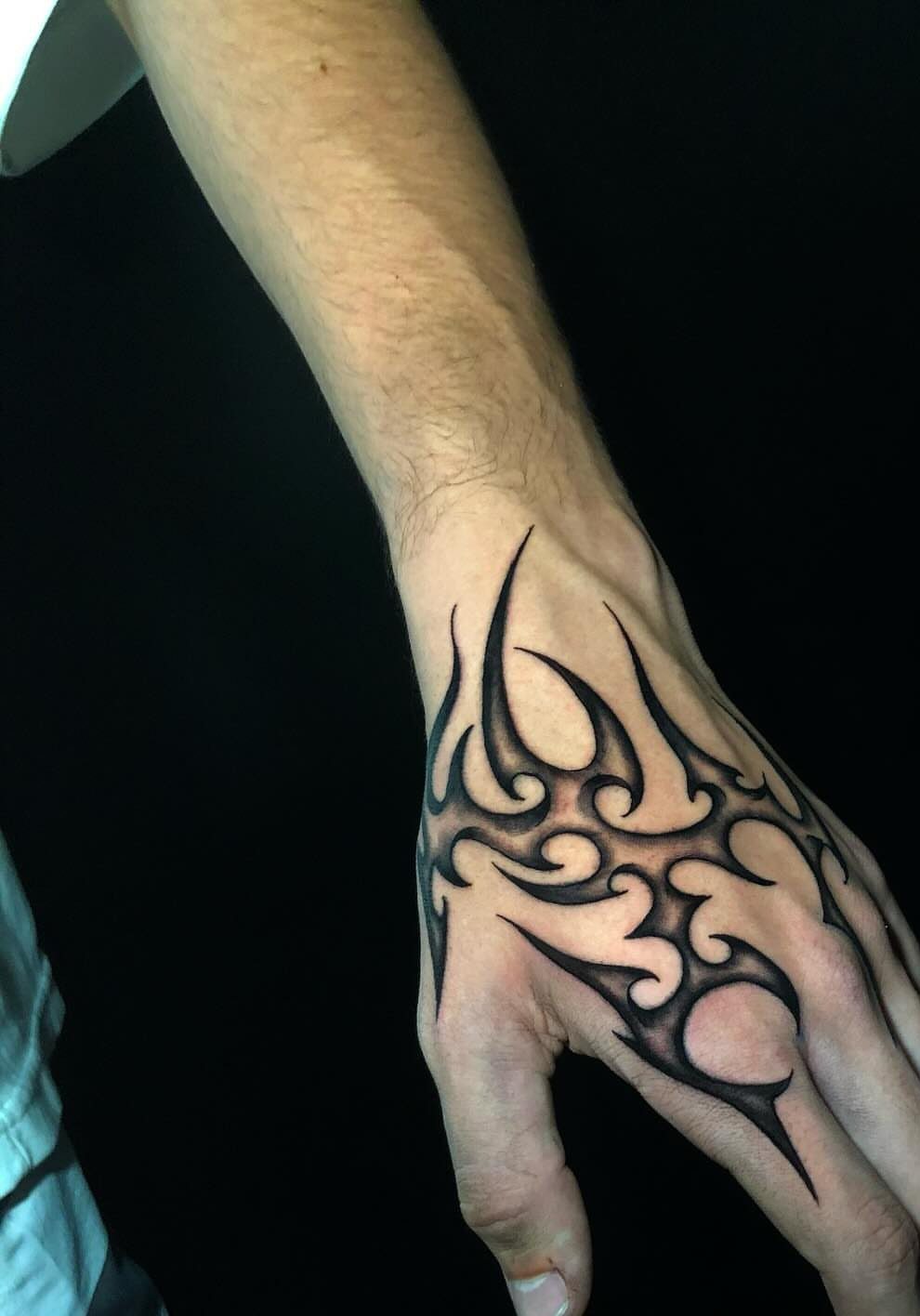
Bold, curving black lines are the signature of a tribal design, and they suit the back of the hand because the shapes follow its natural curve.
If you are drawn to a design with cultural roots, research where the pattern comes from before choosing it. Ask the artist whether it belongs to a specific people, and whether it is appropriate for you to wear.
Solid black areas are my preference here. They stay crisp and make a strong first impression.
6. Henna Designs
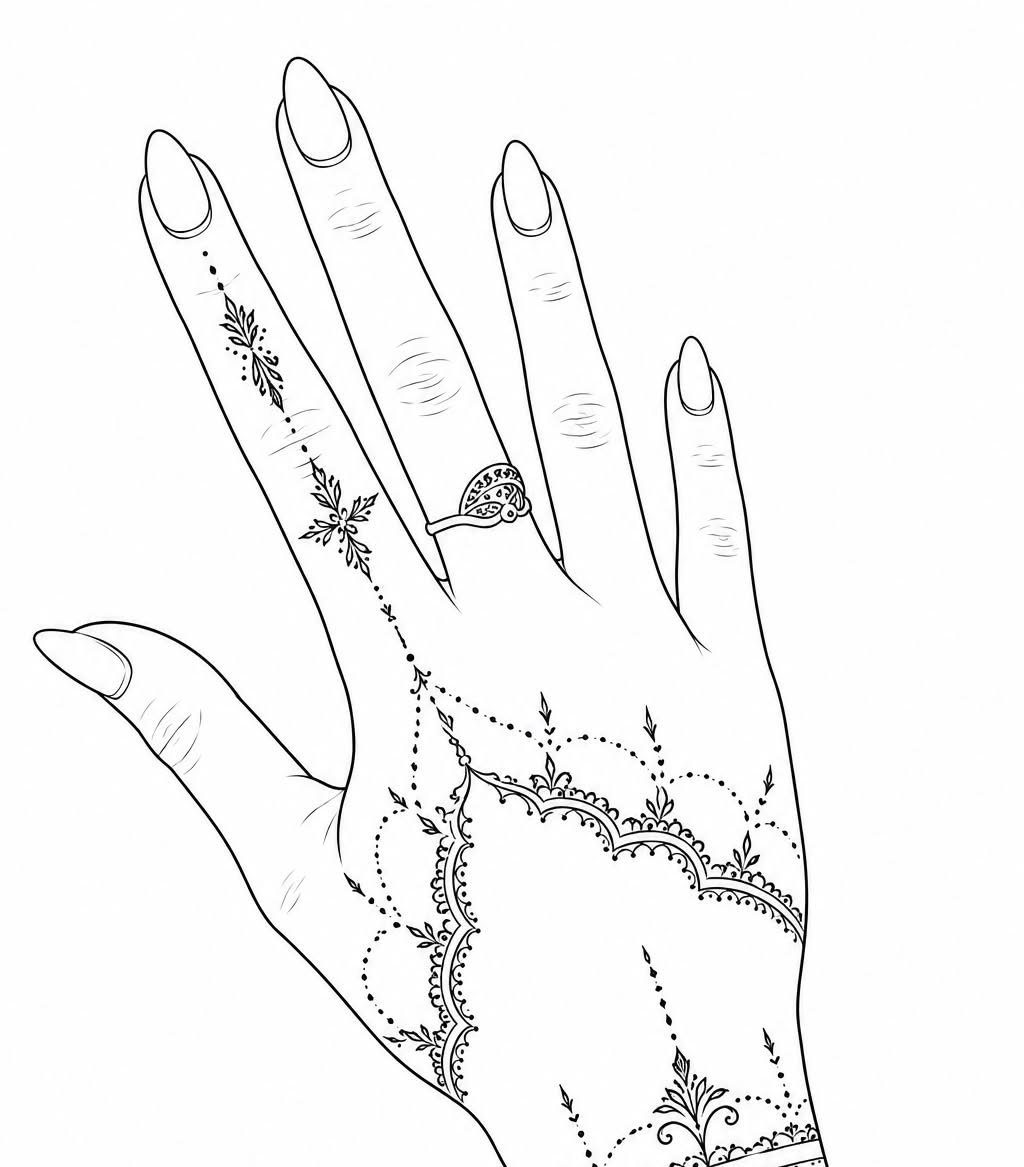
Henna-style patterns are built from flowing, organic lines, with florals curling along each finger and across the back of the hand. A ring in the design gives the pattern a natural anchor.
As a tattoo, this look needs a steady hand and very fine linework. Choose an artist who has done delicate ornamental work, and request photos of healed examples.
For a trial run, draw it on paper first, as in this sketch. You will see quickly which motifs you like.
7. Wolf Portrait Tattoo
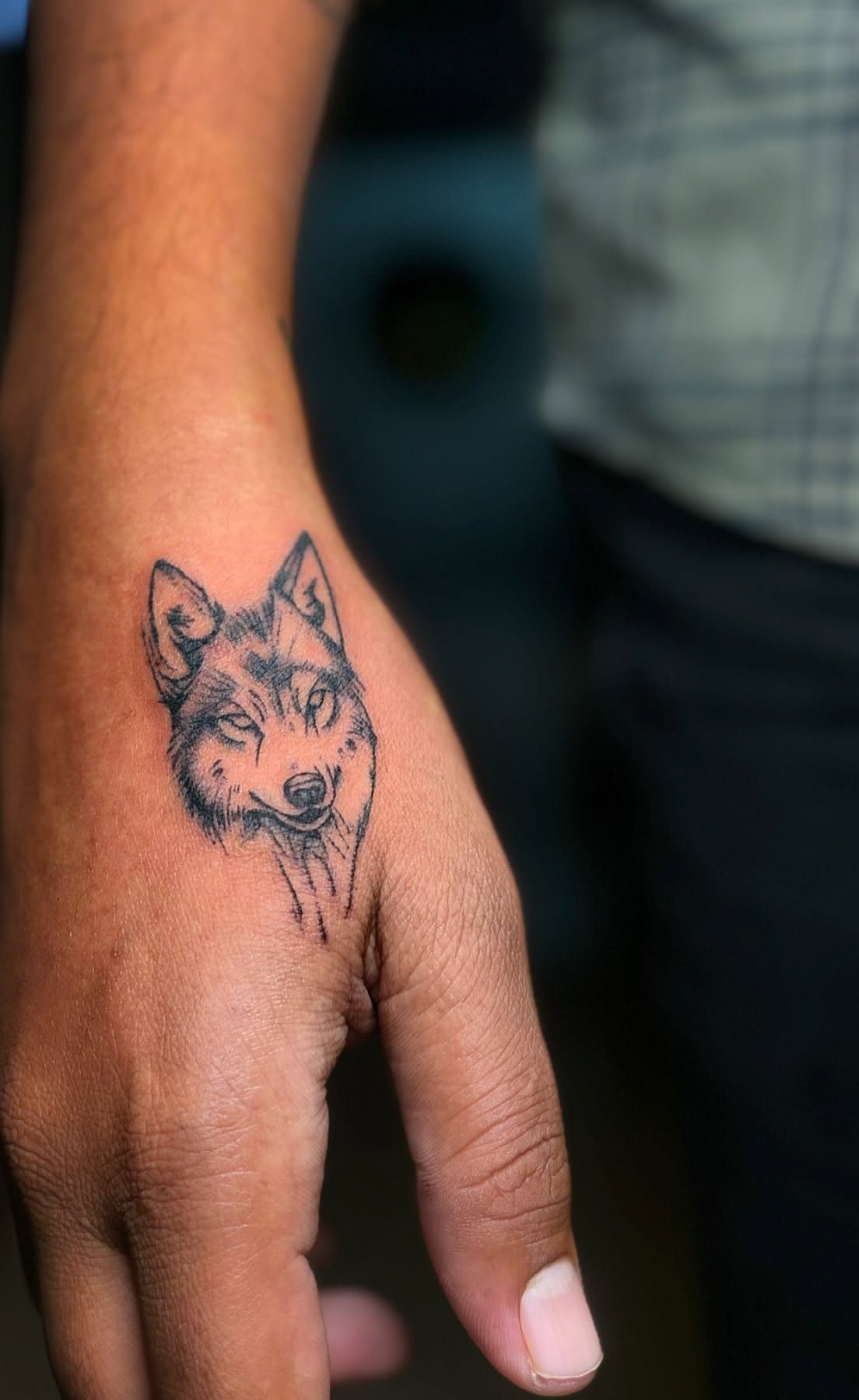
A wolf’s head on the back of the hand works because the skull-like shape of the hand gives the snout and brow room to read. Black ink alone keeps the fur texture clean and sharp.
Fur is the hard part. Ask to see healed portraits in an artist’s portfolio, since fine hair detail on a hand can soften over the years.
The wolf needs enough size on the hand that the eyes stay open and clear.
8. Rose Tattoo
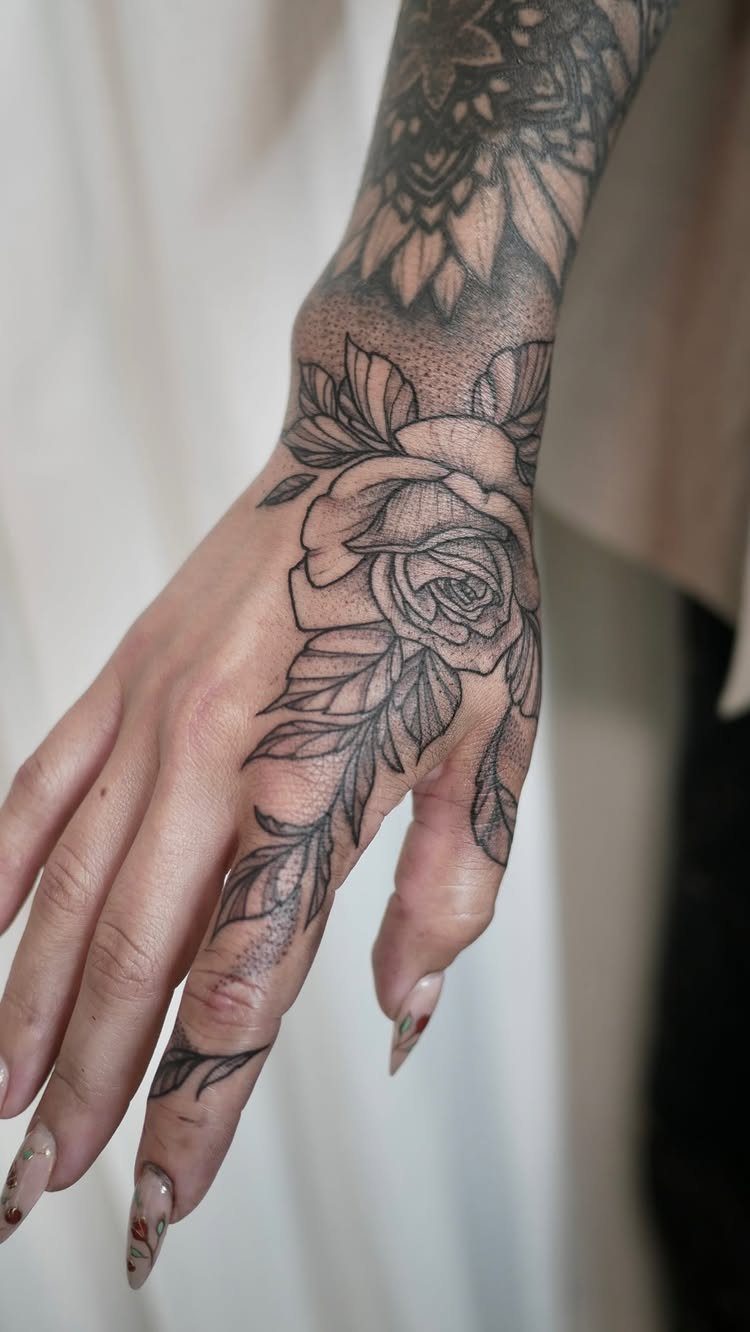
Few motifs sit on a hand as comfortably as a rose with leaves that trail toward the fingers. The stem can follow the line of the wrist, so the flower feels placed, not stuck on.
Soft gradients in the petals give depth without a single color to fade.
Hands and wrists are always visible, so choose the rose size with that in mind. Have the stencil set on your hand first and move it around until the leaves point where you want.
9. Abstract Patterns
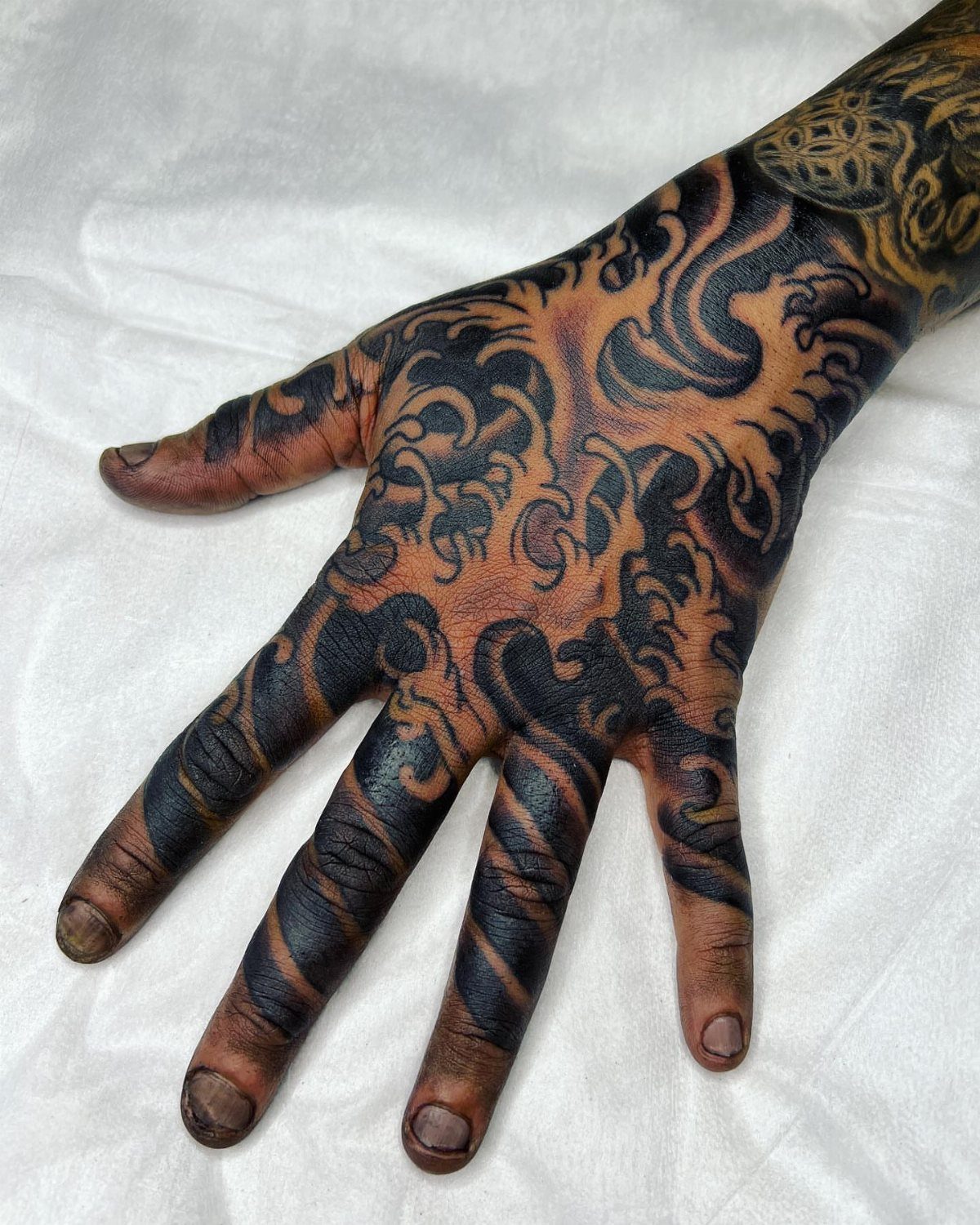
Abstract work has no wrong answer to match, which is its appeal: swirling lines can bend around the knuckles and wrist however your hand suggests. Black with a single orange accent, as here, adds warmth without crowding the pattern.
Since nothing in the design has to look like something, the artist’s flow matters more than the reference. Look for confident, even curves in their portfolio.
Ask for the stencil to be drawn on your hand, so the pattern moves with your fingers.
10. Cursive Script Across the Hand
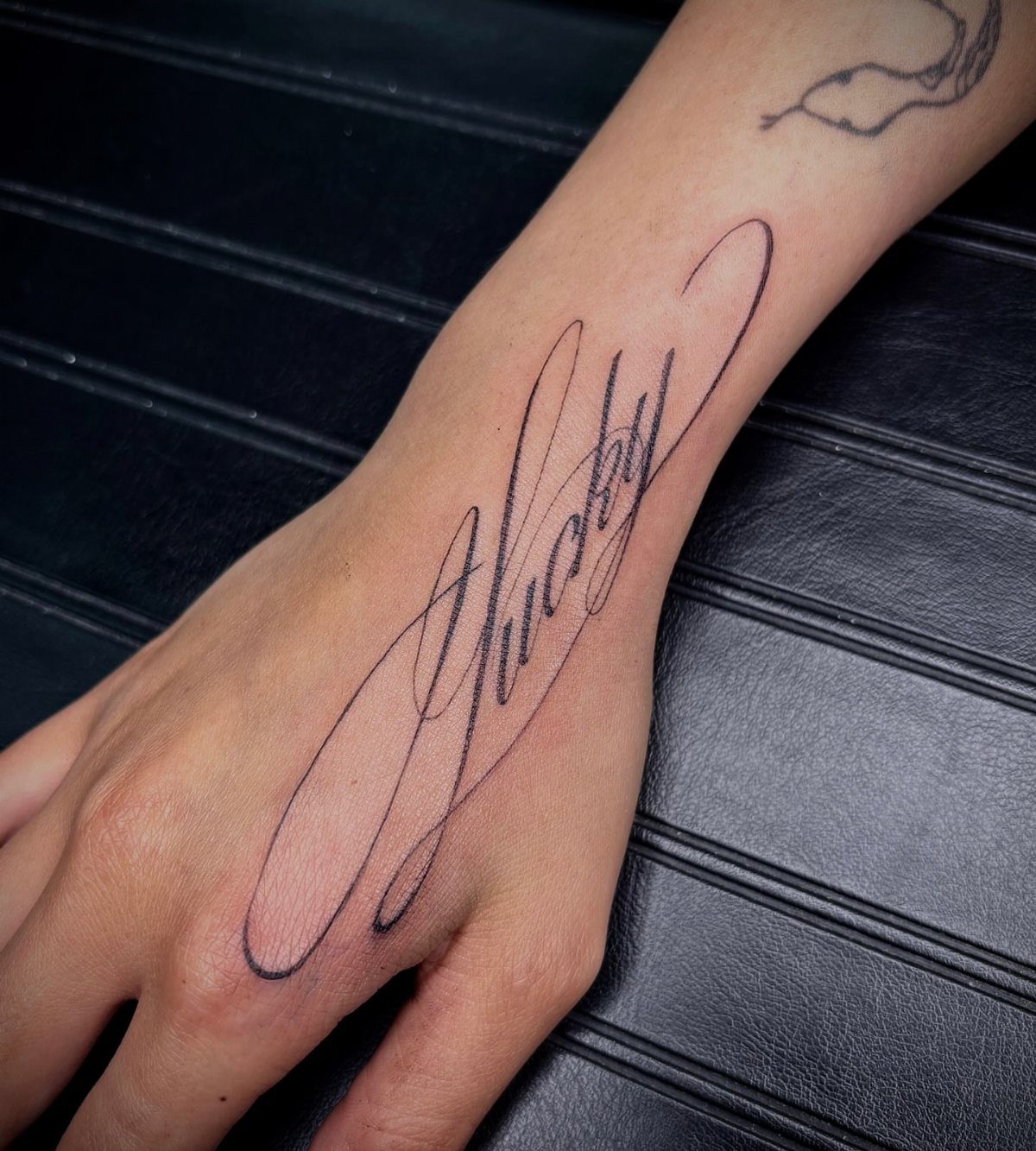
A single cursive word across the back of the hand reads like handwriting you chose to keep. Pick a short word, because long phrases squeeze the letters and lose the flow.
Black ink suits script best. Thin connecting strokes need a skilled hand, so ask for healed photos of lettering, not fresh ones.
I would check the spelling and the letter shapes on the stencil before anything is inked. Script reads quickly, and any flaw in it is obvious.
11. Flowing Botanical Vines and Leaves
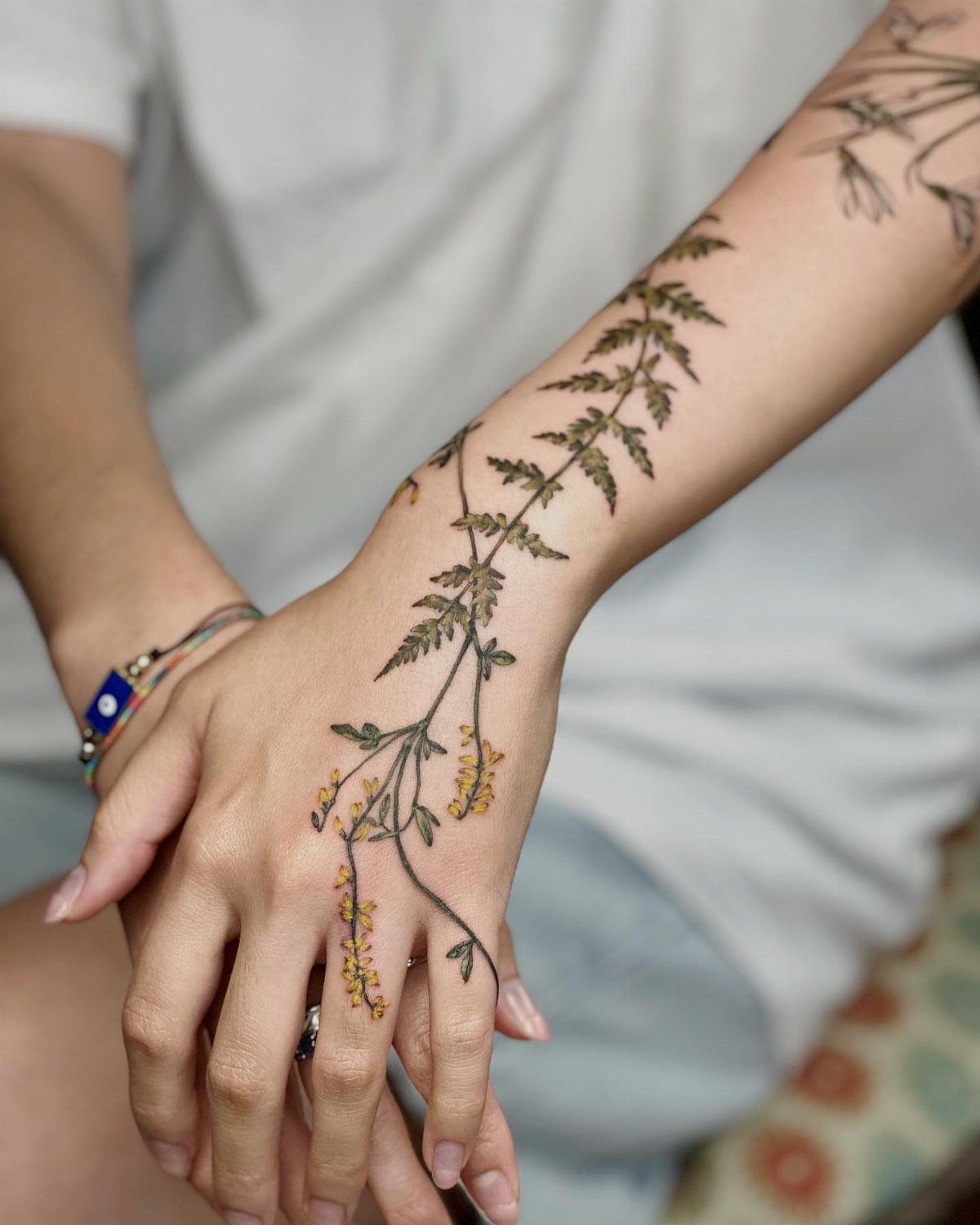
Vines that wind from the wrist onto the hand let a tattoo grow along the body instead of sitting in one block.
Small flowers add a spot of color, and yellow, as here, stands out against green leaves and bare skin.
Use the length of your forearm as a guide: the longer the vine, the more gently it can curve. I prefer fewer, well-spaced leaves to a dense cover.
Color tends to need touch-ups sooner than black, so the linework should be strong enough to stand alone.
12. Traditional Hand Landscape Scenes
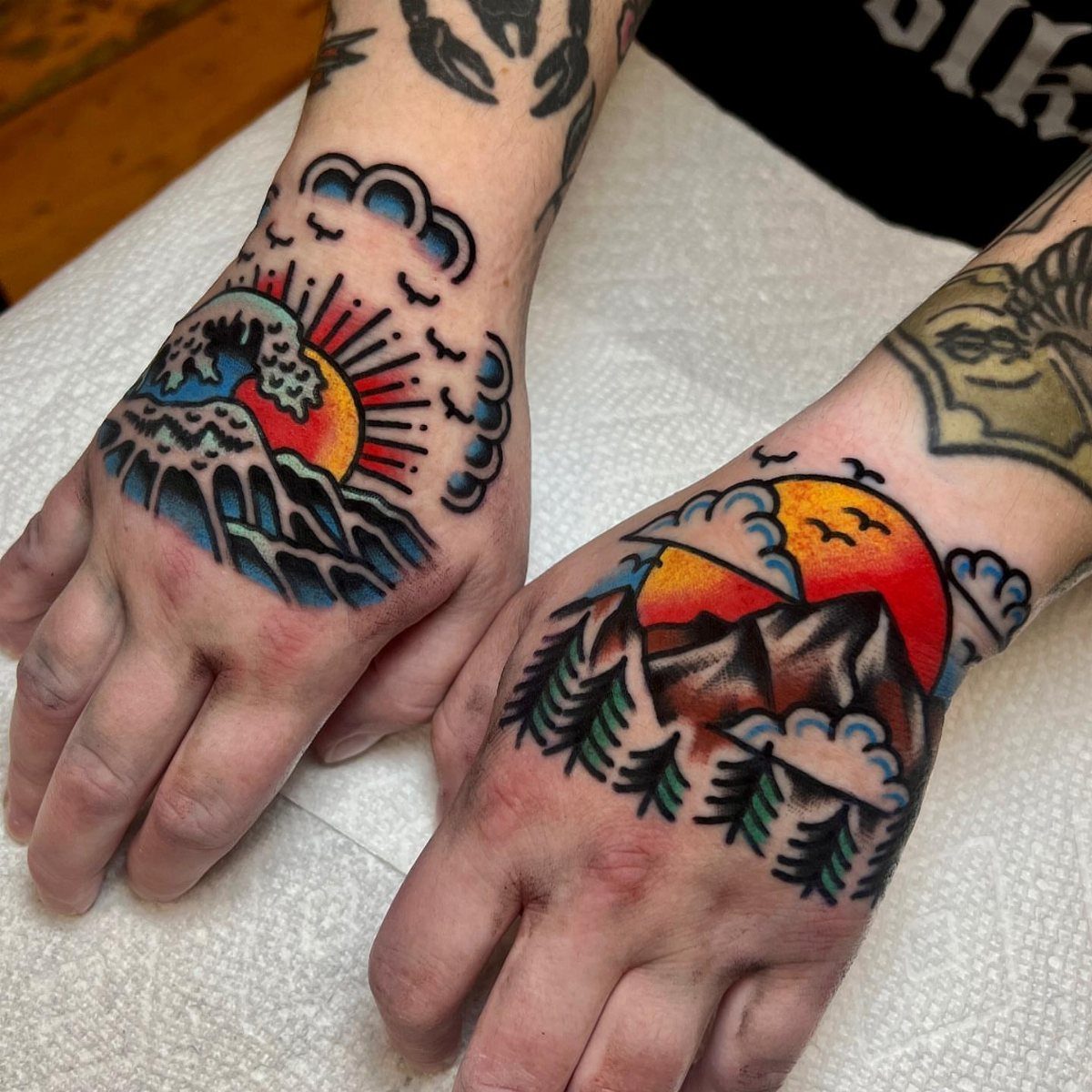
Mountains on one hand and a wave beneath a sun on the other make a pair that only tells its story when the hands are side by side. Traditional style gives each scene bold outlines and saturated color.
I like it because the shapes stay readable at a small size. Keep each scene simple, with a few strong elements, rather than adding detail the back of a hand cannot hold.
The cost is commitment: 2 colorful pieces are hard to hide, so settle the layout on paper first.
Frequently Asked Questions
What do tattoo artists use to draw designs?
Artists usually work from a stencil or draw freehand.
On a hand, I favor having the design drawn directly on your skin, or a stencil placed on it, so you can check how it sits and moves with your fingers before any ink goes in.
A flat template can miss the proportions of your actual hand.
What are some small tattoos on the hands that have meaning?
Hearts, initials and short meaningful words are common small choices. A star, a dot or a crescent moon suits a finger well, because each shape stays legible even at a tiny size.
How to conceal a hand tattoo?
Makeup or clothing are the usual ways to cover one.
Hands are almost always in view, though, so a large or colorful piece is hard to hide. If concealing matters to you, pick a smaller, simpler design, and settle the layout on paper before committing.
How to draw a tattoo drawing?
Sketch it on paper first, or use a digital tool. Drawing a design this way shows you quickly which motifs you like, and it works well for something like a henna-style floral.