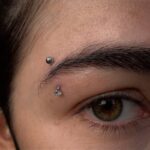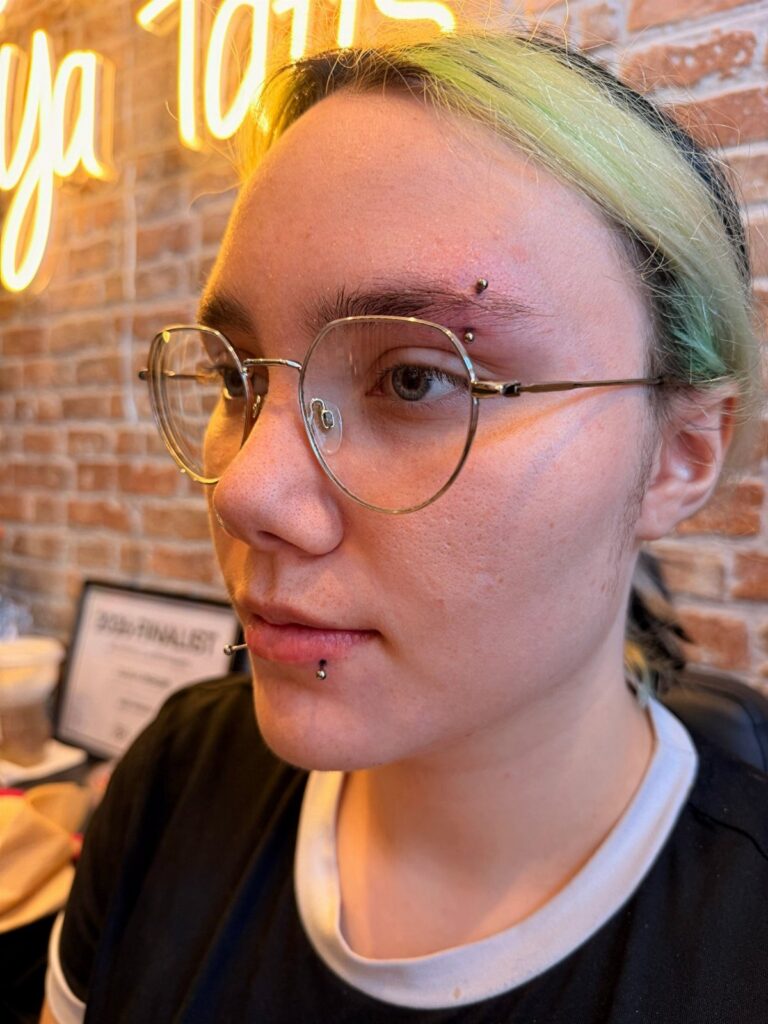
Your anatomy decides which of these works before your taste does, and the Anatomy Considerations section near the end explains why.
A surface bar needs a brow ridge to hold it, so a flat ridge can mean the piercing sits badly or won’t stay, and a piercer’s pinch test settles it before anything is marked.
The ideas run from a single brow stud to a full facial set, and the jewelry follows the same split: Horizontal and Anti-eyebrow piercings sit differently from a Labret, and the Jewelry Material Recommendations section covers what to wear in each.
1. Horizontal Eyebrow Piercing
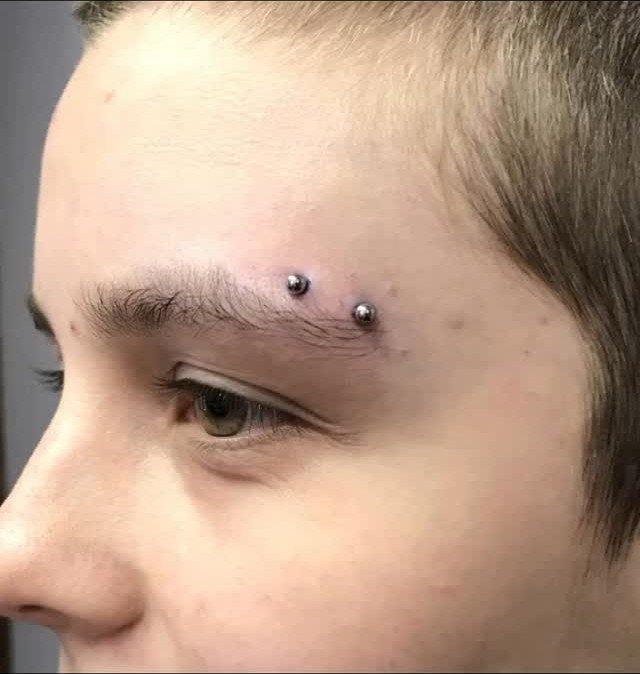
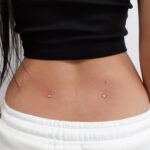
2 silver beads sit on the brow like a bar laid flat, and that is how a surface barbell reads on the face.
The bar runs along the skin with a bead at each end, so the piercing looks like a pair of dots rather than a hoop or a stud.
I like this one for people who want something sharper than a single stud. A horizontal placement follows the arch of the brow and reads differently on each side, so let a professional piercer judge which side flatters your face.
"A curved barbell is best for a vertical eyebrow piercing. Horizontal eyebrow piercings and anti-eyebrow piercings should be done with surface bars to minimize chances of rejection, but a hoop is not recommended in an eyebrow piercing at all."
— PopSugar
2. Anti-eyebrow Piercing
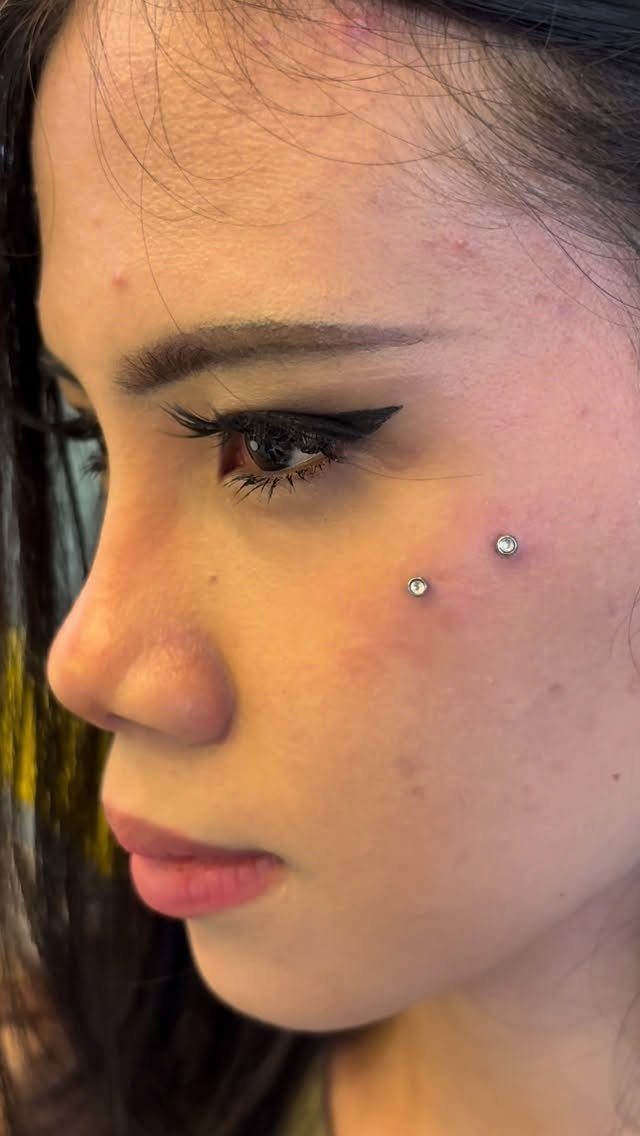
Despite the name, an anti-eyebrow piercing sits on the upper cheekbone, below the eye, so it mirrors where a brow piercing would be. 2 small studs side by side give it a quiet, symmetrical look.
I would pick flat-backed studs in plain silver for a first one.
The spot is highly visible, and small jewelry keeps it from competing with the eyes. Check with a piercer about whether your cheekbone area suits it.
3. Multiple Eyebrow Piercings
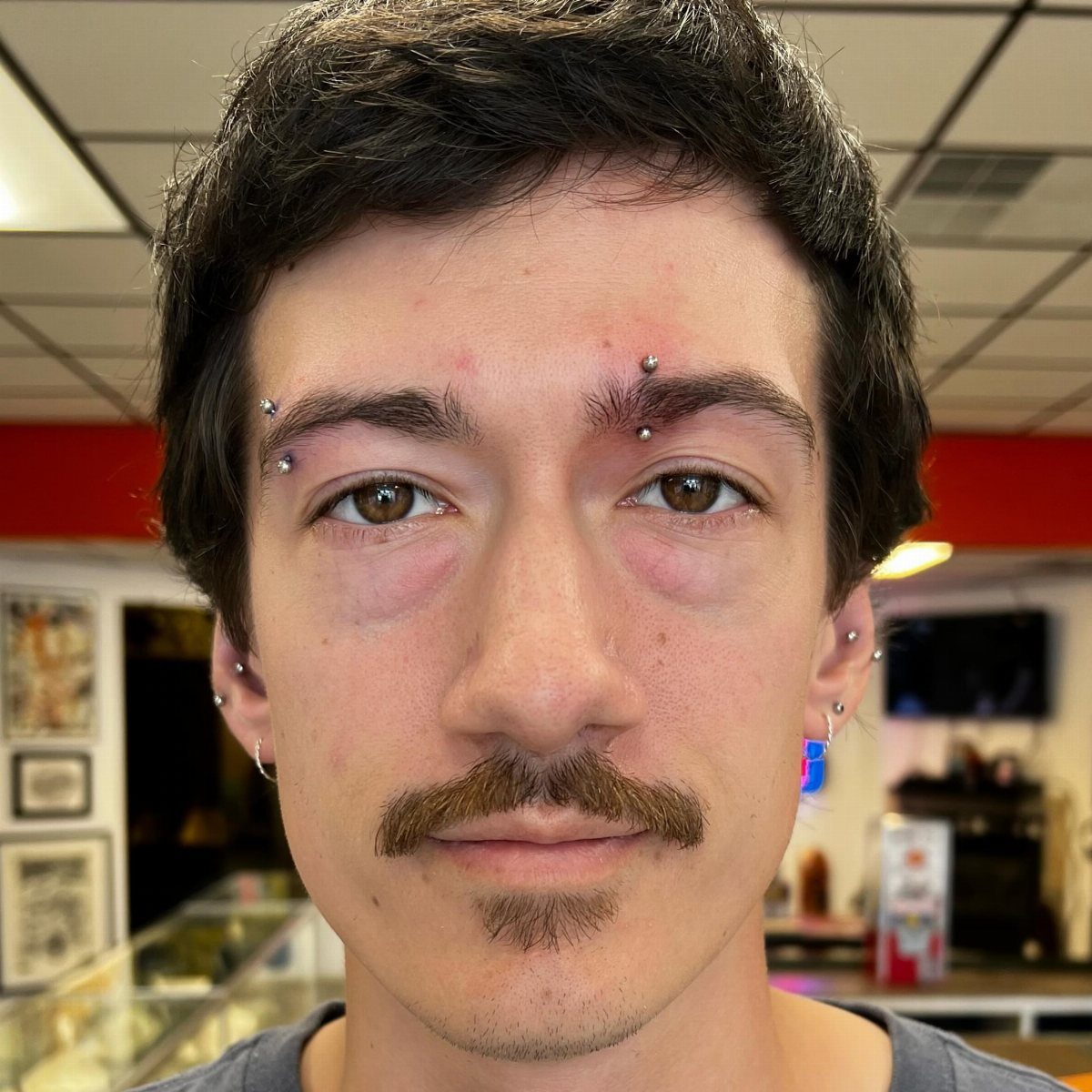
Curved barbells stacked along the brow, and the same shape repeated in the ears, make a set rather than a collection of single piercings. Repeating one jewelry style keeps several holes looking planned.
My advice: start with one or two and add the rest later. Spacing matters more than count, so have each spot marked with ink and checked in the mirror before the piercing starts.
4. Labret Lip Piercings
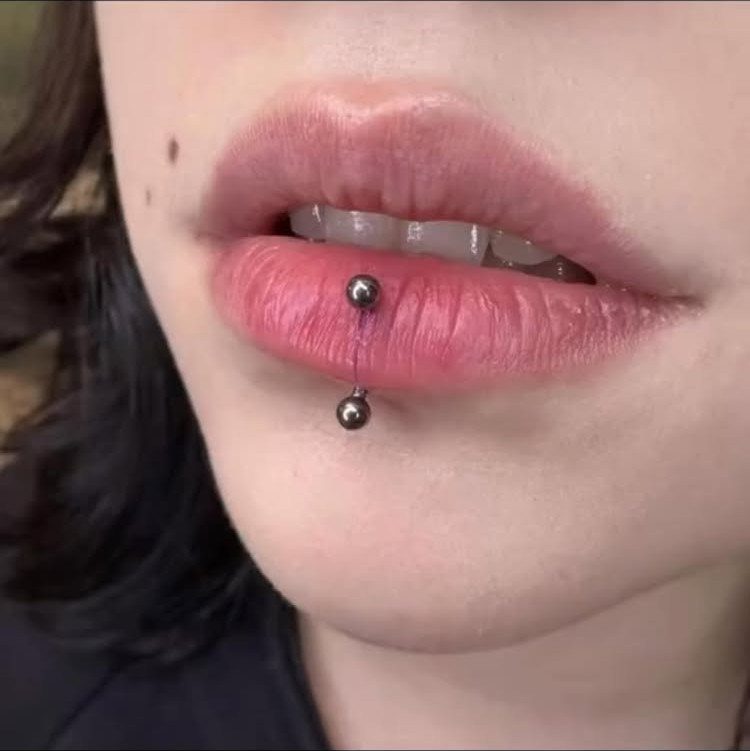
Labret piercings sit below the center of the lower lip, and this vertical version carries two metal beads, one visible under the lip and one in the mouth or on the skin.
The silver reads clean and works with almost any style.
For the doubled look, a barbell with a bead at each end beats a plain stud, and that is the jewelry I would choose. Pick the bar length with your piercer so it fits your lip.
5. Single Eyebrow Stud Piercing

One small stud in the brow is the easiest eyebrow piercing to wear every day. It sits close to the skin, stays subtle, and pairs well with other facial jewelry, such as a nose stud.
I prefer a delicate metal stud over anything with a big gem, since it blends with the brow instead of fighting it.
It also makes a good starter piece for anyone who wants to see how a piercing sits on the face before adding more.
6. Multiple Lower Lip Studs
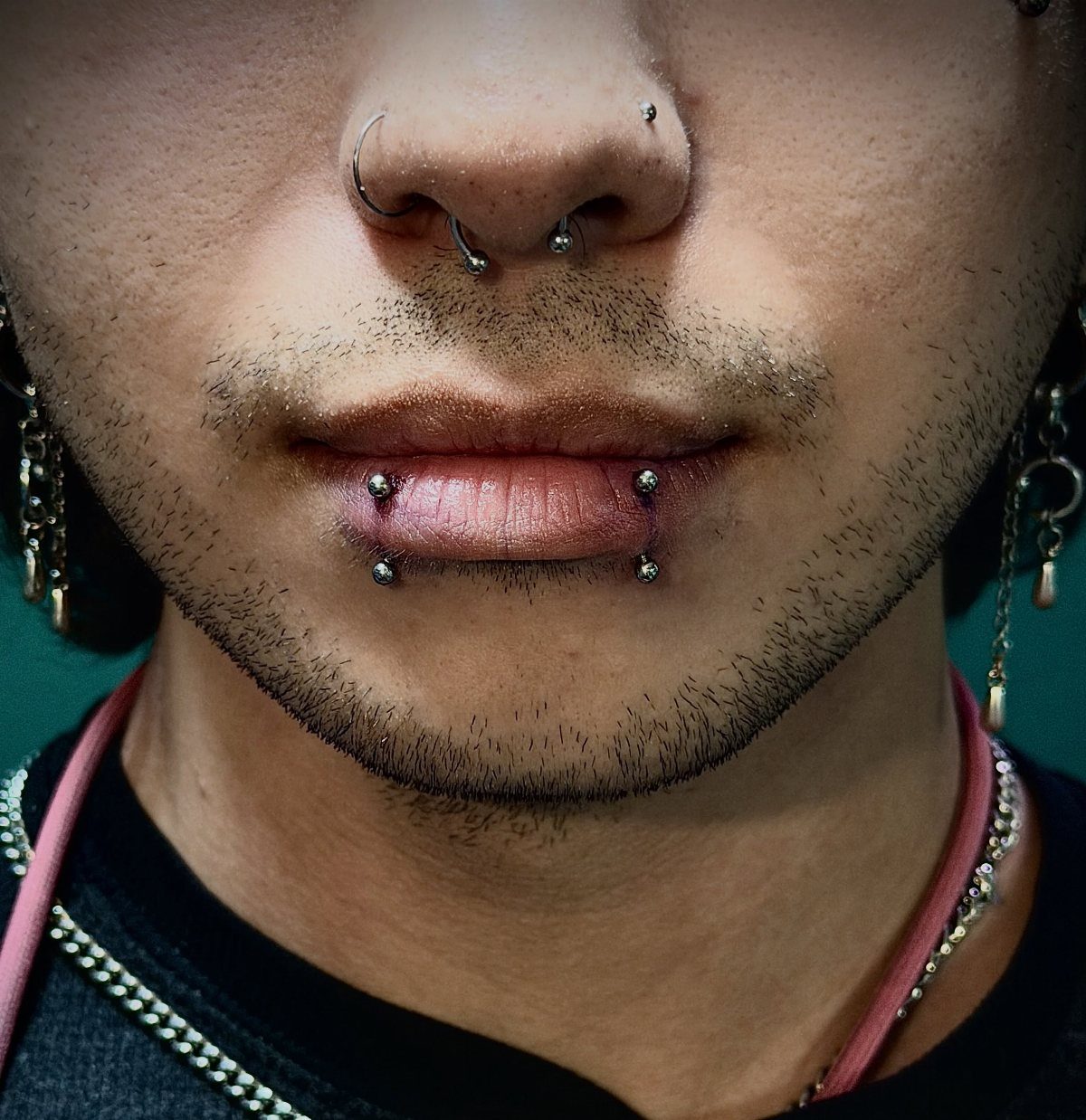
A row of silver ball studs across the lower lip gives a bold, symmetrical look, and it holds together because the balls are all the same size and finish. Matching jewelry is the whole trick here.
Expect to commit more time and care than with a single piercing, since each stud needs its own healing. I would do them in stages, and leave room between studs so they do not crowd each other.
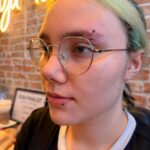
7. Eyebrow Stud with Lip Stud

A small metal stud in the brow and a single stud centered below the lower lip make a pairing that stays quiet because both pieces are tiny and match in metal. Neither one competes with the other.
Matching finishes work best for both pieces, since mixed metals draw the eye to the hardware instead of the face.
Before either spot is marked, have a piercer check the lip placement against your mouth and the brow placement against your arch.
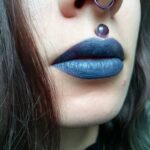
8. Eyebrow Barbell with Lip Beads
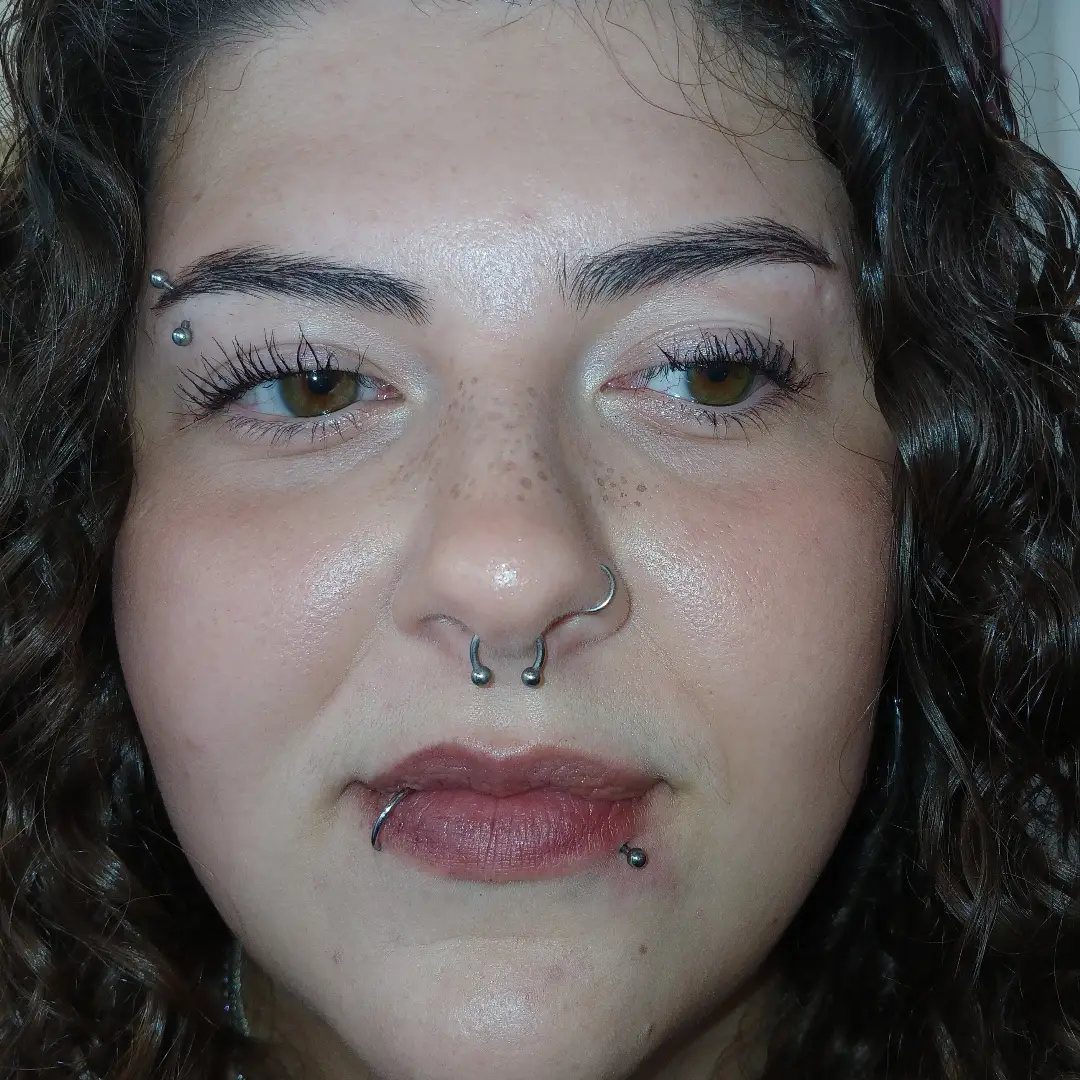
A curved barbell in the brow answers the 2 silver beads at the lip, and the repeated metal ties them together even with other piercings on the face. Curved and round shapes echo each other well.
My pick would be a matching silver finish on both, so the pairing reads as one decision.
If you already wear septum or nostril jewelry, keep any new pieces in the same color so the face does not get busy. Your piercer can size the bar to your brow.
9. Full Facial Piercing Set
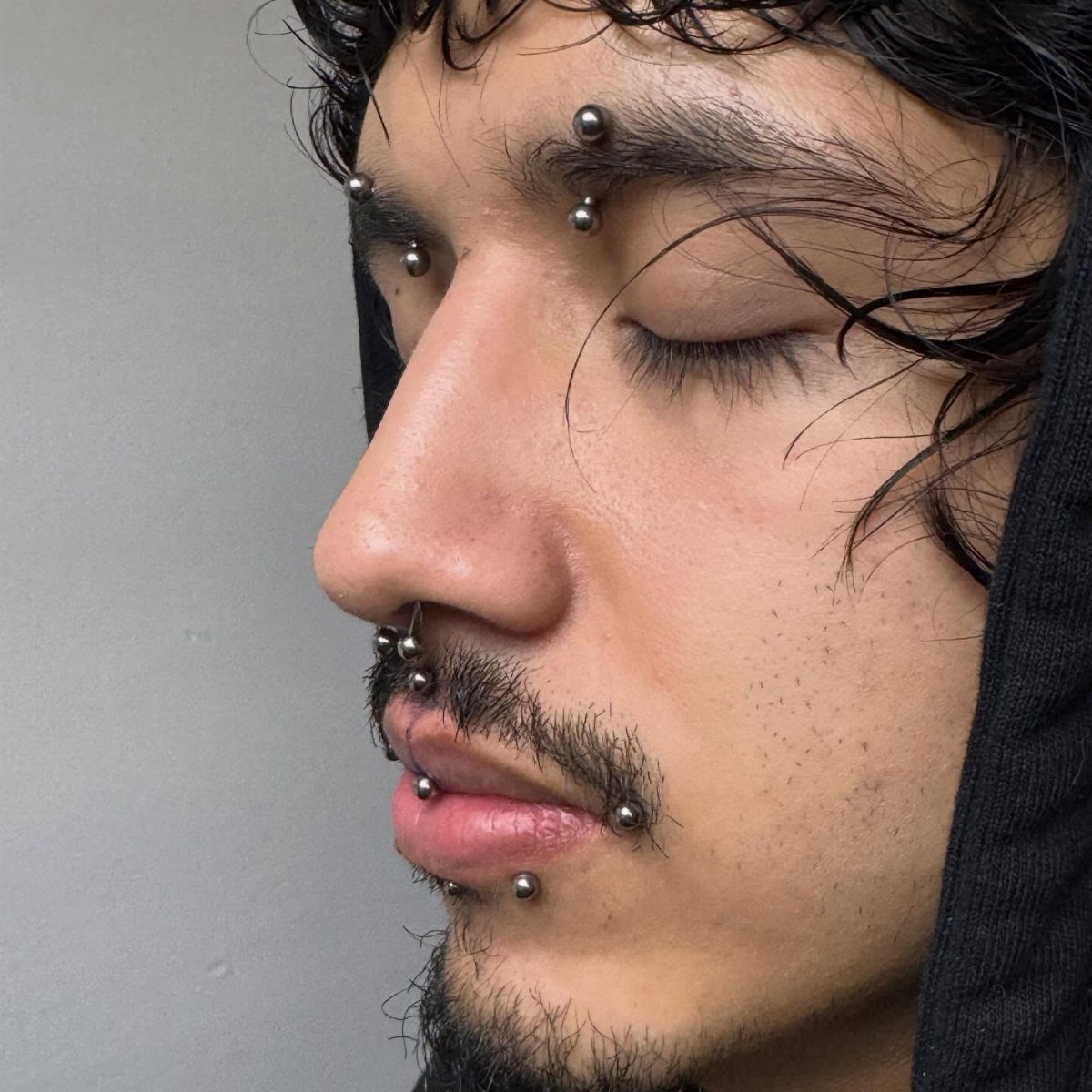
Matching silver studs across both eyebrows, the nose, and the lips turn the whole face into one deliberate set. Identical studs are what make that many piercings look planned.
I would never do this in one sitting.
Add pieces over time, and have your piercer mark each spot so both sides line up in the mirror. Keep every stud the same metal and size, and the profile stays clean instead of crowded.
Jewelry Material Recommendations
Gold or platinum is the metal I would choose for an eyebrow piercing.
A curved barbell suits a vertical brow piercing, while a horizontal or anti-eyebrow piercing needs a surface bar, which lowers the chance of rejection. Skip hoops in the brow entirely.
Lip piercings usually start in surgical steel. One studio prices a needle lip piercing at $80 with hypoallergenic surgical steel jewelry included, and gold or titanium costs extra for anyone who prefers to start with something different.
Check which metals the shop stocks before you book, since the jewelry is part of the price.
Anatomy Considerations
Anatomy decides whether an eyebrow piercing works at all. A surface bar sits flat across the brow, and where it goes and how it angles depends on your face shape, so a saved photo can’t settle it.
I would treat a flat brow ridge as a warning sign.
With little ridge to hold the jewelry, the piercing may sit badly or not stay put, so ask your piercer to pinch and test the skin before anything is marked.
If your piercer says the brow won’t support it, believe them and ask about a different placement.
Changing Jewelry
Hold off on swapping the jewelry until the piercing has fully healed, and have your piercer sign off first.
For a lip piercing, check in after 6–8 weeks to find out whether it is ready; brow piercings follow the same rule of healing first, with no set date.
Before a swap, wash your hands and sanitize the area, then use a new, sterilized piece. If you feel unsure, have a professional piercer do it.
Until then, don’t twist, turn, or remove the jewelry, since that can cause scarring, infection, and slower healing. Spray saline on the front and back twice daily and wash with mild, fragrance-free, alcohol-free soap.
Frequently Asked Questions
What can’t you do with a lip piercing?
Leave the jewelry alone until it heals: twisting, turning or taking it out can scar the piercing, invite infection and set the healing back.
Skip swapping the jewelry until your piercer signs off, too; I’d have them check the piercing around 6–8 weeks. Spray the area with saline twice a day and wash with a mild soap that has no fragrance and no alcohol.
How do I know if I have the anatomy for an eyebrow piercing?
Only a professional piercer can tell you, by pinching and testing the skin of your brow before anything is marked.
A flat brow ridge is a red flag, since the jewelry has little tissue to anchor in and may sit crooked or work its way out.
When a piercer tells you the brow won’t hold a ring or bar, trust that call and ask what other spot would suit your face.
Is a lip piercing more painful than an eyebrow piercing?
Pain varies a lot from person to person, so I would not promise that one of these hurts clearly more than the other. Brows do swell, and bruising around the eye can happen, so expect some of that afterward.
What jewelry is best for a lip piercing?
For most lips I’d pick a flat-back labret stud; on the lower lip, a barbell with a ball on each end is a solid alternative. After the piercing has fully healed, a center-lip labret can be swapped for a hoop.
Let your piercer choose the bar length for your lip, and ask what metals they carry: surgical steel usually comes first, while gold or titanium often costs more.