Placement decides which of these ideas works, because thin single-weight lines need room around them: a forearm holds a spaced-out flower or a vertical line of text, and a wrist suits a tiny heart or a short bit of script.
Tiny hearts, framed botanicals and patchwork all rest on the same pair of requirements: an artist who tattoos this style every day, and sunscreen once the skin has healed.
1. Fine Line Flower Tattoos
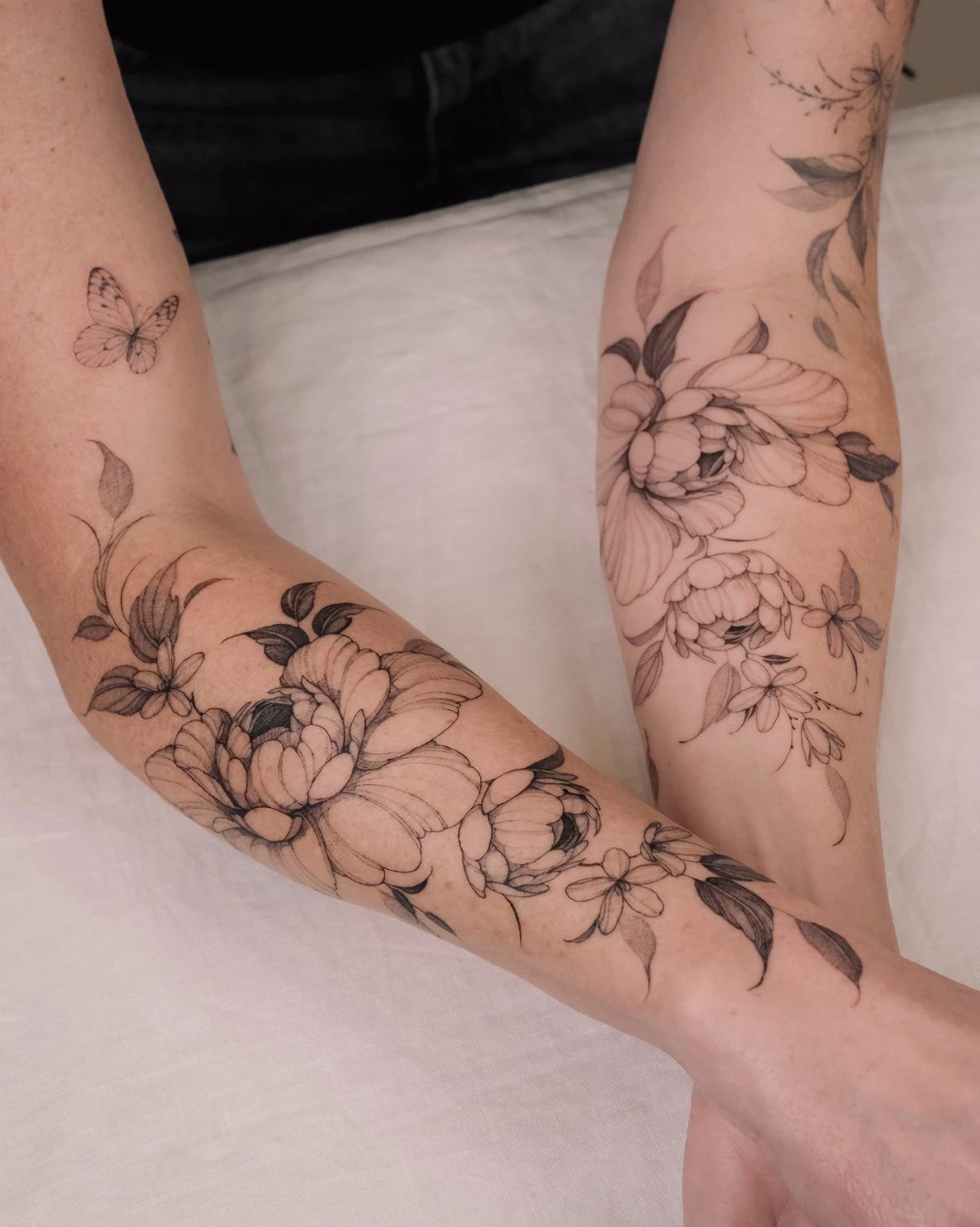
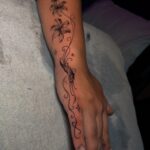
Peonies, leaves and a butterfly in thin black outline suit the forearm because the long, flat surface gives each bloom room to stay separate. I would keep the petals few and the spacing generous.
Floral tattoos carry different meanings depending on the flower, so pick the bloom first and the layout second. A butterfly tucked beside the flowers adds movement without crowding them.
2. Lotus
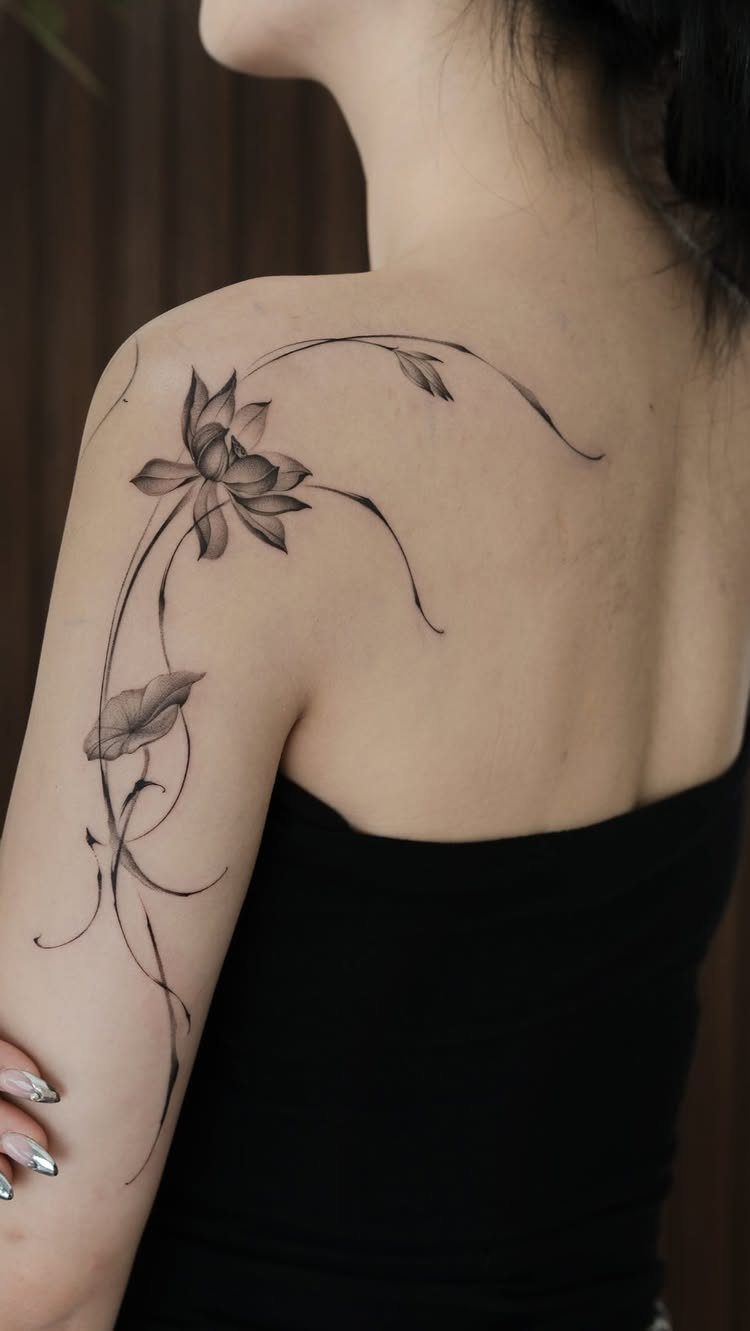
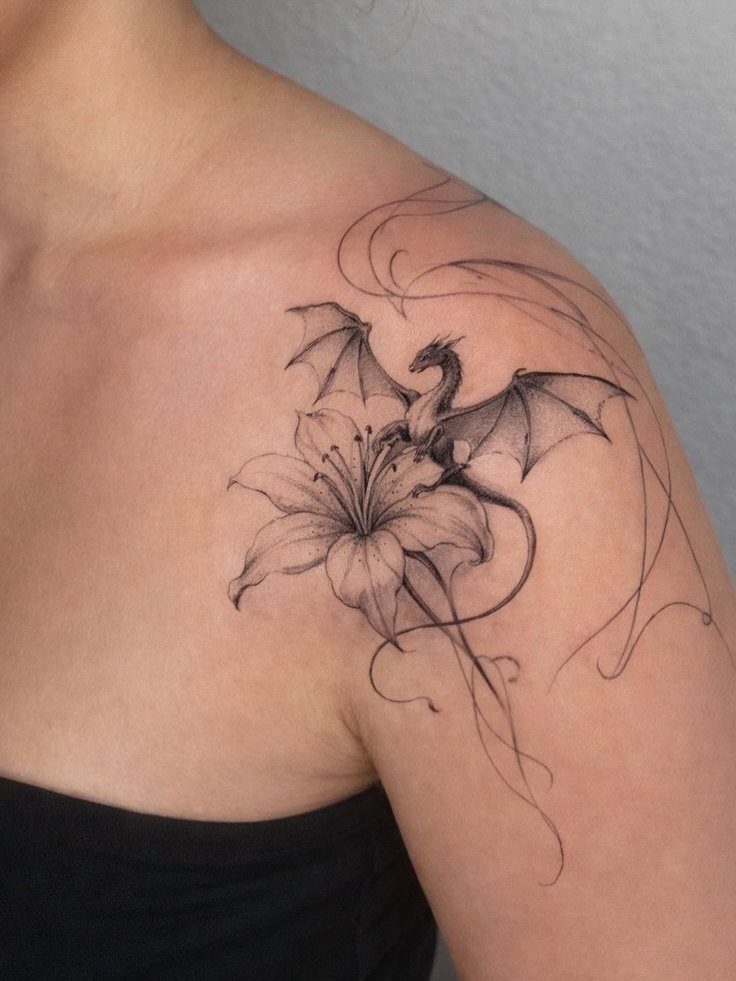
A lotus looks simple, yet the shape holds a lot: a flower rising from stems and leaves says something about growth, and you can decide which meaning is yours. That flexibility is why I like it for a first piece.
For a lotus with trailing stems, the shoulder or upper arm works best, because the flat curve of the muscle gives the lines room to bend and taper.
Ask for single-weight lines and resist adding shading, since the airy look depends on empty skin around the petals.
3. Tiny Tattoos
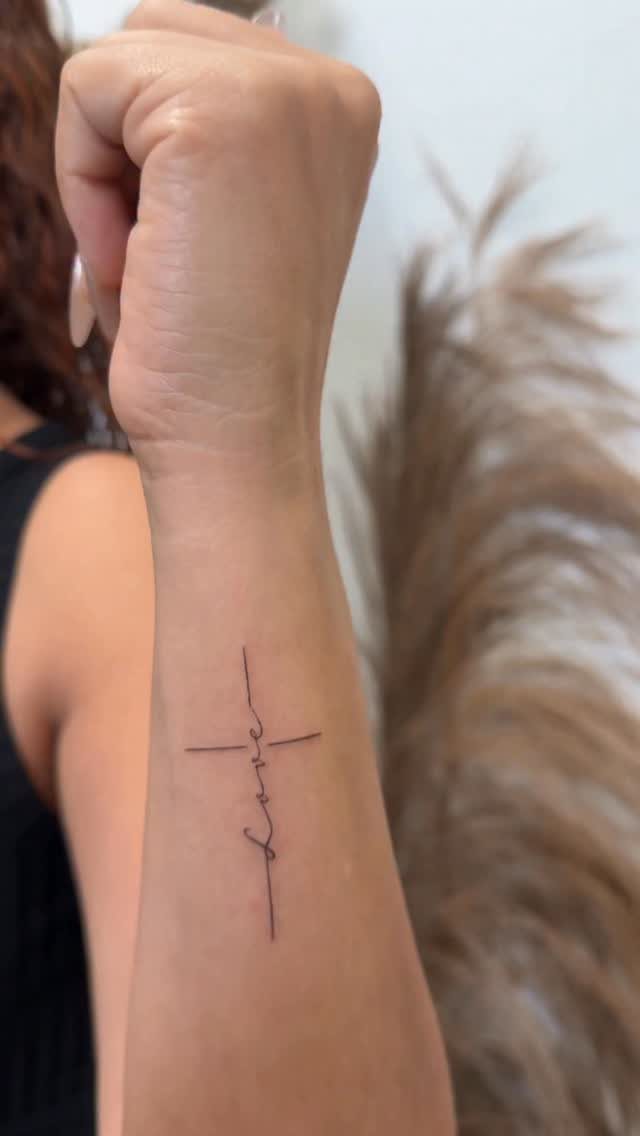
The word becomes part of the shape instead of a caption, and that is the move I would copy.
On a wrist, keep the lettering short. Fewer characters stay readable at a small size, and a design with one clear idea ages better than one packed with details.
4. Continuous Line Art
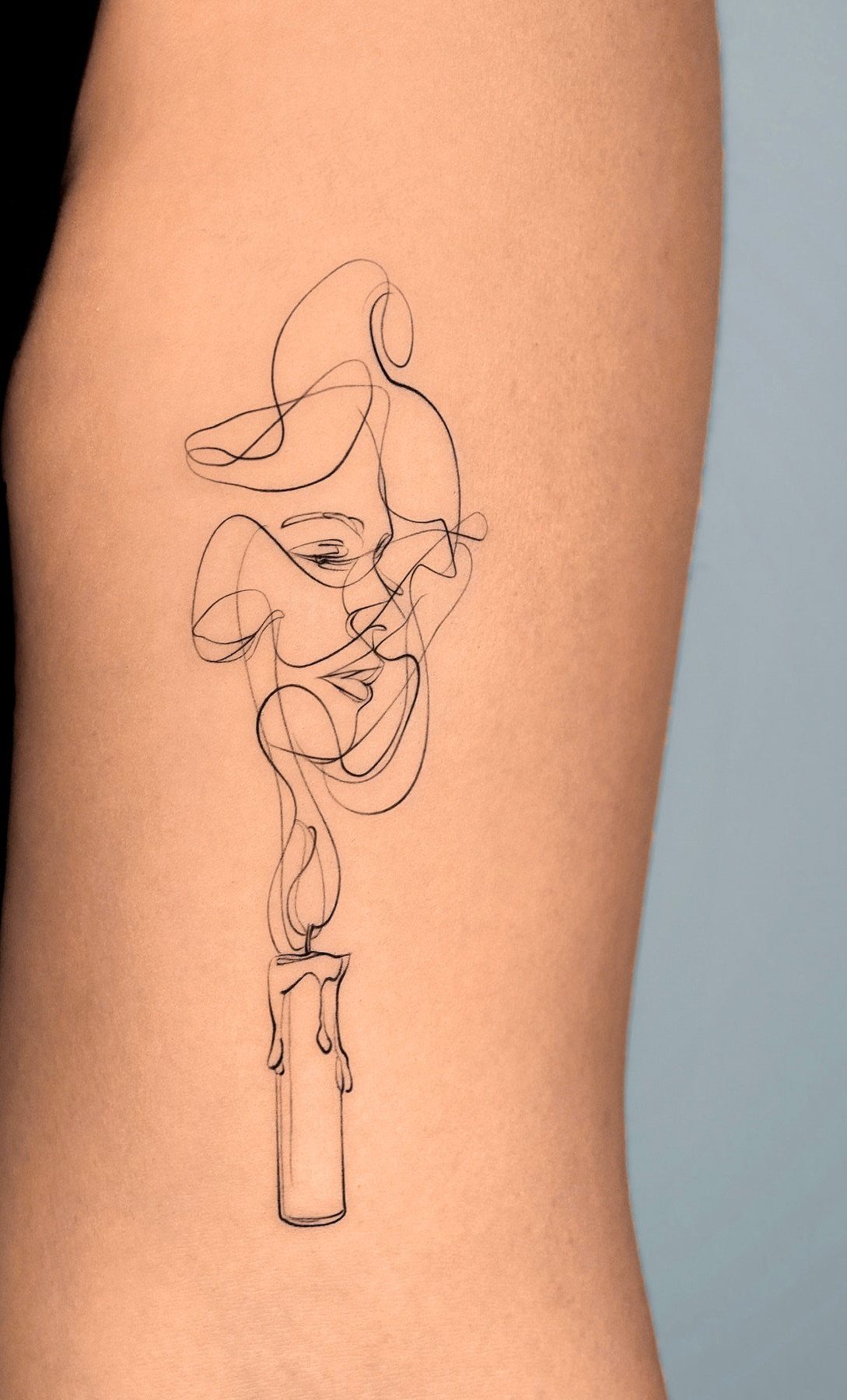
Draw a candle, let the smoke curl into a face profile, and never lift the pen: that is continuous line art, and one unbroken stroke does all the work.
It suits the arm well because the line can run along the muscle.
Ask your artist to sketch it on your skin first, since a single line leaves no room to hide a wobble. I would choose a subject with one strong silhouette.
5. Micro Geometric Patterns
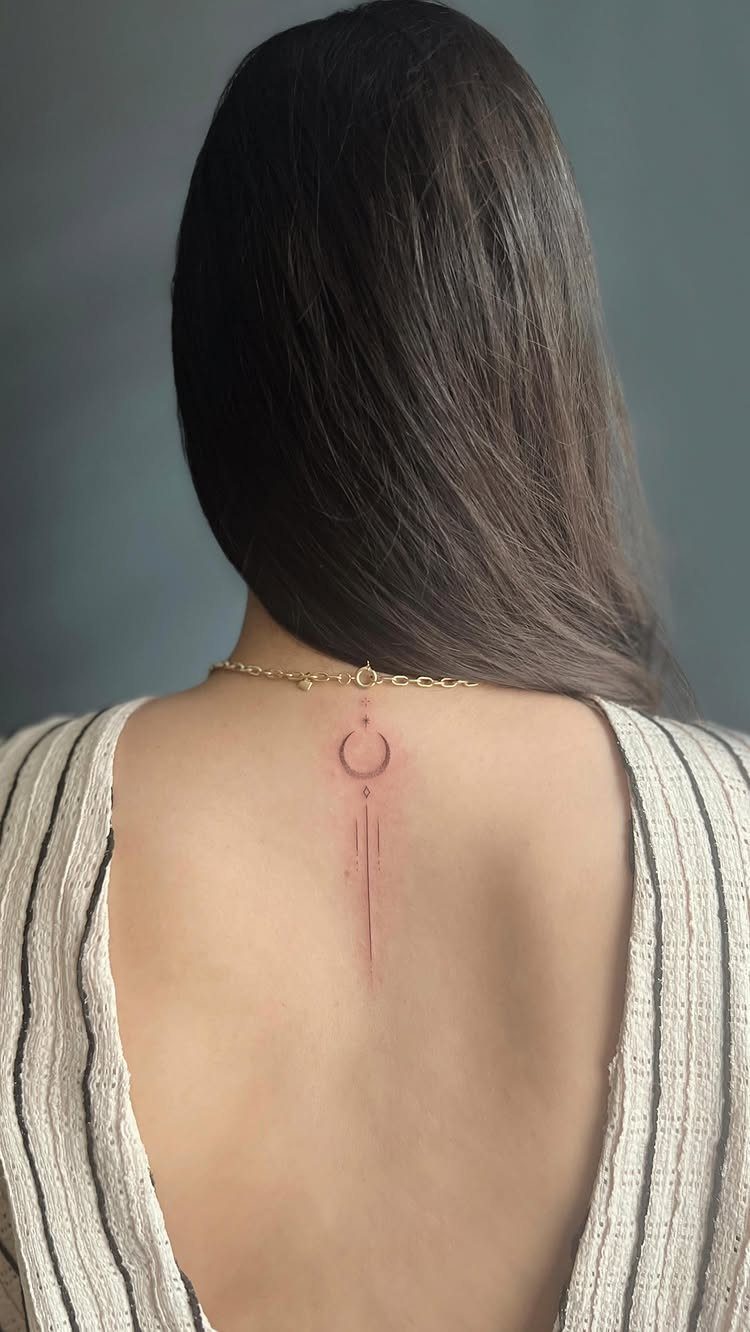
A crescent paired with a vertical line sits easily on the upper spine, where the body’s own center line gives the design a built-in axis. Geometry rewards that kind of alignment.
Precision matters more here than in florals, because a slightly crooked line is obvious.
Have the stencil checked in a mirror before any ink goes in. Hair or a chain can cover it, or leave it on view.
6. Tiny Hearts
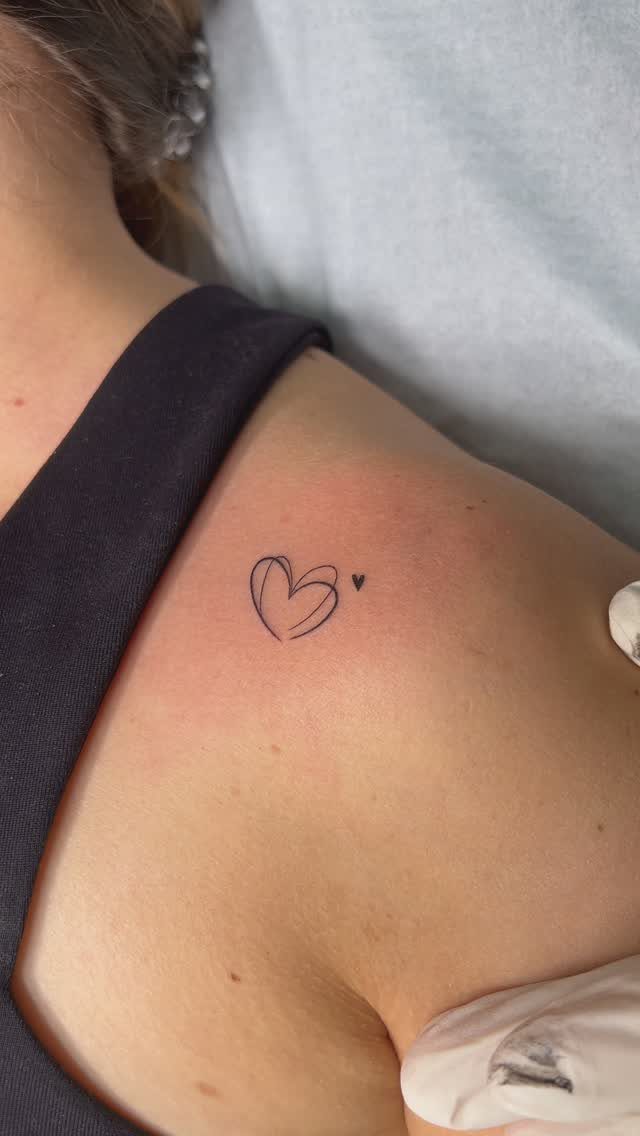
2 small hearts on the shoulder make a pair that reads as a quiet set, not a statement. A heart is the easiest shape to recognize at a small size, which is its main strength.
Placing them a short distance apart keeps the lines from blurring together over time. If you want more than one, I would choose matching size and line weight so they look planned.
7. Minimalist Text and Geometric Patchwork
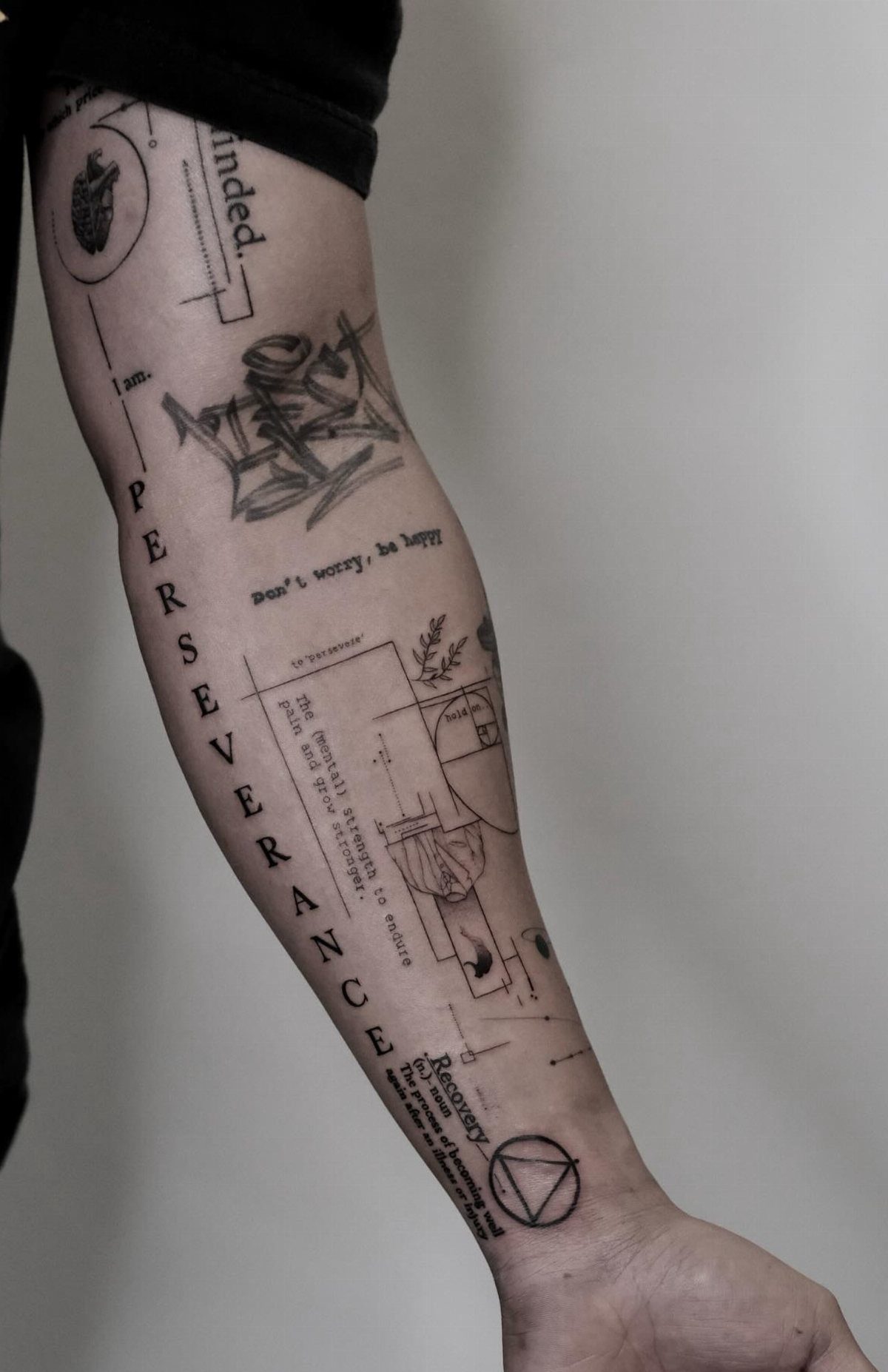
A column of capital letters running down the forearm gives a patchwork its spine, and the smaller pieces can fill in around it. Vertical lettering also lets one long word sit on a narrow strip of skin.
I would keep every piece in the same black and the same thin line weight, so a heart, a building sketch and a word read as one collection.
Leave gaps between them, since a patchwork grows over time and you will want room for the next piece.
8. Fine Line Script and Quotes
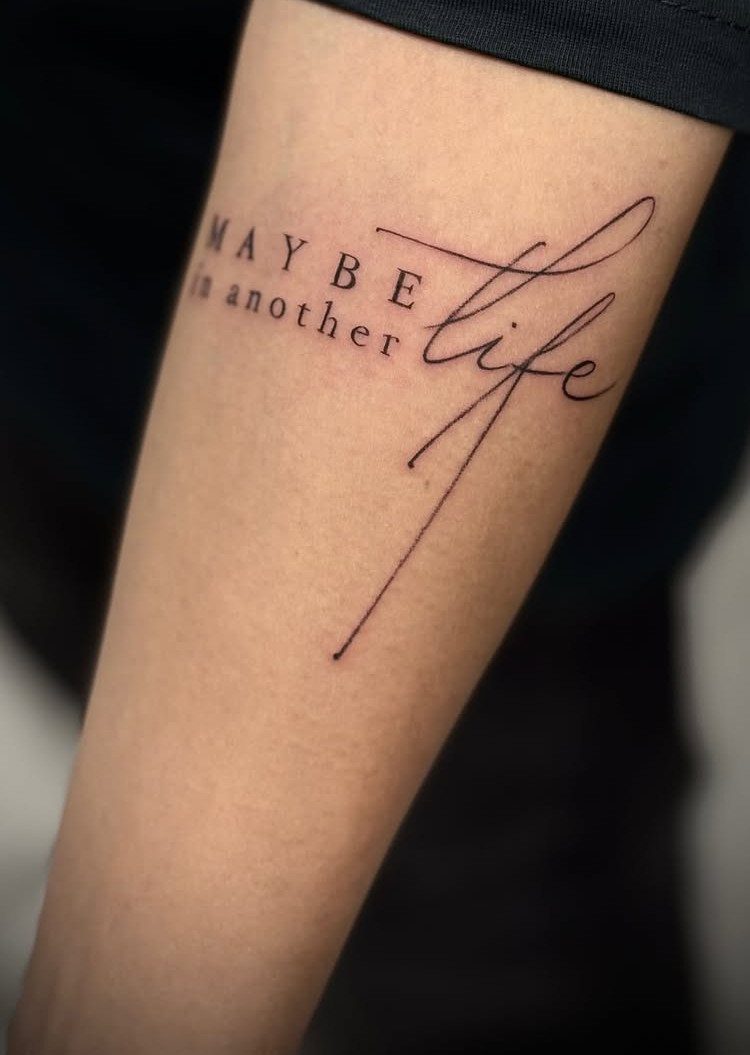
Pairing a flowing script with a plain serif inside one line of text gives a short quote a voice, with the loose words feeling spoken and the tidy ones feeling firm.
Limit it to 2 typefaces, and pick which words get the script before you meet your artist.
Thin lettering needs room, so the inner forearm or wrist works well. Ask for a stencil to check the spacing, because tiny letters can’t hide a crowded line.
9. Framed Botanical Miniatures
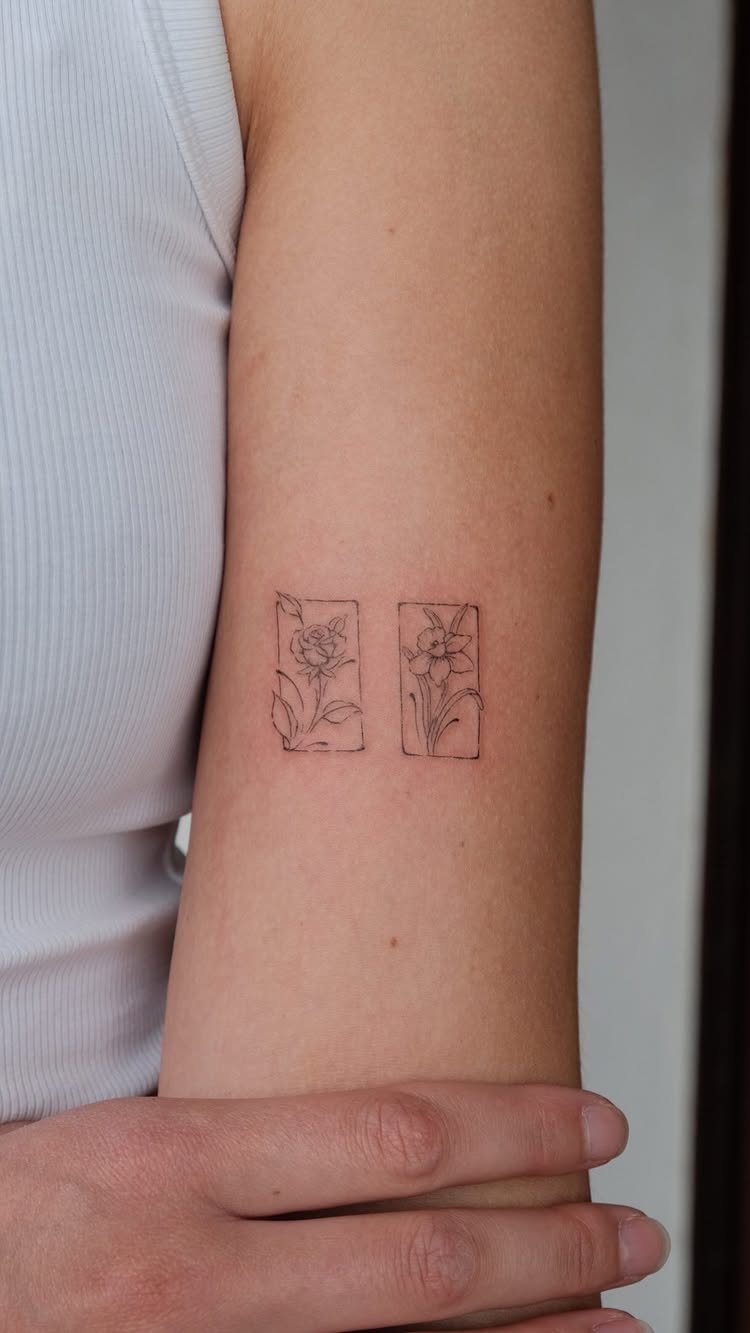
A thin rectangular frame turns a small flower into something like a pressed specimen, and the border makes even a very tiny bloom look deliberate.
On the upper arm, I would stack 2 frames with a short gap between them, as long as the line weight matches.
Keep the flower simple inside the box, with room around the stem, so the outline doesn’t crowd it. Straight edges show any wobble, so ask for the stencil before inking.
Aftercare for Fine Line Tattoos
Healing starts with the wrap. A clear, breathable adhesive film such as Saniderm can usually stay on for 3–5 days, and your artist will tell you exactly when it should come off.
After that, wash twice a day with lukewarm water and a fragrance-free antibacterial soap, then pat the skin dry with a paper towel. Cloth towels can snag, so paper is the safer choice on fresh, thin lines.
Follow with a thin layer of unscented lotion, since a heavy coat can clog fine lines and slow healing. I would skip heavy petroleum jelly, because it smothers fine lines and a thick coat is the easiest mistake to make.
Once the tattoo is fully healed, wear broad-spectrum SPF 50 on it. Thin pigment lines break down under UV exposure, and daily sunscreen is the cheapest way to keep them crisp.
If a line looks patchy or the skin stays red and sore, go back to your artist before it sets in.
Longevity of Fine Line Tattoos
Fine line work uses smaller needle groupings and puts less pigment in the skin, so it can look soft sooner than a thick, heavy black traditional piece. I would go in expecting that, not be surprised by it.
2 things push the odds your way: correct dermal depth, which comes down to your artist’s skill, and daily SPF.
Do both and a fine line tattoo can stay crisp for years, needing only a light touch-up when it finally softens.
Choose an artist who does this style all the time, and look at healed photos of their fine line work, not just fresh ones. Fresh photos flatter every tattoo, and healed ones show how the lines settle.
Budget for a touch-up down the road. Treat it as routine upkeep for delicate work, not as a sign something went wrong.
Frequently Asked Questions
What are the downsides of fine line tattoos?
The main downside is that thin lines can soften sooner than bold ones, because less pigment sits in the skin. Straight edges and small lettering also show every wobble or crowded spot, so the artist’s skill matters a lot.
Are fine line tattoos less painful to get?
For most people, yes. Because fine line work runs on small needle groupings, the skin takes less of a beating than it does under bold outlines or dense shading, and most people feel a scratchy, milder sting.
Pain still depends on where you put the tattoo.