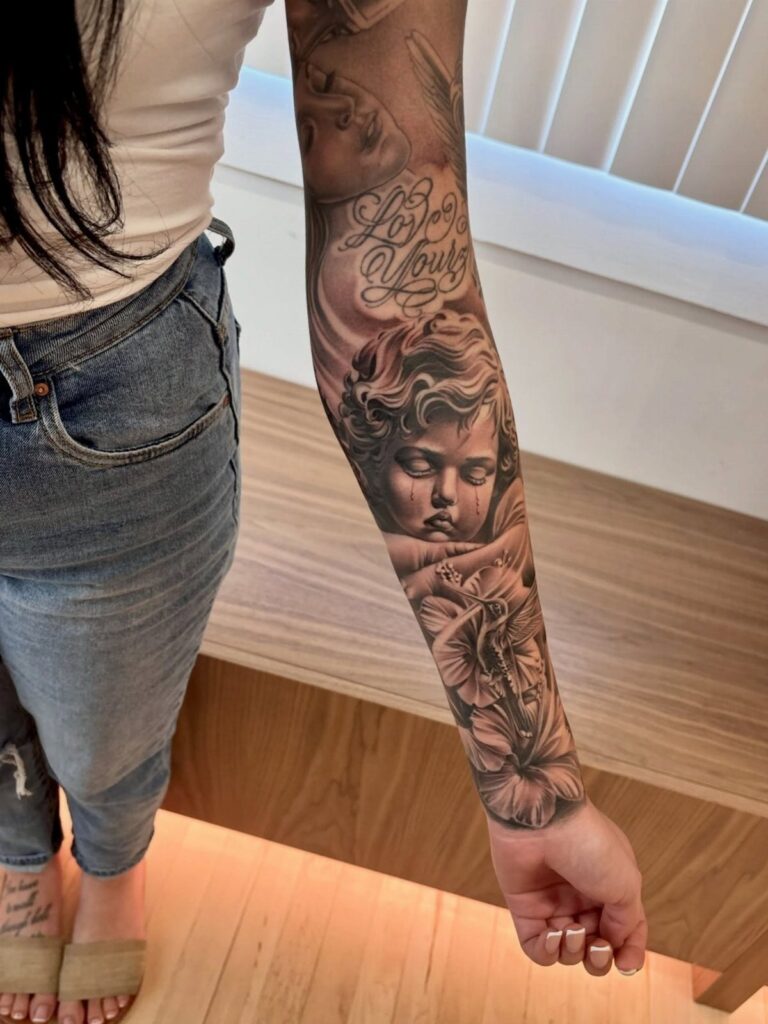
Size decides which of these cherubs is yours, because realistic shading needs room: the Sleeping Cherub on Cloud can spread across a thigh, while 3 Wise Cherubs and the Praying Cherub fall apart if you shrink them.
Measure the spot first, and count any rose, dove or lettering you plan to add.
1. Sleeping Cherub on Cloud
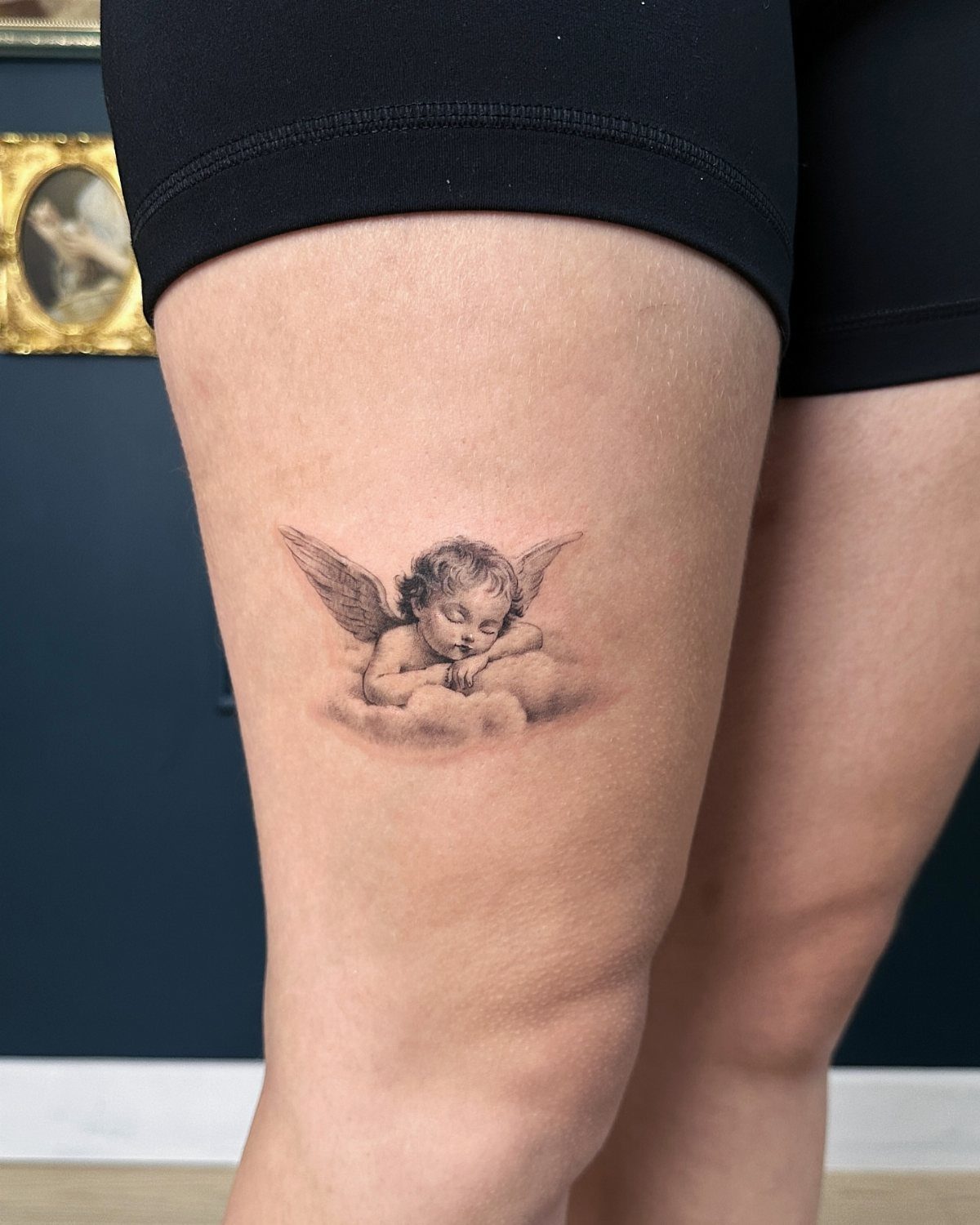
A sleeping cherub on a cloud is the quietest design a realistic cherub can take, and the thigh gives it room to rest without crowding.
The soft cloud gives the shading room to spread, so the smooth black and grey transitions can read clearly.
I would keep the cloud generous rather than cramped. A peaceful pose depends on the space around the figure, and crowding it with extras breaks the calm.
2. Cherub Angel Tattoo
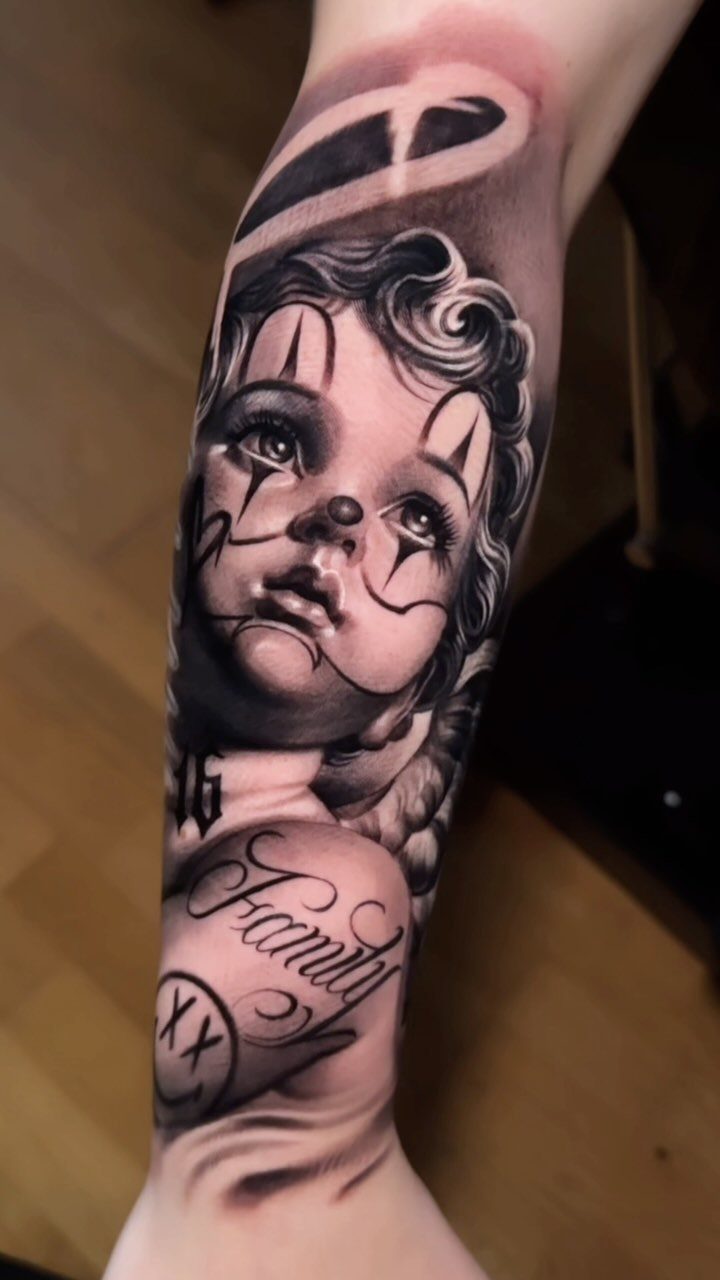
Clown makeup, a halo and the word "Family" on one cherub make this far more personal than a standard angel. The odd mix of innocence and mischief is what keeps a realistic cherub from feeling generic.
For a custom twist, choose one word or symbol that matters to you and have the artist work it into the body of the figure.
On a forearm, I would keep any lettering short so it stays legible as the skin ages.
3. Cherub Cupid Tattoo
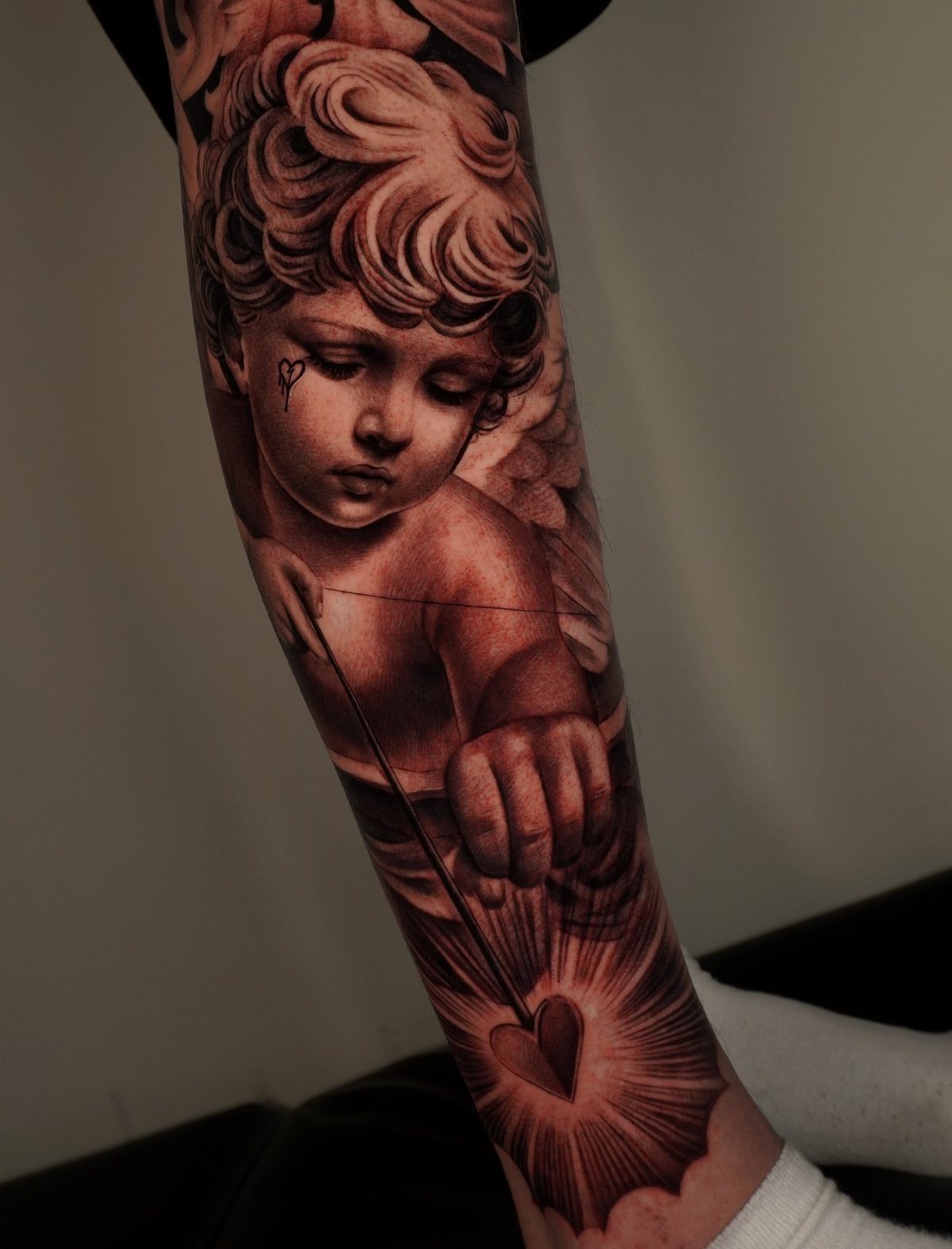
Cupid is technically a cherub in much art history, so he fits a cherub theme without any stretch. The bow, the arrow and the heart give the figure a clear action, which makes the design read at a glance.
Aiming at a heart keeps the meaning simple: love, new or lost.
I like it on the forearm because the arrow’s line follows the length of the arm. Ask for a realistic heart rather than a cartoon one, so the whole piece matches in style.
4. Crying Cherub
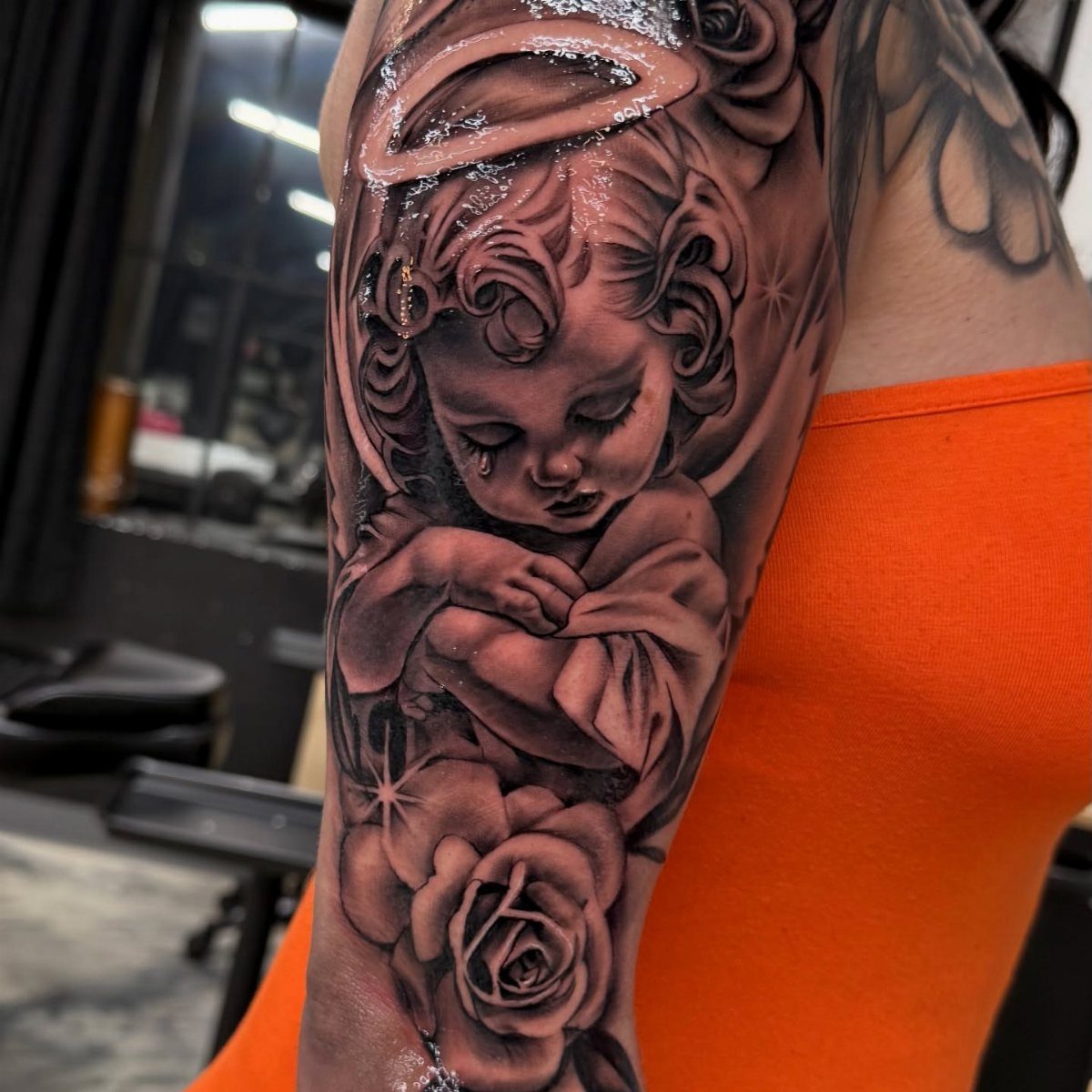
Tears on a cherub face change the whole mood, and this is the most emotional design in the group. A halo and roses add softness around the sorrow, so the piece reads as tender rather than bleak.
The upper arm gives plenty of room for the roses to wrap the figure. I would choose this for grief or a hard chapter you want to mark, since the expression carries the story without any text.
5. Twin Cherubs
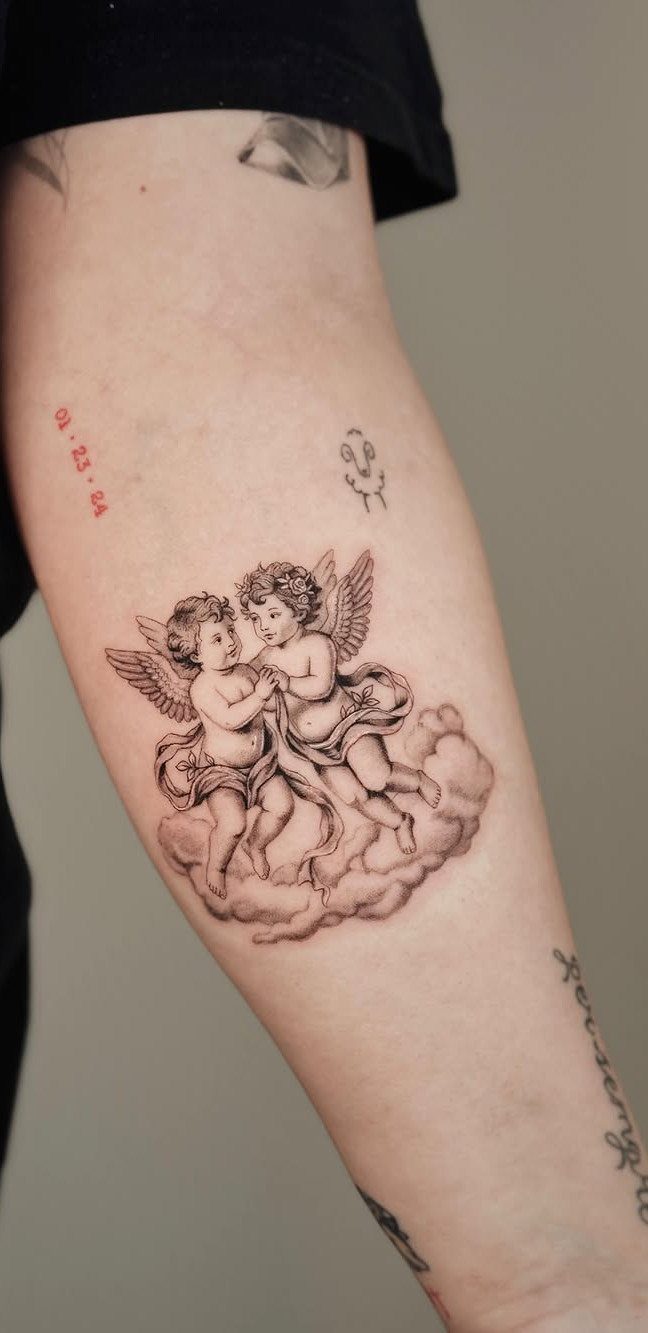
Two cherubs playing on one cloud tell a story of closeness: siblings, friends, a couple, or a pair of lost loved ones. The forearm placement suits the format, since the 2 figures can sit side by side along the arm.
A date works well as a quiet personal detail. Red lettering, like the "01.23.24" and small symbol here, stands out against black and grey, but I would keep it small so the cherubs stay the focus.
6. Three Wise Cherubs
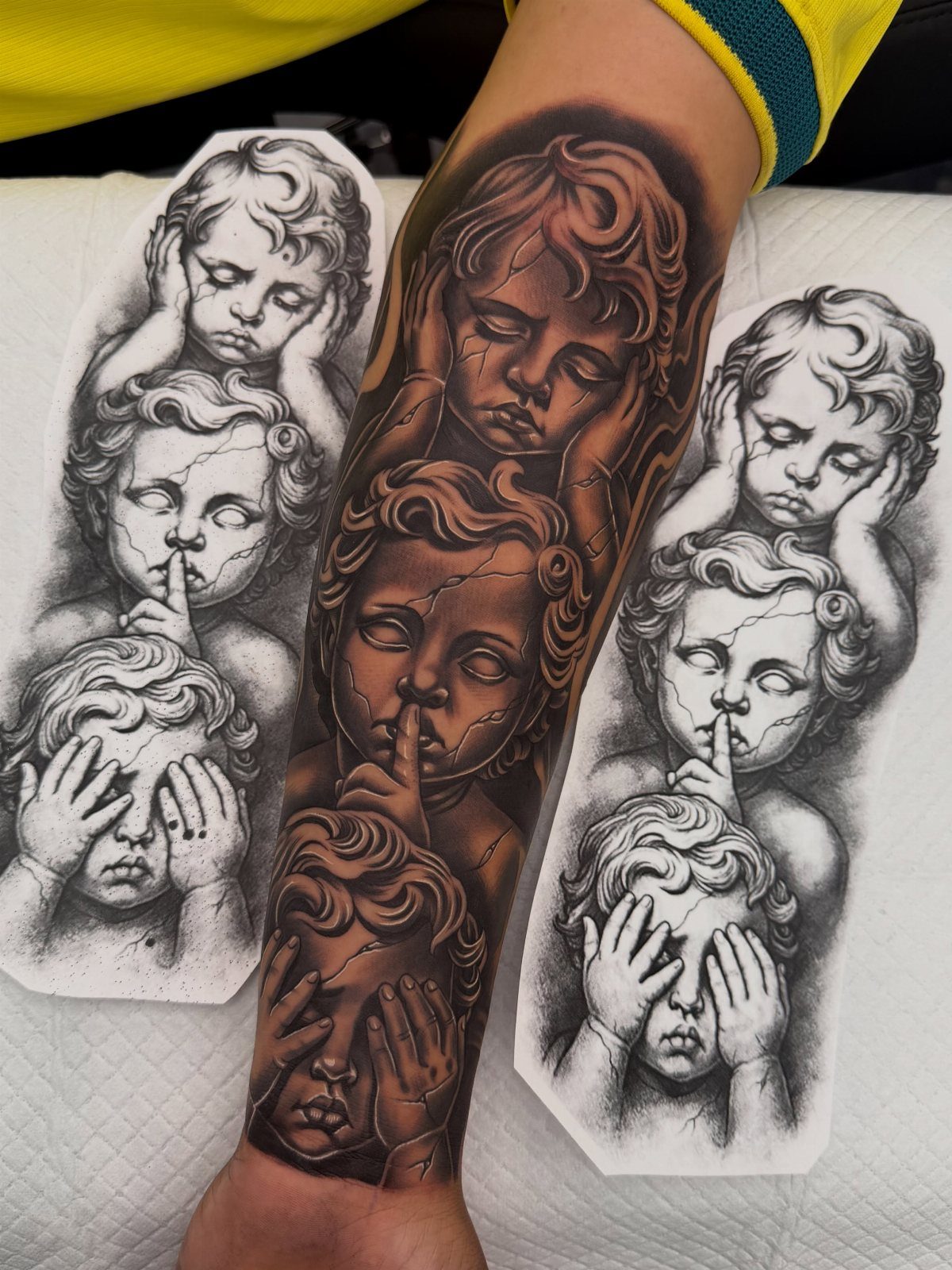
Stacking 3 cherubs to act out see no evil, hear no evil and speak no evil turns a familiar proverb into a tall, narrow design. That shape fits a forearm better than almost any other spot.
Each cherub needs its own clear gesture, so I would not shrink the piece too far.
Hands over eyes, ears and mouth get muddy when small. Bring reference drawings to your artist, so the stacking order is settled while the design is still on paper.
7. Praying Cherub Tattoo
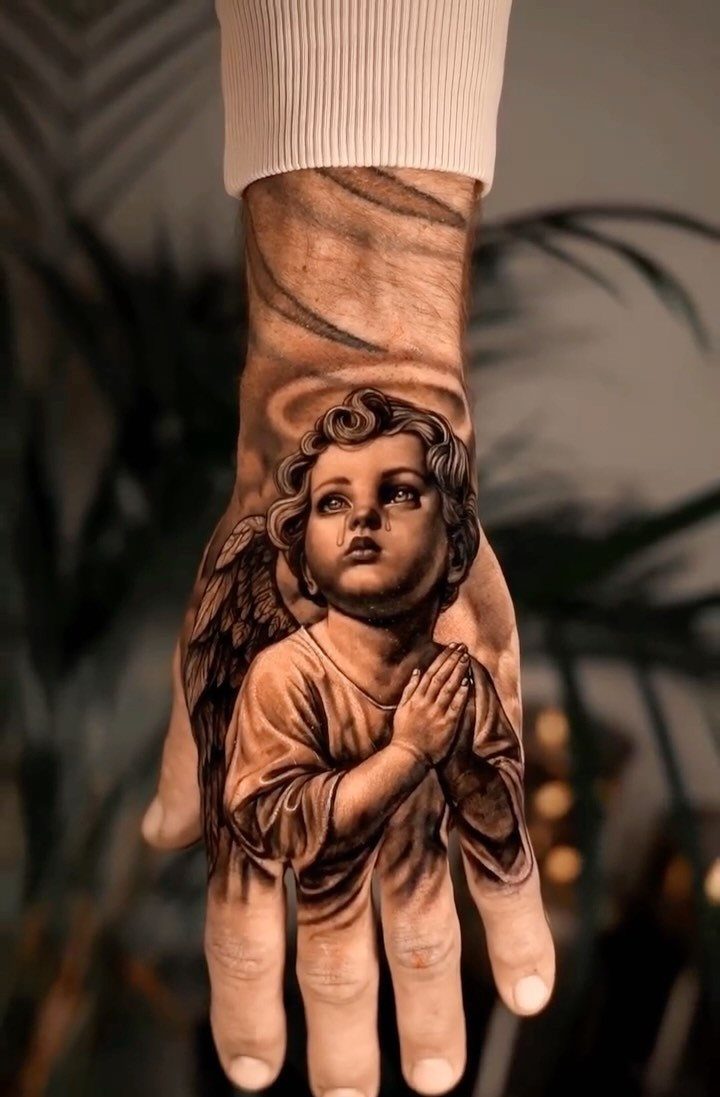
Clasped hands are the whole message in a praying cherub, so the hands deserve the most care.
On the hand and wrist, the piece sits where it is seen every day, and that suits a private prayer you want near you.
Fingers are the hard part to render at a small size. I would have the hands drawn large and the shading kept soft, so the overlap of the fingers stays readable in black and grey.
8. Cherub Behind Wings
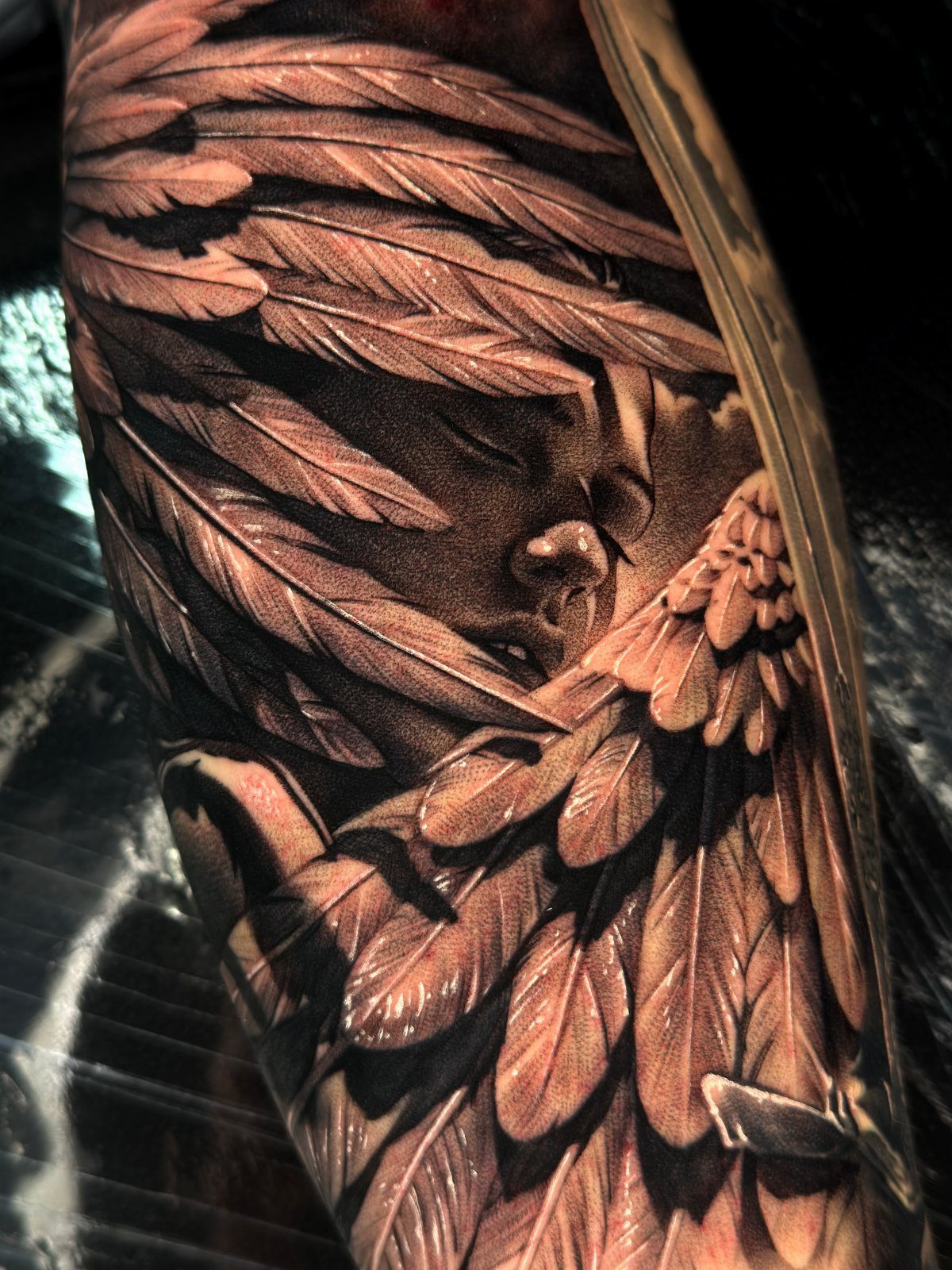
Feathers pulled close around a cherub’s face create a frame that hides half the expression, and I like that restraint. Peeking out from behind the wings gives the child-like face a shy, guarded feel.
Detail in the feathers does the heavy lifting here. Ask for clear variation between light and dark in the feather layers, so the face does not melt into the wings as the tattoo settles over the years.
9. Cherub Neck Tattoo with Script
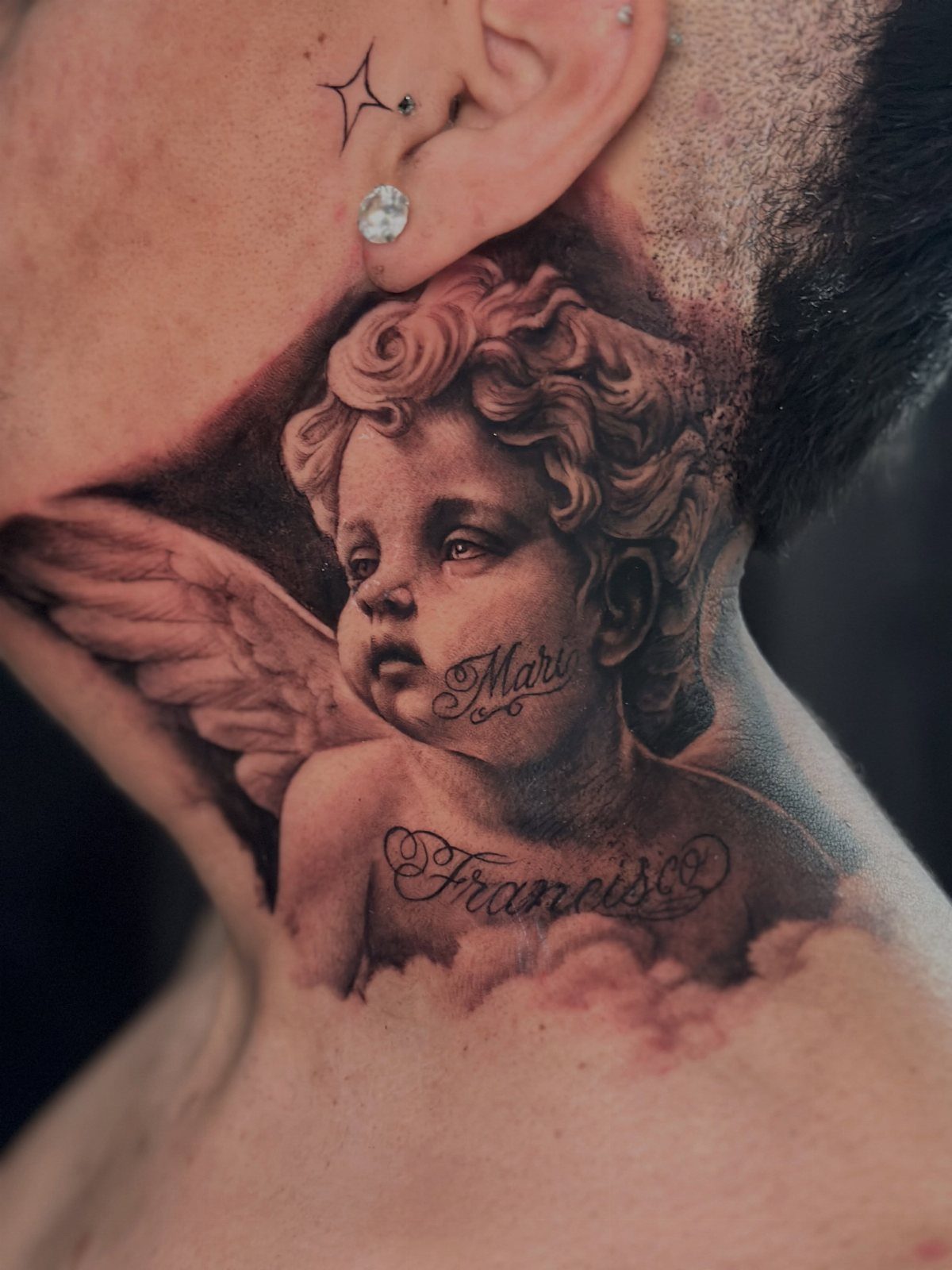
A cherub rising out of clouds on the neck puts a soft figure in a bold spot, and cursive names give it a personal anchor. Names of people you love turn a decorative angel into a memorial or a tribute.
Neck skin is a visible, unforgiving place for fine script. I would keep the cursive loose and a little larger than feels necessary, and get the spelling confirmed in writing prior to the transfer going on your skin.
10. Cherub with Rose Tattoo
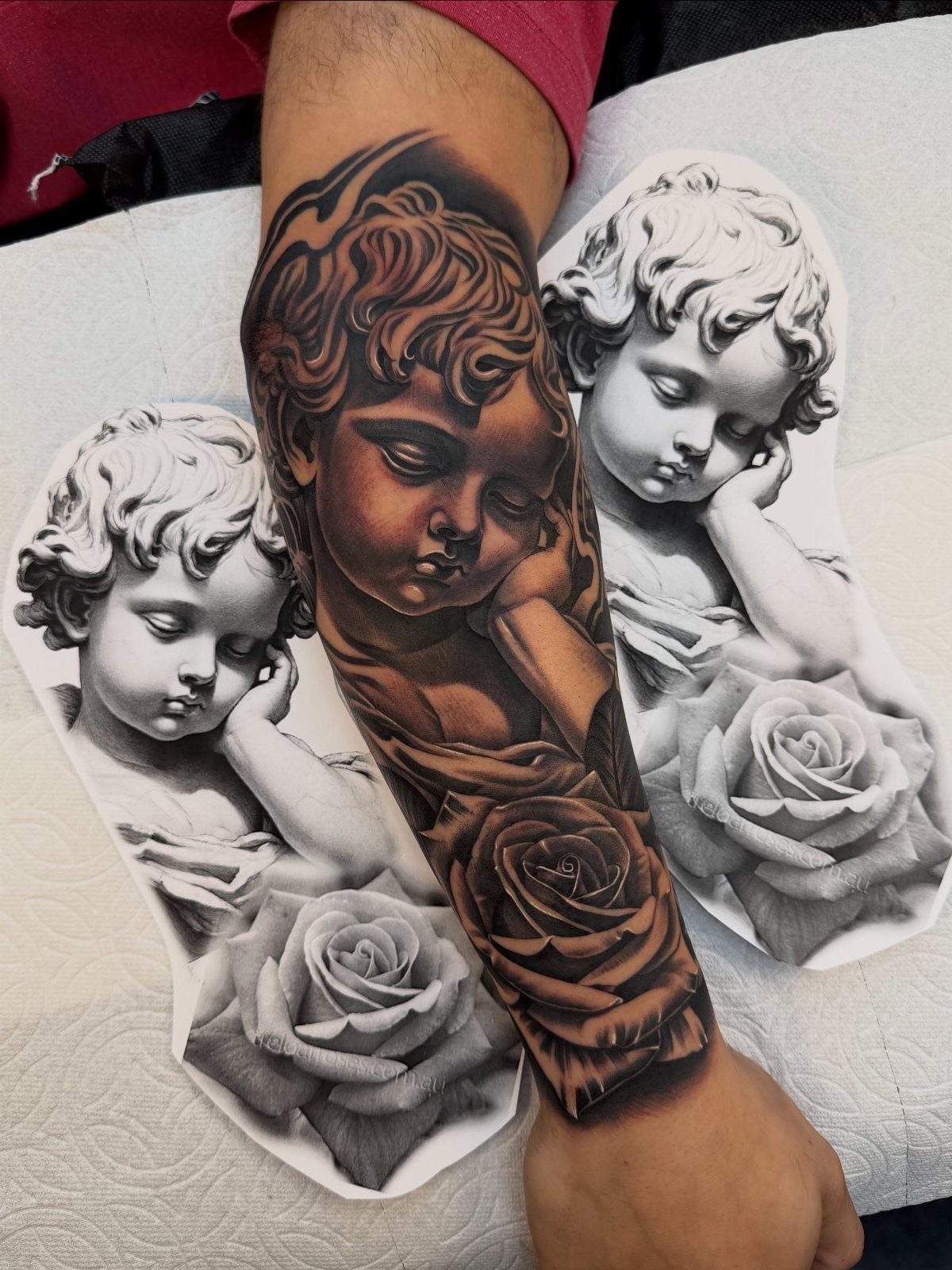
A cherub resting its head on its hand above a rose pairs a daydreaming face with a bloom that carries its own meaning. Stacked vertically, the two fit a forearm well.
Ask your artist for printed stencil sketches, as this one clearly had, and check the placement on your arm before any ink goes in.
I would keep the rose as detailed as the face, so neither part looks like an afterthought.
11. Shushing Cherub Tattoo
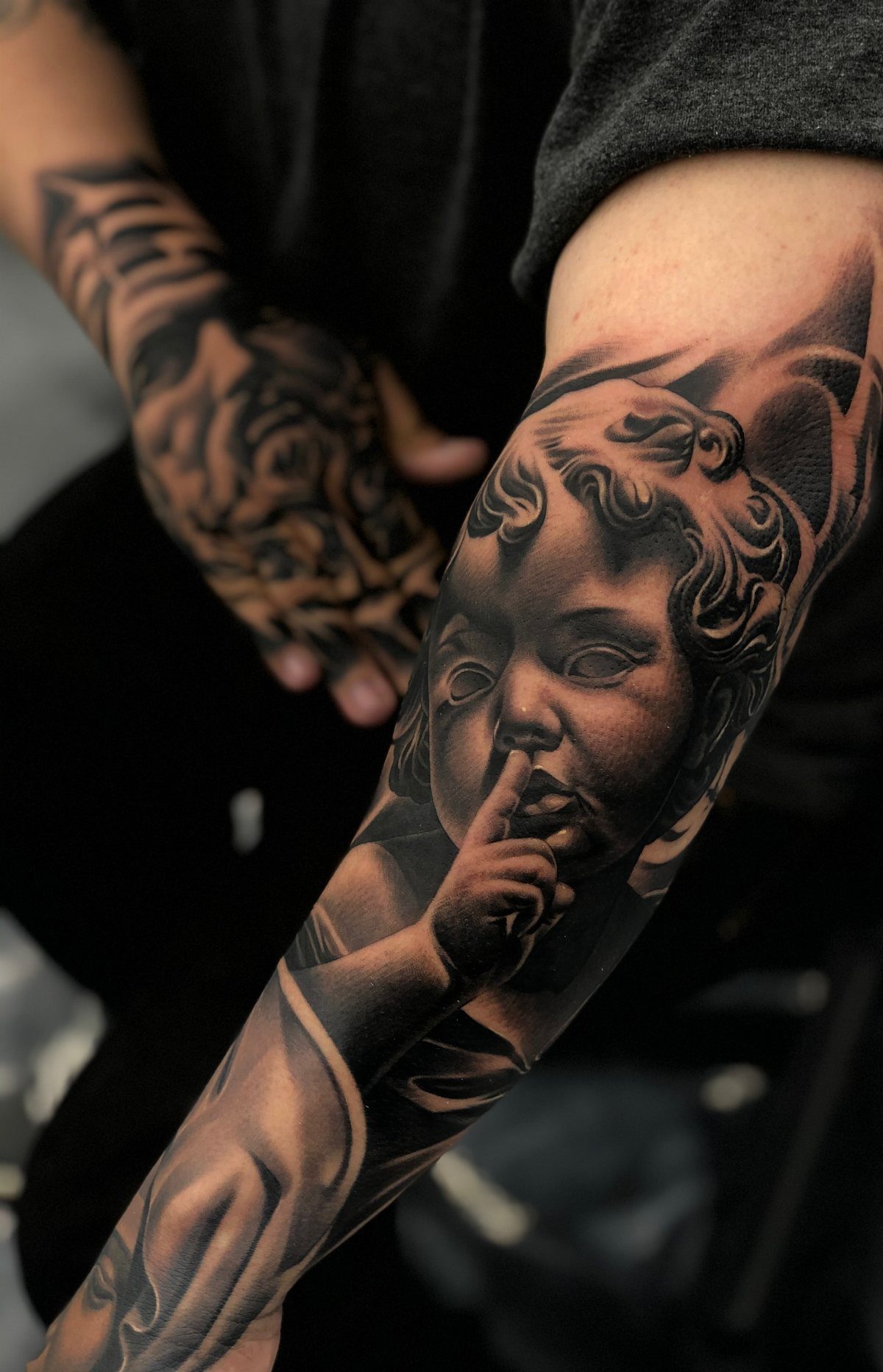
One finger raised to the lips is enough to give a cherub a secret. Shushing reads as a request for silence, or as a private promise, and it needs no words at all.
The finger and lips must stay crisp, since they carry the gesture. On the forearm, I would pick a size big enough to keep that fine detail clear, and keep the shading smooth around the face.
12. Cherub Holding a Sword Tattoo
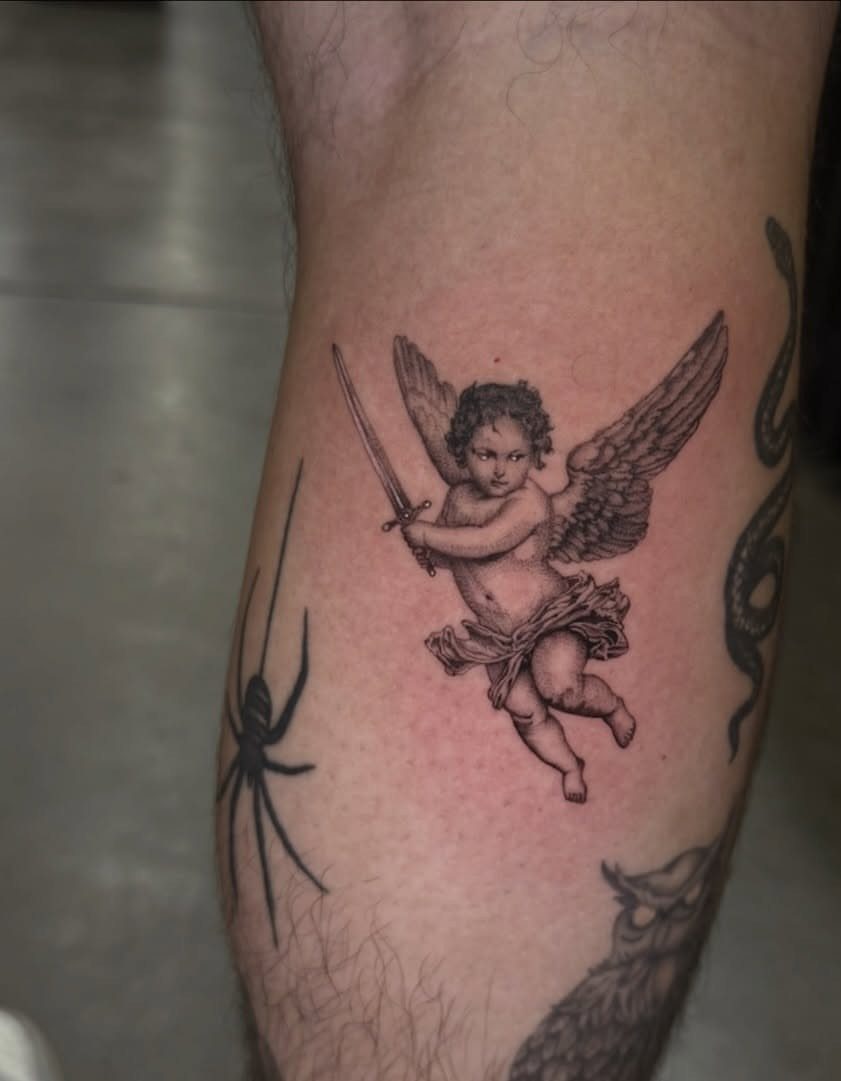
A cherub gripping an upright sword is the toughest idea in this group, pairing a soft child’s face with a weapon. It suggests protection or defiance, and the contrast is the appeal.
A leg gives the long, vertical space a sword needs. I would keep the blade straight and sharply outlined, and leave breathing room from nearby tattoos like the spider and owl, so the figure still reads on its own.
Meaning of Cherub Tattoos
Cherub tattoos carry 6 meanings that come up again and again: love, protection, innocence, faith, remembrance and healing. Most people pick one as the main thread, and that choice should guide the rest of the design.
Love covers romance, devotion and deep emotional ties.
Protection treats the cherub as a guardian, while faith casts it as a messenger of God. Innocence points to purity and childlike wonder.
Remembrance and healing are the two I find most personal.
One honors someone who has died, a reminder that they are still present. The other reads as hope and renewal, with love as the force behind both.
Meanings shift with belief, so decide what yours is before you meet the artist. A clear answer makes it easier to choose the expression, the pose and any extras.
“Cherub tattoos have definitely made a comeback,” says artist Jaz Paulino of High Hopes Tattoo in New York. “They can be drawn to fit anyone and are just so darn cute.”
— Bustle
Aftercare Tips for Tattoos
Healing decides how a realistic tattoo looks years from now, so I treat the first weeks seriously. Smooth black shading is the first thing to suffer from picking or sun.
Use lukewarm water and a fragrance-free antibacterial soap, and keep your hands gentle when you wash. Thin matters; a thick layer keeps the skin too wet.
Never leave the tattoo damp. Do not pick scabs, because picking can scar the skin and pull out the soft shading.
Stay out of direct sun, and hold off on sunscreen until the skin has healed completely. Loose, breathable clothing cuts down on friction.
Check the tattoo every day. Redness or irritation that gets worse instead of settling is a reason to have it looked at.
Placement Options
Size should drive placement, not the other way around. Forearms, shoulders and ribs all work for cherubs, but each one suits a different scale of design.
A design with bold black ink and white highlights holds up well when it is scaled down. A baby cherub rendered that way can shrink to fit the wrist or the nape of the neck and still read clearly.
Realistic work is less forgiving.
Pairing the cherub with a rose or a dove is a common choice, and it adds to the space you need. Count those extras when you pick the spot, not afterward.
Frequently Asked Questions
What does a crying angel tattoo symbolize?
A crying cherub usually stands for grief, loss or a hard chapter in life.
Add a tear, and the whole figure shifts; a halo or a few roses around it can pull the mood toward tenderness and away from grief alone. The expression carries the story, so it needs no text.
What is realistic tattoo style?
Realistic style aims to make an image look lifelike, using detailed shading, highlights and fine lines. For a cherub, that often means smooth black and grey transitions on skin, soft clouds and layered feathers.
Realism leaves less room for error than bold-line work, so faces and fingers need real size, or the soft shading blurs together over the years.