Which of these rare ear piercings fits you depends on how much flat, healed space your ear has, and a piercer can read that in about a minute.
The list runs from a single stud in the daith to an industrial bar linking 2 holes, and the roomy conch and the narrow ledge of the anti-tragus sit at opposite ends of what an ear can hold.
Since a piercing can take 2–6 months to settle, anything that needs two healed holes, a cartilage chain being the clear case, should wait until the first ones have calmed down.
1. Conch Piercing
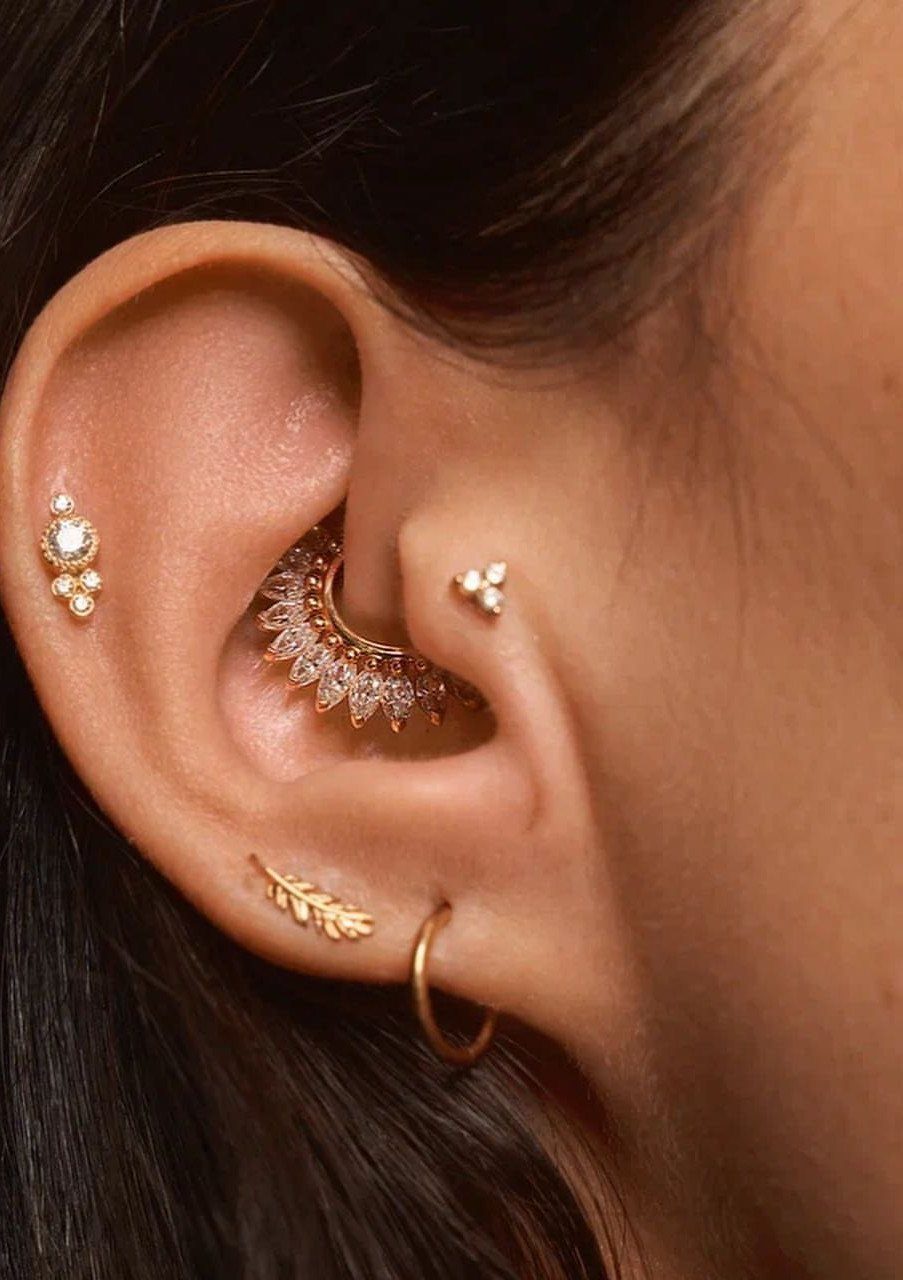
A conch piercing goes through the shell of the ear, the wide cup of cartilage at the center. That space is roomy, so it suits a statement piece better than a tiny stud.
A crescent moon jewel fills the cup of a conch nicely and reads as jewelry instead of a dot. I would pick one bold shape and keep the nearby piercings quieter, so the conch has room to be the focus.
2. Tragus Piercing
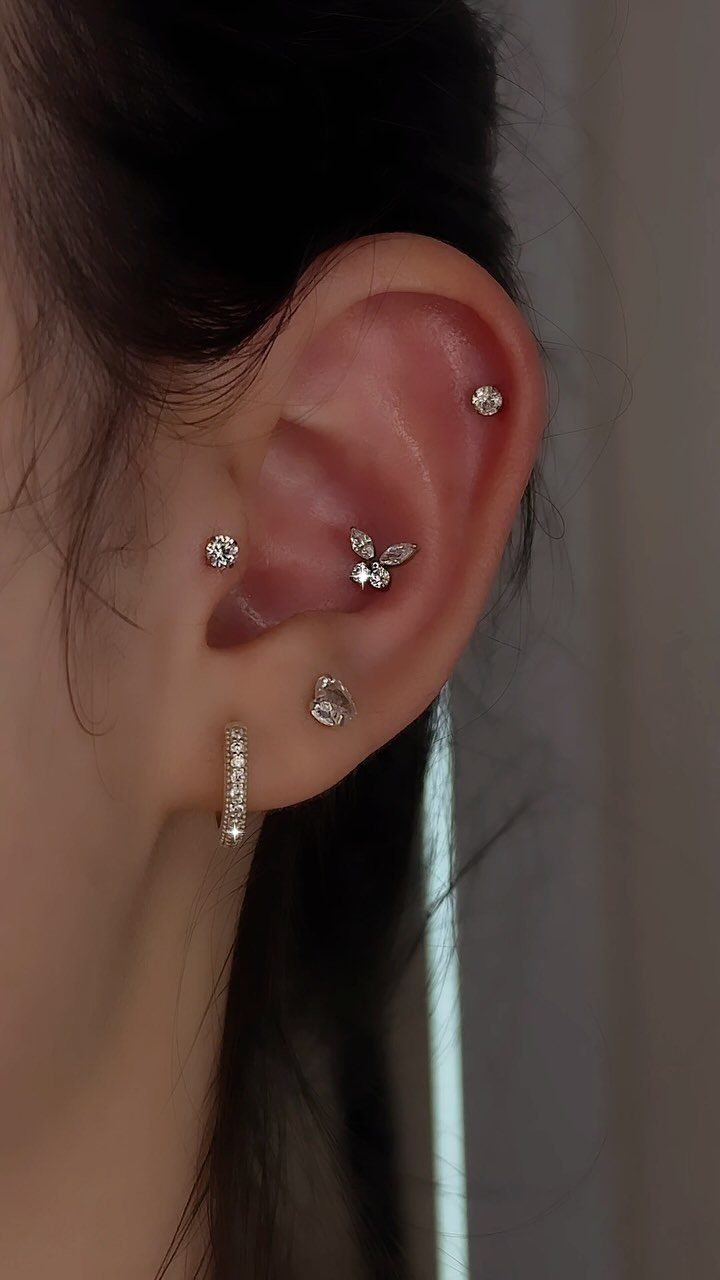
Small and easy to style, the tragus sits on the flap of cartilage right in front of the ear canal. A little diamond-like stud suits that spot because the flap is tight, and a bigger piece would crowd it.
I like it as the quiet anchor of a stack, paired with a helix stud and a lobe hoop. Keep the metal and stone style consistent across the ear, and the whole arrangement looks planned.
3. Rook Piercing
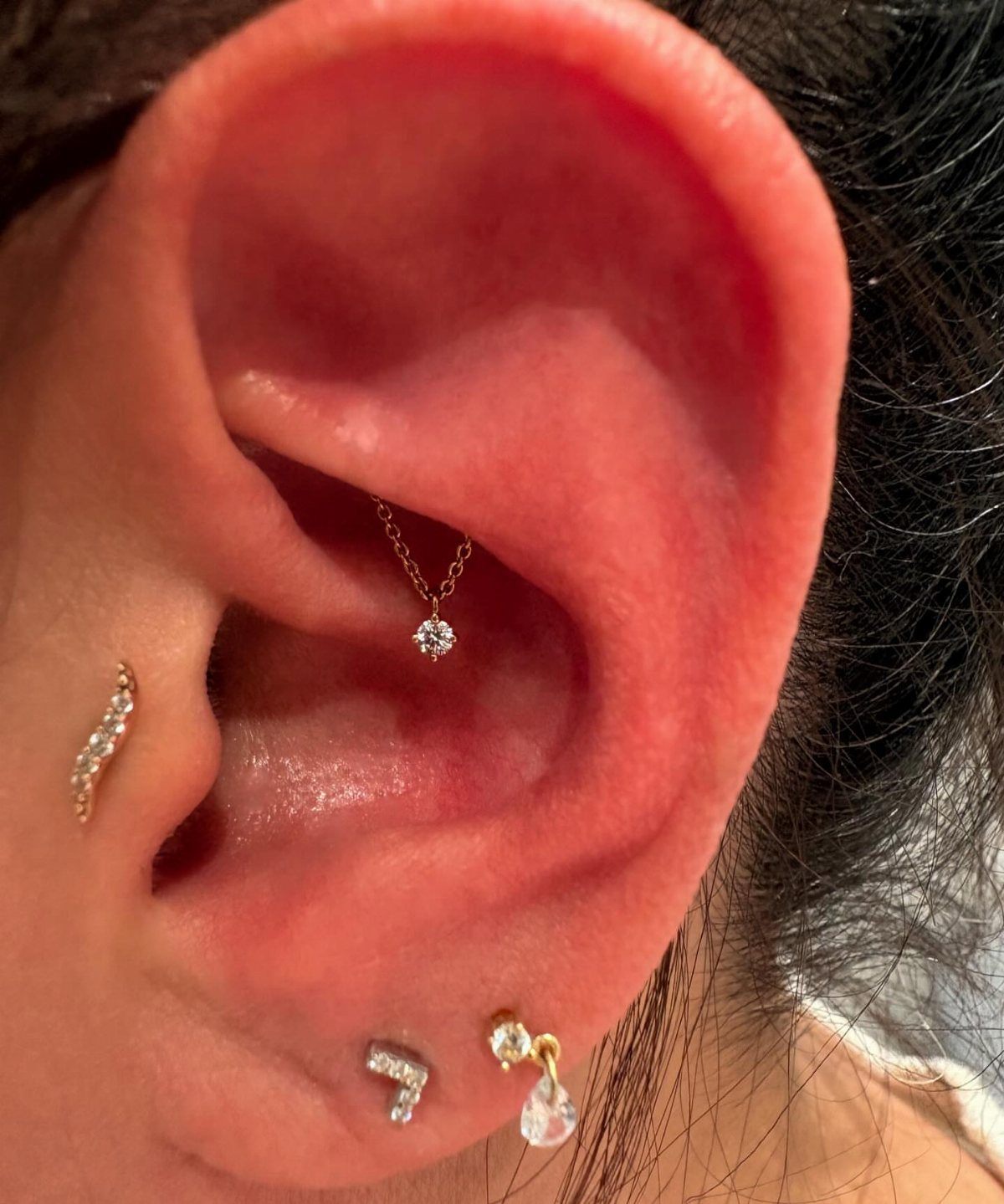
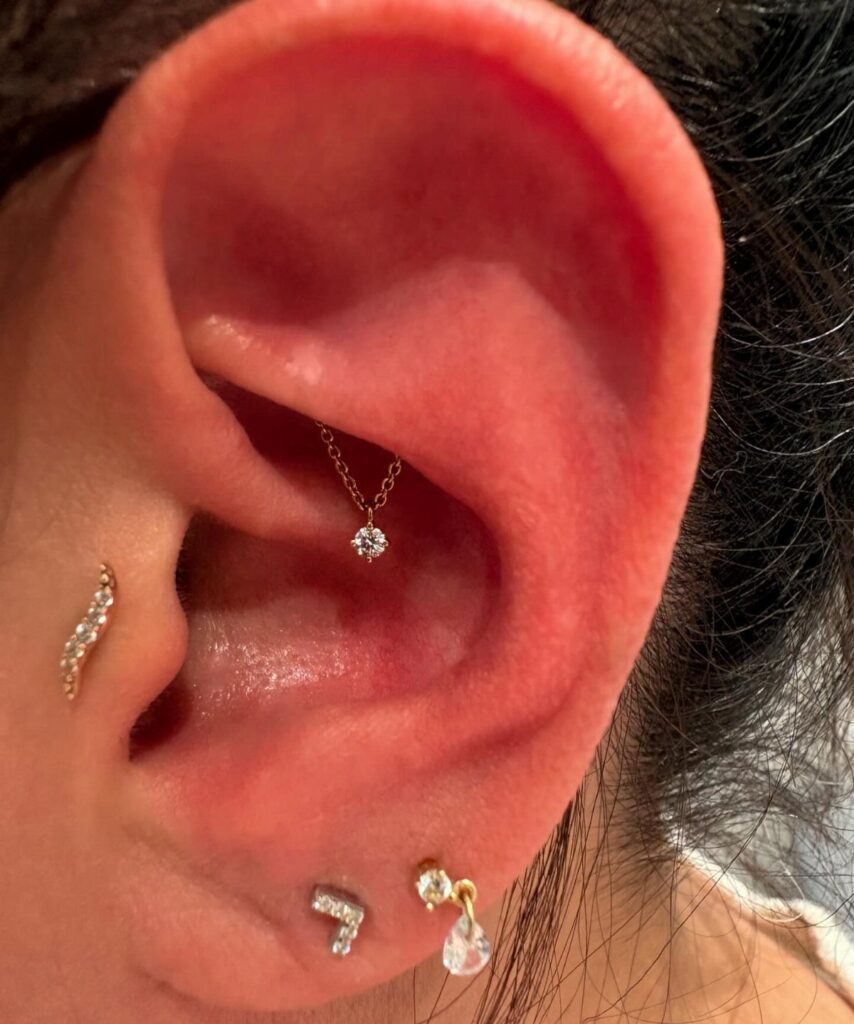
Above the daith, in the upper cartilage fold, the rook is one of the less common spots on the ear, and that is its appeal. Most people expect a helix or conch, so a rook piece gets noticed.
A single diamond with a short gold chain, as visible here, gives the fold a focal point without adding bulk. I would keep the rest of the ear light, since the rook already carries plenty of detail on its own.
4. Industrial Piercing
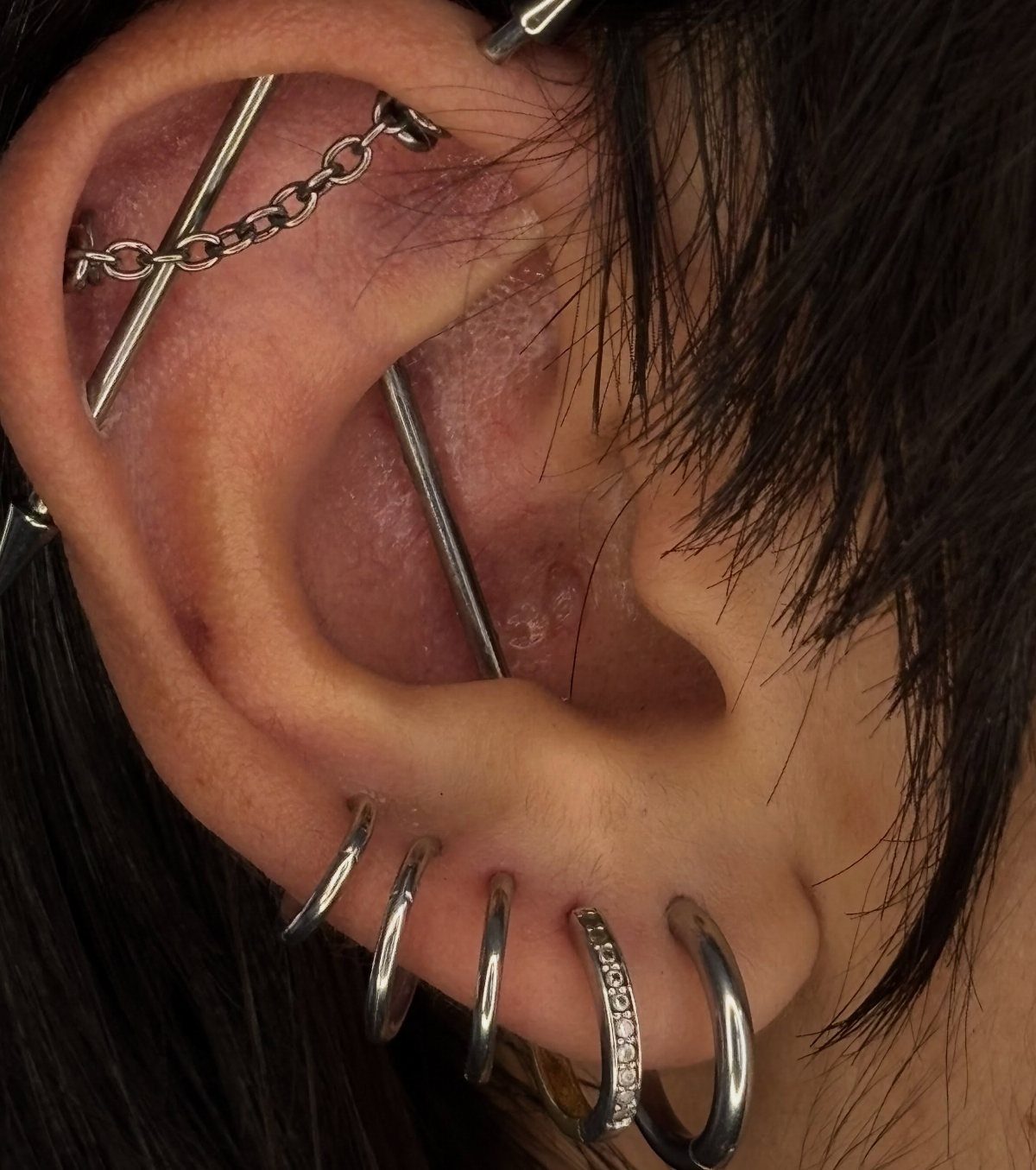
One long barbell runs through two separate holes in the upper ear, which is what makes an industrial. The bar is the whole look: a straight line of silver across the cartilage.
Because it ties 2 piercings together, I would treat it as a commitment to both spots. Skip busy jewelry elsewhere and let the bar stand alone.
5. Anti-Tragus Piercing
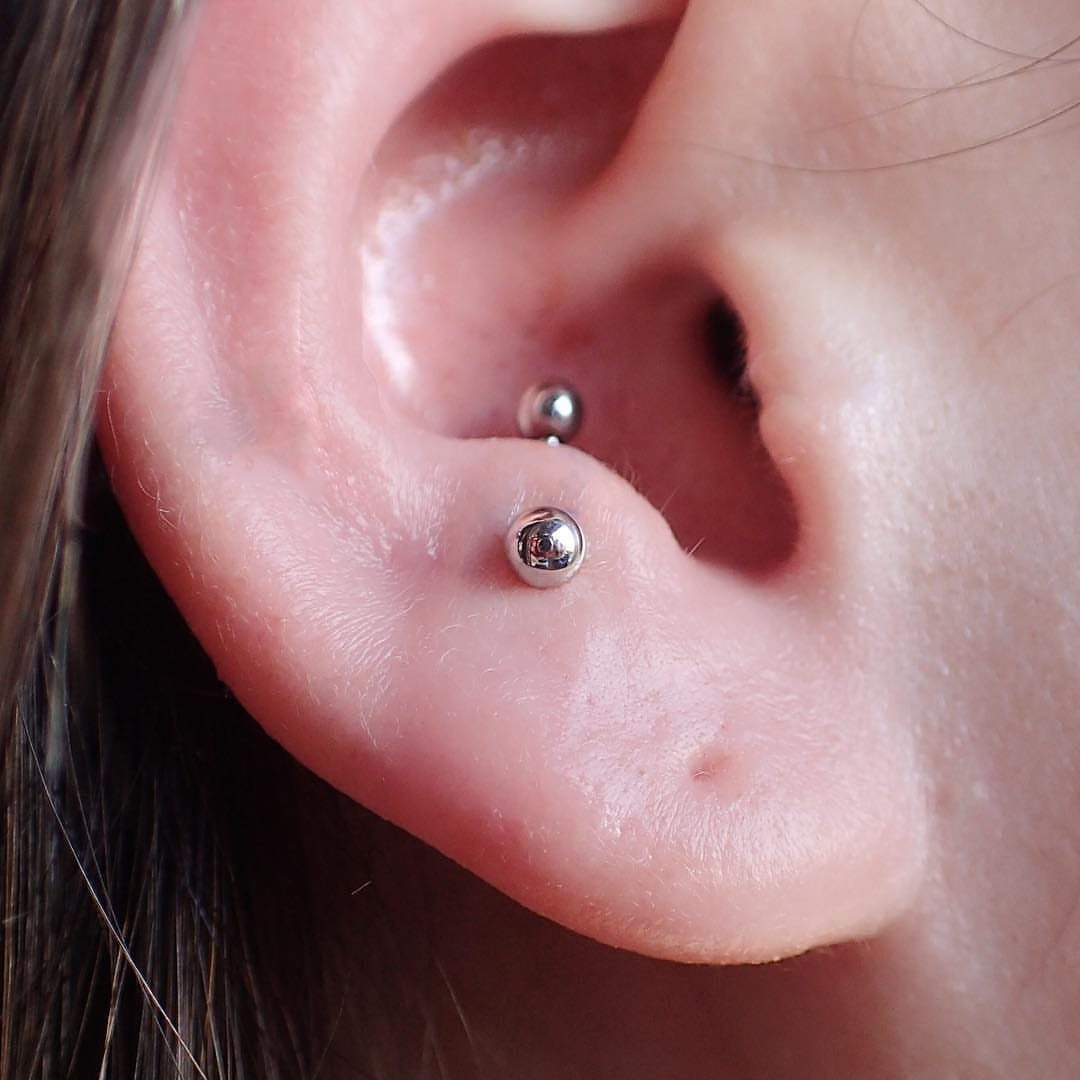
Sitting above the earlobe and opposite the tragus, the anti-tragus is a small ledge of cartilage that most people skip. That is why it stands out.
A silver barbell with two small metal beads gives it a neat, minimal finish.
I prefer simple spheres here over anything ornate, because the spot is small and the beads keep it crisp. Ask your piercer whether your ear has enough ledge before you commit.
6. Forward Helix Piercing
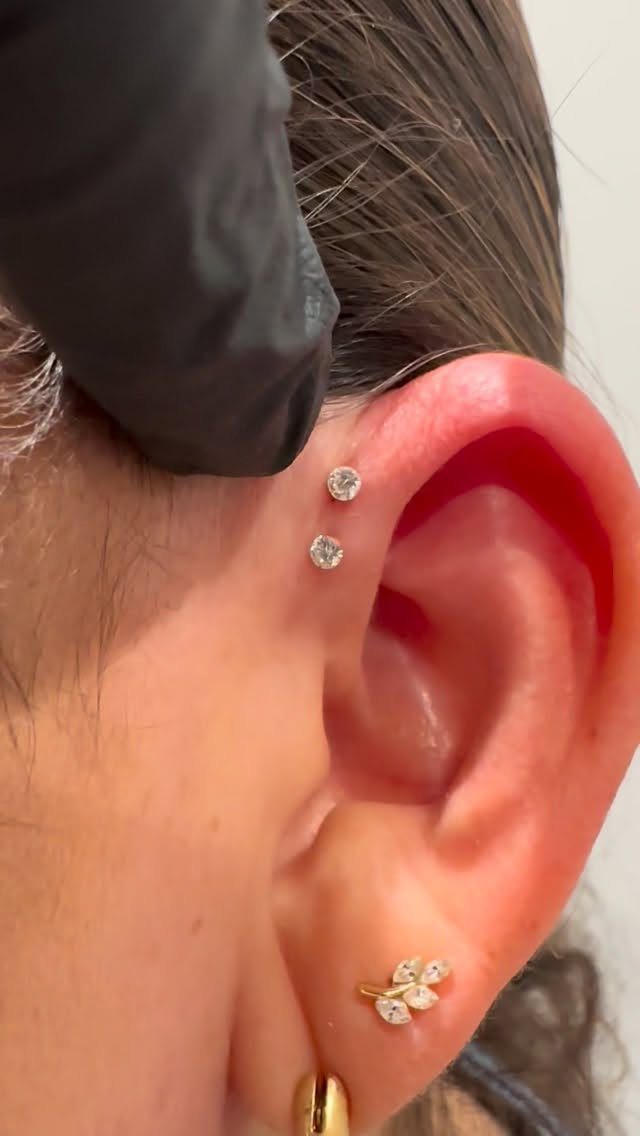
Along the front of the ear rim, where the cartilage curves toward the face, the forward helix has room for a tight pair of studs. Two small diamond studs, as visible here, read as a deliberate set.
I would match the stones and keep the spacing even along the forward helix, then let the lobe carry something different, like a gold leaf. One sparkling pair above and one soft shape below balances the whole ear.
7. Cartilage Chain Piercing

A cartilage chain strings a fine chain between 2 piercings in the ear, so the jewelry draws a line across the rim instead of sitting as separate dots.
Here it pairs with a large hoop, and I like that contrast: the delicate chain next to a bold circle gives the ear 2 different weights. I would keep the chain simple and let the hoop do the loud part.
Ask your piercer how the 2 holes should be spaced so the chain hangs with a little slack instead of pulling.
8. Surface Tragus Piercing
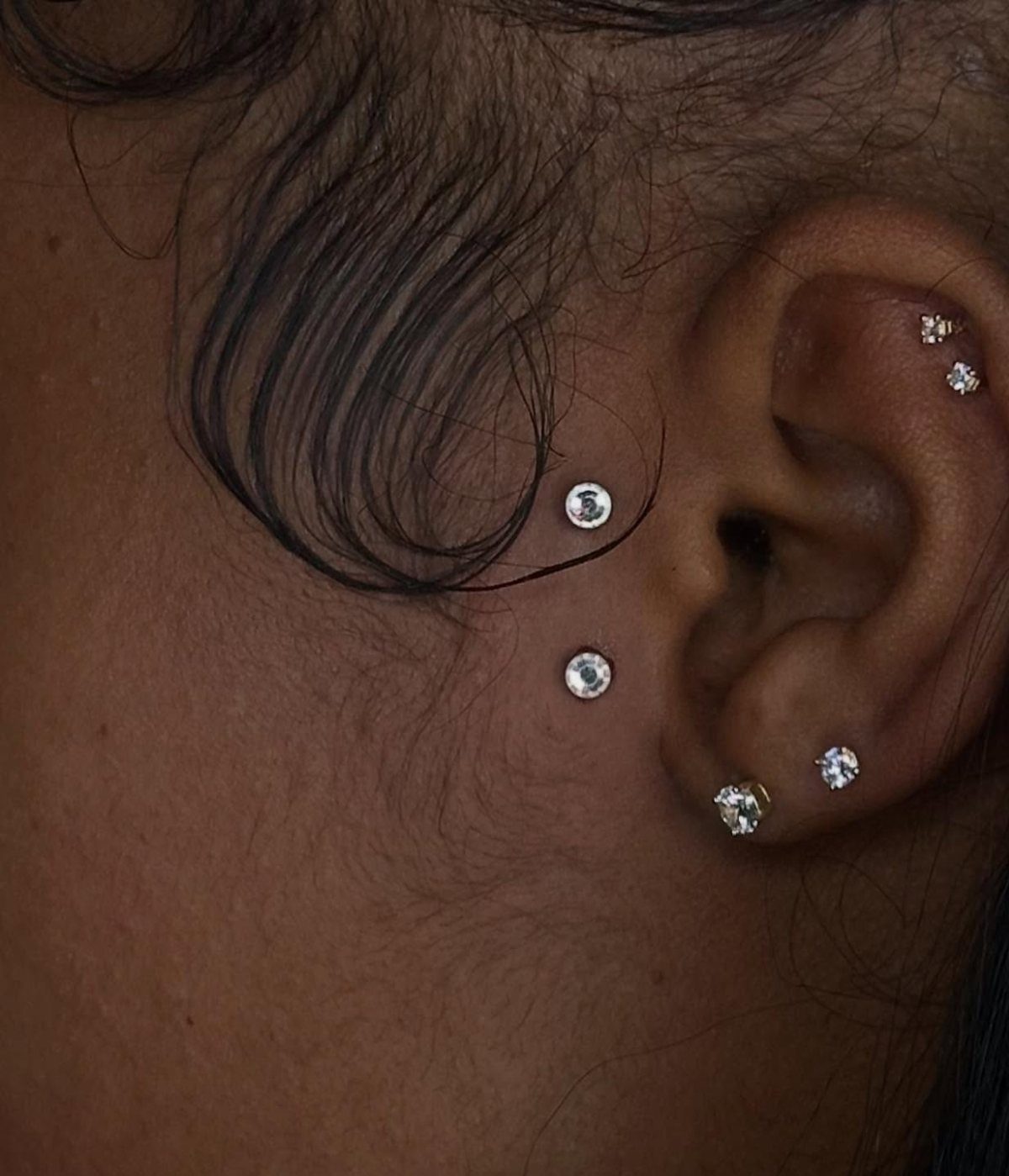
Placed on the skin of the face just in front of the tragus, surface anchors hold small studs flat against the cheek, so the sparkle seems to float beside the ear.
Diamond-like studs suit that spot because the base stays low and the top is all you see. I would match the stone size on both anchors and keep them evenly lined up, which reads as deliberate.
Because these sit on flat skin, not cartilage, this is a spot to talk through with an experienced piercer before booking.
9. Daith Piercing
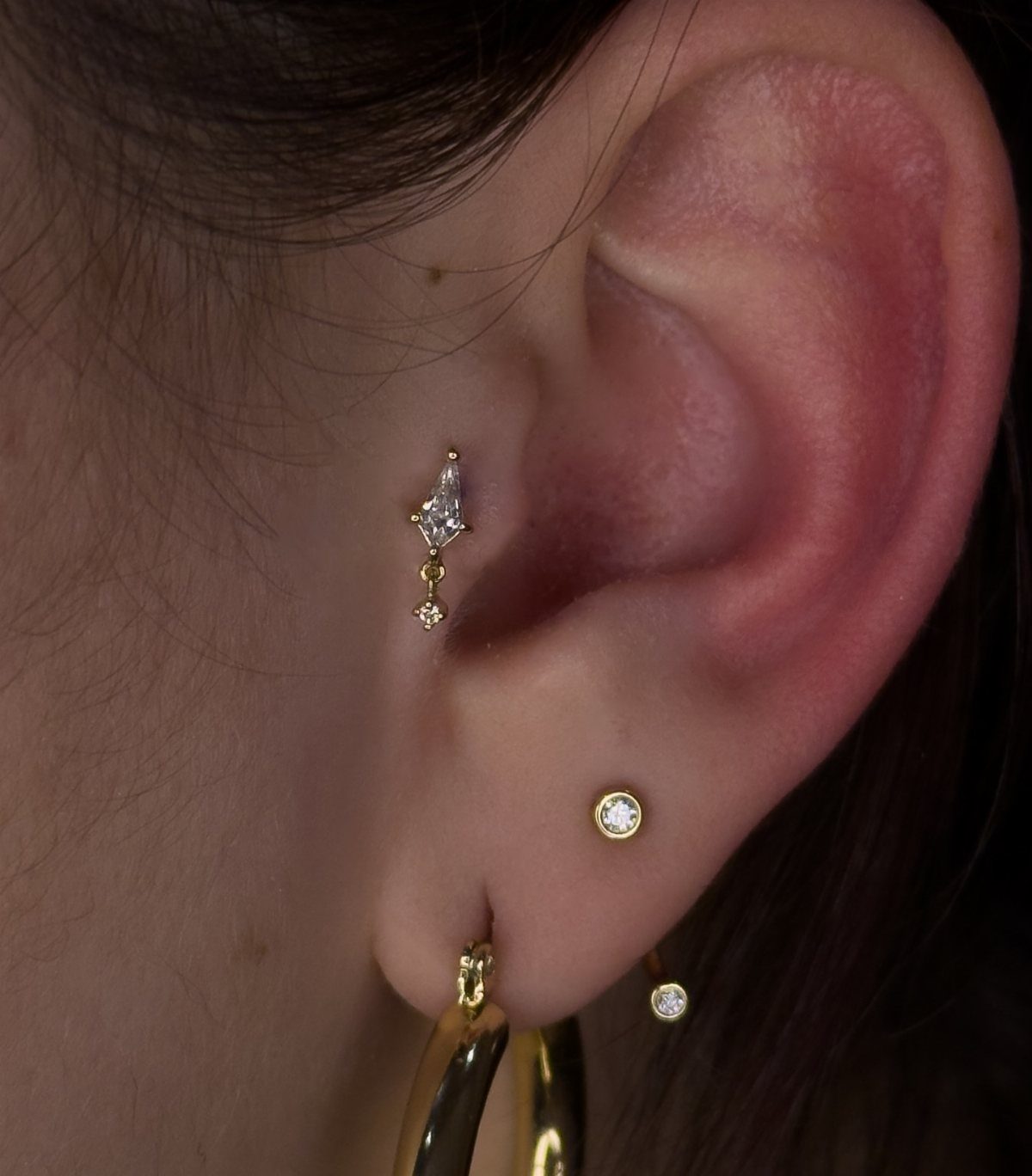
Deep in the innermost fold of cartilage, the daith holds jewelry that seems tucked into the ear itself. It is a rare spot, and a decorative stud shows it off well.
A small gold curved barbell or a snug hoop with a single diamond bead sets off the fold of cartilage and still leaves it room to breathe.
I would pair it with a couple of simple lobe studs in the same metal and stop there.
The fold is small, so choose a stud that fits its curve instead of a bigger piece.
10. Triple Helix Piercing
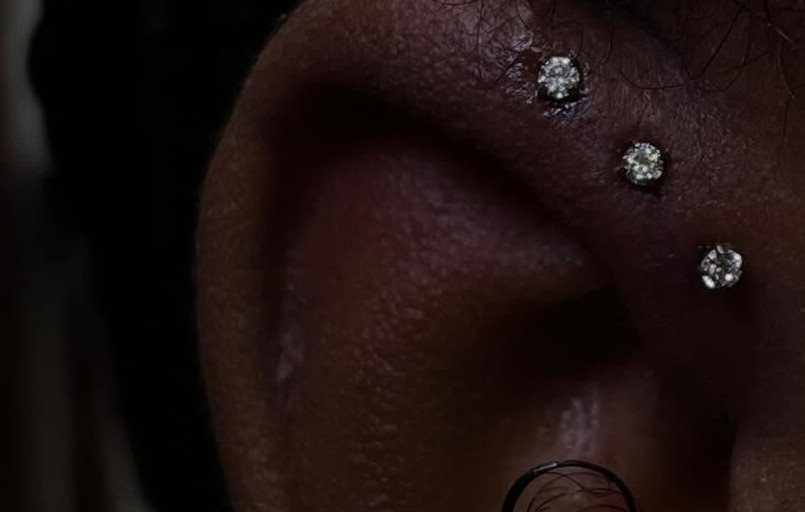
3 studs in a row along the upper outer rim make a triple helix, a column of light that follows the curve of the ear.
I would use three identical diamond-style studs, since matching size is what makes the trio look intentional. Space them evenly from top to bottom and resist adding extra pieces nearby, because the line is the whole design.
It is a neat way to get the look of a stack with a single, tidy idea.
Pain Levels of Piercings
Cartilage hurts more than a lobe, and the conch sits near the top of the scale at 8/10. That rating is worth planning around: eat beforehand, sleep well, and book a time when you are not rushed.
Where the hole goes also decides what you can wear. Because an outer conch sits nearer the rim of the ear, it has room for a hoop, which the flatter inner spot rarely does.
If you want a hoop, pick the outer position and buy one made for the conch. A standard huggie will not sit right there.
A larger gauge may call for a dermal punch, which your piercer uses to remove a small core of cartilage instead of stretching it. Ask about it before the appointment, not during.
While it depends on where you go, most places will charge between £15-20 for ear lobes and £20-30 for cartilage, not including jewellery.
Healing Times for Piercings
Healing runs from 2 to 6 months depending on the piercing, and cartilage sits at the longer end of that span. Plan around the slow ones, because a piercing that feels fine at week 3 is not finished.
Leave the starter jewelry in for the whole healing period. Swapping early is the most common way people set themselves back.
Clean it the way your piercer tells you, and keep your hands off it otherwise. Sleeping on a fresh piercing is a frequent problem, so a travel pillow with a hole for the ear can help.
If it stays red, swollen, or tender well past the first weeks, go back to your piercer rather than guessing.
Jewelry Materials and Styles
Start with the metal. Titanium is my pick for a fresh piercing because it is hypoallergenic, which matters when the jewelry sits in a wound for months.
Style comes second, and it depends on the spot and the stage. Studs are the easiest choice for healing because they stay put and rarely snag.
Hoops look great but move more, so I would wait until the piercing has settled. Chains need 2 healed holes and the right spacing.
When you buy new pieces, check the material listing, not just the photo. Plated or mystery metal can irritate an ear that was healing well.
Your piercer can size the post length for swelling, then swap to a shorter one once the swelling goes down.
Frequently Asked Questions
What are the signs of piercing infection?
Redness, swelling, or tenderness that lingers beyond the first few weeks is a signal to see your piercer, not to wait it out or self-diagnose.
Even if a new piercing feels calm by week 3, it is still healing; plan on 2–6 months, and expect cartilage to take the longer end of that range. Your piercer can check it and tell you what to do next.
What is the most rare ear piercing?
No single spot holds the title, but the rook, the daith, the anti-tragus, and surface tragus anchors are all uncommon.
Most people choose a helix or conch, so these stand out. The snonch is another placement that pages on the topic call less common.
What are some different ear piercings?
Common options beyond the lobe include the conch (the cup at the center of the ear), tragus, rook, daith, industrial, anti-tragus, forward helix, and triple helix.
You can also get a cartilage chain strung between 2 piercings, or surface anchors on the skin just in front of the tragus. Each spot suits different jewelry, so match the piece to the space.
What’s the least painful ear piercing?
A standard lobe piercing is generally the least painful, since the lobe is soft skin and not cartilage.
Lobes hurt least, while cartilage stings more, and the conch rates around 8/10 for me, among the most painful spots on the ear. Individual pain sensitivity varies, so eating beforehand, sleeping well, and booking an unrushed time all help.