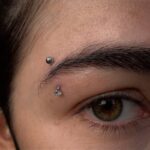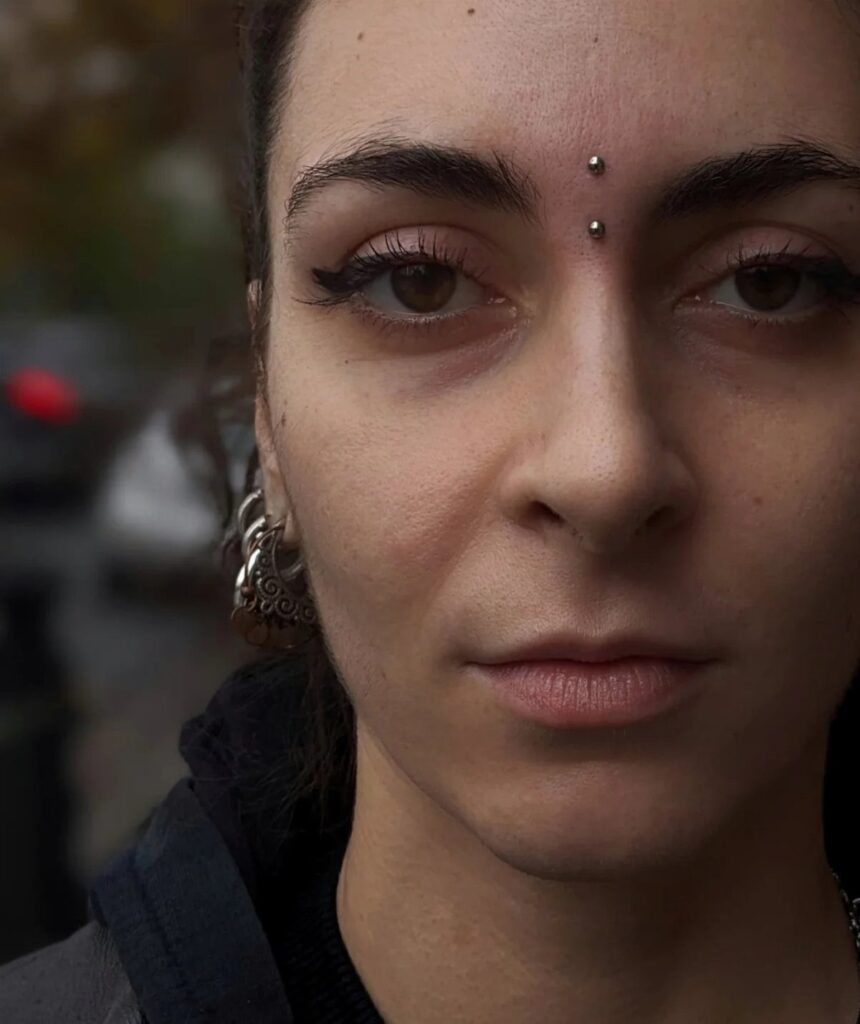
The list covers a plain Classic Vertical Bridge Barbell, a Triple Vertical Bridge Piercing, V-shaped jewelry, Gold Vertical Bridge Beads, spikes and spiral ends, and what separates them is mostly how much you can live with on your face.
The list gives you 6 looks, and what decides between them is how much else is already on your face: a plain barbell stays quiet, while the triple, the V, the gold beads, the spikes and the spiral ends each take up more room.
Every version still needs the 12 weeks of healing before you swap the ends, so start plain and change the style later.
1. Vertical Bridge Piercing
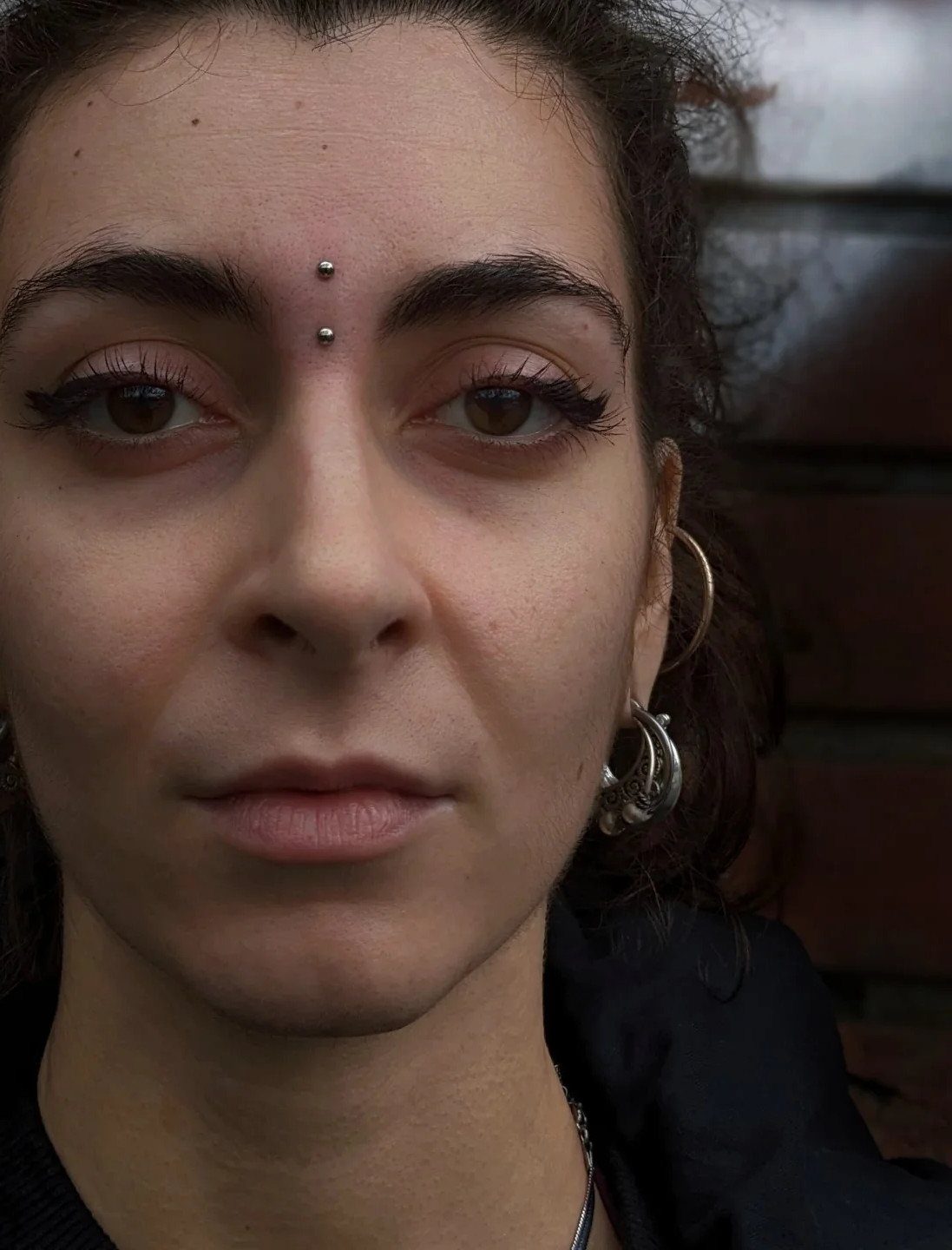
A vertical bridge is the standard bridge piercing turned on its axis, so the jewelry runs up and down the nose instead of straight across.
That change makes it read as two small points on the bridge rather than one bar.
Silver hoops in the ears pair well with it, since the metal stays consistent and the face doesn’t feel busy. Expect some soreness while it heals, and plan on a piercer’s fee that varies by studio.
Bridge piercings typically run between $30 and $60. This cost depends on variables like location, the studio, and the type of jewelry you choose.
2. Classic Vertical Bridge Barbell
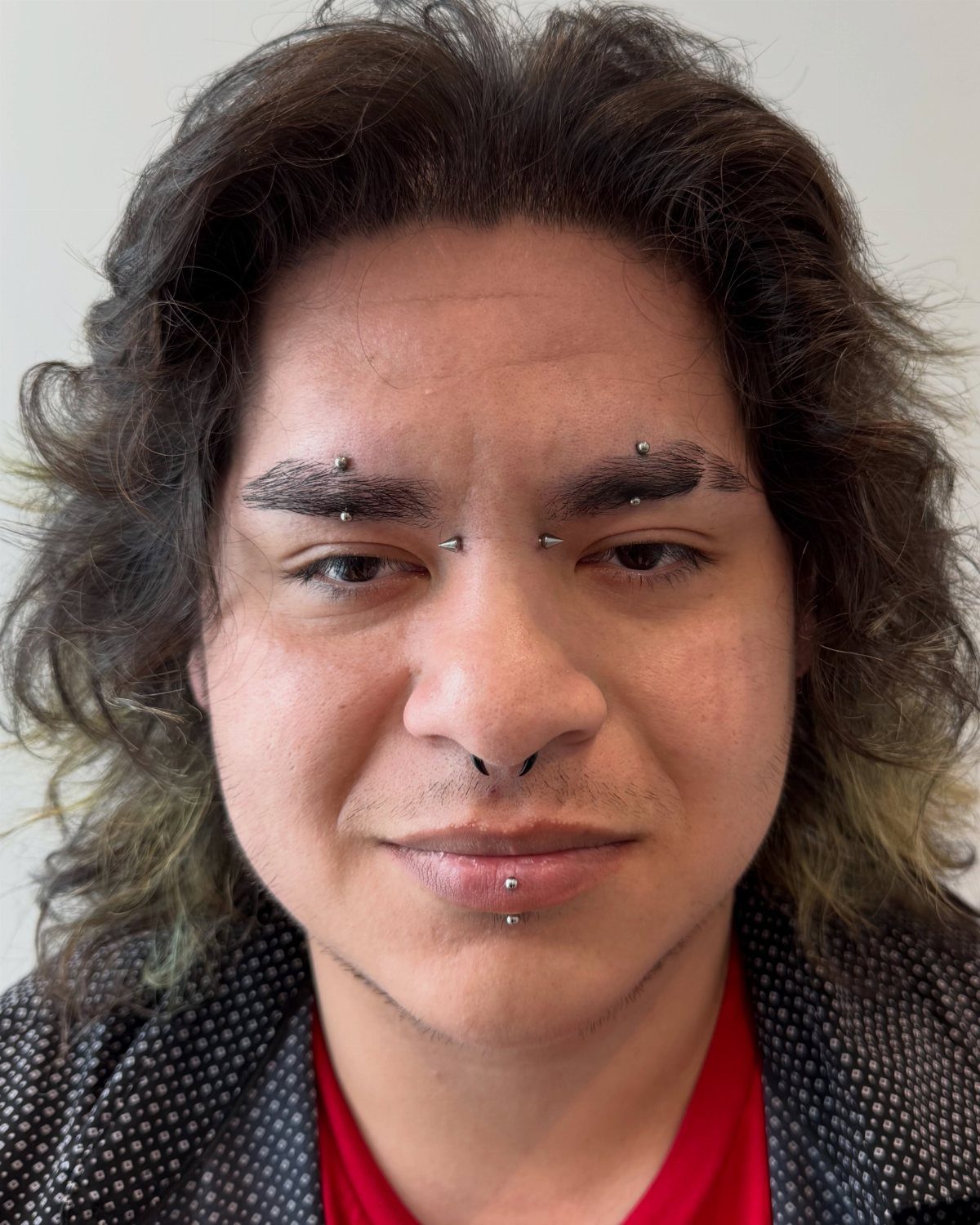
Simple jewelry keeps a vertical bridge from competing with everything else on the face. A straight barbell is the plainest version, and it sits comfortably among eyebrow piercings, a septum ring and a labret stud without adding clutter.
For anyone already wearing several facial piercings, the plain barbell beats spikes or shapes in my book.
Match the metal to the rest of your jewelry. A plain barbell also gives you the most room to change the look later.
3. Triple Vertical Bridge Piercing
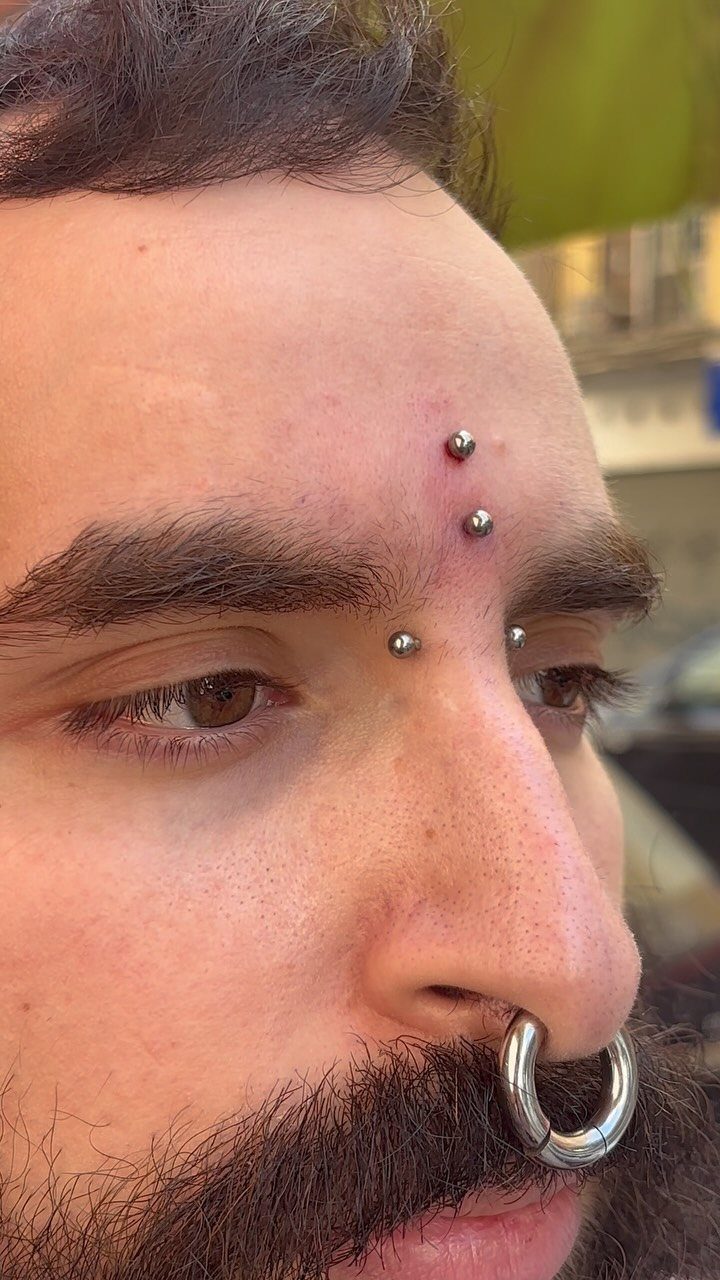
Three silver balls stacked down the bridge turn one piercing into a column. It is a bolder commitment than a single pair, because each ball is its own piercing with its own healing and its own cost.
Round ends keep the line clean and easy to read, and a septum ring doesn’t fight with it.
Before booking, check the spacing with a piercer, since 3 marks crowd a narrow nose quickly. I would choose this only if you want the statement.
4. V-shaped Bridge Jewelry
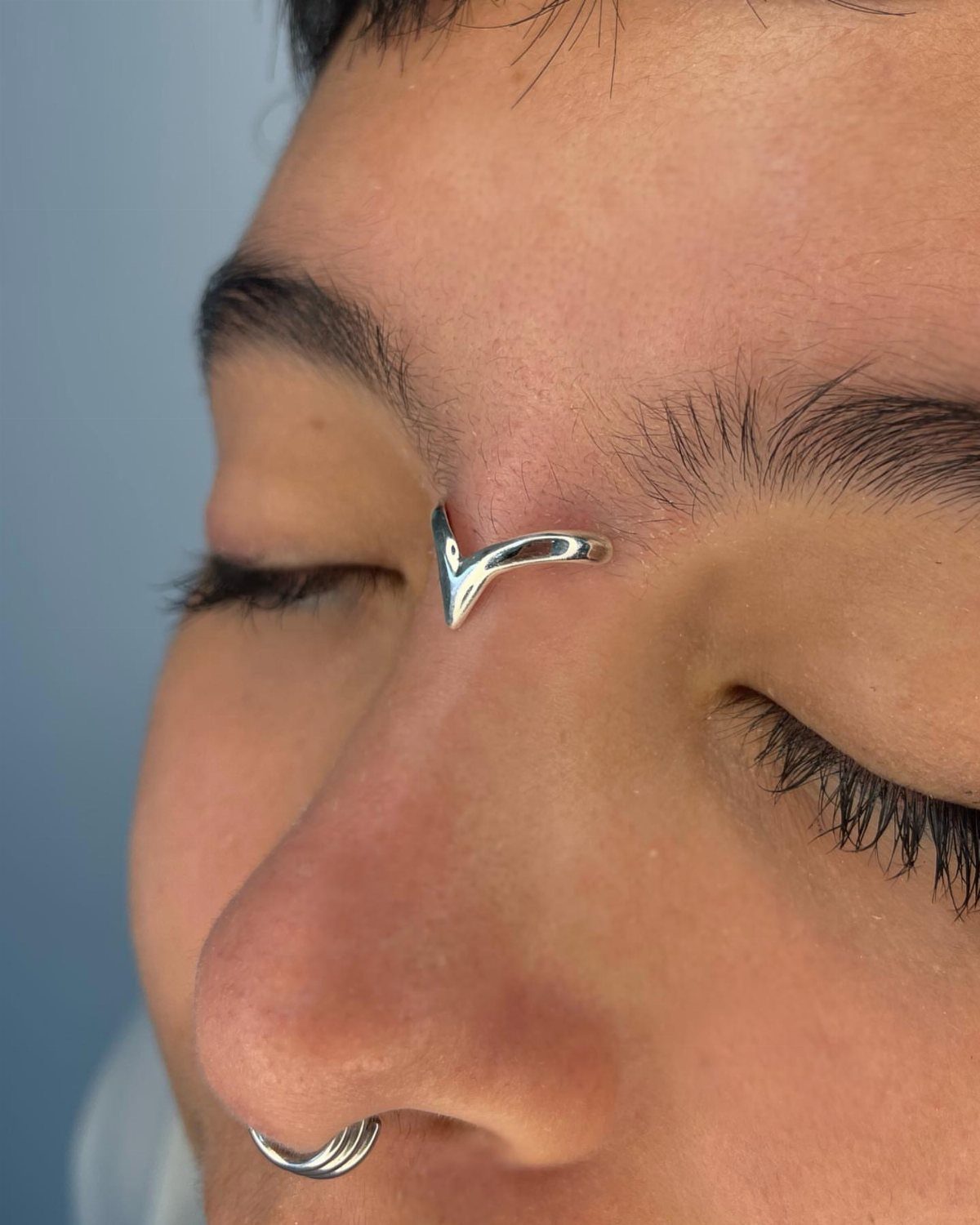
A V-shaped piece bends the jewelry into a point, so the bridge piercing looks like a small silver chevron instead of 2 separate dots. It is the one version here where the shape does the talking.
Silver pairs naturally with a nostril hoop, which keeps the whole nose cohesive.
I like it on a face with little other jewelry, where the V gets room to stand out. Your piercer can tell you whether the shape sits well on your nose, so ask before the needle comes out.
5. Gold Vertical Bridge Beads
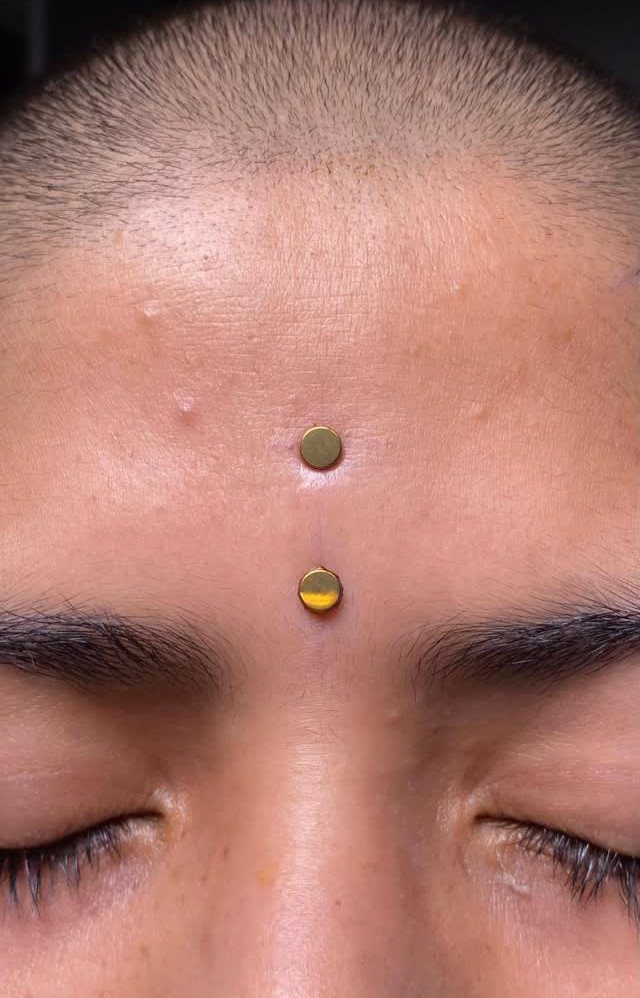
Two small gold studs on the bridge look softer than steel or silver, and they read as jewelry first and piercing second. That warmth works well with most skin tones and with gold you already wear.
Circular studs sit low and quiet, so this is the version I would suggest for a first bridge piercing, or for an office where you want something subtle.
If you later want more edge, you can swap the ends for another style.
6. Vertical Bridge with Spikes
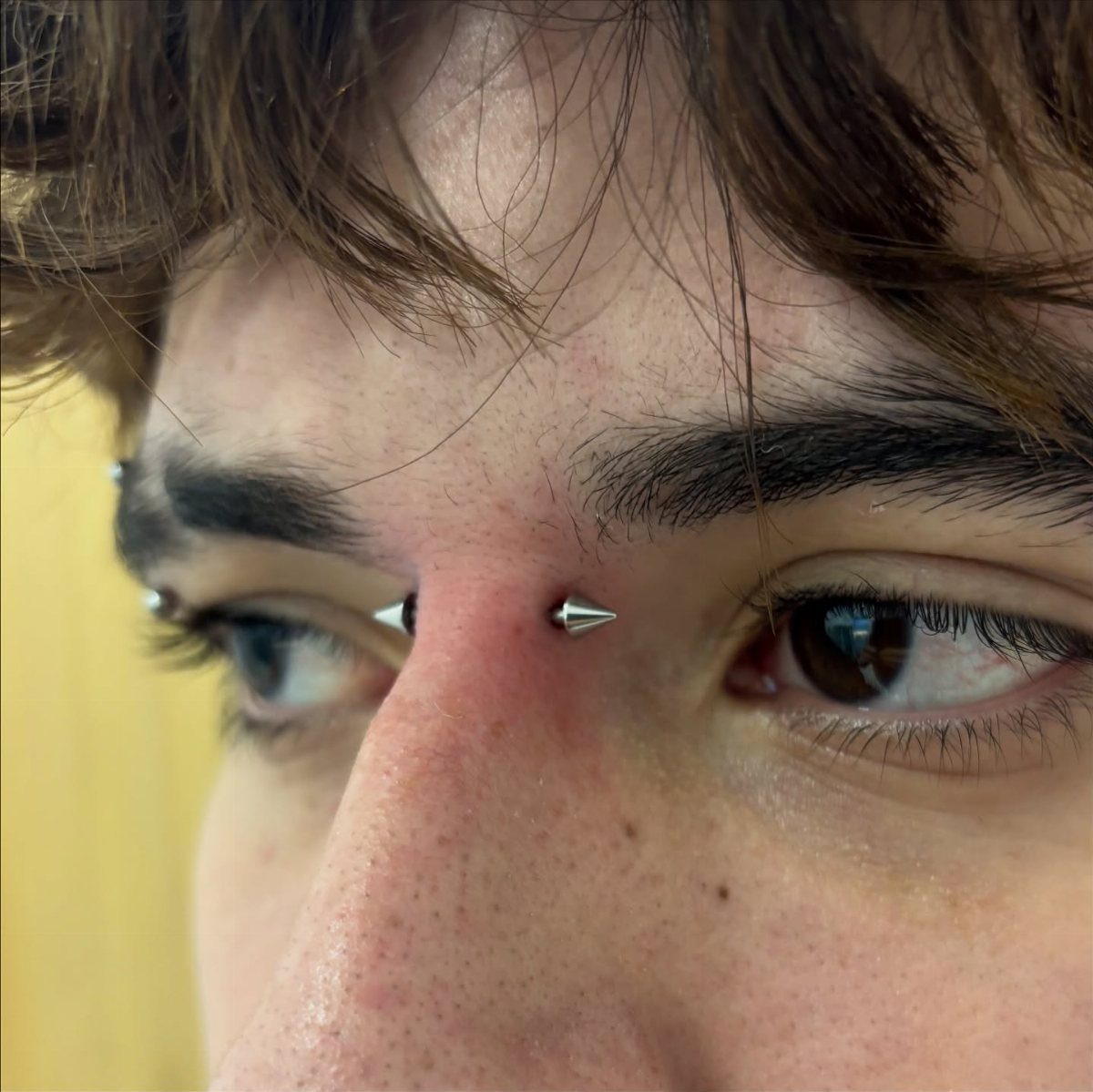
Silver cones on a vertical bridge give the piercing an edge that round beads can’t match. Set between the eyes, the points draw the eye straight to the center of the face, especially beside an eyebrow piercing.
Smooth ends slide past towels, glasses and collars, while spikes snag on all three; I’d hold off on wearing them until the piercing has healed completely. Start with plain ends, then switch to cones.
7. Vertical Bridge with Spiral Ends
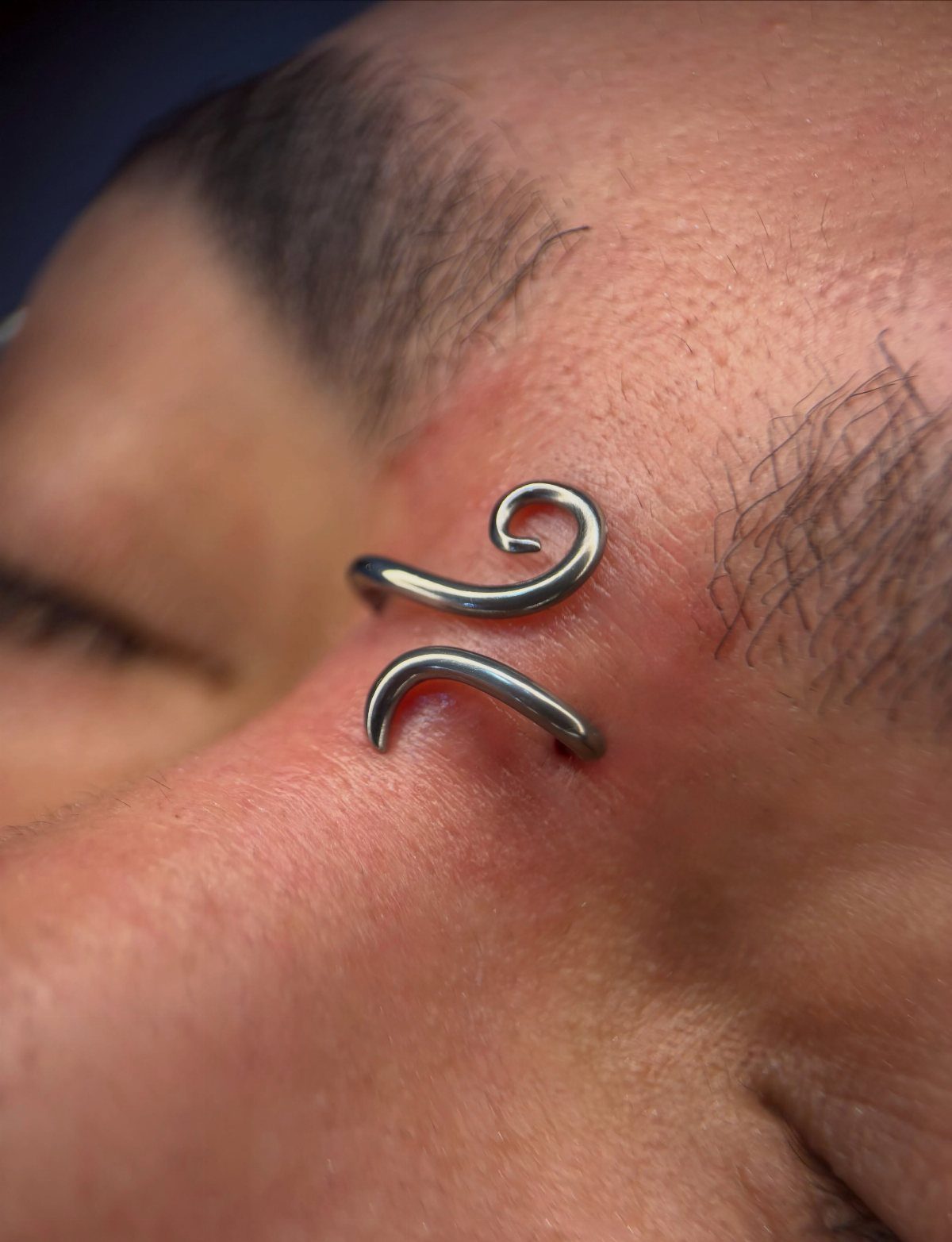
Spiral ends turn a vertical bridge into a piece with movement. The silver coils curl at the top and bottom of the nose, so the jewelry looks like it has a little motion built in, even when you’re standing still.
The coil is the whole statement, so I’d leave the rest of the face quiet. Silver studs in the ears or a simple nostril stud keep the metal consistent without competing with it.
Like the spikes in the previous entry, spirals can catch on glasses and collars.
I’d start with plain ends and switch to spirals once healing is done, and ask your piercer how the coils will sit on your bridge before you buy.
Choosing a Professional Piercer
Because a bridge is a surface piercing, the needle goes in and comes out along one flat stretch of skin, and for a vertical version that stretch runs up and down the nose rather than straight across it.
That makes it more prone to shifting or growing out over time, so the piercer’s skill matters more here than with most facial piercings.
Ask whether they have done bridge piercings specifically, and look for a hollow, sterile, single-use needle. A piercing gun is the wrong tool for this spot.
The gauge and the bar length are your piercer’s call, and they depend on the shape of your nose.
Many piercers start with a slightly thicker gauge to lower the odds of rejection, and the first piece is usually a straight barbell; a curved bar is an option if your nose needs one.
I’d choose implant grade titanium for the first jewelry, since it makes healing smoother.
Adjusting to New Piercings
Your eyes won’t cross. The bar sits in your view at first, but your eyes tune it out within days, the way they do with a new pair of glasses.
The real adjustment is healing.
Expect some redness and slight swelling around both holes in the first few weeks, which is a normal reaction. Hands stay off the piercing unless they’re freshly washed, and the early tenderness usually settles within a month.
Skin can look healed on the surface while the tissue inside is still weak.
I’d wait the full 12 weeks before changing any jewelry, and longer if your piercing seems slow. Rushing a swap is how a bridge piercing ends up shifting out of place.
Potential Scarring
If you remove a bridge for good, expect small pitted marks to stay behind. Retiring it will not make the marks vanish.
Decide that before you book, not after. If a permanent mark between your eyes sounds like a dealbreaker, this piercing is probably not the right one for you.
If the scar doesn’t bother you, go ahead with a clear head. Multiple bridge piercings mean more spots that could scar, so weigh that too.
Frequently Asked Questions
Why don’t piercers do bridge piercings?
Many will, but it’s a surface piercing, so the jewelry passes through one flat stretch of skin and can shift or grow out over time.
Rejection runs higher when the jewelry is wrong, so the bar needs to fit the shape of your nose; a straight barbell is the usual choice, and a curved bar is an option if your nose needs one.
Ask the piercer directly how many vertical bridge piercings they have done, and ask to see healed ones, not just fresh photos.
How is a bridge piercing performed?
First the piercer looks at your nose to judge whether the skin pinches up enough to hold a bar, then cleans the area and dots the spots where the bar will enter and exit.
Forceps or a small clamp hold the pinched skin steady while a sterile, hollow, single-use needle passes through it.
The jewelry is inserted right away, the area is cleaned again, and you get aftercare instructions. A piercing gun has no place here, since it crushes tissue and can’t be sterilized between clients.
Can I have a bridge piercing if I wear glasses?
Usually yes, though the answer depends on how high your frames sit and how much of the bridge the pads touch. Bring every pair, sunglasses included, to the appointment so the piercer can mark a spot that works with them.
Frames with separate nose pads can sit lower than the piercing. Pads and frames can rub on a fresh piercing and irritate it, so slide your glasses on and off slowly and keep them from tugging the bar.
How painful is a bridge piercing?
Most people rate it about a 3 or 4 out of 10.
It goes through skin rather than cartilage and doesn’t pass many nerve endings, so you mostly feel a quick pinch. Pain tolerance varies, so your experience may differ.
What is the healing time for a bridge piercing?
Wait at least 12 weeks before swapping jewelry; full healing runs from 2 to 6 months depending on the source and on you.
Some redness and mild swelling in the first weeks are normal, and tenderness tends to fade by the end of the first month.