Which helix setup fits depends on how much healing you can live with, because the helix, double helix, forward helix and chain are all cartilage, and cartilage takes 3–12 months to settle where a lobe is usually done in 4–6 weeks.
The range runs from a single helix piercing up to a double helix, a forward helix and a chain joining 2 piercings, and each extra hole adds another round of healing and another thing for hair, hats and collars to catch on.
Start with one, and add the second only when you’re ready to care for both.
1. Helix Piercing
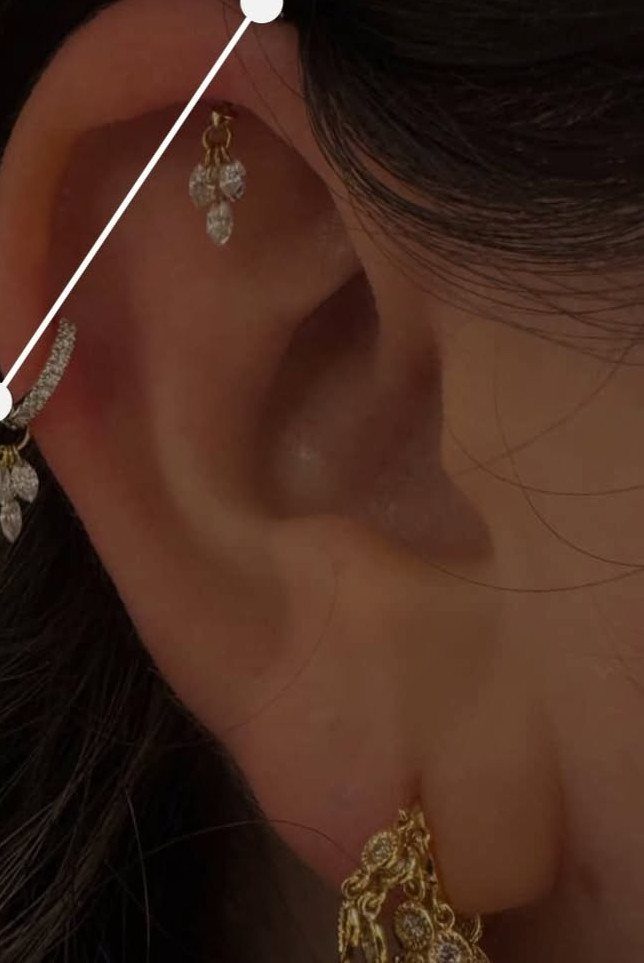
A single helix sits in the upper cartilage rim of the ear, and it’s the easiest place to start if you want something above the lobe.
A small stud or a dangling jewel both read well there, and I lean toward the jewel when the lobe already carries a hoop, since the 2 sizes balance each other.
Cartilage heals more slowly than a lobe, so plan on a long stretch of careful cleaning and no sleeping on that ear.
2. Double Helix Piercing
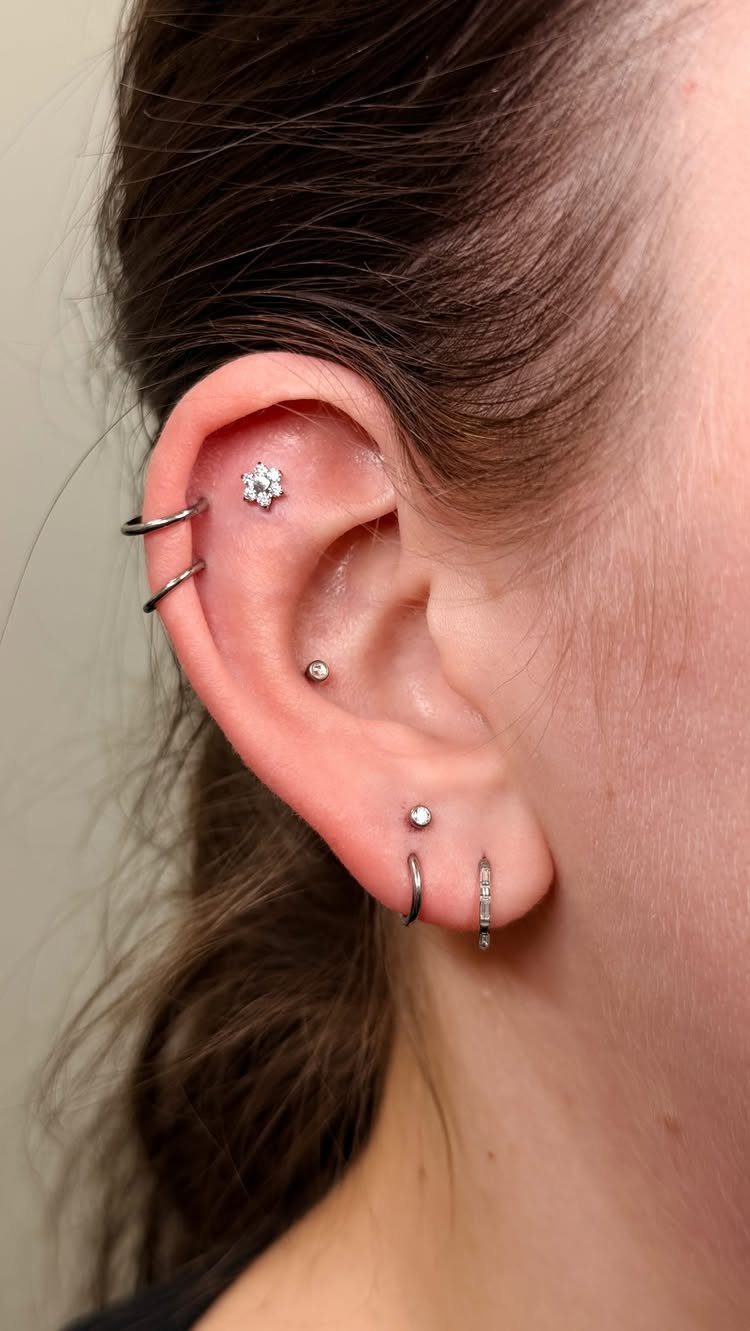
Stack 2 studs along the upper rim and you have a double helix; how far apart they sit, usually a few millimeters, changes the whole look.
Rings in both spots give a bold, rhythmic line; a ring paired with a stud is quieter and easier to live with.
I’d pick the mixed pair if this is your first cartilage work. Two piercings means two sets of healing, and snagging a hoop on hair or a hat hurts twice as much.
3. Forward Helix Piercing
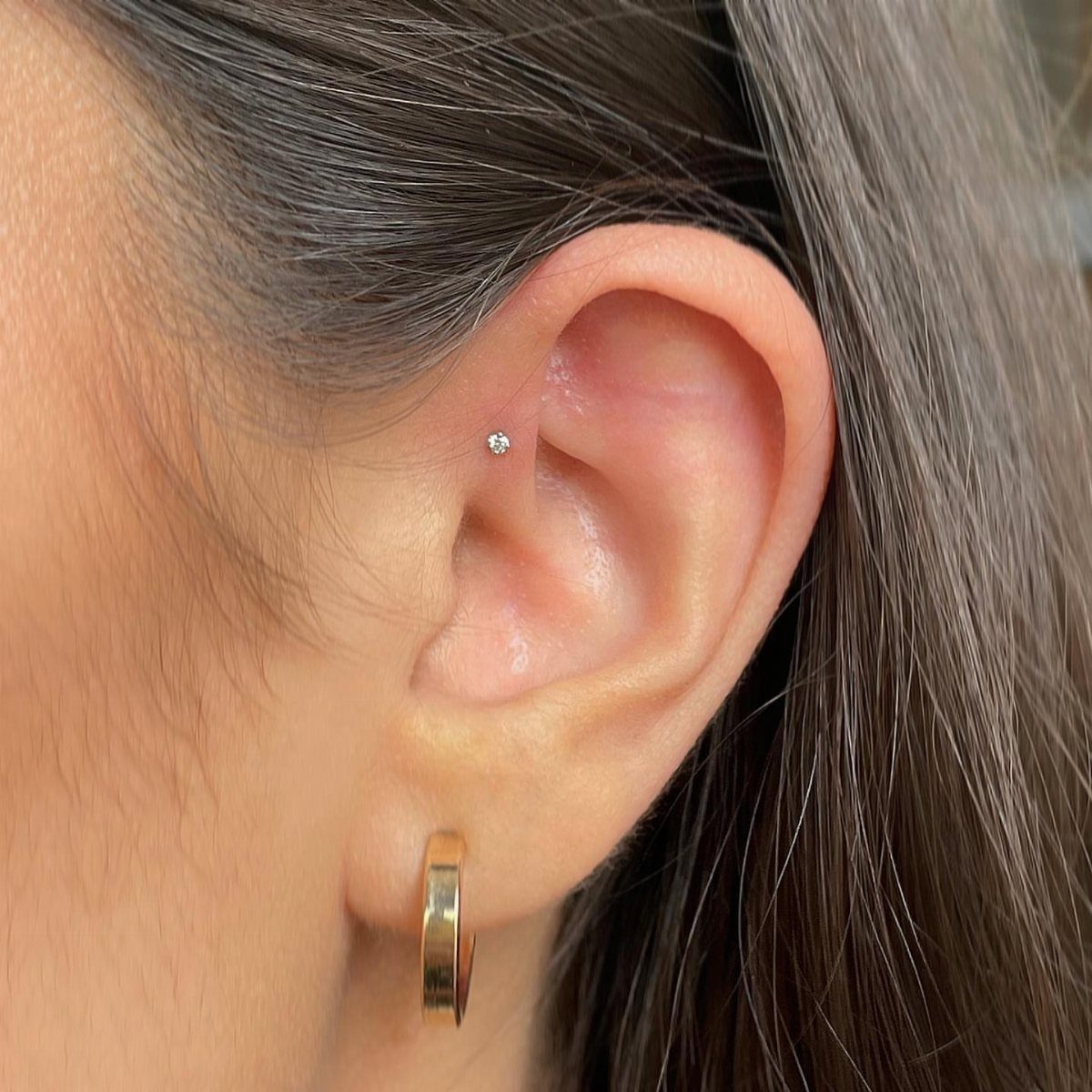
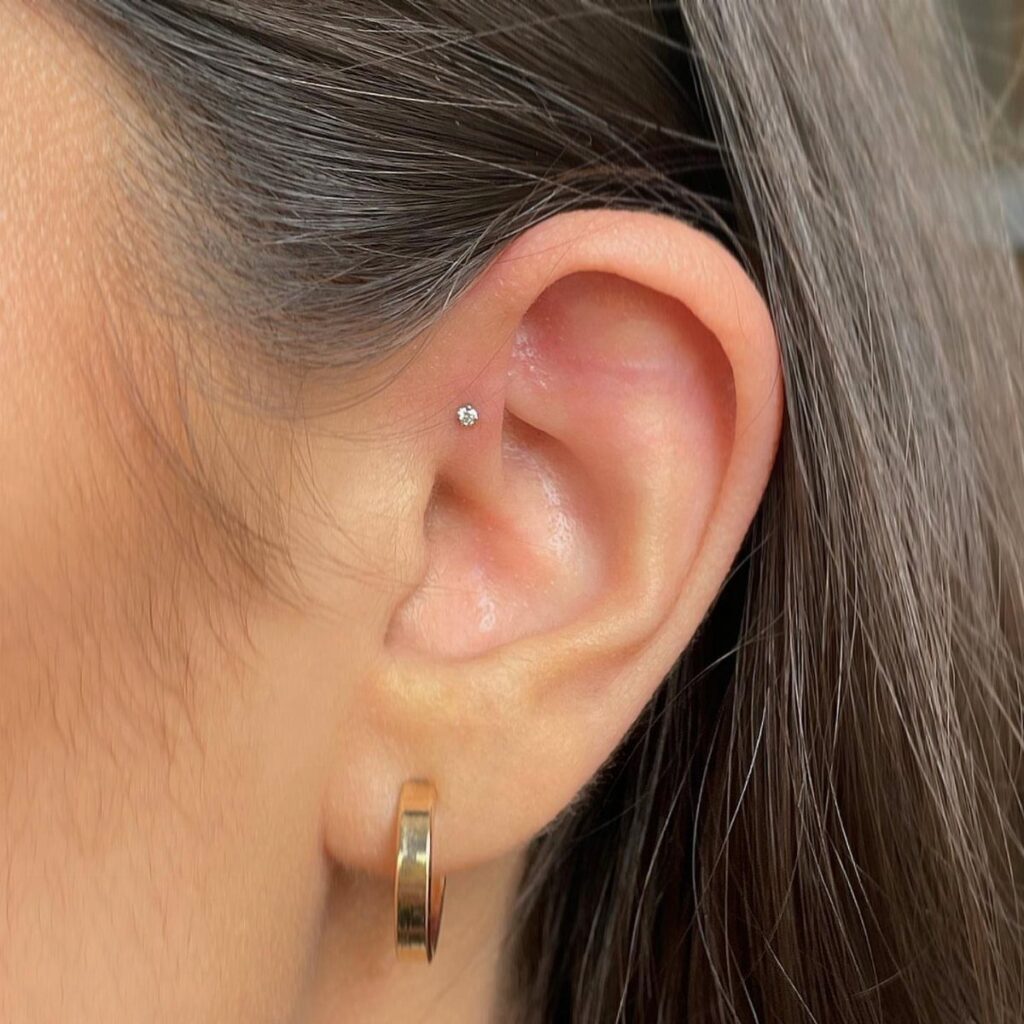
Tucked into the cartilage closest to the face, the forward helix suits a small flat-back stud far better than a hoop.
A single stud there stays neat and leaves room for a hoop in the lobe, which is the pairing I like most.
Expect it to feel tighter and more tucked away than a rim piercing. Ask your piercer to check that your ear’s shape has room for it before you commit.
4. The Helix Chain
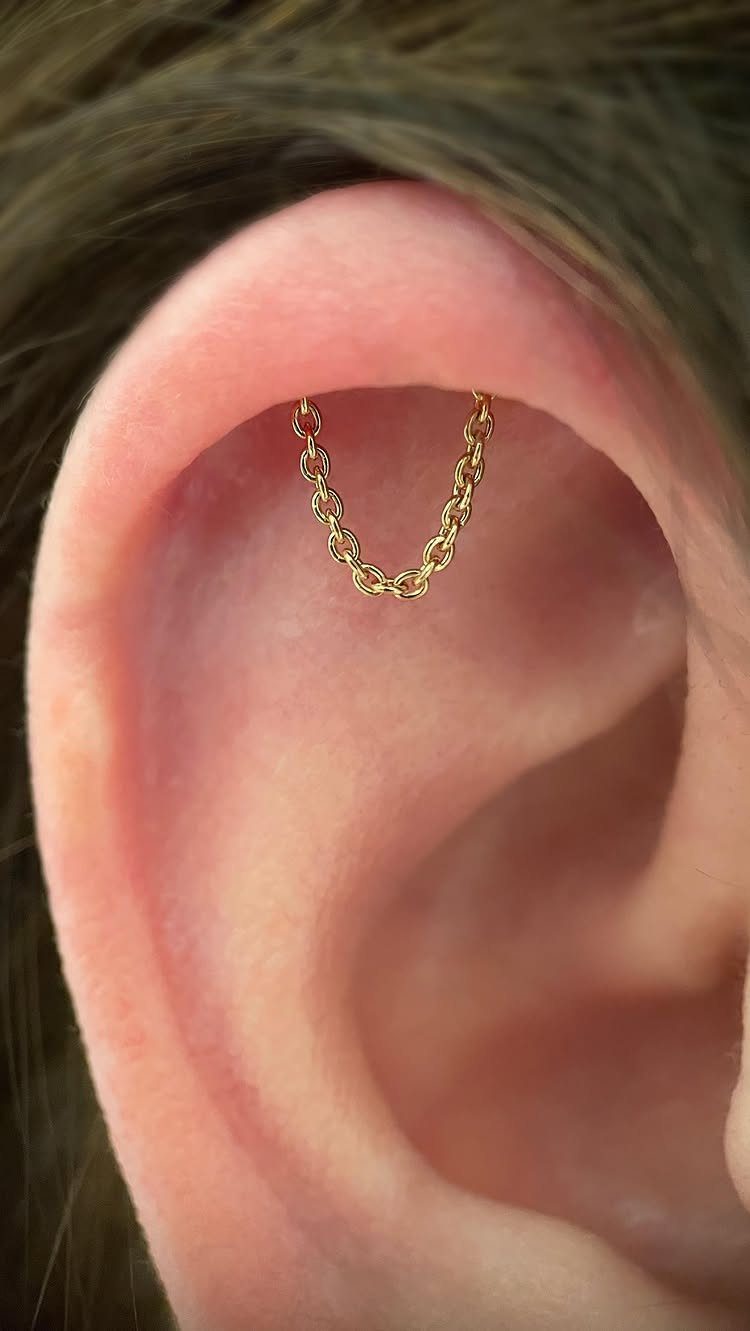
2 helix piercings joined by a fine chain give you a line of jewelry that moves with you. Gold-toned chain keeps it delicate, and I’d match the metal on both studs so the link looks deliberate.
Both piercings need to be healed before you swap in a chain, since the extra length catches easily on hair and collars. Ask your piercer about spacing, because the chain’s slack depends on how far apart the 2 holes sit.
Jewelry Material
A helix is cartilage, which tends to react more than a lobe does, so a metal your lobes have always tolerated can still irritate it or slow the healing.
Don’t use your lobe history as proof that a material is safe.
Stick to implant-grade titanium or solid 14k gold. Those are the hypoallergenic options, and I’d ask the piercer to confirm which one a stud is made of before it goes in.
Keep the jewelry lightweight and well made. Heavy or cheap pieces press on the cartilage and irritate it, and the same weight is what makes a stack look clunky instead of delicate.
Anatomy Considerations
No 2 ears have the same cartilage shape, so a placement you pinned from a photo might land differently on yours.
Bring the look you want and let the piercer tell you how to line the holes up so they follow your ear’s curve.
This matters most when you plan more than one piercing. Talk through the whole layout first, not one hole at a time.
You may read that certain piercings offer healing benefits tied to acupressure points.
Healing Complications
Expect a helix to take 3–12 months to settle, while a lobe is usually done in 4–6 weeks. Infection risk stays real for that whole stretch, so the routine matters more than any single day.
If you need soap, use a mild, fragrance-free one. Leave rubbing alcohol and hydrogen peroxide out of your routine entirely.
Wash your hands before touching the piercing, and never twist or rotate the jewelry. Put a clean pillowcase on your bed often.
Swelling, redness that won’t fade, or bumps mean it’s time to contact your piercer. Jewelry sometimes needs downsizing or adjusting more than once, and fixing it early beats waiting it out.
Frequently Asked Questions
Do cartilage piercings go on both ears?
Yes, you can pierce both ears, and nothing says you have to match them. Many people mix it up, with a double helix on one side and a single stud on the other.
Before you book, talk through the layout for each ear with your piercer, because cartilage differs from one ear to the other and a spot that sits well on the left can fall differently on the right.
What is the difference between a helix piercing and an industrial piercing?
A helix is one hole through the upper outer rim, while an industrial is two holes joined by a single bar.
An industrial is two cartilage holes joined by one long barbell, running from the forward helix area to the back helix area.
Because it means two separate piercings in one, it is rated far more painful, around 9 out of 10 in one source.
What is a double helix piercing?
A double helix is 2 piercings stacked along the upper rim of the ear, usually a few millimeters apart.
2 rings make a louder statement, and pairing a ring with a stud keeps things calmer. Because both holes heal together, I’d go with the ring-and-stud combo if this is your first time through cartilage.
How long does a helix piercing take to heal?
Expect about 3–12 months, with many sources landing around 6–9 months. Swapping jewelry before the hole has settled invites irritation and infection, so get your piercer’s okay first.
Does a helix piercing hurt?
Most people rate it around 4 to 6 out of 10, a quick sharp pinch that fades fast.
Expect a little more sting than a lobe, since the needle has to pass through firm cartilage rather than soft flesh. Pain tolerance varies, but most people find it very manageable.