Placement decides which style is yours: huggies and small gold or silver hoops sit well on the lobe, while cartilage spots like the helix need hoops made for them, and the sizing section below covers the measurements.
The range runs from a single gold hoop to hoops paired with studs and a stepped mix of sizes, and metal matters as much as shape, so the material section covers what to pick if your skin reacts to cheap jewelry.
1. Gold Hoop Earrings
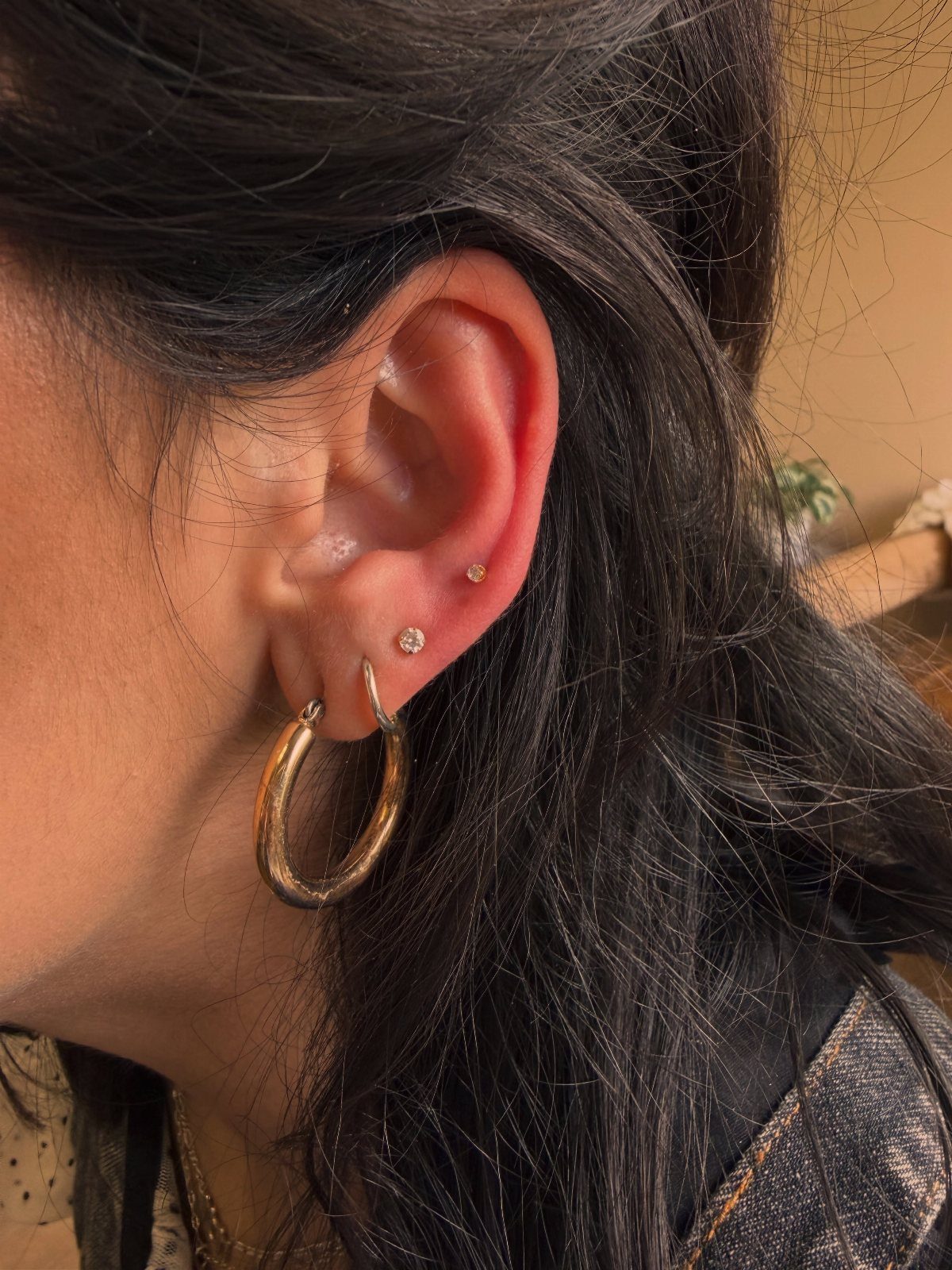
A single gold hoop in the lobe, paired with small gold studs, is the easiest way to start an ear stack. The hoop is the statement, and the studs keep the rest quiet.
One hoop size gets to be the star here, and every other piece in the ear stays small. Gold also keeps the budget under control, since one good hoop does more than three average ones.
2. Huggie Hoop Earrings

Huggies sit snug against the lobe, so the hoop reads as part of the ear instead of something hanging from it. That makes them my pick for everyday wear, under a beanie or a scarf, where larger hoops would catch.
Small gold is the safest finish. A pair comes first, and a third can join later for a stack.
3. Cartilage Hoop Earrings
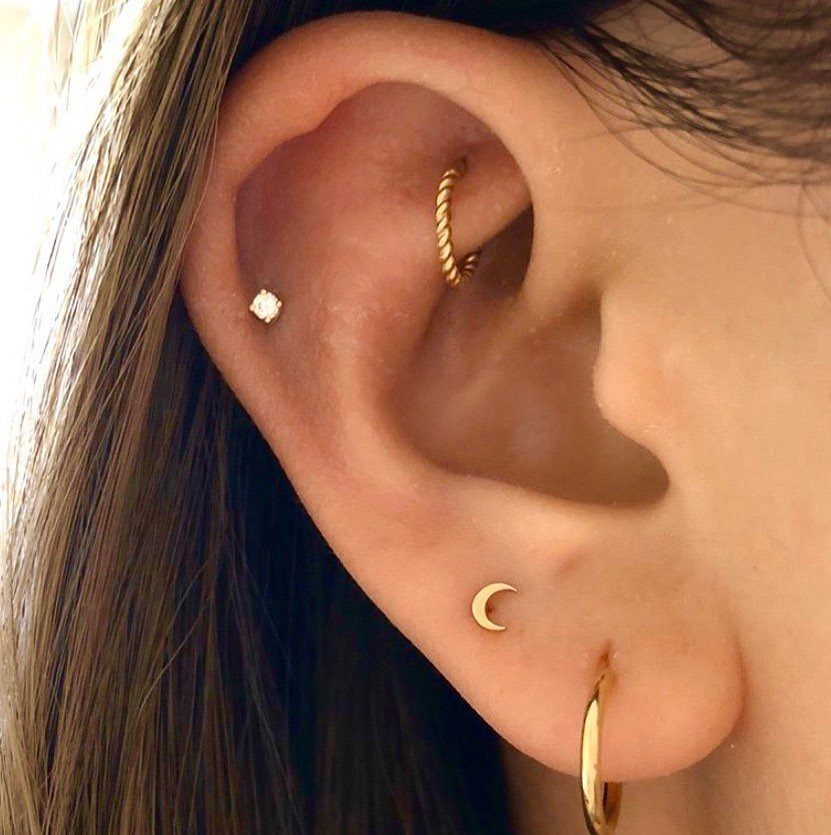
Cartilage hoops belong in the helix, conch and similar spots, and a twisted band adds texture without extra pieces.
I like pairing one with a small stud nearby, such as a moon in the lobe, so the hoop stays the focus.
Cartilage hoops are made for those spots, so skip lobe hoops there. Expect more tenderness than a lobe, and check with your piercer before swapping jewelry.
4. Mix of Sizes Hoop Earrings
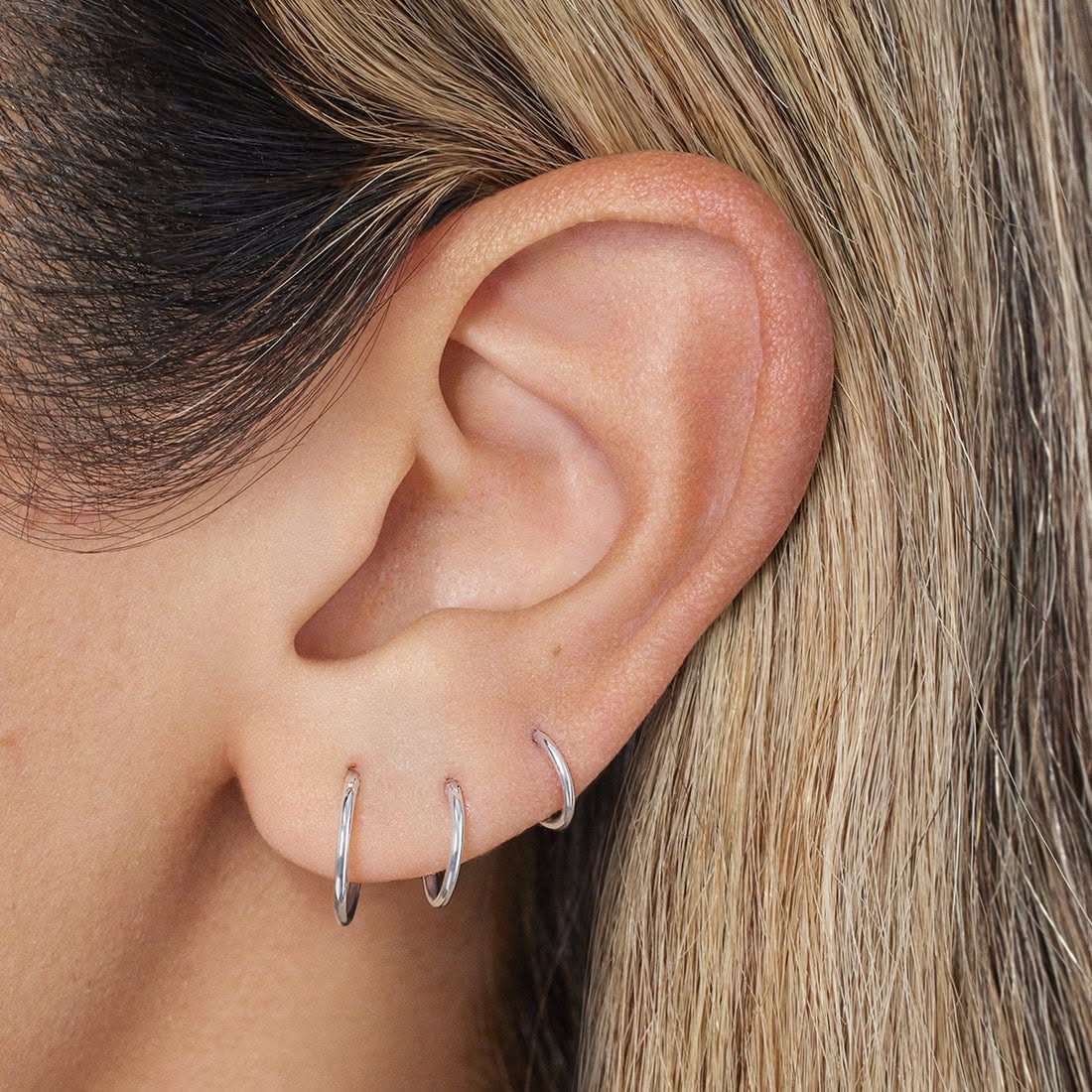
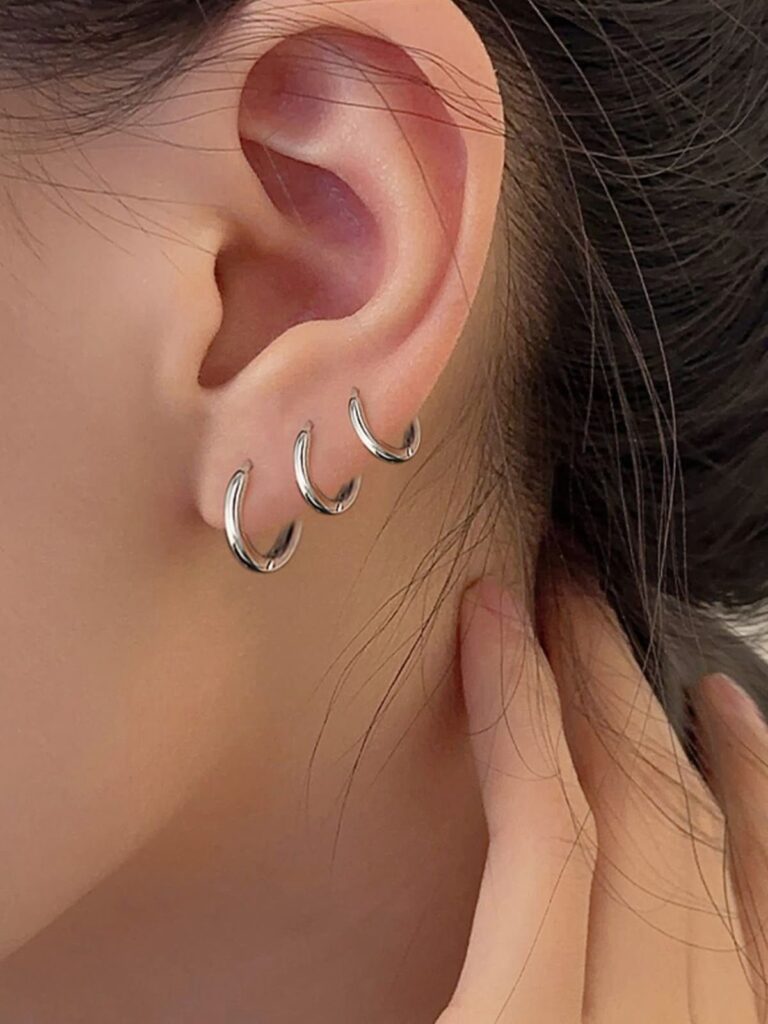
Three hoops in one lobe look best when each is a slightly different diameter. Stepping the sizes down from largest to smallest gives the stack a clean line instead of a crowded one.
Keep the metal matching, silver here, and the sizes do the work. Mismatched metals compete with the size contrast.
5. Silver Hoop Ear Piercings
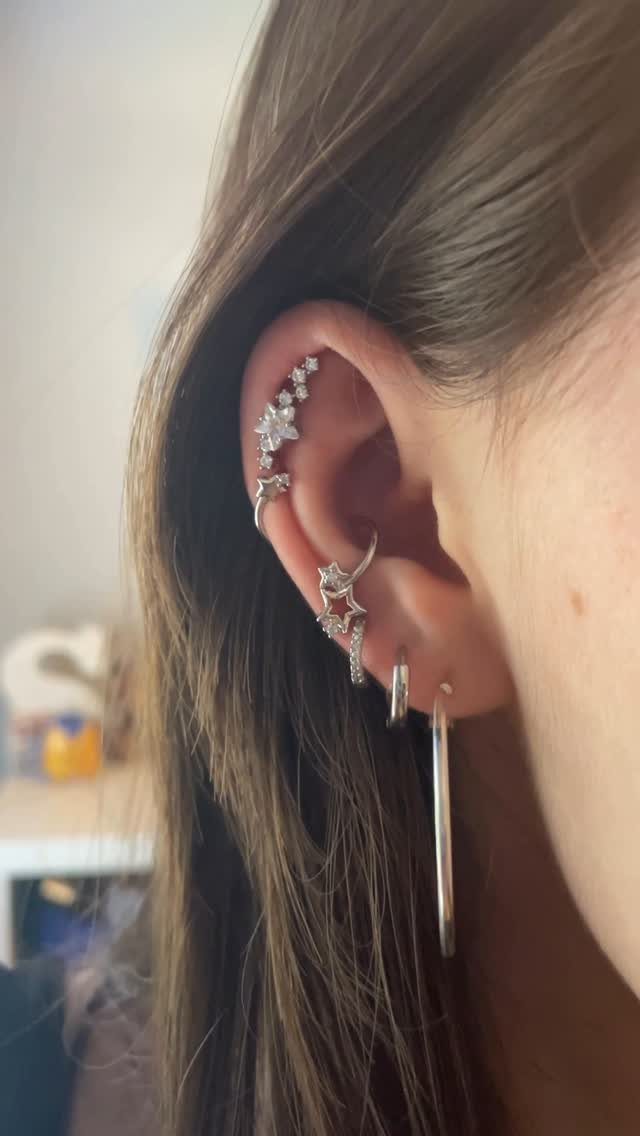
Silver hoops mixed with star-shaped cartilage pieces make a stack that feels planned. The stars add a playful note, while the hoops keep it grounded.
I would keep every piece silver so the shapes stand out. Silver is also easy on a budget, which helps when you are filling several piercings.
6. Hoops and Studs Ear Piercings
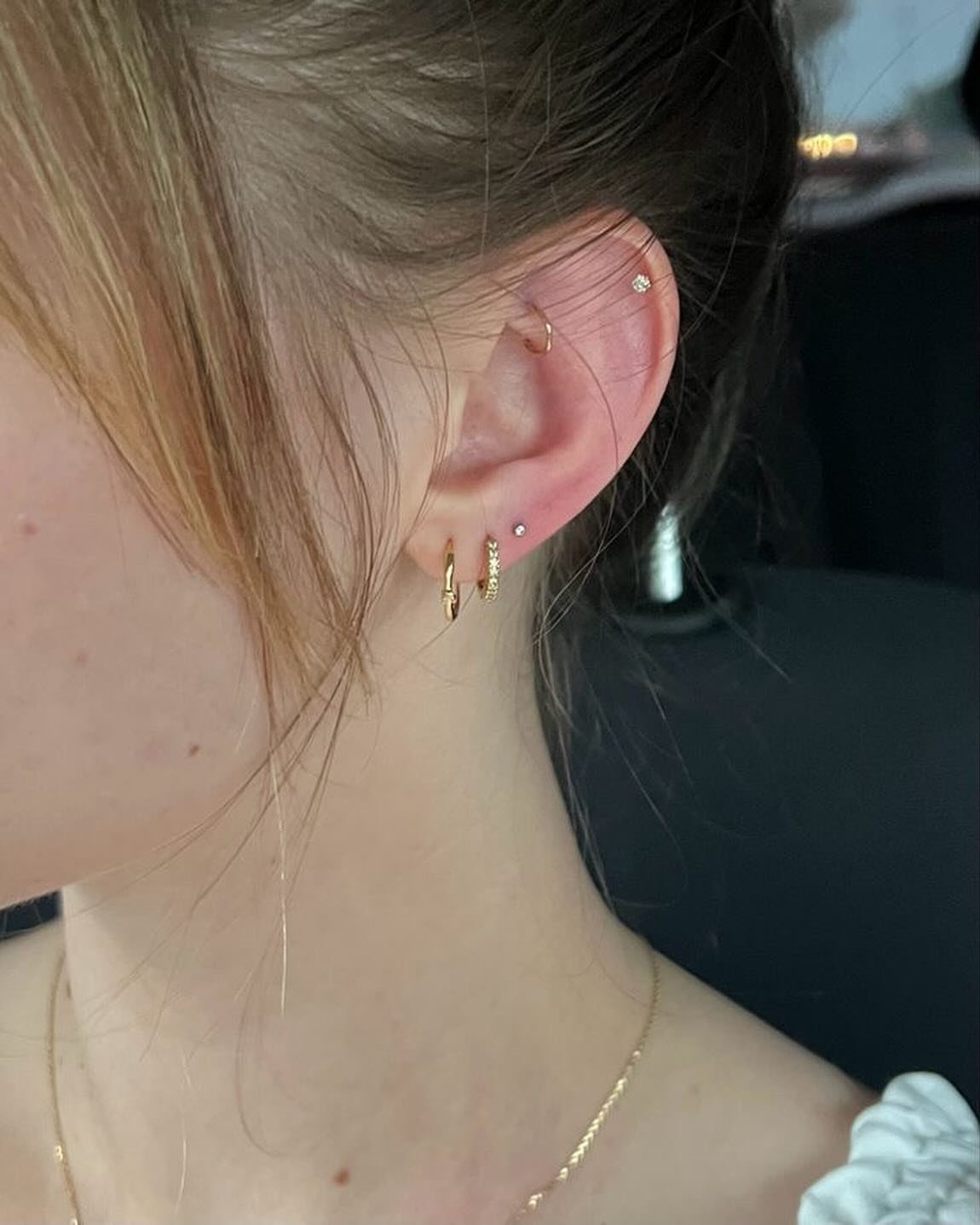
Hoops in the lobe with small studs higher up, in the helix, give an ear both movement and calm. Gold keeps the whole thing warm, and it sits well alongside a chain necklace.
Let the hoops take the lower spots and the studs fill the gaps. If you only buy a few pieces, buy the hoops first.
Sizing for Hoop Earrings
Hoop size is a small number that changes how the hoop sits, so check which measurement a seller is quoting before you buy.
One plain silver huggie in the facts runs 0.56" across, with tubing 2.9 mm wide and a weight of 1 gram per hoop. That is a good reference point for a snug, everyday fit.
Check the tubing width as well as the diameter. A thicker band looks bolder and feels heavier, which counts for more while the hole is still healing.
For a second lobe hole, tiny hoops with clear pavé crystals sit well next to the first piercing.
Small hoops in gold or silver sit well in the lobe, the helix and the flat of the ear, so a single size can cover several spots.
Buy a pair in one size before you try larger ones. If a hoop feels tight or hangs oddly, go up a little rather than forcing it.
Aftercare for Piercings
Clean a new piercing twice a day with sterile saline, and leave the jewelry in place while it heals. Wash your hands first, every time.
Don’t twist or turn the hoop, and skip rubbing alcohol and peroxide, which dry out and irritate the skin. Pat the area dry with clean paper towel, since cloth towels can hold bacteria and snag on jewelry.
Keep hair products, phone screens and pillowcases away from the spot as much as you can. Sleeping on the piercing is a common cause of irritation bumps, so a travel pillow with a hole in the middle helps with cartilage.
Redness, swelling or discharge that gets worse after the first few days is a reason to see your piercer or a doctor. Healing times vary by placement, and cartilage takes much longer than a lobe, so don’t swap jewelry early.
Material Considerations
Start with your skin.
If you react to cheap jewelry, titanium is the safest choice, especially for a new piercing. Choose implant-grade titanium, and check with the person who pierced you about exactly what metal the piece is made of.
Gold works well for many people, but solid gold is the better buy.
Plated pieces can wear through and expose the metal underneath. Silver looks crisp and costs less, but it can tarnish and irritate some skin, so I would keep it out of any piercing that is still healing.
Style matters too. Gold reads warm, silver reads cool, and titanium can be anodized in colors.
If you are unsure, begin with titanium for healing, then change to gold or silver once the piercing settles.
Frequently Asked Questions
Can you wear hoops after getting your ears pierced?
Yes, but wait until the piercing has healed before putting a hoop in.
A new piercing should keep its original jewelry in place, and twisting or swapping early irritates it. Cartilage heals far more slowly than a lobe, so ask your piercer before you swap out any jewelry there.
What are hoop earrings that hug the ear called?
They are called huggie hoops. For daily wear I would pick them over bigger hoops, since they stay clear of beanies and scarves.