These 9 blackwork ideas run from a Blackwork Floral Tattoo or a neck piece to a full Blackwork Sleeve or a portrait that needs more than one sitting, and how much of your body you’re willing to commit decides which one fits.
Visibility is the dividing line: a sleeve can be covered, while a neck piece cannot, so I would pick the placement you can live with every day before choosing the style.
Solid black asks the most of your skin, and heavy fills like Blackout Tattoos need a strict aftercare routine to heal even.
1. Geometric Blackwork Tattoo
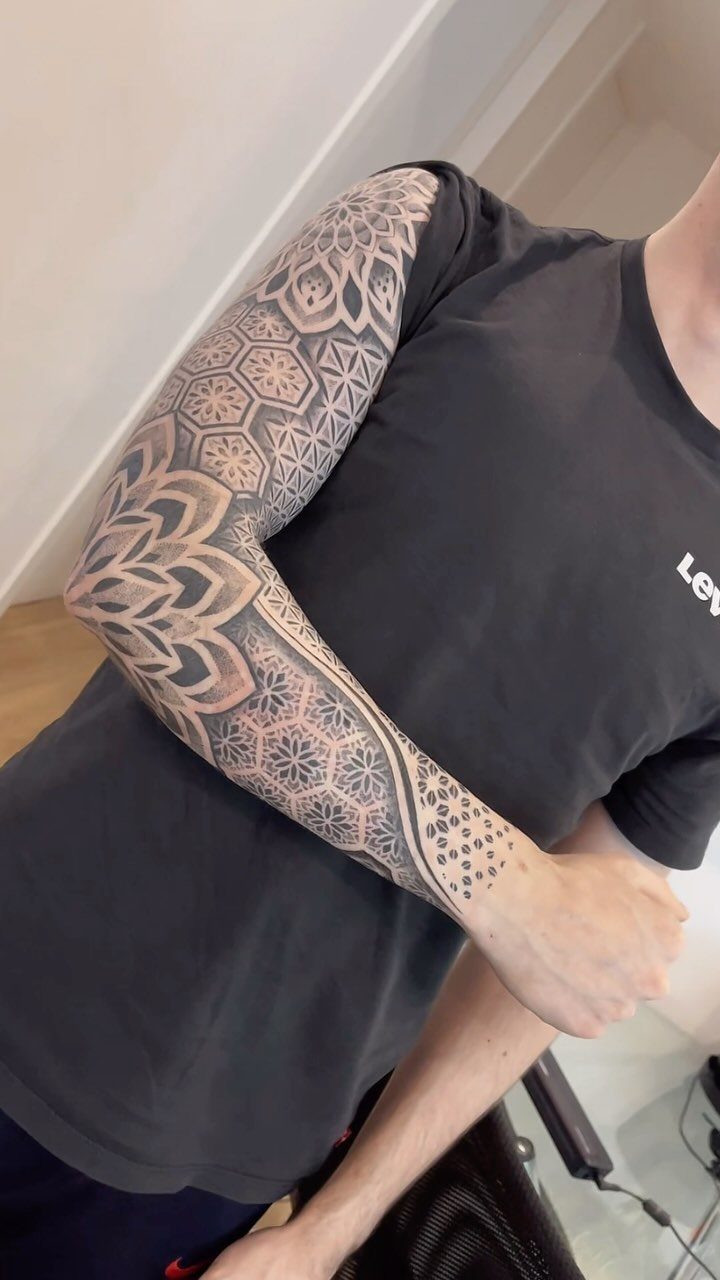
Mandala patterns built from dotwork give a geometric sleeve its pull, because the dots add soft shading to otherwise hard lines. On an arm, I would let the pattern follow the muscle so it wraps cleanly instead of flattening out.
Symmetry is unforgiving. A line that drifts by a hair shows from across a room, so I would choose someone whose straight work looks crisp in healed photos, not just fresh ones.
2. Tribal Blackwork Tattoo
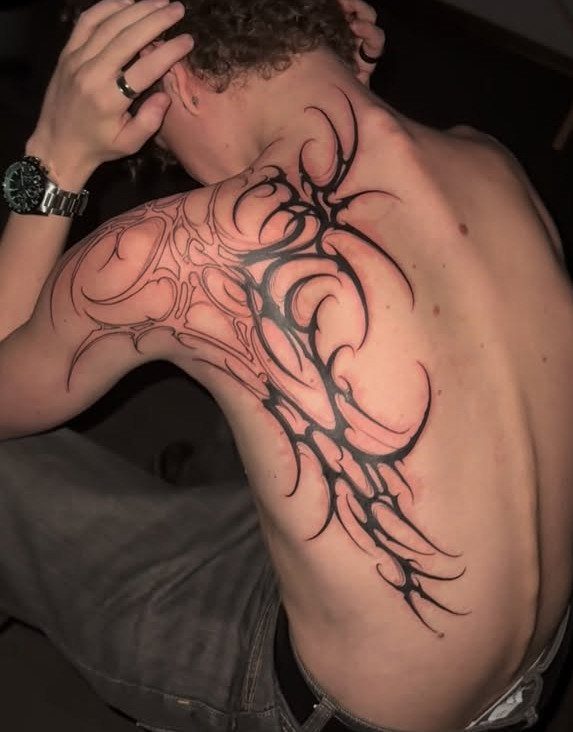
The shape should follow the body, so ask the artist to draw it on you with a stencil before any ink goes in.
I like this placement because the back is a large, flat canvas. Large black areas take time, so plan on more than one sitting.
3. Blackout Tattoos
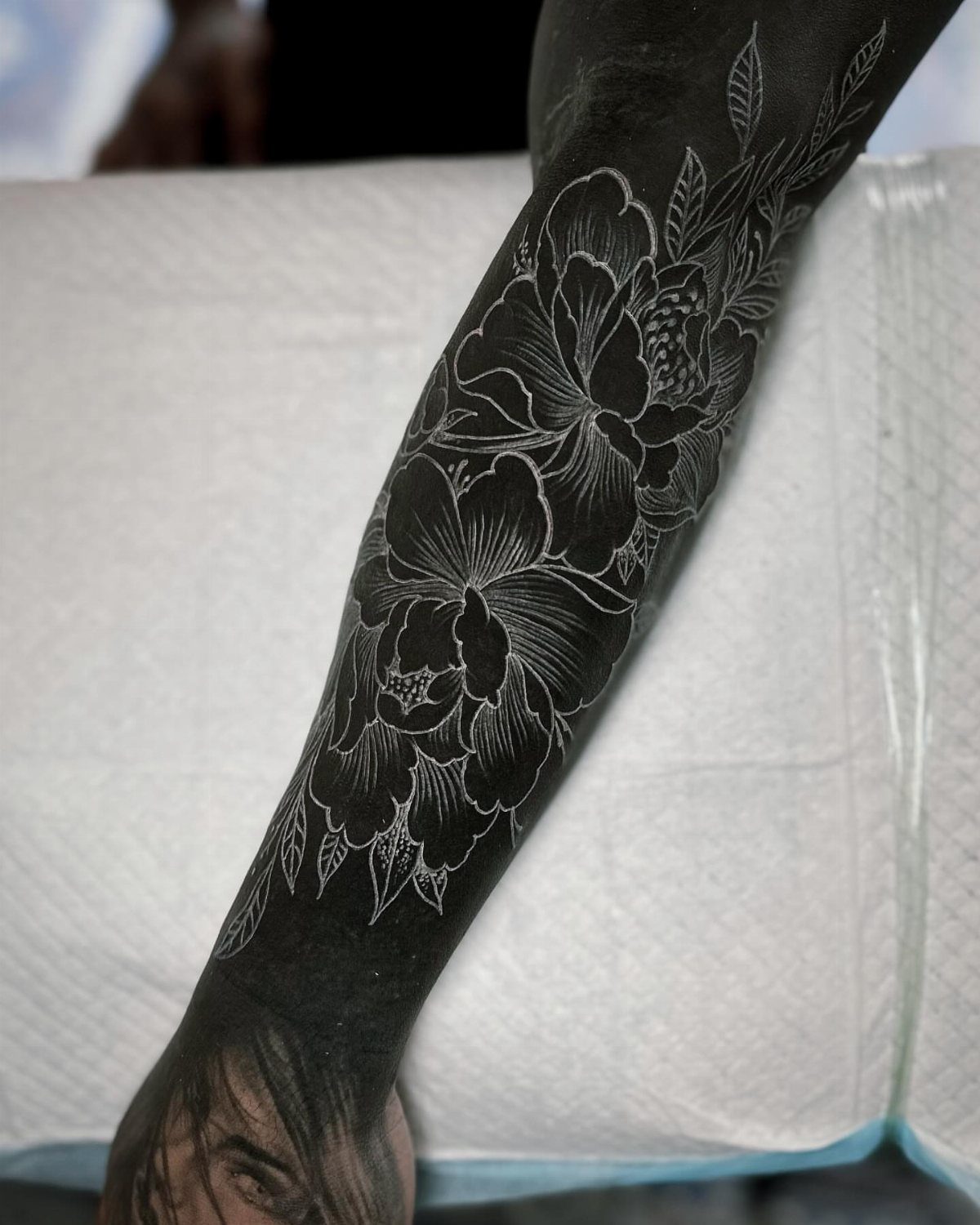
Solid black is the whole idea here, and it asks more of you than any other blackwork style. Packing that much ink into skin takes patience, and the arm will be sore and tender for a while afterward.
White ink floral outlines, like peonies, laid over solid black are a detail I would add. White ink fades faster than black, so a touch-up may be worth budgeting for.
4. Blackwork Sleeve
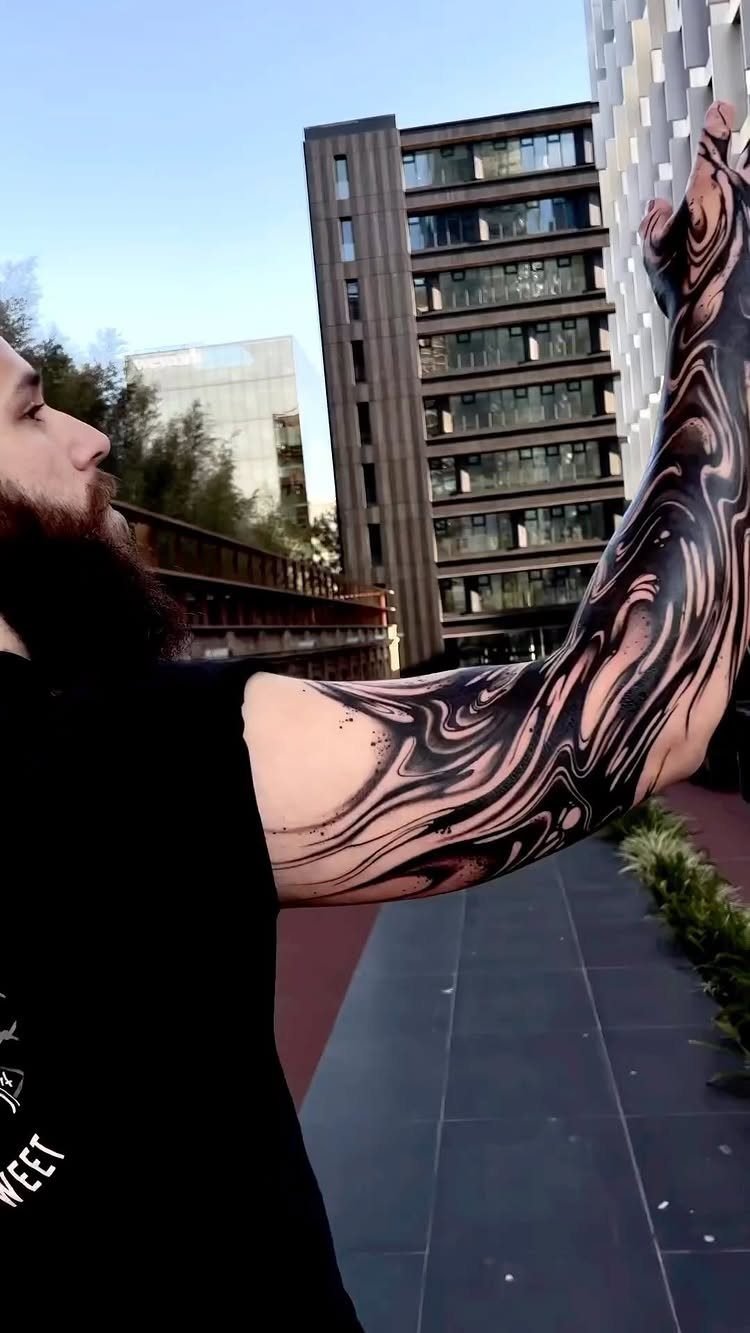
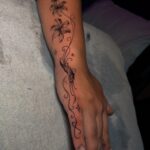
A sleeve works when the whole arm reads as one graphic statement, not a stack of separate tattoos. Swirling black ink does that well because the flow carries the eye from shoulder to wrist without a break.
Settle the full plan at the start, ahead of session one, so every piece fits the whole. Adding pieces later usually leaves visible seams, and I would take a slower, planned build over a quick, patched one.
5. Blackwork Neck Tattoo
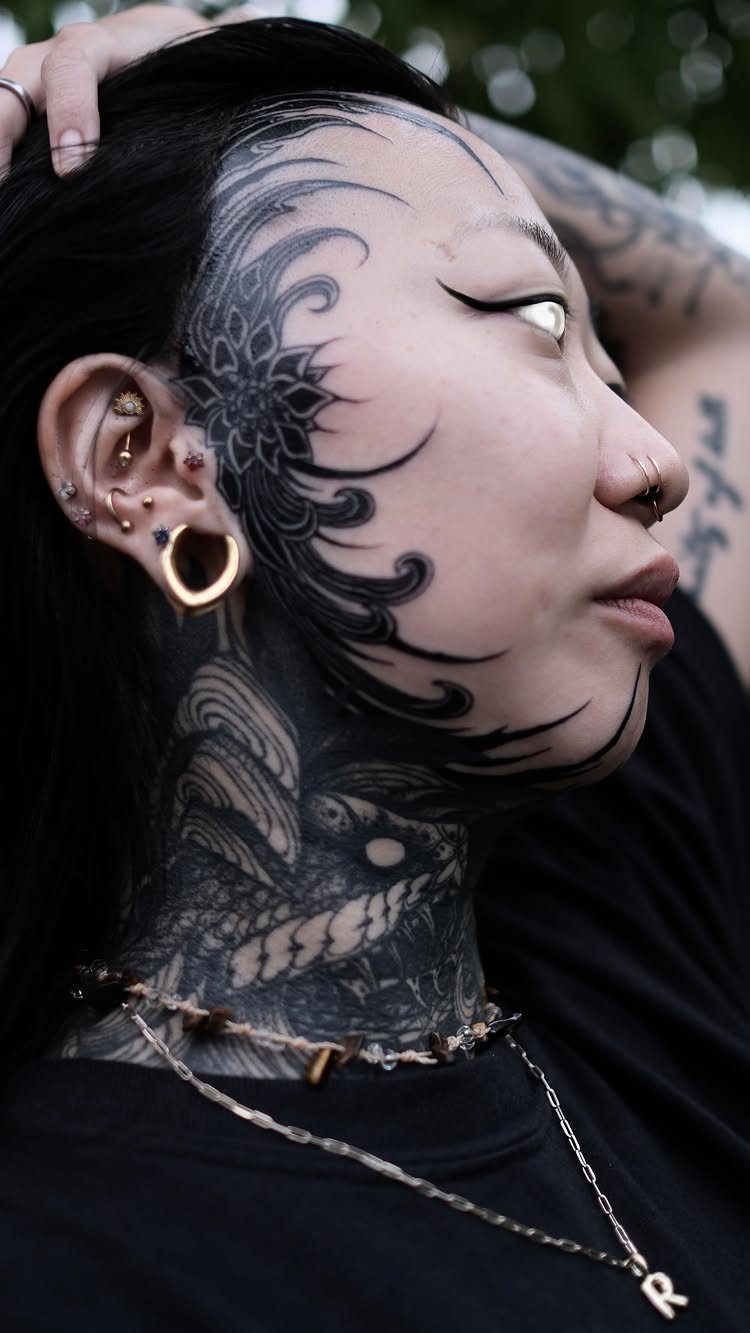
Blackwork on the neck and side of the face is the loudest placement there is, and it is hard to hide. Bold black shows from a distance, so the design has to hold up when people see it every day.
I would only go there after tattooing a less visible spot first. Jobs and family reactions are real factors, and a neck piece cannot be hidden under a sleeve.
6. Illustrative Blackwork Tattoo
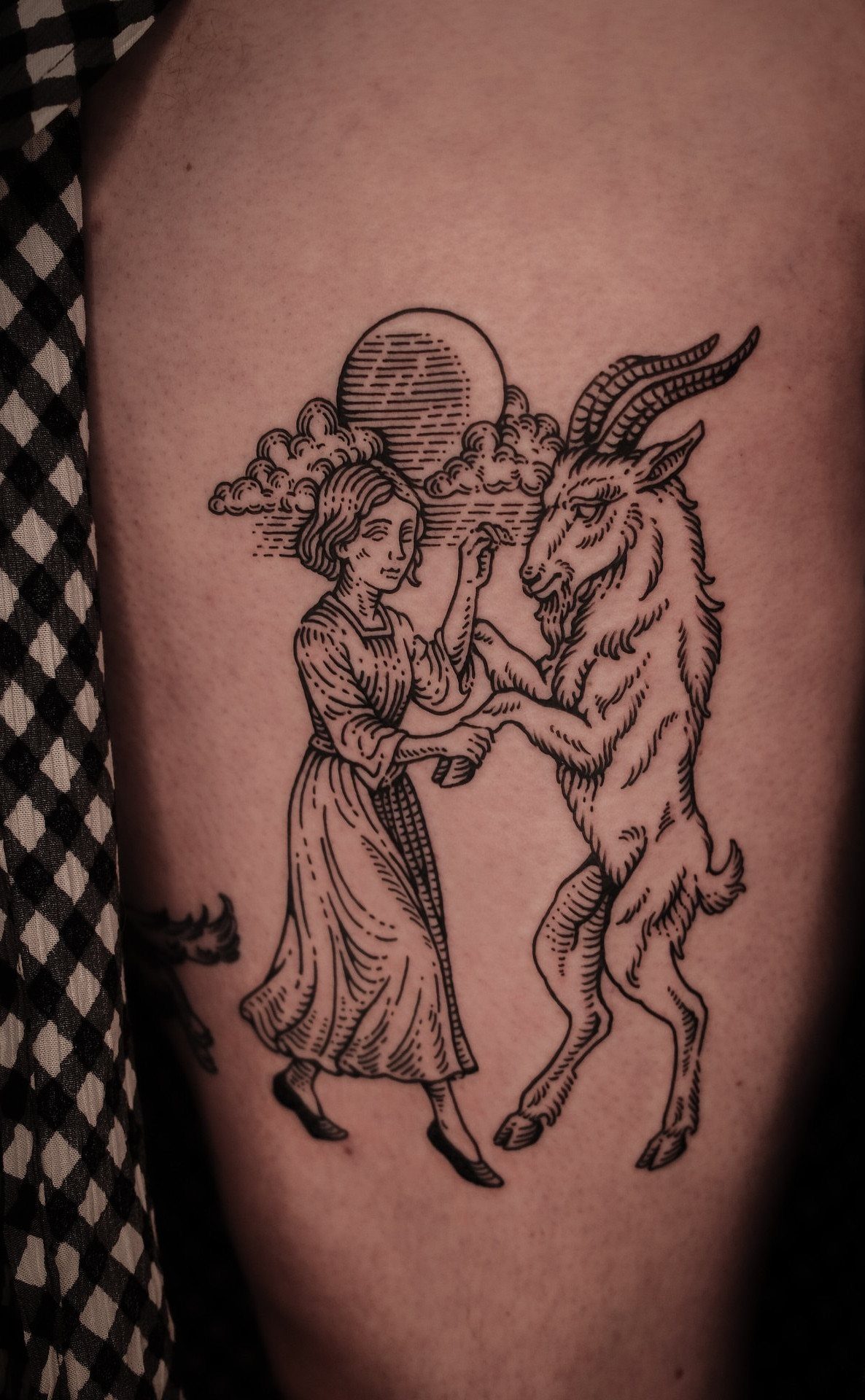
Illustrative blackwork does its best work when it tells a small story in line and shade, like a dancer, a goat, a moon and clouds. A leg gives you a long, forgiving space for a scene like this.
I would choose one clear subject and use the clouds and moon as a frame around it. Dense detail is easier to read in black when each element has space around it.
7. Blackwork Floral Tattoos
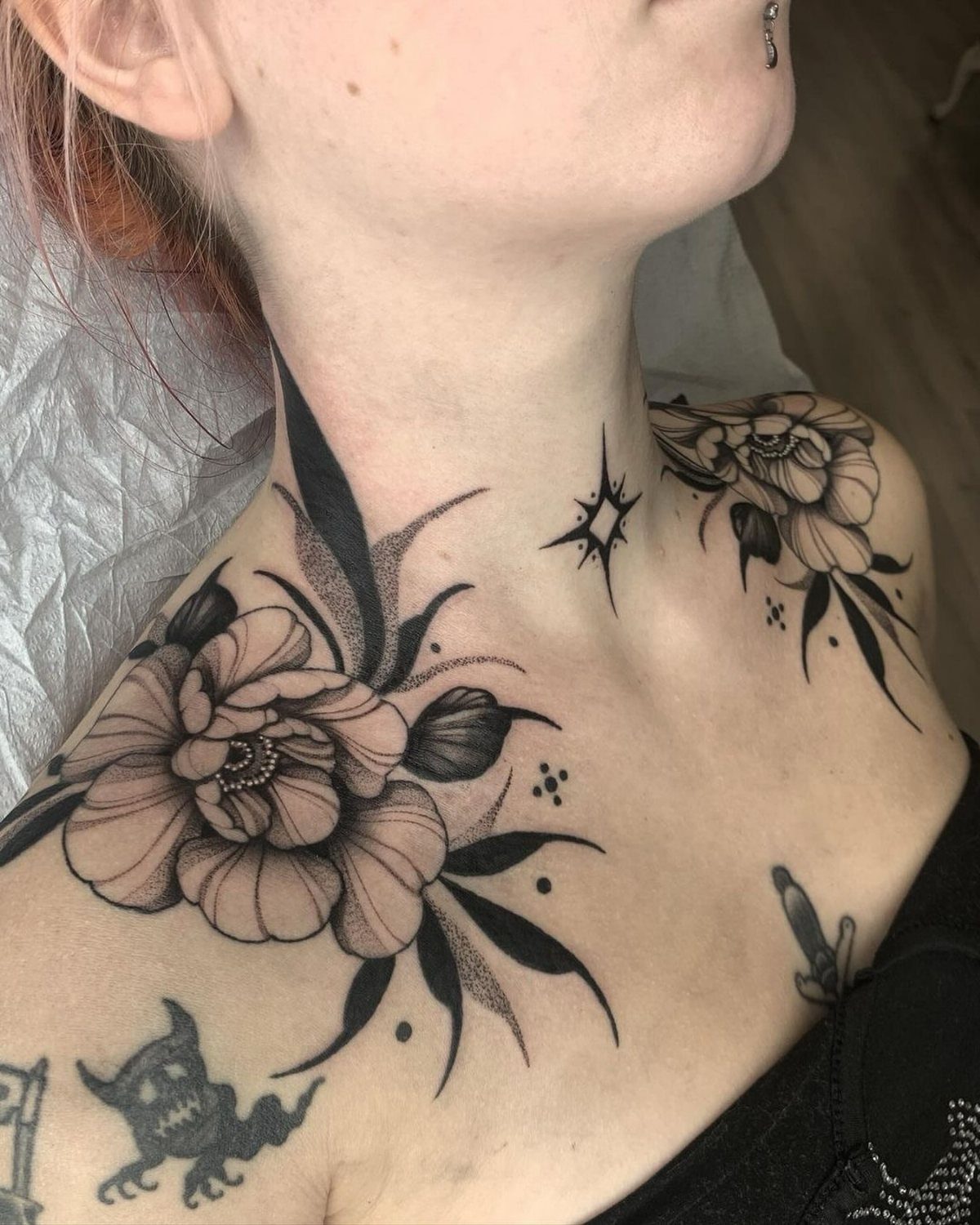
Peonies suit blackwork because their layered petals give you plenty of edges to work with. On the neck and collarbone, I would let the leaves trail along the bone so the flowers follow the body’s line.
Without color, structure carries everything.
Clear gaps of bare skin between petals matter, since solid black packed too tight turns a flower into a blob. A small star or other filler can sit beside it, but the flower should stay the lead.
8. Blackwork Animal Tattoos
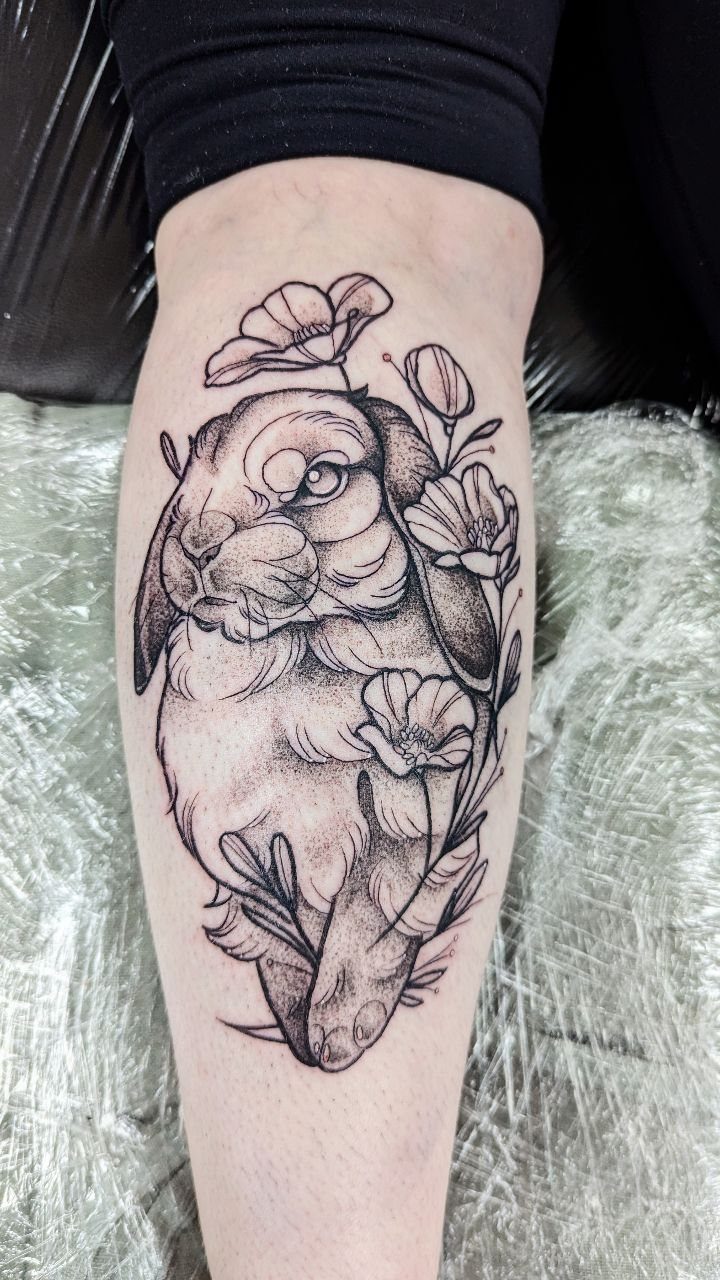
Raw power is what black ink gives an animal, and a rabbit shows it well: soft subject, hard contrast. On the lower leg, the calf gives you a long, even surface for the animal and its flowers.
I would keep the rabbit as the clear focus and let the flowers sit around it in lighter line. Fur reads best through fine texture, not heavy fill, so look at healed photos of an artist’s animal work before booking.
9. Blackwork Portrait Tattoos
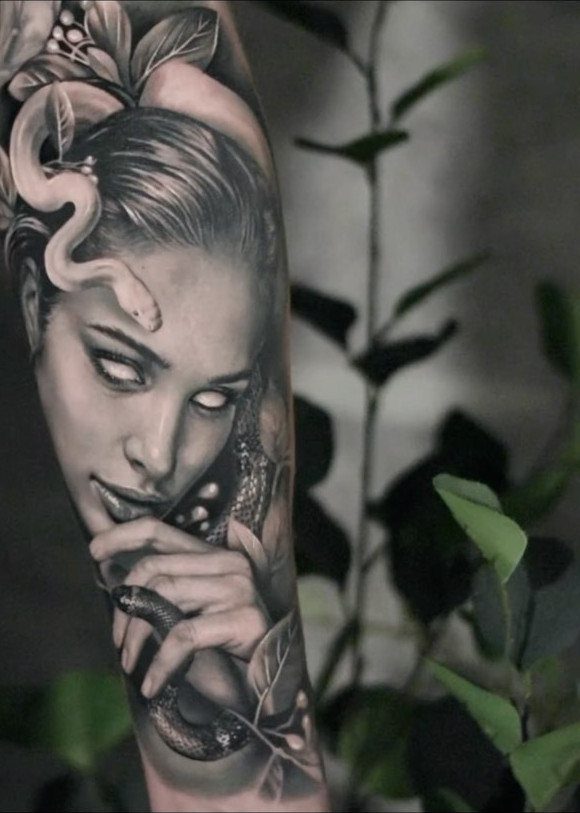
A portrait without color lives or dies on the face. Black and grey lets the artist build cheekbones, eyes and shadow through smooth gradients, so that is where I would spend the money.
Choose an artist whose healed portraits still look like the same person.
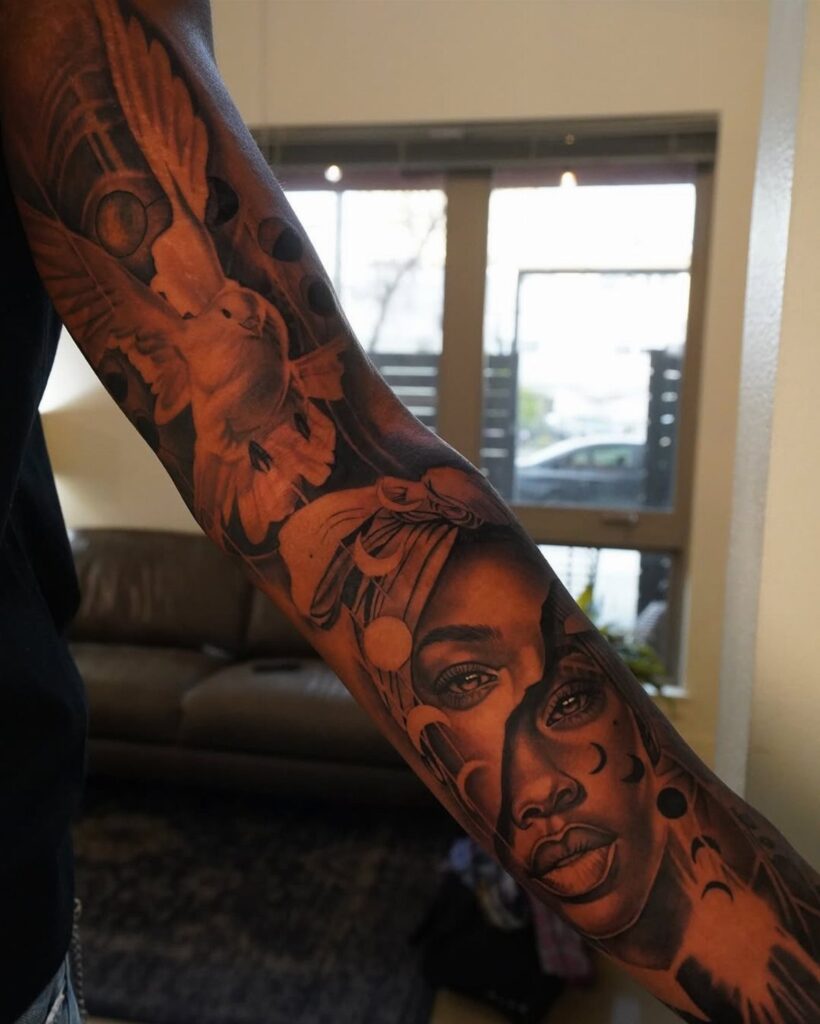
Adding a snake and leaves around the face, as on an arm, gives the design a frame and hides small flaws in shading. Expect a portrait to take longer than most pieces on this list.
Aftercare for Blackwork Tattoos
Blackwork heals differently from a small script tattoo.
Heavy black packing and big solid fills beat up the skin far more than a light line job does; the damage looks more like a scrape than a few pinpricks, so a dab of ointment and a bit of wrap won’t carry you through healing.
Treat aftercare as required, not optional. Skip it and the piece can start flaking before the first week is out, which is exactly what ruins an even black.
Follow the written instructions your artist gives you, since they know how they packed the ink. Ask about them before the appointment, not after, so you can buy supplies ahead of time.
Technique matters here too. Black has no color to pull the eye away, so every line, edge and gradient is on display, and a solid fill usually takes several passes before it looks even and fully opaque.
Good aftercare protects that work; it cannot repair a weak fill.
If a spot looks patchy once healed, contact your artist about a touch-up rather than picking at it or guessing at fixes.
Frequently Asked Questions
What are some creative black art tattoo ideas?
Geometric mandalas built from dotwork, a blackwork sleeve of swirling ink, and peonies with clear bare-skin gaps between the petals all work well.
A full scene on a leg, say a dancer, a goat, a crescent moon and a few clouds, holds up in black alone because the contrast does the work color would.
Black and grey portraits and a rabbit with flowers on the calf are other strong choices. Placement matters as much as subject, so I would pick the idea around the body part it will sit on.
What are some different types of black tattoo ink?
The styles are better described by how the black is used than by ink type. Solid blackout packs skin with full black, dotwork builds soft shading from dots, and black and grey uses smooth gradients.
Artists also lay white ink over solid black for dimension, such as white floral outlines. Budget for a touch-up if any white is in the design, since it lightens sooner than the black around it.