Whether a small arm tattoo still looks sharp years from now depends on how much space the design gets, not on the subject.
Pick the smallest piece that still has open skin around every detail, and save the fine work for a larger spot.
1. Small Tattoo
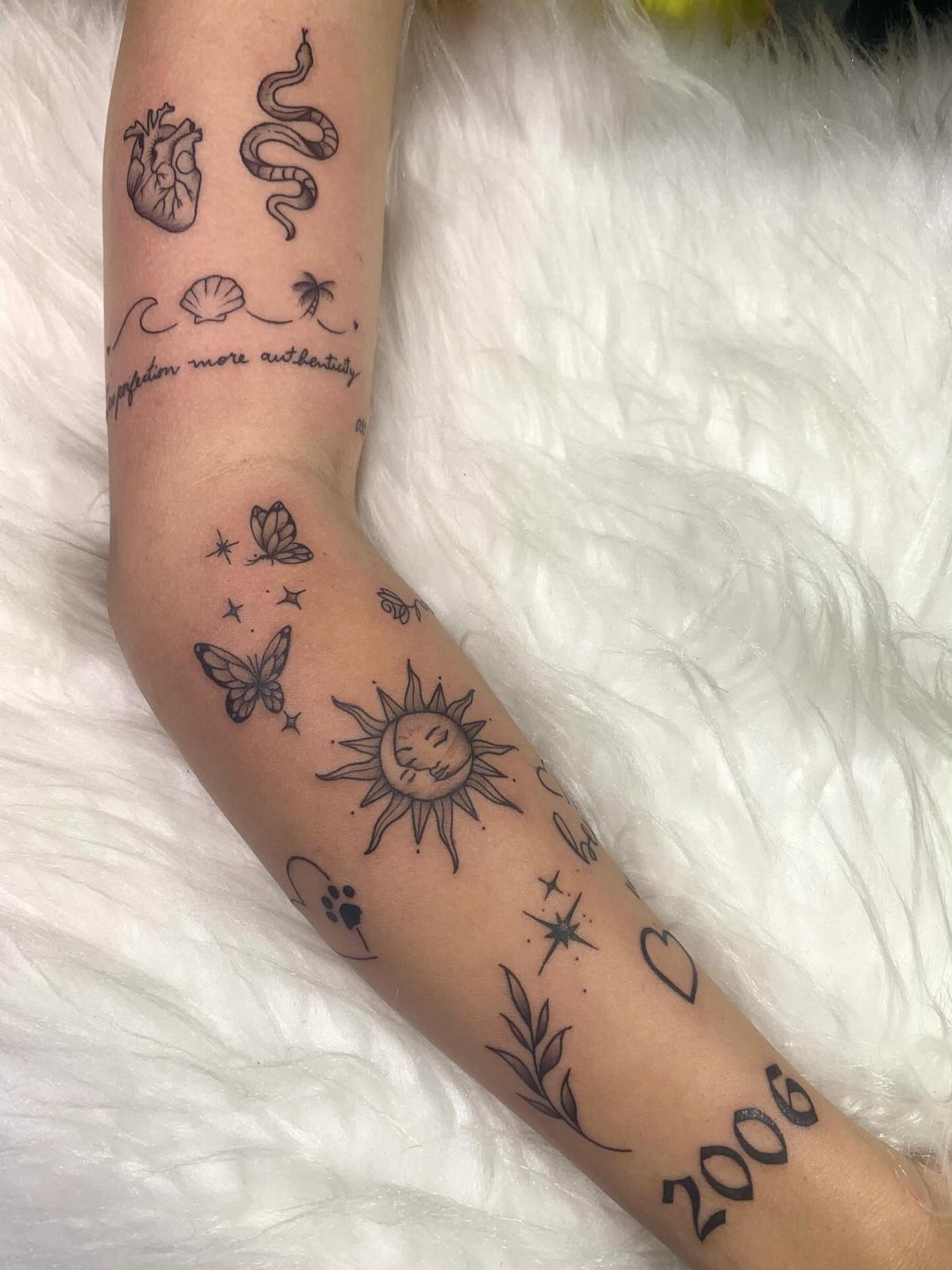
A cluster of micro pieces suits a first-timer better than one big commitment.
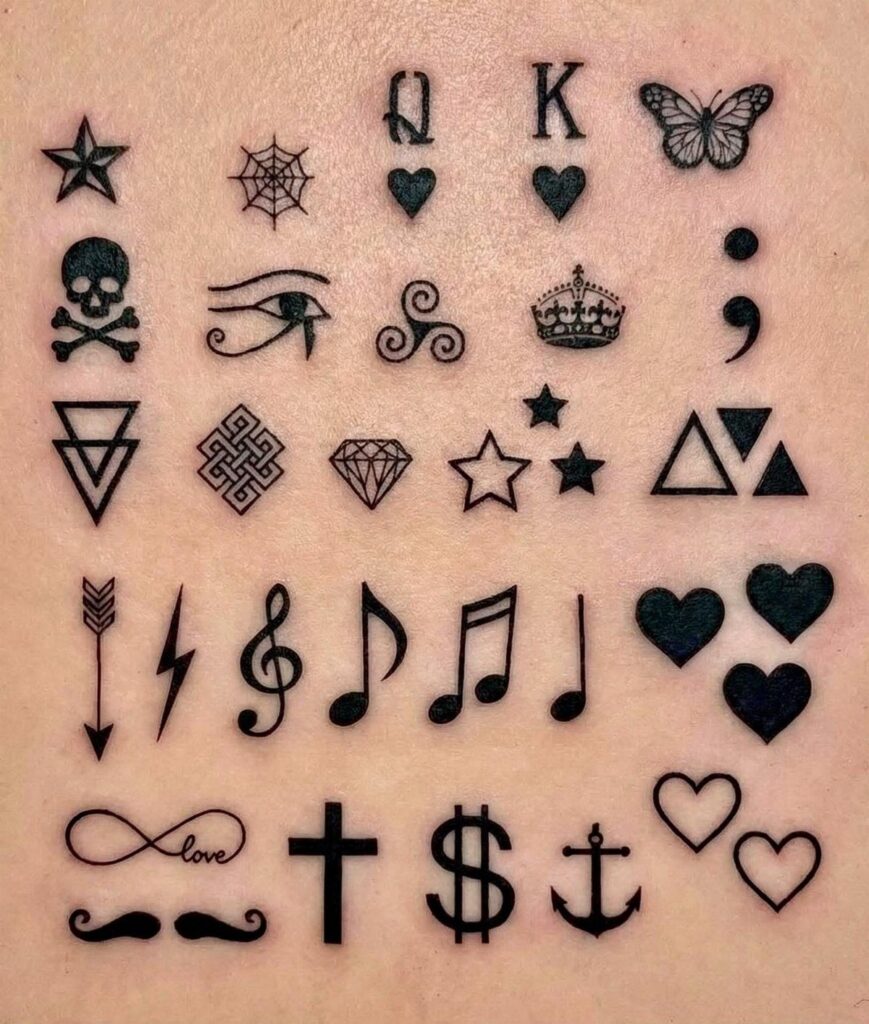
Solid black holds up best on small arm pieces, and each one needs a gap of at least a quarter inch around it so the lines don’t blur together as the ink settles over the years.
Tiny designs crowd fast, and a cramped arm reads as a smudge from a distance.
A year or a short date is an easy small addition, and it hides under a sleeve.
From fine line designs perfect for wrists and fingers to cute and quirky symbols ideal for adorning your ankle or even behind your ear, there’s no end to the versatility a small inking offers thanks to its diminutive size.
2. Star Tattoo
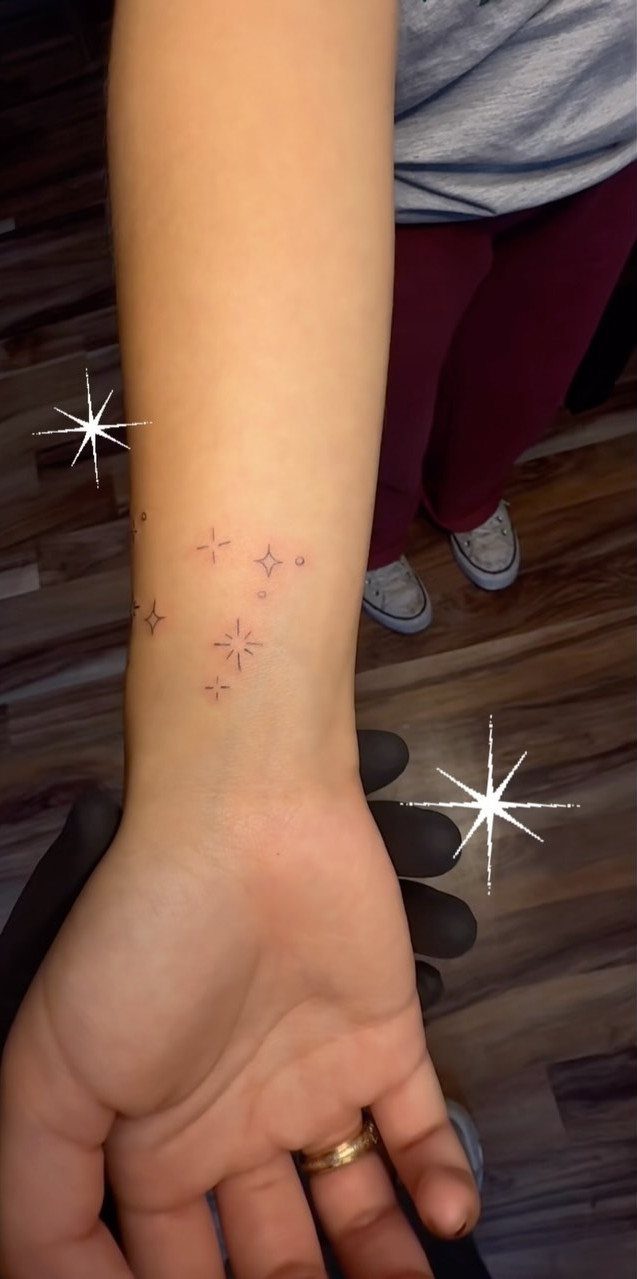
Four-pointed stars are the version I would pick: the sharp, simple shape stays legible at a tiny size, where a five-point star with thin angles tends to blur.
Two or 3 stars in different sizes, scattered along the inner wrist and forearm, look more natural than a tidy row. That gives the look of a loose constellation without needing a large area.
Points that are too thin tend to soften and close up within a few years, so request crisp tips with a little weight to the line. Easy to hide with a watch or a sleeve cuff.
3. Floral Tattoo
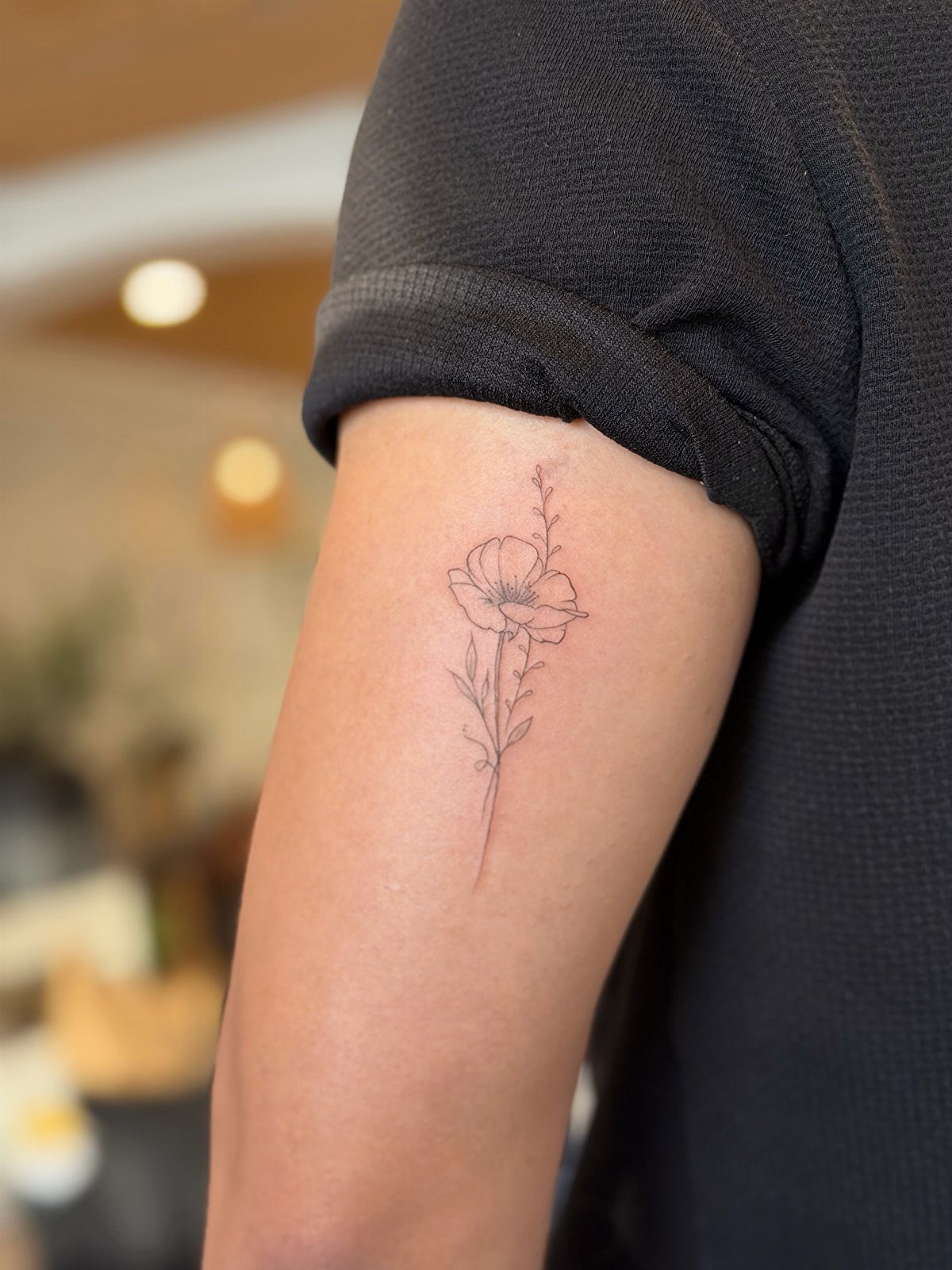
One flower on a stem, drawn in fine black line, is about as quiet as a floral tattoo gets. On the upper arm, a shirt sleeve covers it completely, which suits anyone who needs it hidden at work.
Choose a single bloom with a few leaves and skip the shading. Fine lines carry the whole design, so pick an artist whose line work you have seen healed, since fresh work can hide problems that show up months later.
If you want more later, the stem can grow into a bouquet.
4. Dragon Tattoo
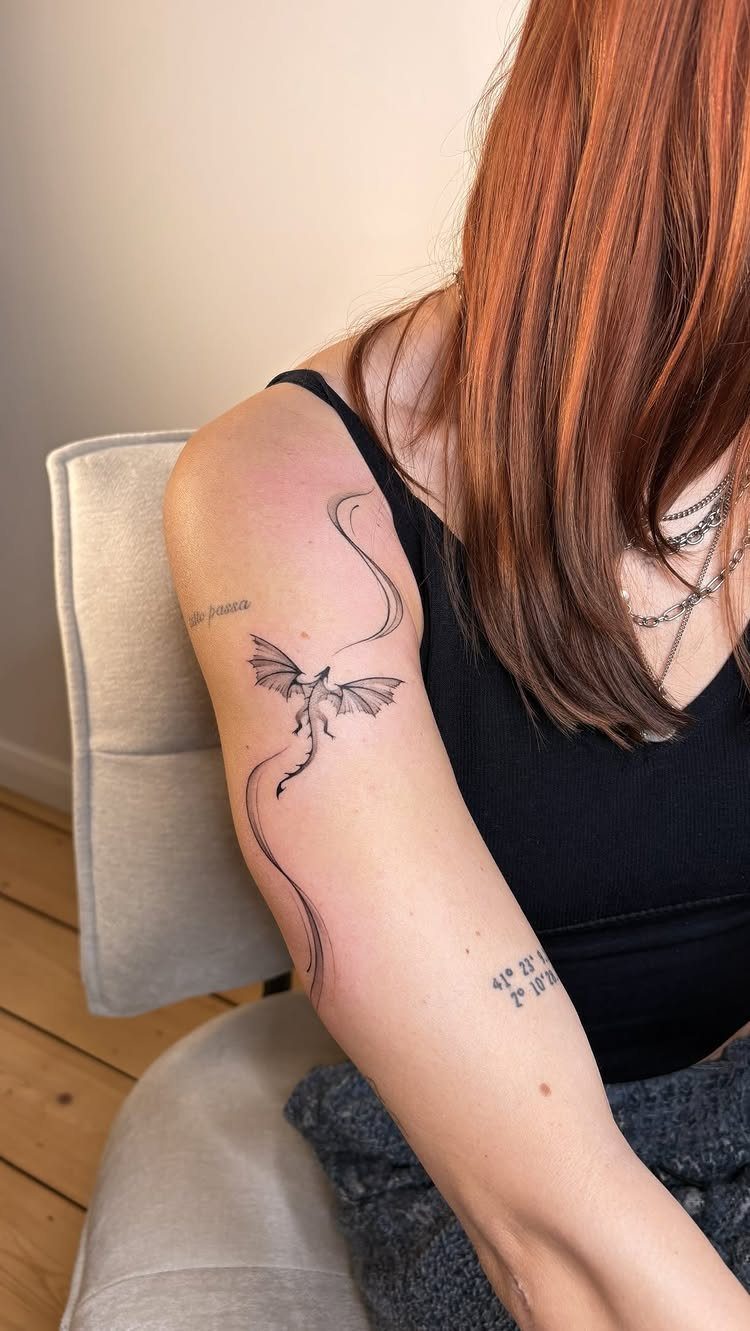
Dragons are loaded with meaning, so I would pick one for how it looks, not for a single symbol.
A small black dragon on the upper arm works when the shape is clear: a curved body, a readable head, and not too many tiny scales.
Black ink alone keeps it sharp as it ages. Fill every inch with detail and it turns to mush at this size.
Let the silhouette do the talking.
5. Heart Tattoo
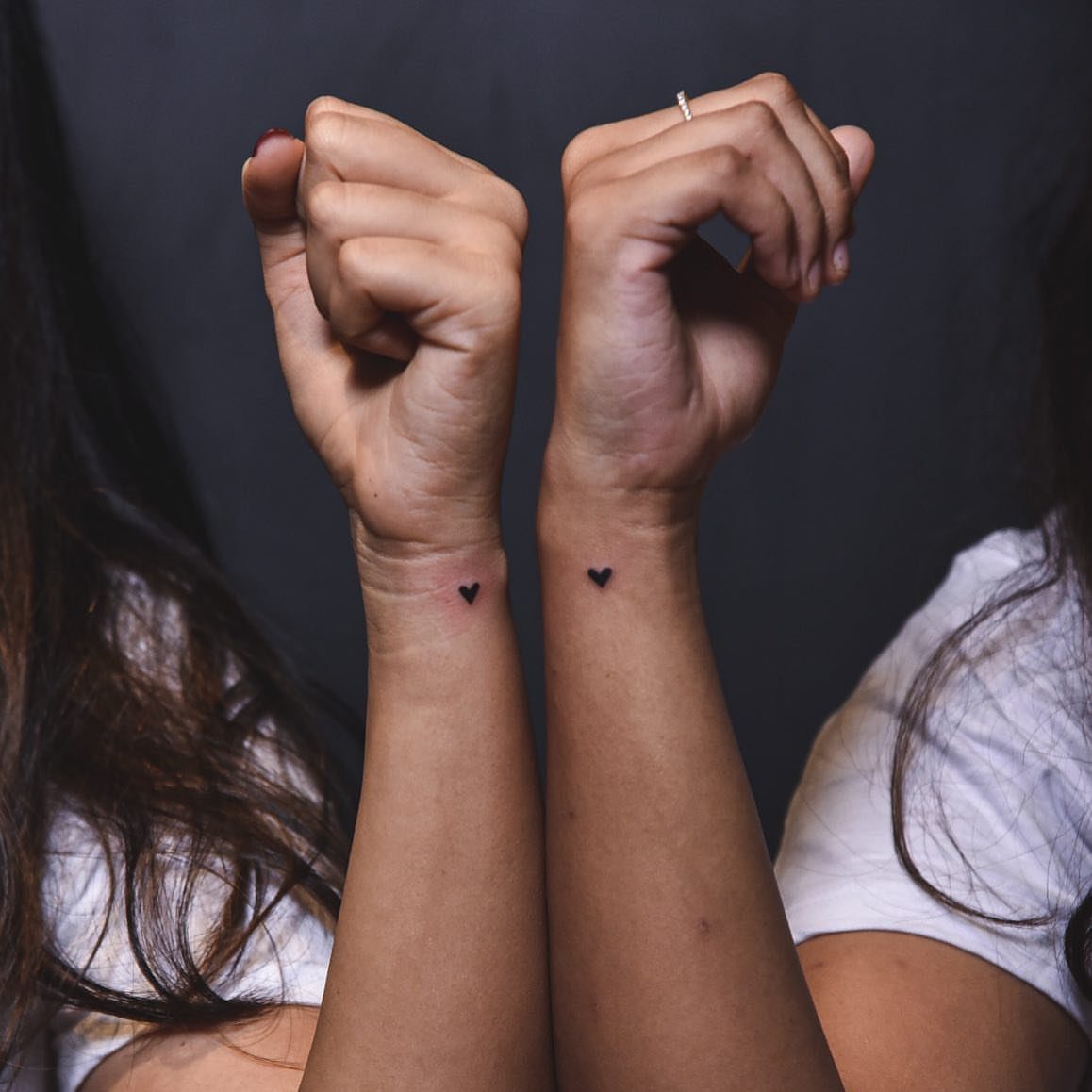
Two small solid hearts on the inner wrists make a clean matching tattoo for a couple, or for friends and siblings.
Solid black fill beats an outline here, because it holds its shape and looks bold even at a tiny scale.
Have both done in the same sitting by the same artist so the size and slant match. A heart can look lopsided at this scale, so check the stencil before the needle starts.
The inner wrist is visible, but a watch or bracelet covers it.
6. Tribal Tattoo
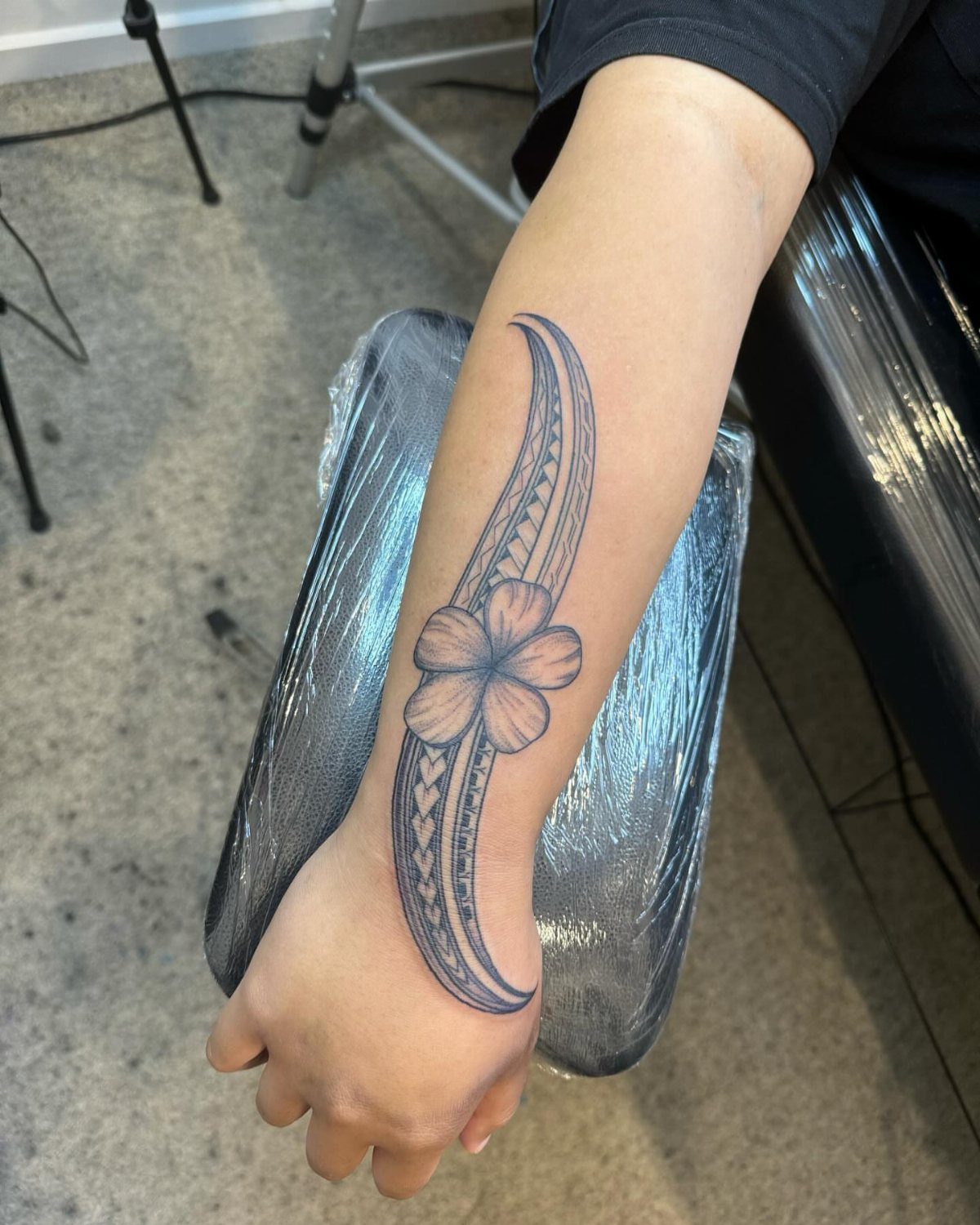
Tribal work is built on heavy black shapes, and that boldness is why it holds up at a small size. Here a flower sits inside the pattern, which softens the hard edges.
Before you commit, learn where a pattern comes from. Many tribal motifs belong to specific cultures, and I would choose an artist who can explain the design’s roots and avoid copying a sacred one.
On the forearm, thick lines age better than thin ones, so keep the black solid.
7. Lion Tattoo
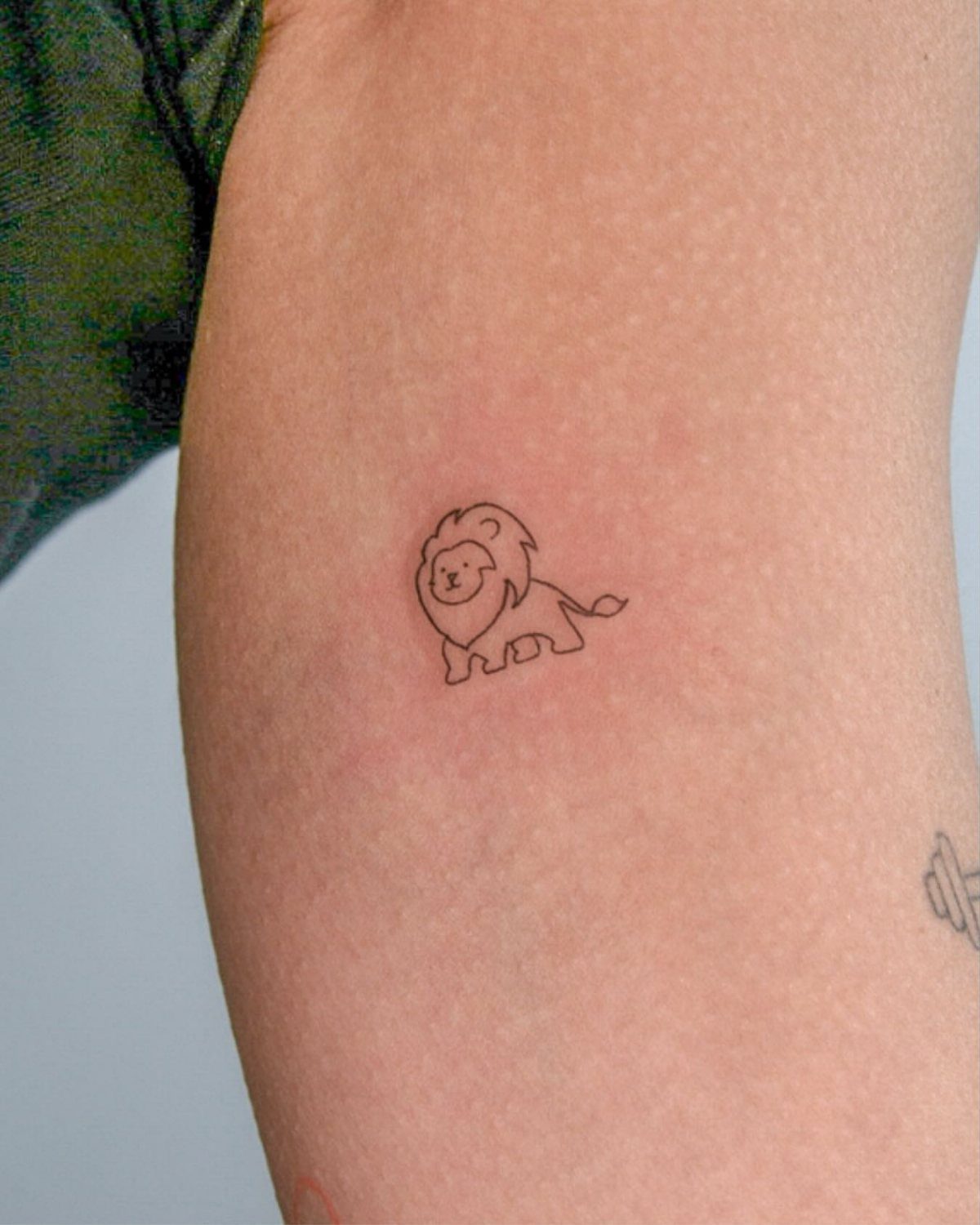
A lion drawn in clean black line is the version I would pick for a small arm spot.
Without shading, the design depends on a few confident strokes, so the mane and face need to be simple enough to read at a glance.
Skip tiny interior details like individual hairs. They crowd together as the ink settles, and open space around the lines keeps the face recognizable.
Ask your artist to show healed line work before you book.
8. Owl Tattoo
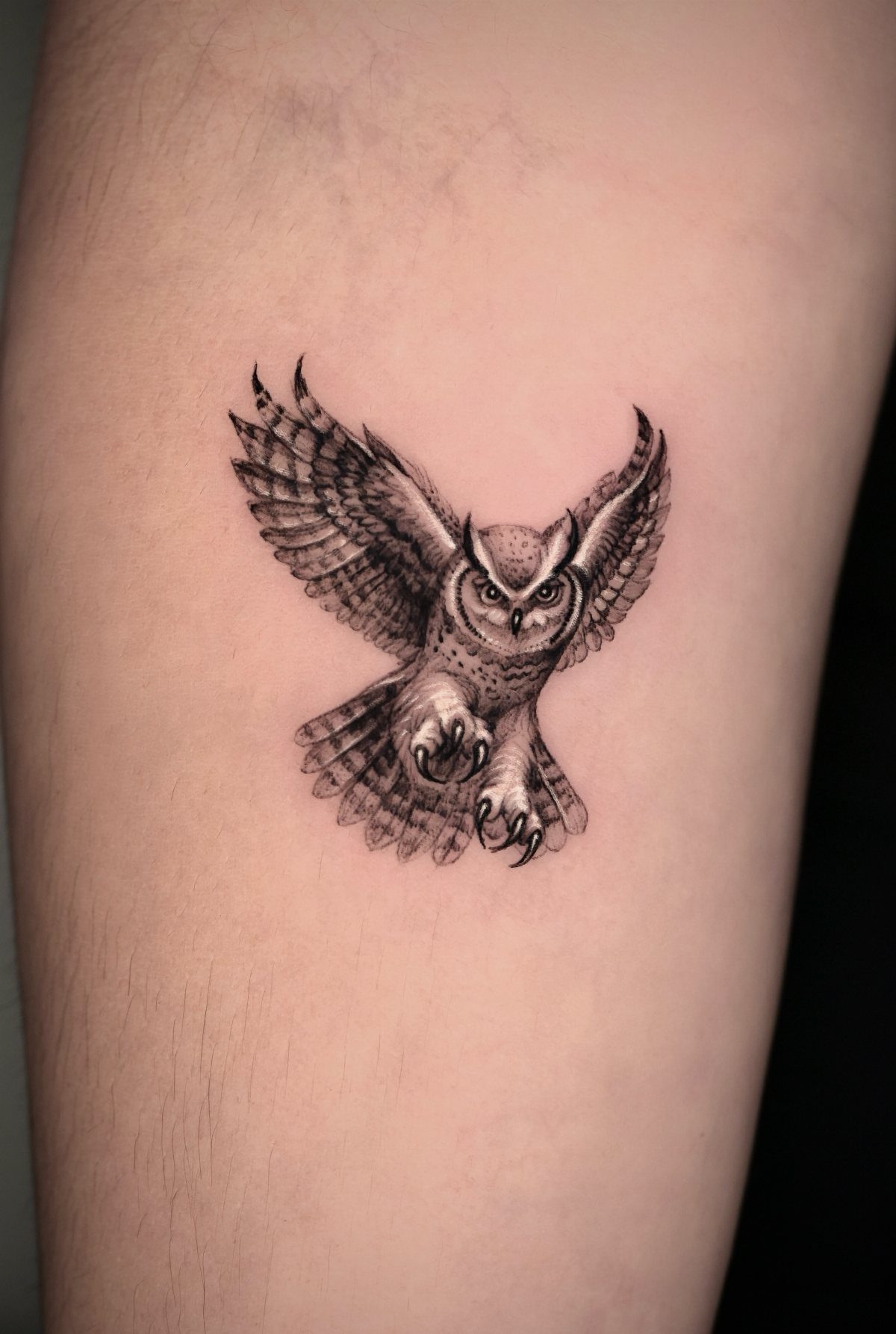
Owls in flight give you more drama than a perched one, because the spread wings create a long shape that suits the length of a forearm or upper arm.
Soft gradients in black ink are what make the feathers read, and that takes a steady hand. Choose an artist with healed shaded work in their portfolio, not just fresh photos.
At a small size, keep the feather detail limited to the wings and leave the body simpler. Too many tiny feathers will blur over time.
9. Angel Wings Tattoo on Arm
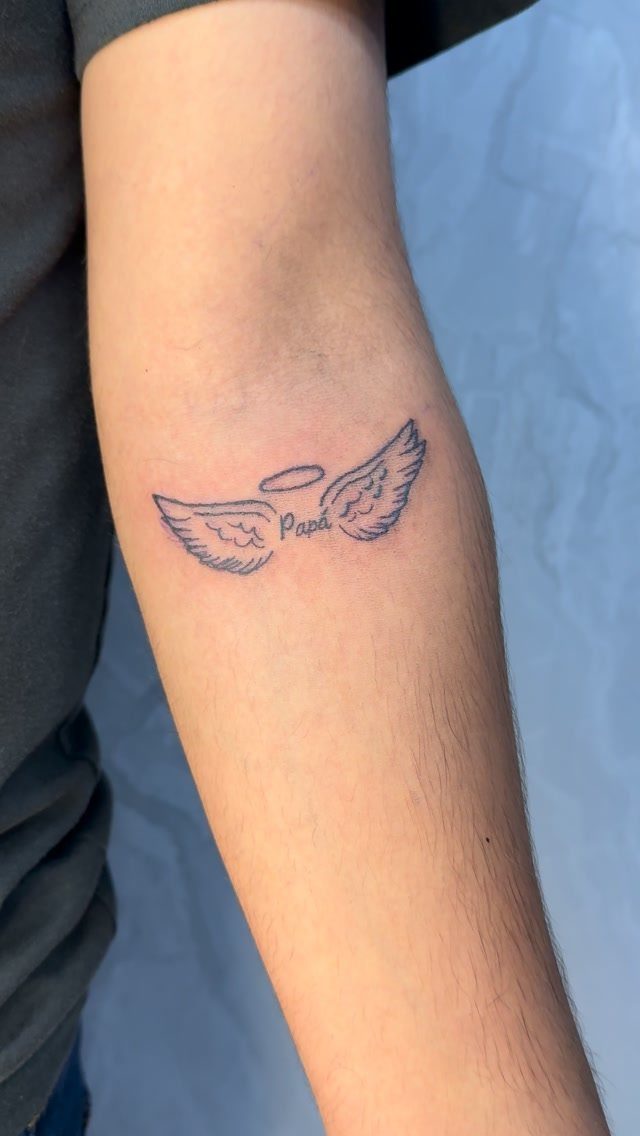
Wings and a halo with a name or word at the center turn a tribute into something personal. A short word like Papá fits cleanly, and the wings frame it.
Have the lettering drawn first, then build the wings around it so nothing squeezes the text. Letters shrink badly, so keep them big enough to stay readable.
If you want it more ornate later, light rays or scrollwork can be added around the outside without redoing the center.
10. Snake
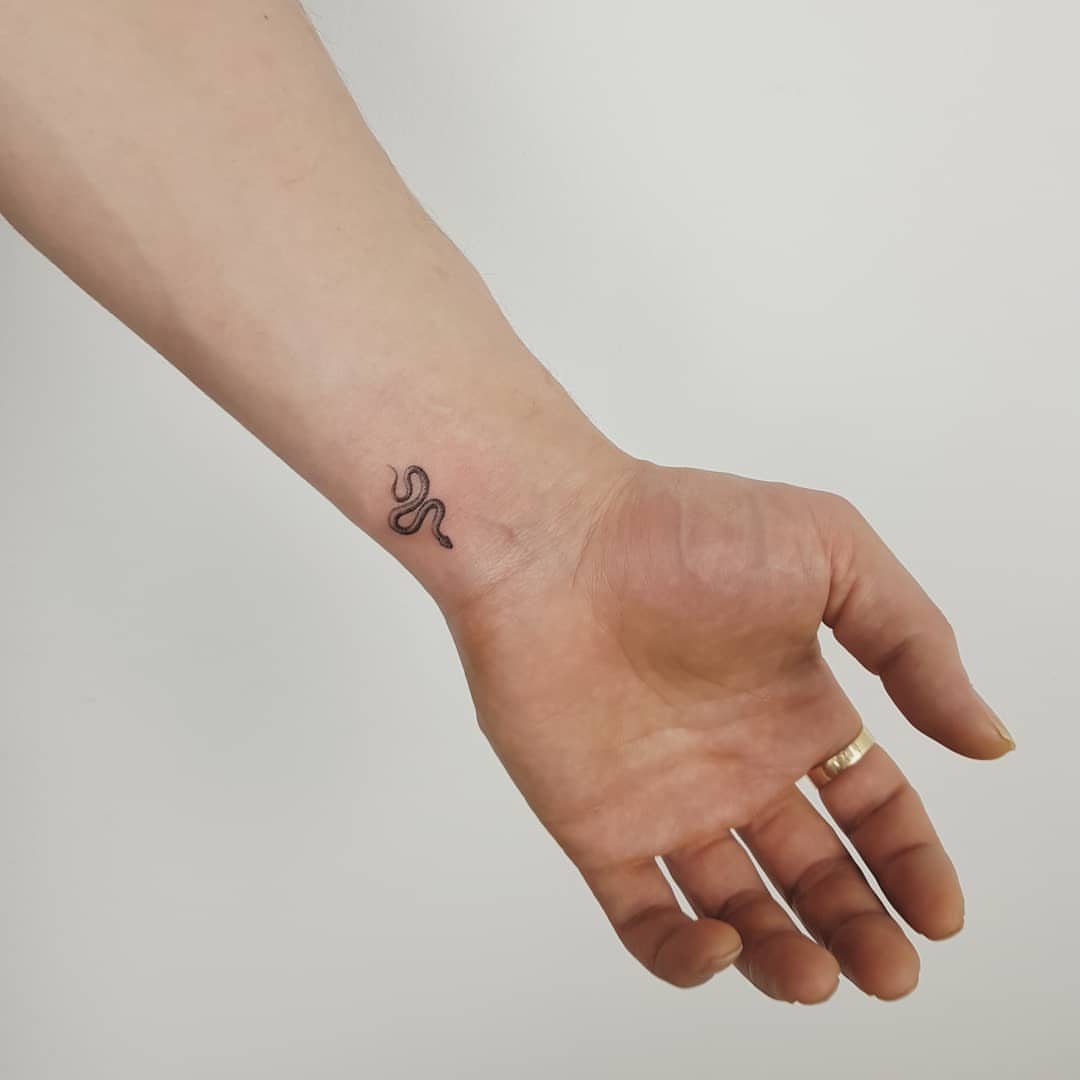
A single coiled snake, kept small and solid black, is a good way to carry a meaning of rebirth and healing without drawing much attention. The coil gives it a compact, round shape that sits well on the inner wrist.
I would keep the body as one bold line with minimal scale texture. Fine scales are the first thing to soften and fill in.
A wrist spot is easy to cover with a watch or cuff, though it stays visible in short sleeves.
11. Quote Tattoo on Forearm
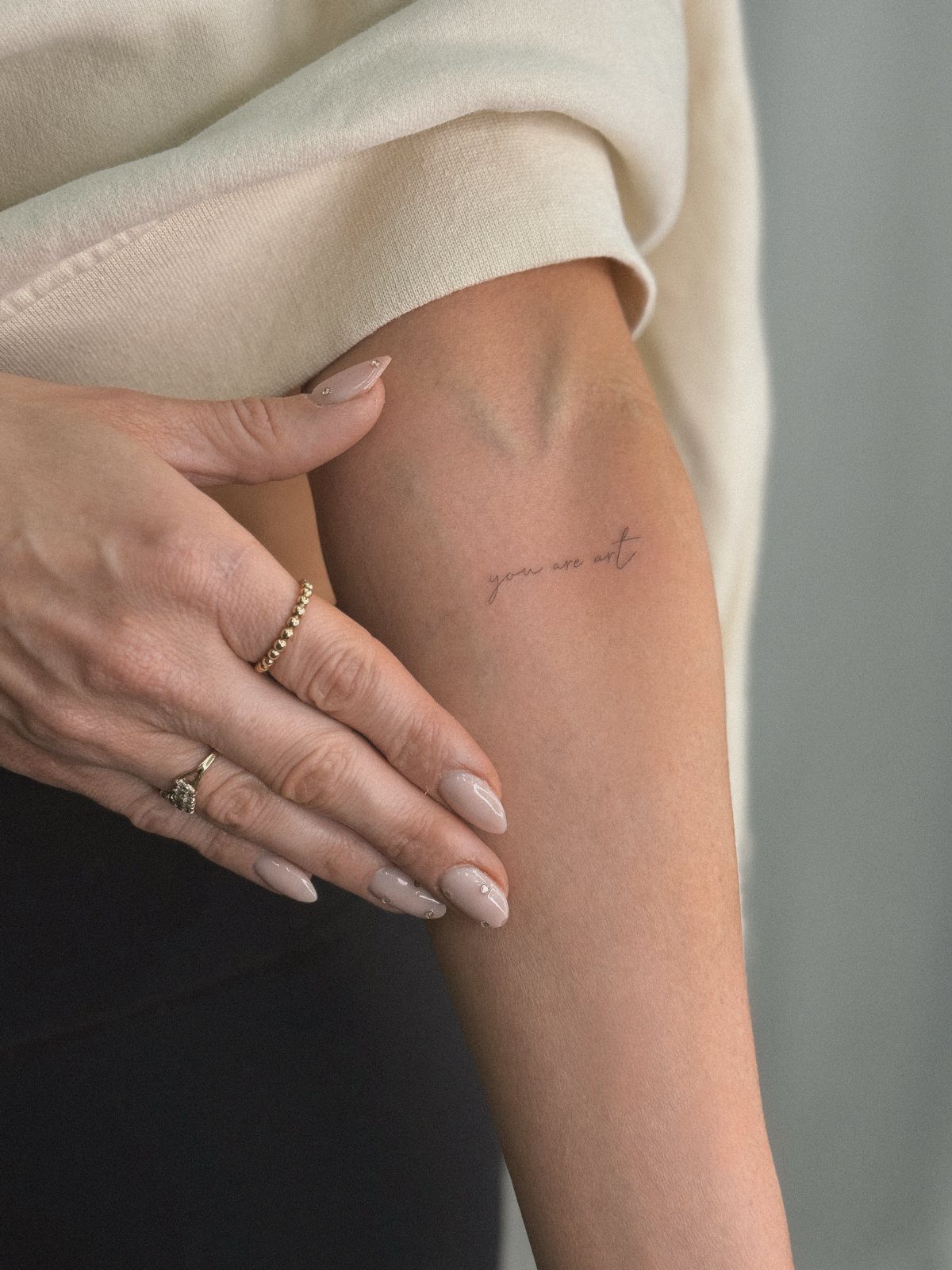
Short phrases work best on the forearm, and 3 words in cursive is about the right amount. Longer quotes force the letters small, and small letters are what blur first.
Pick a script with clear loops and some space between letters. Heavily tangled cursive can turn unreadable once the lines spread a little with age.
Have the artist print the exact wording and check the spelling twice before the stencil goes on. A typo in a quote is permanent, and the forearm makes it easy for everyone to see.
12. Crescent Moon
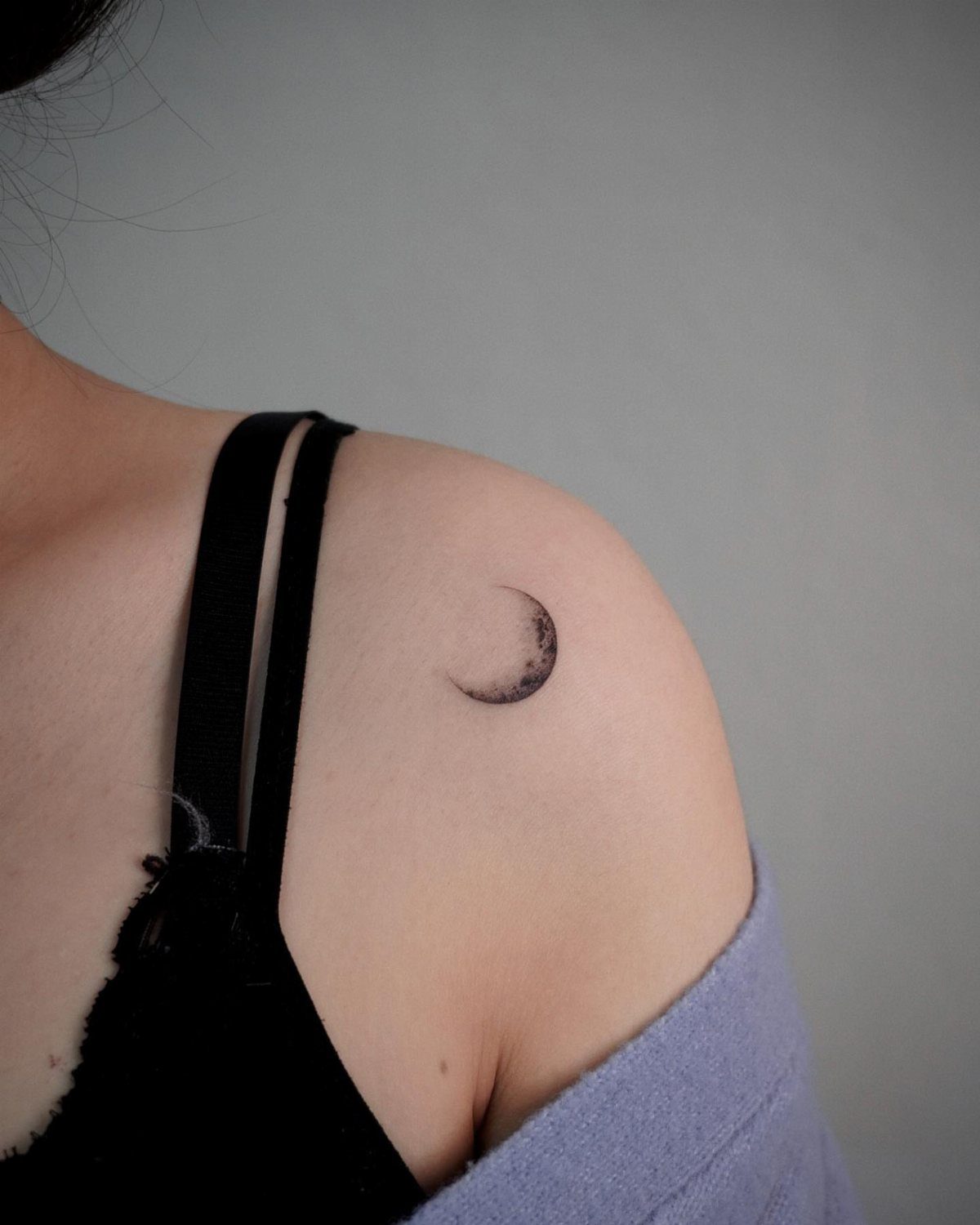
A crescent moon is about as simple as a design gets, and the light shading on this one gives it a soft, rounded look that a flat outline lacks.
Keep the shading gentle and the tips of the crescent crisp, since sharp points are what make the shape read as a moon.
It also pairs easily with a star or two later.
13. Geometric Tattoo
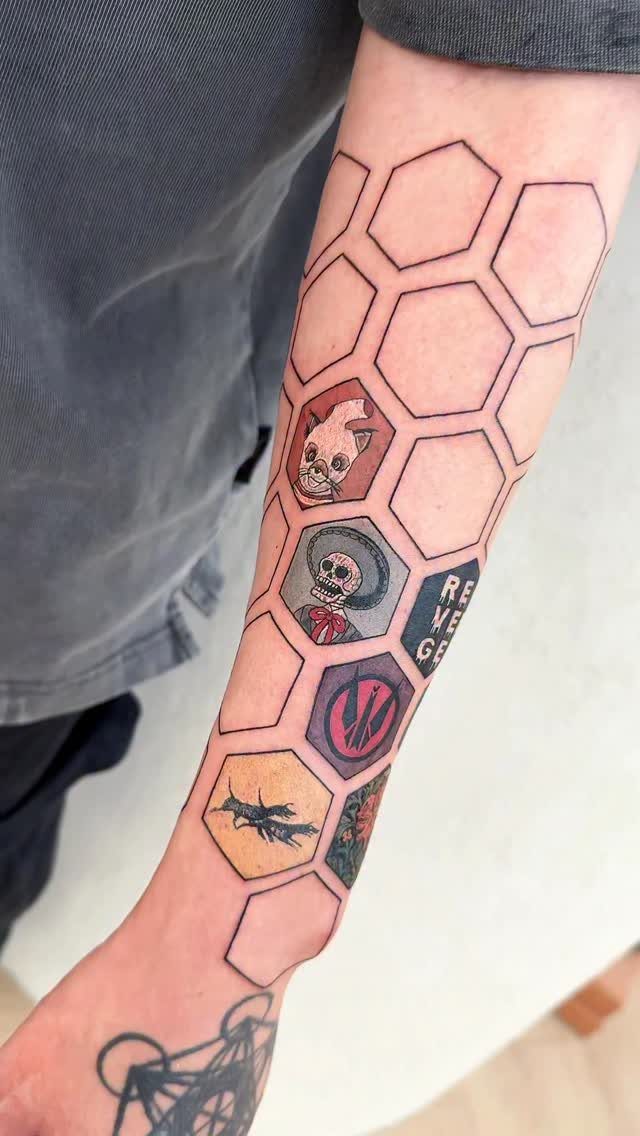
A honeycomb grid gives a geometric piece a built-in way to grow: each hexagon is a small frame, so you can start with a few cells and add more later.
I would fill most cells with plain black or leave them empty, and save the detail for a few.
Plan the outer edge now so the grid can extend without looking patched.
14. Dove Tattoo
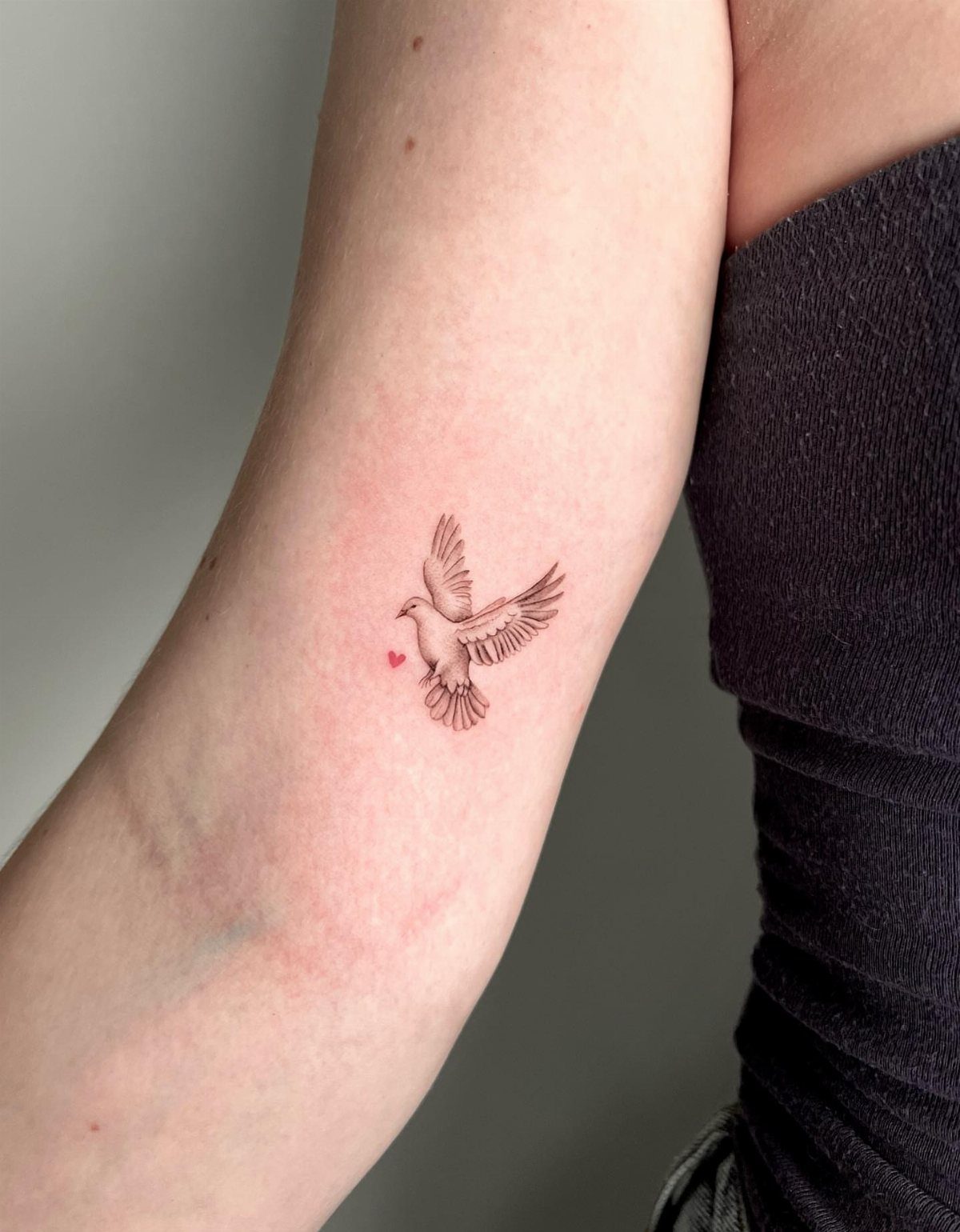
Peace and hope ride on a small dove, and a single tiny red heart is the only color it needs. I would keep everything else in black, so the heart reads as the one accent.
Draw the wings with a few clean strokes, not individual feathers. At this size, feather detail softens into a gray patch.
The inner forearm suits it well, and a sleeve covers it when you need that.
15. Butterfly Tattoo
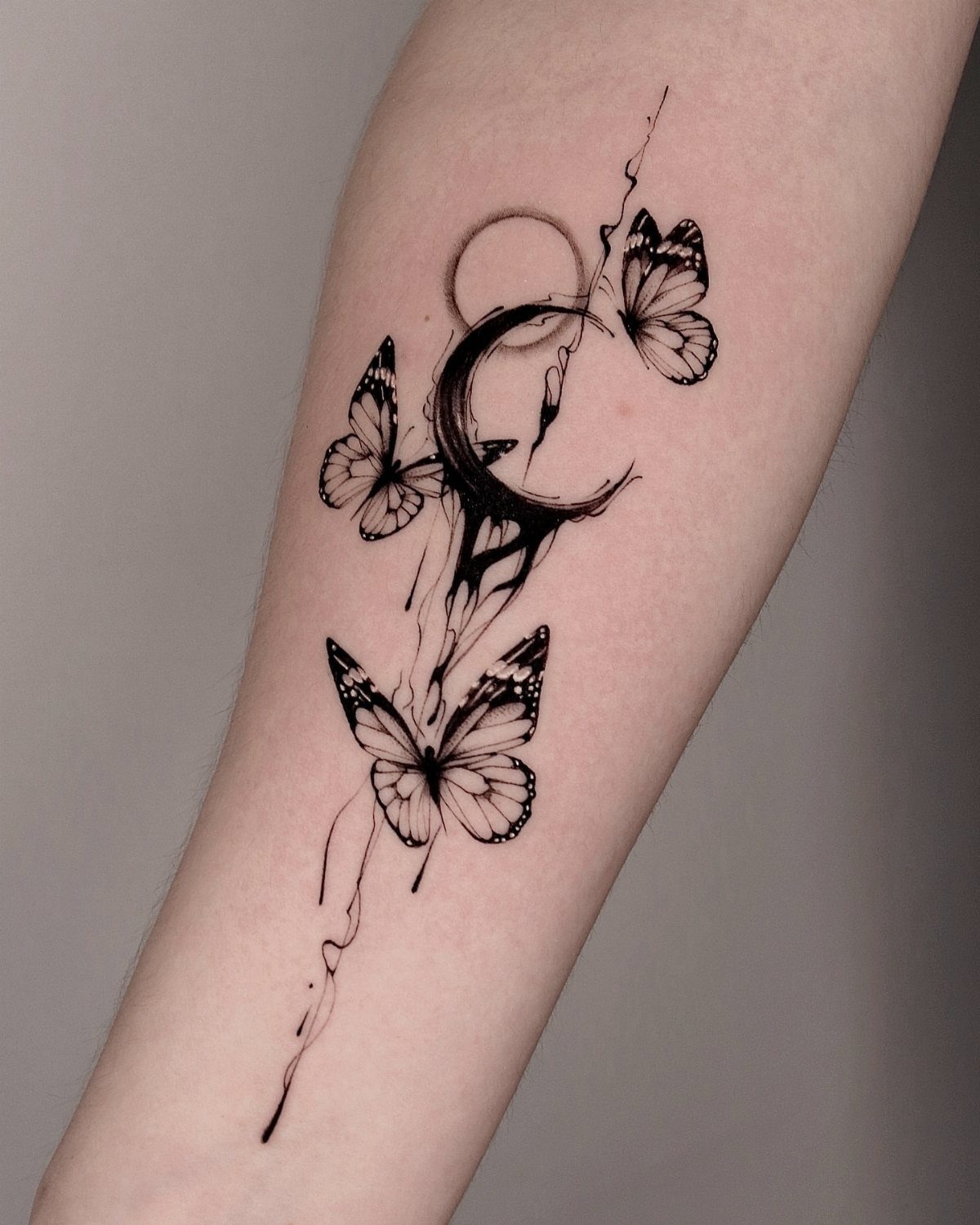
Three butterflies of different sizes look more alive than one, and a crescent moon gives them somewhere to belong. Ink drips and splashes around them add movement without adding detail that could blur.
Keep the butterflies in solid black with simple wing shapes. Space them apart, a quarter inch at minimum, so each stays distinct as the lines settle.
Splashes should stay sparse; too many turn the piece into a smudge.
16. Flame Tattoo
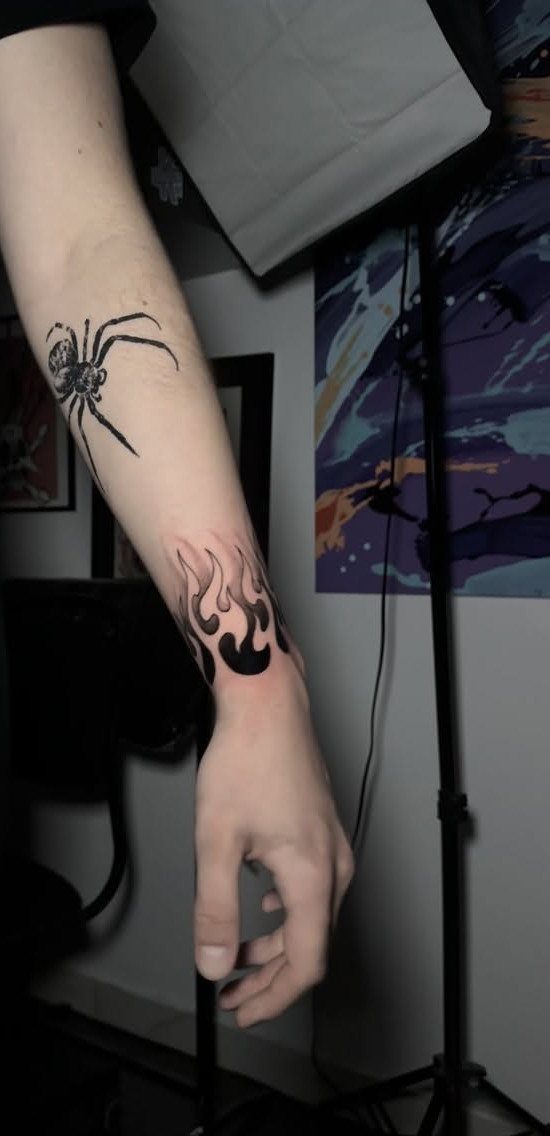
A flame wrapped around the wrist is a design I like because the shape does the work: a few tapered, curving tongues of black, no shading needed.
Wrapping means the artist must draw it to follow your wrist, so ask for a stencil placed on the skin and check it from several angles before the needle starts.
Keep the tips sharp and the gaps between tongues open. Thin gaps close up first.
17. Small Planets Tattoo on Arm
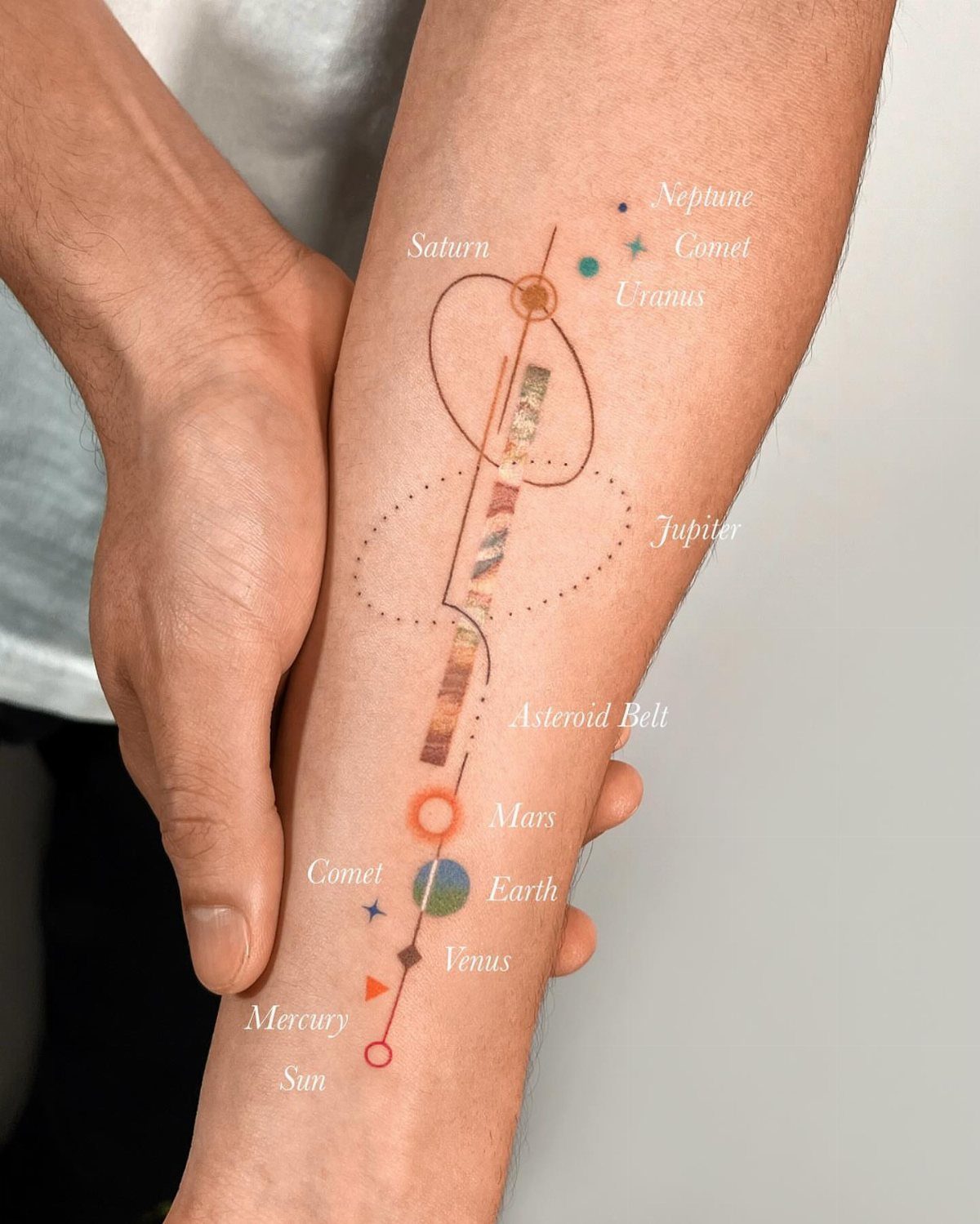
A solar system on the forearm works well as a lined-up row, since the arm’s length gives each planet its own space.
Labels in handwriting add charm, but letters are the first thing to blur, so keep them larger than feels necessary.
Skip the labels if you want it smaller. A small Saturn with its ring is recognizable without a word.
Color is a choice here; I would pick one or two accent hues and keep the rest simple.
18. Spider Tattoo
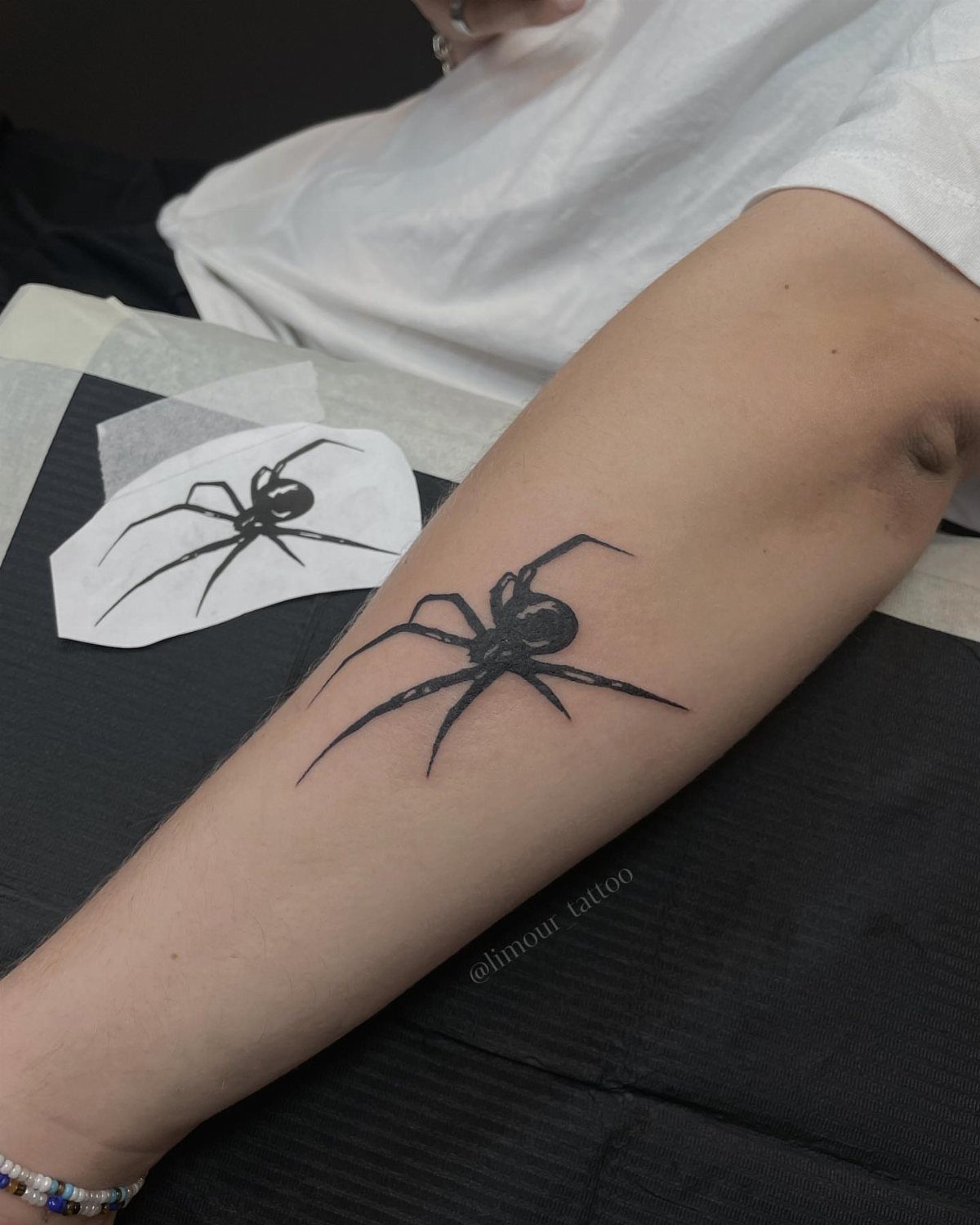
A spider is a good fit for a weaving, creative meaning, and black ink keeps it sharp. I would draw the body as a solid shape with slightly curved legs that stay clean and separate.
Leave a visible gap between legs. When they run close together, they merge into a dark blob as the ink spreads.
The forearm gives a flat surface for the stencil, so check the placement before the artist starts.
19. Thunderbolt Tattoo
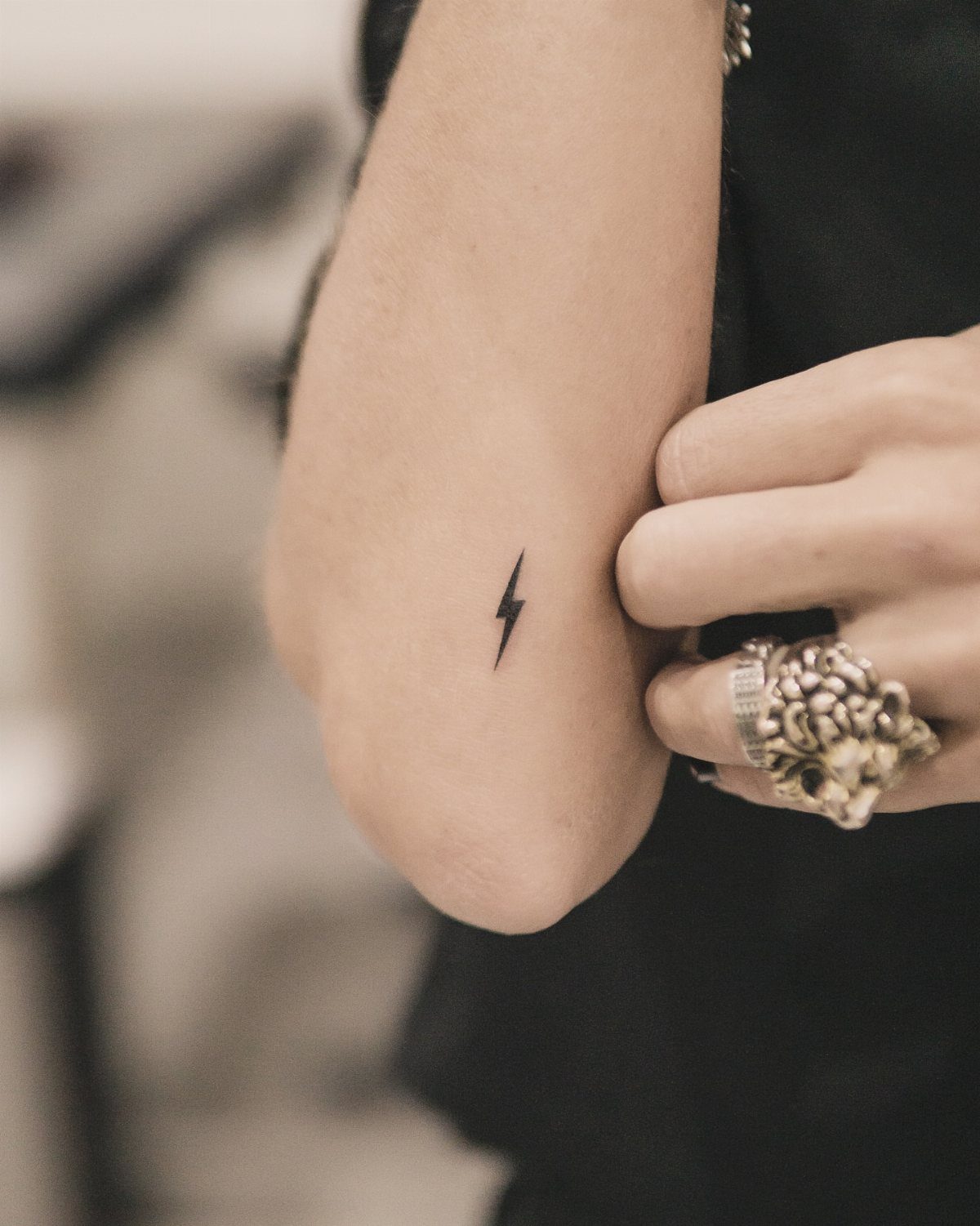
A single bolt in solid black is about as direct as a power symbol gets, and it fits the inner forearm, where the long, narrow space matches the zigzag shape.
Keep the angles sharp and the bolt thick enough to hold its edges. Thin, tight zigzags tend to close up as the ink settles.
Ask for the stencil to run along the length of the arm, then check it with your elbow bent and straight.
20. Flamingo Tattoo
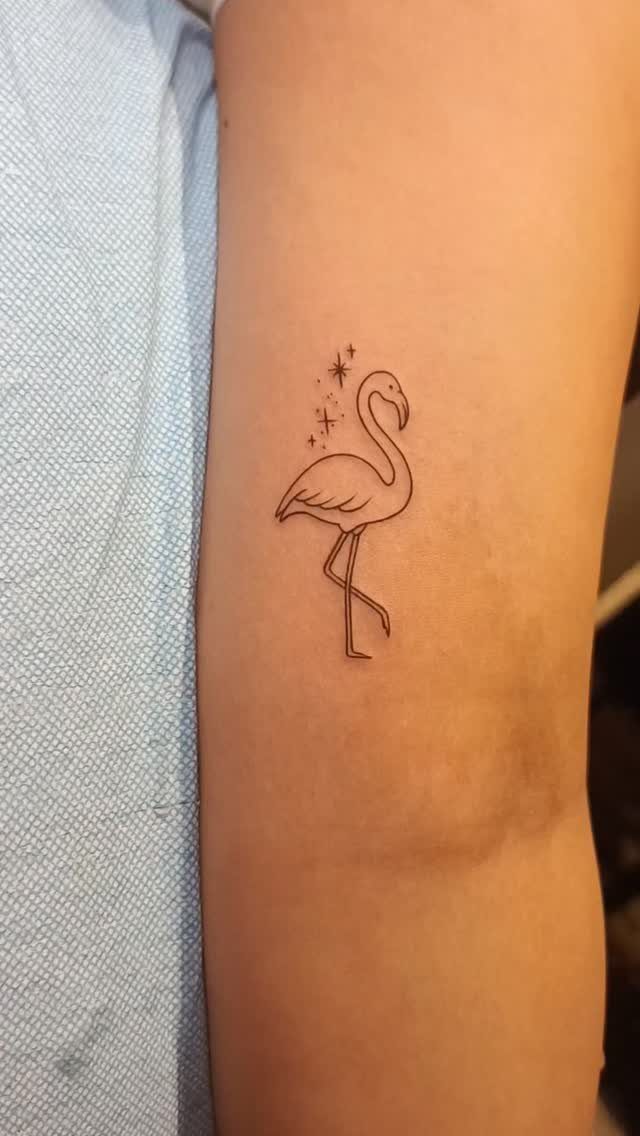
Flamingos make a playful pick, and a few small stars around one give the leg and neck room to breathe. I like it in fine black line, which keeps the mood light.
The neck curve and the thin legs are the parts to watch. Hairline strokes soften first, so have the legs drawn with a little more weight than feels necessary.
Scatter the stars at different sizes, and leave open skin between them and the bird so nothing merges.
21. Cute Ghost Tattoo
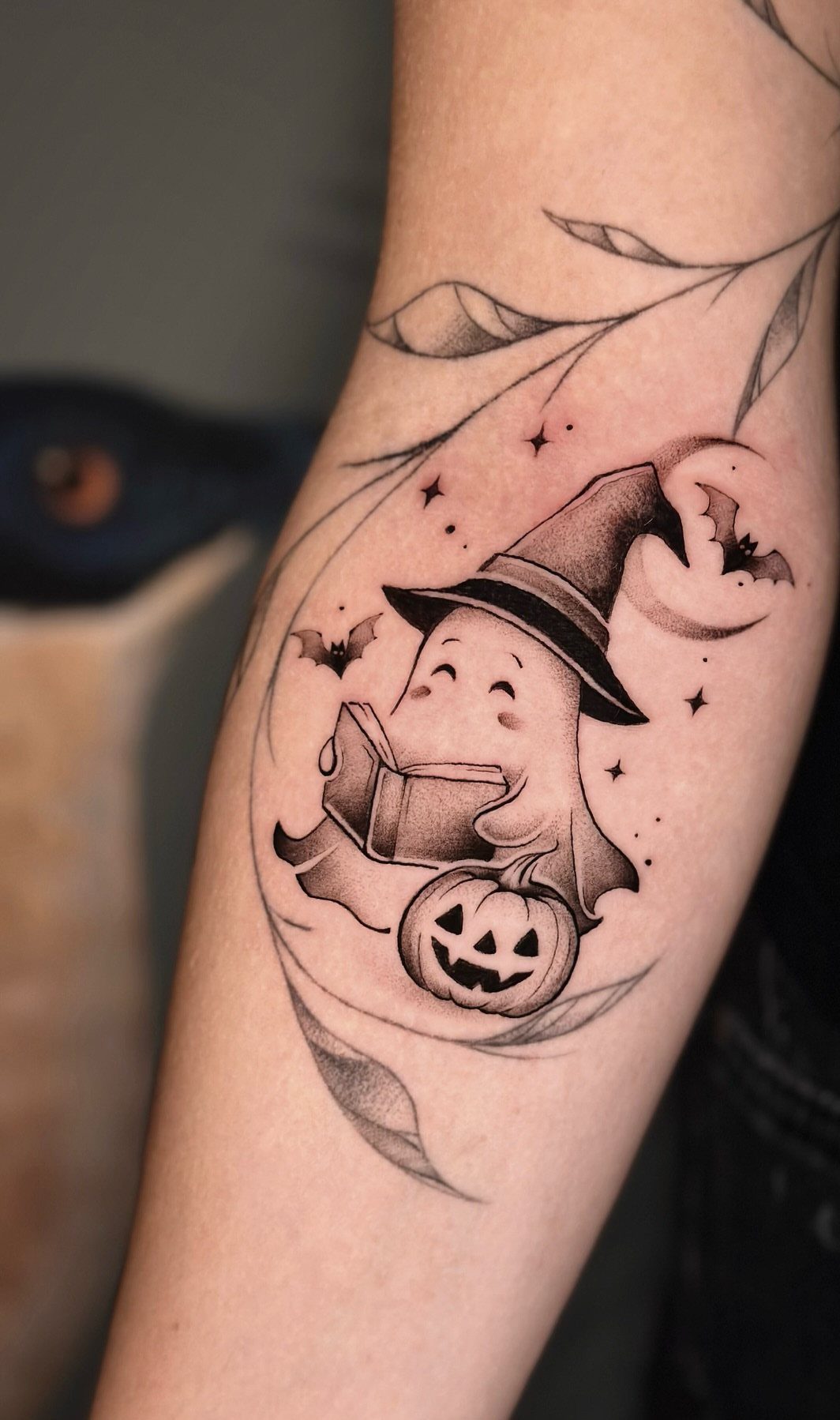
Small ghost designs hold up best when one or two props do the storytelling, such as a witch hat or a book, because every extra detail crowds the outline as it ages.
The ghost is the star, so I would make it the largest shape and keep the pumpkin and bats smaller.
Black and gray shading gives the sheet its soft folds.
If space is tight, drop a bat or two before shrinking the ghost.
22. Lego Character Tattoo
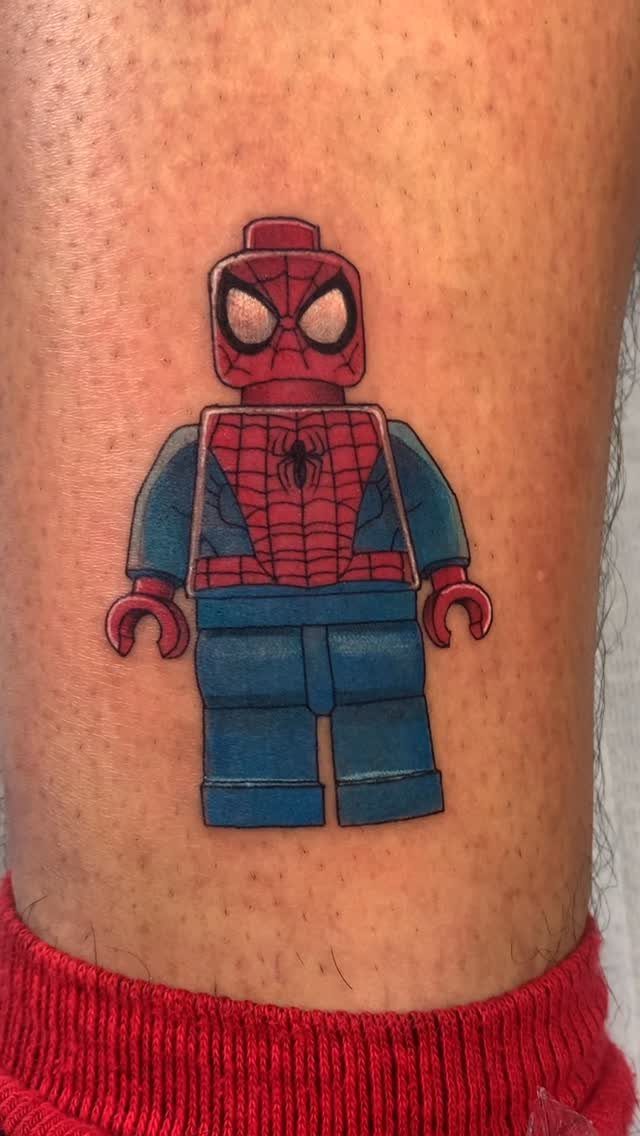
A Lego minifigure tattoo works because the blocky shapes are simple: a round head, a plain torso, clip hands. Red and blue ink suit a Spider-Man figure, and bold color packs well into those flat panels.
Keep the black outlines firm, since they hold the figure together as the color ages. Skip tiny printed details on the face and chest.
Choose a character you will still like later; nostalgia is the whole appeal here.
23. Anatomical Heart Tattoo
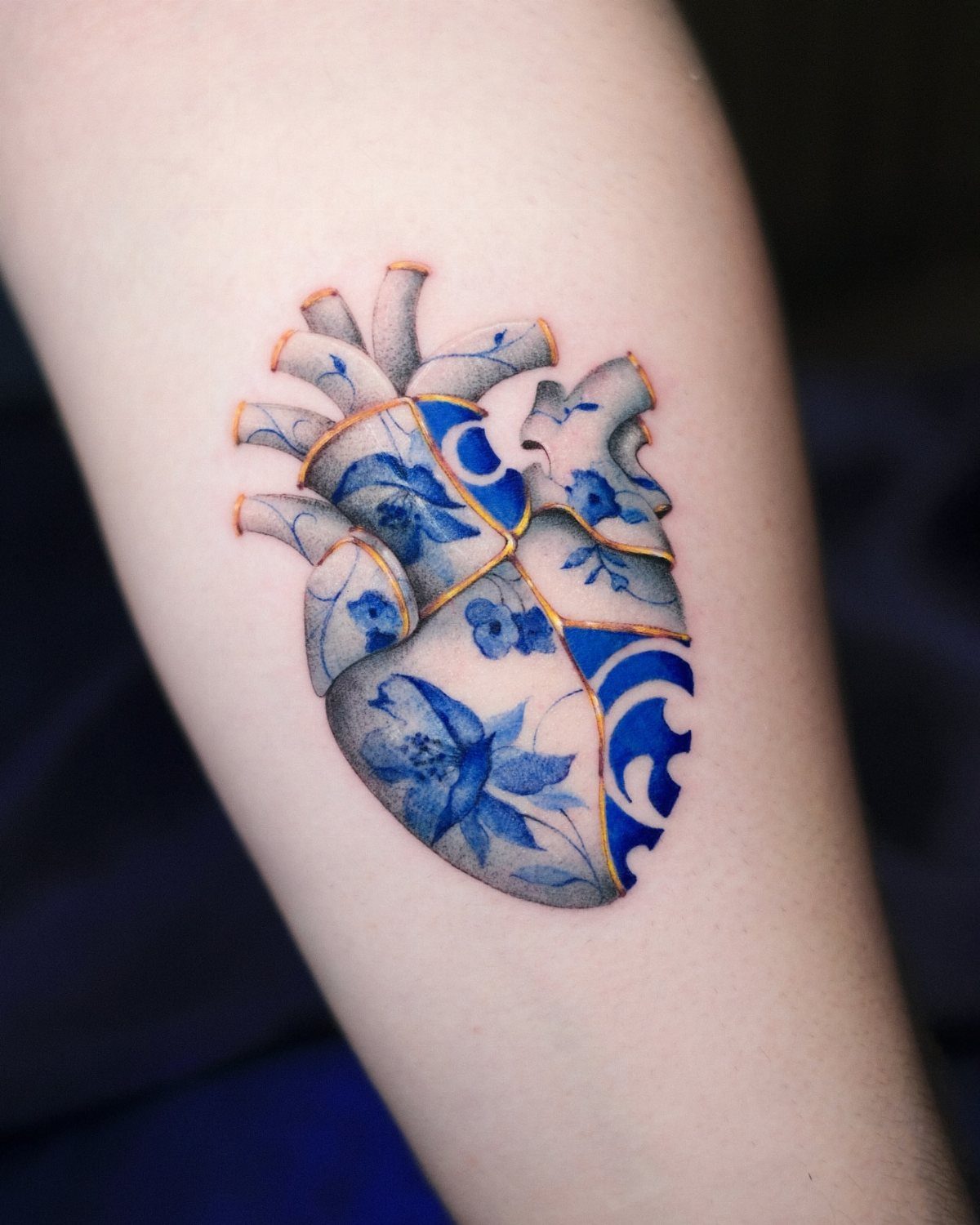
Porcelain styling works on an anatomical heart: blue and white shading with thin gold lines for the cracks gives a classic subject a different look. The cracks make the idea: they say something broken was repaired, not hidden.
Fine pattern work needs space, so I would not go tiny. Keep the heart large enough that the blue patterns stay distinct.
Gold ink can look different on each skin tone, so check with your artist on how it will read on yours.
24. Mini Faces Tattoo
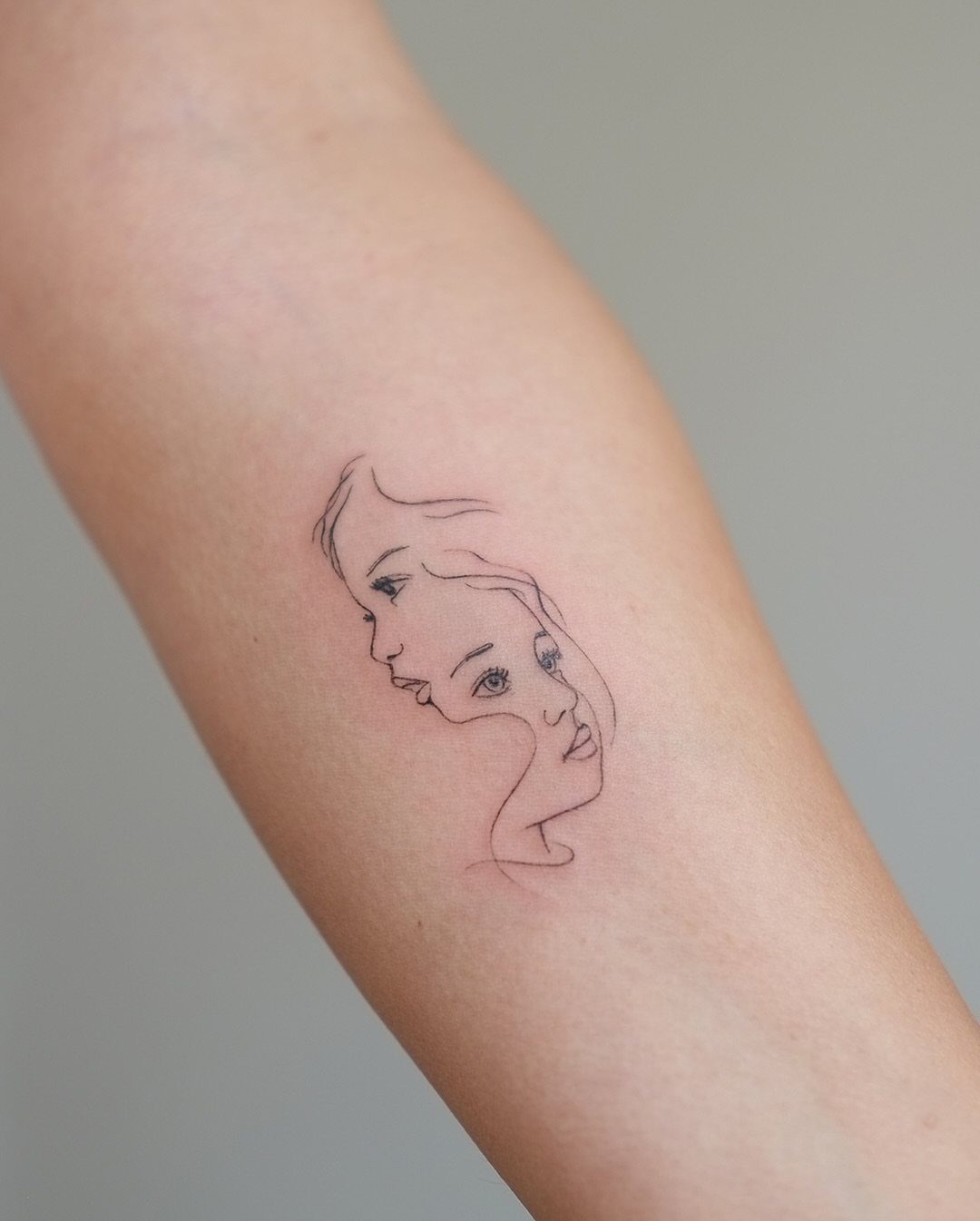
Mini faces tattoos make for a personal pick, since the faces can be drawn from your own choices.
Overlap keeps it compact. Use one continuous line where you can, with few details inside each face.
Fine line needs a skilled hand, so check healed examples first. A simple profile also holds up better at this size than a detailed one.
25. Barbed Wire Tattoo
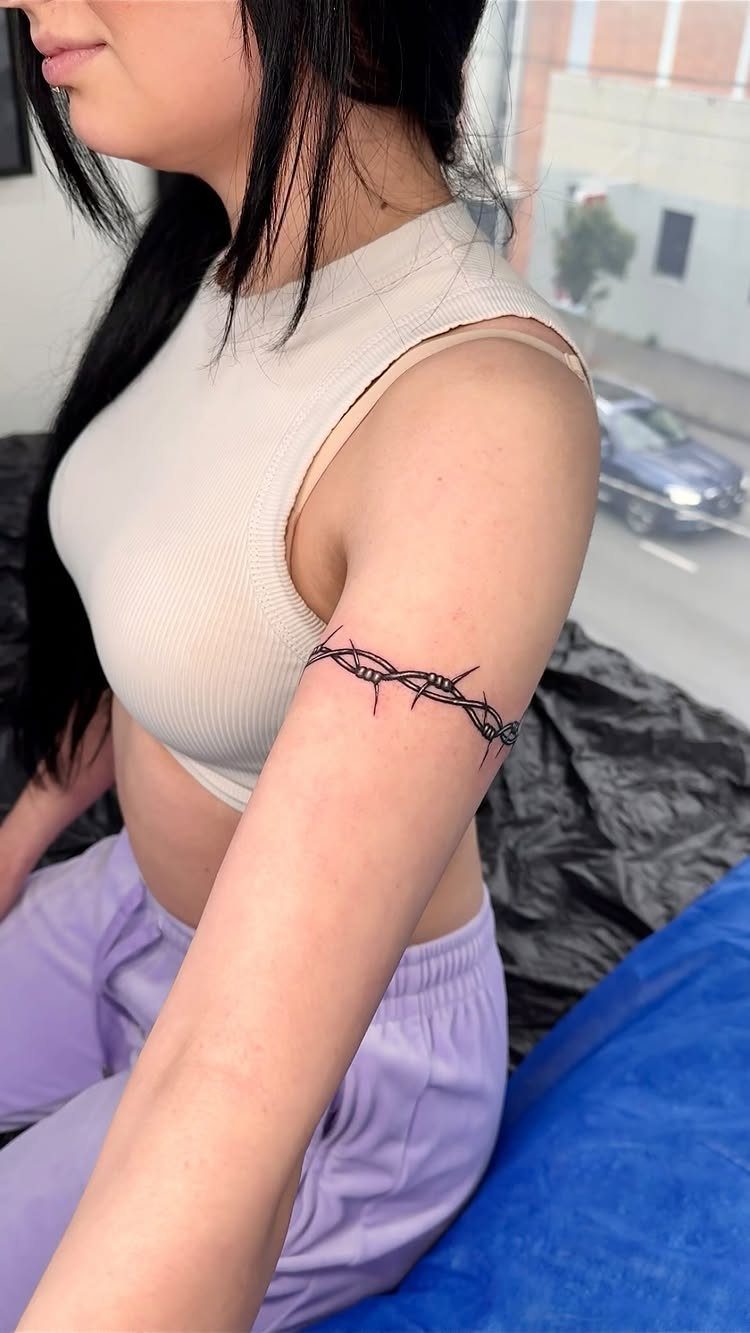
Barbed wire reads like jewelry when it circles the upper arm, because the band shape does what a bracelet or armlet would. Solid black suits it best.
Space the barbs well apart and keep each point crisp, because tight spacing blurs into a dark smear as the lines spread over the years.
Ask for the stencil to be wrapped around the arm and check it from the front and the back before the needle starts.
A sleeve covers it easily.
26. Connecting Hands Forearm Tattoo
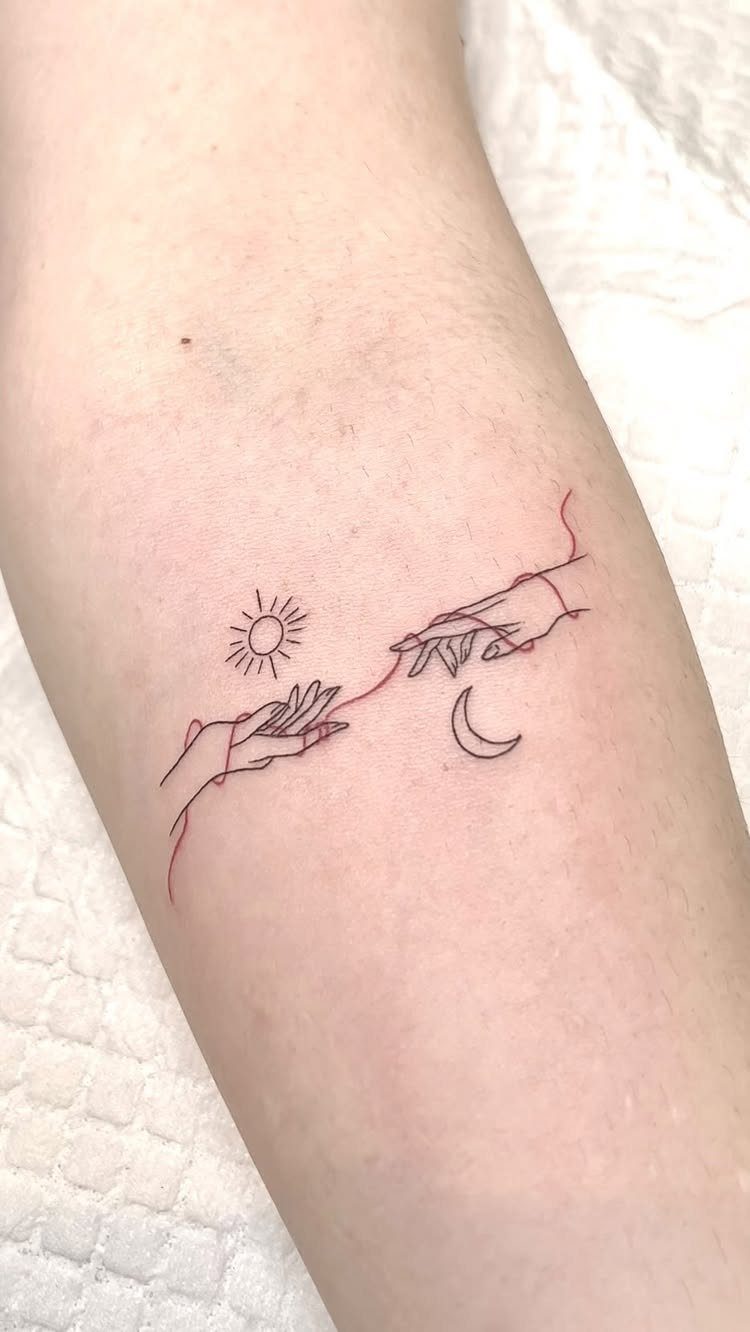
2 hands reaching toward each other, with a small sun and crescent moon, is a quiet way to say connection without a word of text.
Leave a clear gap between the fingertips, since that space is what makes the reach read. Keep the sun and moon small and open so they don’t crowd the hands.
Fine line leaves little room for error, so look at healed photos of an artist’s work before you put down a deposit.
27. Blackberry Branch Arm Tattoo
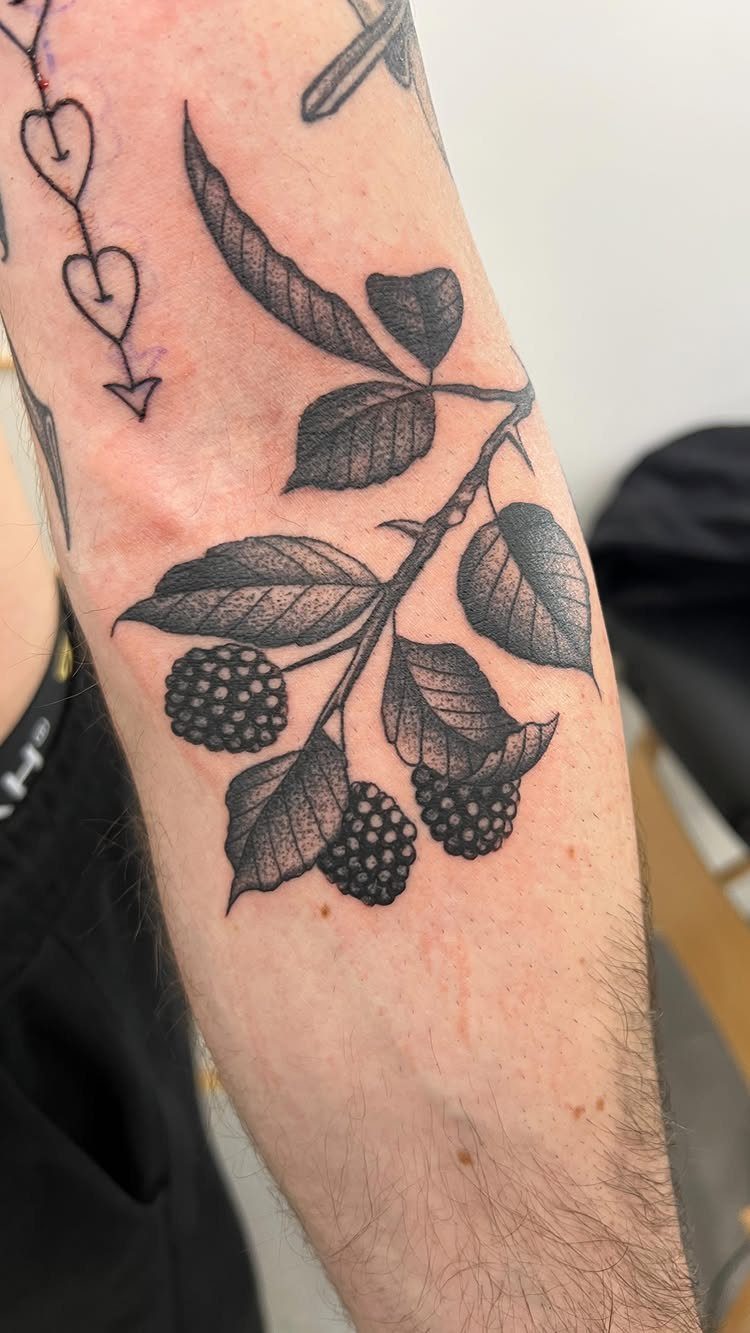
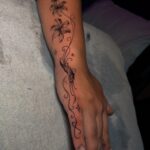
A blackberry branch suits a long, narrow forearm, since the stem can run along the arm with leaves and berries spaced down its length. I would keep it in delicate black ink.
Fill the berries solid or with light stippling, and give the leaves simple outlines. Tiny veins inside leaves tend to fill in first.
Leave open skin between clusters so each berry stays round. Because the branch grows in one direction, adding another leaf or berry later is easy.
28. Sloth on Branch Tattoo
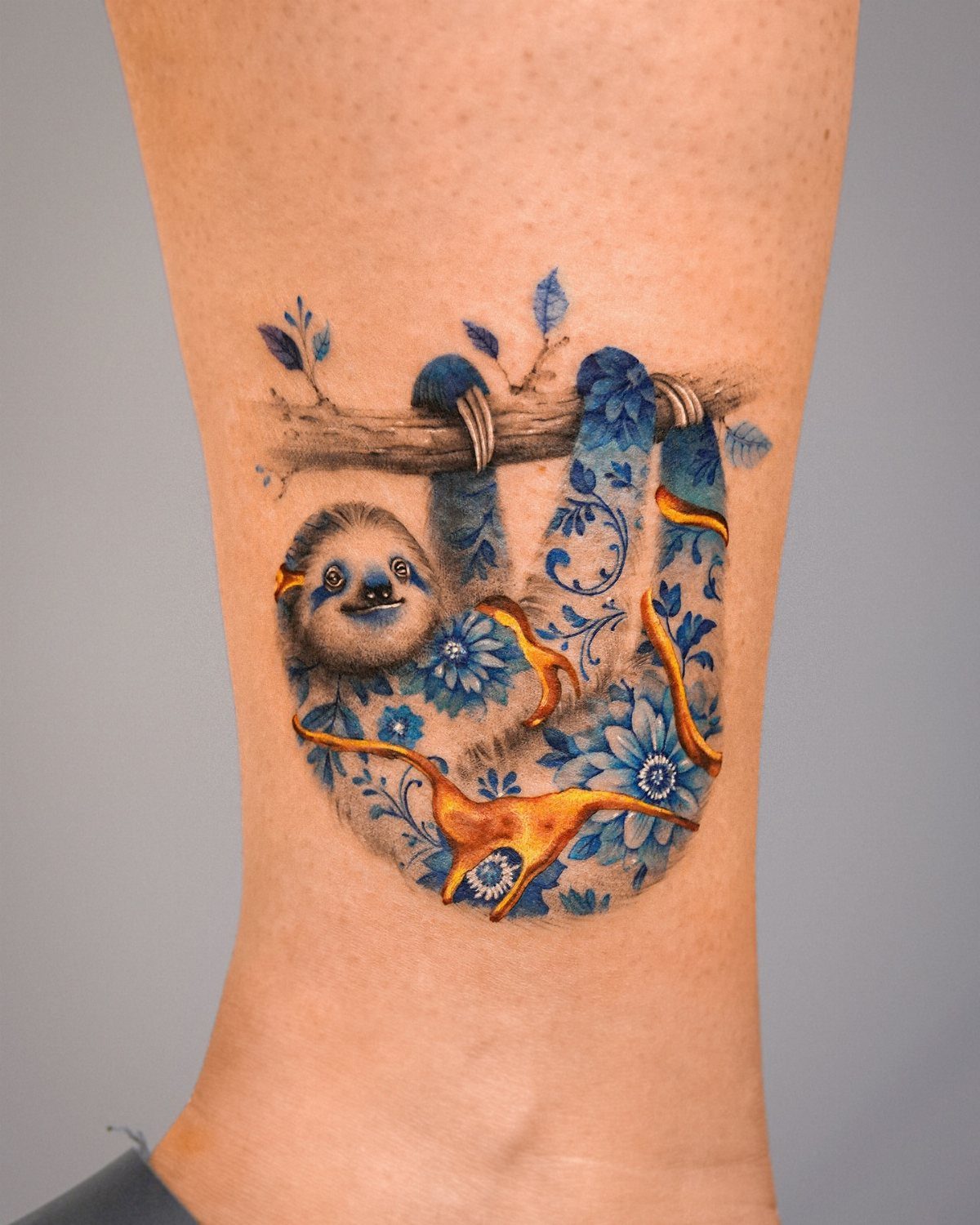
Color is the draw with a sloth hanging from a branch, and floral patterns with orange accents can give the animal a decorative, almost folk-art look. Put the sloth first and the flowers second.
Keep the black outline firm so the color panels stay contained.
Branch and flowers should stay bold enough to read from a few feet away.
29. Coffee Manatee Tattoo
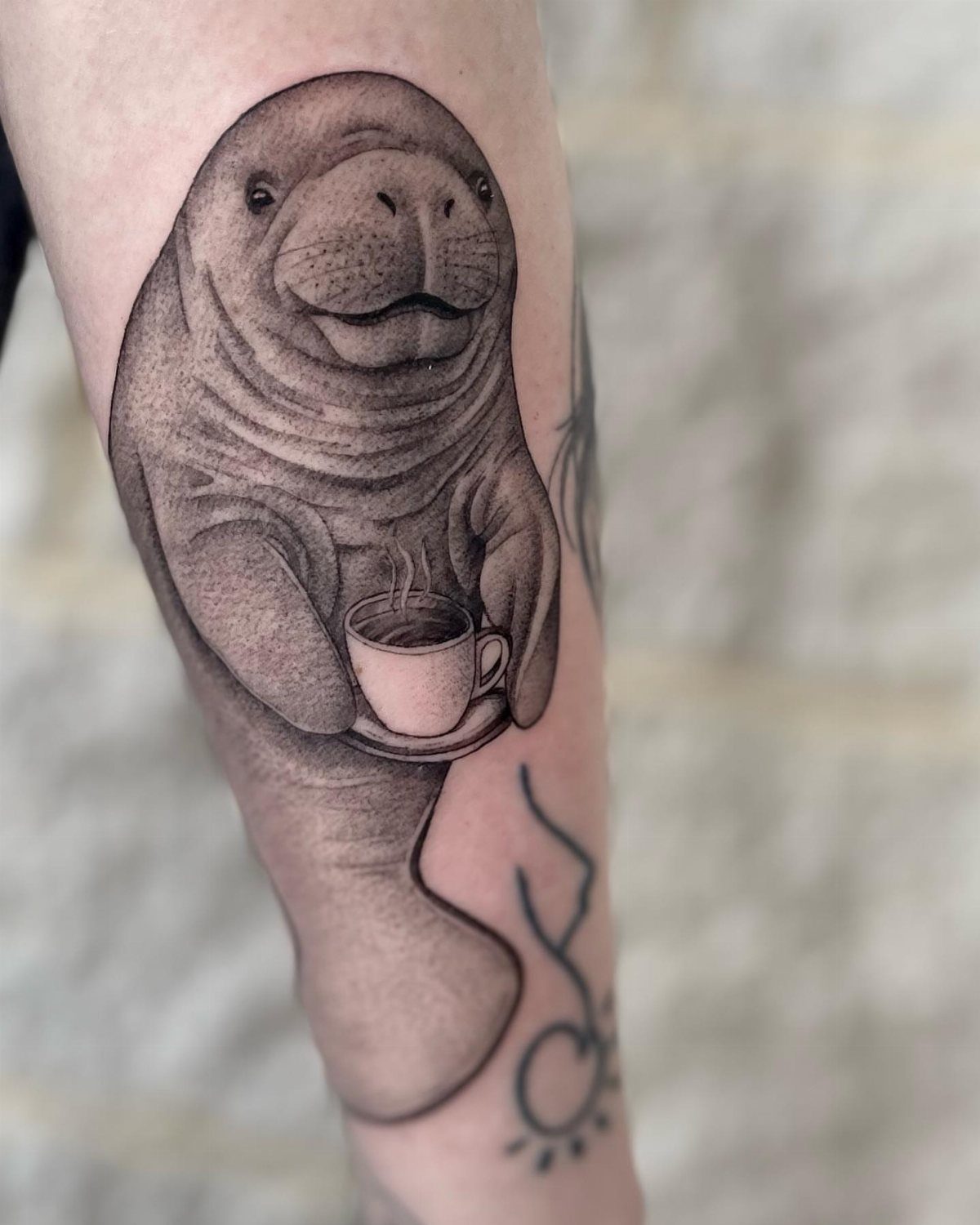
A manatee holding a steaming coffee cup is the pick for anyone who wants a tattoo with a sense of humor. Soft gray shading is what gives the manatee its rounded, heavy-bodied look.
Keep the cup large enough to read, and draw the steam as two or three simple curls. Fine steam lines are the first thing to fade.
On the forearm the skin is flat and easy to see, and a long sleeve covers it when you need it hidden.
Choosing the Right Placement
The inner arm and forearm are the easiest spots for a small first piece, since they have more padding and a flat, easy-to-read surface. They’re simple to cover and tend to hurt less than bony or thin-skinned areas.
For a small piece that feels personal, I’d pick the inner forearm.
The skin there runs flat and even, which gives fine lines a clean surface to sit on. Coordinates, dates, names, short quotes and spiritual symbols all sit well there, laid out vertically or horizontally along the arm.
Simple linework is the cheapest and quickest route, so it’s what I’d choose if budget and sitting time matter.
It lets you carry something you love without giving up a large patch of skin, and the experience is fairly painless, relatively speaking.
Tattoo Design Tips
Muscles run in an S-shaped flow, the way muscles and tendons connect to each other and to bone. A design placed along those flow lines looks like it belongs on the body instead of sitting on top of it.
If you’re new to this, find the bicep and tricep and follow their lines. On the forearm, tense your hand and look for the diagonal where the muscle wraps across the top; that line is your guide.
Keep the design itself uncluttered. Simple work is easier to read, and linework shows off one thing you love without needing a whole canvas.
Meaningful Tattoos
Pick a design that means something to you, whether it points to an experience, a belief or a person. Quotes, letters and symbols are the common routes, and names work too.
Settle the idea before you walk into the shop. A vague concept leads to rushed choices at the stencil stage, and this is permanent.
Write down what the tattoo stands for in a sentence or two. If you can’t, keep thinking.
Uniqueness comes from the personal part, not from rare imagery. Bring your artist your own details, such as a date, a handwriting sample or a symbol only you would recognize, and let them build the design around it.
Frequently Asked Questions
What is a good small tattoo idea?
A four-pointed star in solid black is the one I’d pick. A plain star holds up at a small size, and a loose cluster of 2 or 3 in mixed sizes along the inner wrist or forearm reads like a night sky.
Other good fits are a single flower on a stem in fine line, a crescent moon, or a short word in clear script.
How to choose a tattoo design?
Pick something that means something to you, then test it against the spot on your body. Check that the shape stays clear when small, with bold lines and gaps between elements.
Follow the way the muscle runs so the piece sits on the arm like it was always there, and check that your artist can show tattoos that have fully healed, because that proof counts as much as the concept.
What is the best placement for small tattoos?
The inner forearm is my pick for a small piece. The skin is flat and even, so fine lines sit cleanly, and dates, names, short quotes and symbols all fit along its length.
Wrists and the inner arm make easy first spots, since a sleeve or watch hides them and they usually sting less than skin over bone.
How do I keep a small arm tattoo from blurring over time?
Use solid black, keep lines bold, and leave at least a quarter inch of skin around each element.
Ink spreads slightly as it settles, so thin points, tight zigzags, tiny letters and fine scales close up first. Asking to see an artist’s healed work, not just fresh photos, shows how their lines will actually age.