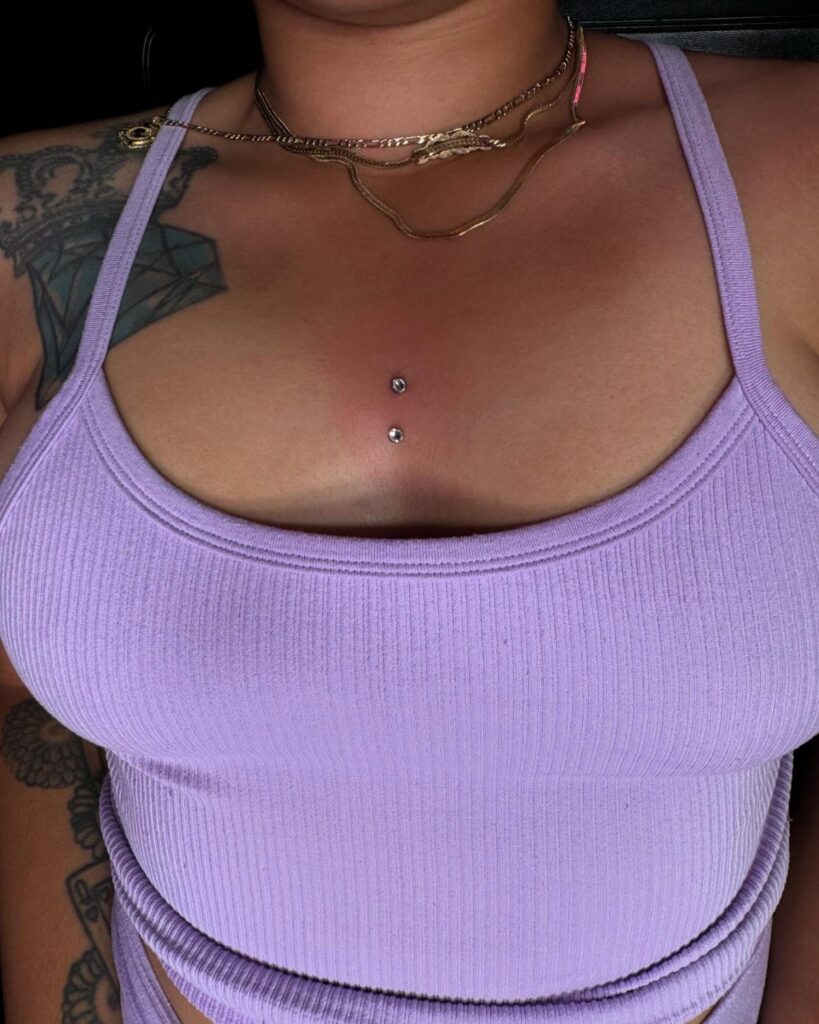
The ideas here run from a Single Center Stud to Three Vertical Gemstone Studs, and the choice usually comes down to how the piece sits against what you already wear: a necklace chain, a bra band or a V-neck.
For daily jewelry, a Dermal Piercing is my pick, since it has no bar to snag on a strap or a chain the way a sternum piercing can.
The 3mm CZ stones on flat back threaded ends show why detail matters, since they sit smoother under clothing than a ball-back post.
1. Two Silver Metal Beads Arranged Vertically in the Center
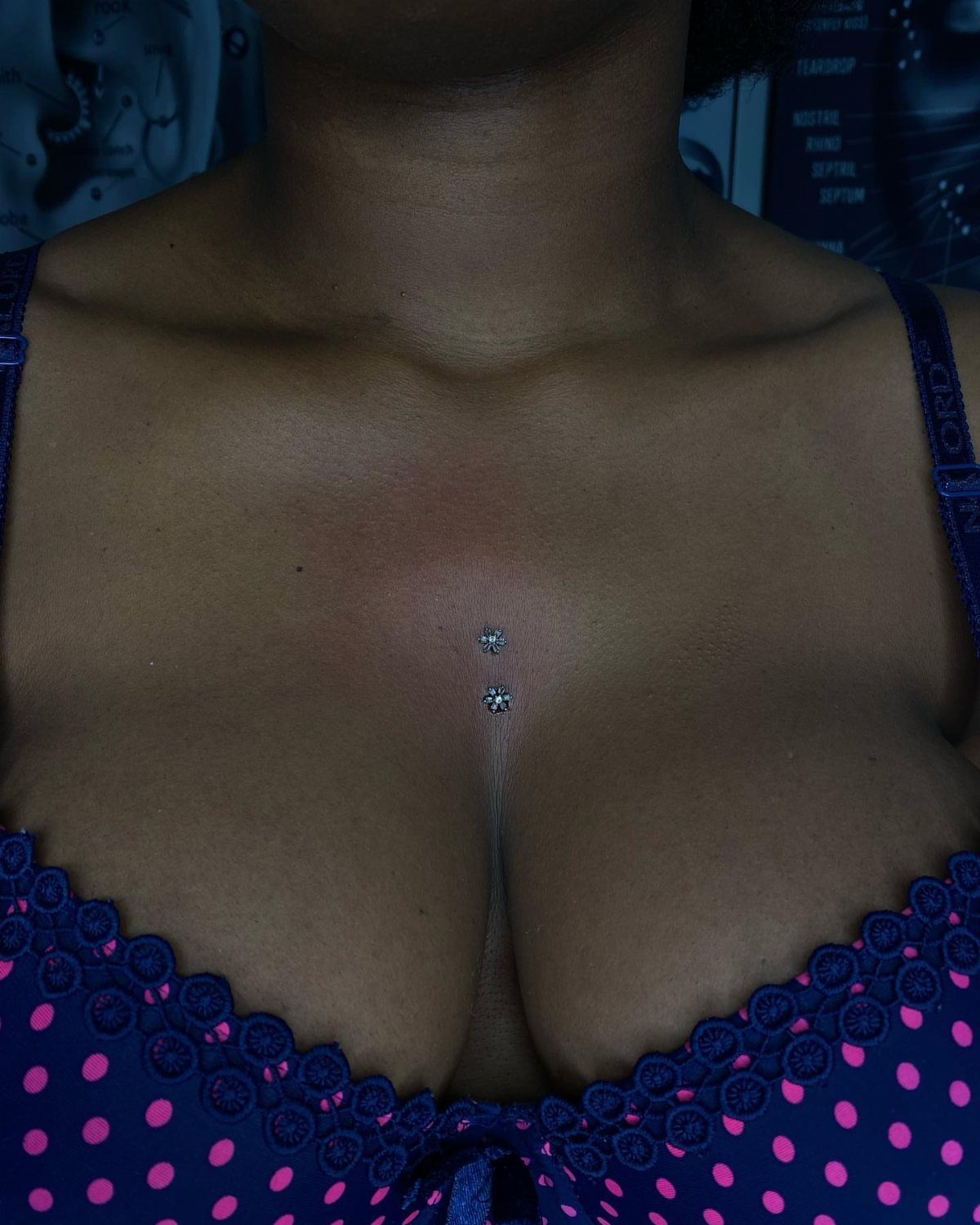
Two 3mm CZ stones stacked vertically give the center of the chest a clean, quiet sparkle. Flat back threaded ends sit smoother against the skin than a ball-back post, and that matters under a bra band or a clingy neckline.
I like the pair for readers who want more than a single stud without going busy. Keep the spacing even, because a vertical line shows every misstep.
The threaded ends also mean you can swap the stones later for another color or size.
2. Sternum Piercing
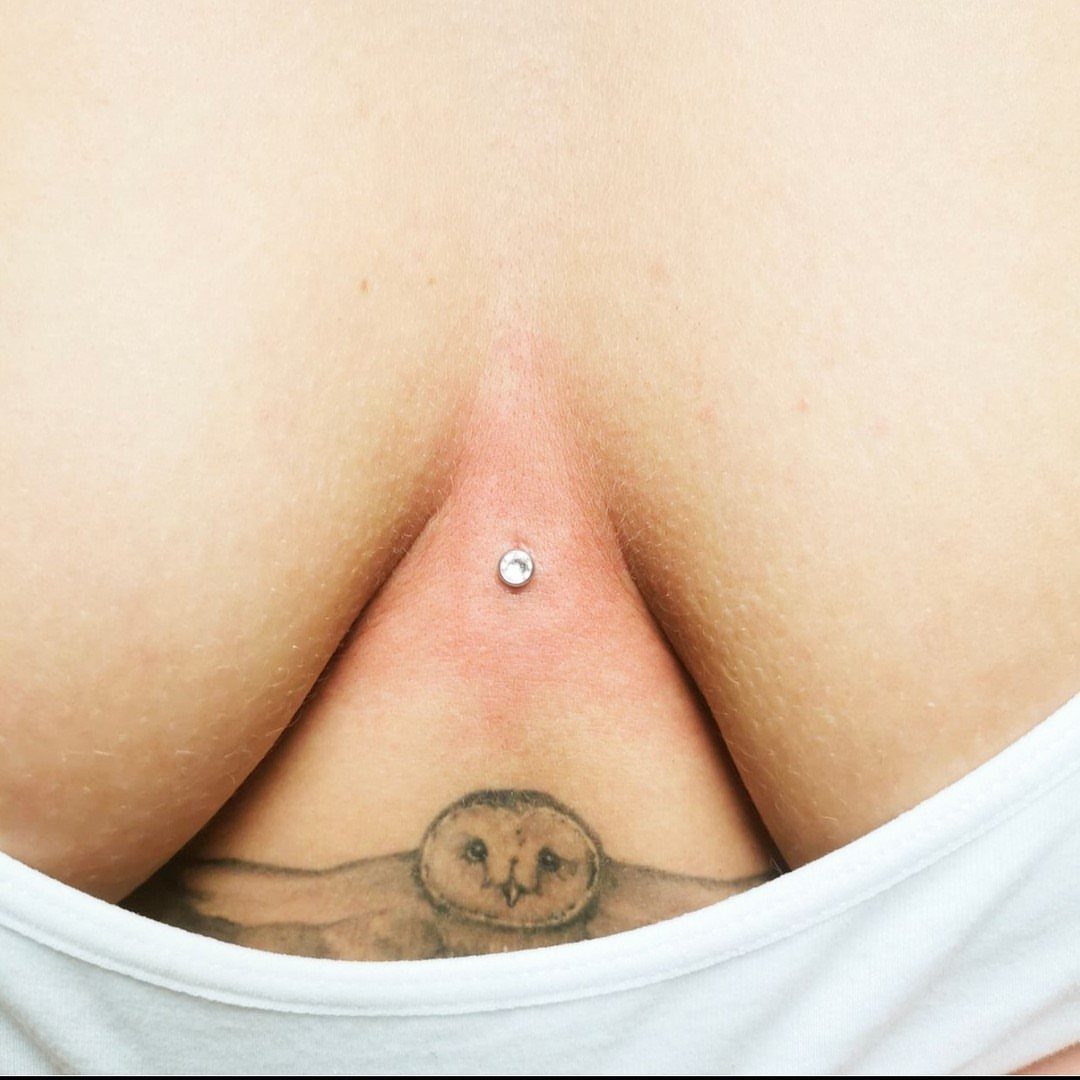
A sternum piercing is a surface piercing, so the jewelry sits along the flat bone line of the chest rather than through a fold of skin.
One small clear stone reads as a delicate accent and leaves room for other things nearby, like a tattoo.
That pairing is a good one. Plan the stud position with your tattoo in mind, so the stone lands where it frames the art instead of crowding it.
Choose a licensed piercer who works on surface placements regularly.
A sternum piercing typically heals within 6 to 12 weeks. If you don’t follow your piercer’s aftercare recommendations, the piercing may take longer to heal.
3. Dermal Piercing
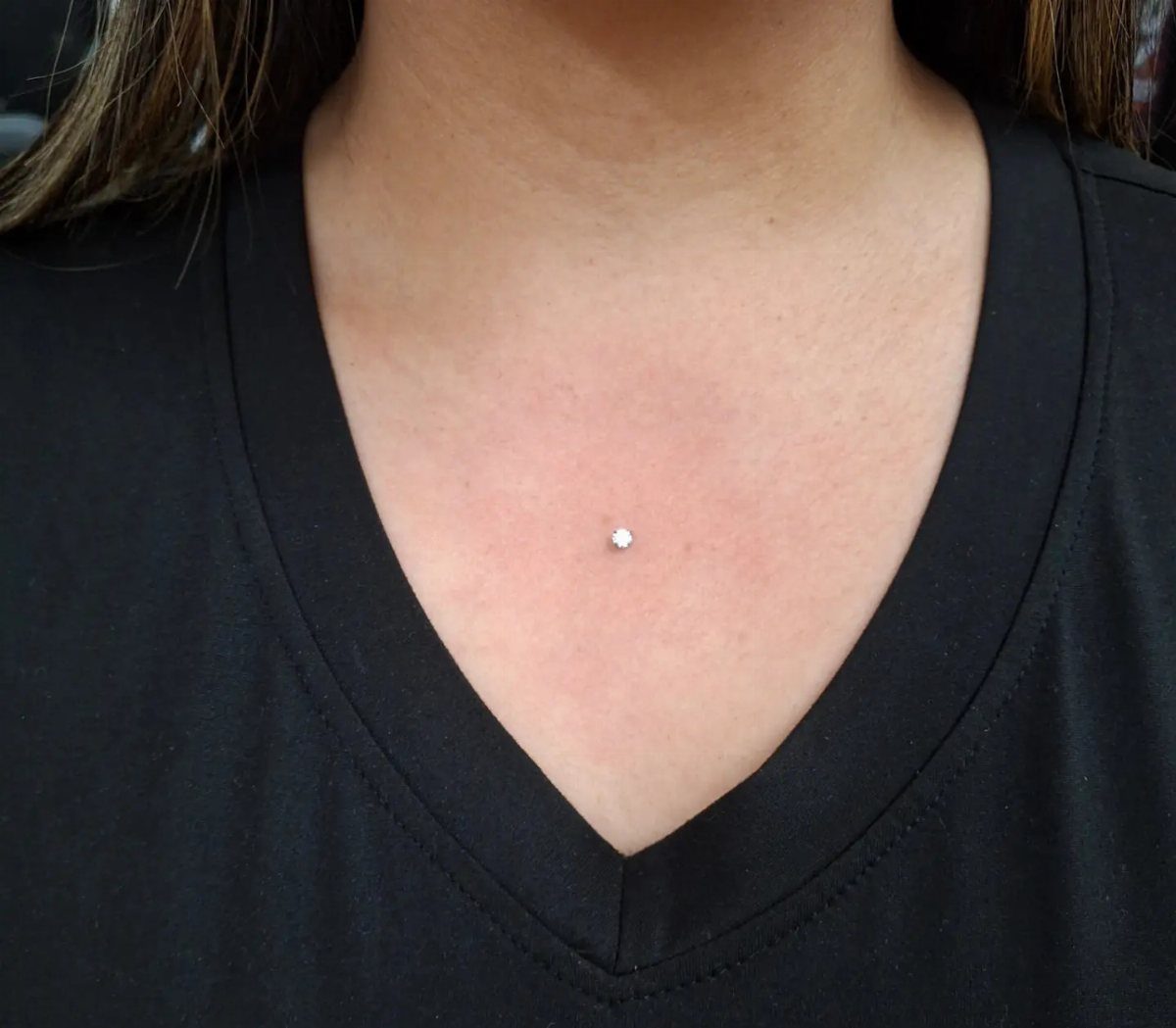
A dermal piercing has no separate entry and exit points, which makes it the most subtle option here. A single small stone sits right on the skin, so it reads as a bit of sparkle rather than jewelry.
A V-neck is where it shines. Silver with a small gem looks tidy and goes with almost everything.
A dermal won’t catch on a necklace chain or strap the way a bar might, so for anyone who wears either daily, I’d start here. Ask your piercer about placement on your own chest before you commit.
4. Gemstone Stud and Snake Jewelry
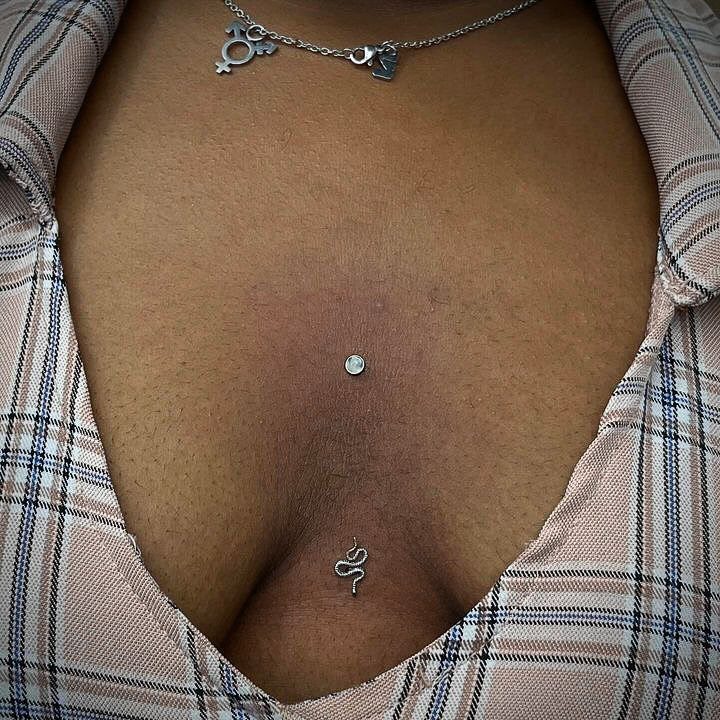
Mixing a gemstone stud on top with a silver snake accent below makes the chest read as a small composition rather than a single dot. The sparkle draws the eye first, and the snake adds a curved, metallic line.
I’d pick this for someone who finds a plain stud too quiet. Keep the stone small so the snake stays the focus of the lower half.
It layers well with a thin silver necklace, as long as the metals match.
5. Single Center Stud
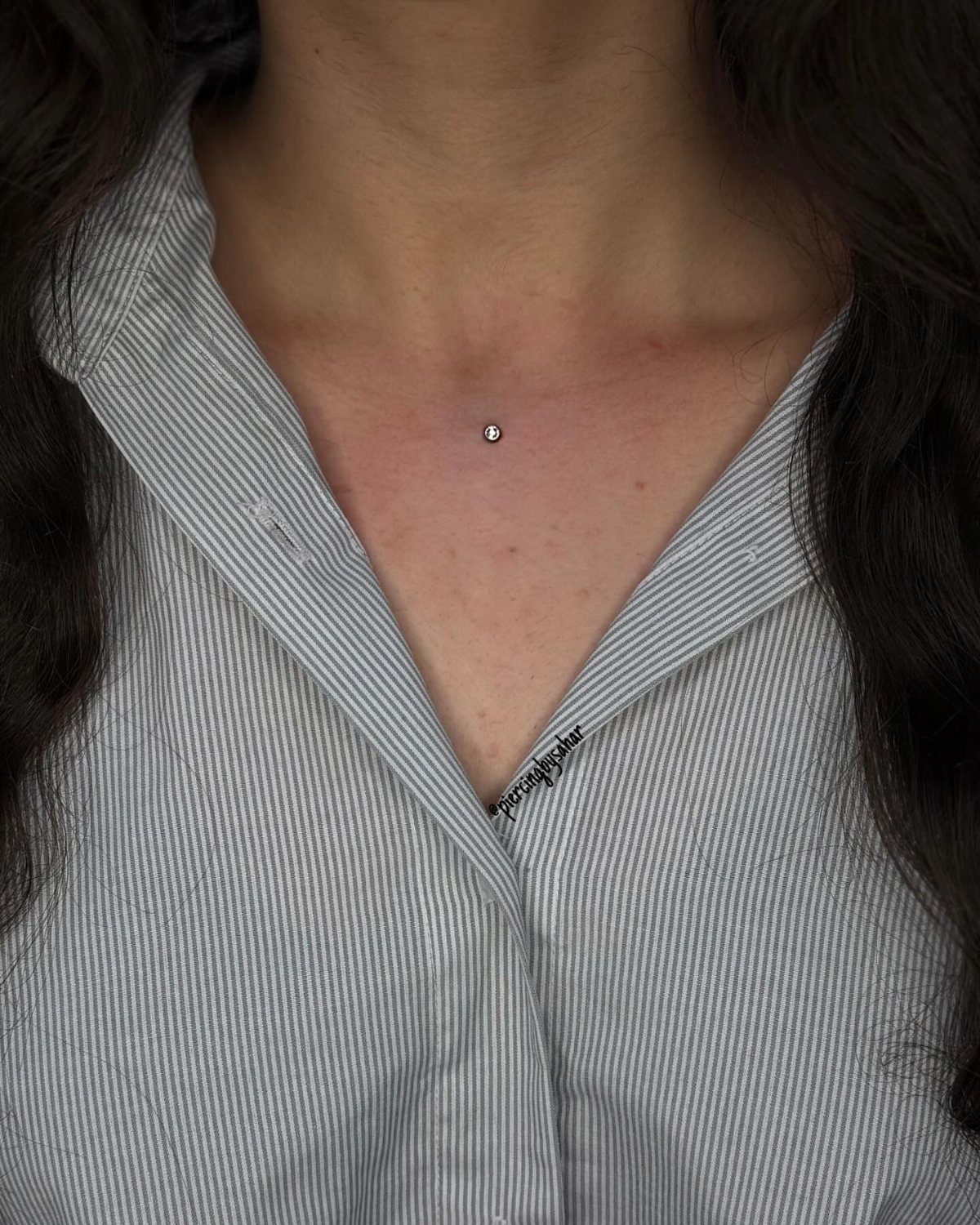
One small metal stud in the center of the upper chest is the simplest version of this piercing, and I think it’s the easiest to live with.
It works with a button-down open at the collar and disappears under higher necklines without fuss.
Silver keeps it understated. Choose a stud that’s small enough to look deliberate rather than lost.
If you later want more, a single stud is easy to build on, with a second or third stone added above or below.
6. Three Vertical Gemstone Studs
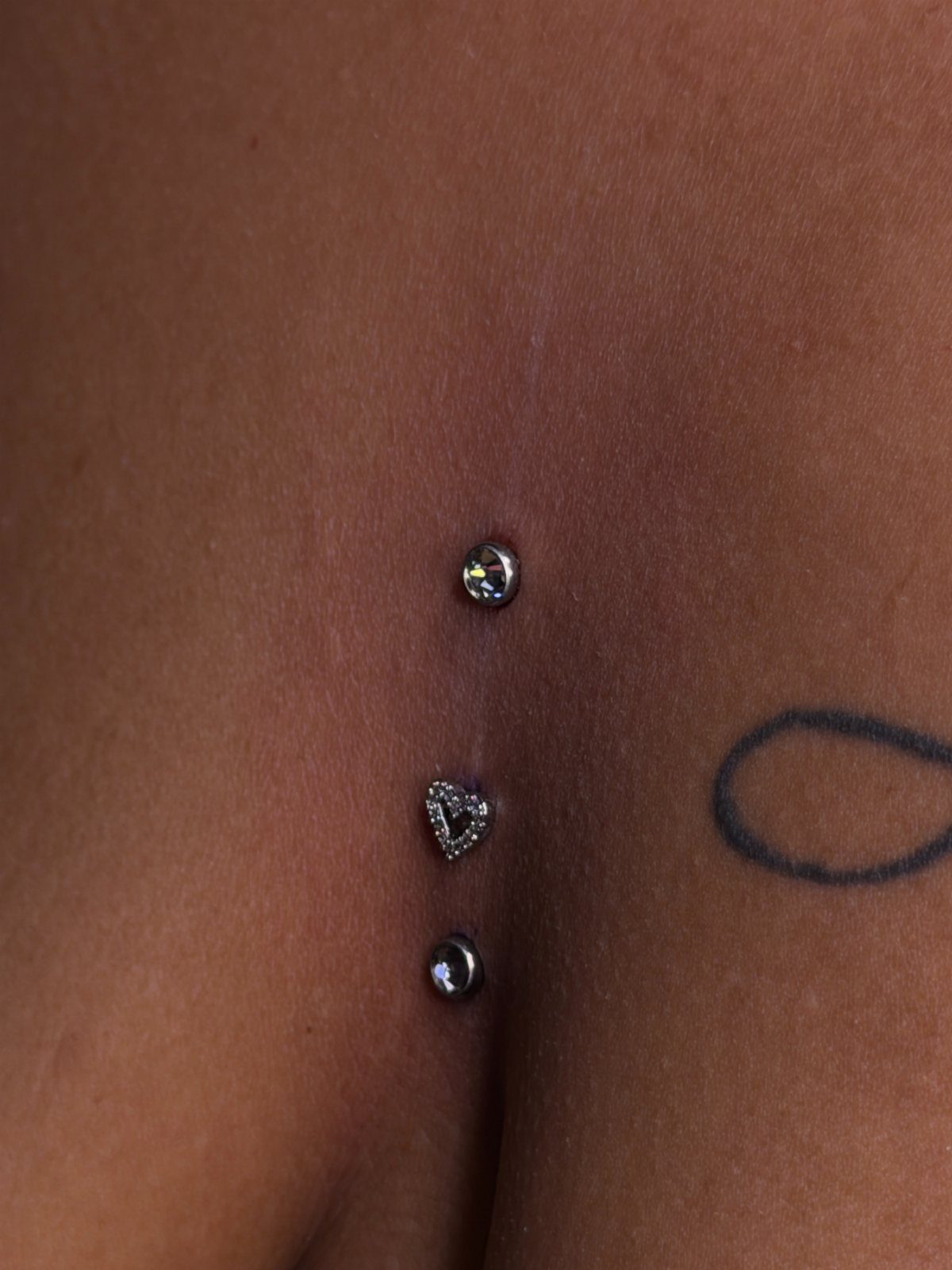
Three dermal piercings in a vertical line, two round gemstones with a heart-shaped gem at the center, make the most decorative option here.
The heart gives the line a focal point, which keeps 3 stones from looking like a row of dots.
Spacing is everything with a trio, so have your piercer mark all 3 spots and check them in a mirror, standing and sitting, before any needle goes in.
It also sits well beside a bold black ink circle, since the clear stones contrast with the dark line work.
7. Mismatched Shaped Studs
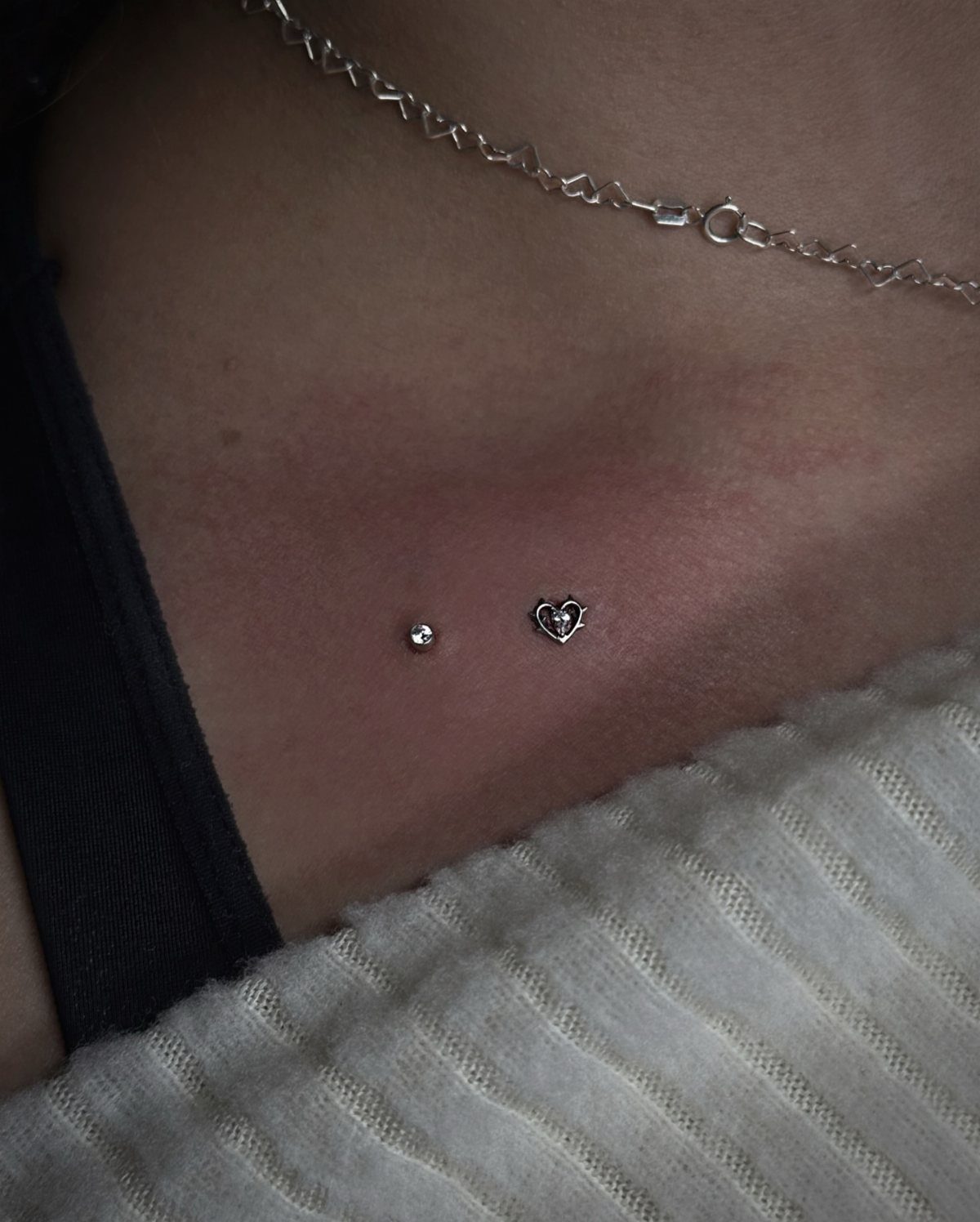
Pairing a small silver stud with a heart-shaped jewel stud makes the chest read as 2 different notes instead of a matched set. The plain stud keeps it grounded, and the heart adds a soft, playful accent.
I like this for someone who finds symmetry a little too tidy. Keep both pieces small so neither one overpowers the other, and let the heart be the one that catches the light.
A thin silver chain above it fits the look, since the metals match. Have your piercer mark both spots and check the distance in a mirror before anything is pierced.
Frequently Asked Questions
What piercings can a girl get on her chest?
The main options are a sternum piercing, a dermal piercing, and a single or paired stud in the center of the upper chest.
Along the flat bone line you get a sternum piercing, which is a surface piercing; a dermal is something different, a single small stone sitting on the skin.
You can also stack two or three stones vertically, or mix a stud with a snake accent for a more decorative look.
What is a heart piercing for women?
It’s usually a chest piercing topped with a heart-shaped gem rather than a round stone. It also works beside a small silver stud for a mismatched look, with the heart as the piece that catches the light.
What is the piercing between your breasts called?
It’s called a sternum piercing.
Because it runs along the flat bone line instead of through a fold of skin, the sternum piercing counts as a surface piercing. Most sternum piercings run up and down between the breasts, but a sideways placement is possible too.
What is a dermal piercing on the chest?
A dermal is a single-point piercing with no separate entry and exit holes.
The piercer cuts one small pocket, seats an anchor in the dermis, and threads a gem onto the top, so it looks like a bead resting on the skin.
Of all the chest options, this one sits lowest and quietest, and a necklace chain or bra strap is far less likely to snag on it than on a bar.
What is the difference between a surface and a dermal sternum piercing?
A surface piercing has an entry and an exit point and uses a curved or staple-shaped bar under the skin, with decorative tops showing on the surface.
A dermal has only one opening and an anchor set in the dermis, with the jewelry screwed on top. I’d pick a dermal for the quietest look and for anyone who wears necklaces or straps daily.