Lobes close up their healing in 4-8 weeks and cartilage can run 3-12 months, so any stack of several holes finishes on the timeline of its slowest piercing.
The ideas run from a small gold star on the flat to a silver-heavy maximalist ear with a spiked industrial bar, and pain climbs from about 1-4 out of 10 at the lobe to 7-8 at an industrial.
A big ear has room for every piercing on this list, so I would choose by how long you are willing to wait on healing.
1. Conch Piercing
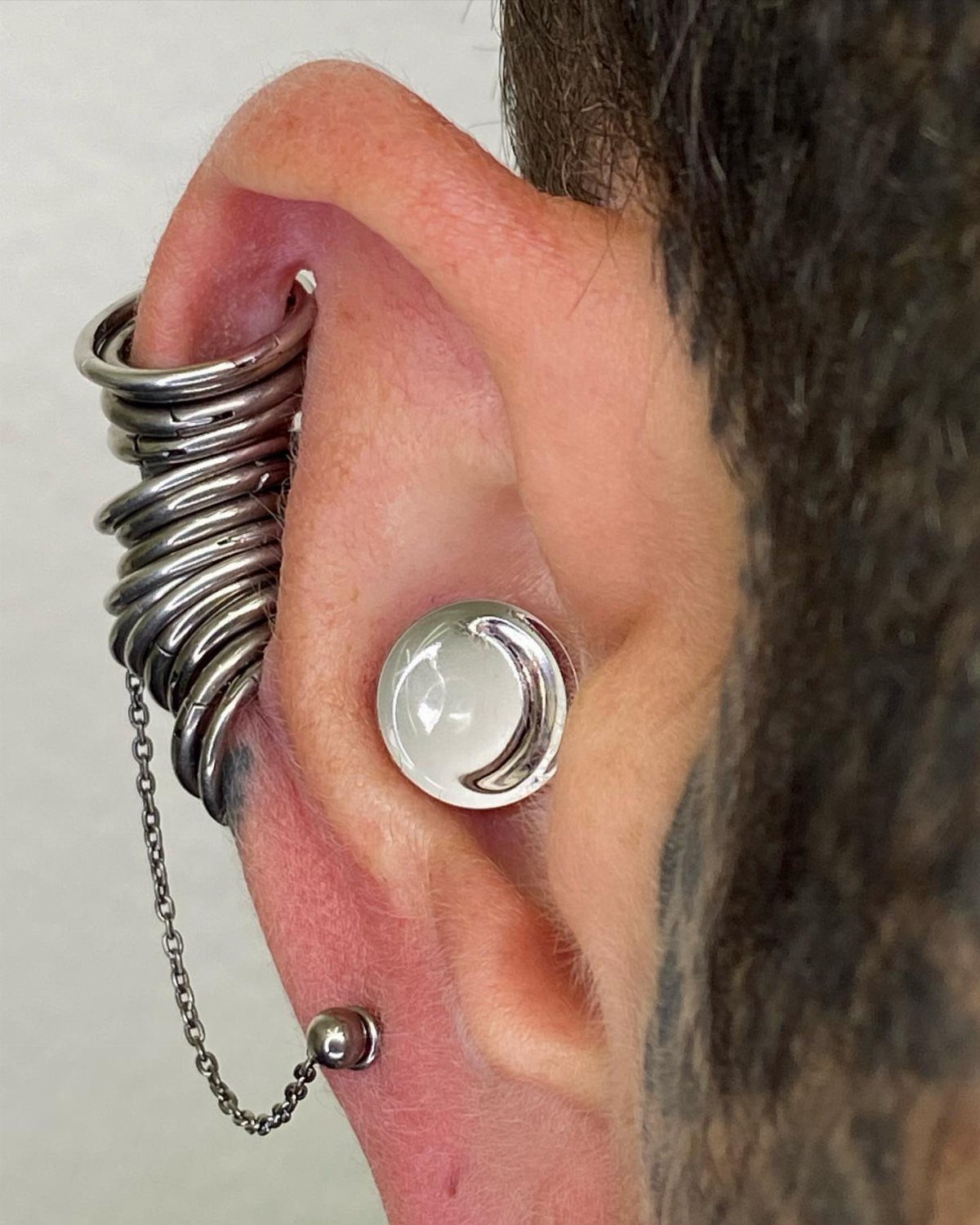
A conch sits in the center of the ear, in the wide bowl of cartilage, so it gives big ears something to fill.
That space handles a larger stone or a disc better than a tiny stud would, and a moon or a single bright gem reads clearly from the side.
I would pick a flat-back stud here over a hoop, since the piece stays visible and the bowl shows off the design.
2. Helix/Forward Helix
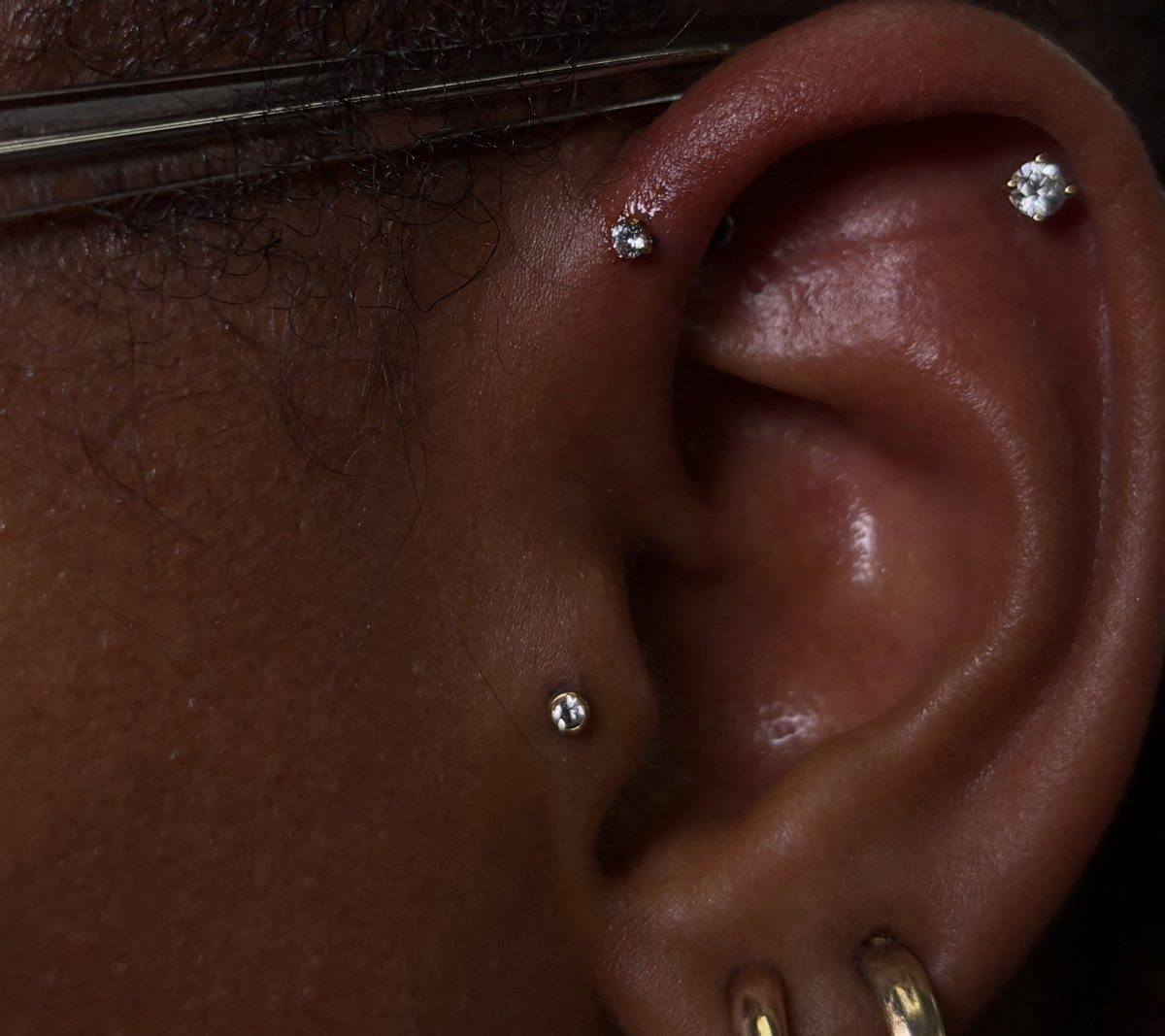
Forward helix piercings sit at the front of the helix, on the small ridge near the face. On a larger ear, that stretch of cartilage has room for 2 studs placed close together, which looks deliberate instead of crowded.
Small gemstone studs suit it best. I would keep the pair matched in size and let a lobe hoop carry the contrast.
3. Daith Piercing
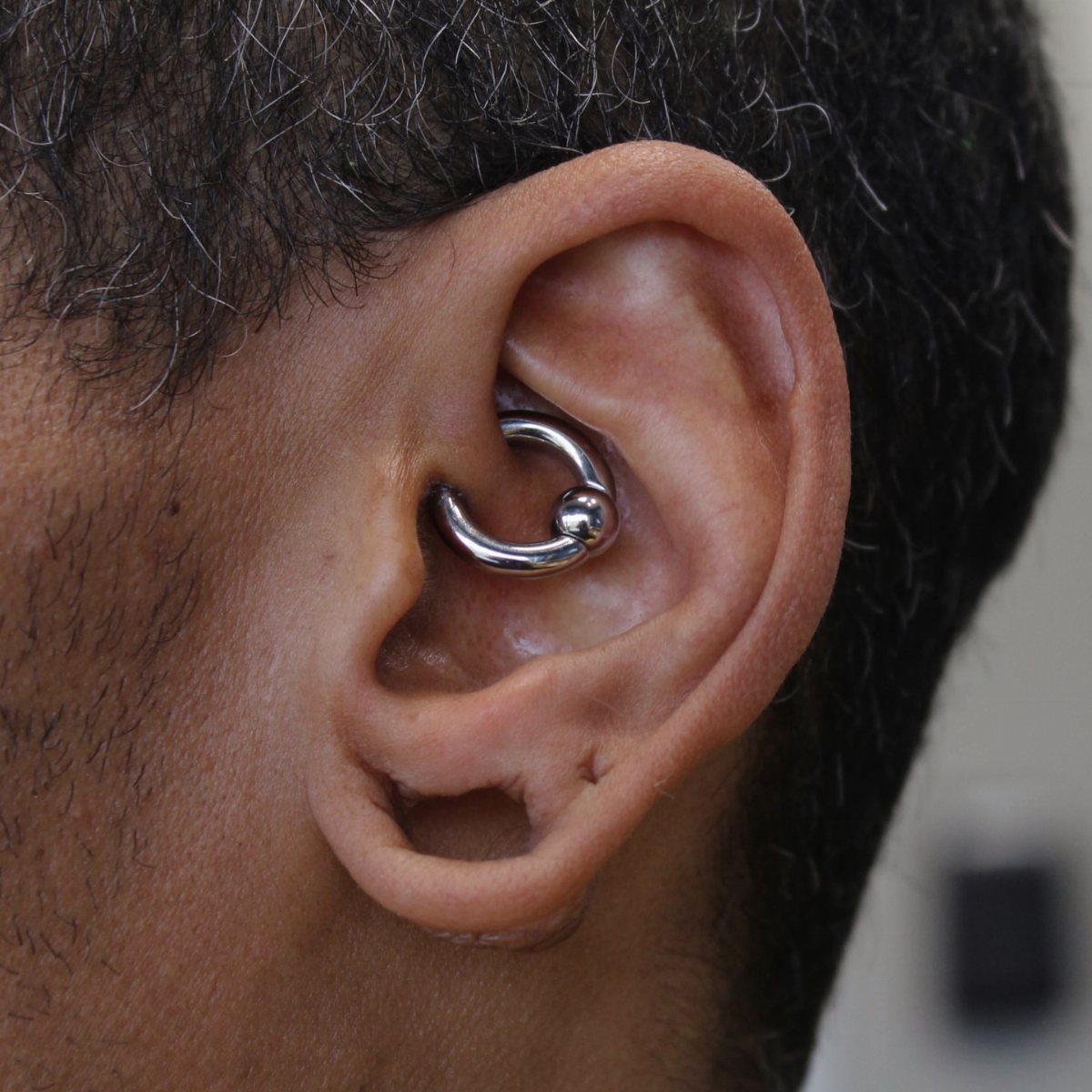
On a daith, the needle passes through the small ridge of cartilage that sits right above the opening of the ear canal.
Because it sits deep in the ear, it stays tidy even when the outer ear is large, and it never fights with piercings along the rim.
A captive bead ring is the classic jewelry for a daith, and plain silver is the version I like best. Pick a ring snug enough to look intentional, not one that dangles.
4. Upper Lobe Piercing
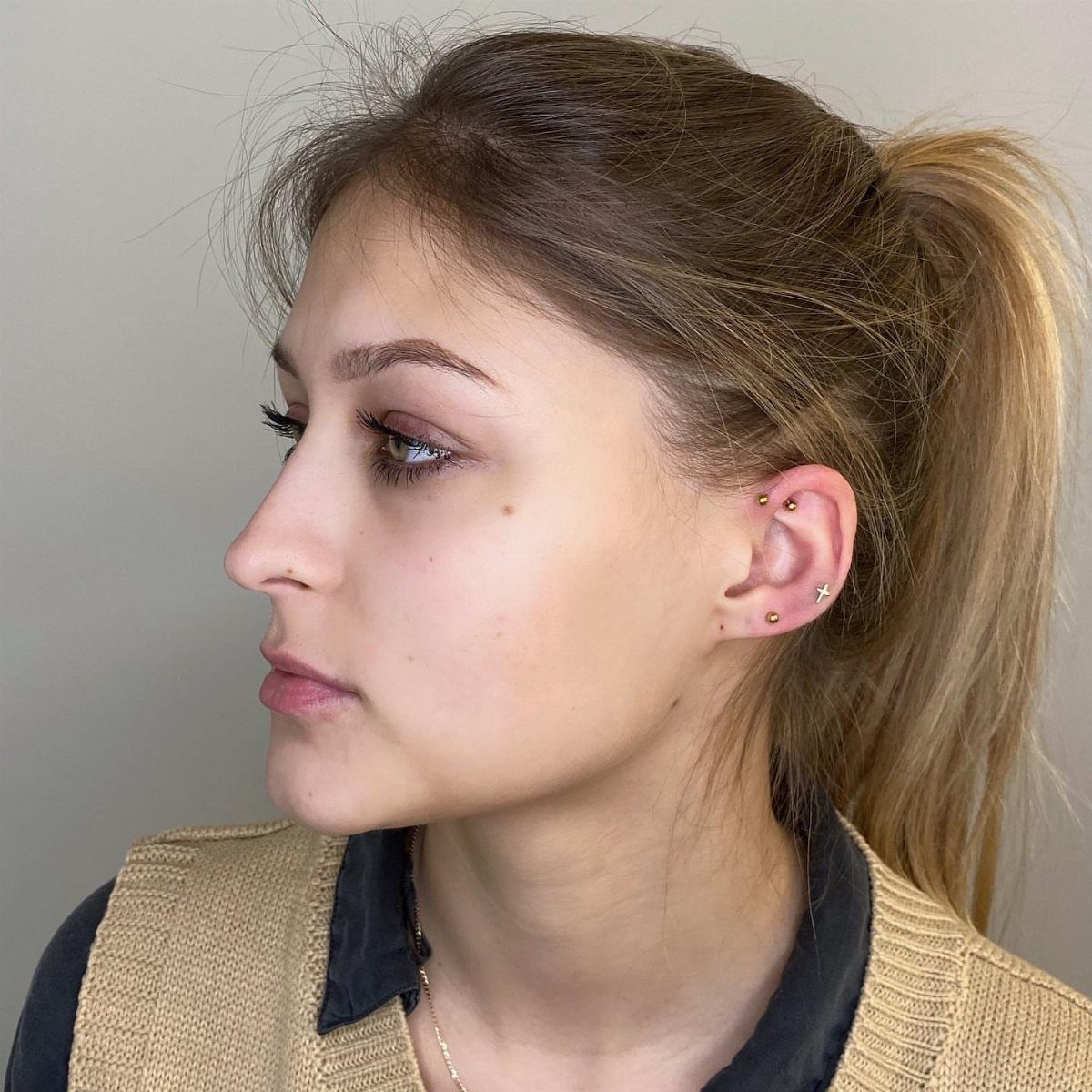
An upper lobe piercing sits just above the standard lobe hole, where the soft tissue starts to thin toward the cartilage. A big ear gives you that extra height, so a second or third hole fits without touching the first.
Gold studs keep the look light. Space the holes evenly and let the sizes graduate, or the line will look random from the side.
5. Industrial Piercing
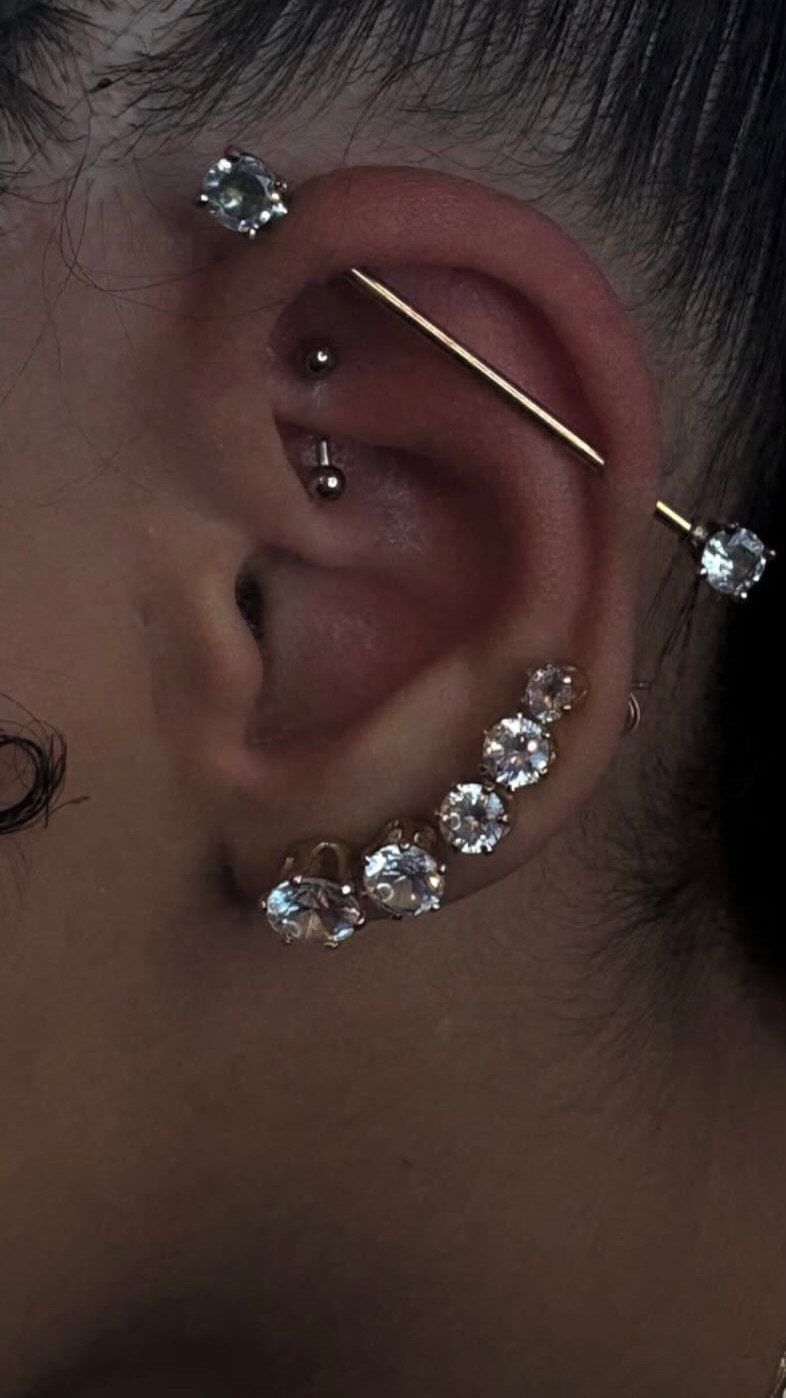
2 cartilage holes in the upper ear, linked by a single long barbell, make an industrial, so the jewelry spans a wide section of the ear.
Big ears are the natural fit, because the bar has the length to sit straight instead of looking cramped.
A gold barbell reads cleanly. I would add a rook stud or a few small crystals nearby, but keep them smaller than the bar so it stays the focus.
6. Stacked Lobe Piercing
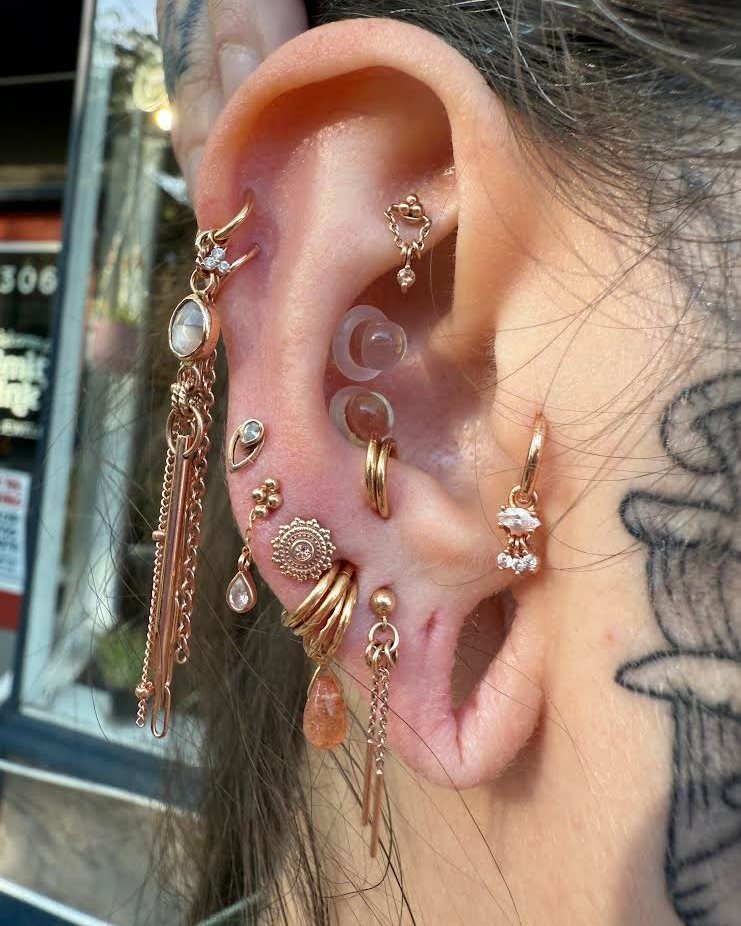
Stacked lobes put several piercings down the lobe in a layered line, and a roomy lobe holds more of them without bunching. Mix gold hoops with small gemstone studs so the stack has texture.
I would plan the spacing before the first hole is placed, then add one piercing at a time. That keeps the final arrangement balanced and gives you room to change your mind.
7. Flat Piercing
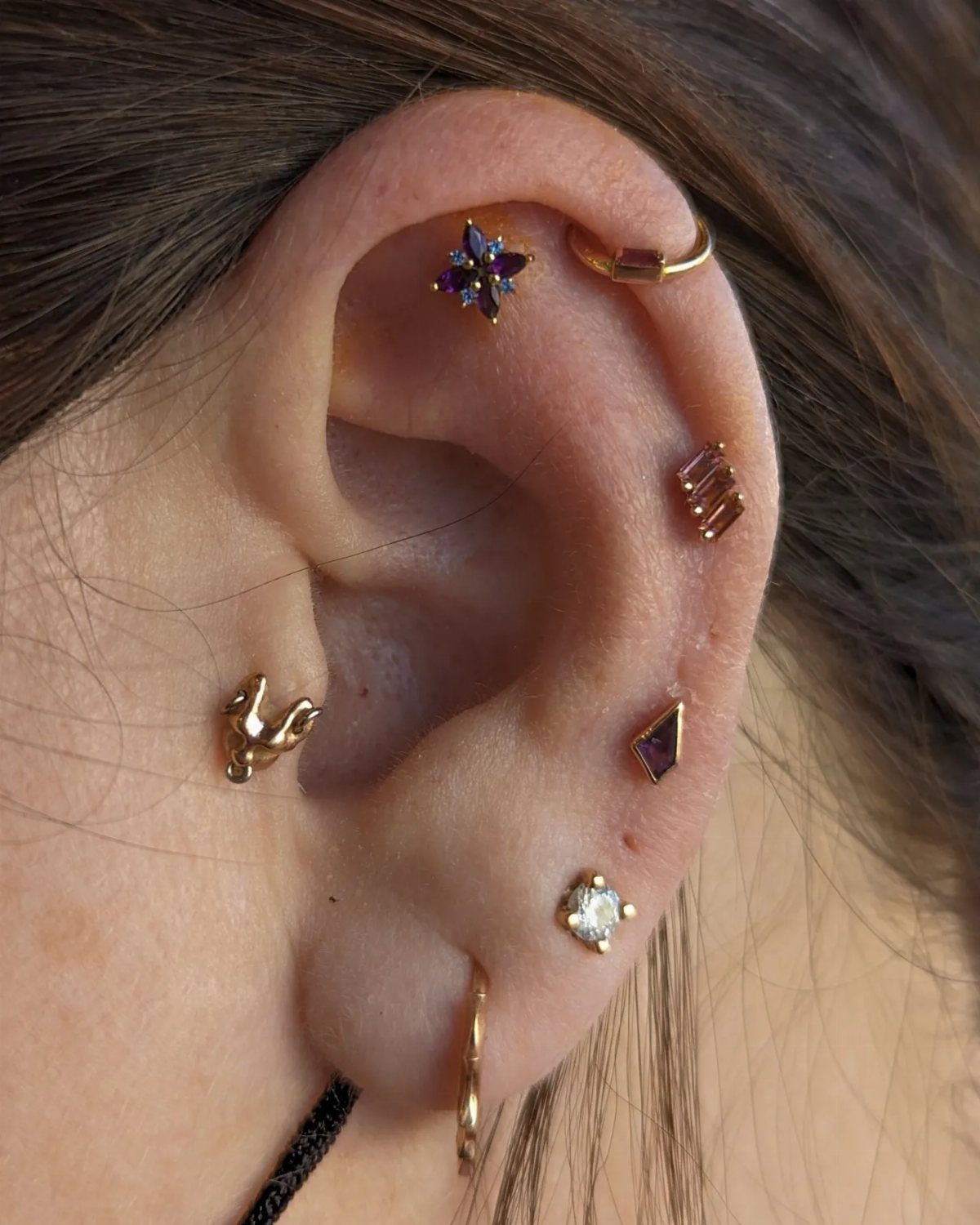
The flat is the smooth, open stretch of cartilage between the rim and the inner ear, and a big ear gives it a lot of quiet space. A single star stud sits well there because nothing crowds it.
I would keep it to one small gold piece and let the helix and lobe jewelry do the rest. Add a second only if it stays smaller than the first.
8. Second Lobe Piercing
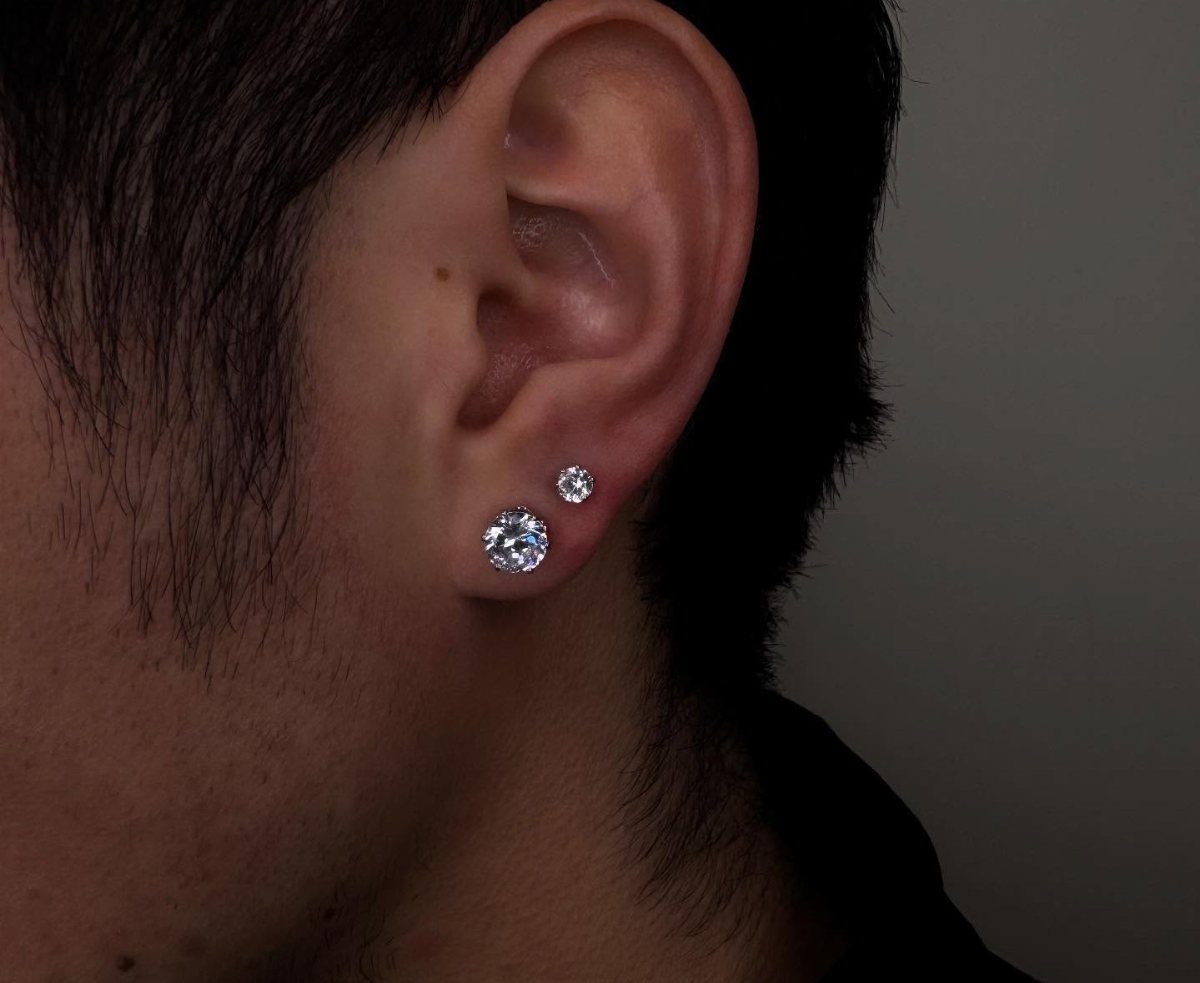
A second lobe hole sits directly below or beside the first, which makes it the easiest way to start layering. 2 diamond studs of the same size read as a clean pair, and a roomy lobe keeps them from touching.
I prefer matching stones, because the stack looks deliberate that way. Save contrast for a third hole, where a small hoop can sit under the studs.
9. Stretched Lobe Gauges
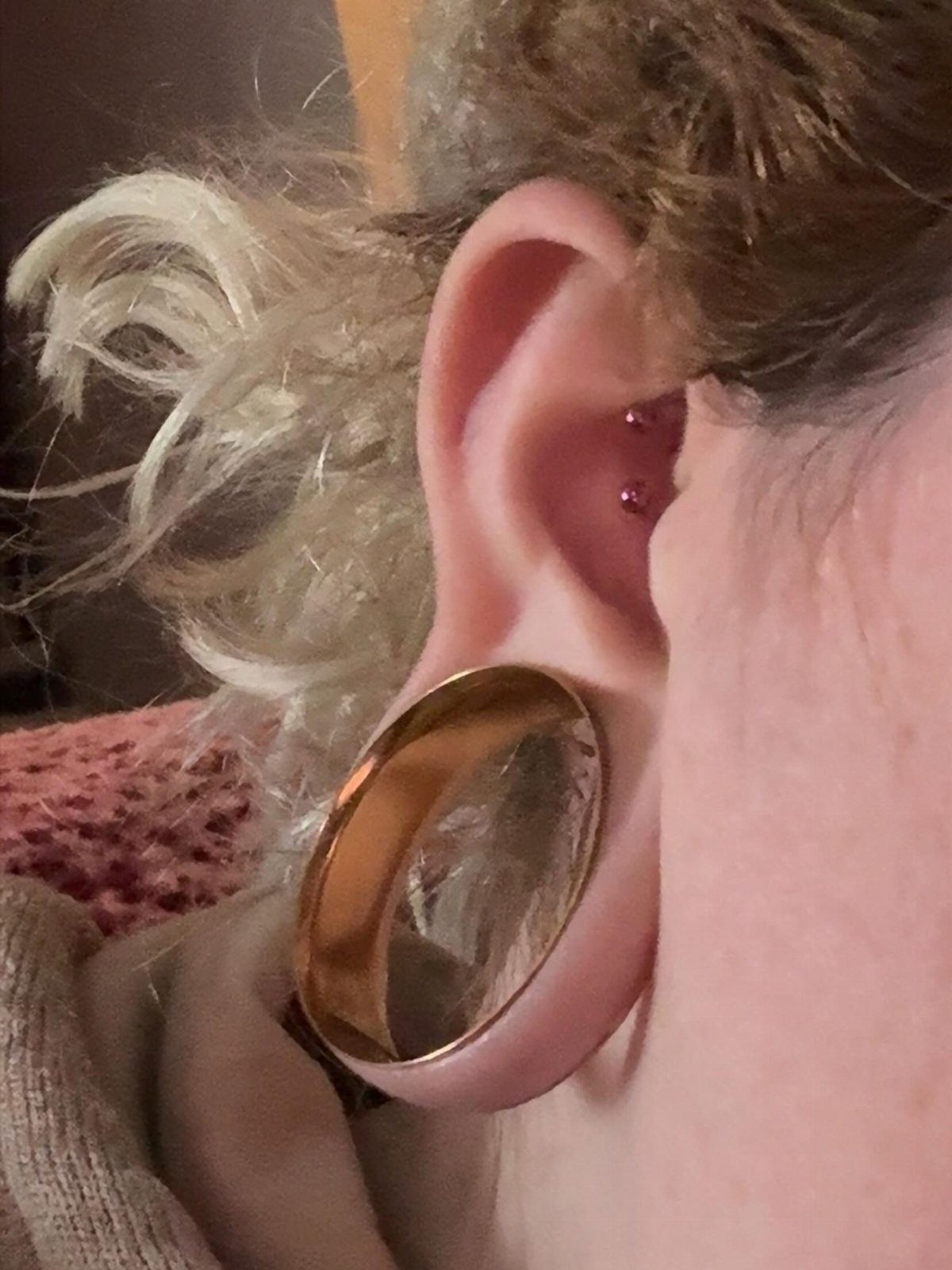
A stretched lobe holds a plug, and on a larger ear the extra tissue gives a wide gold disc plenty of room to sit flat. It also gives you a solid focal point for the rest of the ear.
Gold makes a strong choice, and I would pair it with small studs in the cartilage, like pink ones, so the plug stays the largest piece.
Stretching is permanent in a way a standard hole is not, so decide before you start.
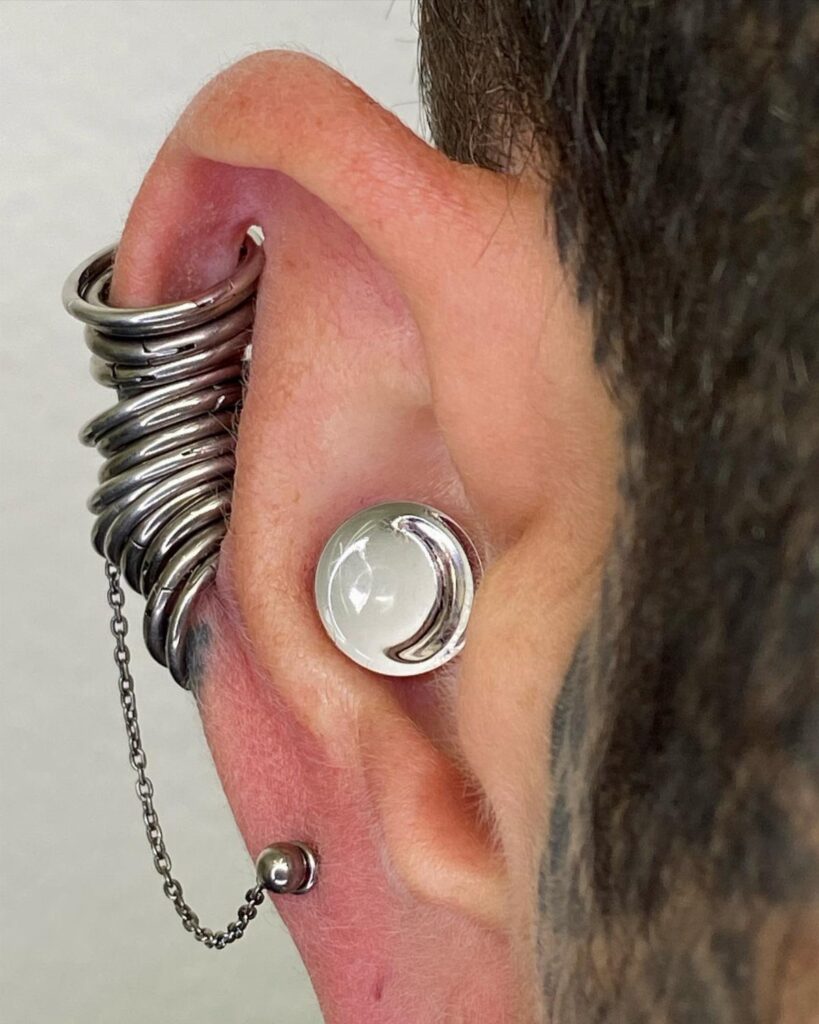
10. Maximalist Multi Piercing Ear Curation
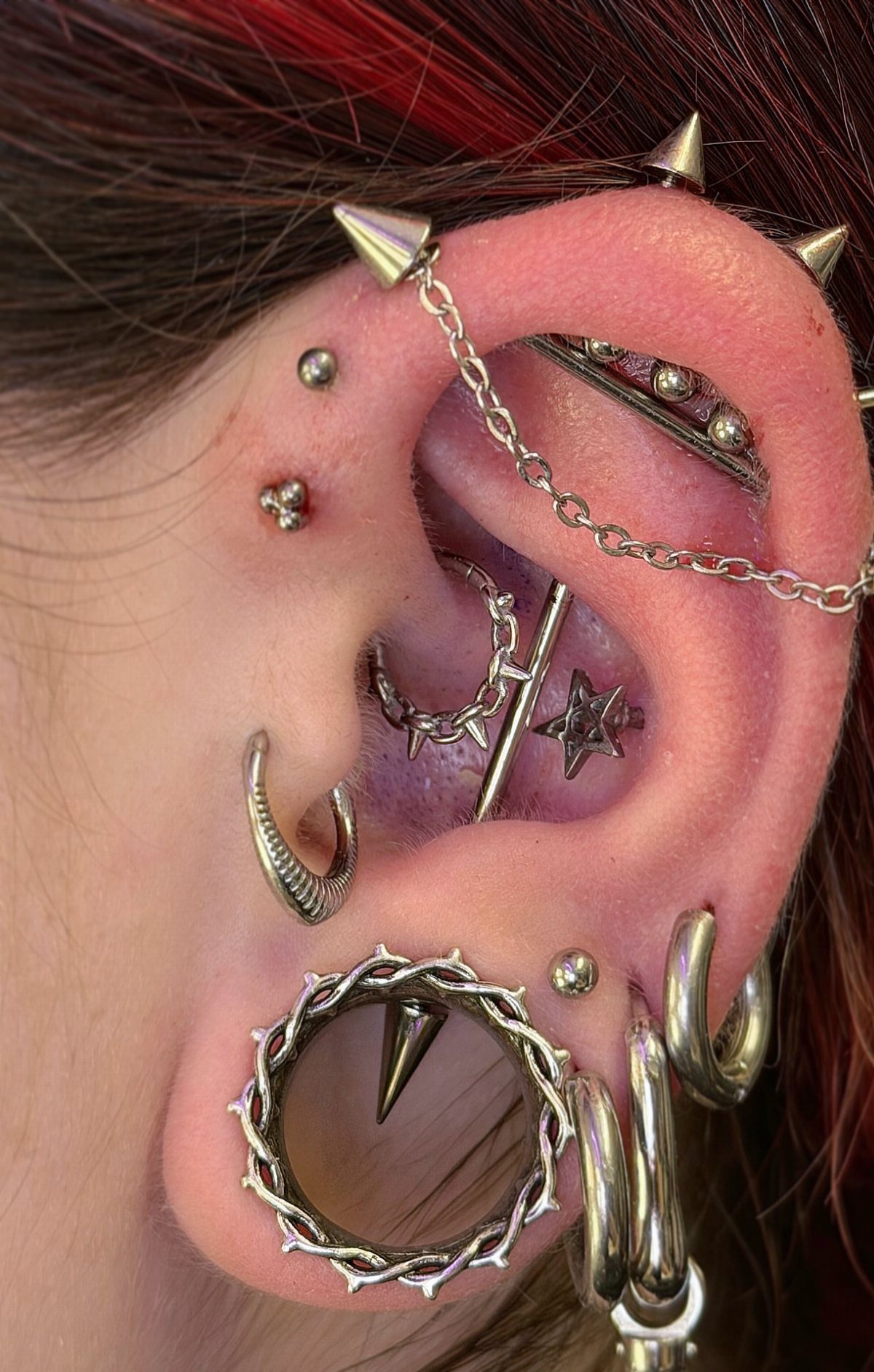
Maximalism means filling the whole ear with silver: hoops, studs, a spiked industrial bar and a hanging chain, all sharing one metal. That single finish is what keeps a crowded ear from looking messy.
A big ear can carry this much, and I would vary shape and size so the eye has somewhere to rest. Pick one hero piece, like the spiked bar, and keep the rest smaller.
11. Connecting Chain Earring
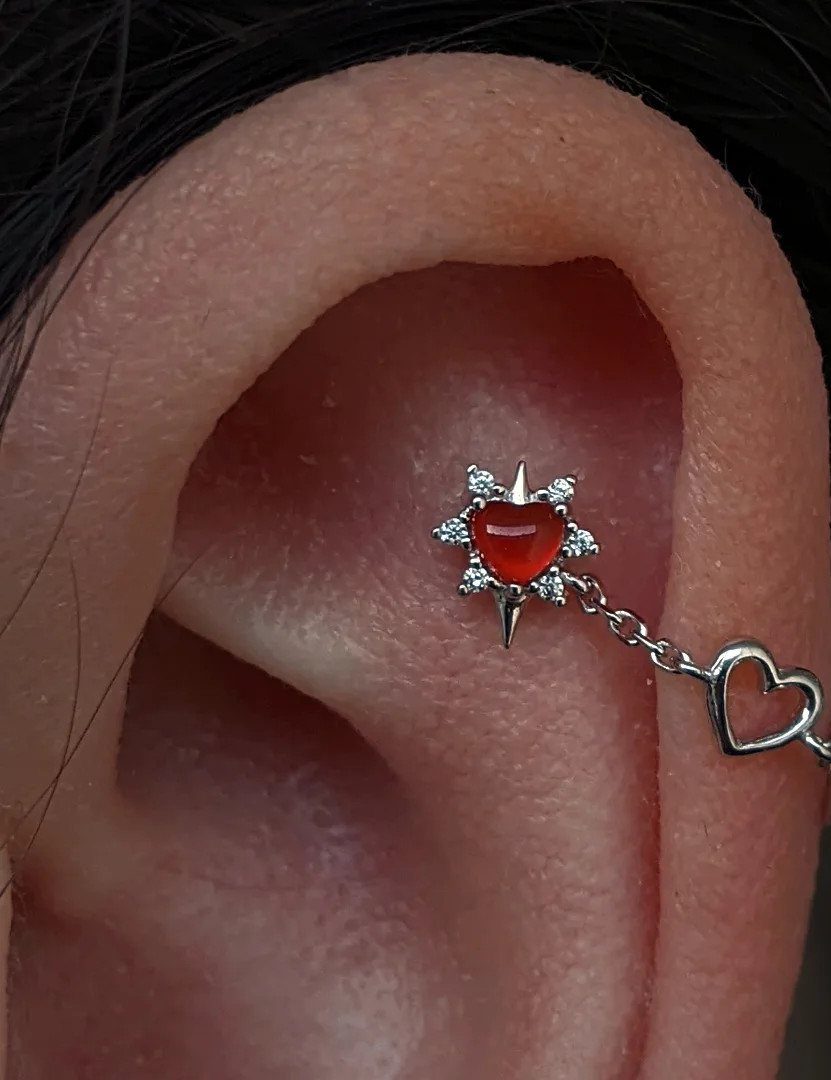
A chain between a lobe stud and a cartilage piercing ties two spots into one line. A red heart stone on the lobe, linked to a heart in the cartilage, gives the chain a clear start and finish.
Large ears suit this because the chain has room to drape without bunching. I would keep both ends matched in shape, and choose a fine silver chain so the red stays the color you notice.
Healing Times
Healing time depends on where the needle goes, and the gap is wide. Lobes settle in 4-8 weeks, while cartilage can take 3-12 months.
Plan around the slowest spots. Plan on 12–18 months before an industrial or snug feels settled, while conch, daith and rook piercings need at least 6–12 months.
A helix can feel fine after 3–6 months if you baby it, but full healing often stretches to a year. If you stack several piercings, the slow ones set your timeline for swapping jewelry.
Aftercare is simple, and the rules stay the same everywhere:
- Rinse the area with sterile saline spray 2 times a day.
- Leave the jewelry alone and don’t spin or twist it.
- Skip alcohol and hydrogen peroxide.
- Avoid sleeping directly on a new piercing, and use a clean pillowcase.
I would treat the low end of any range as the earliest you might change jewelry, not a promise.
Pain Levels
Pain scales vary by source, so use them to compare spots rather than to predict your own number.
Lobes land lowest, around 1-4 out of 10. An upper lobe sits near 2, a touch more sensitive than the lower lobe.
Cartilage steps up from there. Helix, forward helix and tragus run about 5-6, with a crunchy feel and a dull ache afterward.
Conch, rook and daith reach 6-7 because the cartilage is thicker and harder to reach. Industrial, snug and anti-tragus sit at 7-8, with awkward angles and a longer process.
The needle part lasts seconds. Most people find the dread worse than the piercing, so I would book the spot you want and not pick a lower-pain one just to avoid nerves.
Jewelry Types
For cartilage, I go with flat-back labret studs. The smooth disc sits flush, so it collects less debris than a butterfly back and it won’t snag on hair.
Flat-backs also work in the lobe. Traditional post studs with butterfly backs are fine there too, especially for fashion pieces you plan to swap often.
Hoops add movement and drama, but they belong after healing.
While the piercing heals, I’d pick a stud, since it sits flatter and snags less. A daith is the exception, where a hoop follows the natural curve.
If you are unsure, start with a stud and switch to a hoop once the piercing has fully healed.
Frequently Asked Questions
What ear piercings look good?
On a large ear, a conch with a flat-back stud, a forward helix pair, a stacked lobe and an industrial all look good. Big ears have the room to keep each piece from crowding the next.
Matching metals and sizes that graduate make the whole ear look planned. Flat ears often suit a forward helix or conch best, while prominent helixes suit stacking.
What piercings suit my ear shape?
It depends on the ear.
If your ear has a pronounced outer rim, a run of small studs along the helix looks great; on a flatter ear, I’d go with a forward helix or a conch, since both sit on a spot that shows from the front.
Lobes work on nearly any ear. A large ear has space for wider pieces like an industrial bar or a conch disc, so those sit straight without looking cramped.
What are large ear piercings called?
The wide, roomy styles are usually the conch, which sits in the bowl of cartilage at the center of the ear, and the industrial, two cartilage holes joined by one long barbell.
A stretched lobe, which holds a plug or a wide disc, is another large style. Each uses the extra space a big ear gives.
How do I make my ear piercing bigger?
Stretching the lobe gradually to a larger gauge is how a hole gets bigger, and it holds a plug or wide gold disc.
Stretching can’t be undone the way a standard hole can, so settle on the size you want before the first taper goes in.
If you want a larger look without stretching, a bigger stone or disc in a conch gives a similar effect.