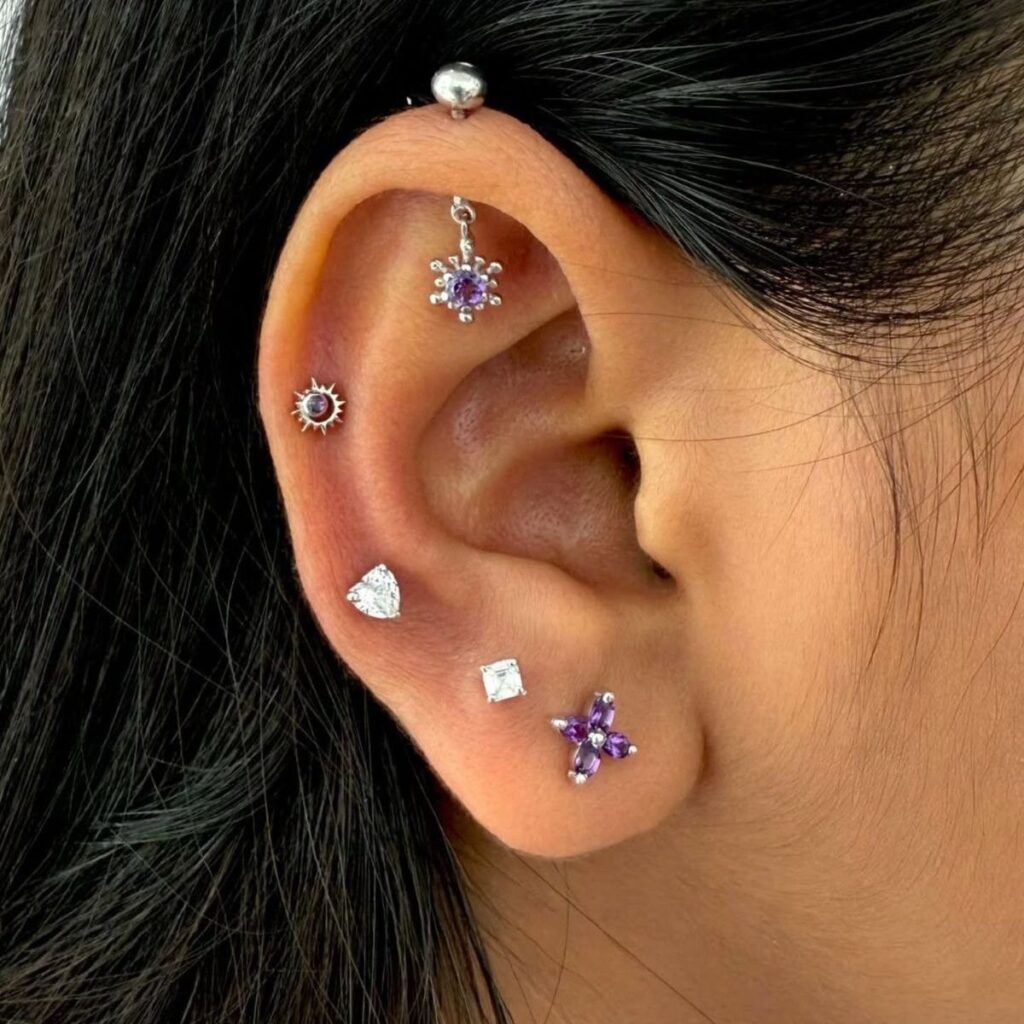
These 9 ideas run from a single silver ball stud to an industrial, which is two piercings joined by one long straight barbell, so the real choice is how many piercings you are willing to heal at once.
If you want one piercing, pick a stud or a hoop. If you can handle caring for 2 piercings, a chain-linked pair or an industrial bar is on the table.
1. Studs and Hoops Upper Cartilage Piercing
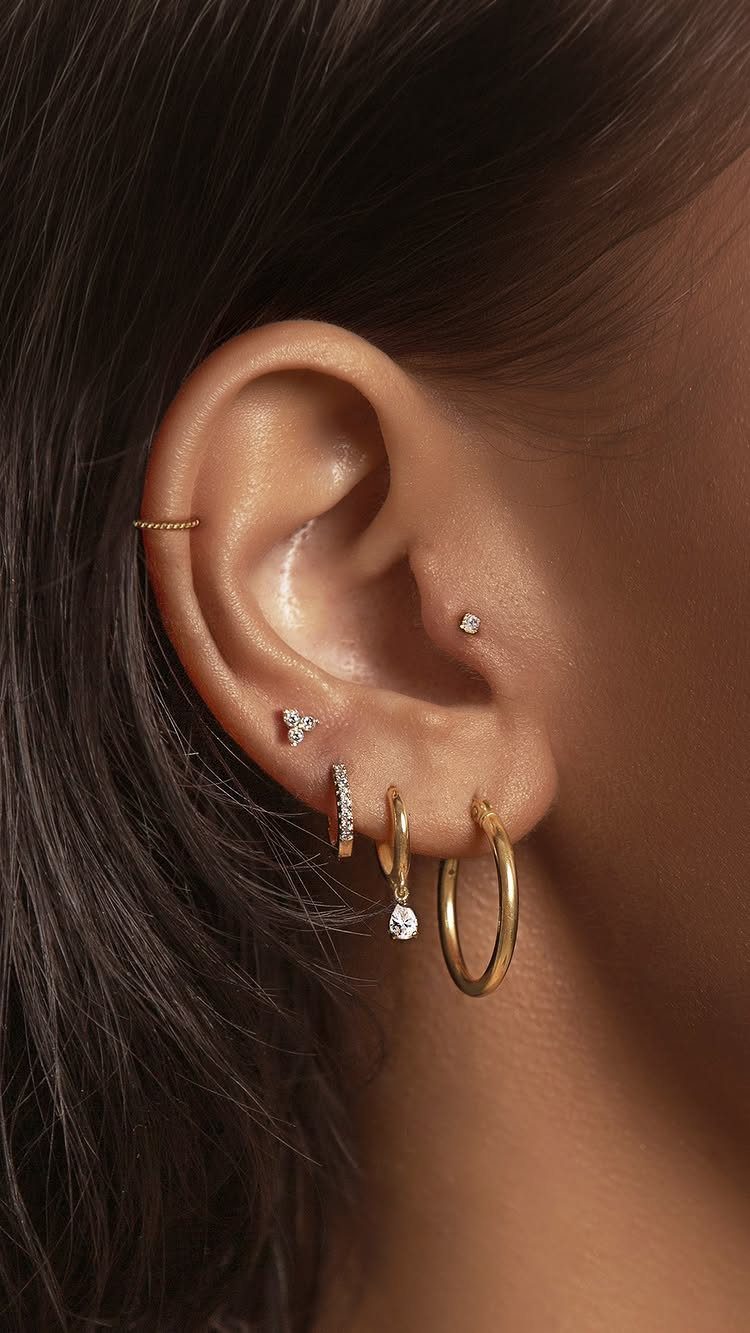
A small hoop and a few studs in the same metal make a stack look planned rather than piled on. Gold works well here, and the maker of this stack says it is 14K.
Pick one metal and keep the shapes varied: a hoop in the upper cartilage, a stud nearby, something simple in the lobe. Pairing a hoop with a stud gives the ear contrast without clutter.
I would start with one piercing and add the rest as each one settles.
2. Helix Piercing
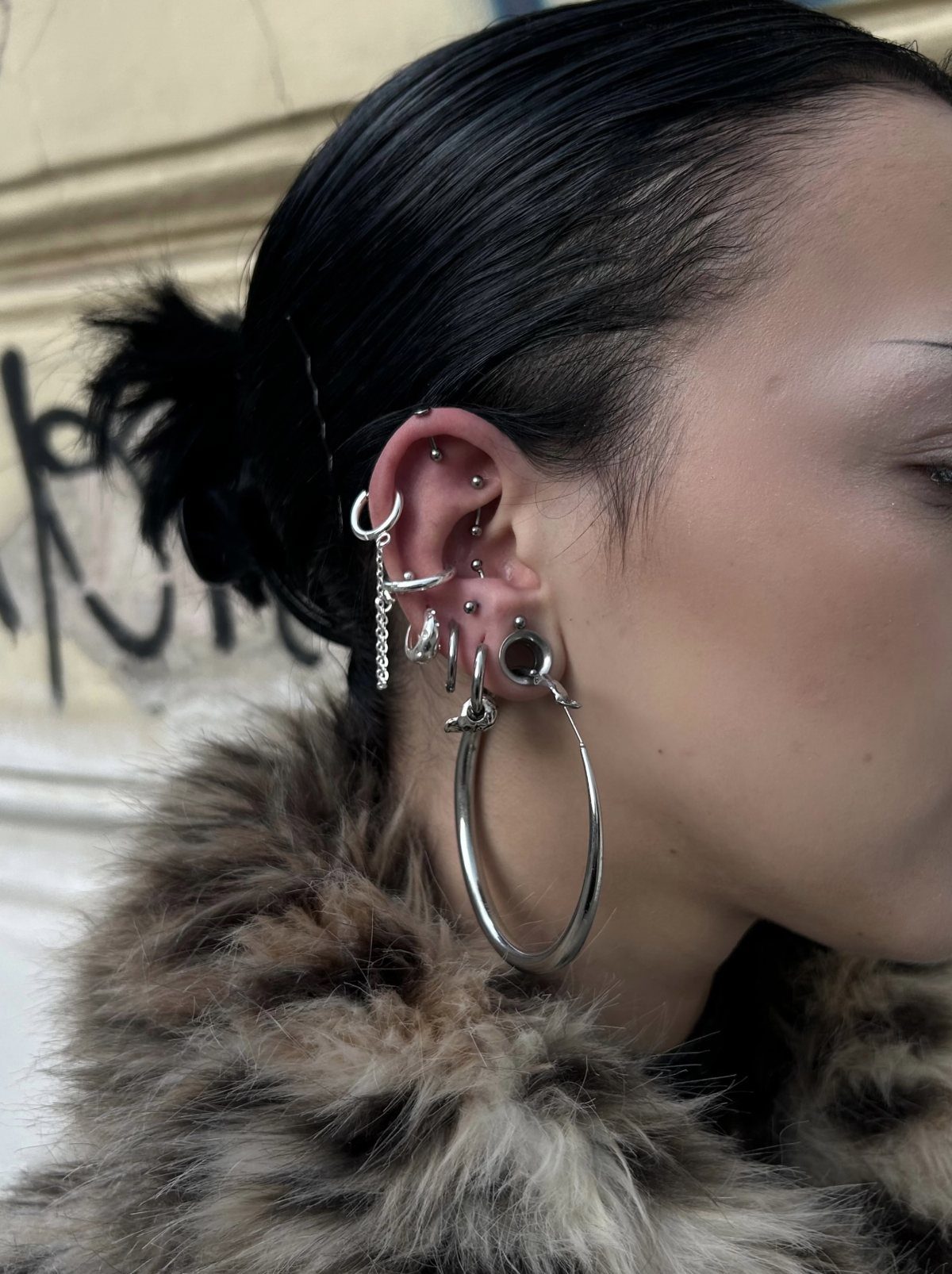
Sitting high on the curve of the ear, the helix is the piercing most people mean when they search "upper cartilage." It takes a stud or a hoop, so you can change the look later without a new piercing.
Silver suits darker hair and cooler outfits, and a single helix stud beside a larger hoop keeps things balanced. For a first cartilage piercing, I would choose the helix.
3. Industrial Piercing
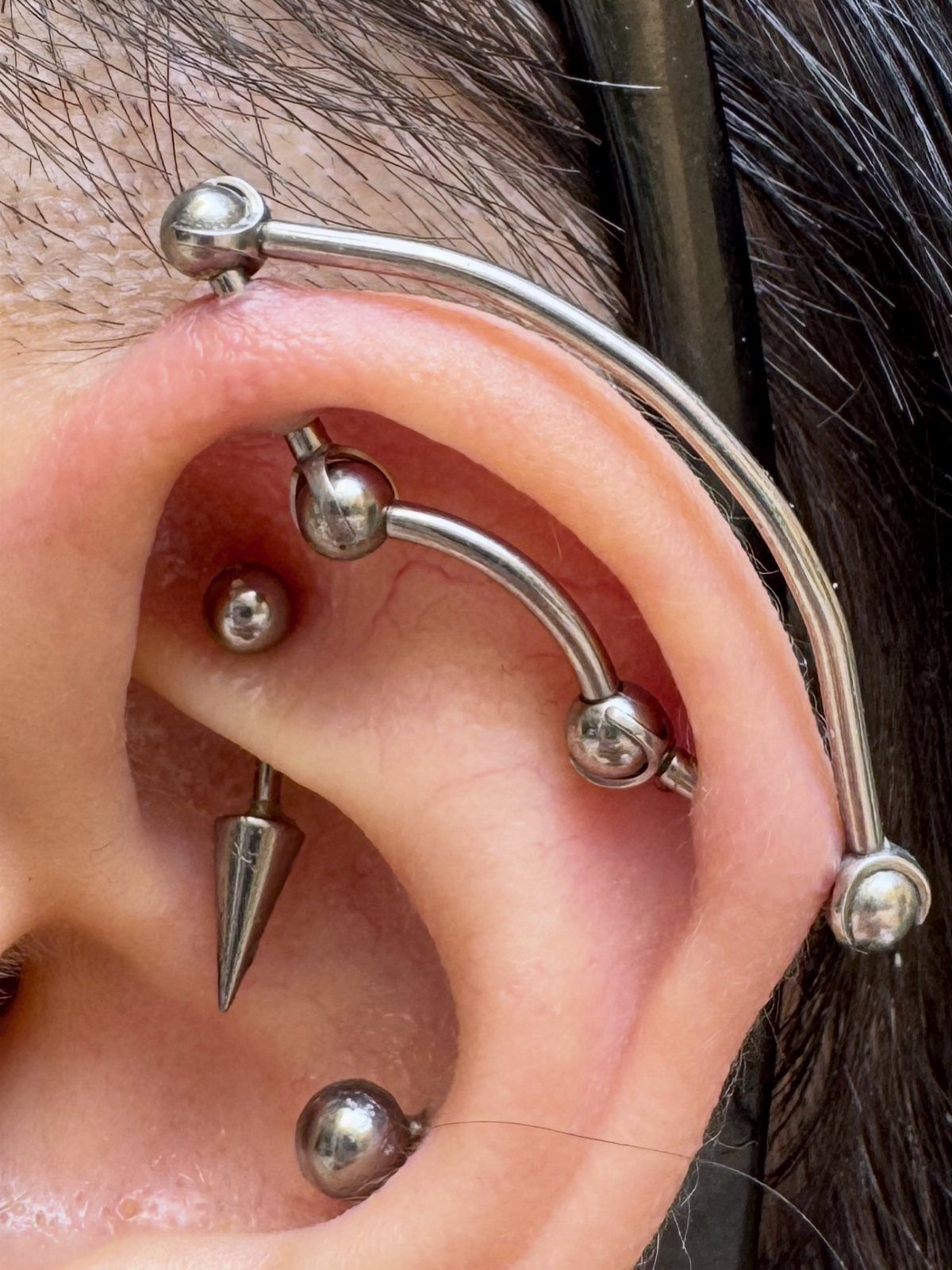
An industrial is really two piercings joined by one long straight barbell: a forward helix near the face and an outer helix toward the back of the ear. That makes it a bigger commitment than a single stud.
Because it is 2 piercings, expect to care for both. I like it best worn alone or with only a couple of small studs, so the bar stays the focus.
If a straight bar feels like too much, start with one helix piercing instead.
4. Double Cartilage Piercing with Chain
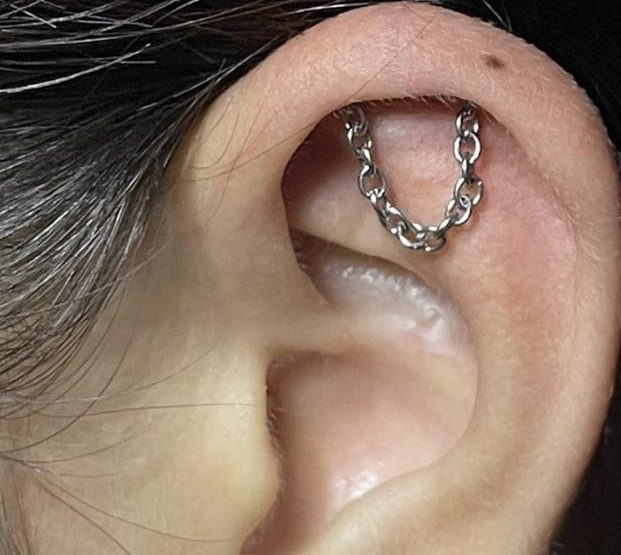
Two upper cartilage studs joined by a small chain look like one deliberate piece, and the chain adds movement a plain stud lacks. Silver keeps it light and a little modern.
You need 2 piercings placed close enough for the chain to drape, so ask your piercer to mark both spots before anything goes in.
I would pick this over a hoop if you want something dressier but still delicate.
5. Flower Stud Cartilage Piercing
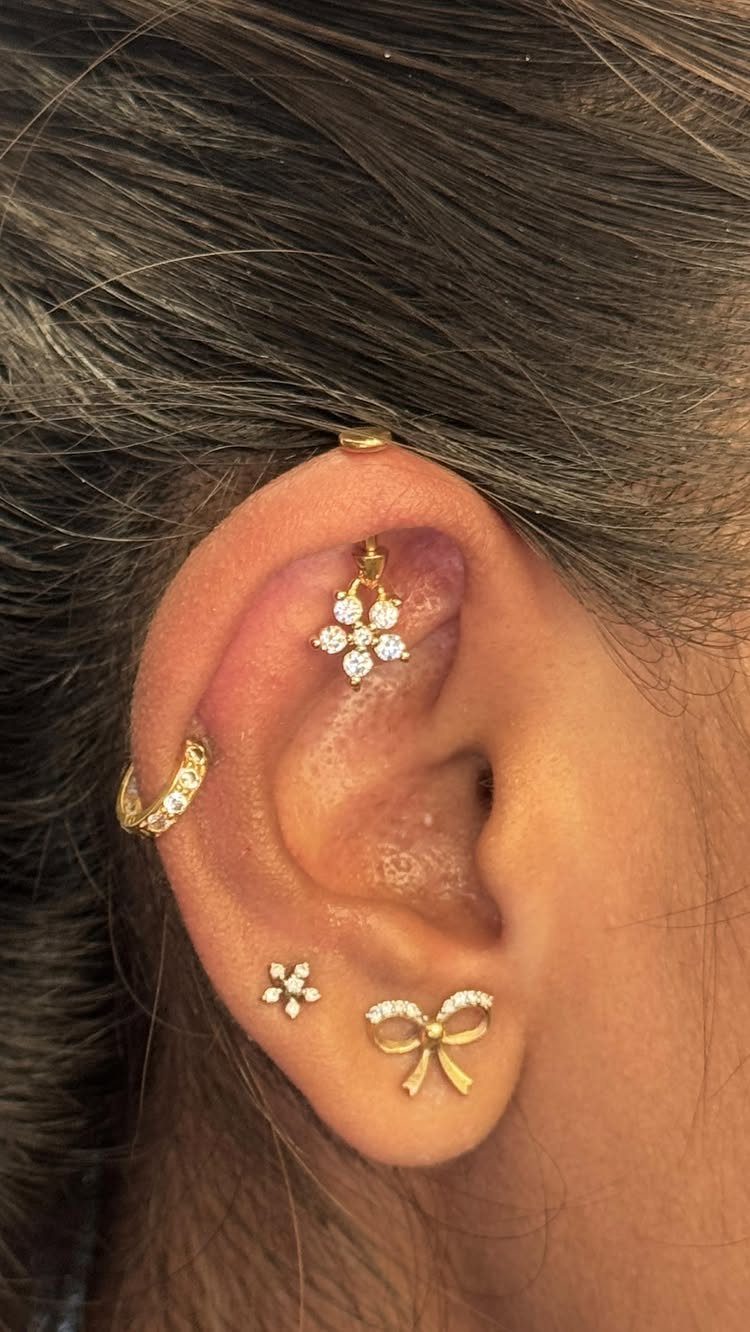
A flower stud turns one upper cartilage piercing into the decorative centerpiece of the ear. Keep the surrounding jewelry quiet, and match metals: gold flower, gold hoop, gold lobe pieces.
I prefer a small flower, because the shape stays readable up close and does not crowd a neighboring piercing.
If you want more than one accent, let the flower be the only one with a pattern.
6. Gold Leaf Cartilage Stud
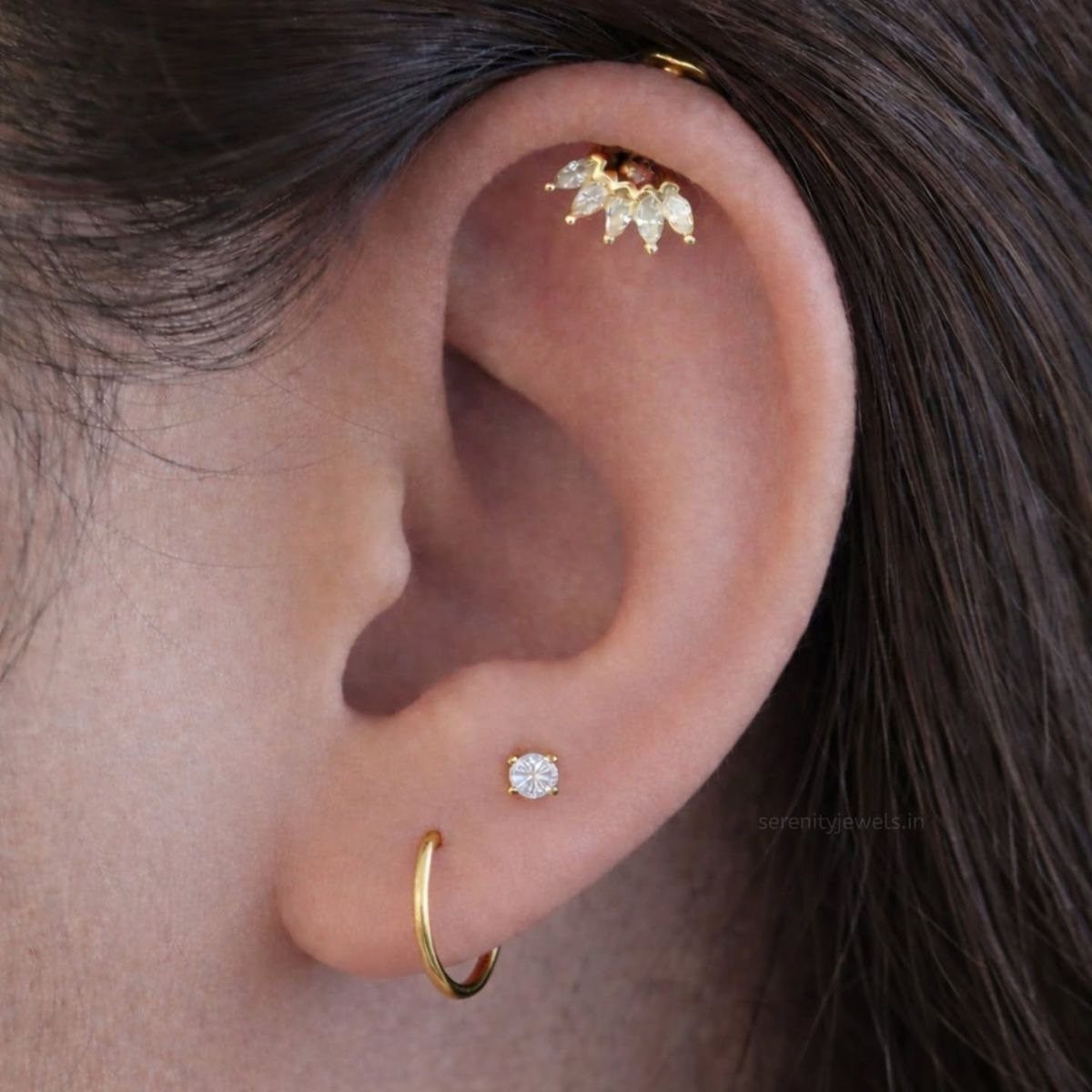
A gold leaf stud brings a natural shape to the upper cartilage without much fuss. Its outline is simple enough to wear daily and distinctive enough that people notice it.
Pair it with plain pieces, like a diamond stud and a small gold hoop, so the leaf stays the detail people notice. Shiny, flat-lying designs like this suit minimal outfits.
I would choose it over a flower if you want something quieter.
7. Fan-Shaped Cartilage Stud
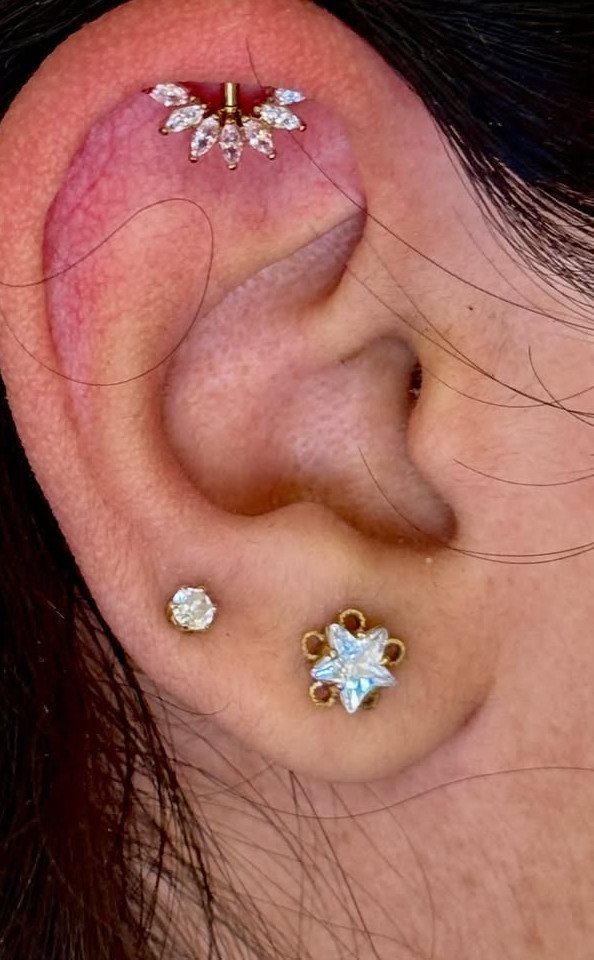
A fan-shaped stud with gems gives the upper cartilage a small ornate accent, closer to a brooch than a plain stud. The gold setting echoes the 2 studs in the lobe, which keeps the ear cohesive.
I would wear it with a quiet lobe pair, as it is here, and leave the rest of the upper ear empty. A shaped stud this detailed needs space to read.
8. Bee Cartilage Stud
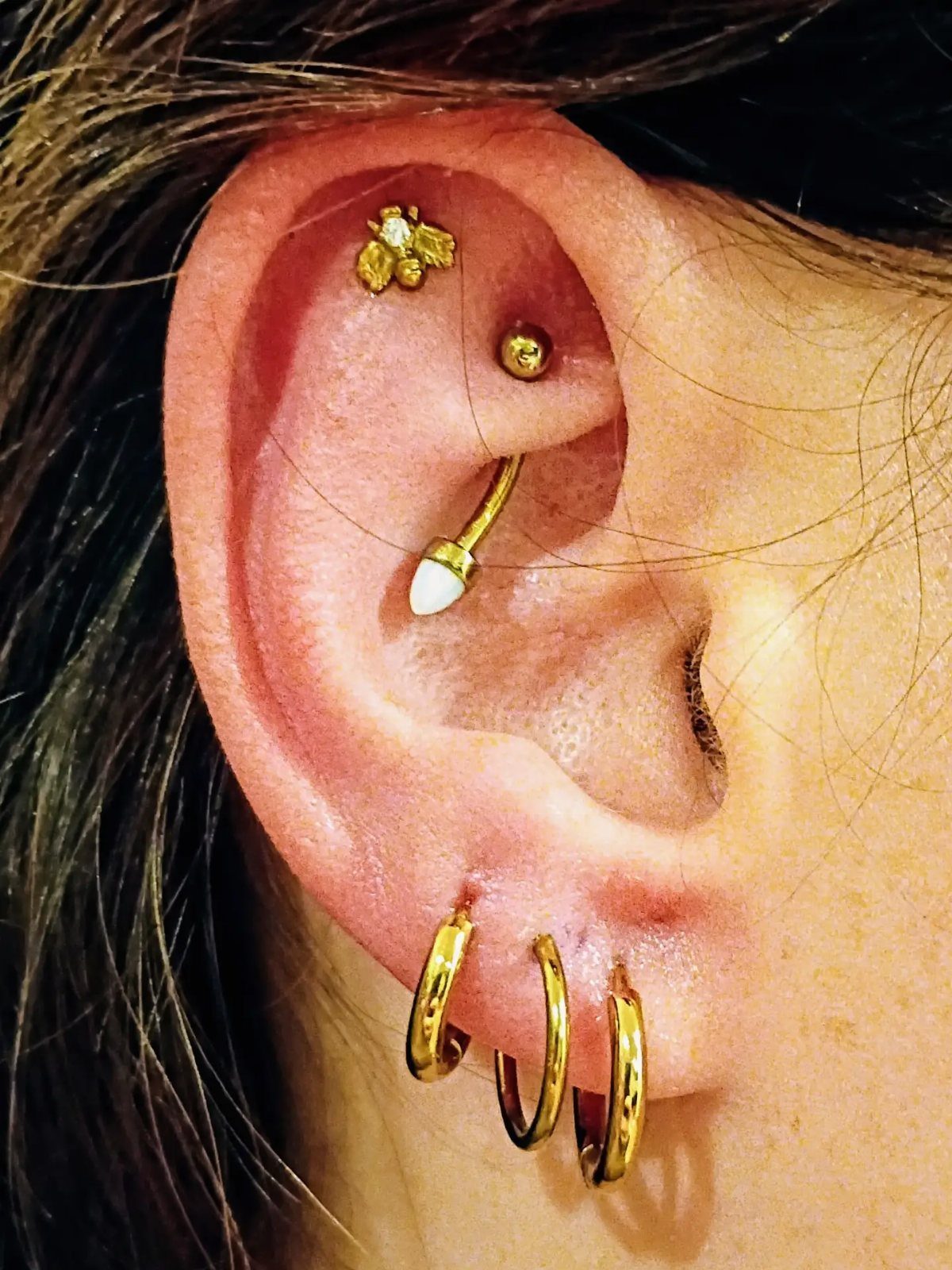
A bee stud is the playful pick for an upper cartilage piercing, and gold keeps it from looking like a novelty. It sits in the upper cartilage, so it works as the one small surprise in an otherwise polished ear.
A gold barbell in the upper cartilage looks balanced with 3 lobe hoops stacked around it, since the small studs and larger hoops don’t compete.
That is a lot of metal, so I would keep every piece gold and let the bee be the only figure, since the rest are plain shapes.
9. Minimalist Cartilage Ball Stud
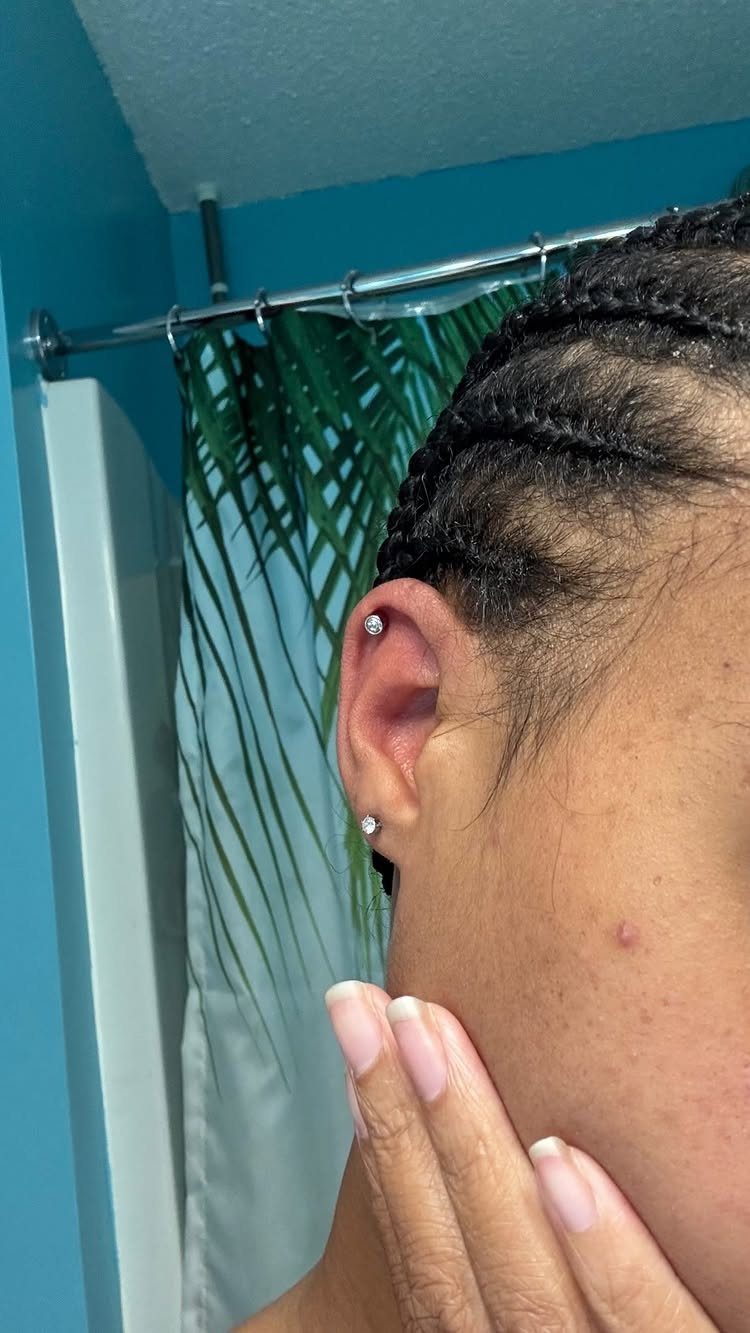
One small silver ball stud in the upper cartilage is about as easy as this piercing gets. It pairs with a matching stud in the lobe and nothing else, and it suits braids, ponytails and any outfit.
I would choose it if you want a piercing that will still look right a decade down the road. Plain shapes rarely date.
If it feels too quiet later, a hoop or a second stud can join it without changing anything.
Complications and Risks
Cartilage heals slower and reacts harder than lobe tissue, so I’d read up on the risks first, ideally while you’re still choosing a piercer.
The main ones are infection, raised scars (keloids or hypertrophic scars), migration or rejection of the jewelry, and cartilage damage from rough handling or poor piercing technique.
Most of these trace back to aftercare. Dirty hands and contaminated jewelry cause most infections, so scrub for 2–3 minutes with antibacterial soap whenever you need to touch the piercing, and otherwise keep your fingers off it.
Skip pools, hot tubs, lakes, ponds and the ocean while it heals. Sleep on the unpierced side, and watch for hair and bedsheets catching on the jewelry.
If you know you scar easily, tell your piercer before the needle comes out. Choose your piercer carefully, because technique matters as much as aftercare.
Cartilage piercings take longer to heal than soft-tissue piercings through your earlobes or eyebrows.
— WebMD
Jewelry Materials
Compared with a lobe, cartilage tends to flare up more easily when it meets a metal it dislikes. Earrings that never bothered your lobes can still irritate a new cartilage piercing, slow healing or cause complications.
For that reason I stick to 3 materials: titanium, 14K gold or surgical steel. Anything else is a gamble on a spot that takes months to settle.
Ask the piercer what the jewelry is made of before it goes in, and don’t assume a pretty piece is safe because the price is high.
Once healed, you can swap between studs, hoops, clickers, huggies and cuffs. Keep to the same hypoallergenic materials when you do.
Care During Healing
Leave the starter jewelry in place until the downsize appointment, since swapping it early invites irritation. Taking it out even for a day puts the piercing at risk.
Touch it only when you’re cleaning it, and always with clean hands. Skip antibacterial ointments, since they can block the air the piercing needs.
Tell your stylist or barber about it before a cut.
Phones, headphones and hats touch the spot too, so wipe them clean.
At night, pull a clean T-shirt over your pillow and flip to the other side each day.
Use a fresh shirt once every surface has been used. Showers beat baths, which can hold bacteria.
Frequently Asked Questions
How painful is a helix piercing?
A helix piercing usually feels like a quick pinch with a little more pressure than a lobe, somewhere around 4 out of 10 for most people.
Of the cartilage spots, the helix tends to hurt least, since the tissue along the upper rim is thinner. Pain tolerance varies, so your experience may run lower or higher than a friend’s.
Can I get multiple cartilage piercings at once?
Yes, though the common recommendation is to stay at four or fewer per visit. Each piercing needs its own care while it heals, and a double setup like a chained pair needs both spots marked first.