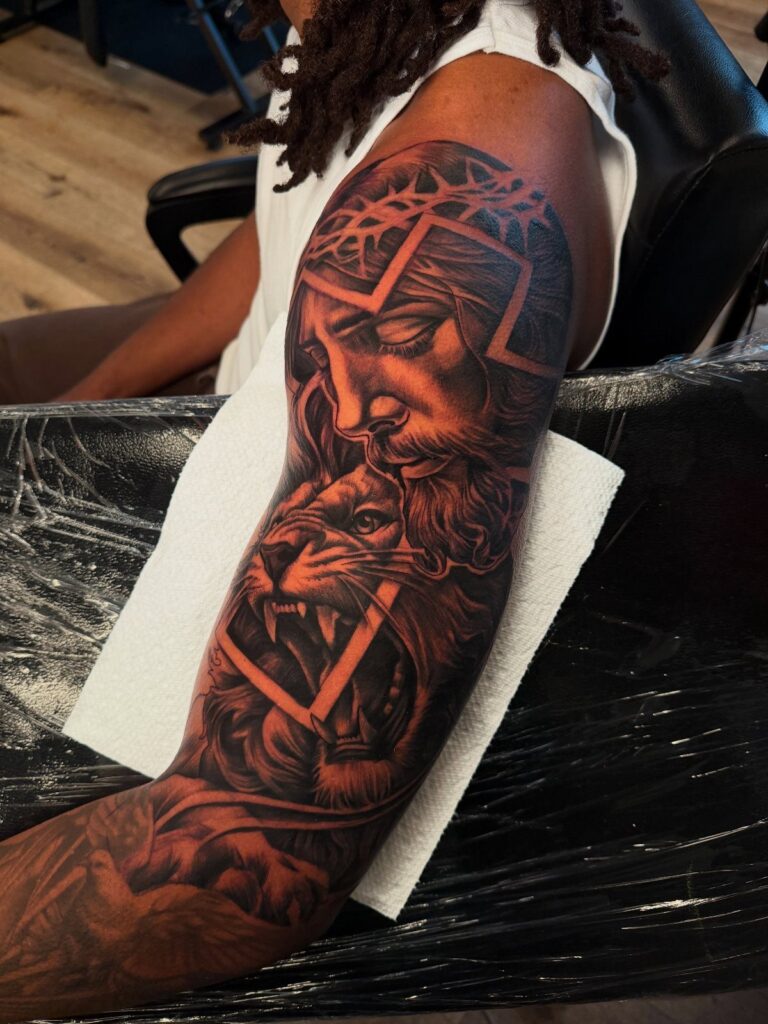
The ideas here run from safe black and grey work to riskier choices like white ink and gold or orange accents, and what decides each one is how much contrast your skin gives the pigment.
Healed photos of work on skin as deep as yours settle the question better than any fresh-tattoo shot, so check for those before you pick a design or an artist.
1. Black and Grey Tattoos
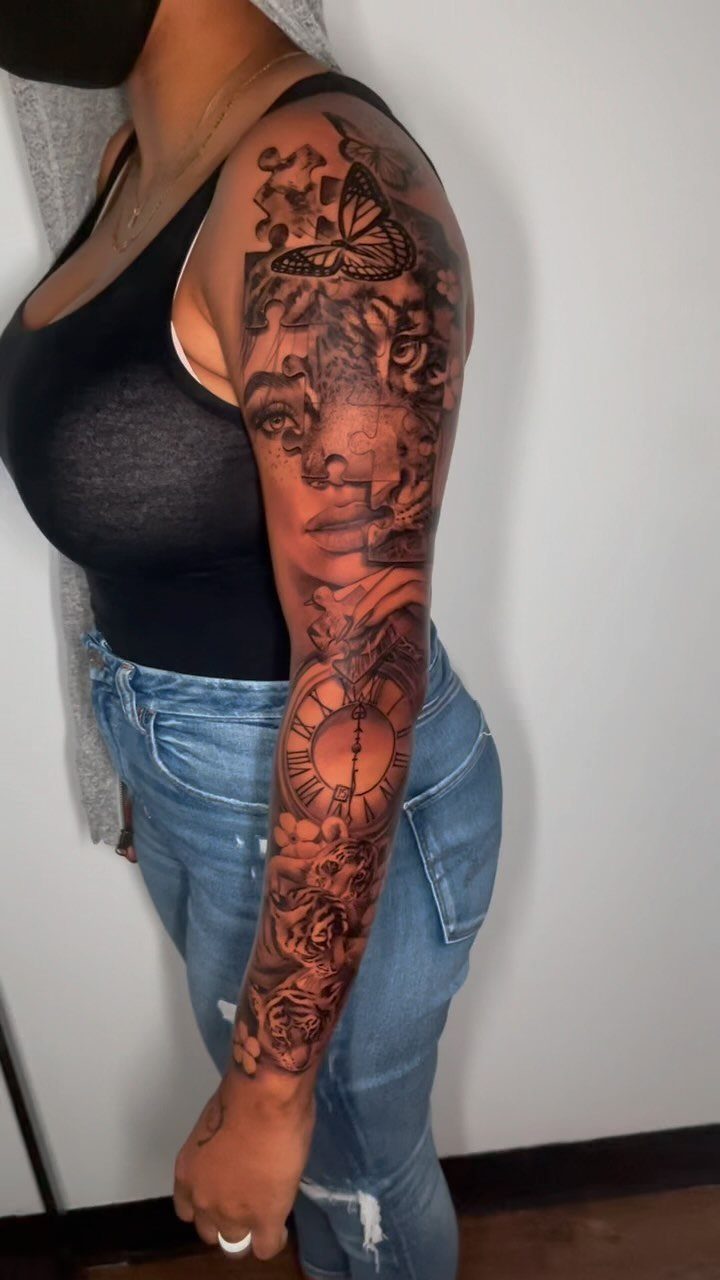
Contrast does the work here.
Black and grey ink sits dark against dark skin, so shading and fine detail show up through value rather than color, which is why I treat it as the safest starting point for a first piece.
A sleeve like this one, with a face, a clock and a butterfly, rewards smooth gradients.
Look at healed black and grey work on dark skin first, and plan your highlights deliberately, because the deepest blacks and the lightest grey tones need clear separation to stay readable.
2. Gold/Bronze Accents (Yellows/Oranges)
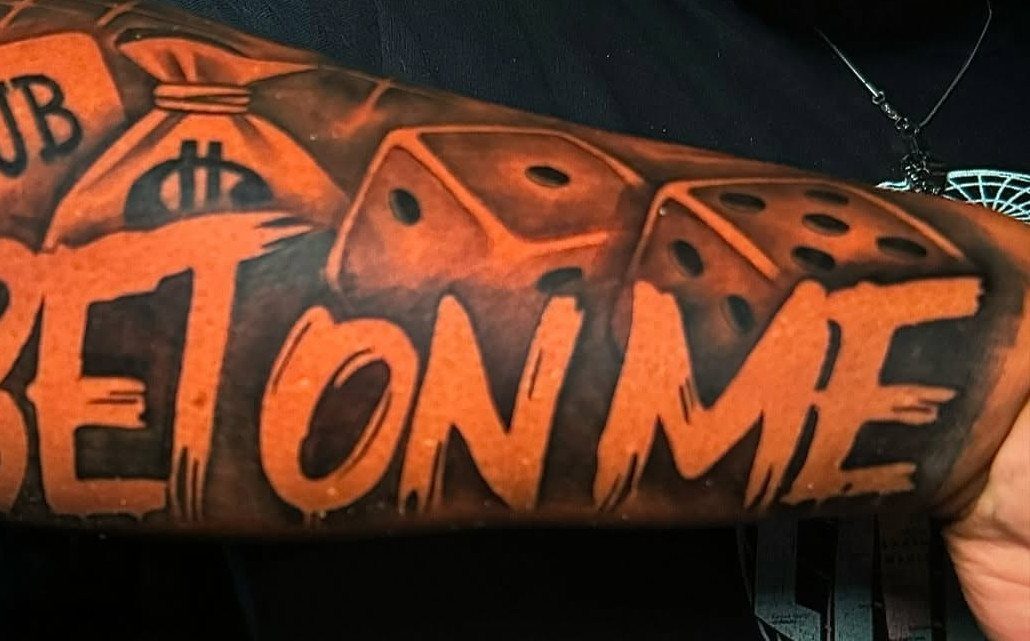
Orange paired with black is the version of the gold idea I’d actually pick.
Metallic or true gold ink is where I’d be careful. Expecting a shiny finish on a darker complexion sets up disappointment; yellows and oranges tend to read softer than they do on paper.
Keep the black linework heavy and treat the orange as an accent.
3. Tribal and Cultural Patterns
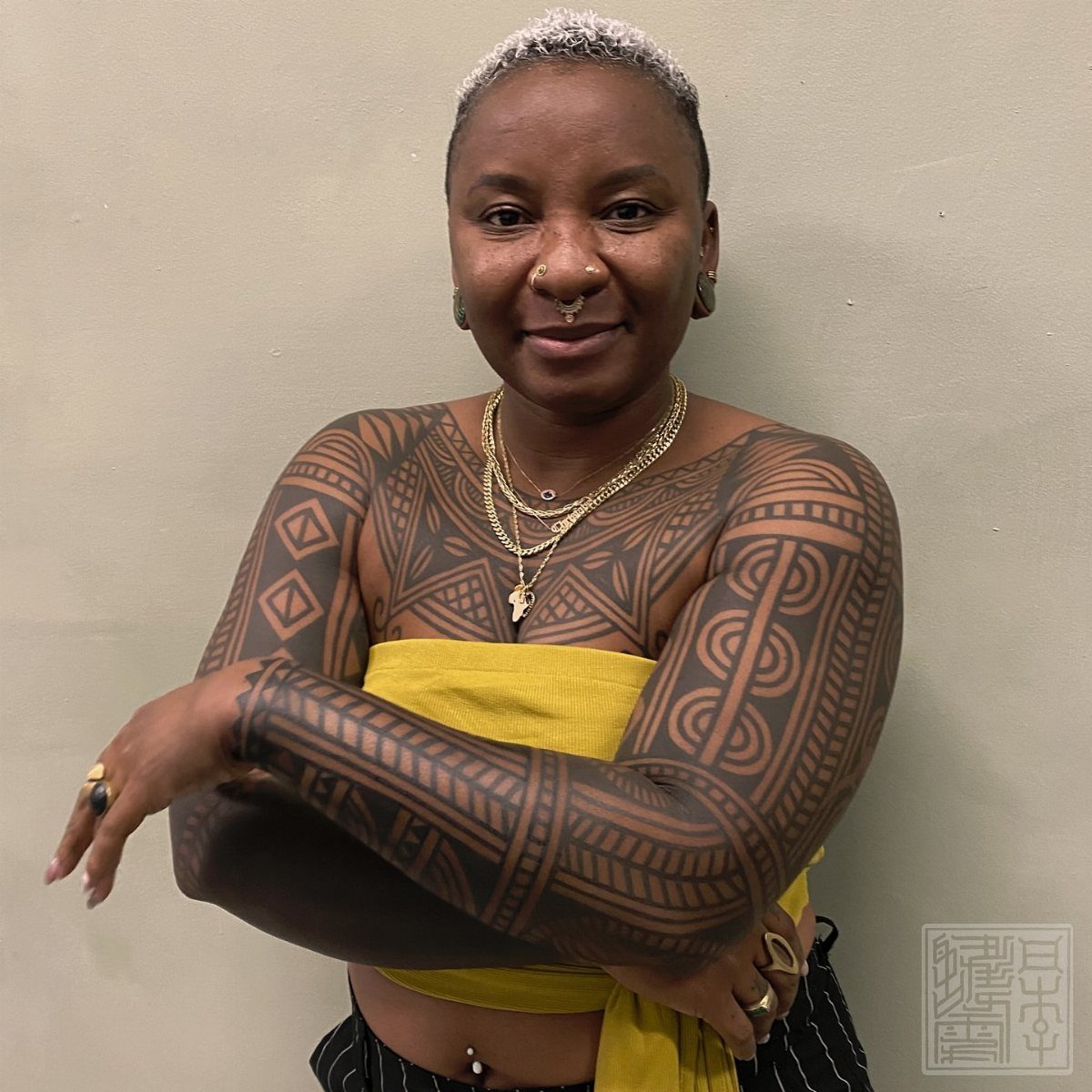
Heritage work asks for more than a good artist; it asks for one who understands the pattern.
Bold black ink suits dark skin, and dense tribal and geometric bands across the shoulders, arms and chest hold their shape because the solid areas carry the design.
Research the origin of any motif first, and bring that source to the consult. I’d rather spend an extra week confirming the meaning than wear something I can’t explain.
4. Fine Line Geometry
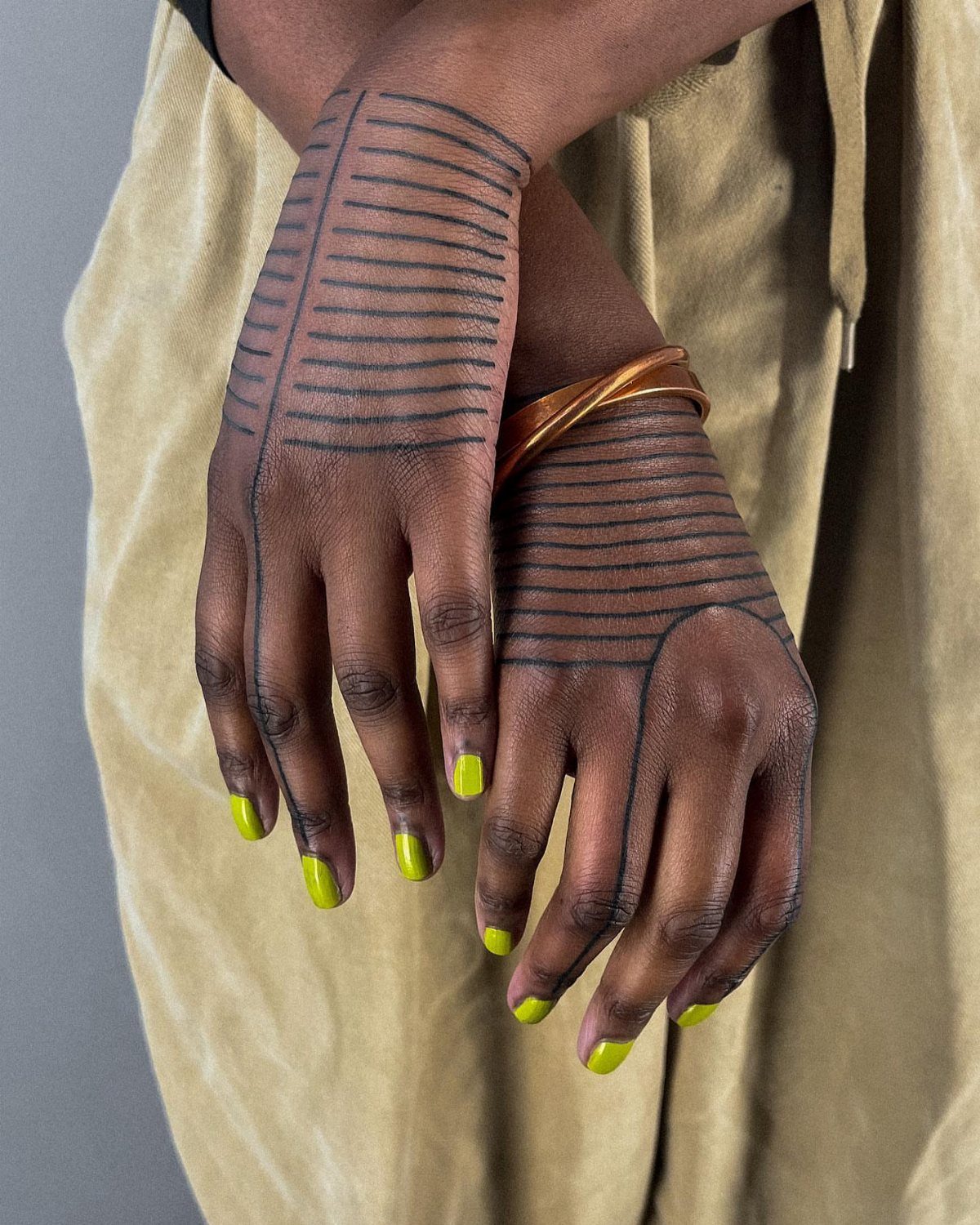
Hands and wrists are where I’d place fine line geometry, since small, clean shapes frame the fingers like jewelry.
Minimalist designs with bold lines stand out best when the lines are thick enough to hold, so ask for a single confident weight instead of hairline detail.
Keep the pattern simple and the spacing open. Crowded geometry in a small area blurs sooner than a few strong shapes.
5. Bold Fonts Script Tattoo
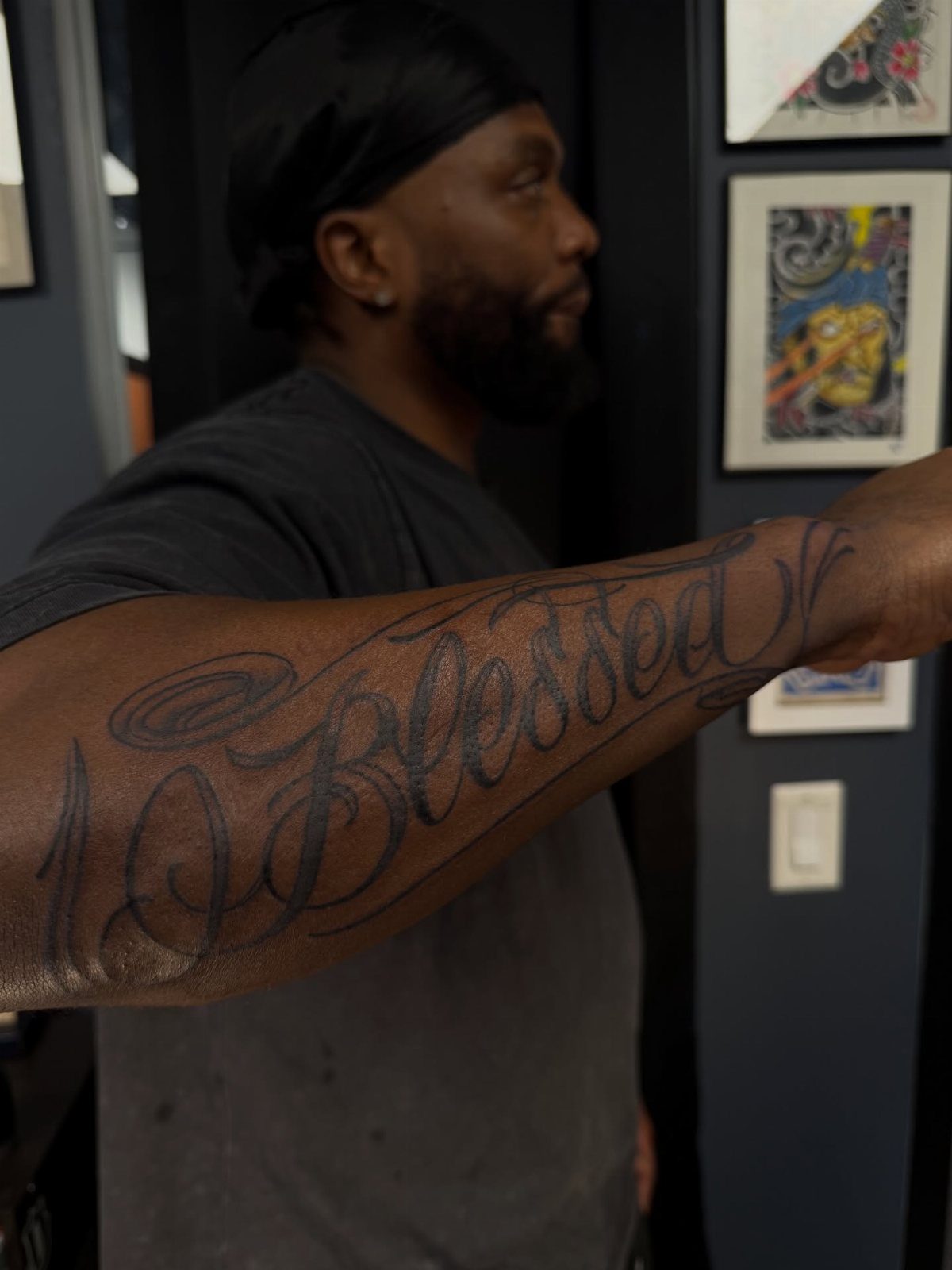
Thicker lettering is the practical choice for script. Heavy strokes keep a word like "Blessed" readable on a forearm, while thin, tightly looped letters tend to fade into each other.
I’d choose a single word or short phrase, bold black ink, and generous space between the letters. Ask the artist to size the stencil on your arm before any ink goes in, and check that every loop stays open.
6. Vibrant Color Tattoos
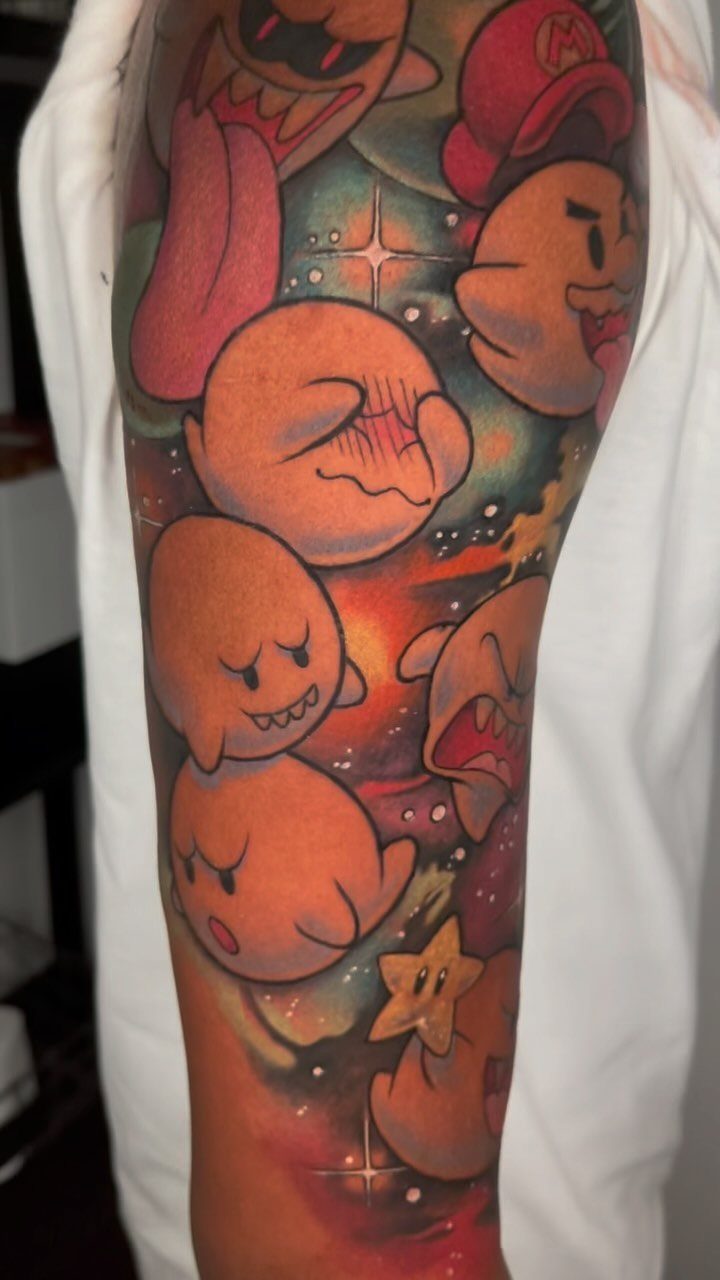
Color can work on dark skin, and orange and red cartoon ghosts against cosmic space details prove it. Warm, saturated shades hold up best, so I’d build the piece around them.
Use black or deep dark backgrounds to make the bright shapes stand out. Pick an artist who shows healed color work on dark skin, not just fresh photos, because the healed result is what you’ll live with.
The best way to think about it is that the color of your skin is a tint, not a canvas, says Arizona-based tattoo artist Anthony Michaels.
7. White Ink Tattoo
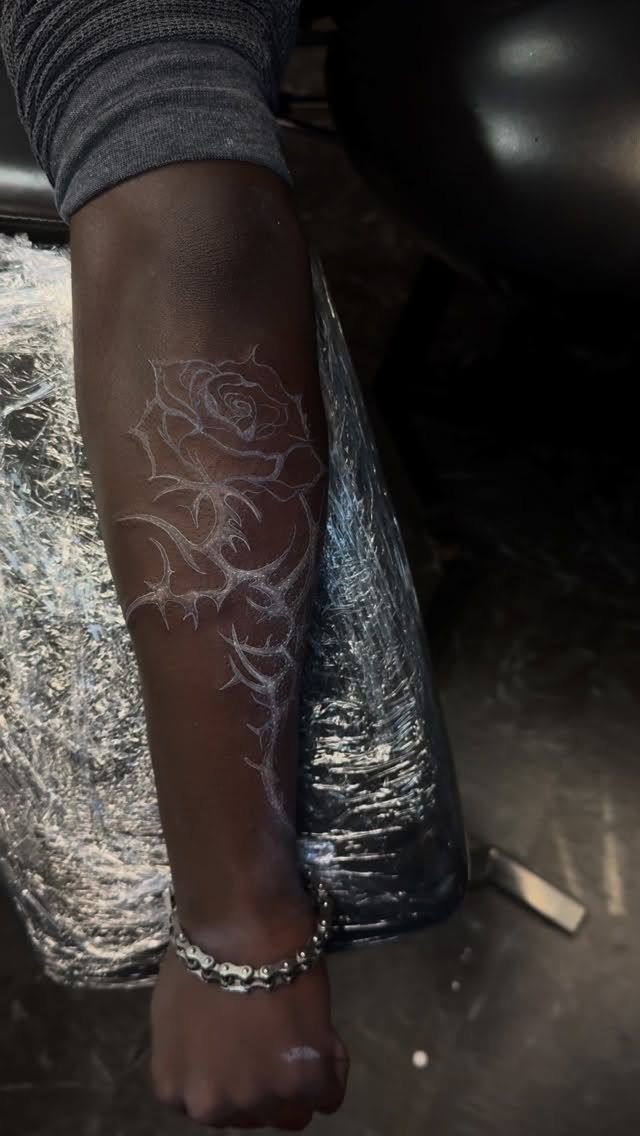
White ink on dark skin is the quietest choice for this search, and a single rose is a good way to try it. Expect a soft, subtle mark rather than the bright white you see on fresh, wrapped skin.
I’d keep the design to one simple flower with clear outlines, and check with a few artists on how white ink has healed on skin tones like yours.
Skin color changes how the pigment reads, so healed examples matter more than fresh photos.
To keep the rose readable for years, plan on a touch-up with the same artist and the same white ink.
8. Floral and Butterfly Hand Tattoo
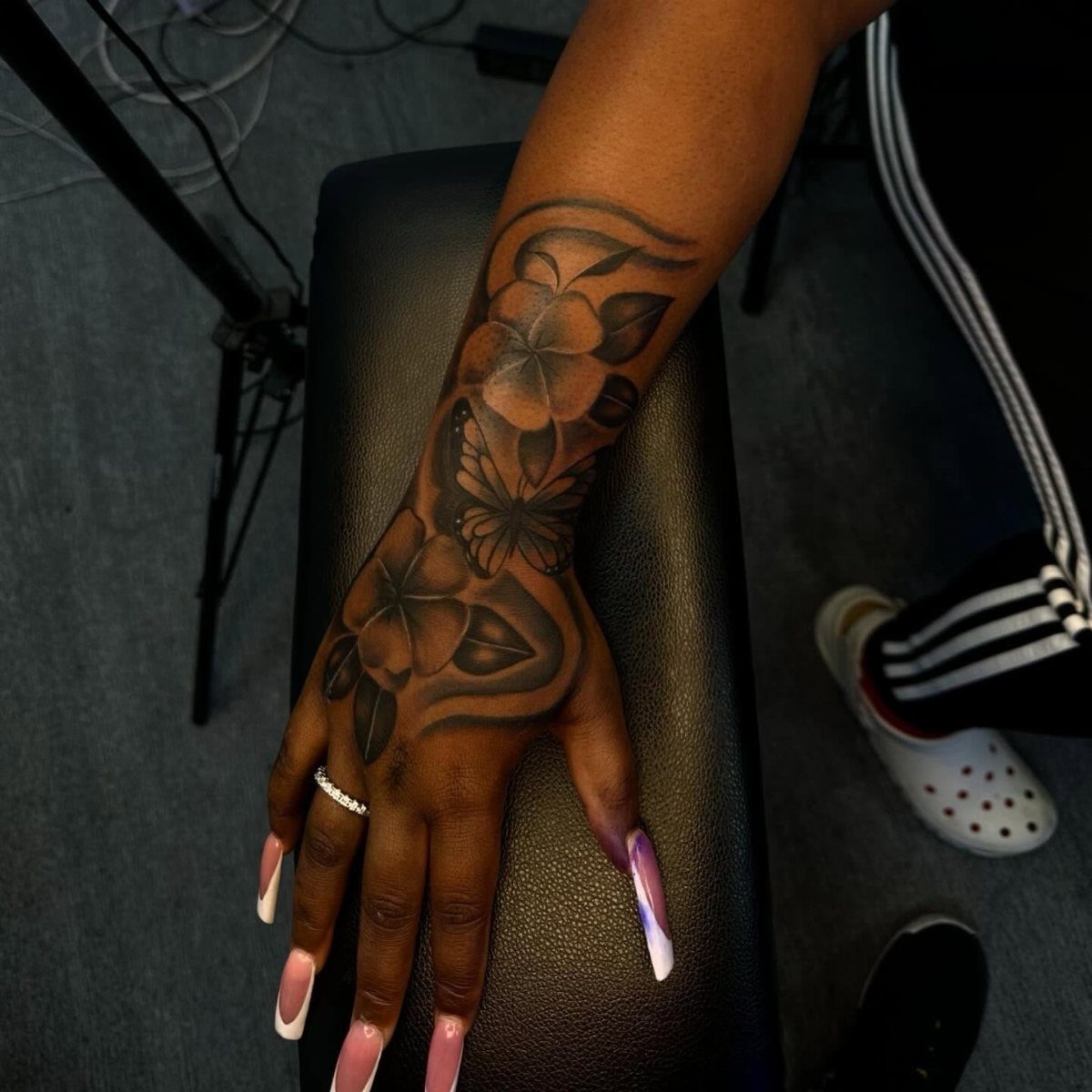
Flowers and a butterfly running from the back of the hand up the forearm make one of the best uses of black ink on dark skin. The forearm gives the design room to move, and the hand keeps it visible.
I’d choose black ink with open space between the petals and wings, so each shape stays distinct. Have the stencil placed with your hand relaxed and then flexed, because the design has to sit well in both positions.
A hand is a high-visibility spot, so I’d settle the layout before booking the session.
Choosing the Right Artist
Portfolio proof matters more than a shop’s reputation. Before booking, go through the artist’s portfolio and look for healed work on skin as deep as yours; if you can’t find any, I’d keep looking.
Artists are quick to post work they’re proud of, so an empty feed means they haven’t done it much or don’t want to.
Match the artist to the style as well. A portrait calls for someone who is strong at portraits, and dark skin adds a second requirement on top of that.
Experience counts for more than anything else here. Tattoos on very dark skin have to be adjusted to the individual person, and that knowledge only comes with years of practice.
Body parts also vary in tone, so a good artist adapts the work to the exact spot.
Common Myths
Many people with dark skin have been told that color and detail won’t read, and they stick with black and grey to be safe. With the right technique and color choices, that belief doesn’t hold up.
An artist who works on all skin tones will read your undertone and choose colors that stay bold on you.
On medium skin, I’d lean toward orange, bright blue and green shades, which tend to hold their color well. Deeper skin looks great in dark blue and crimson, and I’d pick those first.
A design that looks bright on white paper will sit differently under a layer of skin, a bit like seeing it through a tinted window. Ask the artist to explain how each color will shift on you before you commit.
Keloid Concerns
Keloids are raised scars that grow past the edge of an injury, and dark skin develops them more often, so mention any history of them before you book.
If you’ve had keloids before, a tattoo can trigger them again, so tell your artist up front and talk to a dermatologist before booking.
Pigment itself isn’t the cause.
Keloids are mostly genetic, and deep trauma to the skin sets them off. Dark skin does have more fibroblasts, the cells that promote collagen production, which is why scarring runs higher.
That makes technique the part you can control. An artist who doesn’t push too deep keeps trauma down, which is another reason to pick someone with real experience on dark skin.
Frequently Asked Questions
What colors show up best on dark skin?
Saturated warm tones hold their color longest on deeper skin, and orange and red are the ones I trust beside black.
Skip colors close to your own skin depth, since they can lose contrast, and start with dark blue and crimson, which hold up well on deeper skin.
Do black or color tattoos look better on dark skin?
Black and grey is the safest choice, because dark ink gives strong contrast and the shading reads through value.
Skin acts like a tint over the ink, so colors will sit softer than they look on paper. For a first piece, I would start with black.
What is a black tattoo?
A black tattoo is a piece done mainly in black ink, relying on contrast instead of color. On dark skin it gives high contrast, and black and grey versions use shading from deep blacks to light greys.
Heavy black linework, dense tribal bands and bold geometric patterns all fall under it. Keep the darkest and lightest tones clearly separated so the design stays readable.