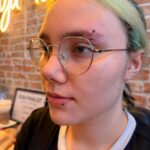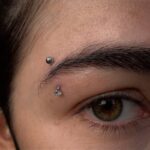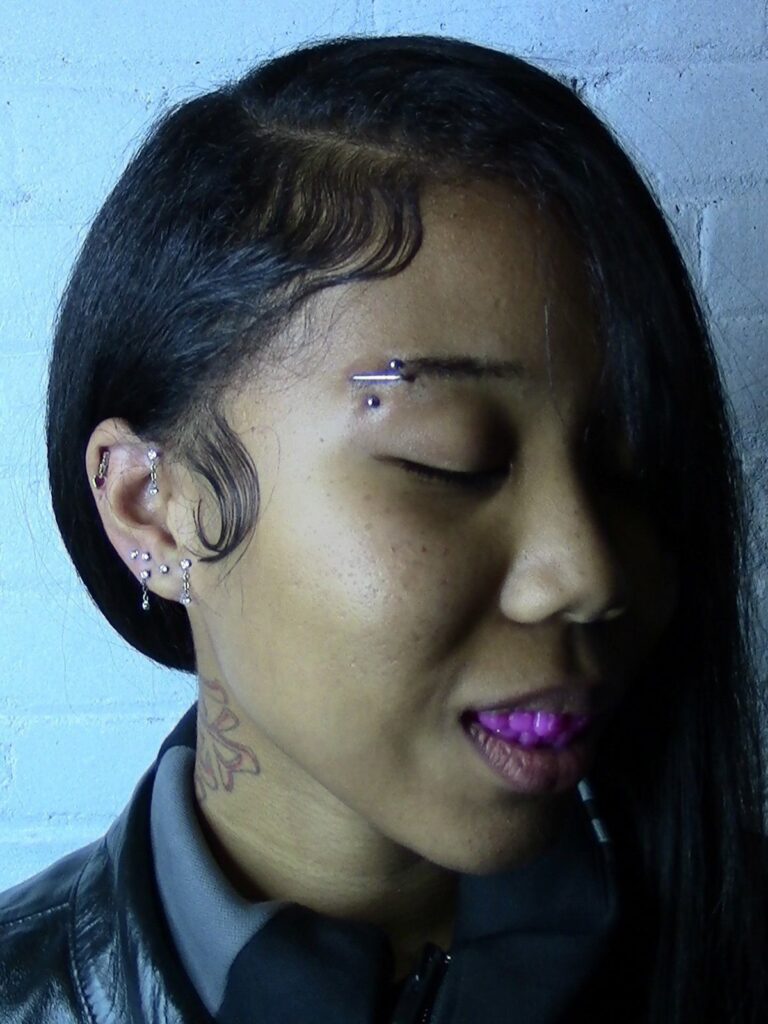
Your brow’s anatomy decides which of these piercings you can wear, because every style here is a surface piercing and a flatter brow bone gives the jewelry less tissue to sit in, which raises the odds of migration and rejection.
The 6 run from a single vertical bar to a bilateral pair, and from the anti-eyebrow on the upper cheekbone to the bridge across the nose.
Most are done at 16 gauge (1.2mm), so the real differences are placement, spacing and how much your skin can hold.
1. Anti-Eyebrow Piercing
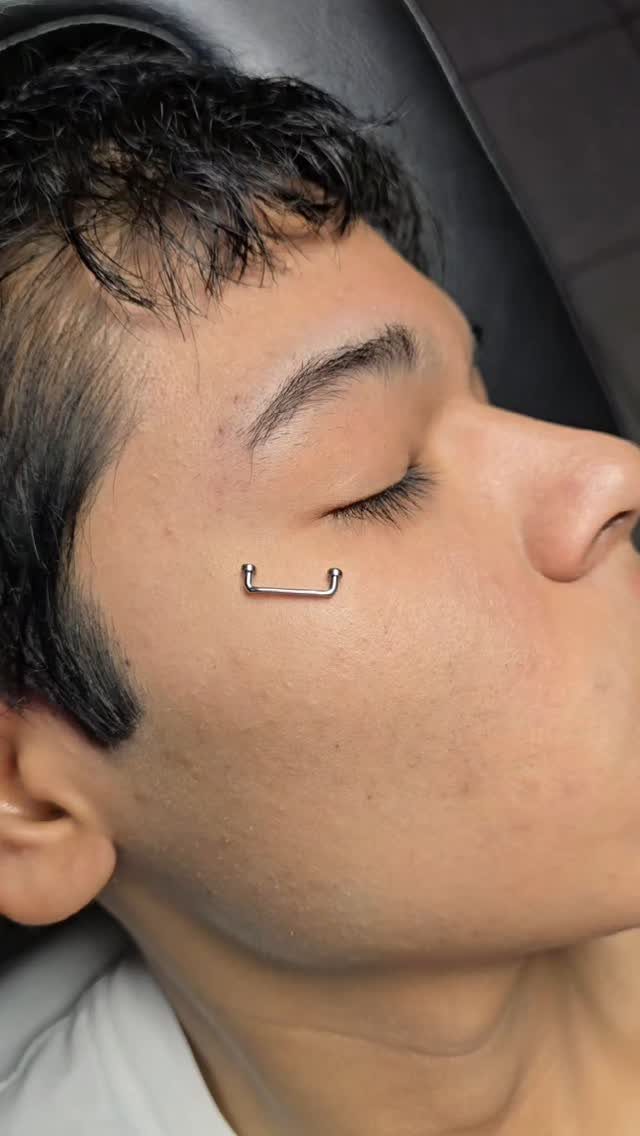
Placed on the upper cheekbone just under the eye, the anti-eyebrow piercing echoes the line of the brow from below instead of cutting through it.
That mirror effect is why I like it on people who want a facial piercing nobody else on the street has.
A flat-ended barbell gives this placement its cleanest look, since the flat disc sits close to the skin and doesn’t catch on lashes or makeup.
Have a piercer check how the spot sits against your bone structure first, because the cheekbone’s shape decides whether the jewelry lies flat.
2. Vertical Eyebrow Piercing
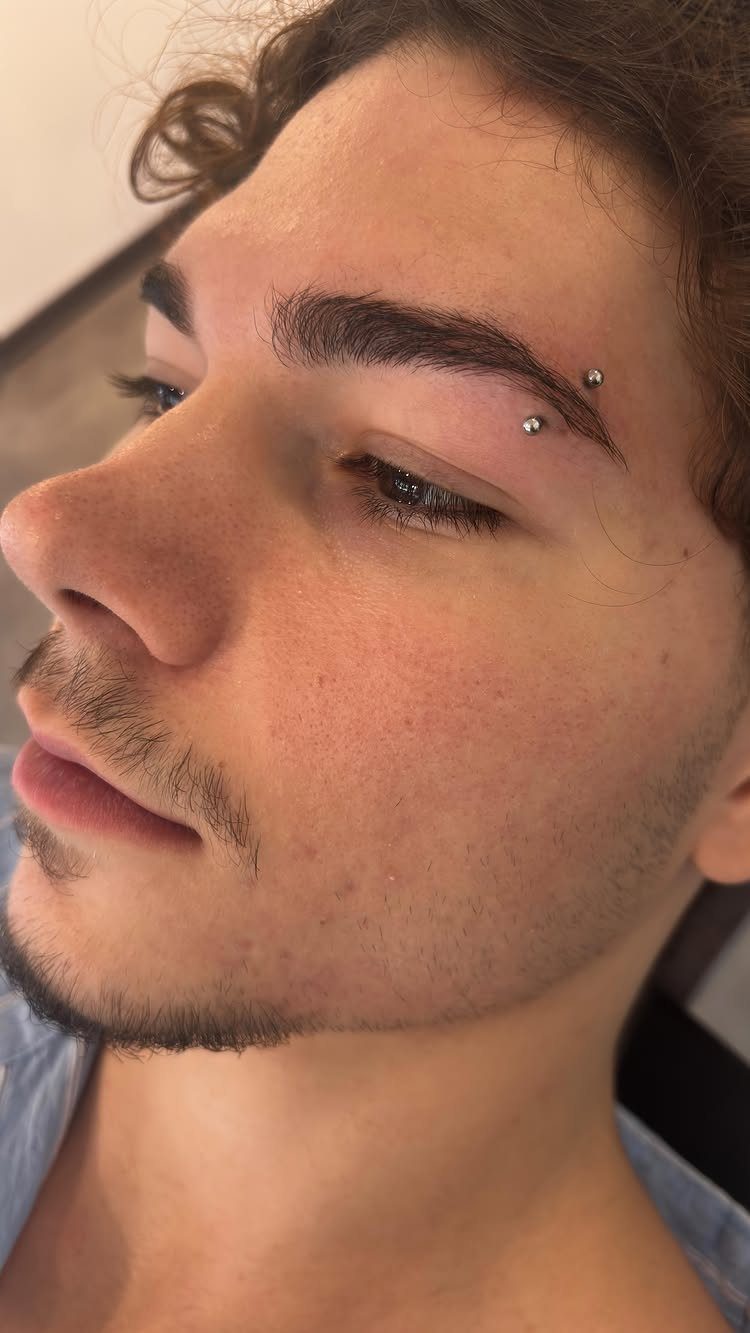
The vertical eyebrow piercing is a classic, and it has stayed popular for years. A barbell passes up through the brow just past the arch, and the beads end up on top and underneath.
Silver beads are my pick here, since they read clearly against skin without looking busy. If you want one eyebrow piercing and no surprises, this is where I would start.
Have the piercer mark the spot while you relax your face, since brows move when you talk.
3. Horizontal Eyebrow Piercing
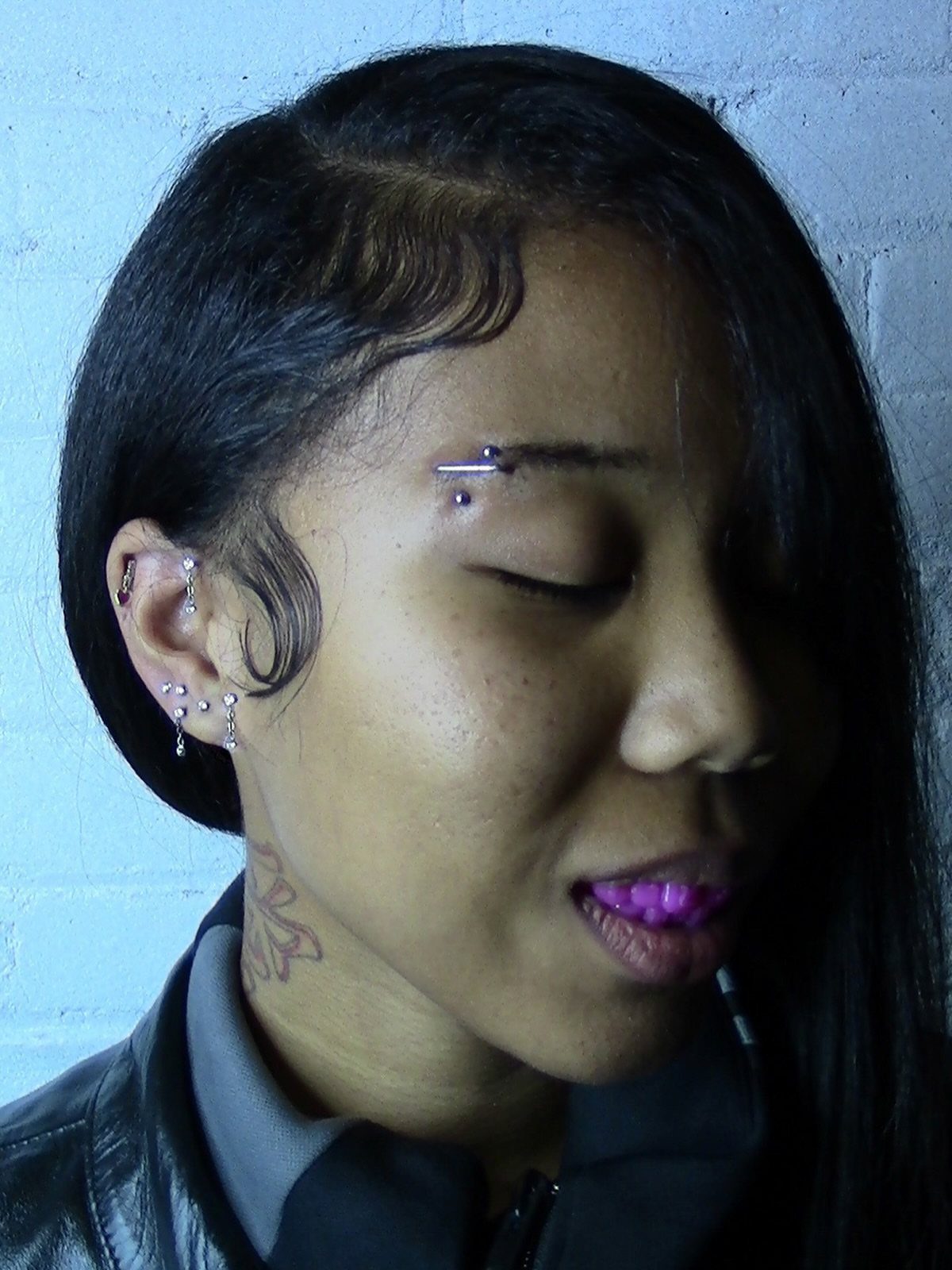
Lying parallel to the brow instead of cutting across it, a horizontal eyebrow piercing looks more modern than the vertical style. The barbell follows the line of the hair, so the jewelry reads as part of the brow.
It pairs well with other piercings, tattoos and bold lipstick, since the straight bar stays quiet next to them. Choose a plain metal barbell and let the rest of your look do the talking.
4. Bridge Piercing
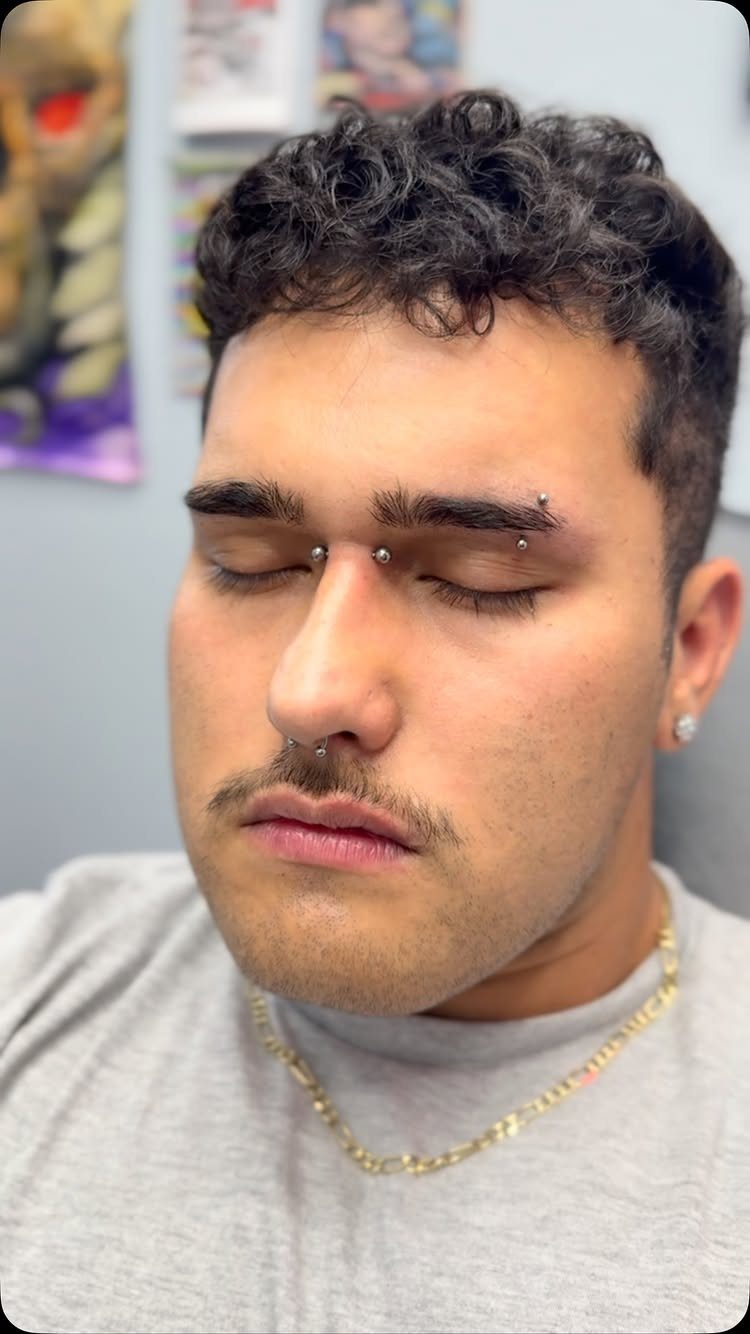
Few piercings sit as unconventionally as the bridge, which passes straight across the top of the nose, between the eyes. A single bar means the jewelry shows at both ends of the skin.
I like it best next to an eyebrow piercing, because the two together frame the upper face. Ask your piercer plenty of questions first, since this is a less traditional placement than a brow.
5. Double Eyebrow Piercing
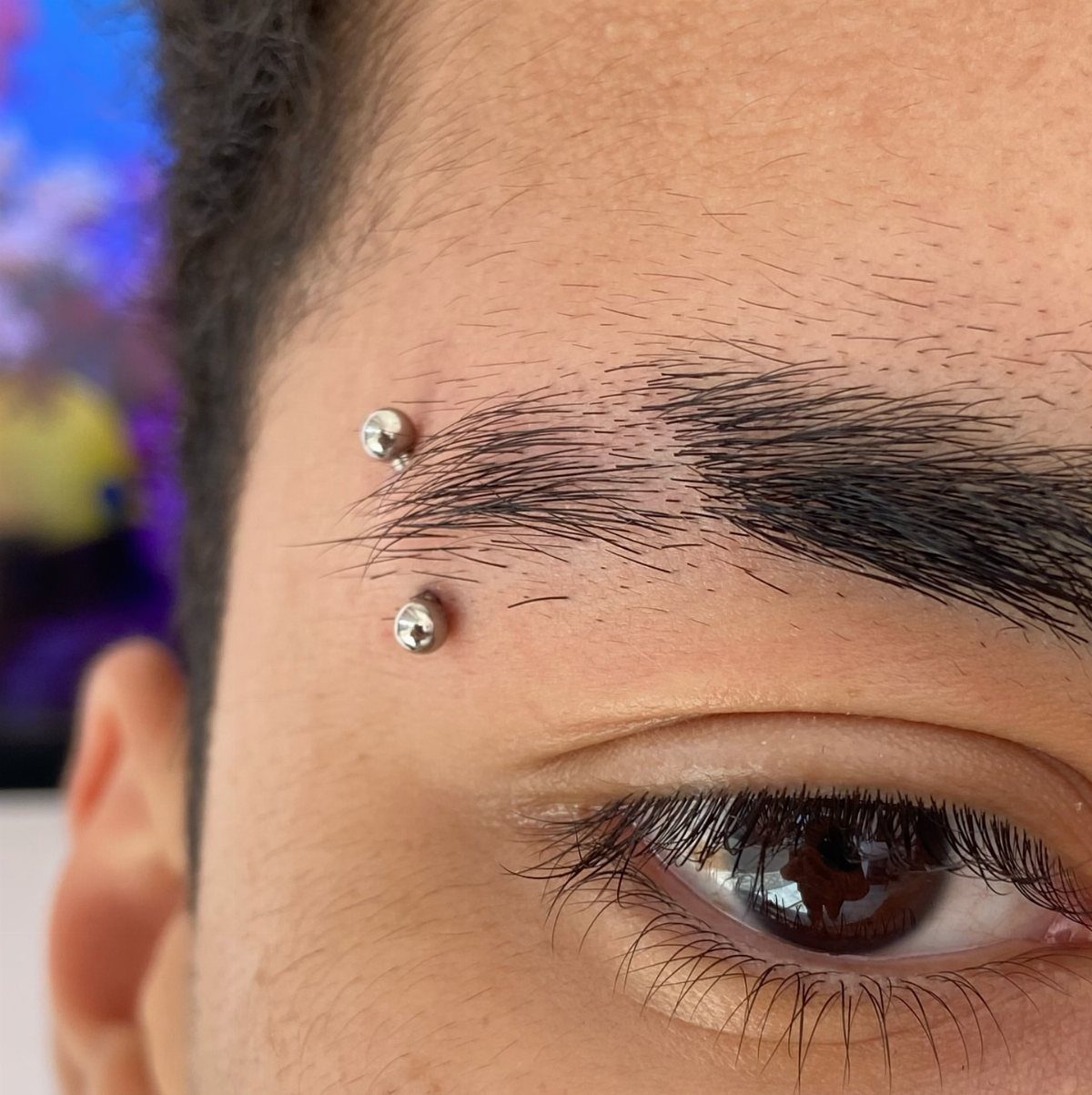
Two piercings set side by side on one brow make a double eyebrow piercing.
Matching the 2 pieces in size and finish keeps the pair looking deliberate. Mismatched jewelry makes 2 holes look accidental, while a matched pair looks planned.
Talk spacing through with your piercer before the needle, because the gap between the 2 is what makes or breaks the look.
6. Bilateral Eyebrow Piercings
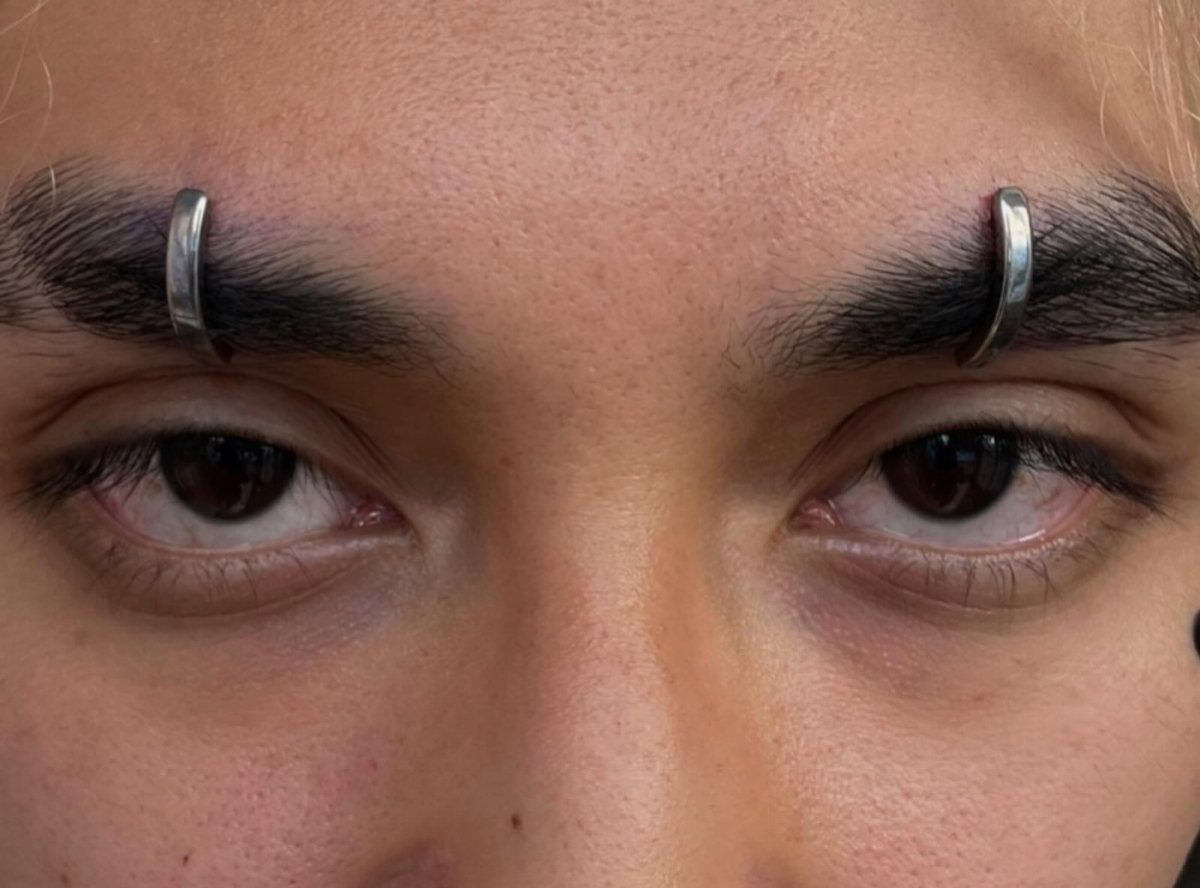
Bilateral eyebrow piercings put one piercing in each brow, so the face reads as symmetrical. Curved barbells in both brows, in matching silver, make that balance obvious at a glance.
My advice is to keep the jewelry identical and the placement even on both sides. Symmetry is the whole appeal, and a small difference in height shows right away.
Mark both spots with the piercer, looking in a mirror, before either one is done.
Aftercare Tips
Treat a fresh eyebrow piercing like any other small wound: leave it alone except to keep it clean while it closes up. Sterile saline solution is the one product you need.
Skip harsh soaps, alcohol and peroxide. They dry out the skin and irritate it, which slows healing instead of speeding it up.
Avoid trauma: keep brushes, hats, headbands and towels away from the jewelry, and don’t twist or pick at it. A snag early on can set healing back by weeks.
Healing varies from person to person, so don’t judge yours against someone else’s timeline. Watch for signs of infection and go back to your piercer if the area gets worse instead of calmer.
Jewelry Materials
Material matters as much as looks. Implant-grade titanium is my first pick: it is hypoallergenic, lightweight and won’t tarnish, which suits sensitive skin.
Surgical steel costs the least and holds up well, which is why most shops stock it first.
If you pick steel, ask for implant-grade 316LVM, since cheaper alloys release more nickel and can leave the brow red and itchy. Solid 14k or 18k gold is a body-safe choice too, but never plated.
Most eyebrow piercings are done at 16 gauge (1.2mm).
Bar length comes down to how thick your brow tissue is; most people end up somewhere between 5/16" (8 mm) and 3/8" (10 mm). A snug fit prevents snags and irritation.
Starter jewelry is usually a curved barbell. Decorative rings with gemstones are fine later, as long as nothing presses hard on the piercing.
Migration and Rejection
Migration and rejection are the biggest hassles in healing, and every eyebrow style carries the risk.
The brow is a surface piercing, so the jewelry runs along a flat or ridged stretch of skin with no distinct front and back, and often little tissue to hold it.
Anatomy is the main factor. A flatter brow bone gives the jewelry less to sit in, so migration and rejection get likelier; ask your piercer straight out whether you have enough tissue before you commit.
Jewelry choice and material play a part too, which is one more reason to stick with body-safe metals and a well-fitted bar. Plenty of people heal these piercings without trouble when the anatomy suits.
Frequently Asked Questions
What are eyebrow piercings called?
The main styles are vertical, horizontal and anti-eyebrow piercings.
A vertical one passes up through the brow just past the arch, a horizontal one lies along the brow line, and an anti-eyebrow sits on the upper cheekbone under the eye. Bridge, double and bilateral piercings are related variations.
What to avoid with an eyebrow piercing?
Avoid anything that snags or irritates it: brushes, hats, headbands and towels, plus twisting or picking at the jewelry.
Harsh soaps, alcohol and peroxide are also out, since they dry the skin and slow healing. Stick to sterile saline, because an early snag can set healing back by weeks.
What are the different types of piercing jewelry?
For eyebrows, the usual starter is a curved barbell, and captive bead rings and surface bars are the other common choices.
Surface bars sit flat under the skin to cut down pressure, which makes them the pick for horizontal and anti-eyebrow placements. Decorative rings with gemstones are fine once healed, as long as nothing presses hard on the piercing.