Which of these ideas fits depends on one fact: whether the piercing is already healed, because Clear Retainers and Flesh Colored Adhesive Patches suit a settled hole, while a fresh one needs more care.
Clear retainers and adhesive patches suit healed ears, since patches can irritate a new piercing and plastic should stay out of anything under 3 months old.
The span runs from a Hidden Helix Piercing to a skin-toned adhesive patch, and cartilage can take 6–12 months to settle, so I would plan around that clock before choosing how to hide anything.
1. Hidden Helix Piercing
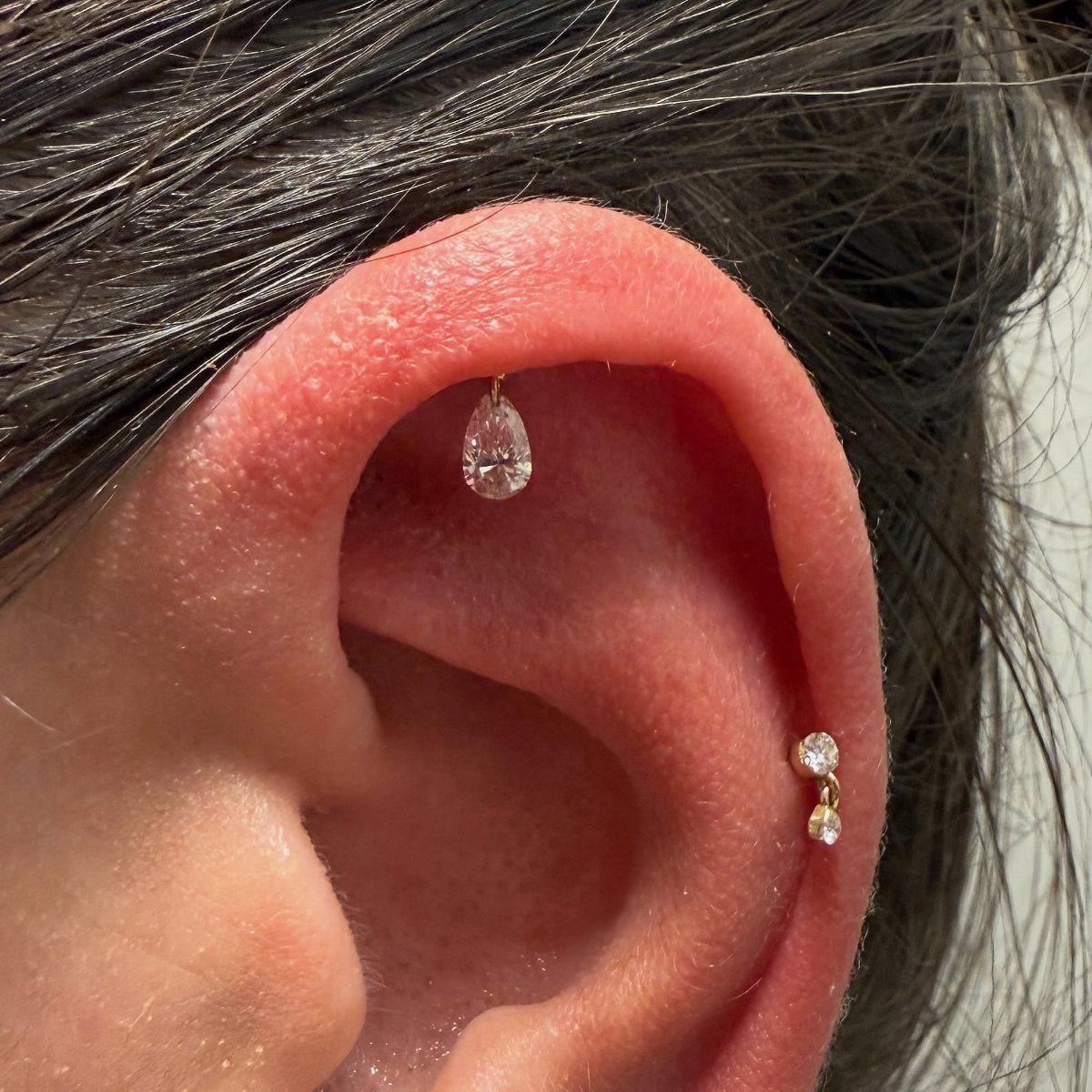
A floating teardrop gem set in the inner cartilage reads as a sparkle on the skin, not as a piercing, which is why I like it for conservative settings.
Pair it with one small stud on the outer rim and the eye lands on the gem first.
Pick a small gem. The bigger it gets, the less hidden it is, and a tiny one sits closer to the ear.
2. Clear Retainers
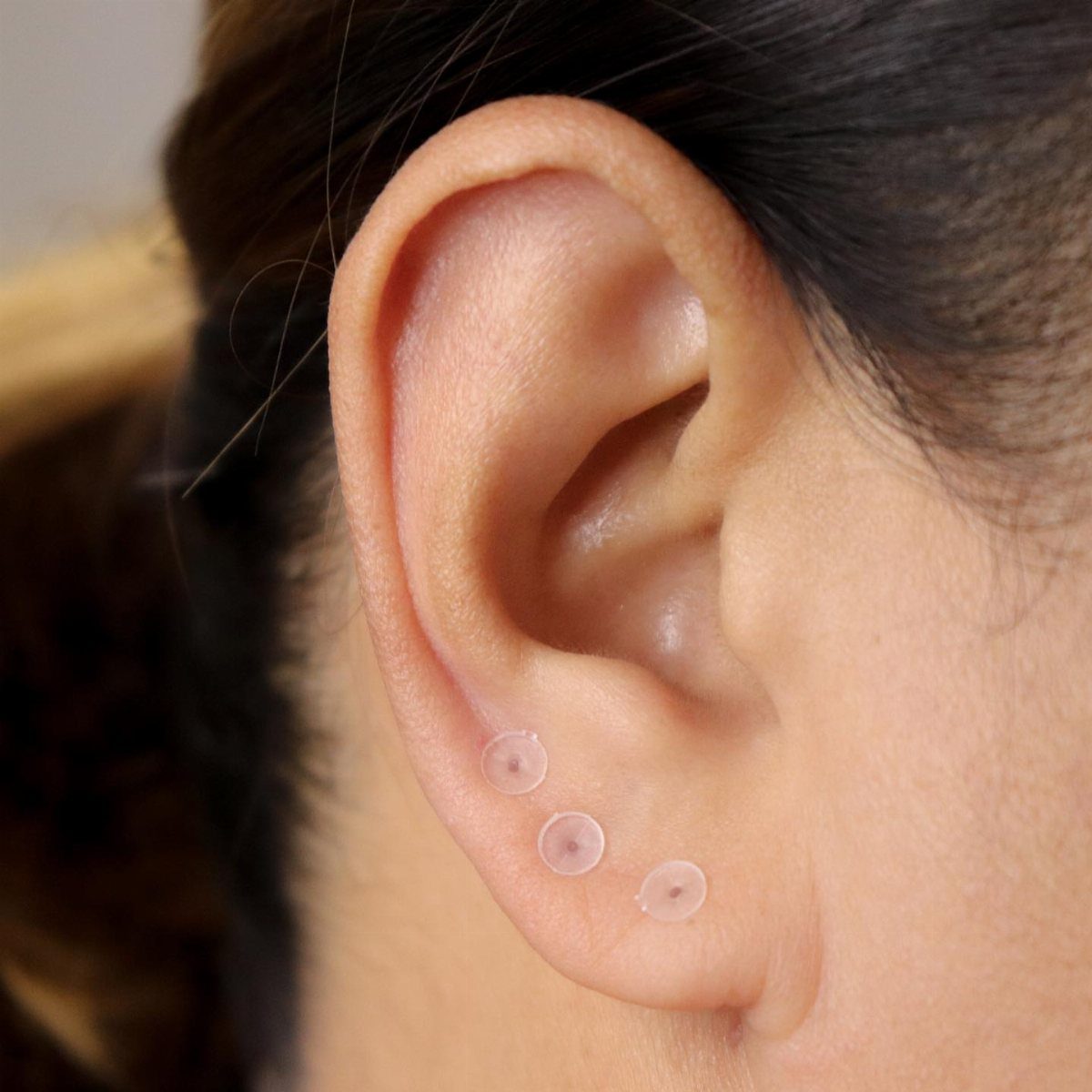
Clear retainers are my pick for lobes you want to keep open without anyone noticing. The translucent disc sits flush in the hole, so three at once still look like bare skin from a few feet away.
They are placeholders, not jewelry, so swap them in on workdays and put your real studs back on weekends. If a piercing is still healing, check with the person who did it before you change anything.
3. Flesh Colored Adhesive Patches
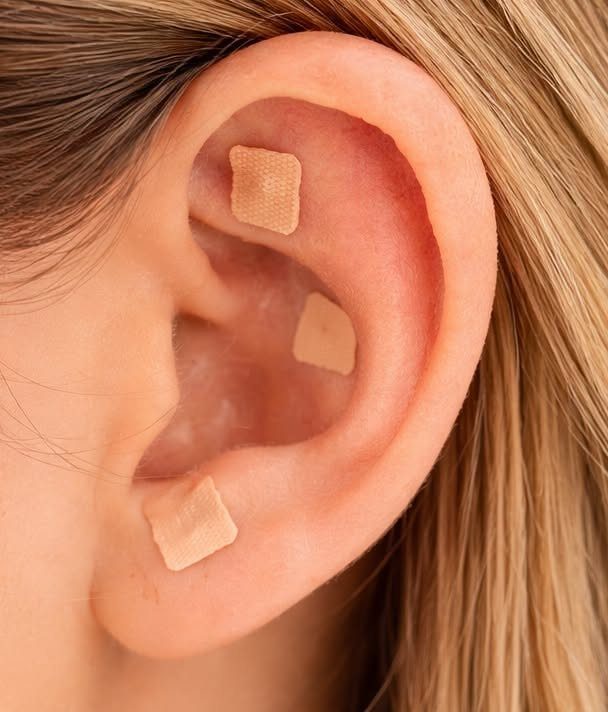
Skin-toned patches are the fastest fix, and they cover lobe and cartilage piercings alike. Choose a shade close to your own skin, because a patch that is too light or too dark draws more attention than the jewelry would.
Treat them as a short-term cover for a school day or a meeting, not something to wear nonstop. Adhesive over a piercing that is still new can irritate it, so I would use patches mainly on healed ears.
4. Tucked Inner Fold Studs
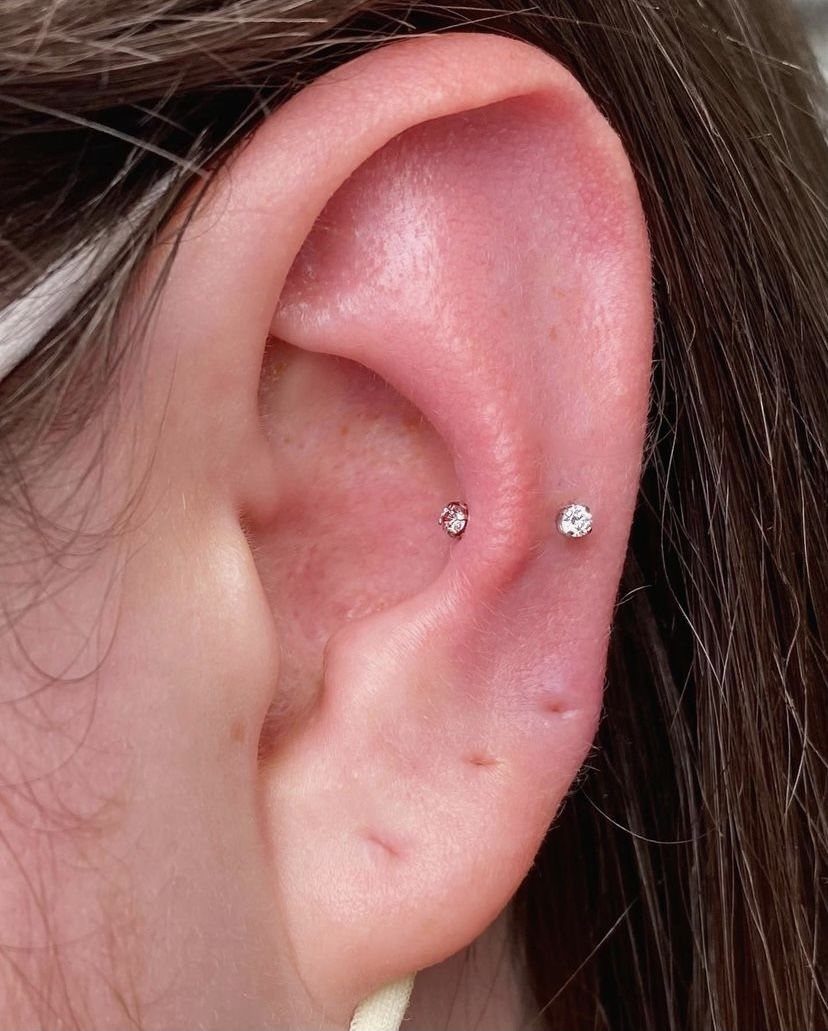
Tiny clear gemstone studs tucked into the inner fold of the cartilage disappear into the ear’s own shadows. Hair or a turn of the head hides them completely.
Keep the stone small and clear, and pair it with one visible stud so the ear still looks styled. Fold placements can be fussy to pierce, so I would go to a professional piercer rather than guess at the spot.
Navigating Dress Codes
Before you book, check the dress code or employee handbook, since a job or school rule is the usual reason a piercing has to stay out of sight.
A corporate office may treat a visible piercing as unprofessional, while other workplaces have relaxed. Policies differ a lot, and a quick look at the written rules saves you a guess.
Hair can hide some ear piercings, but outside of those, no piercing can be hidden completely. Facial spots like the nostril or lip are where those rules tend to bite hardest.
If you already have the job and the rules forbid piercings, think twice before paying for one you might pull out the first Monday back. You could waste the money or put the job at risk.
Healing Time Considerations
Plan around healing before you plan around hiding. Cartilage piercings run on a long clock, and the sources I trust give different numbers: 6–12 months for a hidden helix in one place, 4–6 months in another.
I would plan for the longer end. Your ear, your aftercare, and your piercer’s judgment decide when it is actually done, not a calendar date.
Keep up your aftercare the whole time, even when the ear looks and feels fine. A piercing that seems healed at month 4 can still be fragile, and rushing a jewelry change is how setbacks start.
Temporary Removal Advice
If you only need the piercing hidden for an hour or two, such as an interview, pull the jewelry just before you walk in and put it back right after. The longer the hole sits empty, the harder reinserting gets.
Many people need help getting jewelry back in. An insertion taper lets you slide the jewelry back in yourself at home, and it’s worth checking with the person who pierced you about getting one before the day arrives.
Don’t count on a clear retainer to vanish. Skip plastic in a piercing less than 3 months old, and keep it for short wear rather than days on end.
You may not need to hide the piercing at all, so check the policy first.
Frequently Asked Questions
What piercings can be hidden?
Lobe and cartilage piercings are the easiest to hide, using clear retainers, skin-toned patches, or tiny clear studs tucked into the inner fold of the ear.
Hair will cover a few ear spots reliably, but every other piercing will show at some angle.
Nostril and lip piercings sit right on the face, so they are the ones that run into dress codes at work and school first.
How long does a hidden helix piercing take to heal?
Count on the longer estimate, since the sources I trust split between 6–12 months and 4–6 months.
The calendar matters less than how your ear looks and feels, how well you keep up aftercare, and what your piercer says when they check it.
Month 4 can feel painless and still hide tissue that irritates easily, so keep cleaning on schedule until your piercer clears you.
Can I take my piercing out for an interview?
Yes, if it is only for an hour or two. Ask your piercer about an insertion taper before the interview, because it guides the jewelry back in smoothly at home.
Can I use a clear retainer in a new piercing?
Not in a piercing less than 3 months old. A clear retainer works as a short-term stand-in, so wear it for a few hours at a time instead of leaving it in for days.
They also won’t fully vanish, so don’t count on them being invisible up close. Before you swap anything in a piercing that is still healing, get your piercer’s okay.