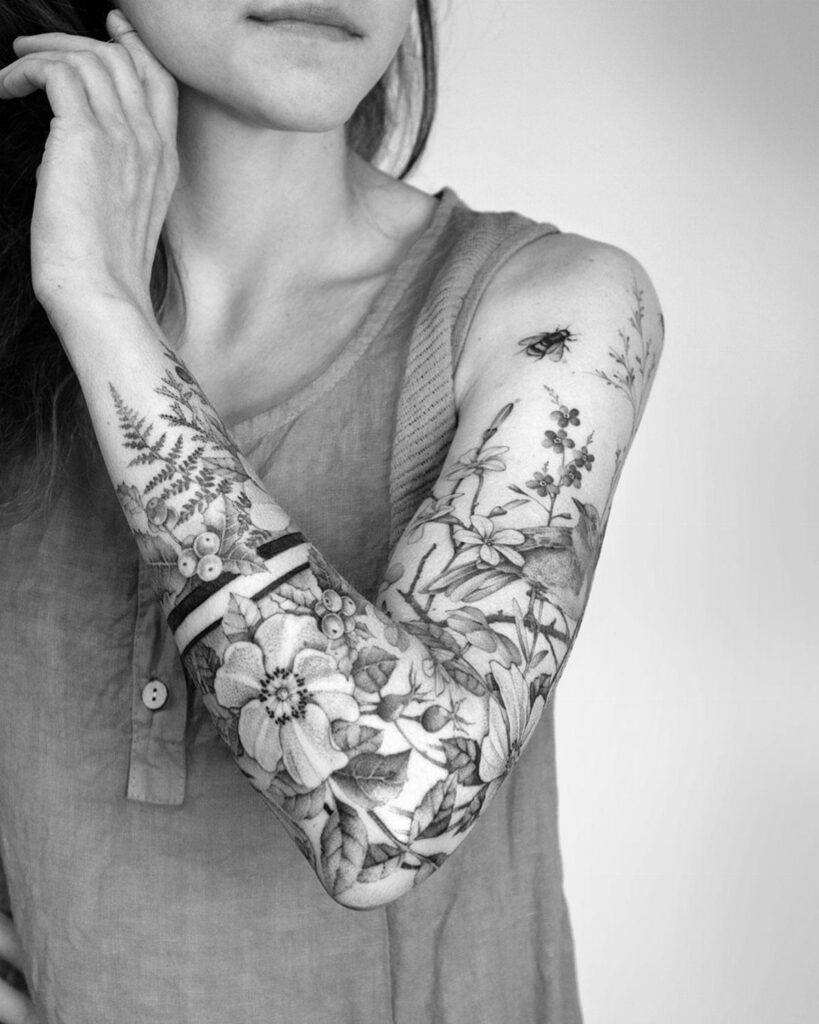
The ideas below run from fine-line black ink botanical illustration to a climbing ivy silhouette, a color vine sleeve, and bold monstera and tropical leaves.
How much of the arm you want finished decides which one is yours: an ivy silhouette or a vine can start small and keep climbing from the elbow, while big monstera leaves cover the whole sleeve with fewer pieces.
Color is the other split, and I would start with black, since a few red leaves can be added later but removing color is much harder.
1. Black Ink Fine-line Botanical Illustration
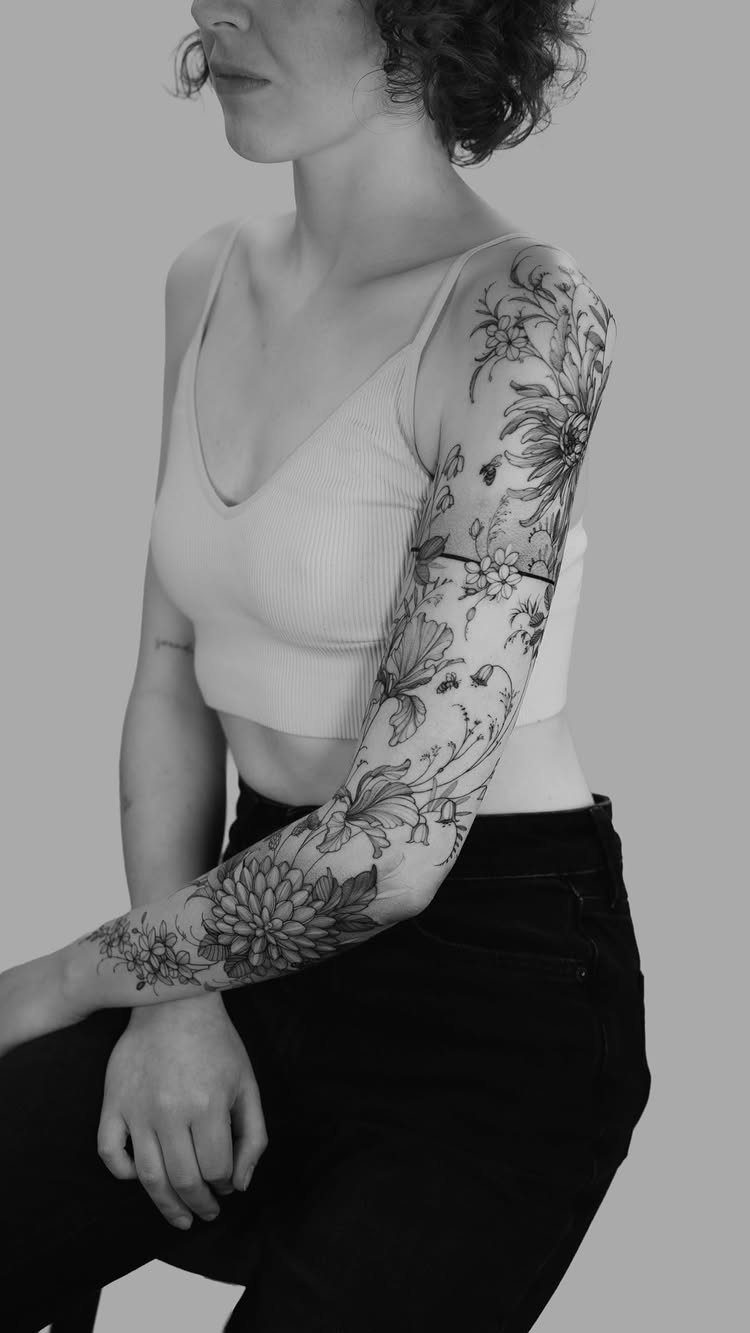
Fine black linework lets a sleeve hold flowers, leaves and insects at once without turning heavy. Small insects between the blooms give the eye somewhere to rest, so the arm reads as a pressed-specimen page rather than a bouquet.
I would keep the bugs few and scattered, and vary the leaf sizes so no single flower dominates. Thin lines need an artist who is steady with a single needle, so check healed photos in their portfolio before booking.
2. Vintage Botanical Tattoo Designs
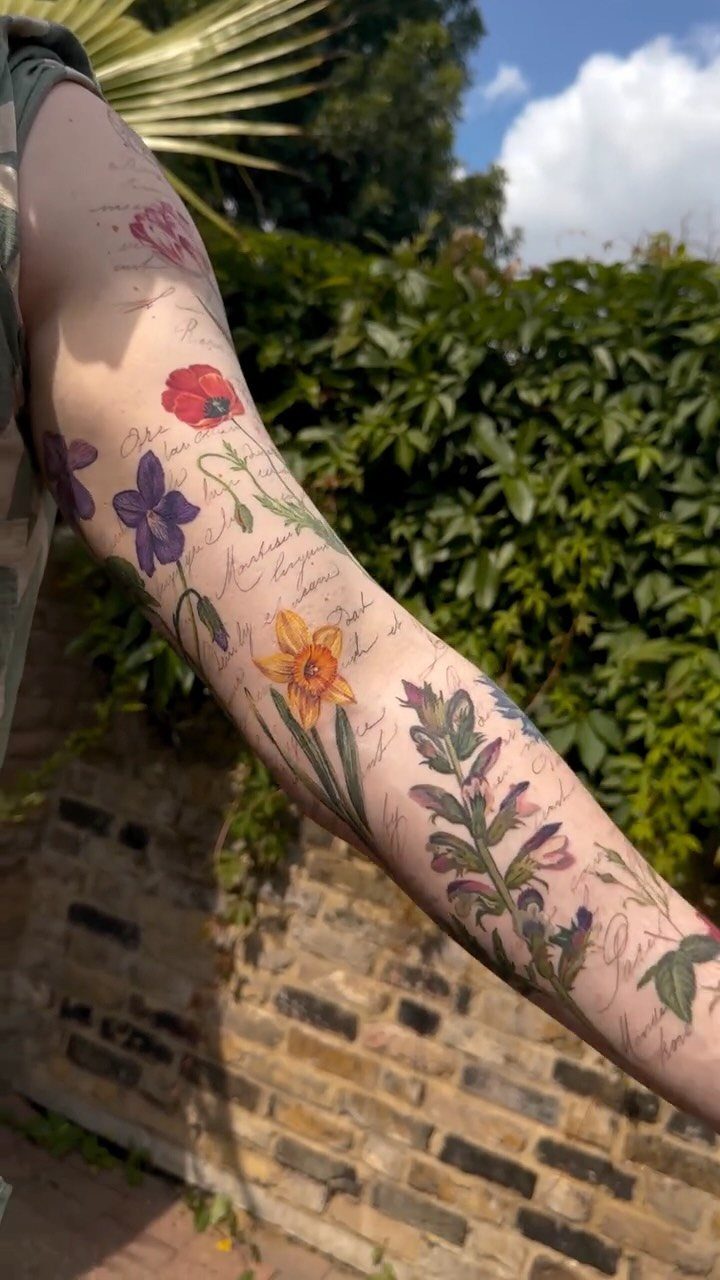
The lettering works like a botanical plate caption, and it can carry a Latin plant name or a word that matters to you.
Keep the script on the plainer side so it stays legible as the skin ages.
Colored blooms in classic poses, a rose, a peony, a few leaves, suit the look best. I would plan the script spots first, then fill the flowers around them.
3. Black Ink Silhouette of Climbing Ivy
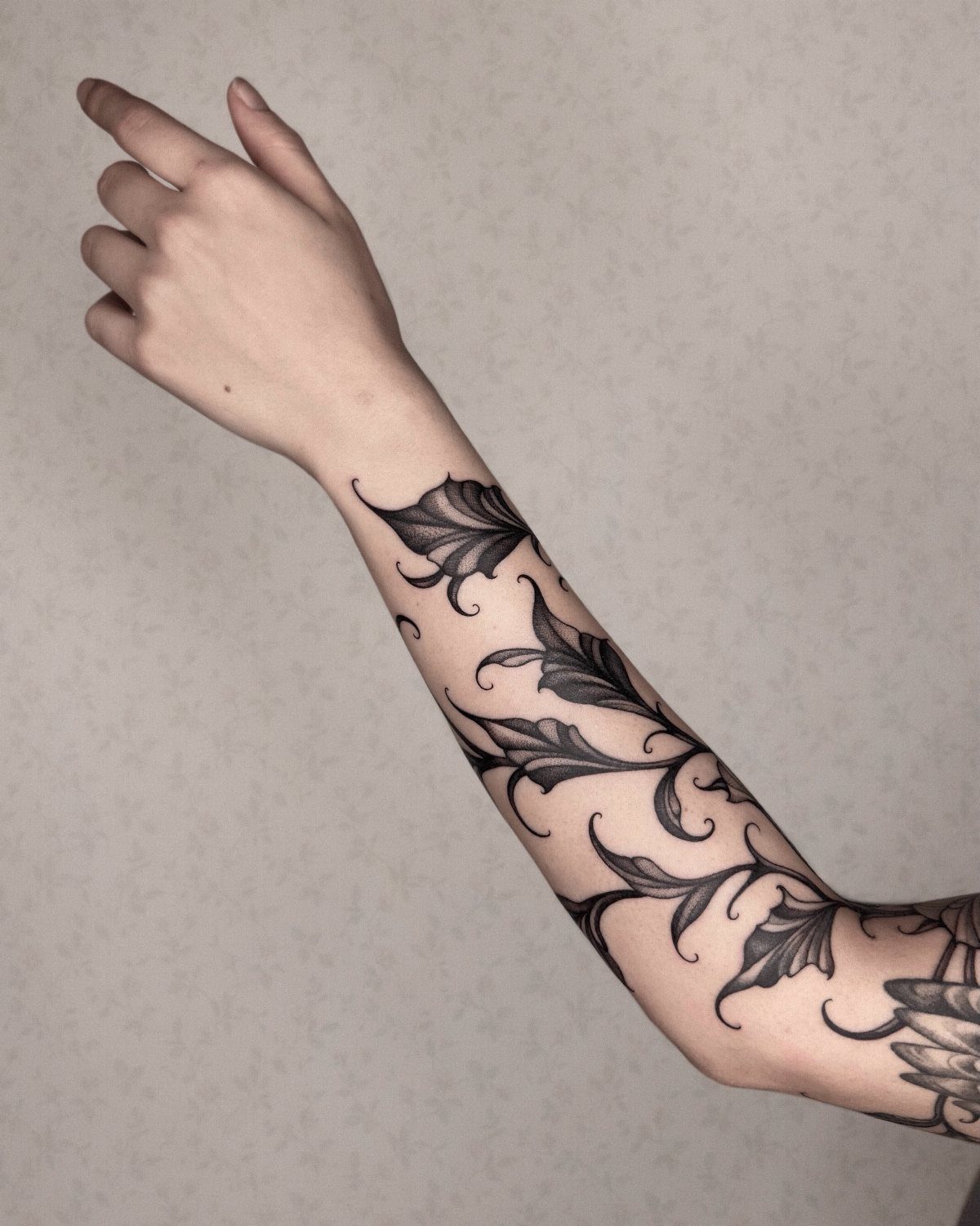
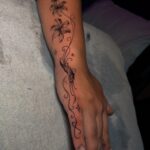
Ivy in solid black needs only a stem, a scatter of leaves and some empty skin. On the forearm the vine can trail along the arm’s length, so a single strand already looks planned.
Black silhouettes forgive more than fine detail does, and the shapes stay clear from across a room. If you later want a full sleeve, this is an easy starting piece: the vine can keep climbing upward from the elbow.
4. Color Climbing Vine Sleeve
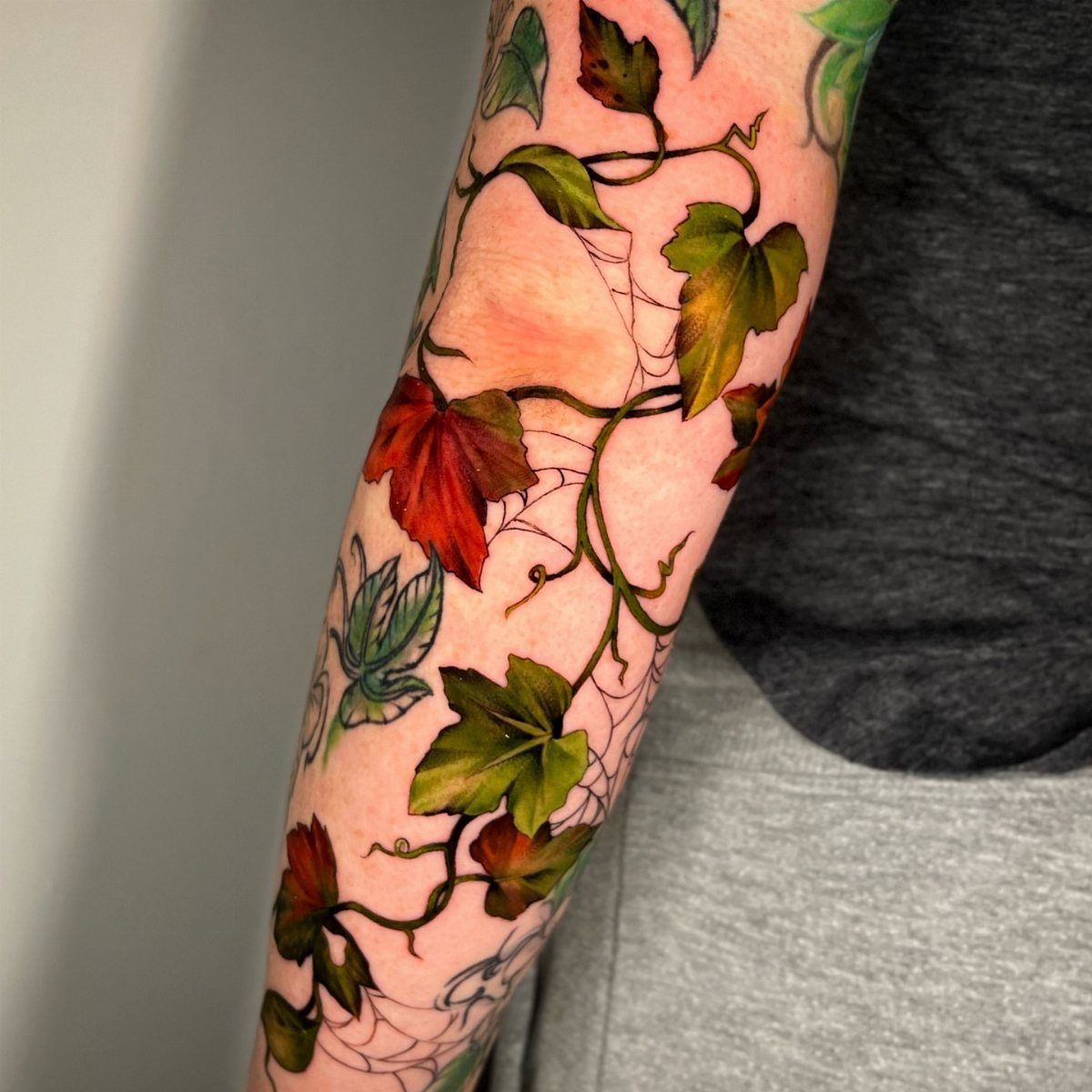
Green leaves with touches of red give ivy a seasonal, almost autumn feel, and the vine wraps the arm instead of sitting flat on one side. That wrap is what turns a single tattoo into a sleeve.
I like keeping the red limited to a few leaves so the green stays dominant.
Plan the vine’s path around the arm before the stencil goes on, since the design has to look right from every angle, not just the front.
5. Monstera and Tropical Leaves
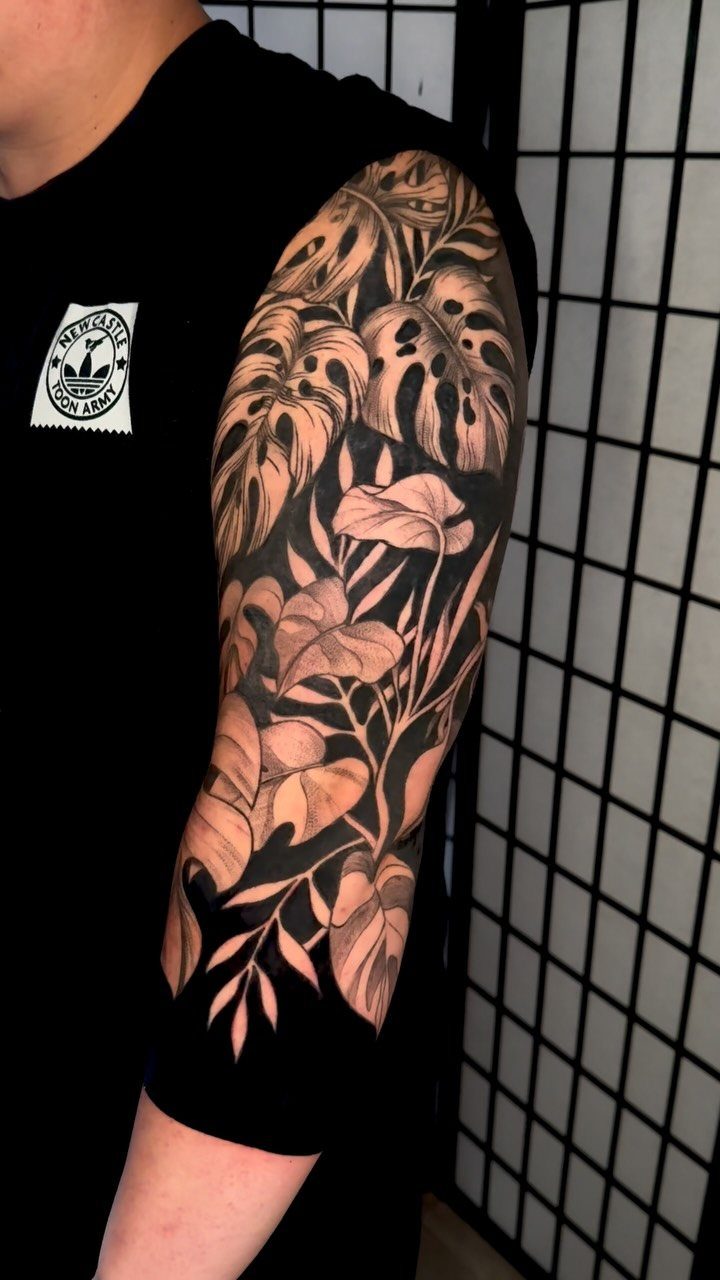
Big monstera leaves in black and grey fill a full sleeve fast, which is exactly why they work. Each leaf is large, with its splits and veins, so you need fewer pieces to cover the arm.
Smooth grey shading gives the foliage depth without any color.
I would pick this over a small-leaf design if you want a bold sleeve that reads from a distance. Expect a long project, since a full arm takes multiple sessions.
Tattoo Placement Considerations
Placement on a sleeve is a flow question before it is a subject question.
Ferns and wildflowers that run in a vertical line up the arm feel natural because the stems follow the muscle, so let the growth direction point upward from wrist toward shoulder.
A large single bloom, like a stylized peony on the forearm, needs room to breathe.
Give it clear skin around it and let the lines trail off into the upper arm, so the 2 areas connect instead of reading as separate tattoos.
A stencil drawn on the skin shows the layout before any needle touches you, so have the artist place it and then move your arm through its full range.
Bend the elbow, turn the wrist, and check that no stem is cut off at the inner elbow crease.
Color Choices for Botanical Tattoos
Black ink alone is a real color choice, and I would not treat it as the safe fallback.
Lilies, poppies, berries and trailing stems done in line work only can look finished and sharp, and the ferns, wildflowers, berries and a moth in black stay readable at a glance.
If you want color, decide how much before the stencil goes on. Muted tones give a quieter, aged look, while bright colors pull attention and make the sleeve louder.
My pick for a first sleeve is black first. You can add color to a few elements later, but removing color you regret is much harder.
Symbolism of Flowers in Tattoos
Choose flowers for what they mean to you, then check the common meanings so nothing surprises you. A quick search on each bloom’s meaning can save you a regretful conversation later.
Wildflowers fit a personal sleeve because you choose the mix: stems, leaves and berries gathered into one forage can start at the chest, cross the shoulder and run down the arm.
Berries and a bee add their own meanings, so check those too.
I would pick 3 or 4 plants that matter and let the filler leaves stay purely decorative. Tell your artist which ones carry meaning, so they give those the most space.