Hand pen tattoos run from a single black crescent moon to a wrist full of swirling lines, leafy branches and butterflies, and every one of them is drawn in pen, so the real decision is how long you want the drawing to last.
A pen tattoo usually lasts a few days to weeks, and water, friction and oily skin shorten that.
A busy design like a spider web or a full set of doodles gets redrawn more often, so if you want fewer touch-ups, I’d pick something simple like a crescent moon or a cross.
1. Spider Web Tattoo
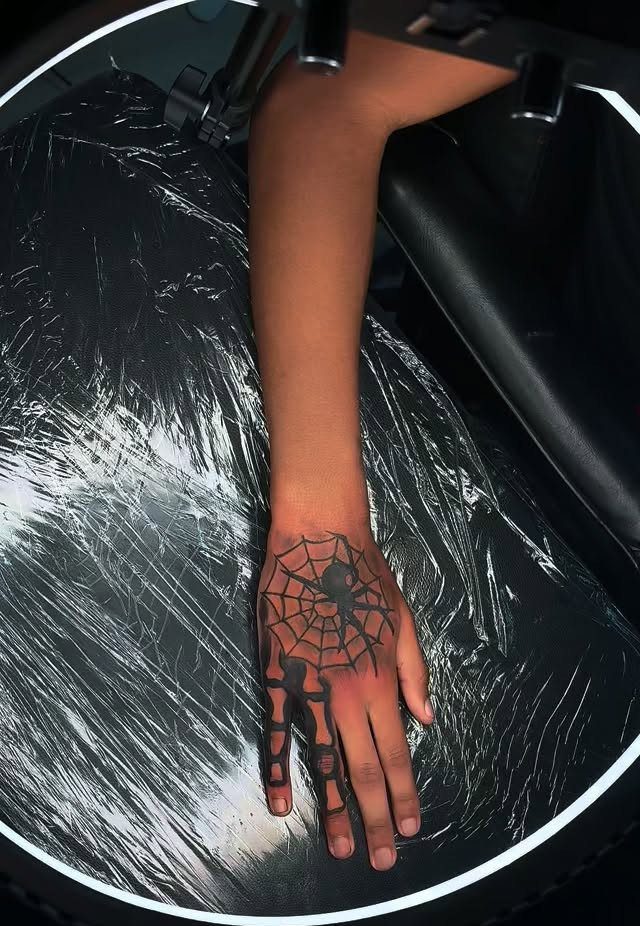
A spider web gives the hand a built-in frame, and the black ink keeps it readable at a small scale.
Let the web’s radiating lines follow the natural curve of the knuckles or the back of the hand, so the pattern looks like it was spun there.
I would keep the spider small and let the web carry the design.
Thin lines are the weak point, so check with the person holding the needle on how very fine strands hold up over the years before you commit to them.
2. Floral Patterns
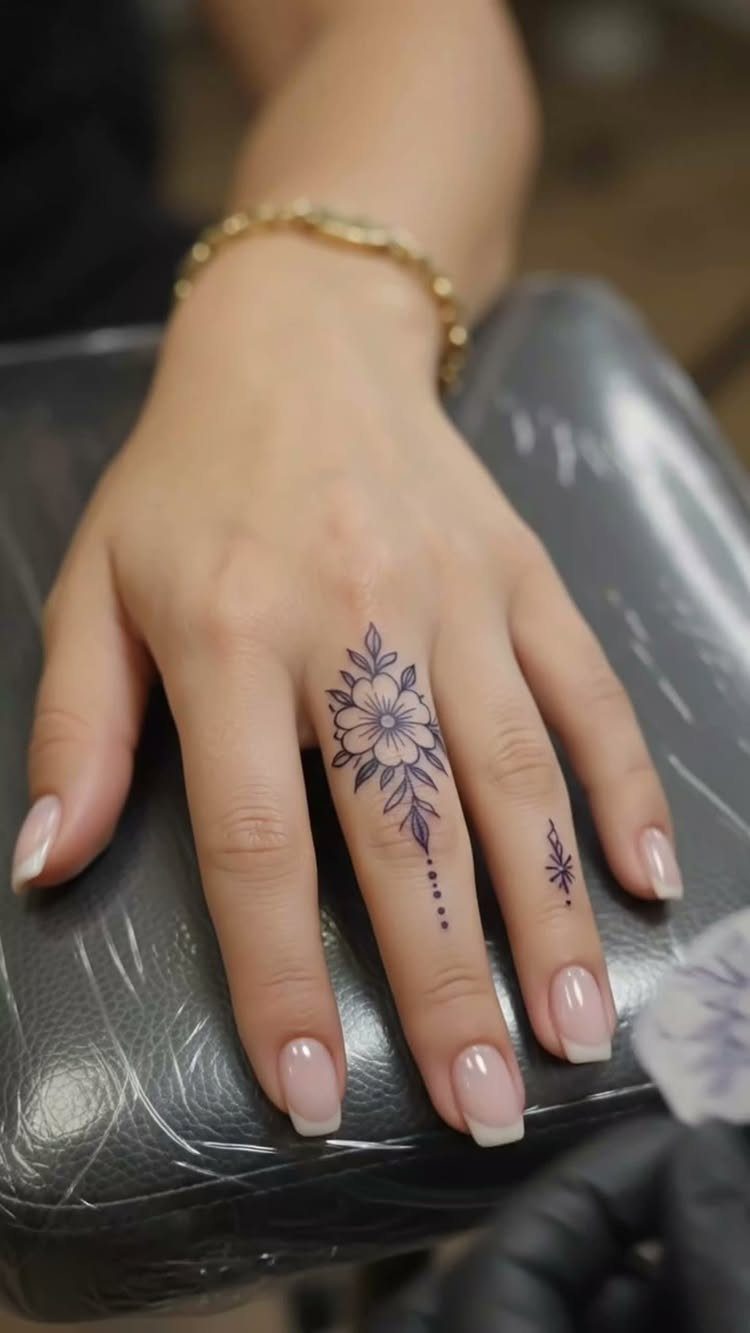
Flowers on a finger work best when the design stays narrow. A single bloom with a few swirls can wrap one finger, and a small symbol on the neighboring finger keeps the pair from feeling crowded.
I prefer solid black ink here because it holds its shape on a surface this small.
Keep the petals simple and leave some skin showing between them. Packed-in detail on a finger tends to blur together, so fewer petals usually read better.
3. Eye Tattoos
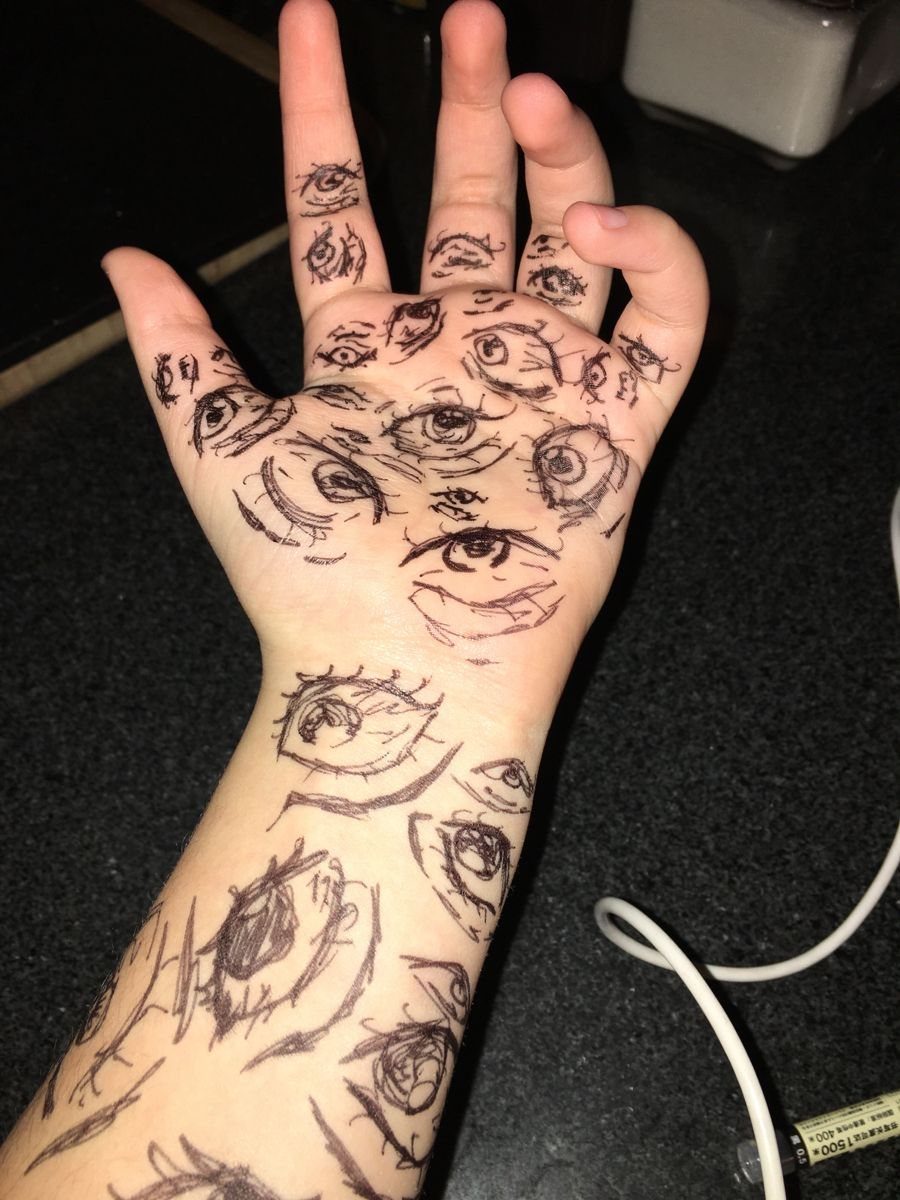
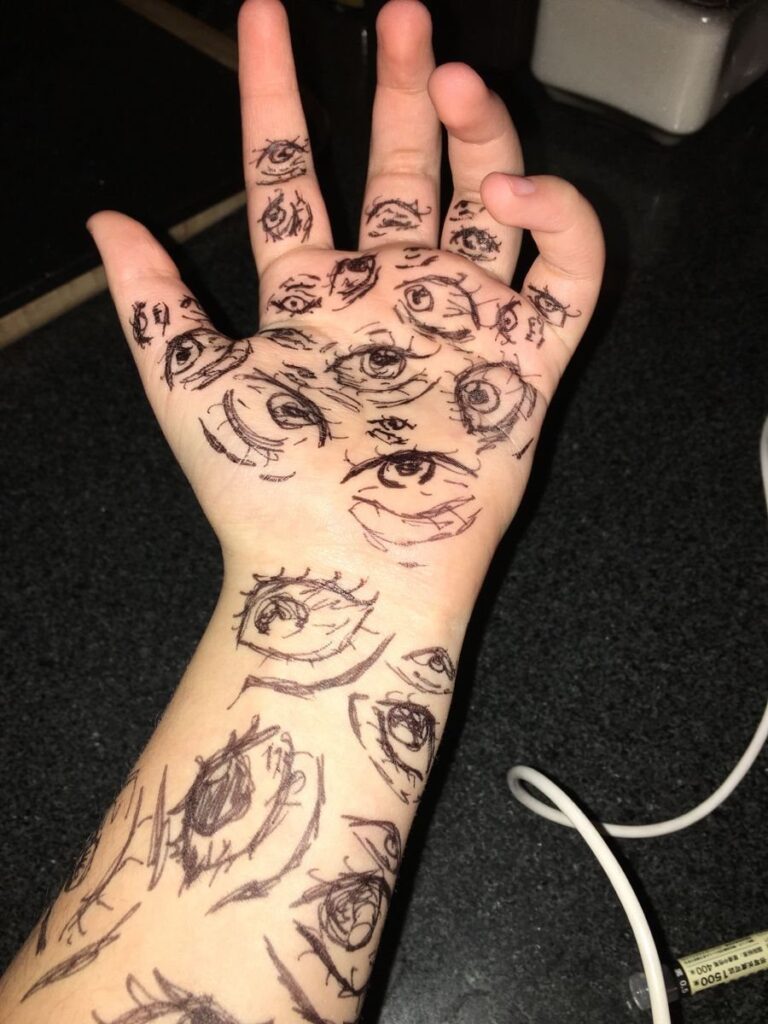
Eyes repeated across the hand and wrist read like a pattern, which makes this one forgiving. No single eye has to be perfect, and the group carries the design.
Vary the sizes and angles so the set feels scattered and not stamped.
I would start with 3 or 4 and add more later, since the piece can grow in any direction. Plain black ink keeps every eye legible, even the small ones.
4. Abstract Patterns
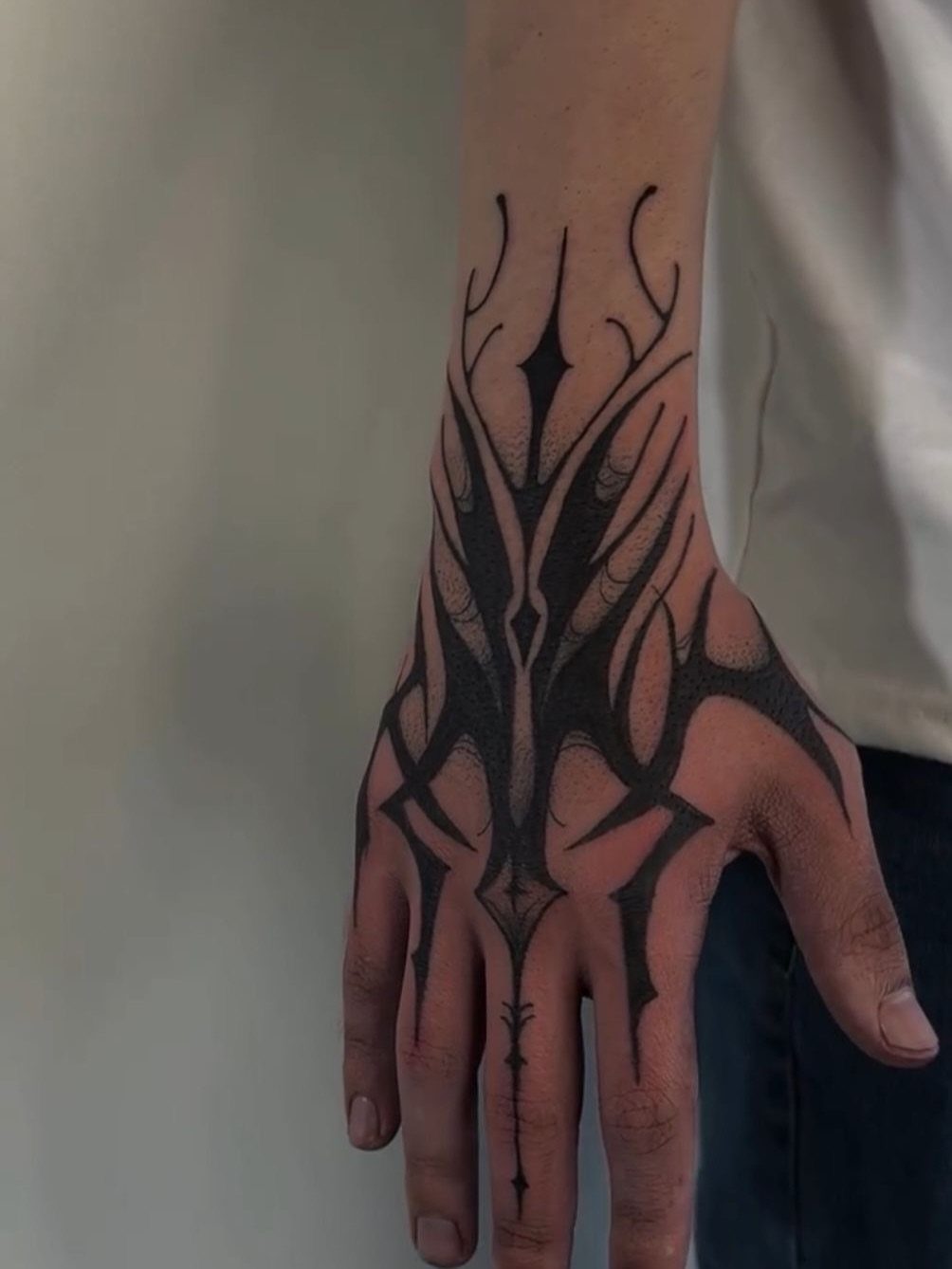
Symmetry is what makes an abstract hand piece work. Flowing lines that mirror each other across the hand, ending in sharp points, give the design a deliberate look instead of a random one.
Center the design on the hand and wrist so the mirror line matches your anatomy.
I would pick this if you want something no one else has, because no meaning is required. Bring a few reference sketches, and let the artist adjust the lines to your hand.
5. Hand Bones and Anatomical Joints
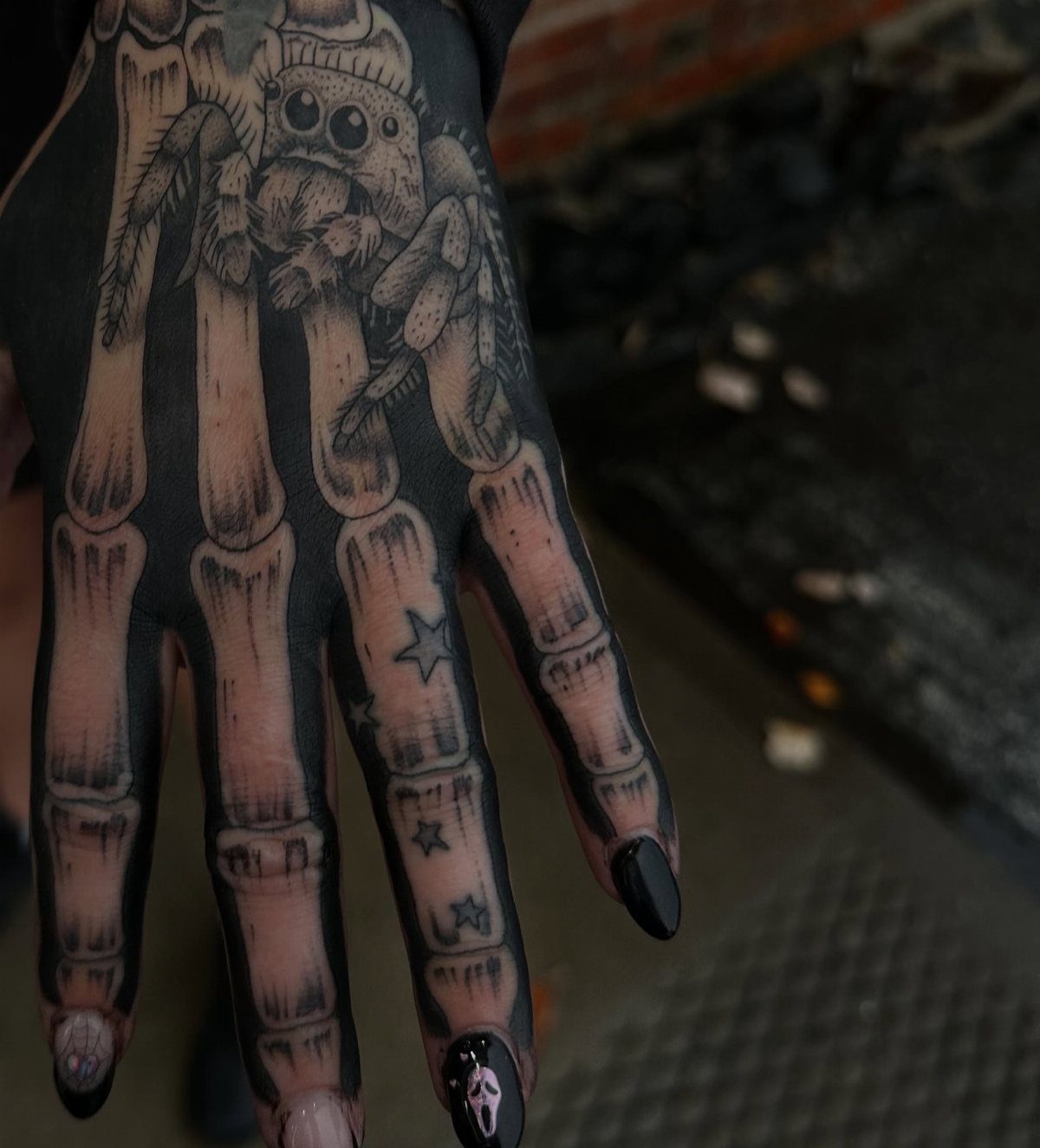
Bones inked over the back of the hand turn it into an X-ray, and the design only works if the bones line up with your real ones.
Have a stencil drawn on your hand before any ink goes in, so the joints land right where your knuckles do.
A small skull or character perched on top adds personality without crowding the anatomy.
Black nail polish pairs well with it, if that suits you. Stick to black ink for the cleanest, most believable bones.
6. Crescent Moon Tattoo
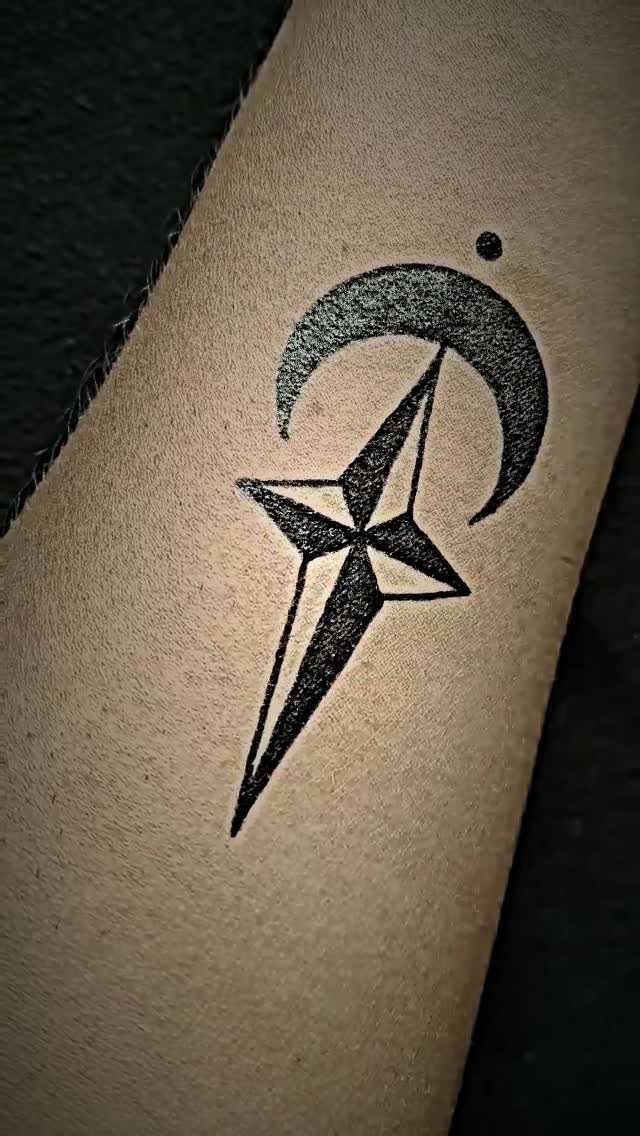
A crescent moon paired with a four-pointed star is about as simple as a hand tattoo gets, and that simplicity is the appeal. Both shapes are bold enough to stay clear in black ink at a small size.
I would leave generous space between them so the outlines never touch as the skin ages.
Small and quiet, it suits someone getting inked for the very first time. Choose a spot with room to breathe, such as the back of the hand or the side of a finger.
7. Character Tattoos
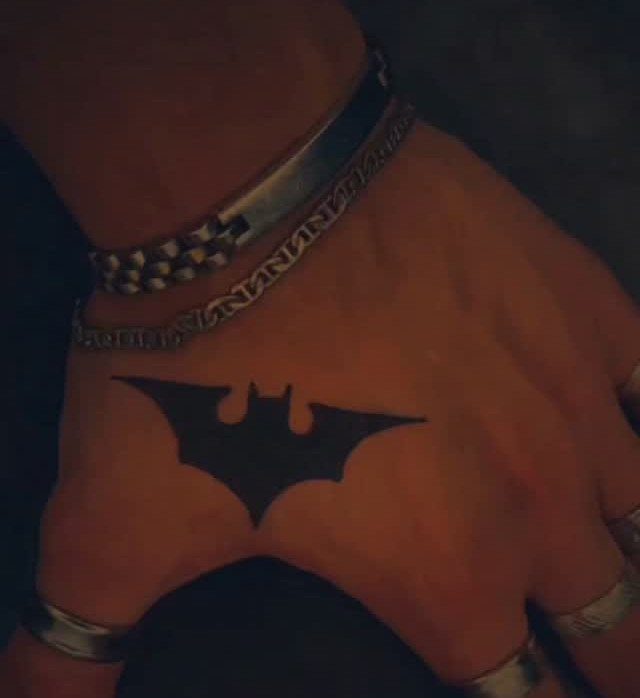
A small character or symbol suits the back of the hand because the shape is recognizable from a distance. A bat symbol in solid black ink, as above, shows why: one bold silhouette needs no interior detail to read.
I would pick a logo-style mark over a full portrait.
Faces and tiny details are hard to keep clear at hand scale, while a flat symbol stays sharp. Choose a character you will still like years from now.
8. Cross Tattoos
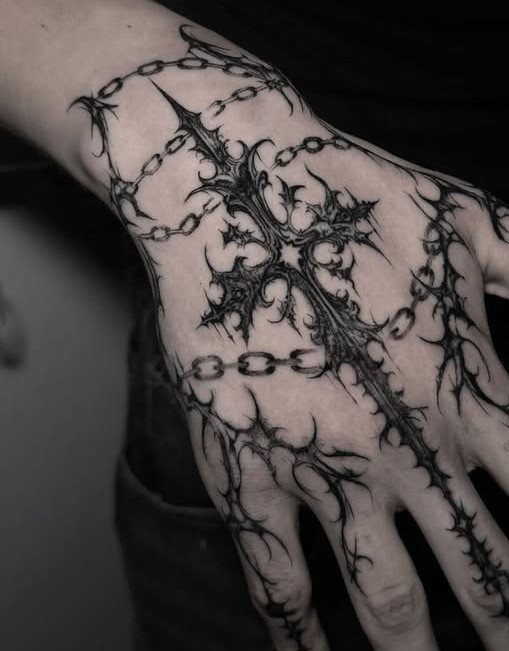
Add thorns and chains and a cross turns personal, and soft black and gray work gives it a gothic weight. The hand and wrist give the chains room to trail along the skin.
I would let the cross sit on the back of the hand and run the chains toward the wrist.
Fine thorns and chain links are small details, so ask your artist how they will hold up as the tattoo ages. Keep the shading simple.
9. Text Tattoos
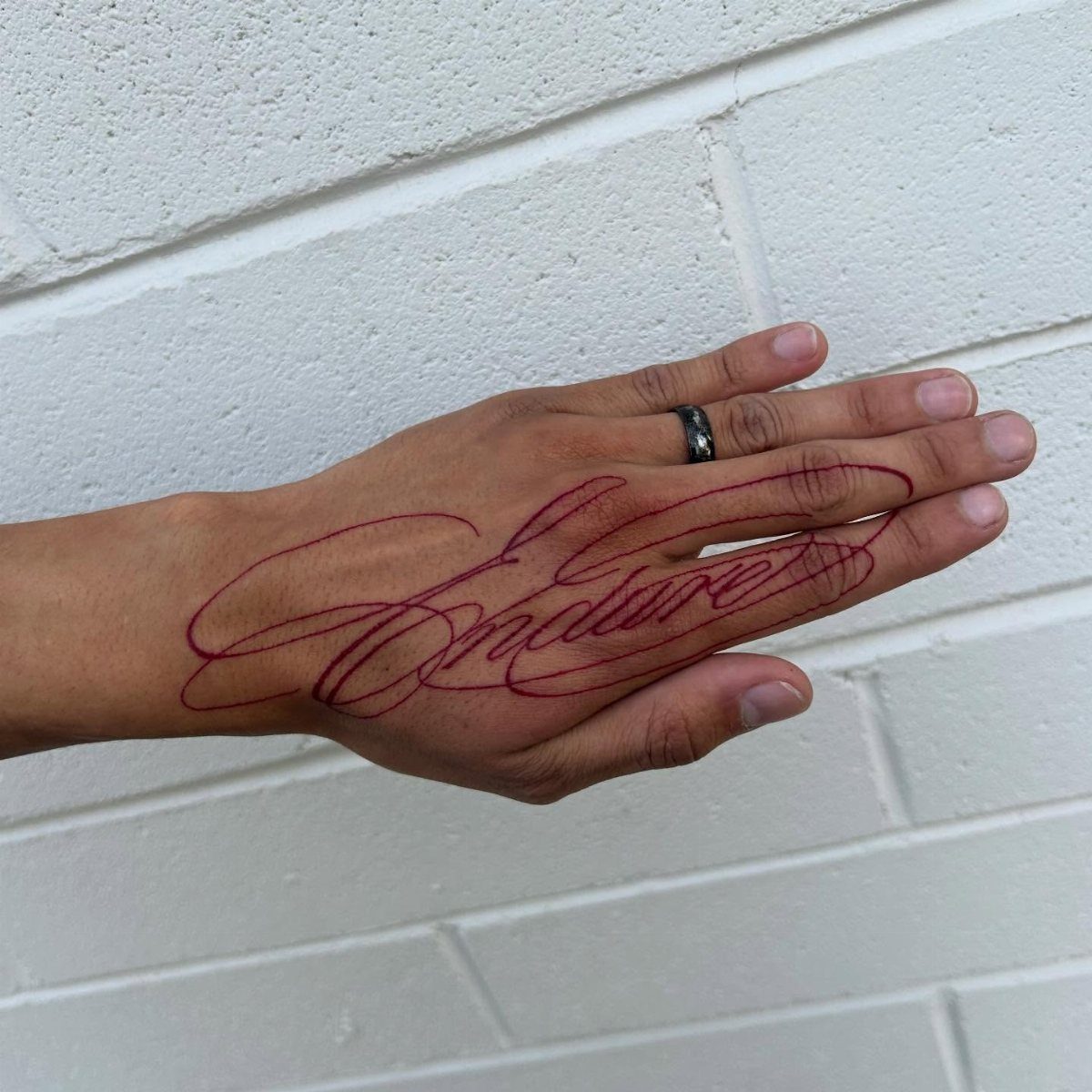
One word in cursive can say more than a whole drawing. Red ink, as above, makes one word stand out, though I would still want to hear how red ages on the hand compared with black before committing.
Pick a word you can live with for years, since the hand is always in view.
Short words work best because the letters can stay large enough to read. Settle the spelling and the handwriting style on a stencil before any ink goes in.
10. Leafy Branches
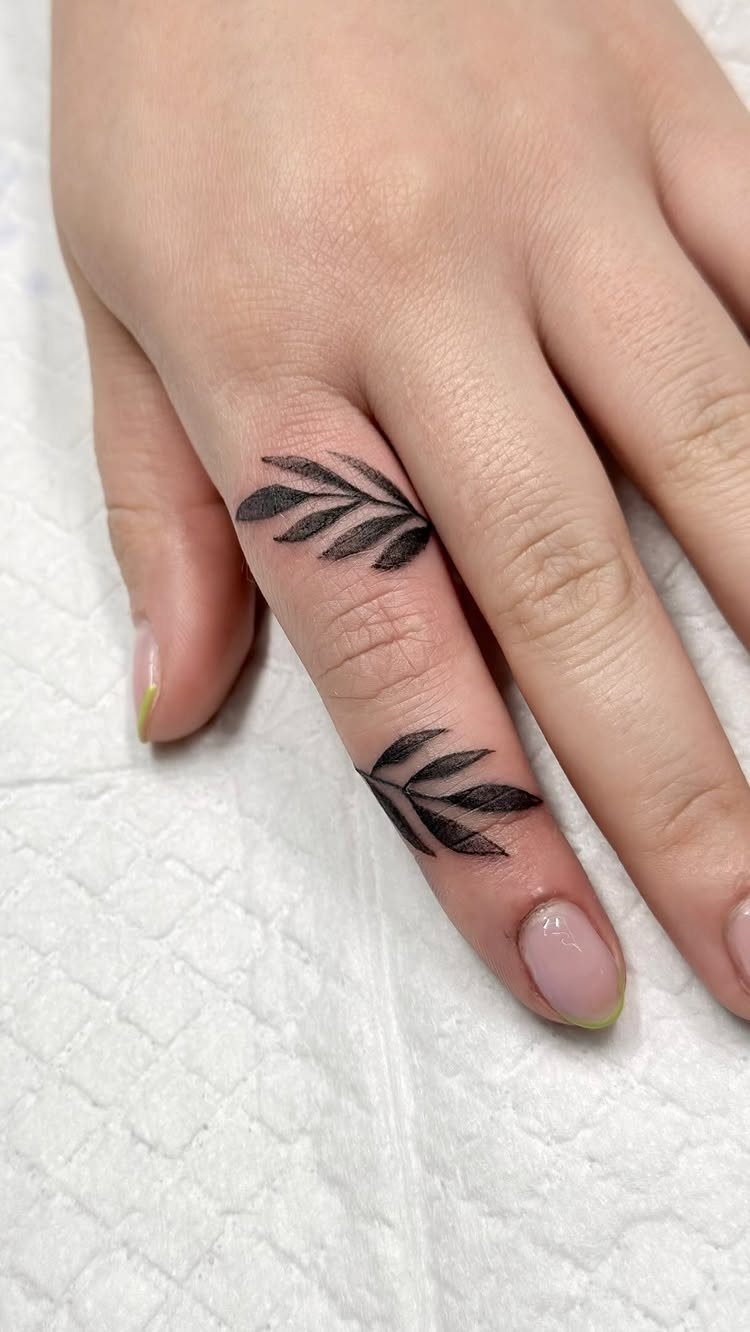
Two small leafy branches on one finger give you a design that is simple, narrow and easy to repeat. The stems follow the length of the finger, which suits its shape.
I would keep the leaves few and spaced apart, in black ink.
A finger leaves little room, so crowded foliage turns into a smudge. Start with one finger, and add a branch on another later if you want more.
11. Swirling Lines
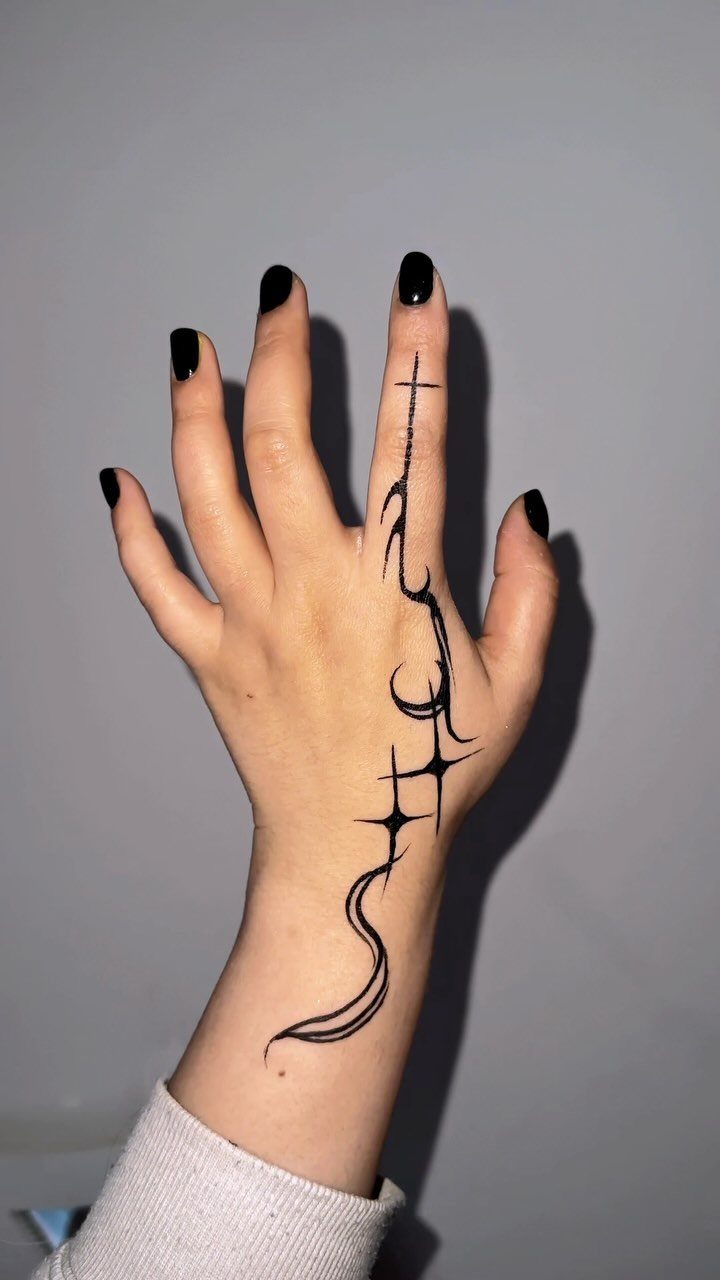
Swirling lines work like a drawing that follows your hand, running from the wrist toward the fingers. Small stars or a cross tucked between the curves give the eye somewhere to land.
I like this best when the lines flow with the direction of the hand, not across it.
12. Doodle Tattoos
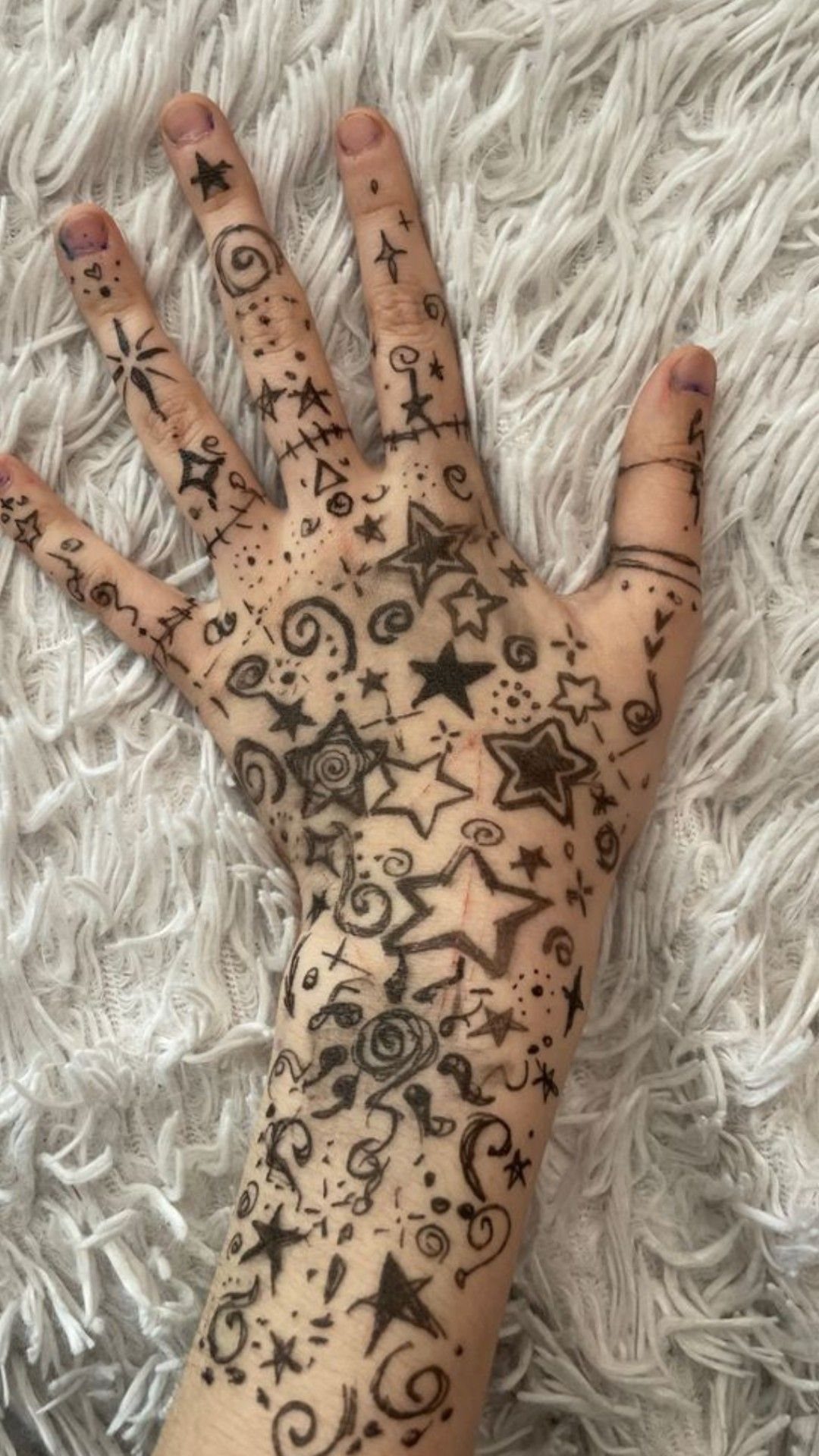
Doodle tattoos mix stars and spirals with no strict plan, which is the appeal. Black ink keeps the whole set cohesive even when the shapes differ.
Start with a few doodles and add more over time, since nothing has to match. I would vary the sizes and leave some skin showing between shapes so they don’t merge into a dark patch.
13. Flame-like Patterns
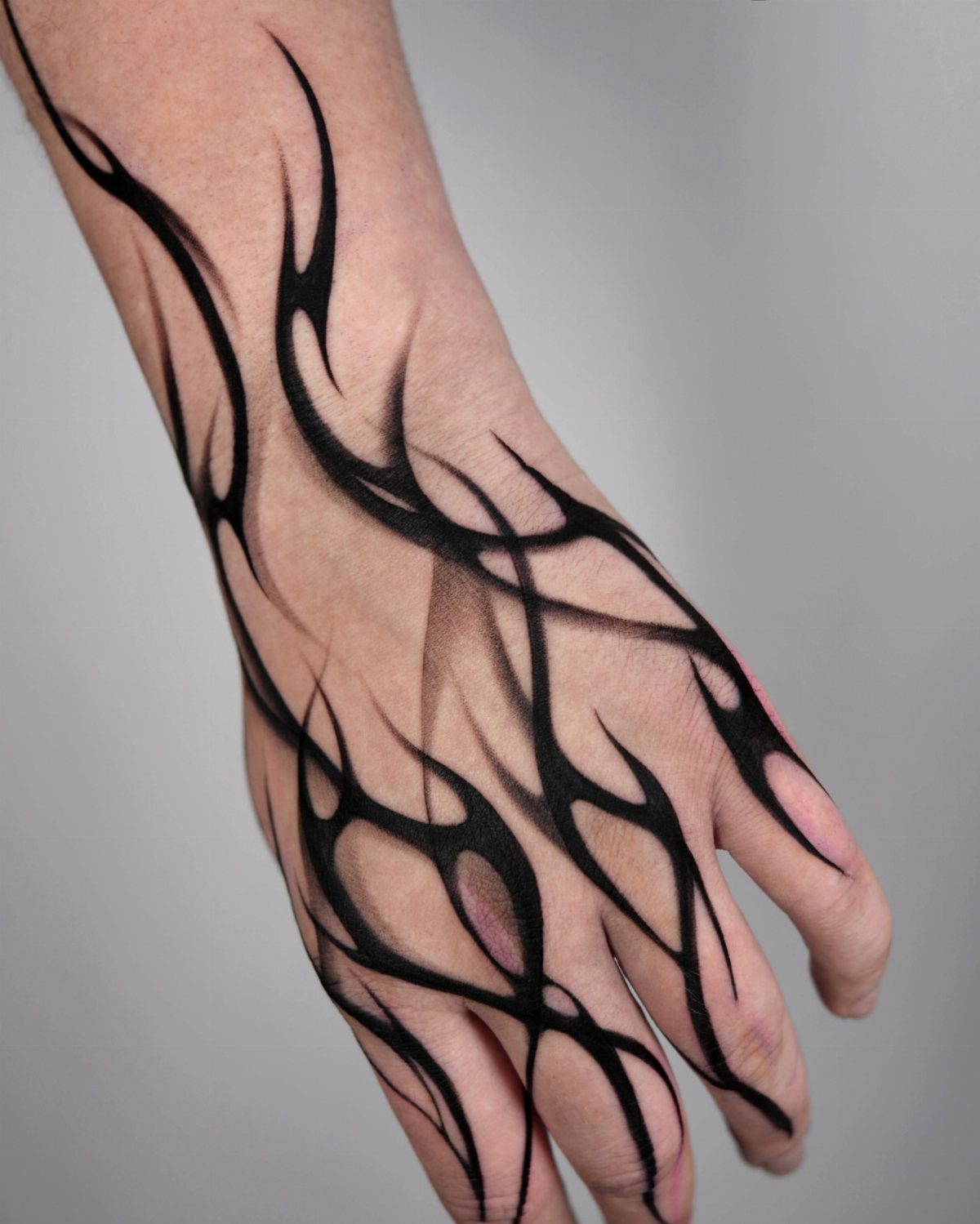
Sharp, pointed tribal lines can read as flames licking up from the wrist, and black ink is all the design needs.
The tips are what sell the effect, so I would keep them crisp and let the shapes taper toward the fingers.
Leave a little skin between the points. Dense black on a hand and wrist can close up into one dark block, and a clean gap keeps each flame legible.
14. Mushroom Tattoos
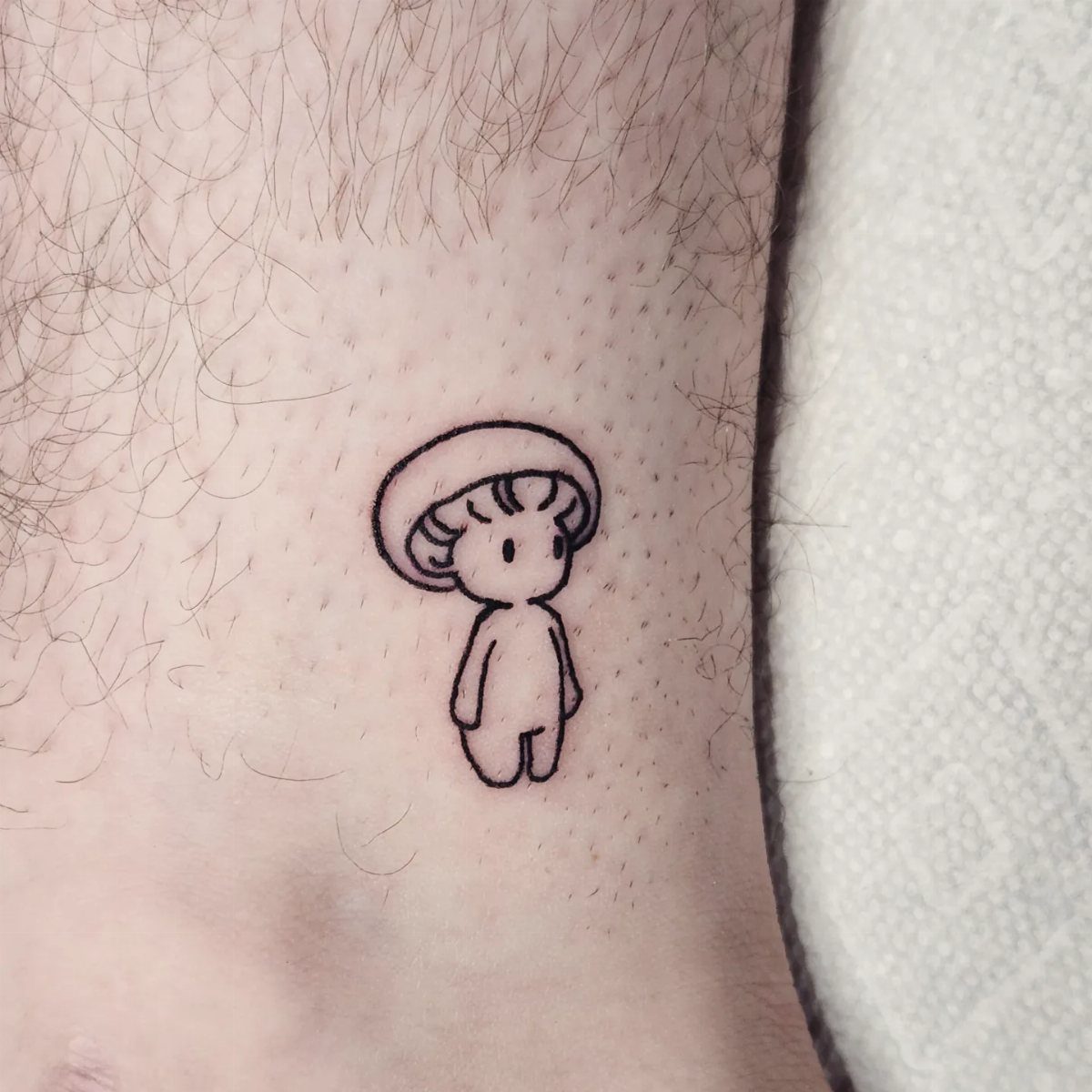
A mushroom drawn as a little character is a gentle, funny choice, and a simple black line drawing keeps it light.
I like it small, on the ankle or lower leg, where one cute figure can sit alone without competing with anything.
Keep the outline thin but unbroken, and skip heavy shading. Ask your artist how fine lines will hold up on skin with body hair, since that is a real consideration at this size.
15. Butterfly Tattoos
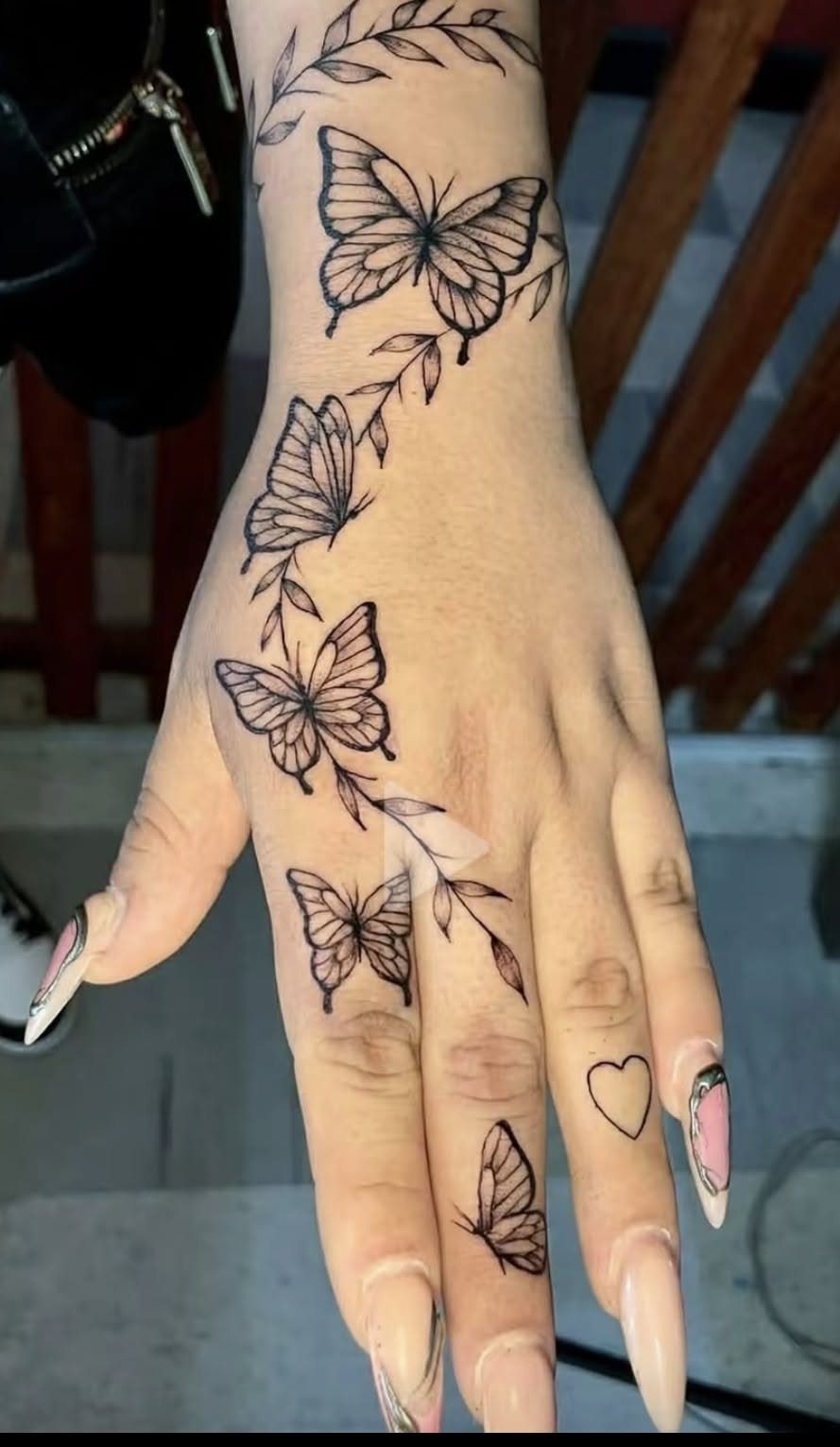
Butterflies work best when they live inside a larger plant design instead of floating alone. Here they sit among leafy vines on the hand and wrist, and that gives each one a branch to belong to.
I would vary the butterfly sizes and let the vine run along the wrist toward the hand. A tiny heart on a finger is a good small accent, and it can be added later without disturbing the rest.
Pen Tattoo Longevity
A pen tattoo is temporary, and it usually lasts a few days to weeks.
Skin type and care decide where in that range yours lands, so plan the design as something you will redraw, not something you will wear for a season.
Oily skin tends to break a line down sooner than dry skin, so I would test a small mark on the inside of the wrist first.
If it holds for a couple of days, you have a rough idea of how your skin treats it.
Hands are the hardest place to keep a drawing intact, because you use them constantly.
Fading of Pen Tattoos
Pen ink fades, and water and friction speed it up. Washing your hands, showering and rubbing against sleeves or pockets all lift the line a little at a time.
If you want the drawing to last longer, pat the area dry instead of rubbing it. Keep soap off the lines where you can, and skip lotion over the design, since it can smear the ink.
Expect the lines to go patchy before they vanish. Touching up a faded spot with the same pen looks better than letting it wear down unevenly and starting over.
Safety of Pen Tattoos
Safety starts with the pen. Use only non-toxic pens, because the ink sits on your skin for days and your skin absorbs more than you might expect.
Even so, I would talk to a professional before drawing on yourself, especially if you have sensitive skin, eczema or a history of reactions. A tattoo artist or a dermatologist can tell you which pens are safe for skin.
Test a small patch first and wait to see whether redness or itching shows up. If it does, wash the ink off and stop using that pen.