Placement decides which of these designs works, since a small dog tattoo only reads when the detail fits the space it gets.
A soft-shaded Realistic Dog Portrait or a Dog Face Paw Print Tattoo needs forearm-sized room, while a Pawprint, Minimalist Dog Line Art or a Snoopy Tattoo holds up on a wrist, ankle or behind the ear.
1. Realistic Dog Portrait
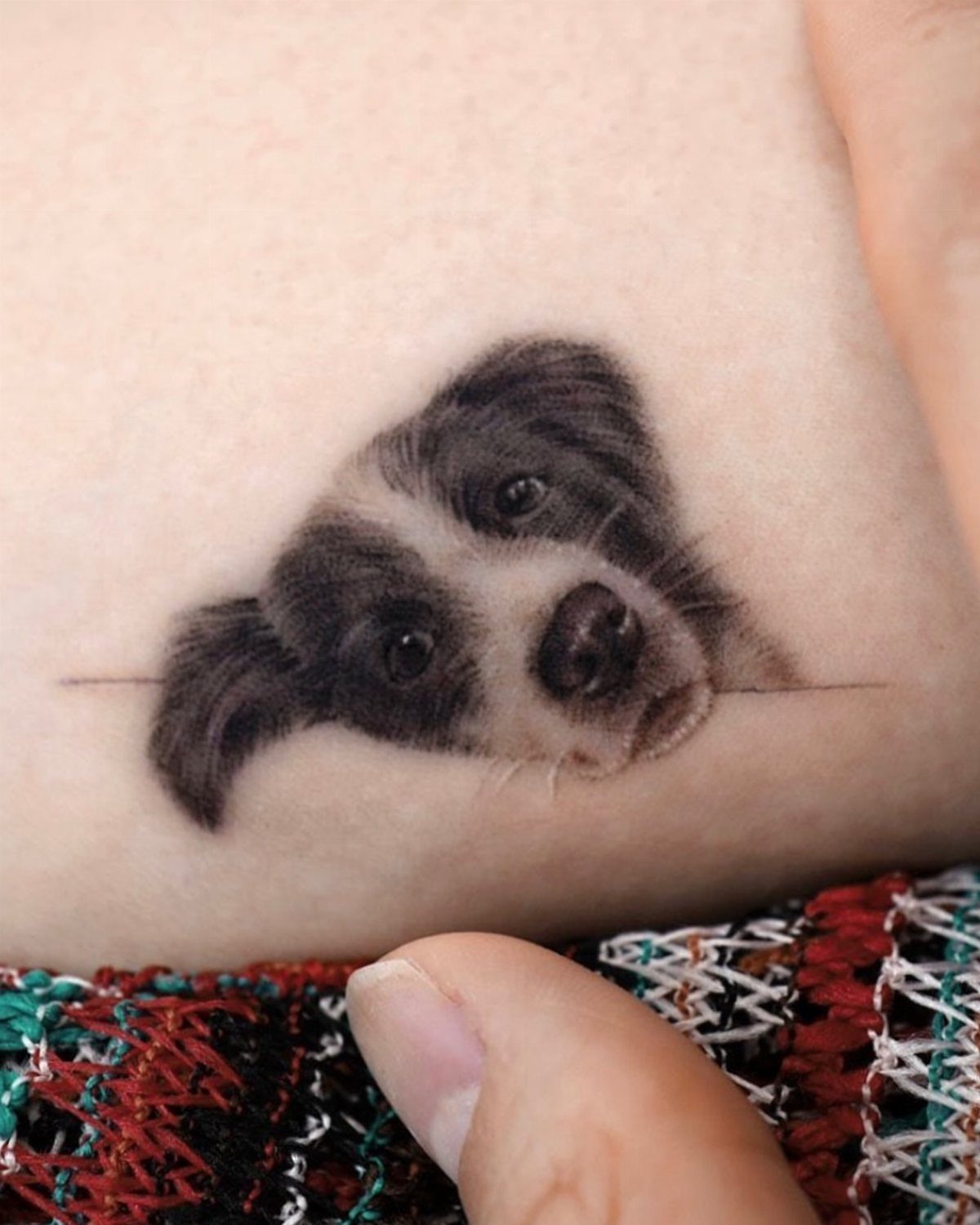
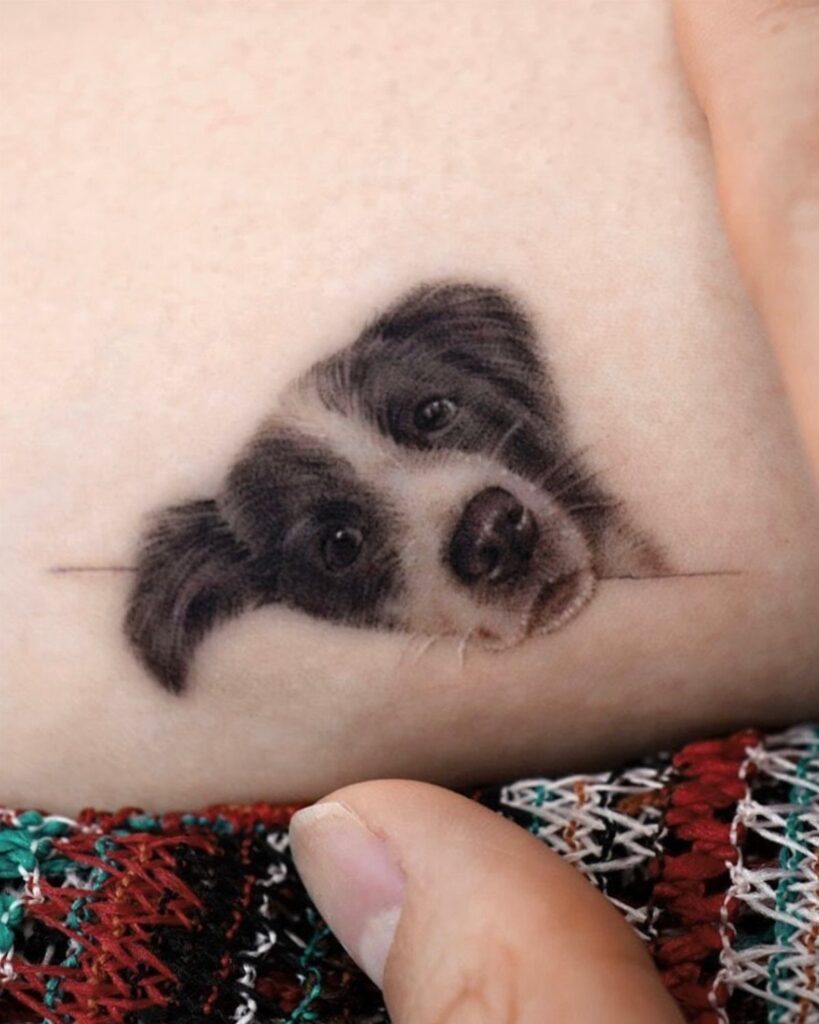
Soft shading needs room, so I’d give it a larger spot like the forearm or calf rather than squeezing it small.
Bring a clear, well-lit photo of your dog looking at the camera. Look for a portfolio full of realistic work, with more than line work in it, because a face either looks like your dog or it doesn’t.
2. High-five
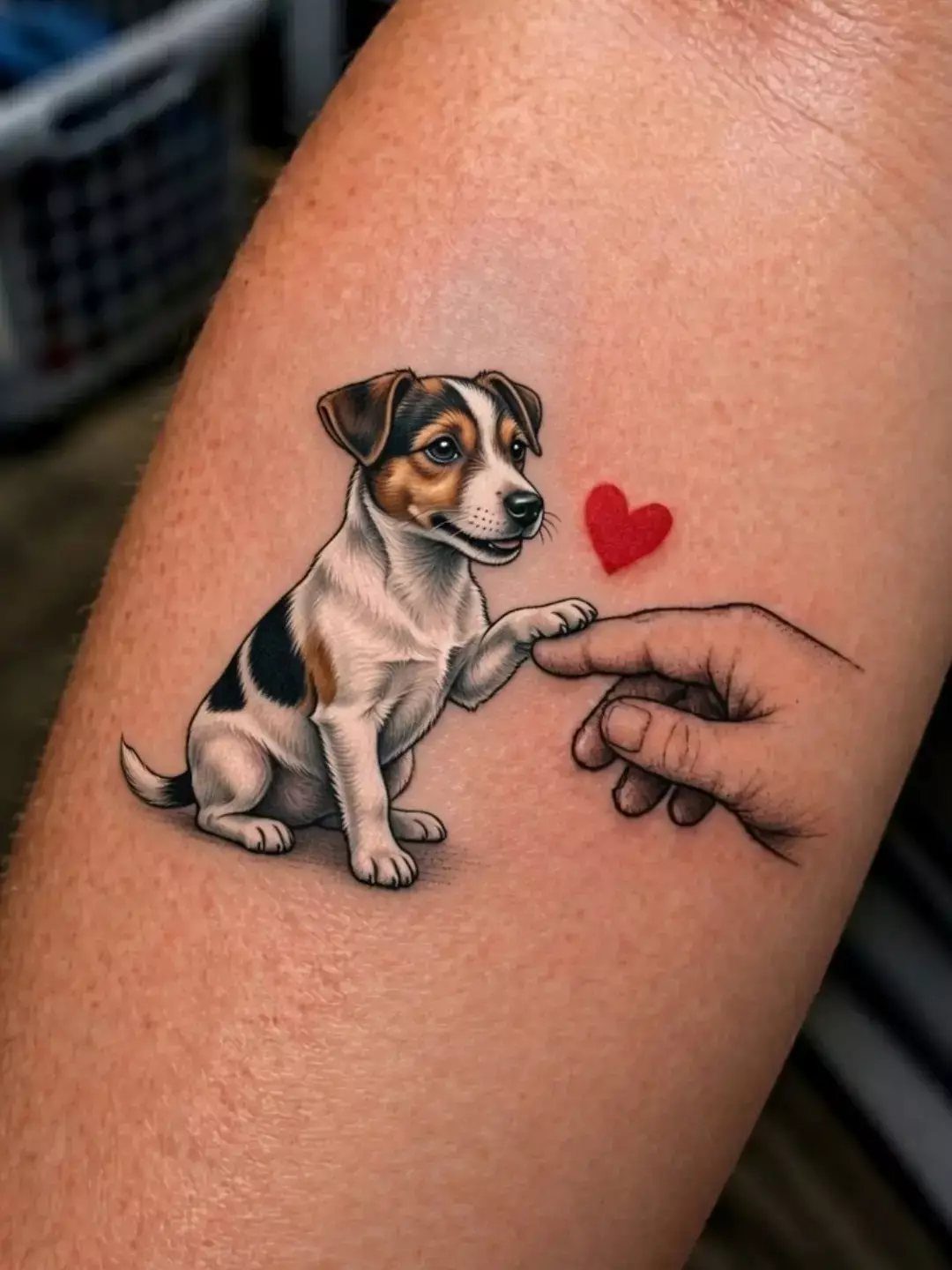
Here the dog is only half the picture; a human hand meets a paw, with a small red heart sitting between them. That makes it a tattoo about the bond, not just the animal.
I like it on the arm, where the pairing has space to read. If your dog has a signature trick, this is a good way to put it on skin.
3. Dog Tattoo with Roses
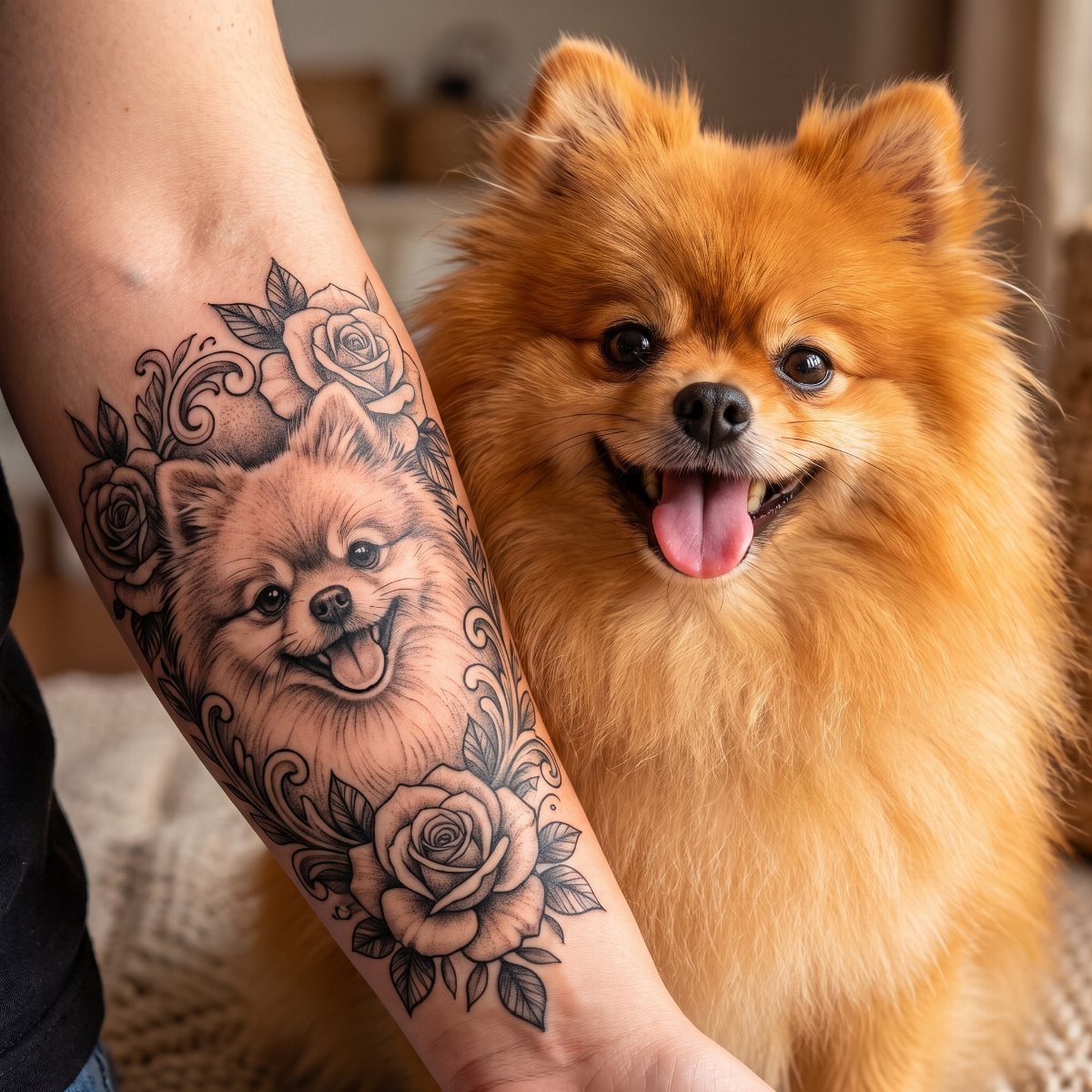
Roses frame a black and grey Pomeranian, and the flowers do real work: they fill out the edges of the design and give it a shape that fits a forearm.
Stars would be a lighter alternative if roses feel too traditional.
Pick a dog with a distinctive coat, since fluffy fur against the smooth petals gives the piece contrast. Plan the flowers around the dog’s face with the artist so the dog stays the focus and the roses never crowd it.
4. Cartoon
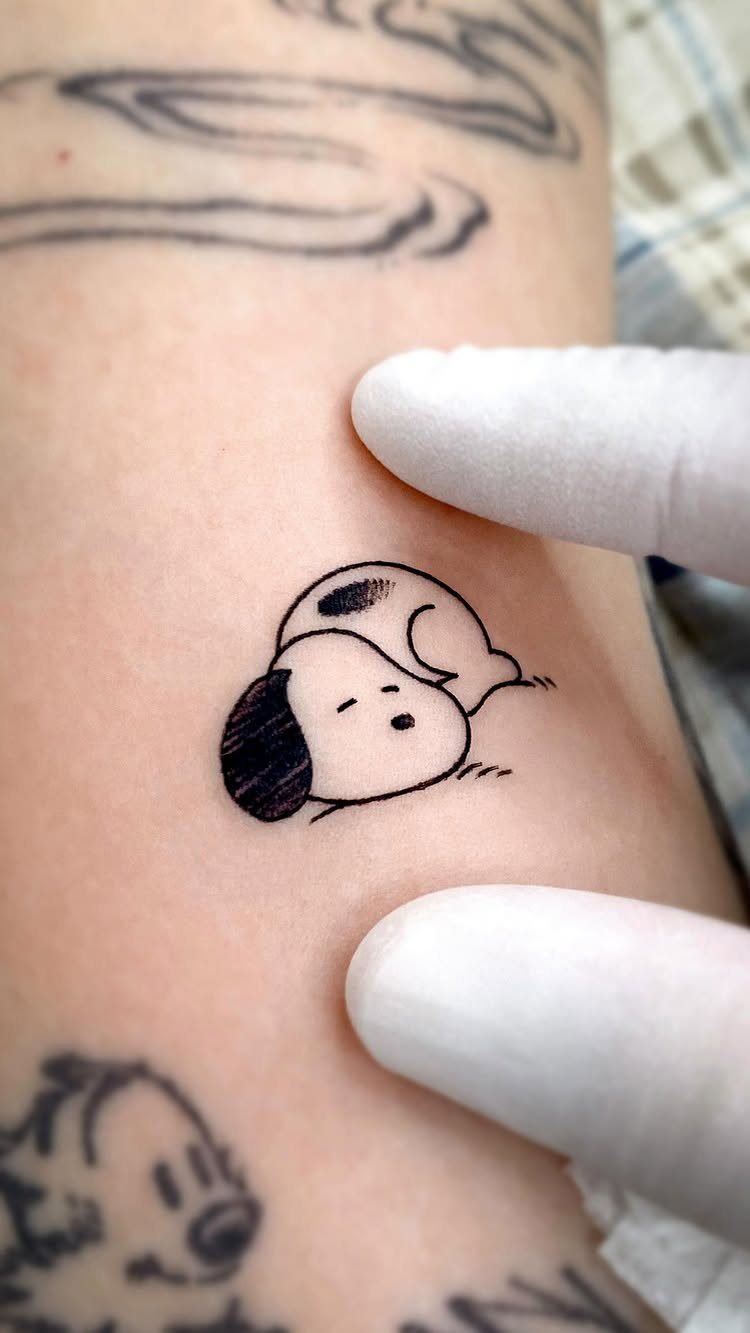
Cartoon style lets a sleeping dog be pure charm: simple shapes, bold lines, and a curled-up pose that says everything about a lazy afternoon.
It suits a first tattoo well because the design is small and clean.
I’d choose a pose your dog actually takes, since that’s what makes a cartoon feel personal and not like clip art. Keep the lines bold enough that the sleeping face stays readable as it settles over the years.
5. Pawprint
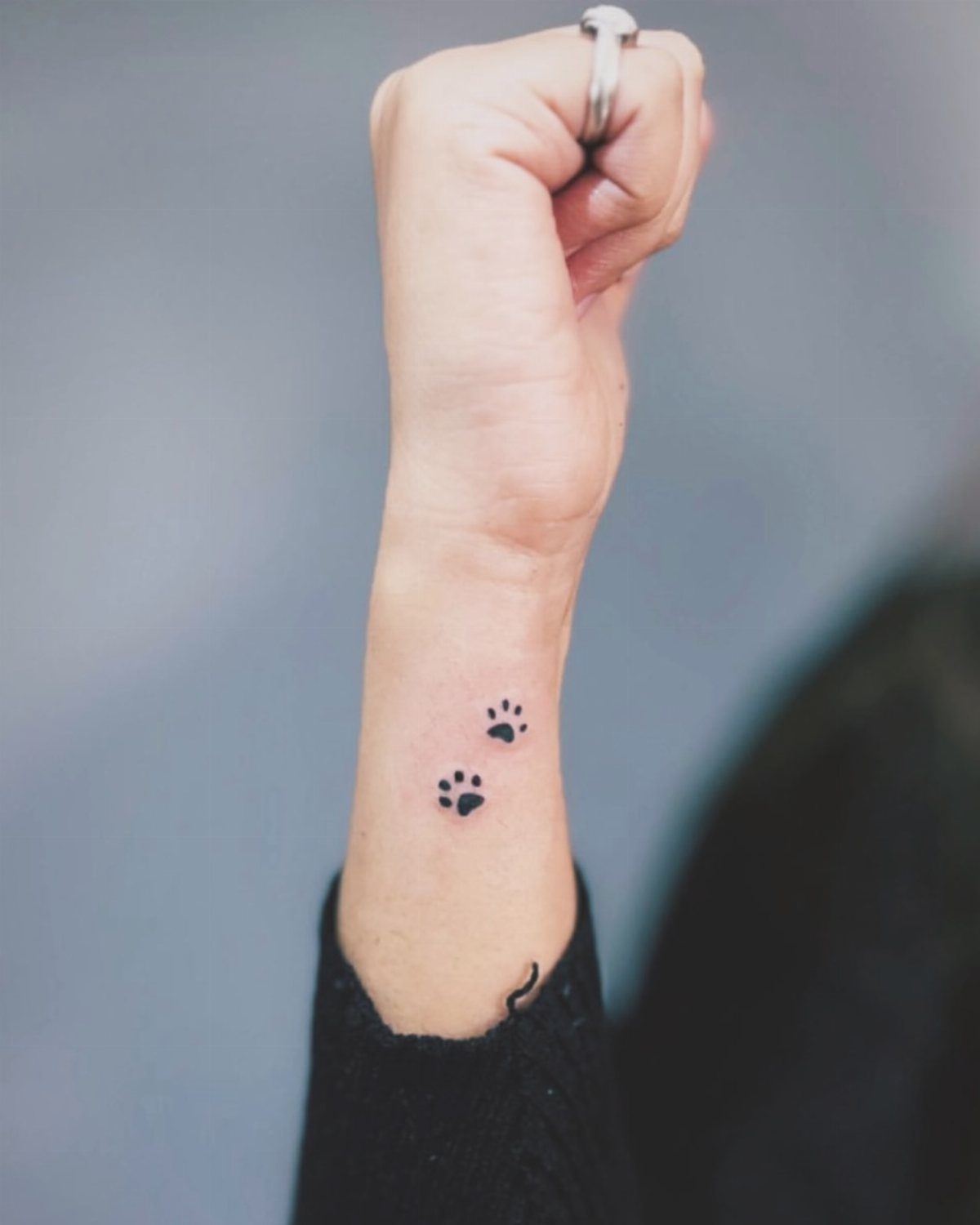
Two small black pawprints on the inner wrist are about as simple as a dog tattoo gets, and that’s the appeal. They fit nearly anywhere, from wrist to ankle to behind the ear.
Two prints can stand for two dogs, or one dog and you.
For a personal touch, work from your dog’s real print, since paw shapes and toe spacing differ from dog to dog. Plain black ink keeps it easy to read.
6. Illustration
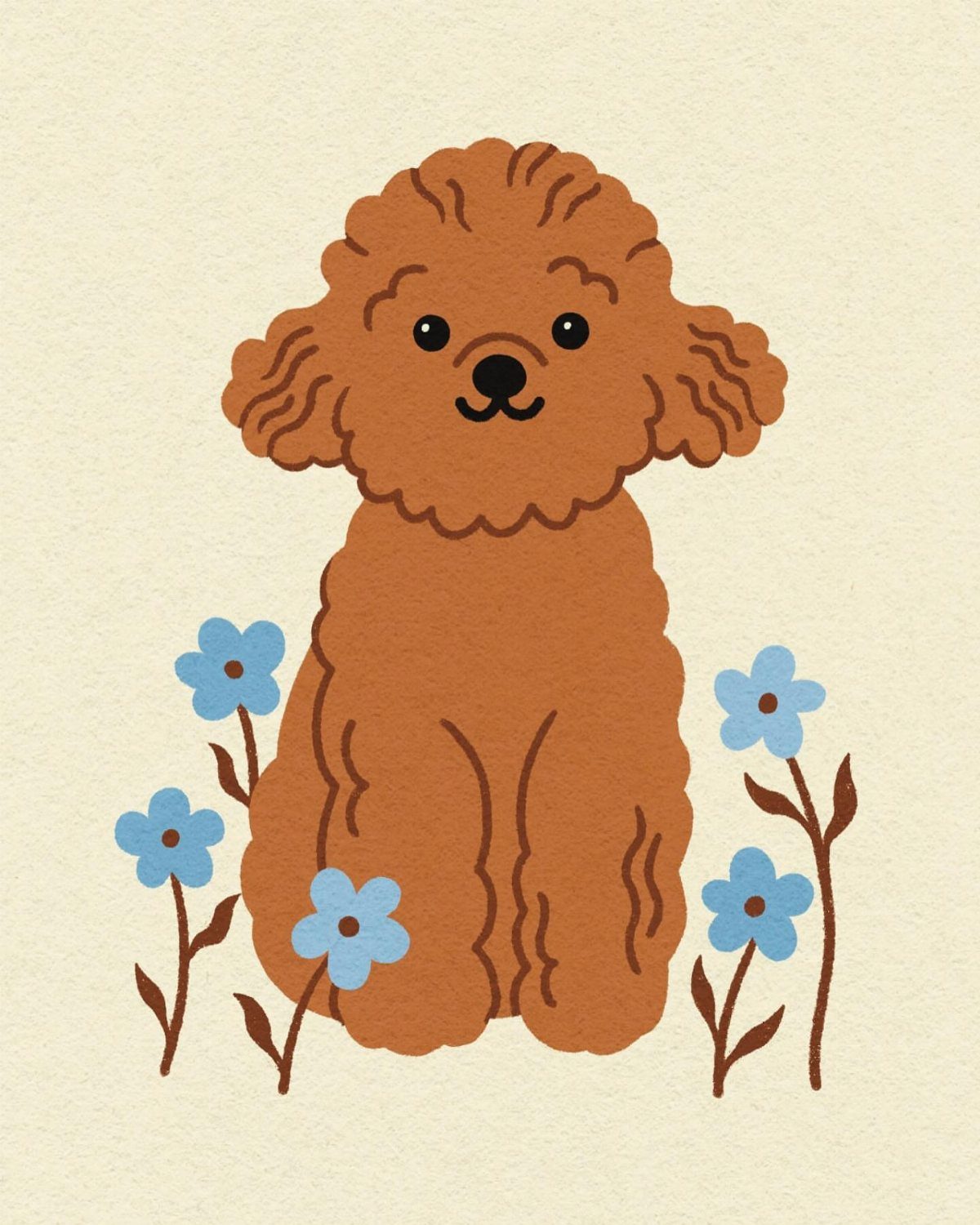
Think of a children’s book plate: a brown poodle, curly and sitting upright, surrounded by small blue flowers. The illustrated style gives a tattoo a storybook warmth that realism can’t.
Pick someone who already draws this way, because the loose, hand-drawn quality is what makes the style work.
Tiny flowers around the dog can be added or dropped to suit the space. The blue also adds a second color to a mostly brown design.
7. Memorial Tattoo
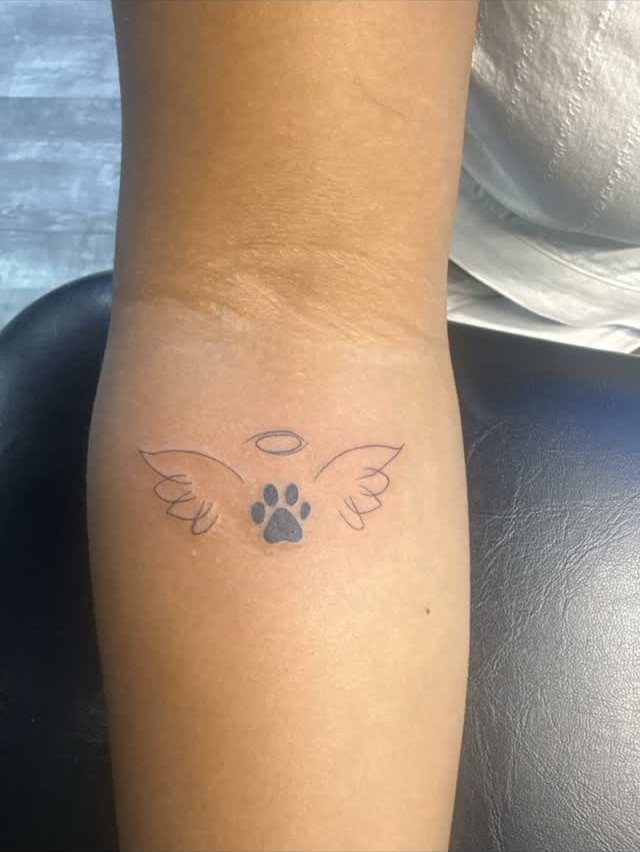
A paw print with angel wings and a halo says "gone, but still mine" without a single word. It reads clearly even when small, which suits a forearm.
Keep the wings and halo thin enough that the ink won’t blur together as the tattoo ages. If you want it personal, ask the artist to base the print on your dog’s real paw.
A date or name could be added beneath it, though the design already works without one.
8. Minimalist Dog Line Art
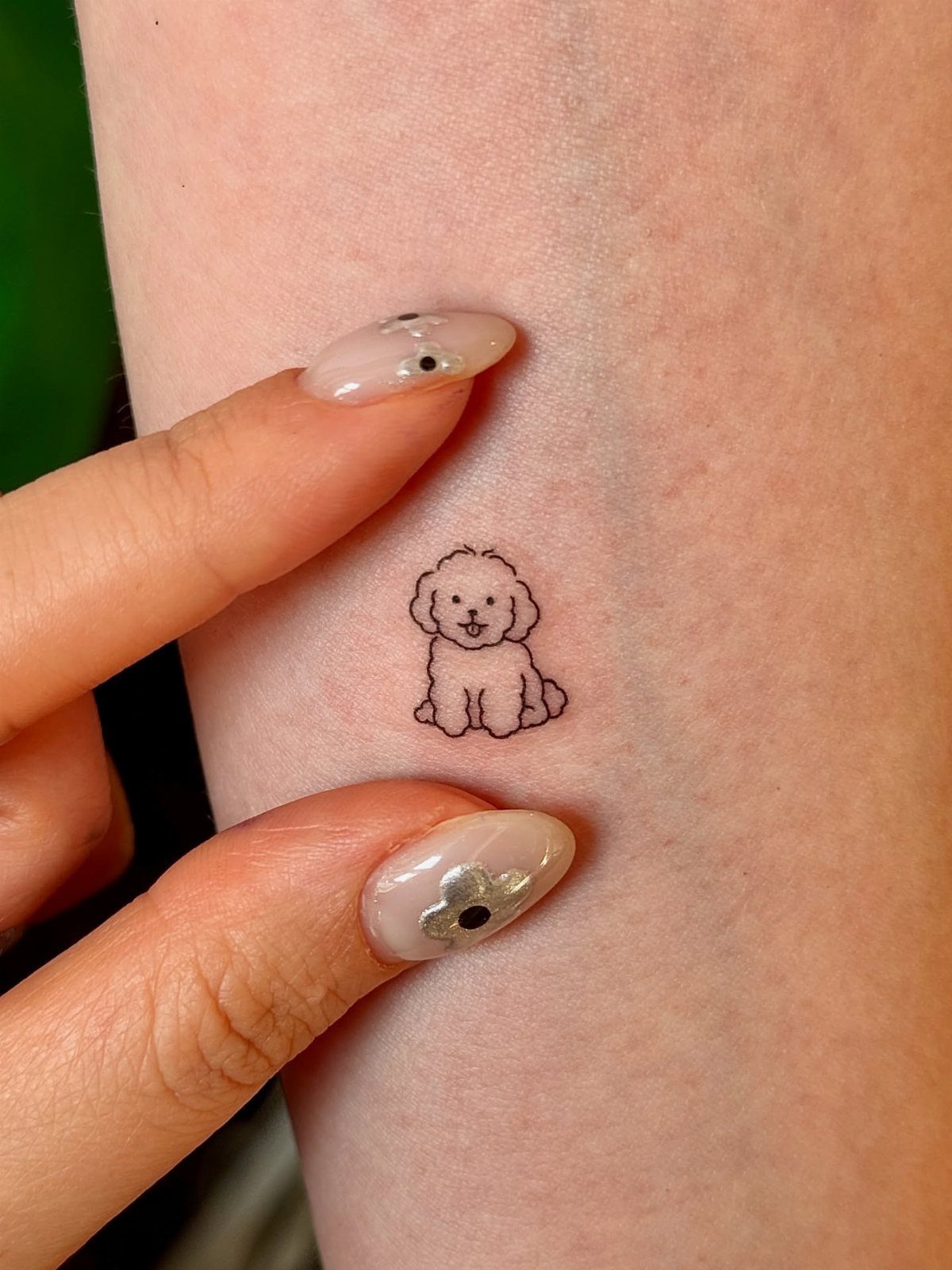
Fine-line work trusts a single thin black outline to carry the whole dog, and with a fluffy coat that restraint is the charm. A few loose strokes suggest the fur without any shading.
For a first tattoo it’s a gentle choice, since the design is small and uncluttered. I’d pick an artist who does fine line every day, because a shaky stroke has nowhere to hide.
Pick a spot like the inner finger area or wrist only if you accept that very thin lines can soften over the years.
9. Dog with Patterned Sweater
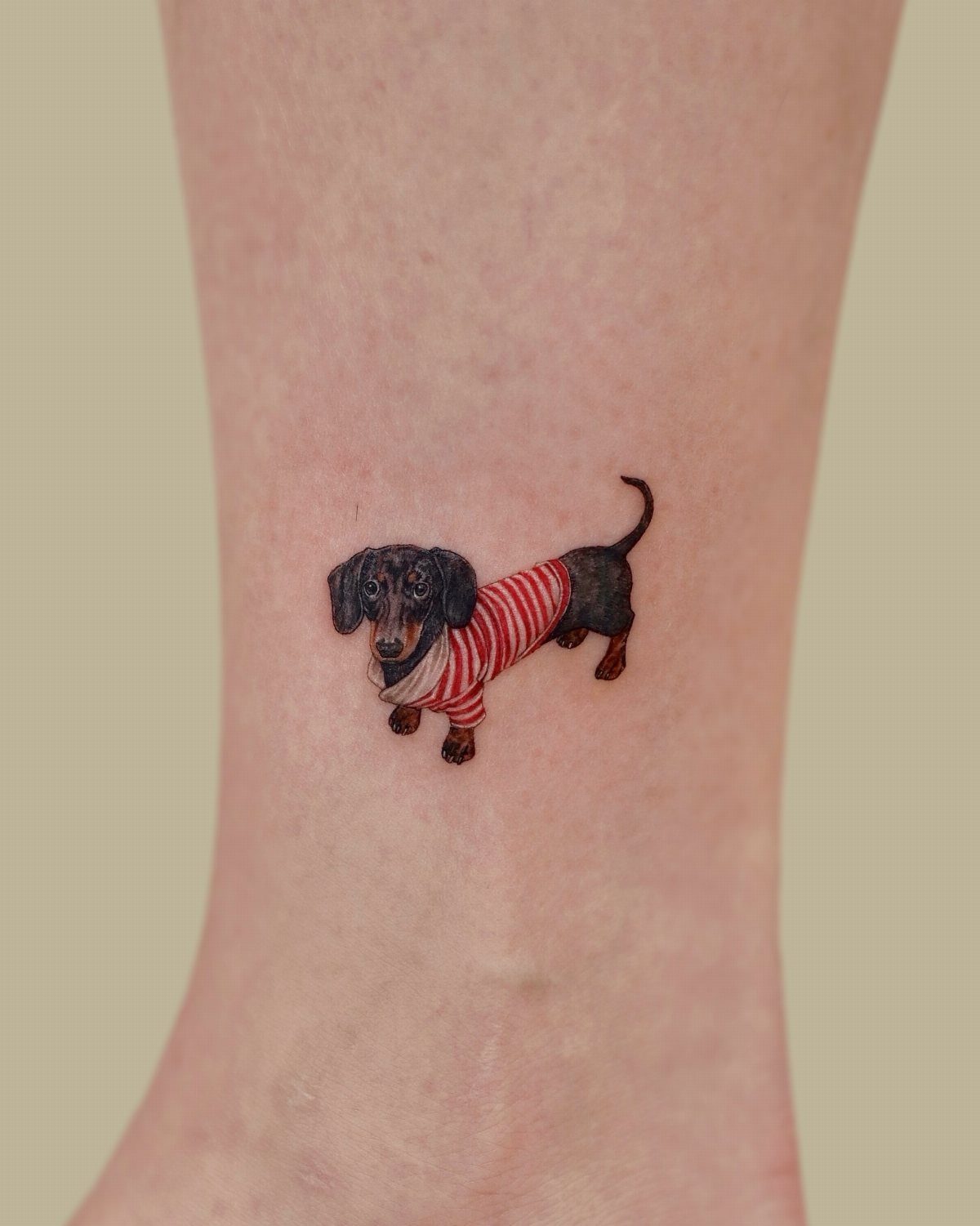
A dachshund in a red and white striped sweater is a small piece with a lot of personality. The long body and the knit pattern do the work, so the dog is recognizable even at a tiny size.
Bring a photo of your dog in the actual sweater, because stripes follow the body’s curve and the artist needs to see how they sit.
I’d keep the stripe count low. Too many thin bands crowd together as the ink settles.
10. Dog Peeking Over Line
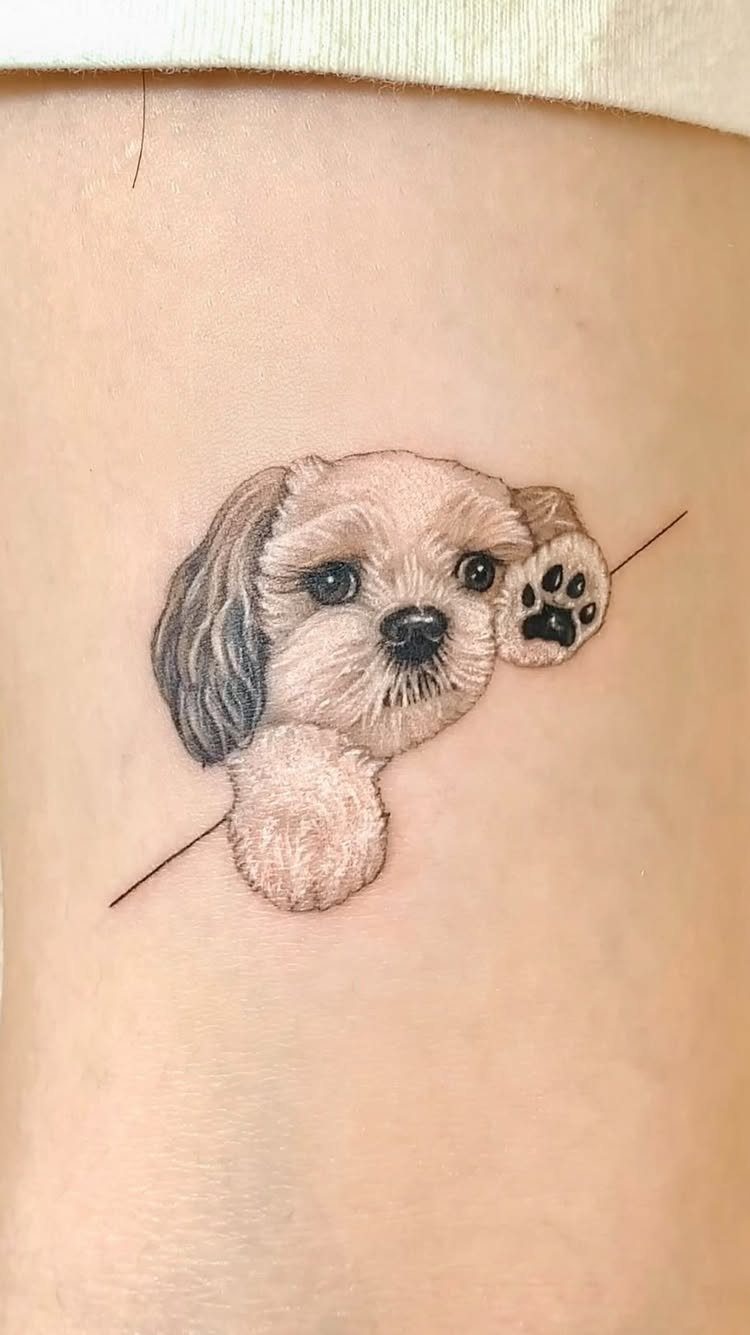
A tattoo of a small dog peeking over a line works well on a wrist, forearm or ankle, anywhere a flat edge can run straight.
I’d choose this for a dog that really does peek at you around corners. Ask for the fur to be softly shaded, since the contrast against the crisp line is what makes it pop.
11. Dog Face Paw Print Tattoo
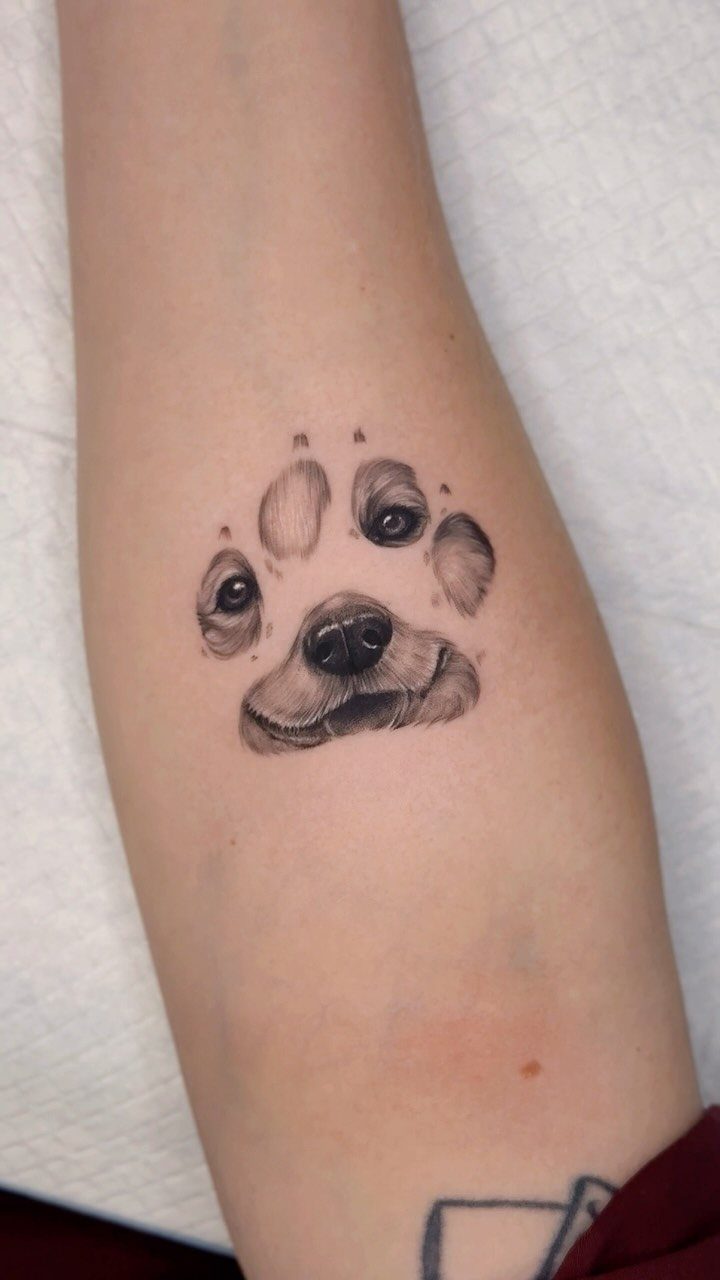
Putting the dog’s face inside a paw print shape gives you a portrait and a symbol in one compact piece. Black and grey shading suits it well, since the face has to read within the outline.
Choose a photo with the face straight on, so the eyes and nose land where the print’s pads would sit. I’d give it forearm-sized space; shrink it too far and the face turns to mush.
12. Snoopy Tattoo
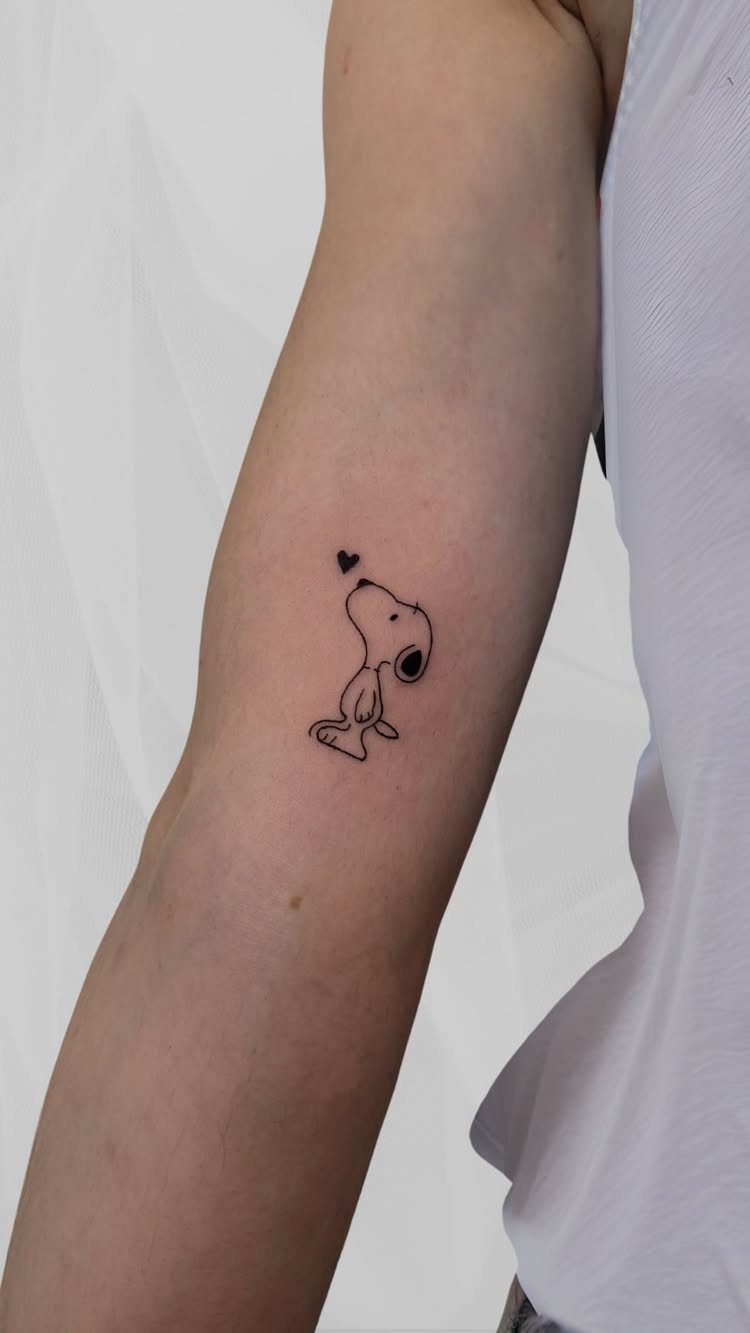
Snoopy is the shortcut for anyone who wants a dog tattoo that’s instantly recognizable and light in spirit.
Simple lines mean little can go wrong, which is why I’d steer a first-timer toward it. I’d keep the heart small so Snoopy stays the focus, and keep the lines bold enough to hold up over time.
Meaning of Dog Tattoos
Loyalty, companionship and unconditional love are the meanings people attach to a dog tattoo most often. Dogs also stand for guardianship and fidelity, and for traits like courage, playfulness and resilience.
Decide which meaning you want before you pick a style. A playful dog and a protective one call for different poses and expressions, and your artist can draw on that.
Dogs also tend to be with us through different life stages, so some people read their tattoo as a marker of growth and change. Others use one as a tribute that keeps a pet’s memory close.
If the meaning is personal, tell your artist the story. It helps them shape the design around what you want it to say.
Cultural Significance
People have honored dogs for ages as hunters, guardians and companions, and a few of those traditions hand you real symbolism to build a design around.
For a design with that kind of weight, choose the tradition that matches your reason for getting the tattoo.
Anubis suits an afterlife or memorial theme, while Cerberus fits guardianship. Before any drawing starts, have the artist pull reference art, so the details come out accurate and respectful.
Placement Options
Arms, shoulders and backs are the most common spots for dog tattoos, and each one suits a different kind of design.
The arm gives you a flat, visible surface that works for most sizes.
The shoulder curves, so I’d pick designs that tolerate a bit of bending. A large piece with plenty of detail needs space, and the back gives you the most of it.
Size is the other decision. A paw print can be as big or small as you like, so it adapts to nearly any spot.