A struggle tattoo has to mean something on your worst day, so the story you lived should pick the symbol: a phoenix for coming back, a lotus for growing through murky water, a hamsa for protection, a semicolon for choosing not to end the sentence.
The list runs from a small, private semicolon to a full upper-back hamsa, with a phoenix, a dragon, a lotus, a bear claw, a cactus, a tree, a wolf, a lion tarot card and an eagle in between.
If you can’t say in one sentence what the image stands for, keep looking.
1. Phoenix Tattoo
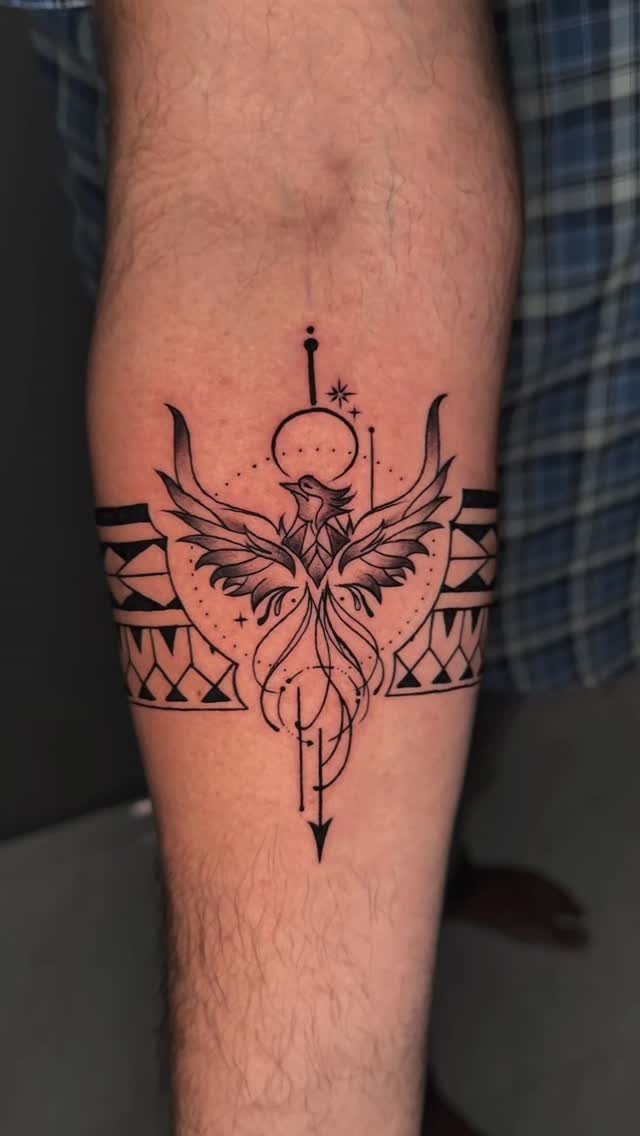
A phoenix says "I came back" faster than almost any other symbol, and the version on this forearm pairs it with geometric lines and an arrow, which keeps it from reading as a cliché.
I like that choice. Straight edges give the bird a structured, deliberate look that will hold up as the ink softens over the years.
The forearm is a good spot for a struggle tattoo you want to see daily. Bold geometry holds up best, so have the lines and shapes drawn thick enough to stay crisp as the skin ages.
2. Dragon Tattoo
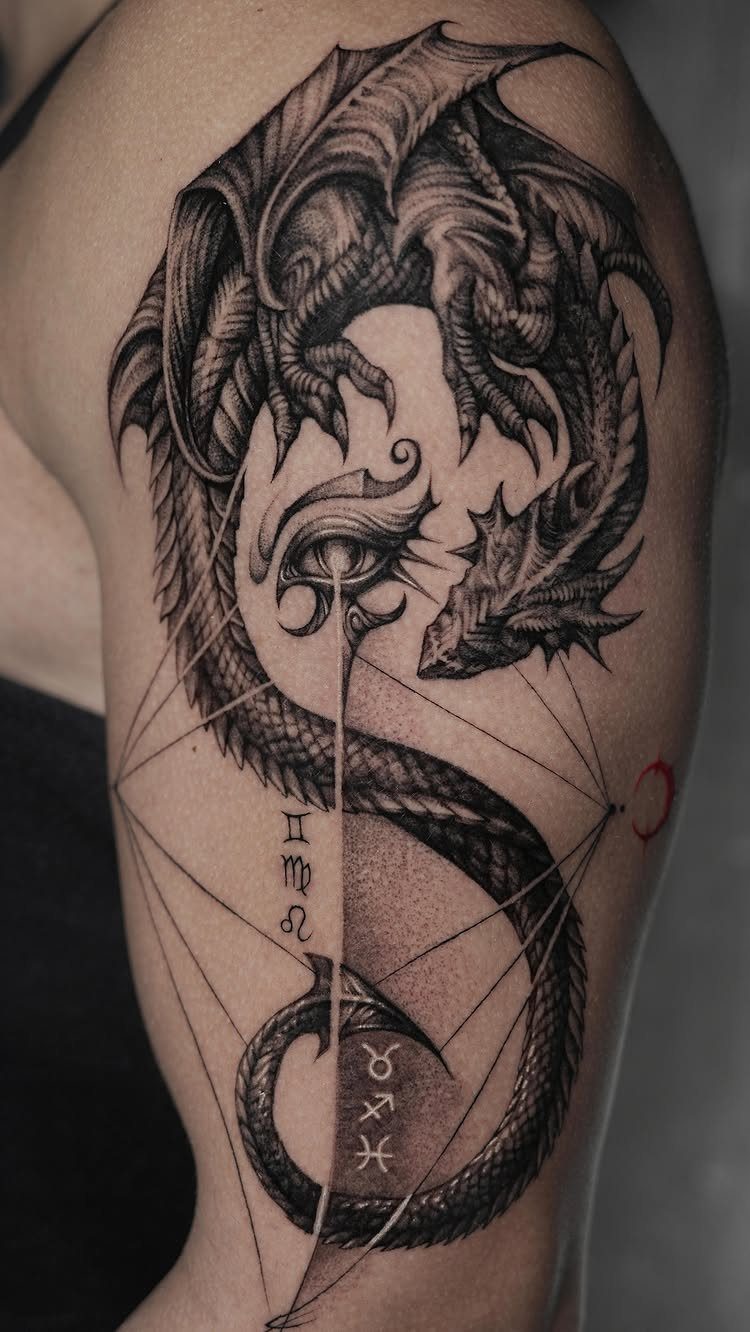
Dragons suit people whose struggle felt like a fight they refused to lose.
Black and grey keeps the focus on power and drive, and this upper-arm piece adds an eye and astrological symbols, so the dragon carries a personal layer too.
Pick symbols that mean something to you rather than filling space; that is what gives a dragon a second layer.
The upper arm gives a dragon room to coil, and it is easy to cover with a sleeve when work requires it.
3. Lotus Tattoo
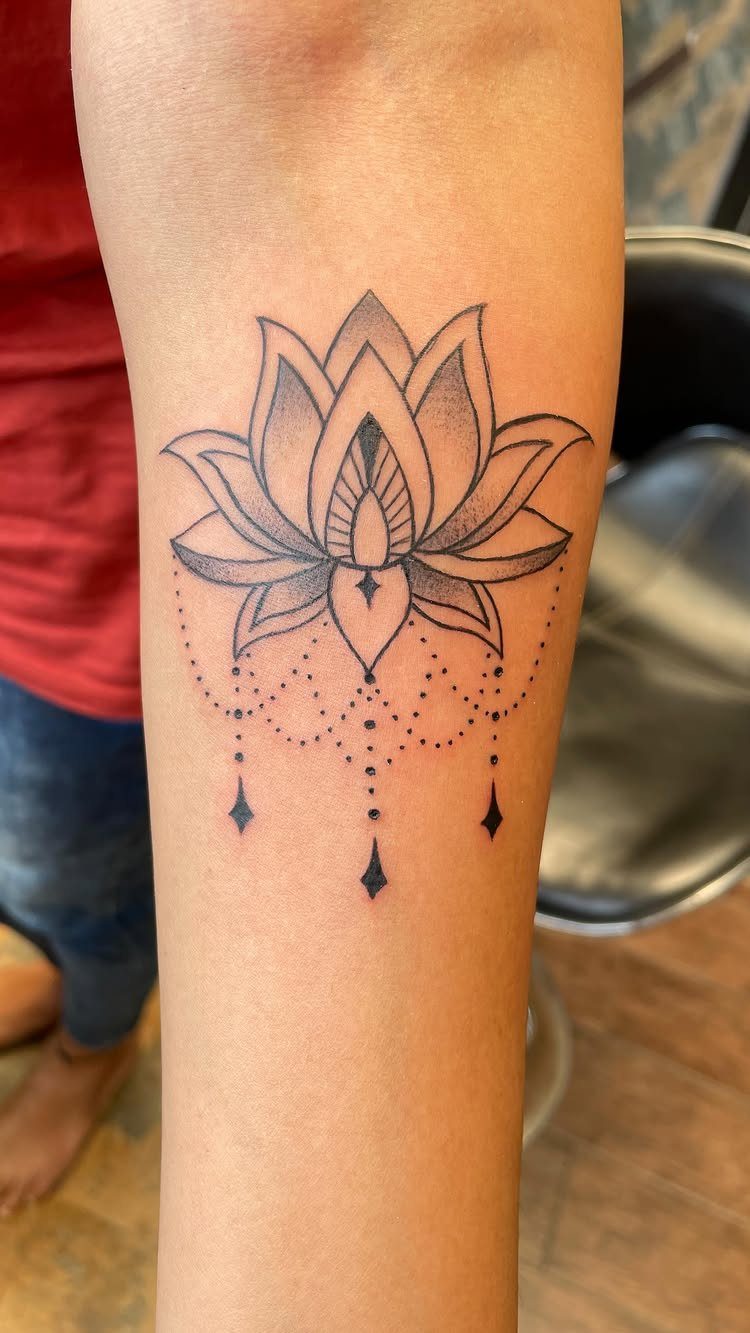
Growing through murky water and still opening clean is the whole lotus story, which is why it fits anyone who got through something hard and came out steadier.
Black ink with dotwork and small diamonds, as on this forearm, gives the flower a calm, ornamental feel instead of a loud one.
I would choose this for a quiet reminder. Dotwork rewards a skilled hand, so check an artist’s healed work before booking.
4. Breast Cancer Recovery Tattoo
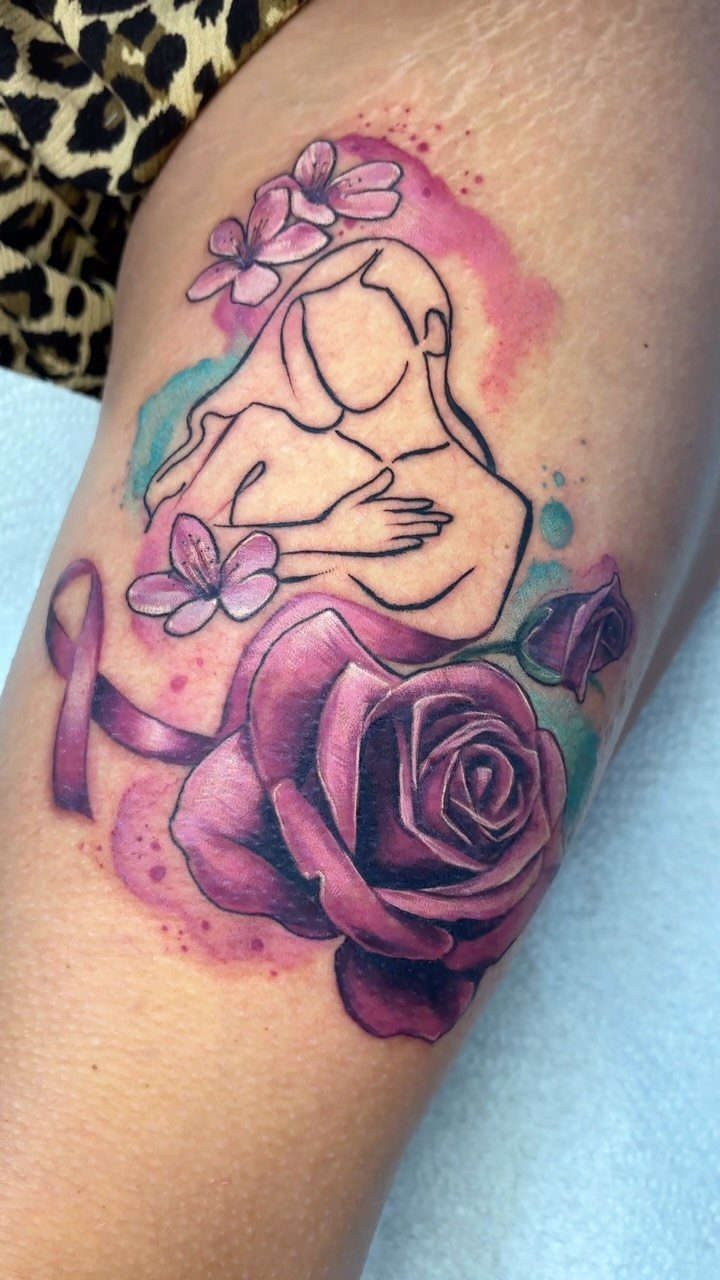
A pink ribbon, a large purple rose and a line-art woman together say survival, and the color separates this from the usual black-and-grey approach to the theme. Pink flowers around the rose soften the whole design.
Keep the woman as a simple outline so she stays readable beside the rose. Because this is a personal milestone, I would talk through meaning with your artist first, then choose the colors.
5. Semicolon Tattoo
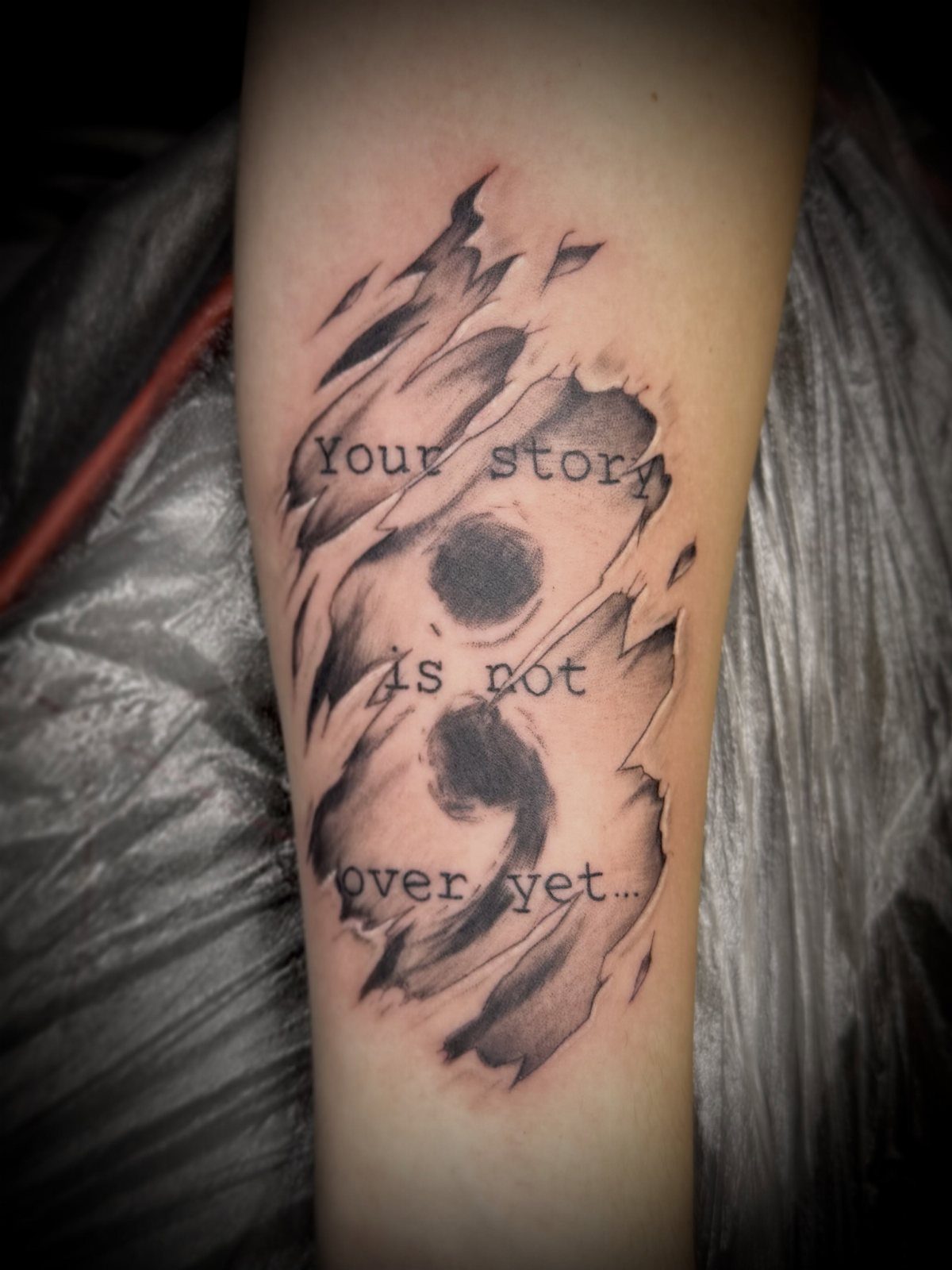
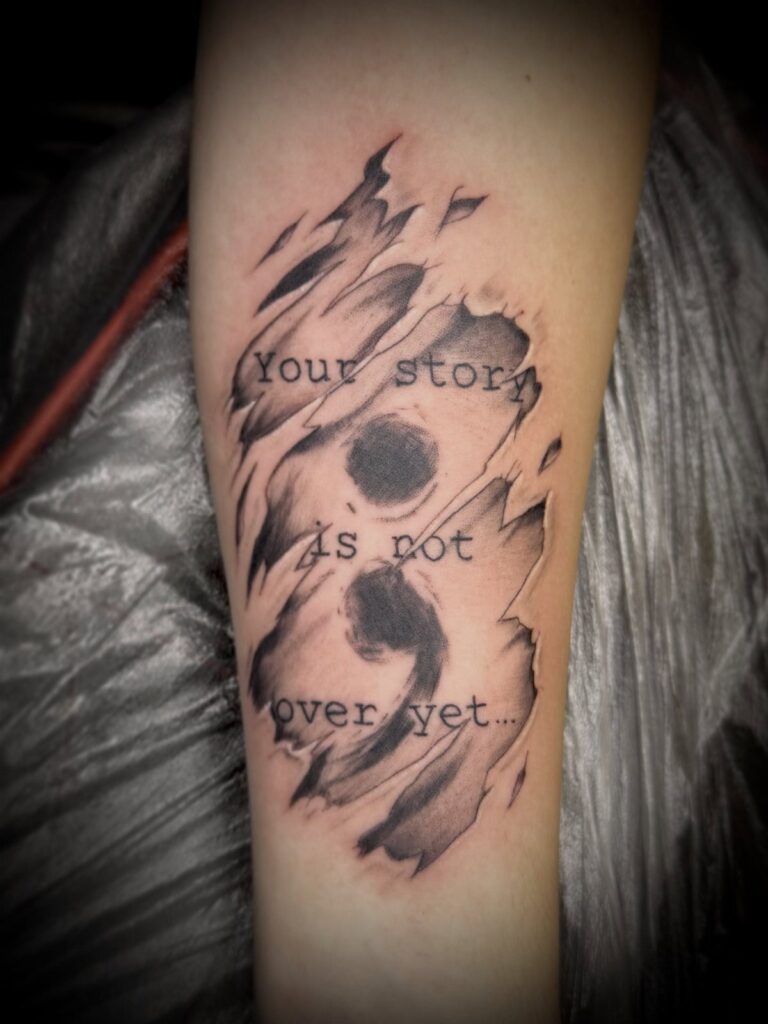
The semicolon works because an author uses one where a sentence could have ended but did not.
A semicolon marks a sentence the author chose not to end, so it reads as a plain symbol of surviving mental health struggles and carrying on.
This arm version tears the skin open around a large semicolon and adds "Your story is not over yet…."
I prefer it to the tiny dot-and-comma version when you want the message spelled out. The words make it unmistakable, though a plain small semicolon is easier to keep private.
6. Bear Claw Tattoo
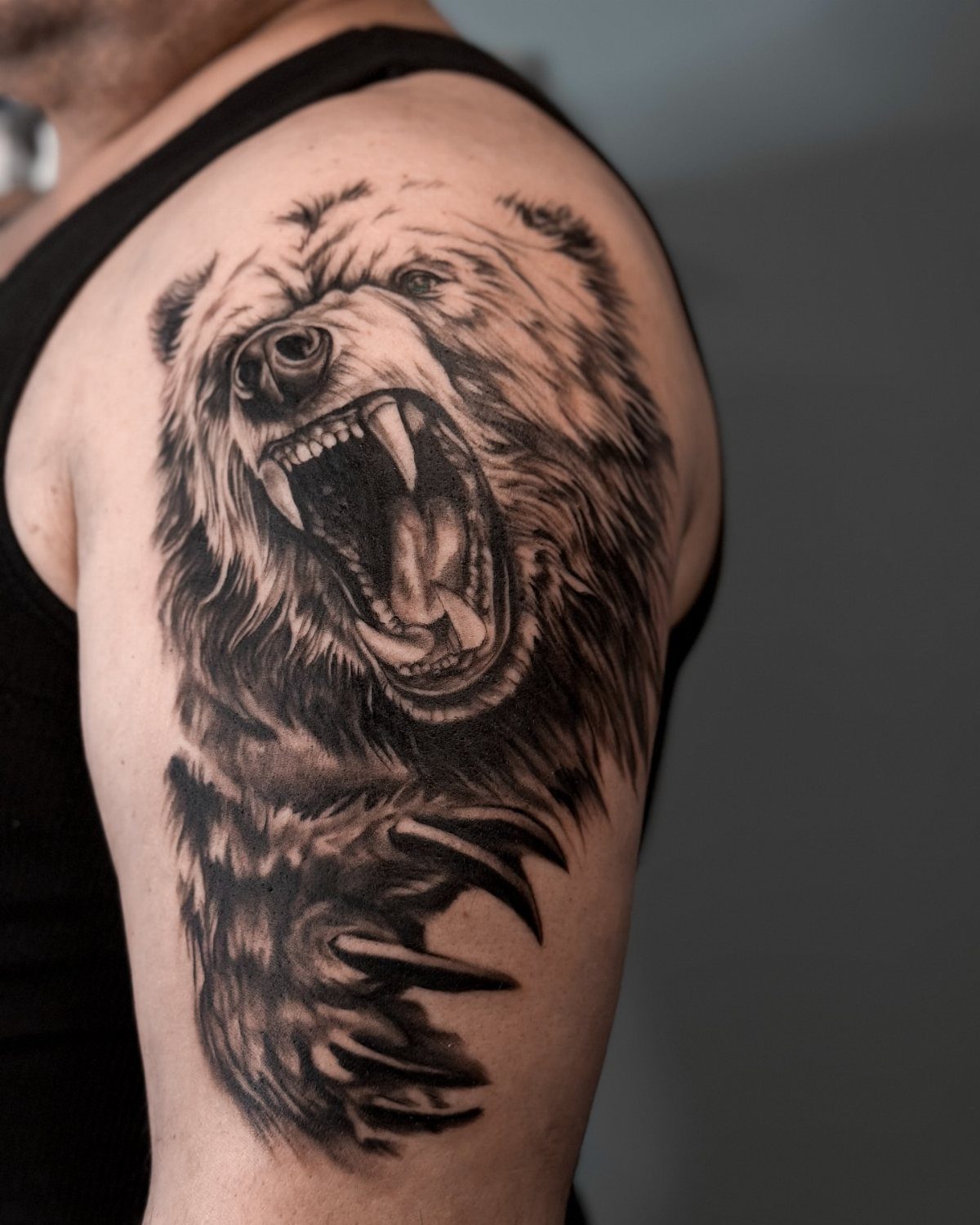
Roaring bear head, claw raking beside it: this upper-arm piece reads as protection with teeth. Bears stand for strength, courage and guarding what is yours, which suits someone who held their ground through a rough stretch.
Black and grey shading gives the fur and claw weight without color. I would push for strong contrast inside the open mouth, since the eye lands there first.
7. Cactus Tattoo
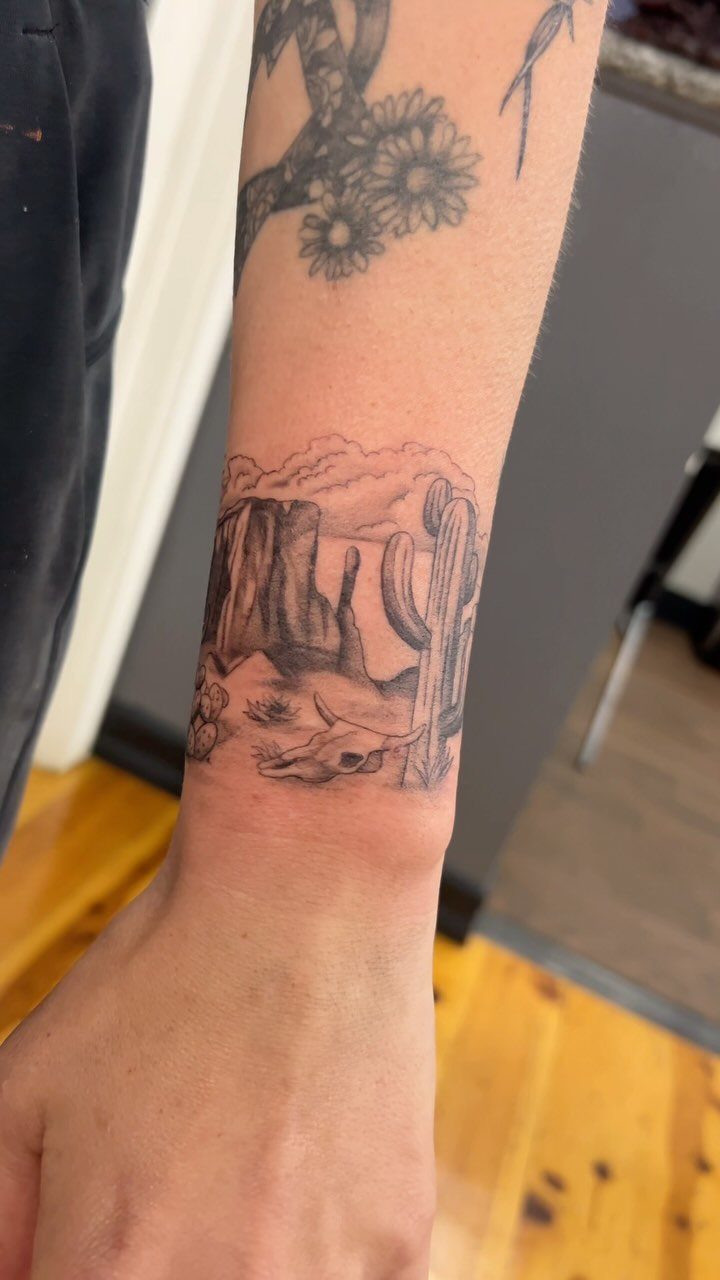
A saguaro, a mesa and an animal skull make the desert a stand-in for endurance: this is a landscape where little survives, and the cactus does anyway. Black and grey suits the scene, since the sun-bleached mood needs no color.
I would keep the skull small so the cactus stays the hero. The forearm and wrist give the scene a wide, horizontal strip, which fits a desert horizon well.
8. Tree Tattoo
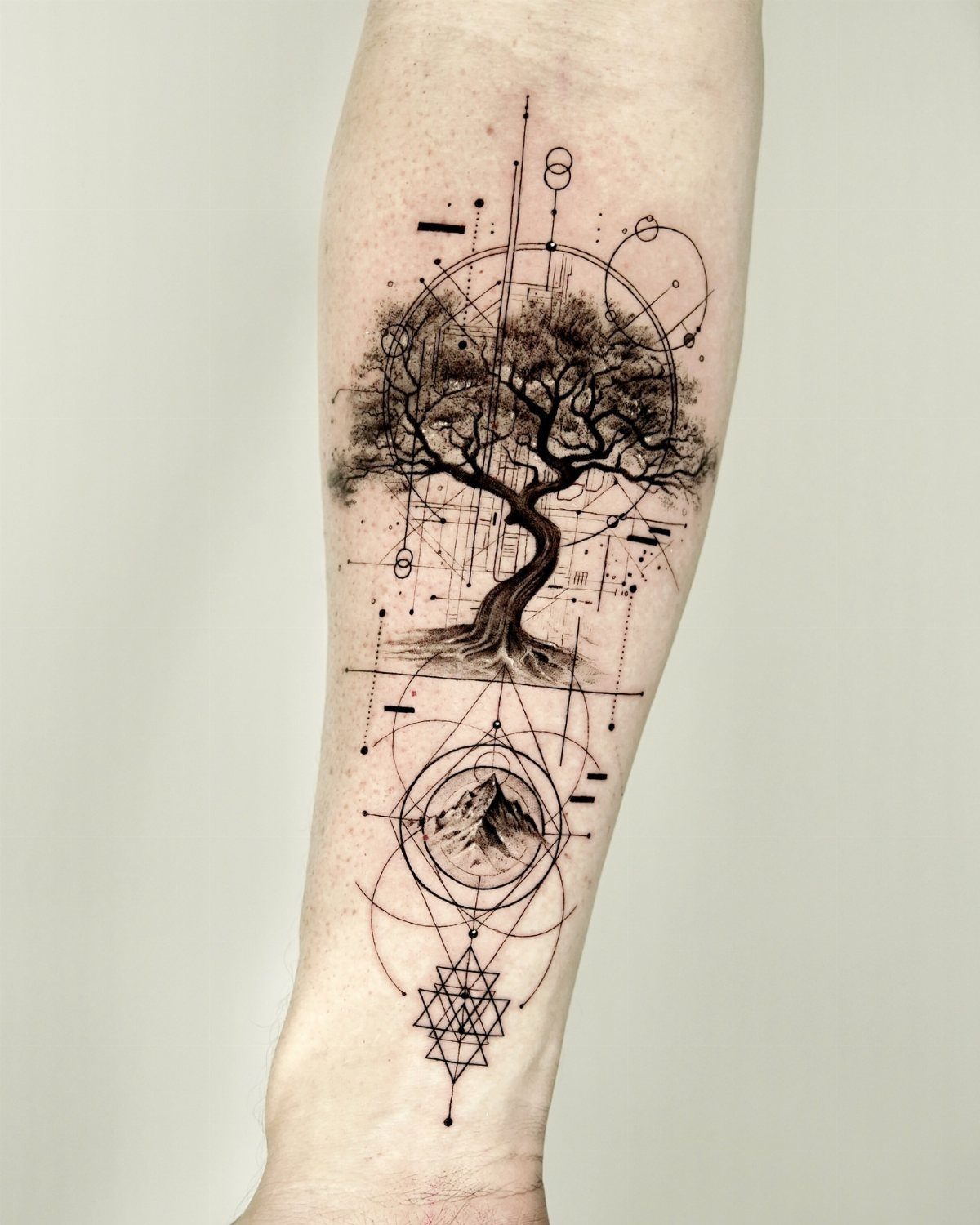
Roots, trunk and branches say grounded, and the mountain inside a circle adds a second message: you stood through weather and stayed put. Geometric patterns around the tree give this forearm piece a tidy, designed feel.
I like that the tree is detailed while the shapes stay clean.
Keep the branches from crowding the circle, since fine twigs blur first as ink settles over time; a little open space between them keeps the shape readable for years.
9. Hamsa Tattoo
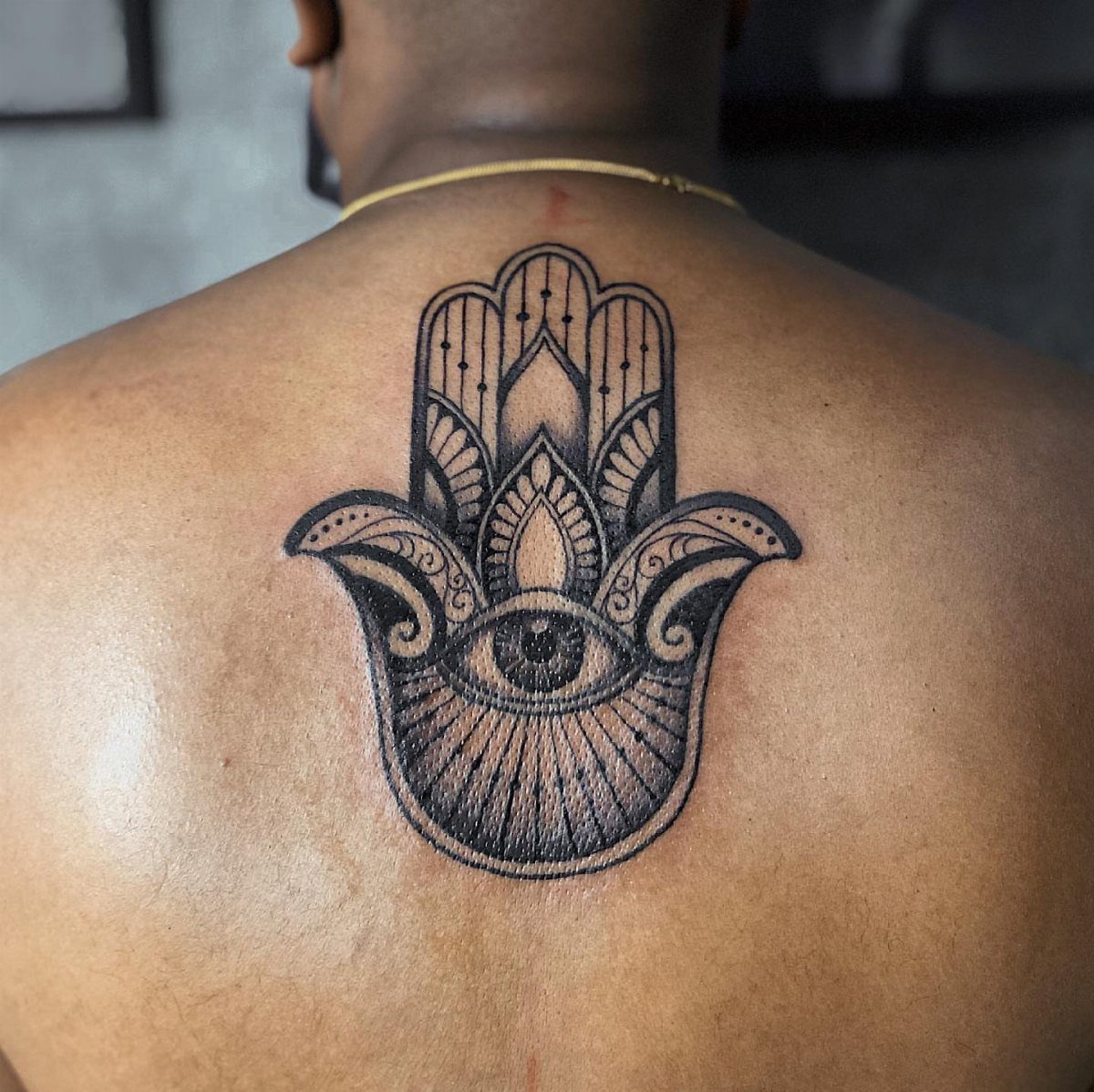
Protection is the job of a hamsa, and the eye in the palm makes it a watchful one. For someone rebuilding strength after a hard stretch, it works like a guard posted at your back.
The upper back suits it well: a flat, centered spot where the symmetrical hand sits cleanly.
Black ink keeps it simple. I would add nothing else unless the extra detail means something to you, since the hand’s outline is what people recognize.
10. Wolf Tattoo
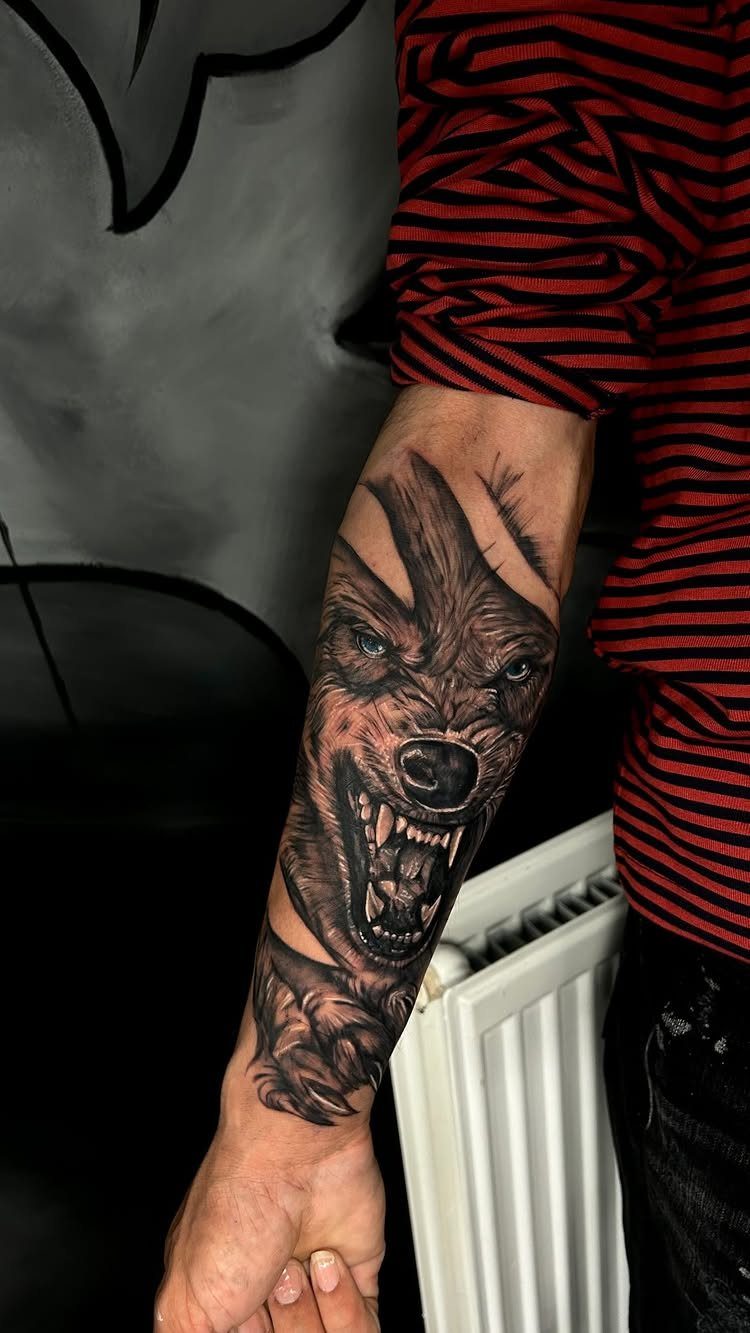
Wolves stand for loyalty, unity and resilience, so this fits someone who got through with other people beside them, not alone.
The forearm works well for detailed black and grey, because the face sits where you can see it daily and the skin there holds fine shading.
I would insist on crisp fur texture and a dark, clear eye, because the snarl only reads if the face stays sharp.
11. Strength Tarot Card Tattoo with Lion
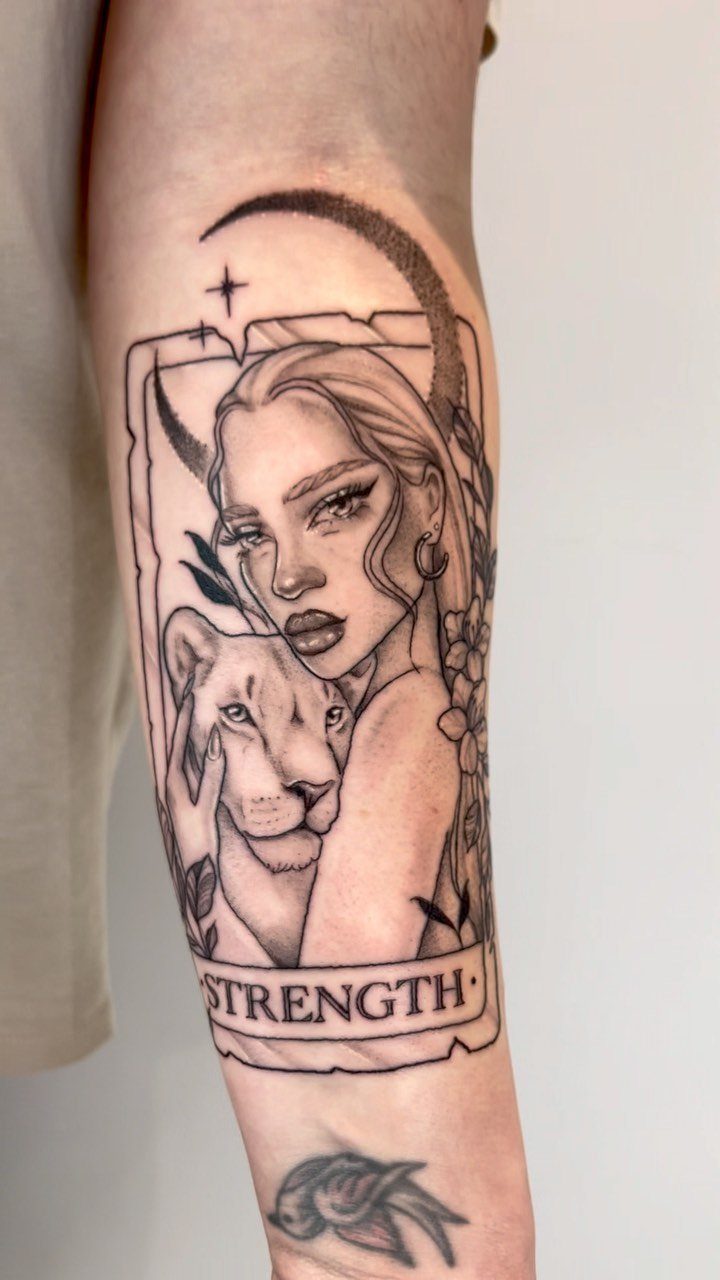
Quiet strength is the Strength card’s whole idea: a woman calmly holding a lion, with no fight at all. That makes it my pick for people whose struggle was won through patience, not force.
The tarot frame and the word "STRENGTH" keep the meaning obvious, and a crescent moon adds a soft touch. Keep the lettering bold and evenly spaced so it stays readable on the forearm for years.
12. Eagle Tattoo
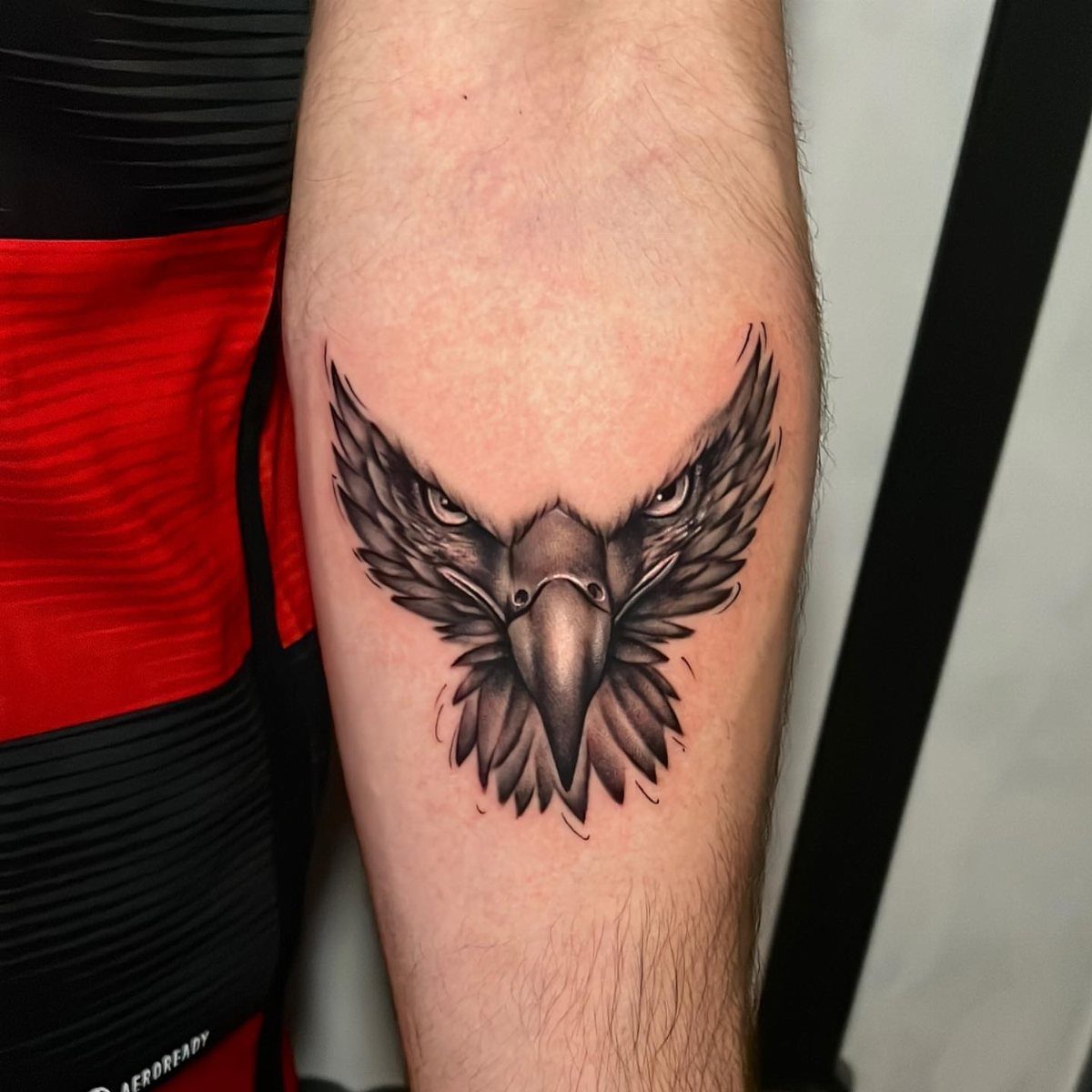
Rising above is the eagle’s message, and a close-up head with spread wings gives it a fierce, focused look. It suits anyone who wants freedom from an old struggle to be the headline.
Black and grey works well for feathers, but the eye needs the darkest contrast. A forearm gives the head enough size for fine detail; shrink it too much and the beak and feather lines will crowd together.
Tattoos as Reminders of Strength
A tattoo works as encouragement only if you keep seeing it and it still means something on a bad day. Before booking, write one sentence about what the piece reminds you of, and use it to judge every design choice.
Pick an image tied to something you actually got through, not just one that looks strong. A symbol you can explain in a sentence holds its meaning longer than one chosen because it was popular.
To get courage from the tattoo, choose a subject that points to your own resilience, such as the way a bear relies on its claws to survive.
Then look at it on purpose now and then, rather than only in passing.
Placement Considerations
Check your work dress code first, since these are the spots hardest to hide.
To keep the choice yours each day, pick a place that a sleeve or a watch can cover.
A small design on the inner wrist is easy to see, though it can look fuzzy sooner because the skin there is thin and moves constantly.
Hold a printed stencil against the spot for a full day before committing. Notice whether you see it while typing, driving and washing your hands, and whether you still like it there.
Cultural Significance
Many tattoos draw on cultural symbols that stand for strength, resilience and personal growth, so it pays to learn where a symbol comes from before you commit to it.
Look up where your design comes from before you choose it, and read what it means to the people who use it, not just what a tattoo page says.
If the symbol belongs to a culture that isn’t yours, ask yourself why it speaks to you and whether you can wear it respectfully.
Talk with your artist; a good one will tell you if a design is commonly misread or misused.
Personal meaning still counts most. A symbol tied to your own growth, drawn by an artist who understands it, will outlast one picked for its look alone.
Frequently Asked Questions
What tattoo represents hardship?
A phoenix, a semicolon or a bear claw are the clearest picks. I would match the symbol to the kind of struggle you went through rather than choosing the one that simply looks toughest.
What represents overcoming struggle?
The phoenix and the semicolon are the two most direct symbols.