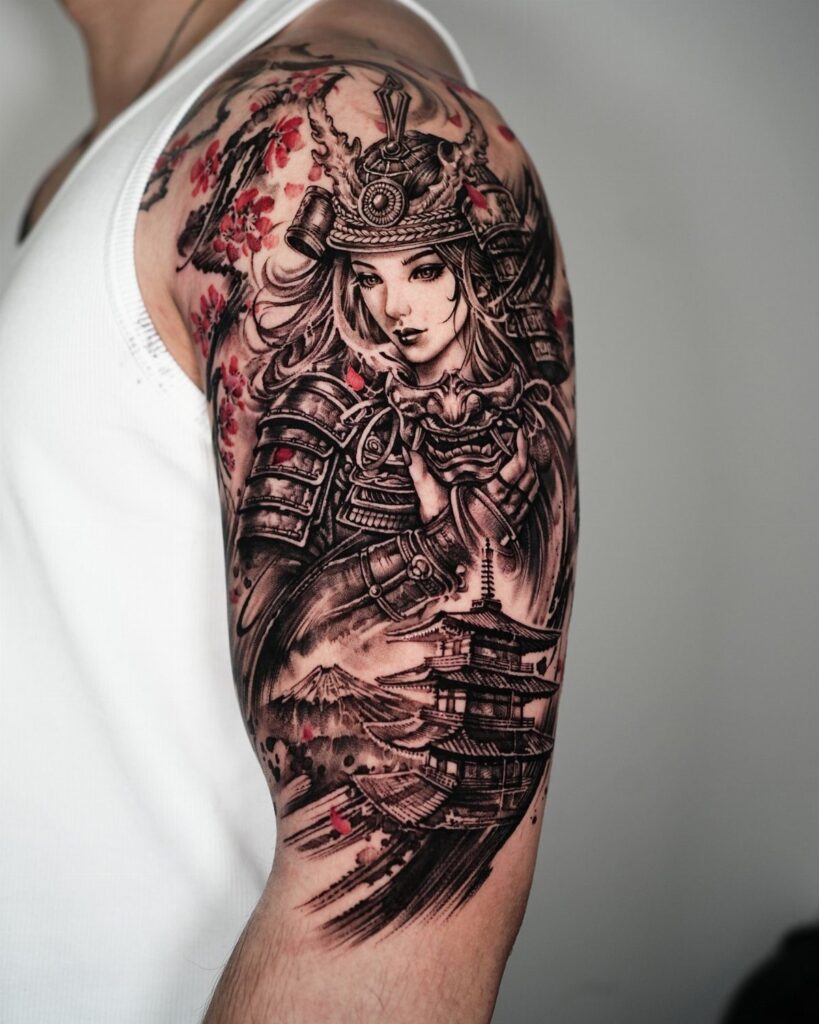
Placement decides which of these 8 warriors works for you, so check the size of your spot before you fall for a design.
Small sizes blur over the years, so realism and dense armor linework belong on a thigh or upper arm, where the detail has room to stay readable.
The designs range from a sketch-style archer you could finish in one session to a full dragon back piece that takes several.
1. Female Warrior in Ornate Armor
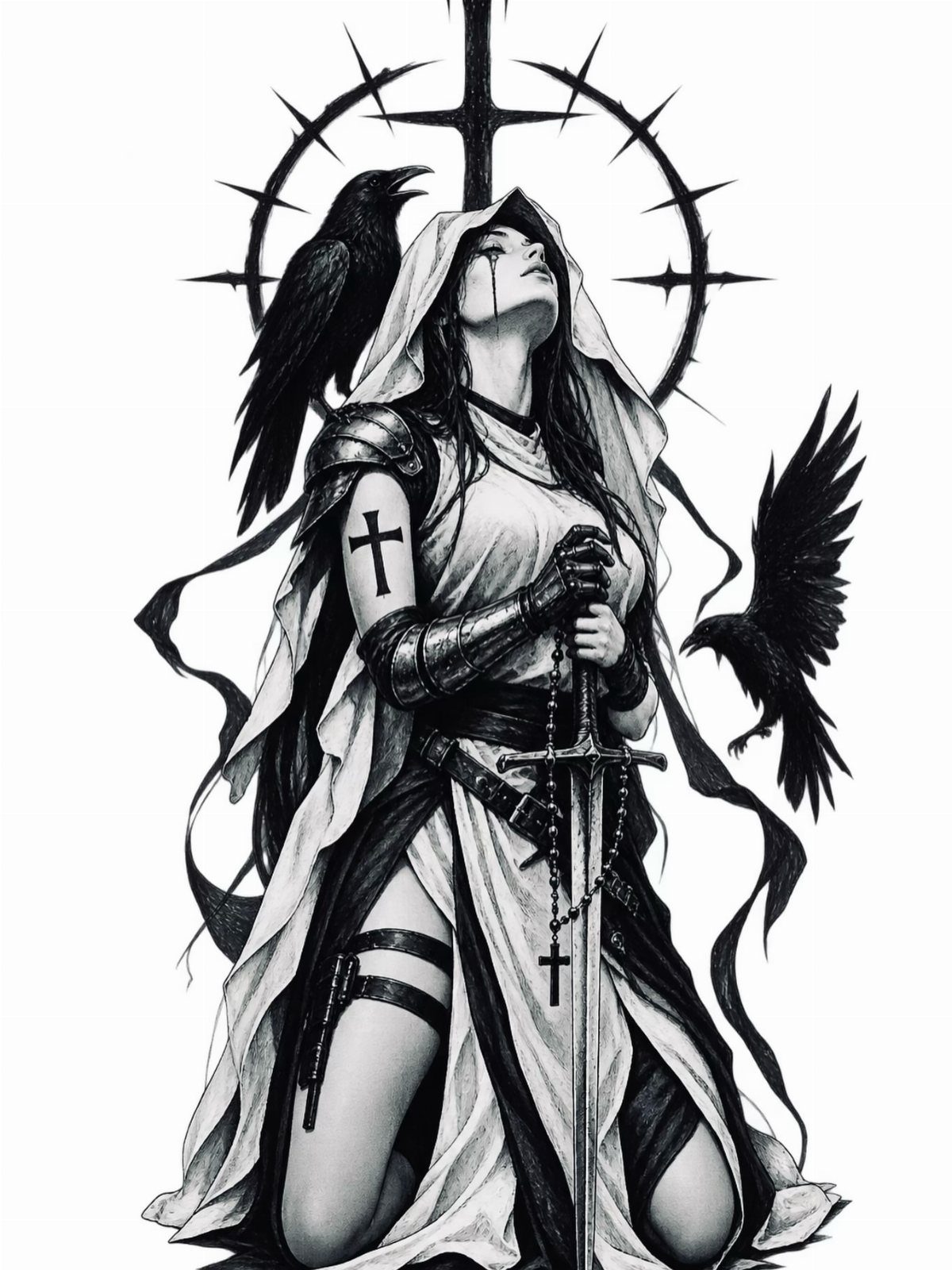
2 ravens and a spiked halo carry much of the story, so the design reads as a figure with a myth behind her, not just a woman in costume.
Fine armor detail and a hooded cloak need room, so I would keep it on a larger spot like a thigh or upper arm.
Small sizes blur linework this dense over the years. If the budget or space is tight, drop the ravens before you shrink the armor.
2. Samurai Girl Tattoo
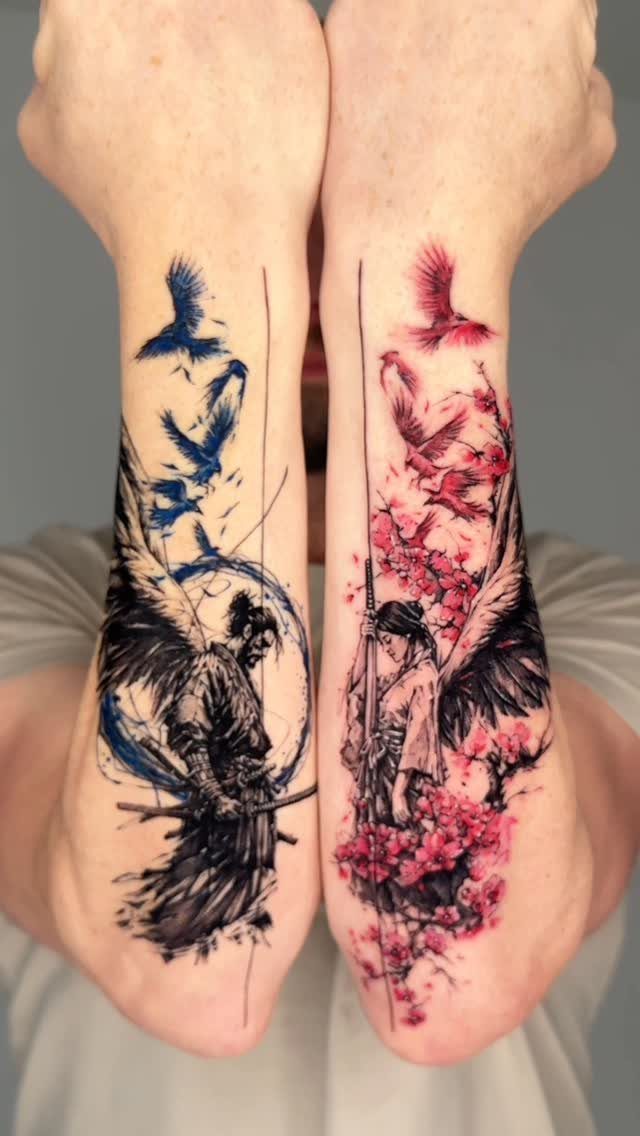
Cherry blossoms and birds give a samurai girl softness without weakening her. A katana-wielding figure in traditional Japanese attire holds the strength, and the flowers carry the femininity.
One accent color changes the mood more than you’d expect: blue with black reads cool and calm, while red with black reads aggressive.
Red feels fierce, blue calmer. Choose one accent color and stay with it; a second one starts to compete with the black linework.
Lower legs and forearms suit the tall, narrow shape of a standing figure.
3. Elf Warrior Tattoo
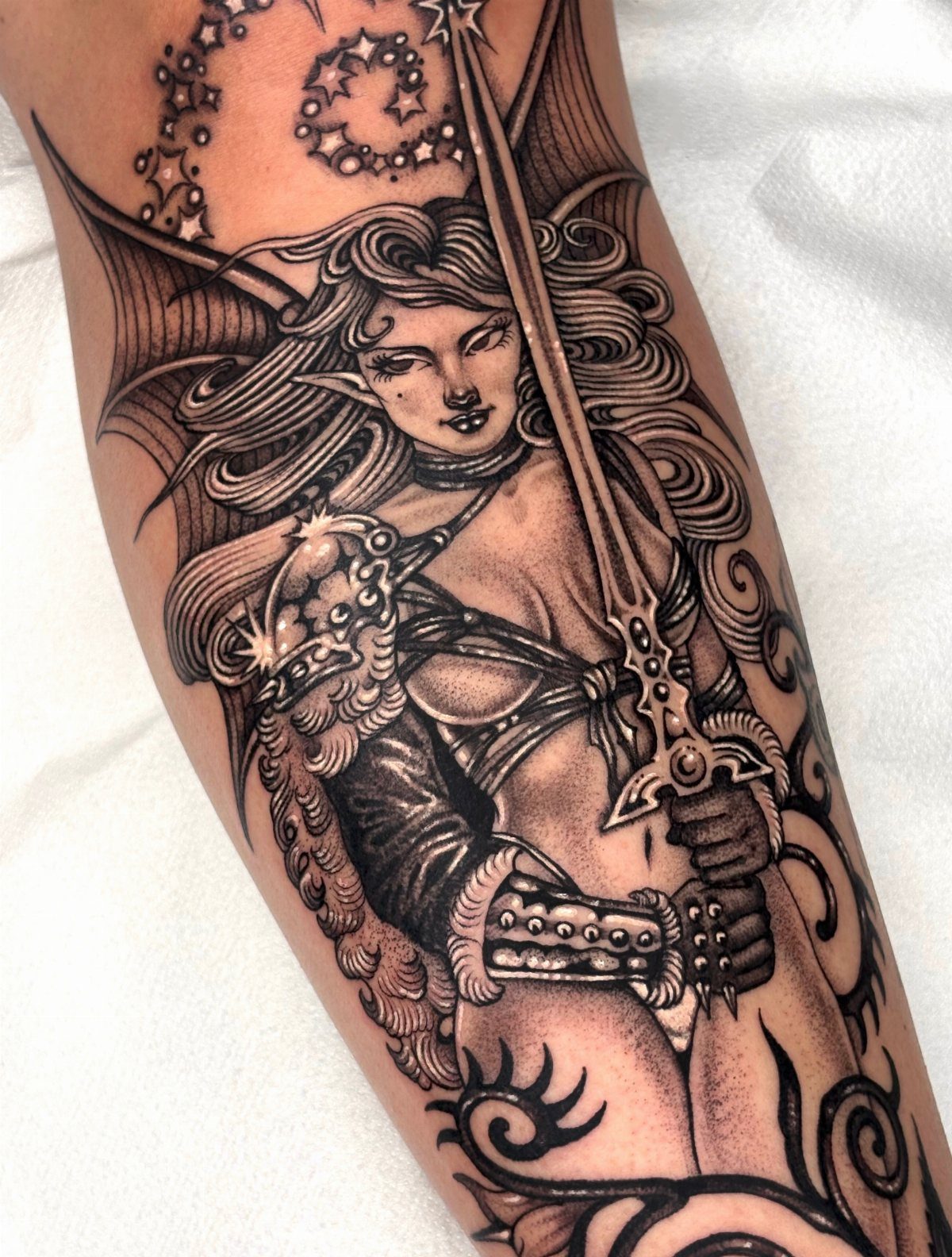
Fantasy readers will want this one: a female elf in armor, wings and a sword, wrapped in celestial swirls. It lets the strength come from story instead of history.
Black and grey suits the swirls well, since the shading can fade out into the skin. I like it on an arm because the swirls can follow the muscle and the sword can run along the length of the limb.
Have the artist plan the swirls around your arm before drawing the figure, so the flow wraps the limb instead of getting cut off.
4. Black and Grey Realism Female Warrior Tattoo
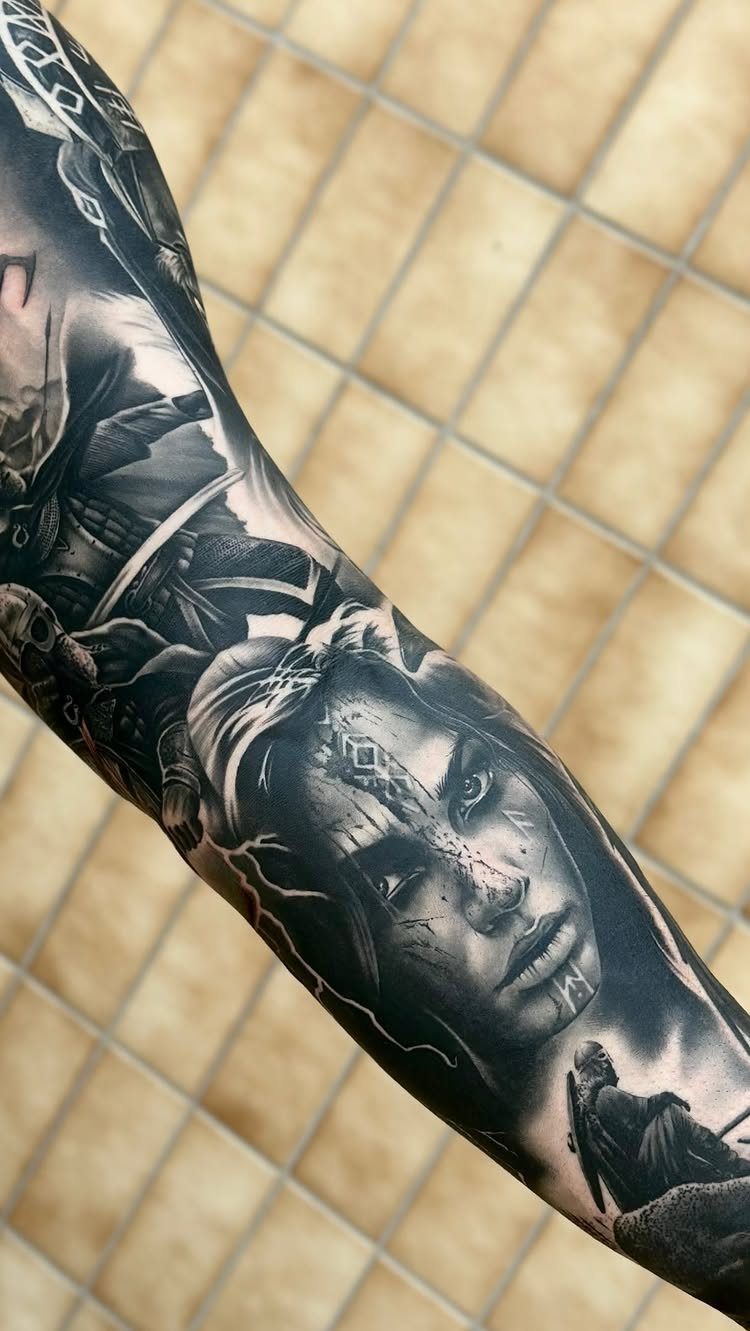
Realism puts the weight on the face. In black and grey, a female warrior’s expression does all the work, which makes this the most personal version of the idea.
Choose an artist whose portfolio is full of faces, not just armor or linework. Skin tone and smooth shading are skills, and they vary a lot between artists.
I would pick this over a cartoon style if you want a design that still looks serious years from now.
5. Archer Warrior Woman Tattoo
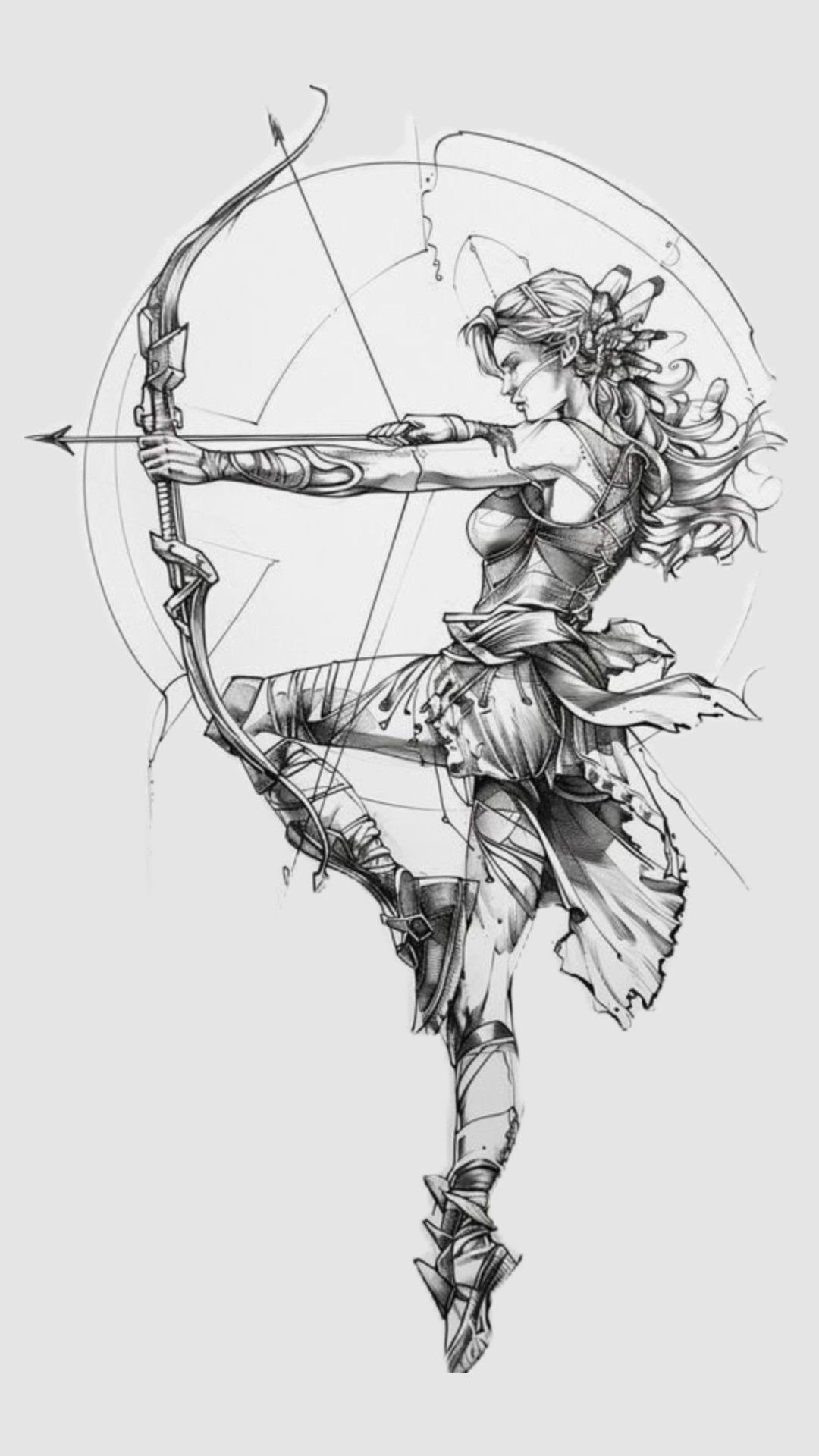
A drawn bow gives a design built-in motion: flowing hair, a leaning pose, and a line of tension from hand to arrow. That is why an archer works better than a figure standing still.
A sketch style keeps it light, with visible pencil-like strokes and plenty of open skin. I would run it vertically along a forearm or calf so the arrow has somewhere to point.
It is a good first piece because the loose linework forgives small changes in placement.
6. Kneeling Knight Female Warrior Tattoo
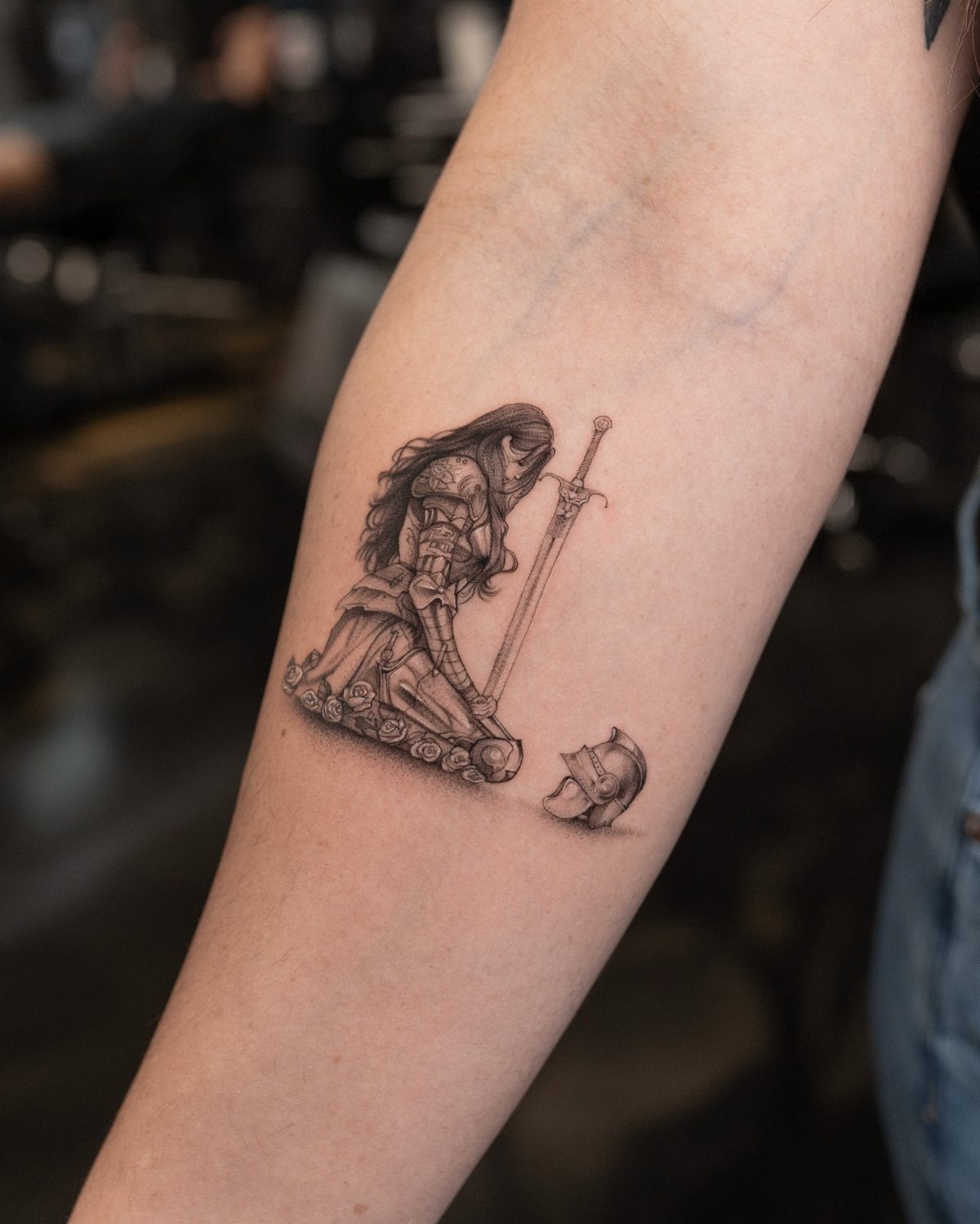
Kneeling says something a charging warrior cannot: the fight is over, or resting, and the strength remains. An armored woman with her hands on a large sword and her helmet on the ground is quiet and a little somber.
Black ink alone keeps it clean on a forearm. I would leave a little empty skin around the figure so the sword reads clearly.
This suits anyone marking a hard stretch survived, not a battle still ahead.
7. Tribal Warrior Woman with Leopard Headdress
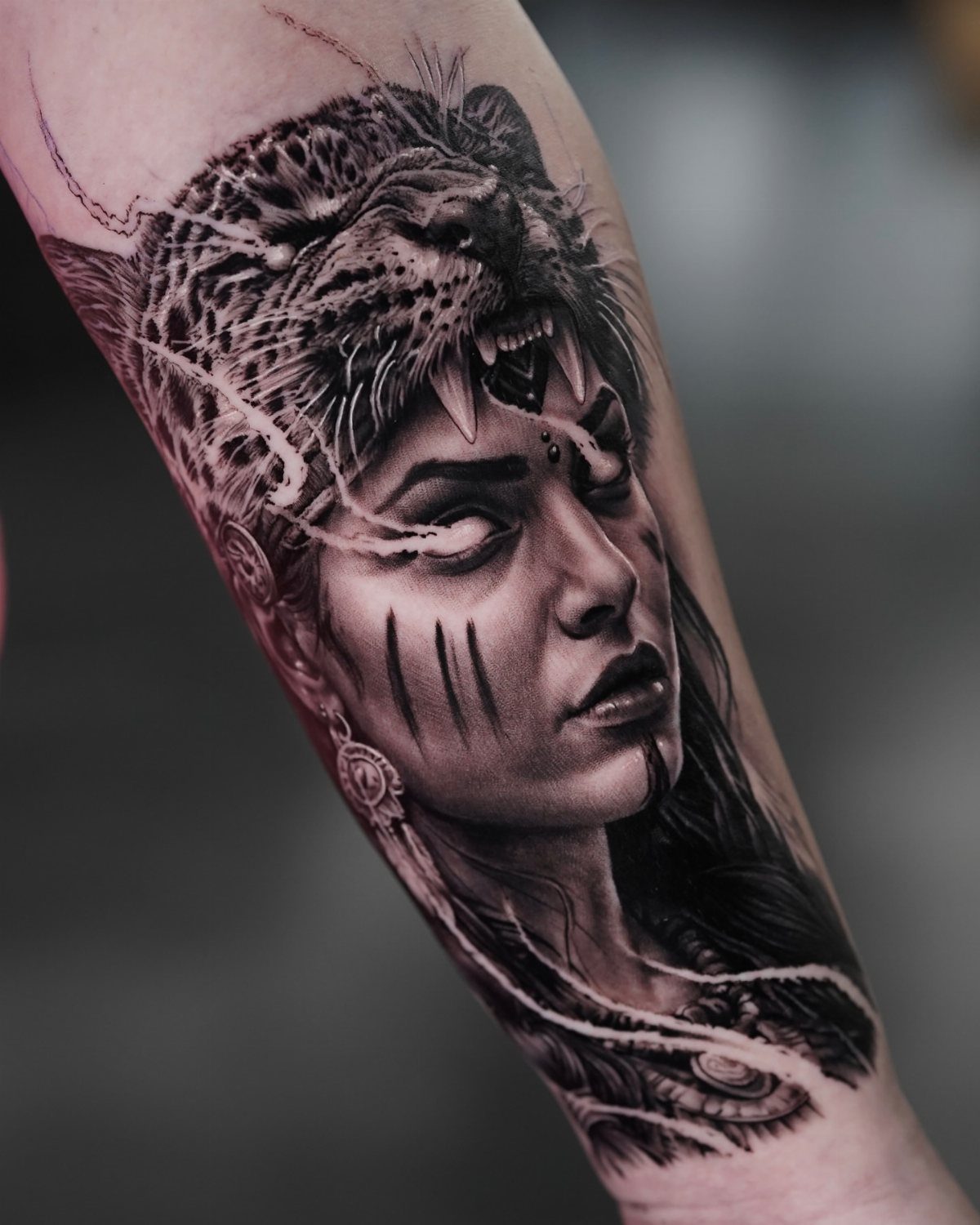
Realism on the face is what makes a leopard pelt headdress work: the war paint and the spotted fur are both texture, and black and grey handles texture better than almost anything.
An arm gives the portrait room to read, and I would keep it large enough that the fur spots don’t crowd together.
Pick an artist who shows healed portraits and animal fur in the same portfolio. Fur and skin are different skills, and this design needs both.
I like it more than a flat tribal pattern because the face carries the strength.
8. Female Warrior with Dragon Back Tattoo
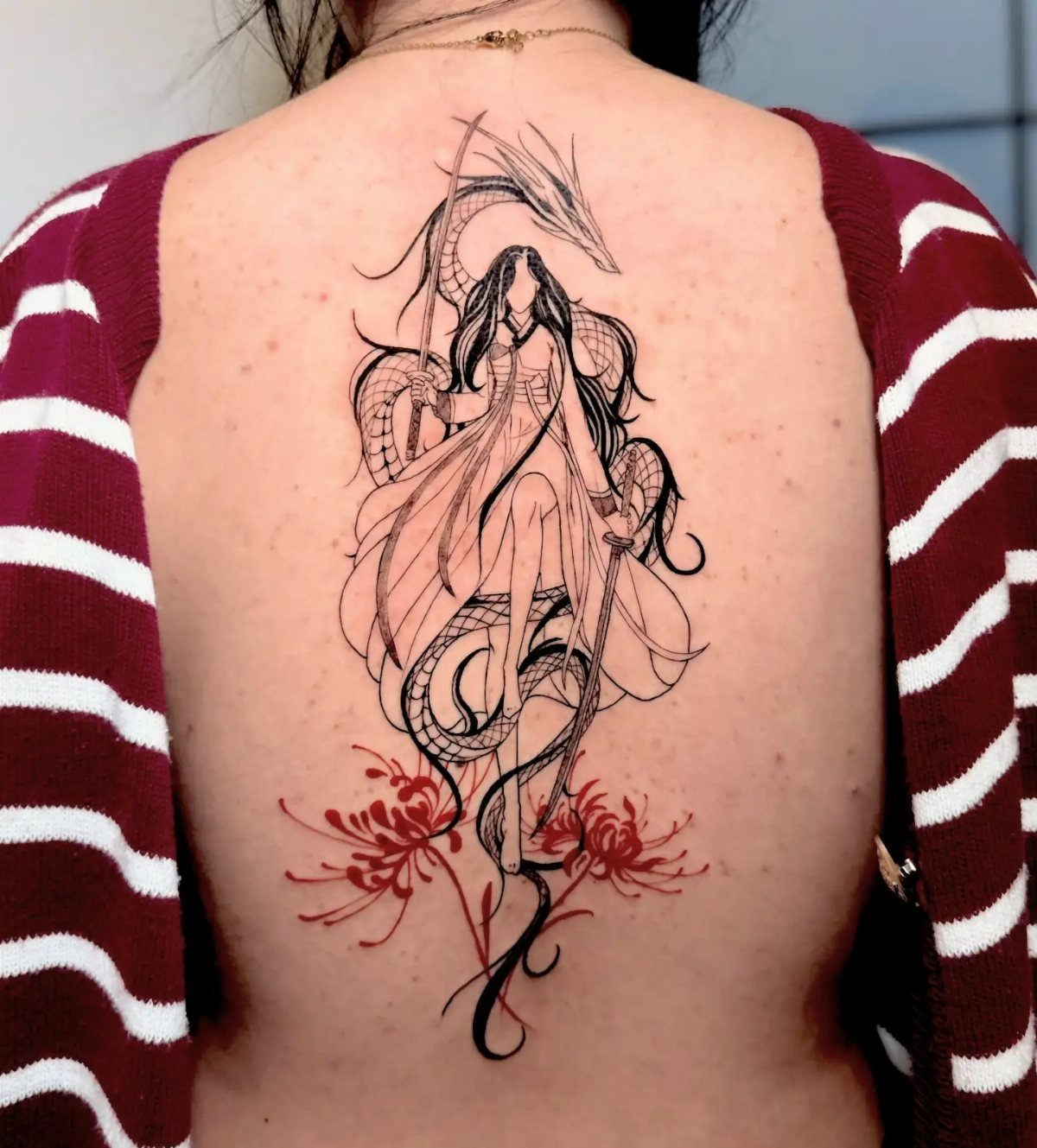
A full back gives a sword-bearing warrior and a winding dragon the length they need to coil around her. Line art keeps the whole scene light, and the red spider lilies at the bottom supply the only color.
I would keep the red to the flowers. One color against clean black linework stays sharp, and it leaves room to add more later.
Expect a large piece that takes several sessions, so cost and time run well above an arm design. Plan the dragon’s path along the spine with the artist first, then place the figure.
Tattoo Symbolism and Meaning
Warrior tattoos usually stand for power, courage and resilience, but the strongest ones point at something specific to the wearer.
A shield, a crest or an emblem on armor can carry that private meaning, such as a milestone, a recovery or a victory you earned.
Decide what the strength was for before you pick the figure. Plate armor with a phoenix on the shield tells the story of someone who has been through something and returned.
A braided headband and a Celtic knot shield say "I come from something." Those are different tattoos, even when the pose is the same.
Pick one symbol and let it do the talking. Three or four competing meanings on one piece usually read as clutter, and you will struggle to explain it later.
Tattoo Styles and Techniques
Style changes how a warrior ages and how she reads from across a room, so choose it on purpose.
Black and grey realism relies on smooth shading and contrast. A fresh realistic piece can pass for a photograph, so ask to see healed work as well as new photos.
Traditional Japanese uses bold outlines and set color rules. Heavy lines hold up well over time, and the style expects a larger area, often built around a body part’s shape.
Illustrative work sits in between. It mixes line and shading with more freedom, so it suits personal details like a custom shield or a particular pose.
Whichever you choose, look for an artist who does that style every day. A realism specialist is rarely the best choice for bold Japanese linework, and the reverse is also true.
Choosing a Tattoo Design
Start with meaning, then check it against the spot on your body. A design you love on paper can fall apart when it has to fit a calf or a shoulder blade.
Ask yourself 3 things:
- Would I still choose this subject after the novelty wears off?
- Does the style match how I dress, work and present myself?
- Is the spot one I want visible, or one I can cover?
Bring a few references, not one, so the artist can see what you actually like about them.
Pinterest boards work well for this. Expect the artist to change the design to fit your body, and treat that as a good sign.
If you are torn between 2 ideas, wait a month. The one you still think about is usually the right one.