How much arm you plan to cover decides which of these designs is yours, because price follows chair time: a small piece starts around $150–$400, a half sleeve runs 5–10 hours and roughly $800–$2,000, and a full sleeve needs 20–40+ hours and $2,000–$8,000.
The ideas run from a small Minimalist Tattoo that takes under an hour to a Japanese Sleeve Tattoo that can stretch across a year or more of sessions.
Placement matters almost as much, since the outer bicep sits around 3–4 out of 10 on pain while the inner elbow hits 8 out of 10, so check the Choosing Tattoo Placement section before you pick a design.
1. Japanese Sleeve Tattoo
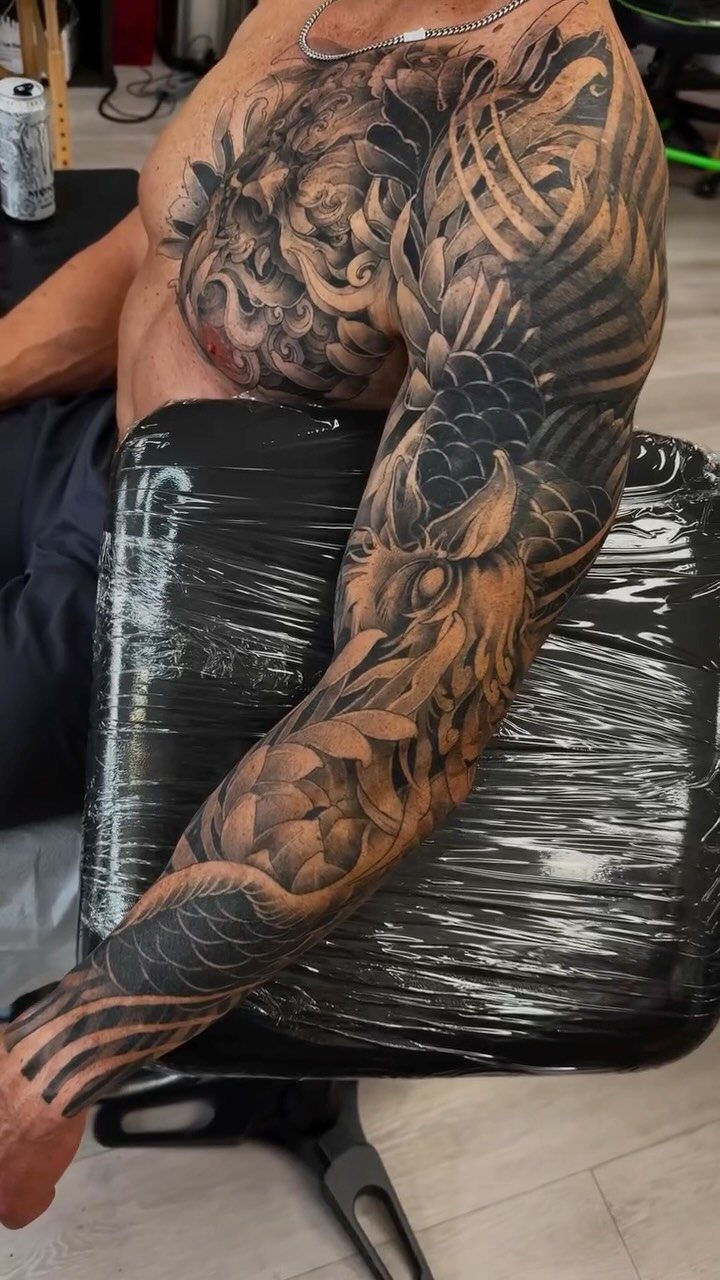
A dragon in black and grey suits a sleeve because the body of the animal can follow the natural line of the arm.
Without color, the shading carries everything, so I would pick an artist whose healed black and grey work still shows clear contrast.
A sleeve is a long project, usually done over several sessions. A full Japanese sleeve takes many sessions and often a year or more, so budget the time and money for that first.
2. Realistic Animal Tattoo
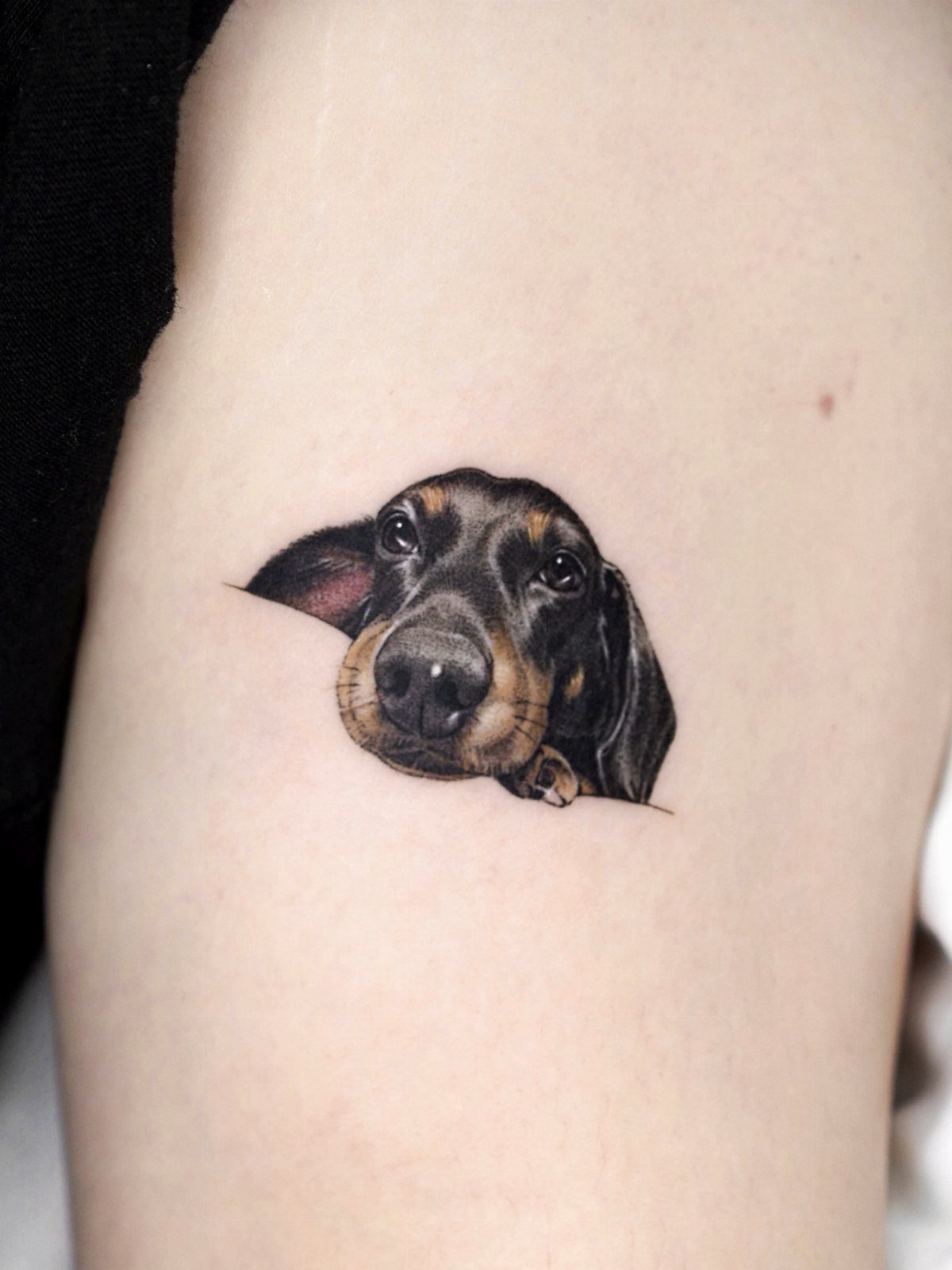
Pet portraits like this dachshund head work best when the face is the whole subject. Skin on the arm gives you a flat, visible spot for it, and pale skin shows soft gray shading well.
Bring several clear, well-lit photos of the animal, ideally head-on. I would choose an artist who does realism regularly, because a wrong eye or snout shape makes the dog look like someone else’s.
3. Landscape Tattoo Wrapping Around the Arm
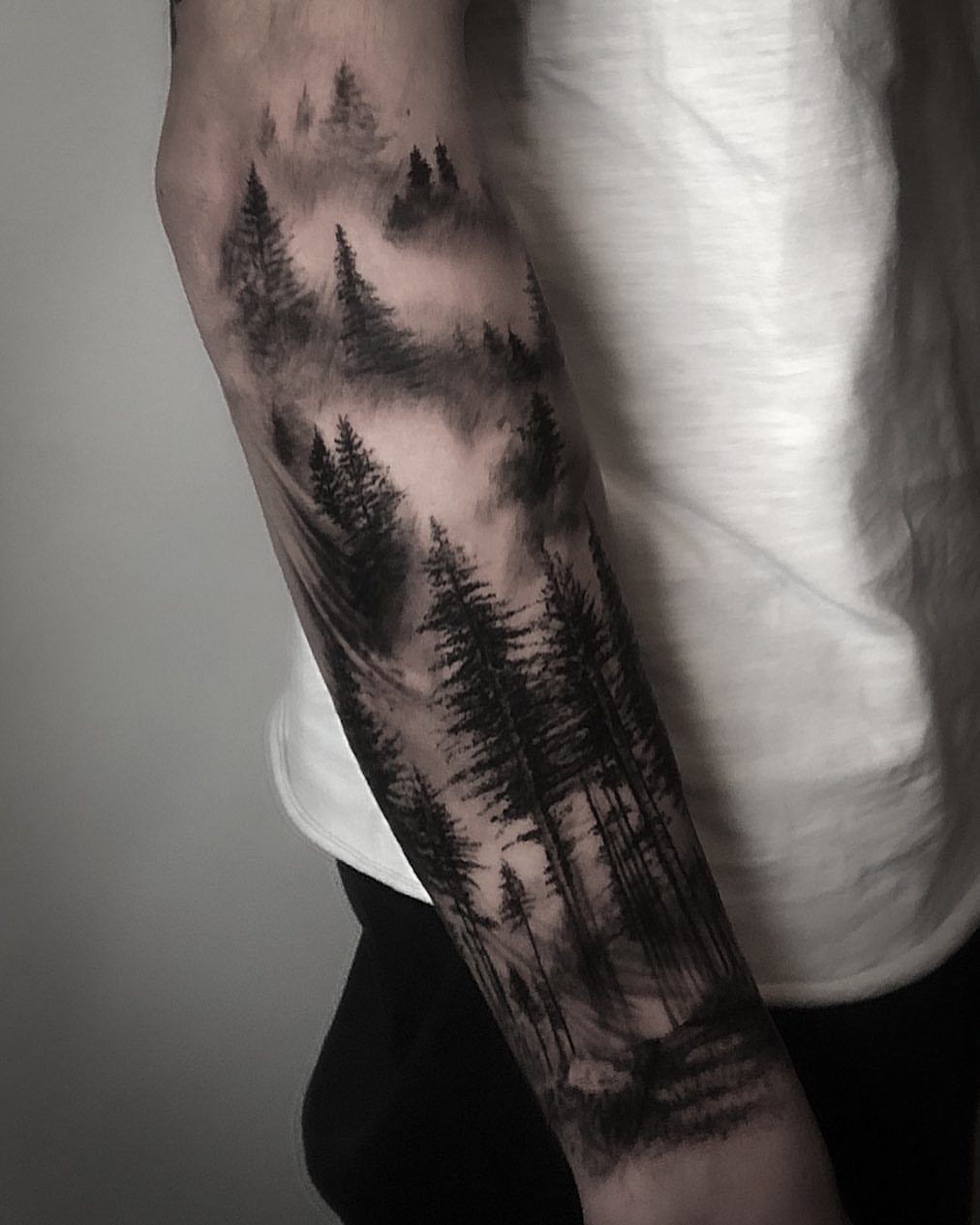
Misty pine forests wrapped around the forearm read as a small scene that shifts as the wrist rotates.
Leave some skin open in the mist areas; that bare space does the work of the fog, and a good artist will plan for it.
That empty space is what makes the trees read as distant, and I like it more than filling every inch.
4. Heart Tattoos
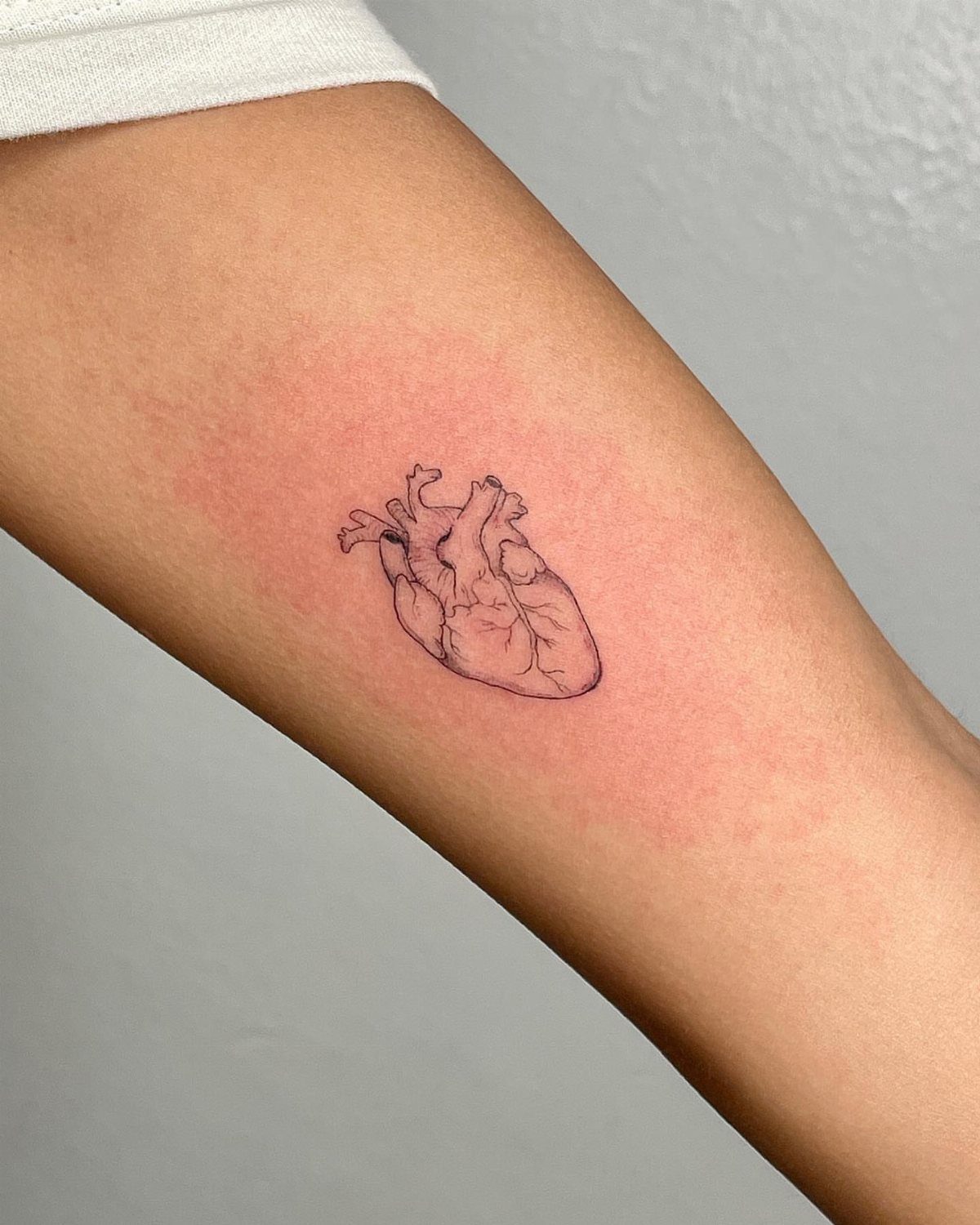
An anatomical heart in black ink is a good pick if the usual cartoon heart feels too sweet. Small on the forearm, it stays easy to see and easy to place.
Fine detail in a small piece needs restraint, so I would keep the vessels and chambers simple enough to stay readable. Redness around fresh ink is normal at first, so judge the final look once the skin settles.
5. Celtic Tattoos
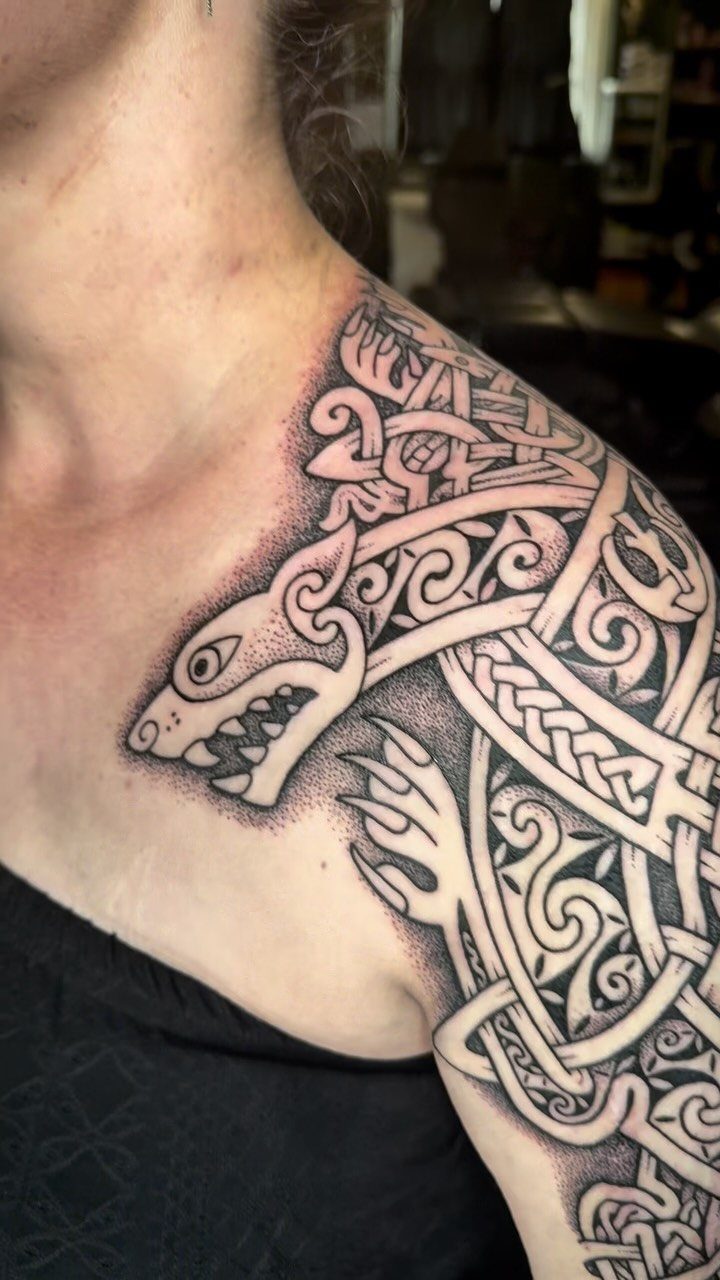
Celtic knotwork turns a wolf’s head into one continuous interlaced pattern, which gives the animal a carved, ancient look. Across the shoulder and upper arm, the curves of the muscle give the knots room to flow.
Choose black ink for crisp lines. Since the pattern depends on strands crossing cleanly, I would look for an artist with steady, even linework, because small wobbles show quickly in knotwork.
6. Minimalist Tattoos
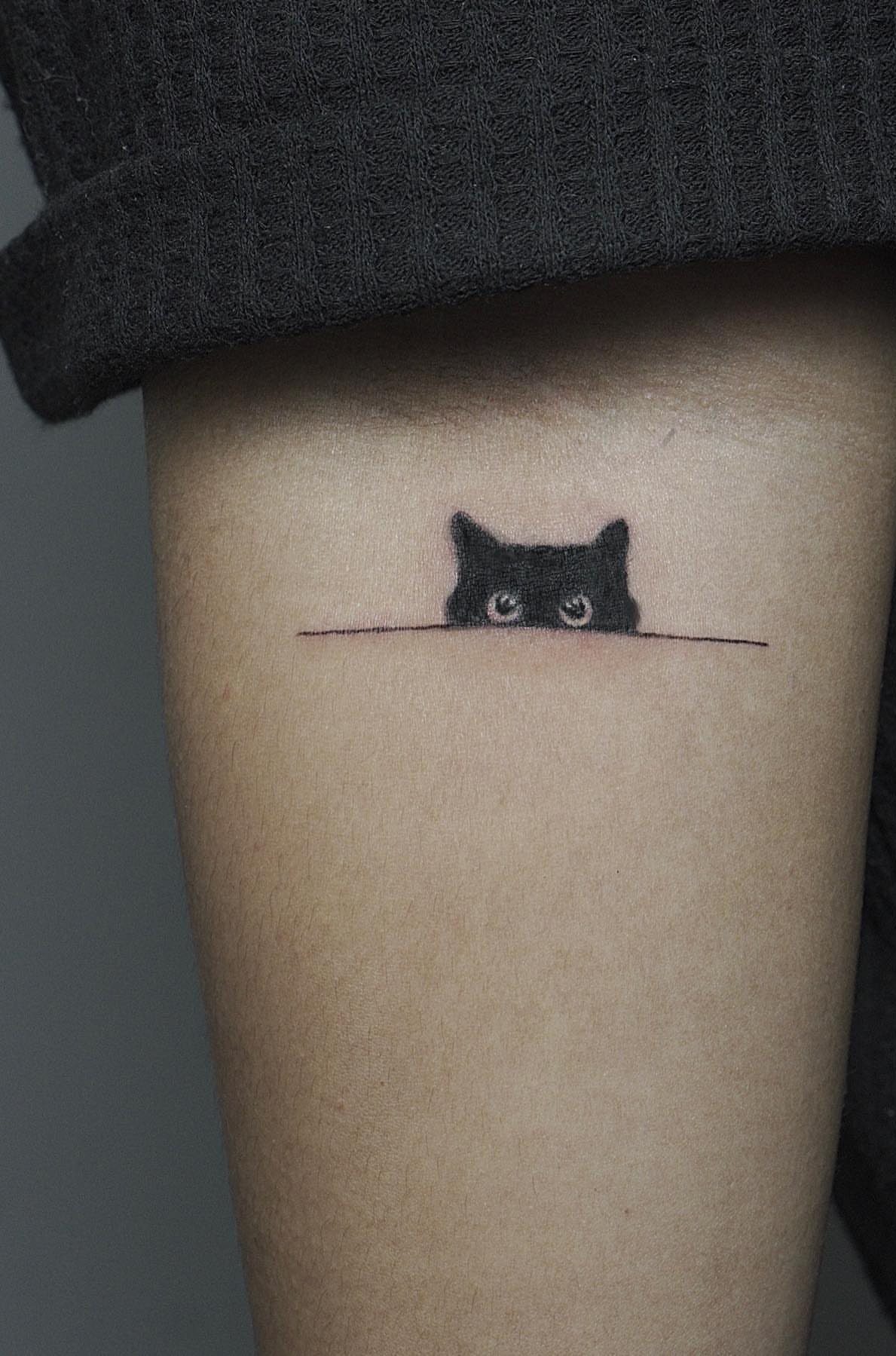
A tiny black cat peeking over a single line is a joke and a tattoo at once, and the line does half the work. It sits easily on the arm, reads from across a room, and needs very little space.
Keep the cat as a solid silhouette with minimal detail. If you later want more ink, the line can extend into a longer design, which is a fair reason to start simple.
7. Compass Tattoos
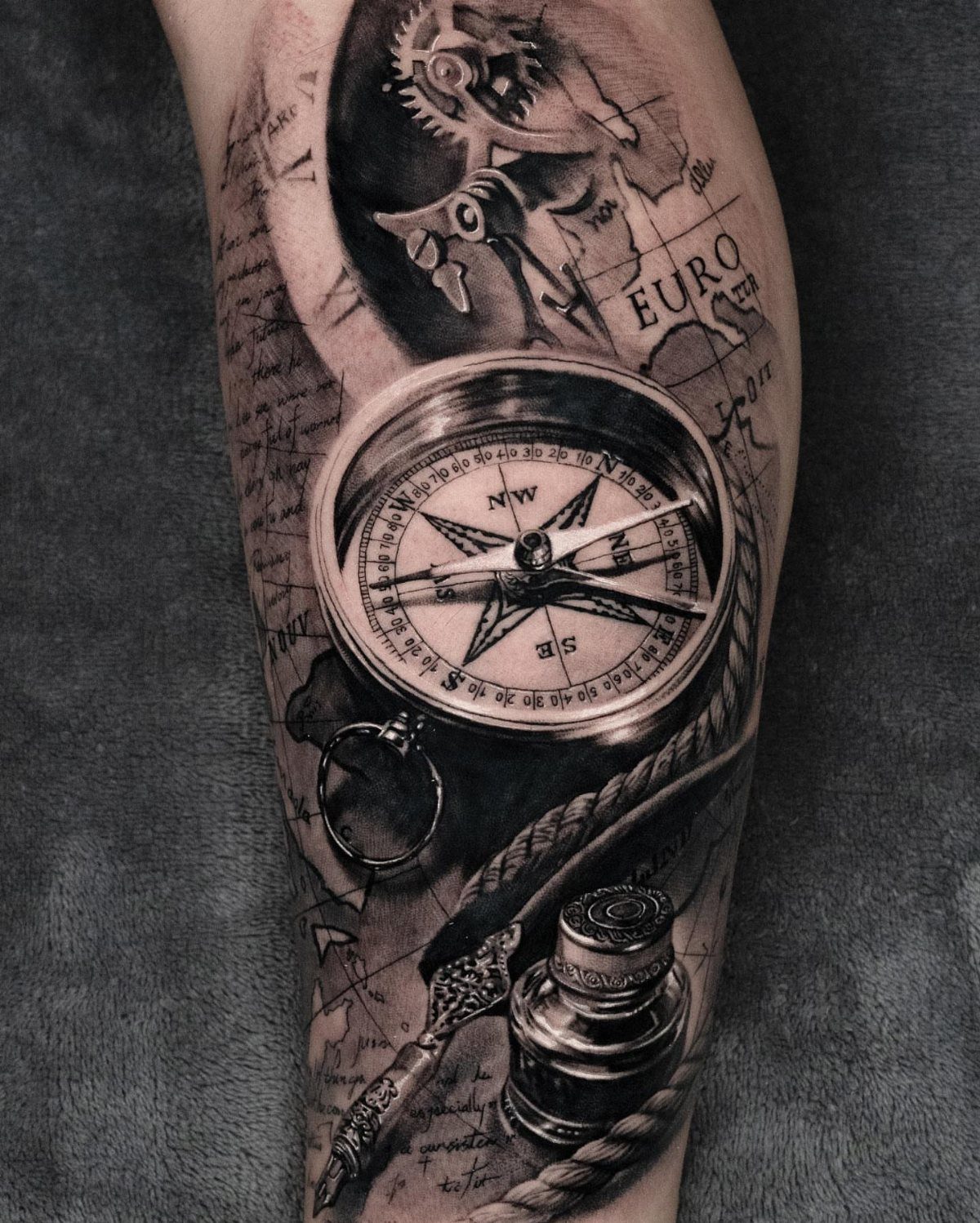
A compass is rarely alone in a good arm piece, and pairing it with a map, a quill and an inkwell gives it a story about travel and writing.
Soft gradients of black ink and gray wash hold all that detail in one calm tonal range.
Pick the spot for the compass first, then let the map and rope fill around it. I would have the map lettering drawn large enough to read once the skin ages and the lines soften.
8. Geometric Arm Band Tattoo
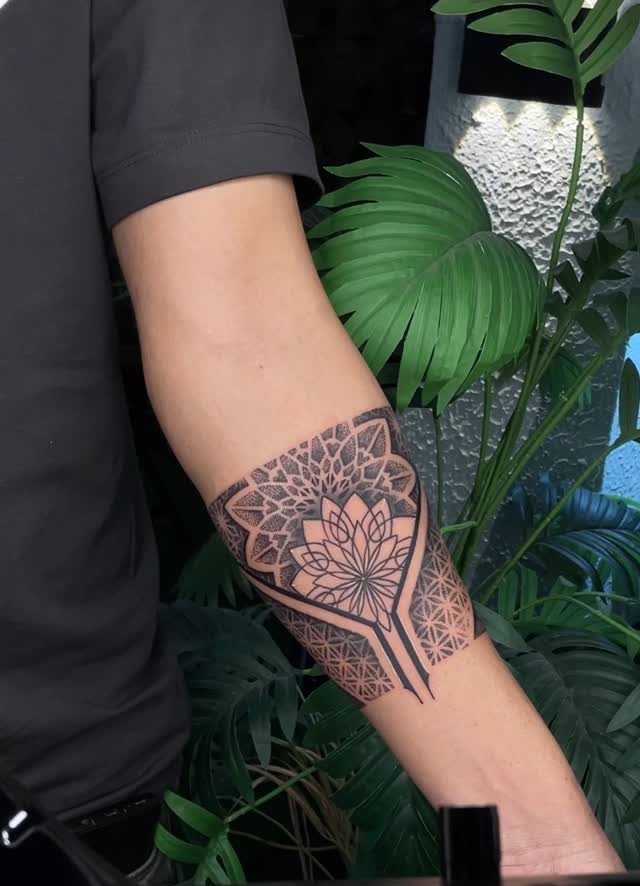
A lotus set inside geometric patterns gives a forearm tattoo both softness and structure. Black ink alone suits it, since the symmetry depends on clean contrast.
Pattern work punishes uneven lines, so I would look at healed examples of an artist’s straight edges and circles before booking.
Placing it on the forearm keeps the symmetry visible, and your own arm sits in view while you wear it.
9. Biomechanical Tattoos
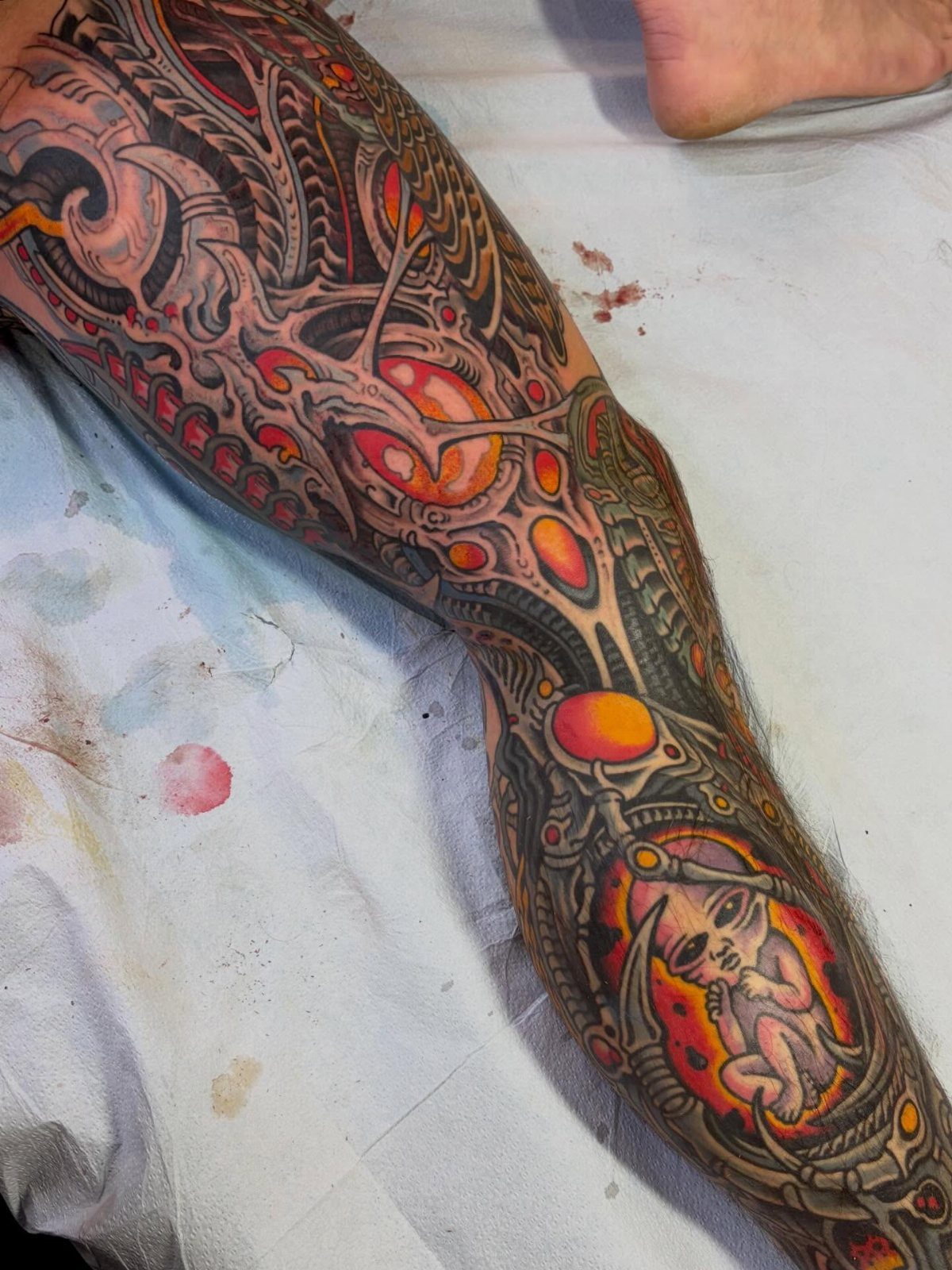
Grey mechanical parts with glowing orange circles make the arm look like it has working machinery under the skin.
The orange accents are what pull the eye, so I would keep them to a few spots and let the grey stay quiet.
Ask to see healed color work from the artist, because bright accents on a grey piece are the part most likely to be judged against the original design later.
10. Sports Team Mascot Tattoo
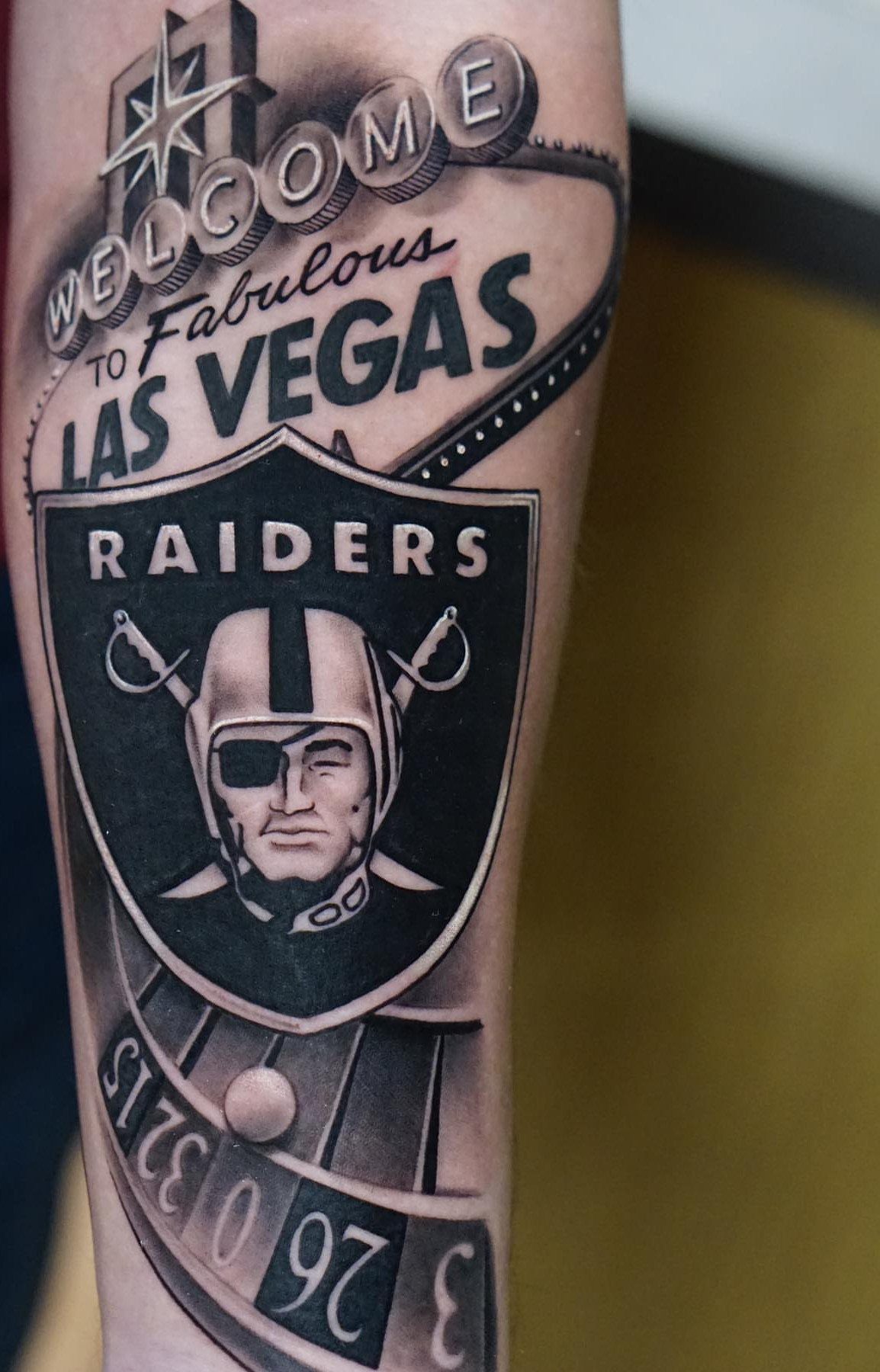
Pairing the team mascot with a personal element, like a date, a name, or a meaningful scene, is the combination I would copy, since a logo alone can feel like merchandise.
Black and grey keeps it timeless. Logos need exact shapes and lettering, so bring a clear reference image and choose an artist comfortable with sharp, even lines.
11. Cityscape Tattoos
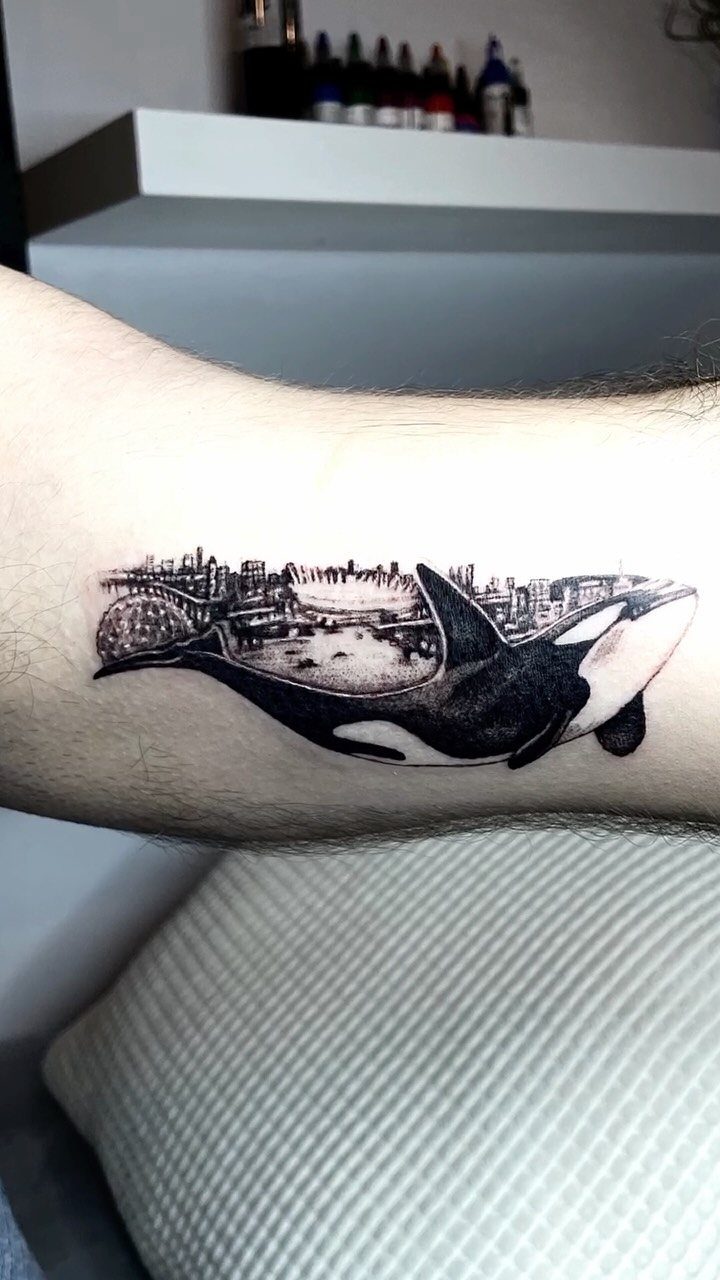
An orca with a city skyline inside its body uses the animal’s outline as a frame, and the forearm’s long shape suits the whale’s length.
I like it because the skyline gives a place a quiet role instead of a postcard one.
Keep the buildings simple and the whale’s edge bold so the silhouette still reads at a glance. Black ink gives the clearest split between the animal and the city inside it.
12. Dream Catcher Tattoo
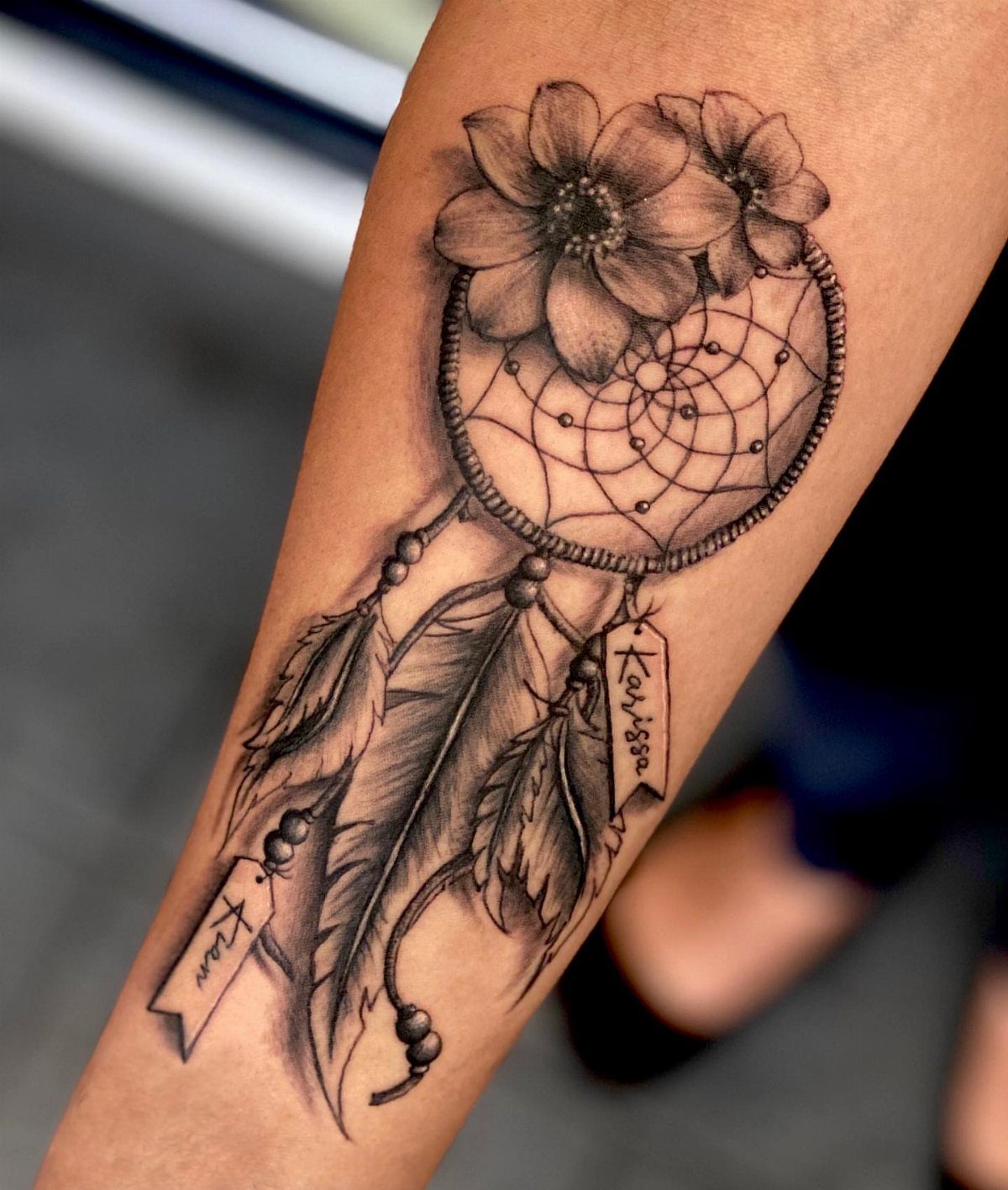
A dream catcher with flowers and feathers leaves room for personal touches, and the ribbons can carry names, dates, or initials. If you add names, settle the spelling and lettering style with your artist before the design is finalized.
Names are the one element you cannot easily change later, so confirm every letter on the stencil.
13. Crawling Snake Tattoo
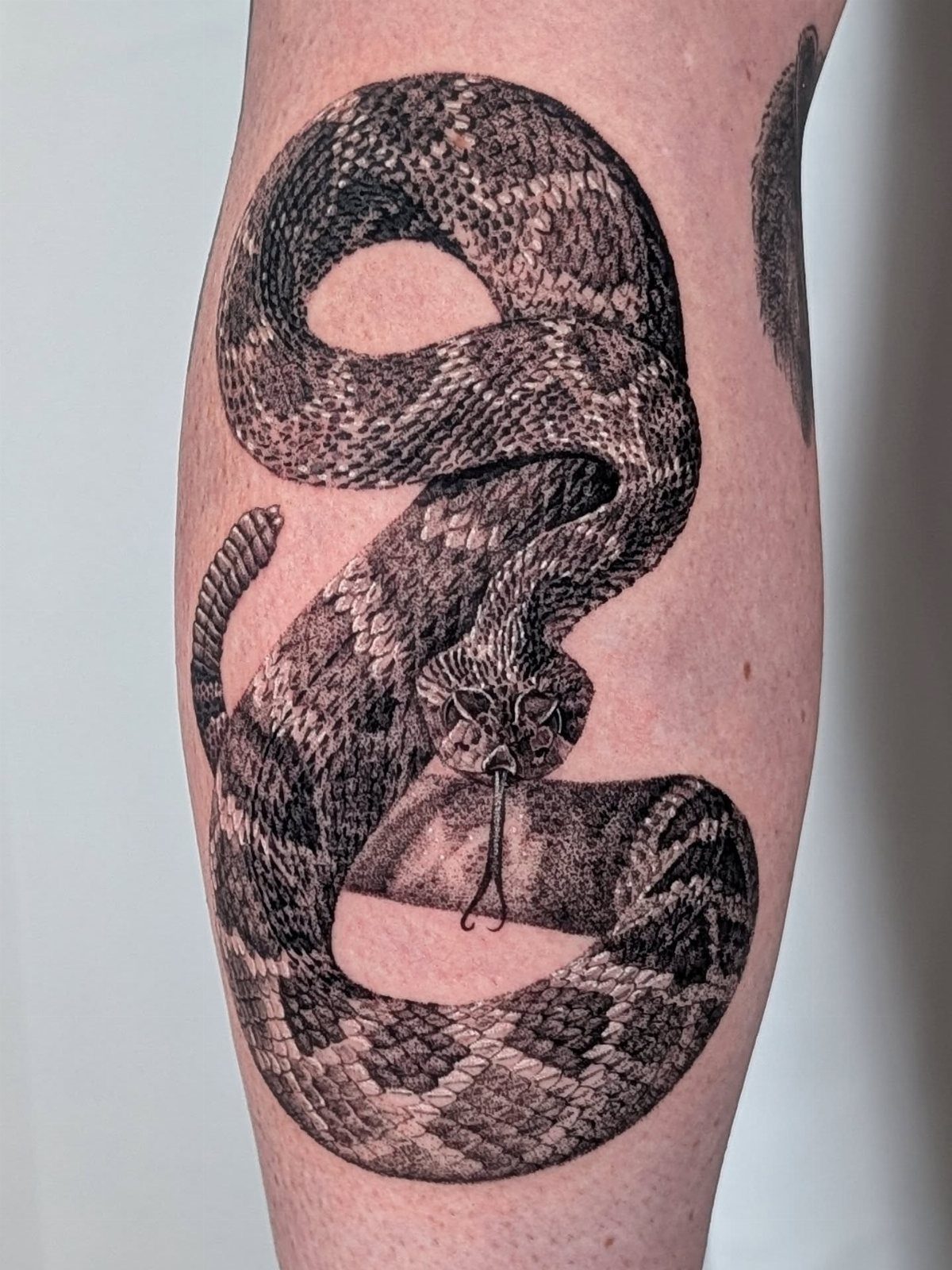
A snake coiled around the forearm works because the body can follow the arm’s round shape, so the tattoo reads from several angles as the wrist turns. Black and grey keeps the scales and the open mouth sharp.
Scale texture is the detail to protect. Clear gaps between the shading and the outline are worth requesting, since tight, dark scales blur together as the skin ages.
14. Quote Tattoos
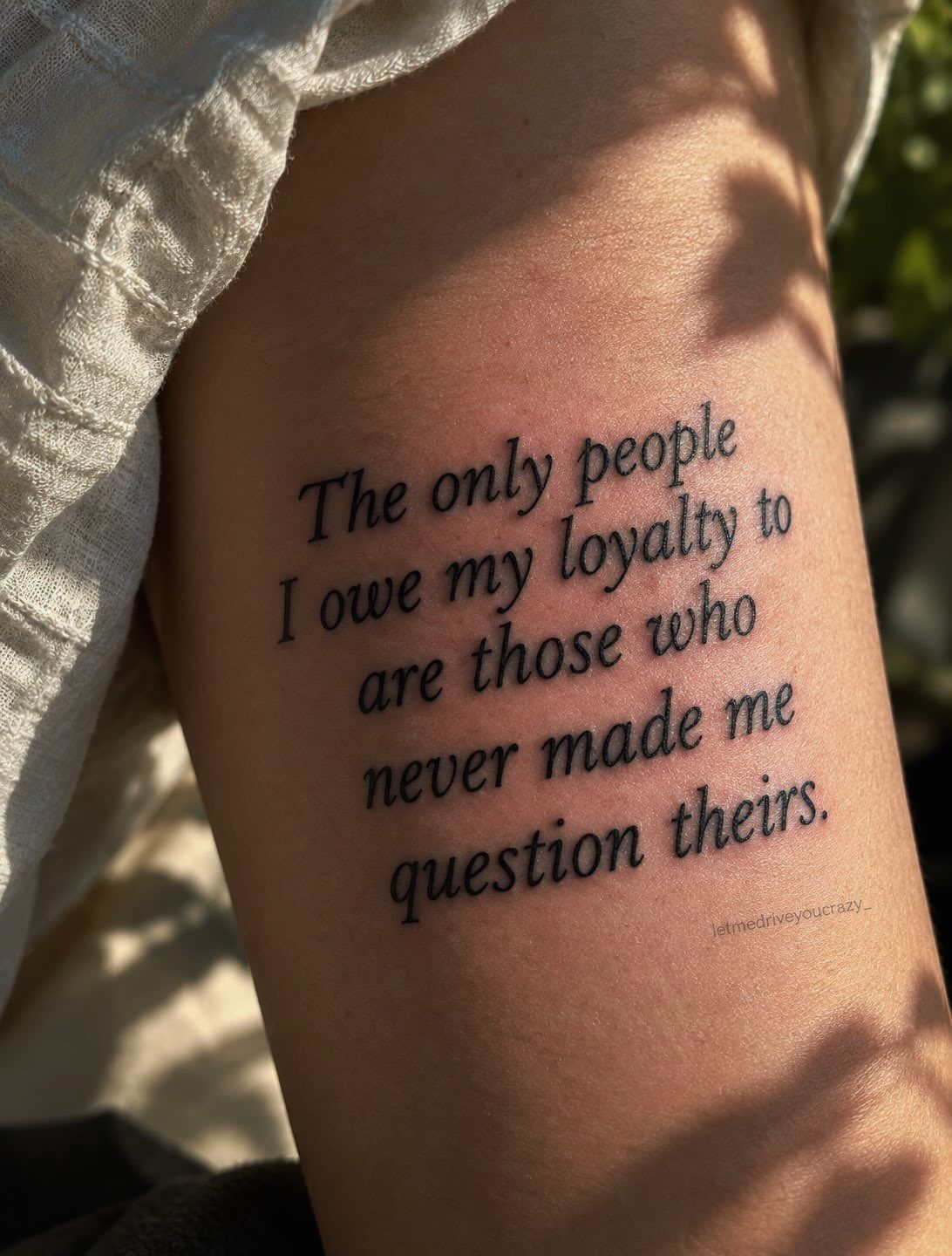
A long quote in cursive serif lettering is a tattoo you will read for years, so the wording matters more than the font. Check every word and comma against the stencil before the needle starts.
Sentences this long need room, and the forearm gives a straight, visible line for it. I would keep the letters large enough that the thin strokes of the cursive stay open as they soften with age.
15. Watercolor Floral Tattoo
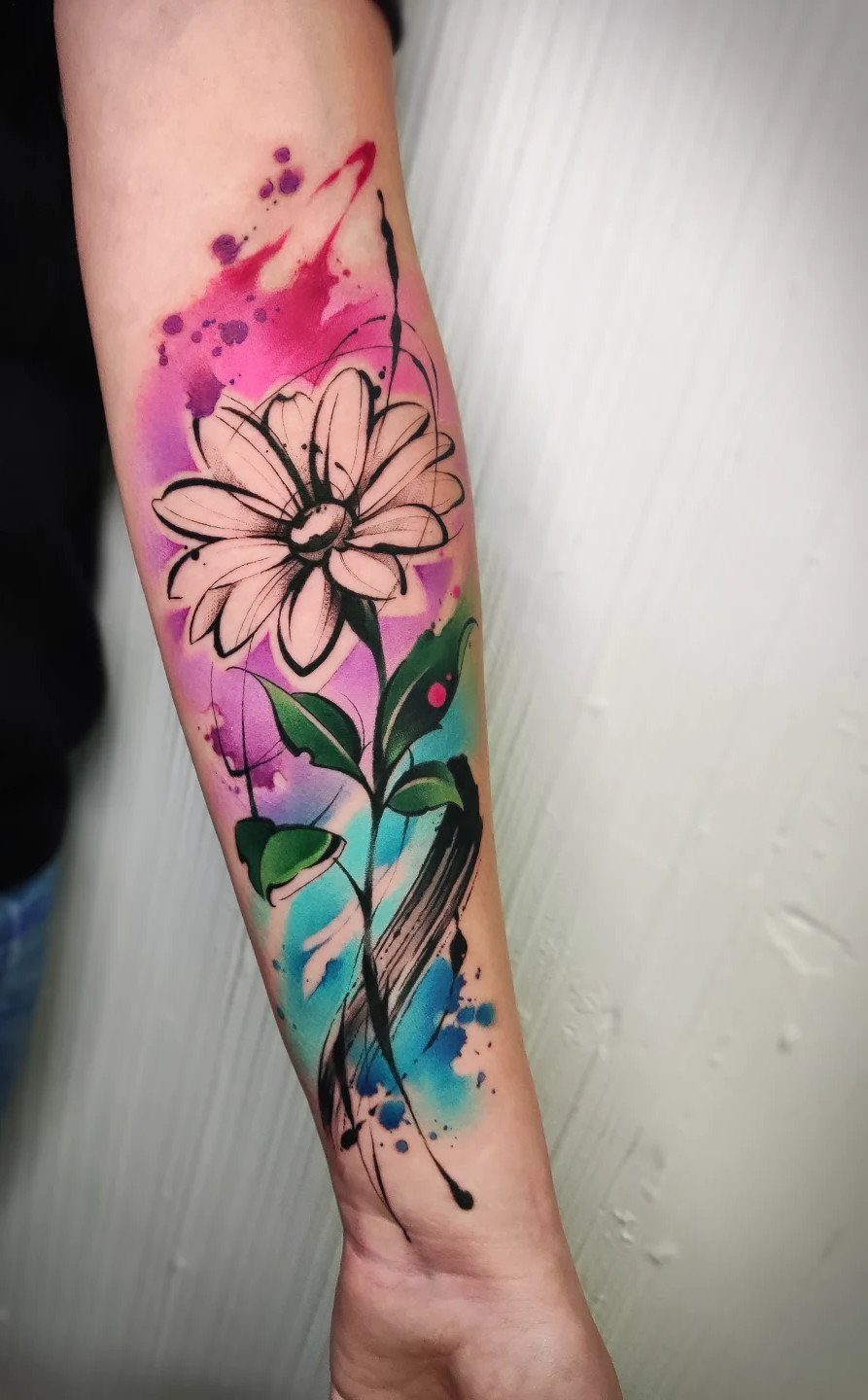
Watercolor floral work looks painted rather than inked when loose splashes of pink, purple and blue carry the shape, so the color does the soft work an outline usually would.
Watercolor work has little black line holding it together, so I would look at healed examples from the artist before booking. Ask how the color looks after the skin settles, and plan on touch-ups if the soft edges fade.
16. Polynesian Tattoos
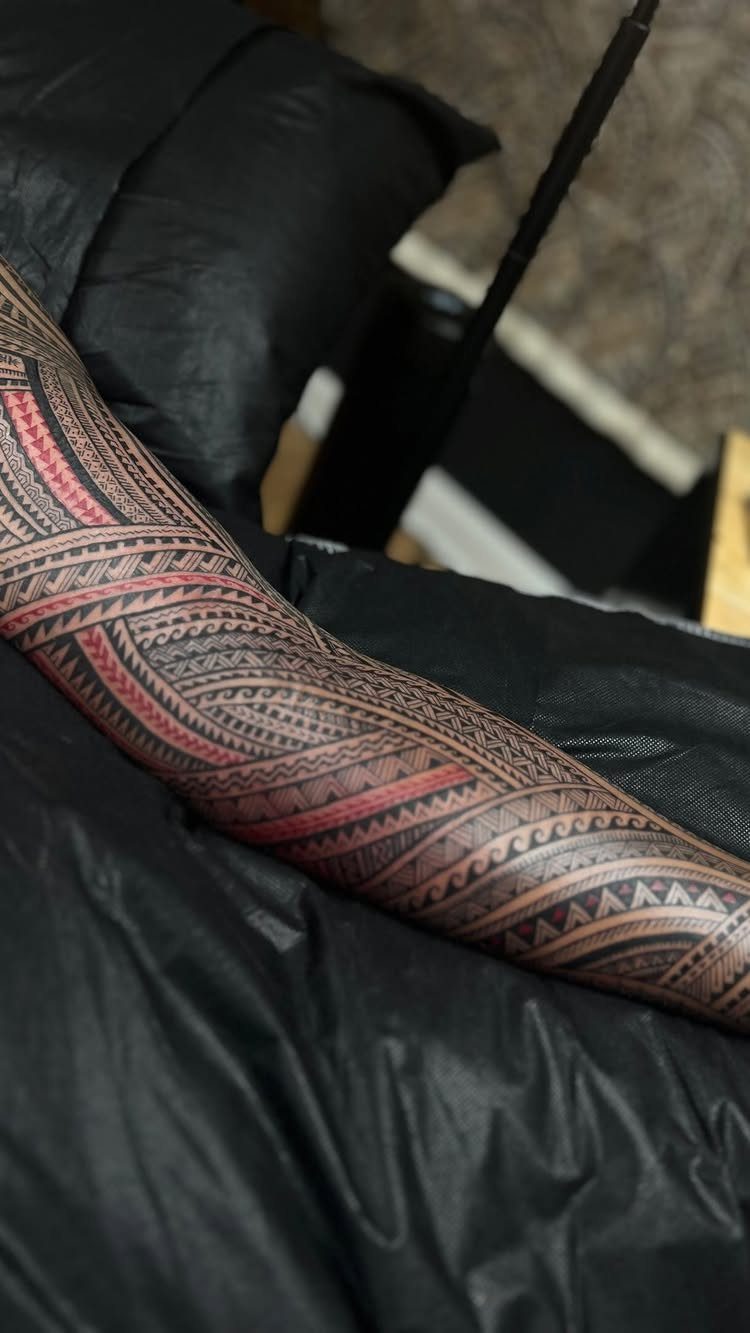
Black and red geometric patterns running the full length of the arm give a Polynesian sleeve its weight. The shapes are built to follow the muscle, so the design is planned around your arm rather than dropped onto it.
Because these patterns carry traditional meaning, I would research what each motif stands for before choosing. Pick an artist who knows the style well and can explain what they are drawing.
17. Lightning Tattoos
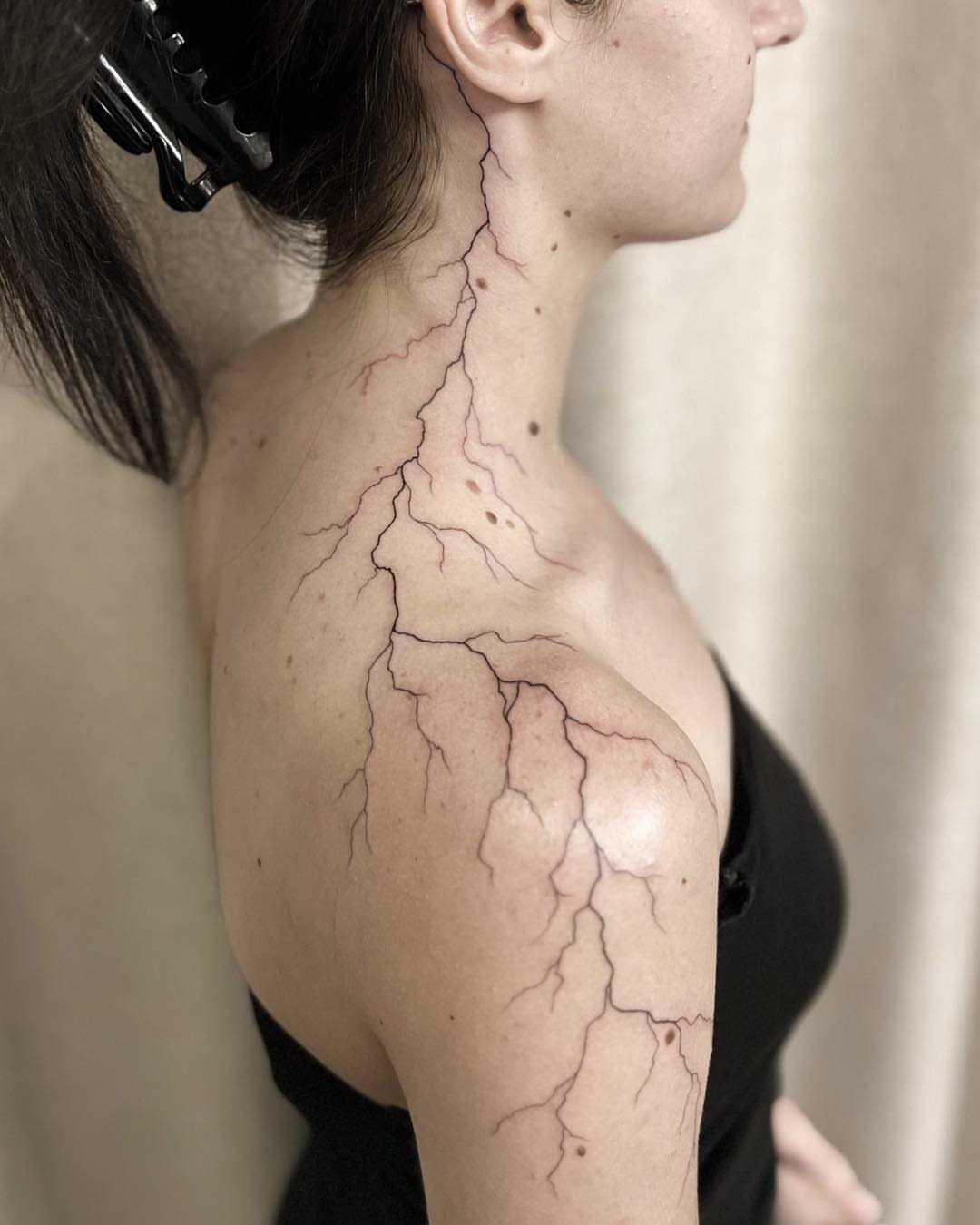
Lightning bolts that start at the neck and run over the shoulder and upper arm use the body’s own line to suggest a strike traveling downward. Black ink alone keeps the jagged edges sharp.
This is a visible placement, so I would think hard about the neck before committing. Have the artist draw the bolts on with a stencil first and move your arm around to see how the angles shift.
18. 3D Tattoos
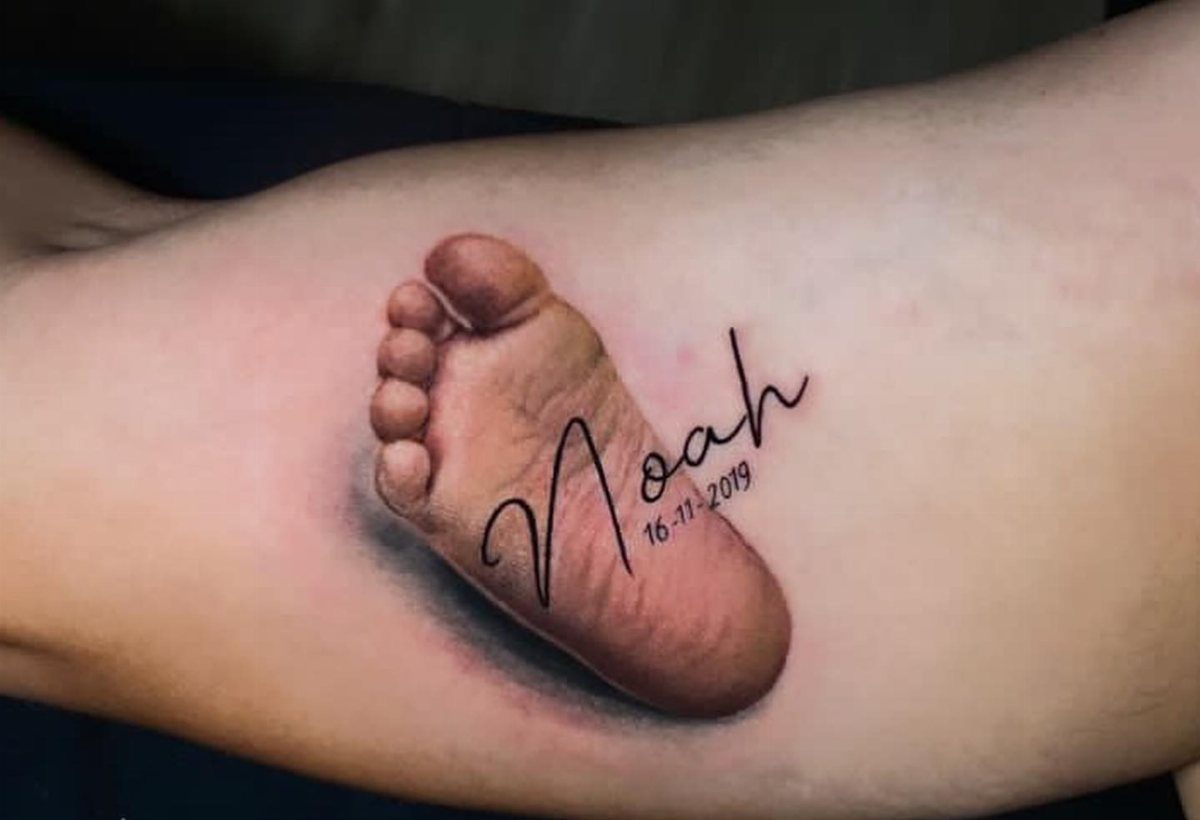
The shading and highlights create the depth, so realism skill matters here.
Spell the name and check the date format on the stencil, since the "16-11-2019" style reads day first. I would choose an artist who can show healed realism, because soft shading is what keeps the foot looking round.
19. Realistic Portrait Tattoo
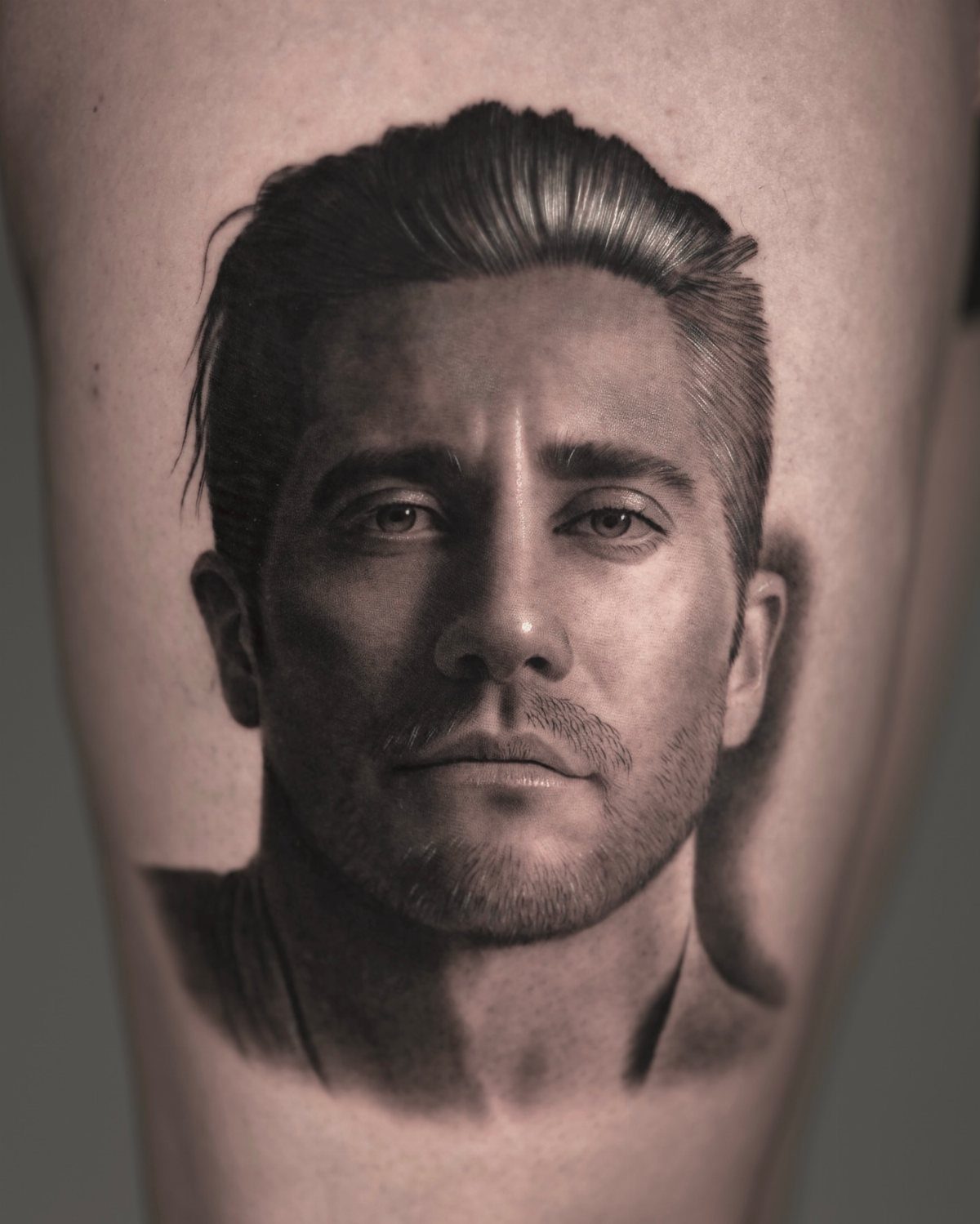
A portrait in black and grey lives or dies on the eyes and the shading around them, so I would pick an artist who does faces all the time.
A face needs a smooth, open surface, and the outer forearm or upper arm gives it one; soft gray gradients hold up well there.
Bring a sharp, well-lit reference photo. Ask to see healed portraits, because a likeness that looks right fresh can drift as the skin settles.
20. Half Sleeve Tattoo Design
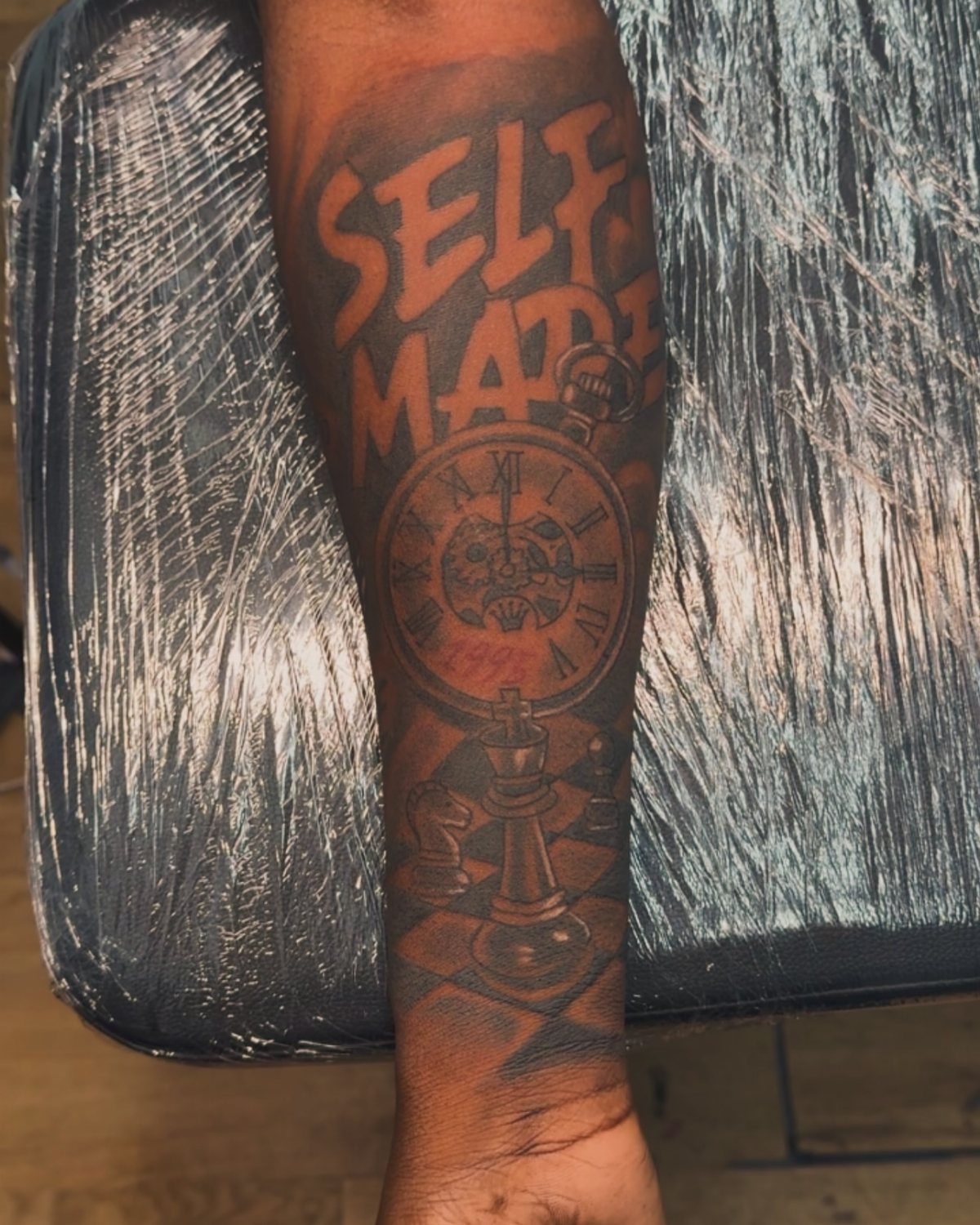
A half sleeve gives separate symbols room to share one arm, so a clock, chess pieces and a phrase like "SELF MADE" can sit together without crowding. Ending it at the elbow or mid-upper arm keeps it tidy.
Decide the lettering size first, then fit the clock and pieces around it. Keep any lettering large, because the edges blur a little as the years pass and small words go first.
21. Floral Arm Band Tattoo
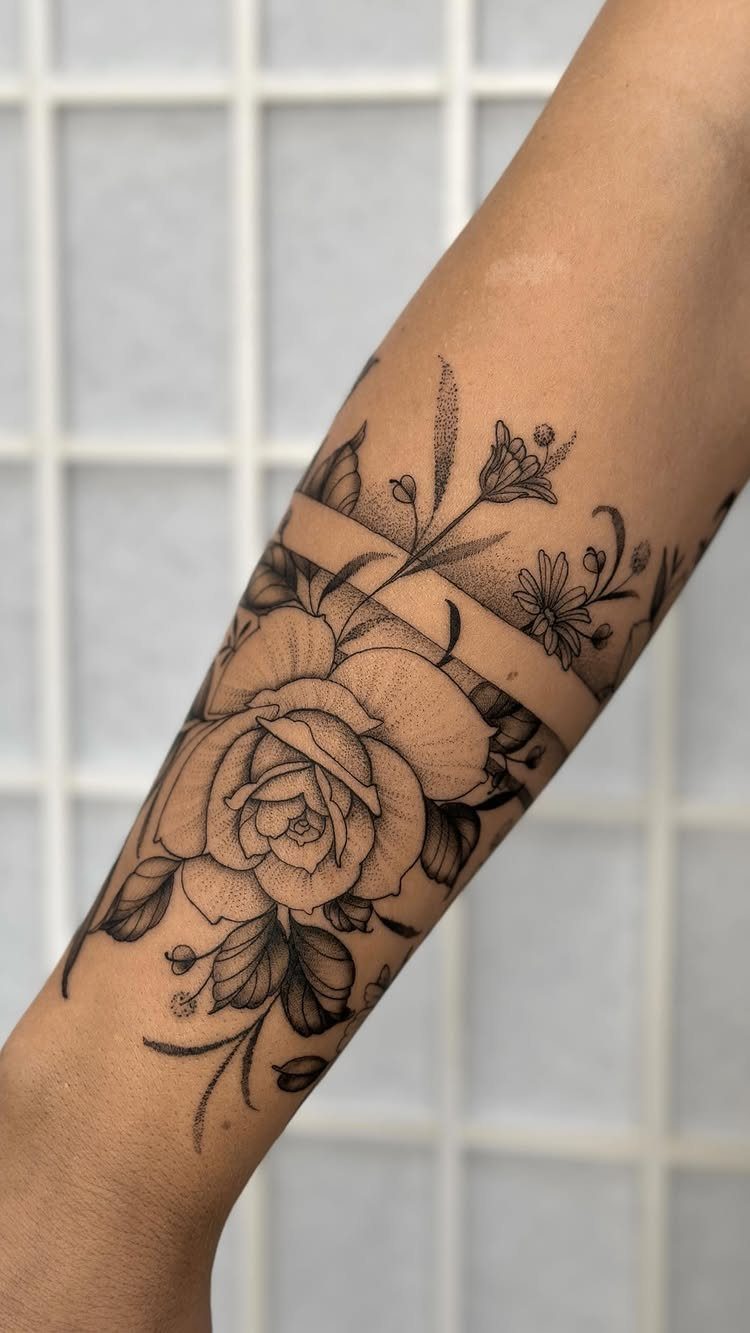
Because a band wraps the arm, a large rose in black ink works as a focal point with smaller flowers trailing around the sides.
A band should read as complete from the back and sides of the arm as well as the front.
Have the artist wrap a stencil around your arm and check it in a mirror, then approve the placement before the needle comes out.
I would check where the ends meet, since a mismatched join is the first flaw people notice in a band.
22. Skull and Crossbones
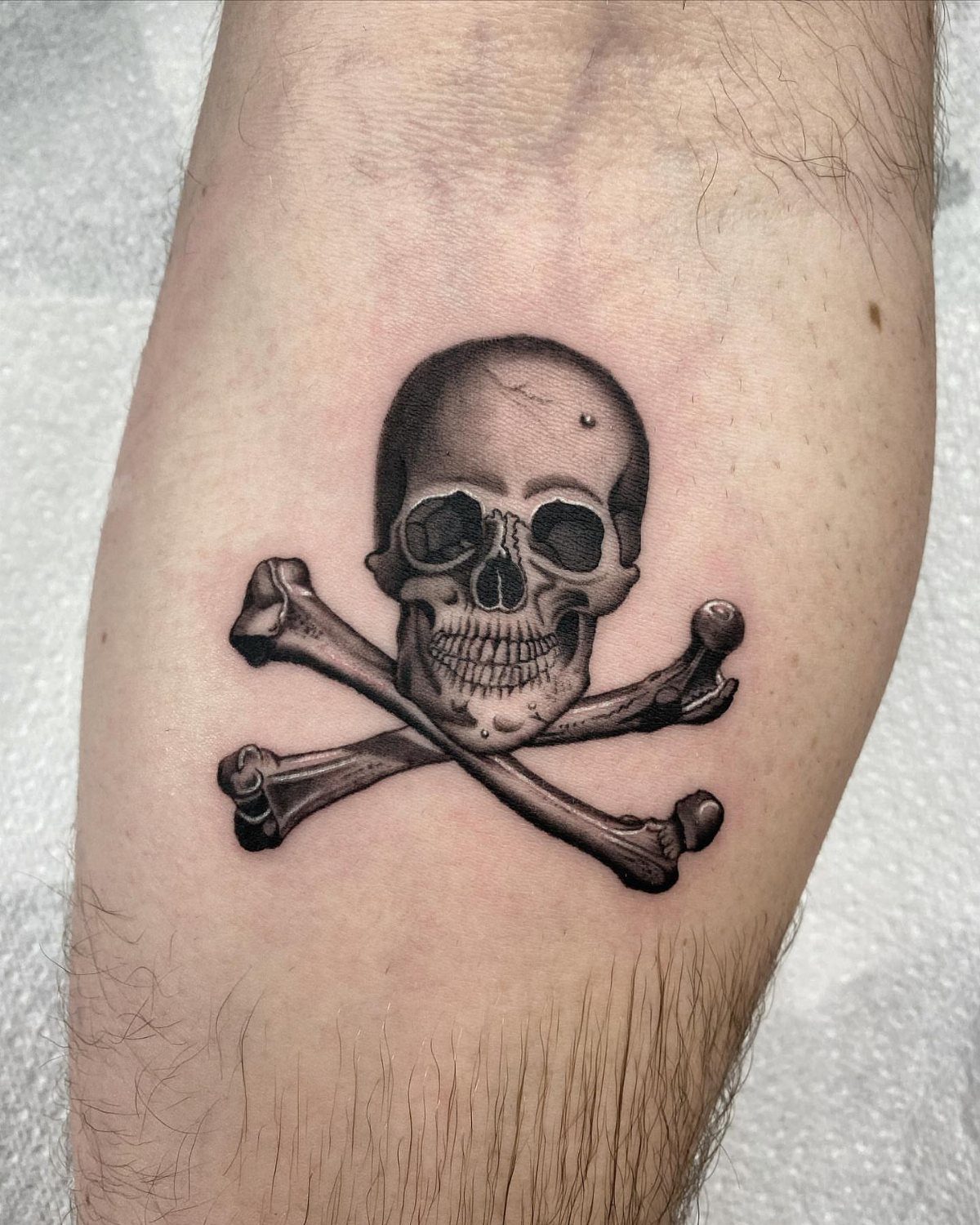
Skull and crossbones is old and familiar, so the shading is what makes one yours. Realistic gray work gives the bone texture depth and keeps the forearm piece from looking like a flat sticker.
I would pick an artist with healed realism in their portfolio, since smooth gradients are the hard part. Keep the crossbones bold enough to hold their shape as the skin ages.
23. Angel Wing Tattoo
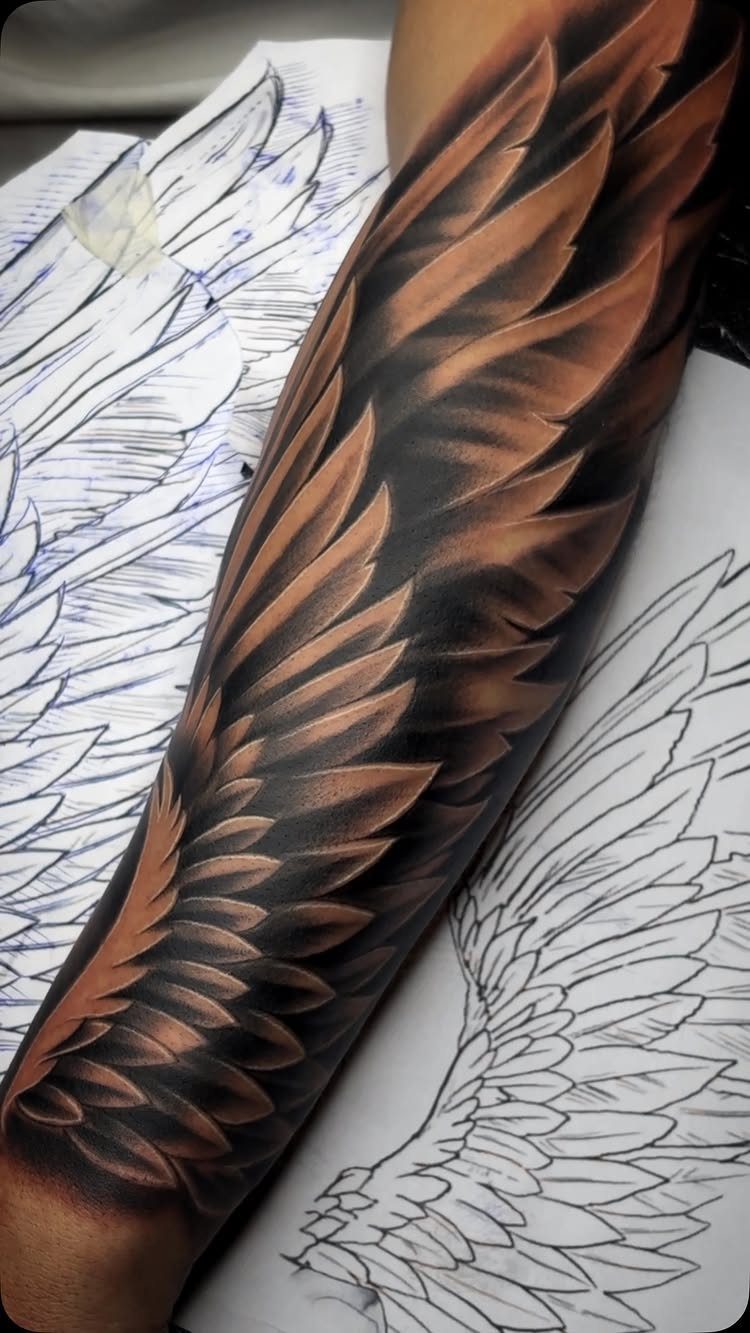
Detailed feathers need room, and the arm lets a wing stretch out in layers, with black and gray shading building the depth. A sketch beside the stencil is a good sign the artist plans the piece before starting.
Ask for the feather rows to be separated by clear gaps of skin. I prefer that over packing every inch, because tight dark feathers blur together over time.
24. Hummingbird Tattoo
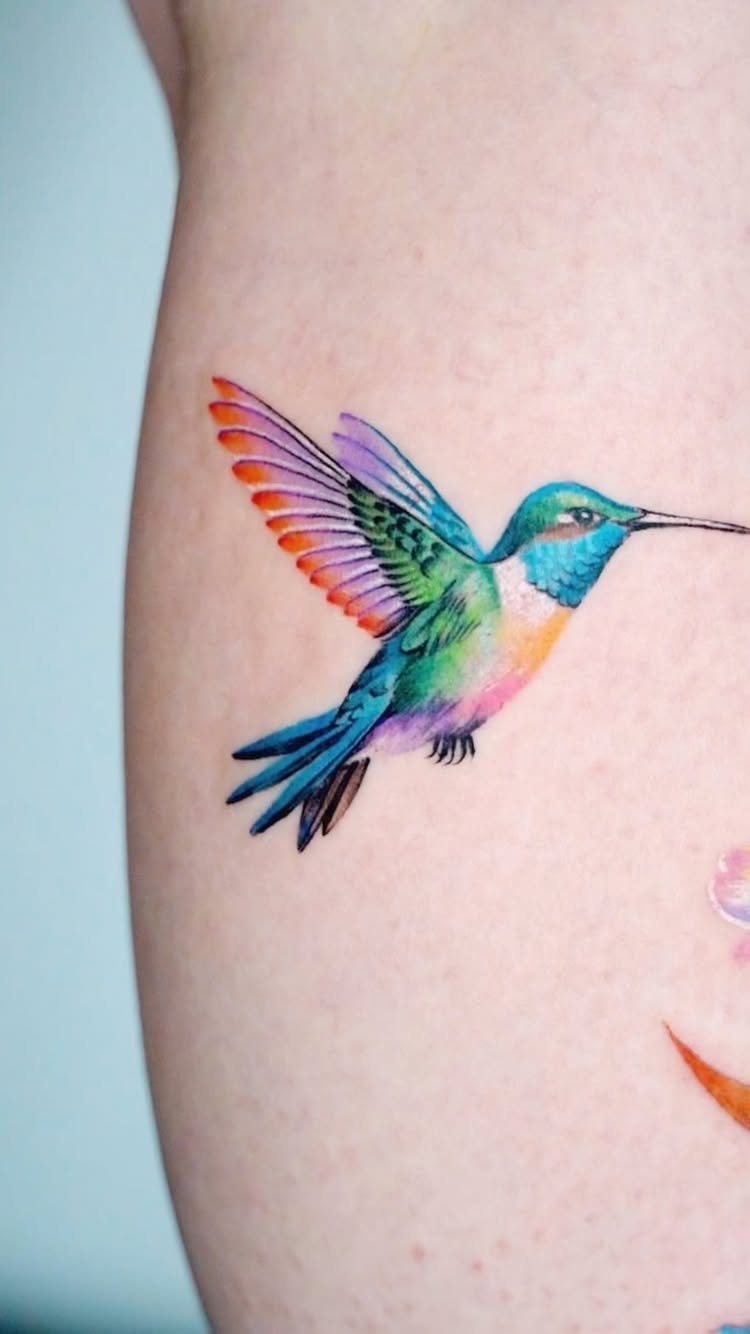
The arm suits a bird caught mid-flight, with room for the wings to spread.
Color is the part to vet: look at healed examples from the artist, because bright tones soften with age. I would keep the bird fairly large rather than tiny, so the feather detail stays readable.
25. Rose Tattoos
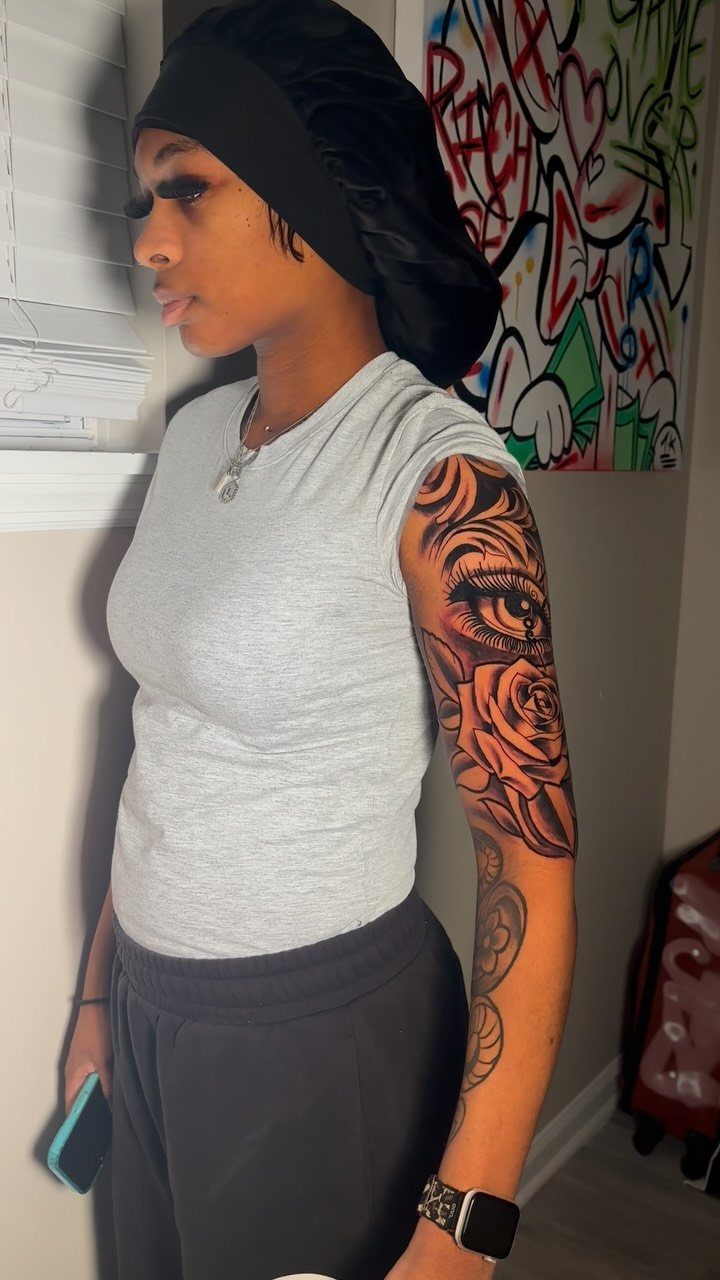
A rose paired with a realistic eye puts two detailed subjects on one upper arm, and the contrast between soft petals and a sharp gaze is what makes it memorable.
The upper arm has the flat, broad surface a piece this size needs.
Both parts depend on smooth shading, so I would book an artist who can show healed realism, since eyes and petals both go muddy when the gradients are rushed.
A rose needs room: if the petals sit too tight, the shading blurs together over the years and the flower turns into a dark blob.
If you want a half sleeve later, the design can grow downward from here.
Choosing Tattoo Placement
Placement sets the pain level and how visible the tattoo is, so choose it before the design. The outer bicep is the easiest spot for a first piece: thicker skin and a layer of muscle put it around 3–4 out of 10.
The inner forearm is flat and taut, which suits fine detail, but it climbs to about 6 out of 10 because the skin is thinner and the ulnar nerve runs close by.
The inner elbow, the ditch, is the worst choice at 8 out of 10. The skin folds constantly there, so healing is hard and ink tends to fall out or blur.
On the bicep, skip perfectly straight lines. Muscle moves, and a rigid design warps with it on every flex, so I’d pick artwork whose lines run the same direction as the muscle fibers.
There are wrists, elbows, biceps, shoulder caps – all perfect places for a tattoo. They also offer the opportunity to play with scale – both big, eye-catching and small and subtle tattoos look great on arms.
Tattoo Healing Time
The top layer looks healed in 2–3 weeks, yet the deeper skin underneath keeps settling for 3–4 months. Judge the final look after that, not at week three.
While an inner bicep tattoo heals, your torso keeps brushing against it. That friction can pull scabs off early, so wear loose clothing and use a breathable barrier.
The outer arm gets a lot of UV. Fine line and watercolor pieces can fade a lot within 3–5 years unless you wear SPF 50 faithfully, and bold traditional work holds up the longest.
A line that looks straight with your palm up can curl into a spiral palm down, so I’d check the stencil in both positions before booking.
Tattoo Cost Estimates
Price follows chair time, so coverage is the number to decide first. An arm band runs 2–4 hours and $300–$800, and a mismatch of even a millimeter in the alignment shows.
Plan on 5–10 hours and roughly $800–$2,000 for a half sleeve or a single panel. It also lets you live with visible ink before you commit to more.
A full sleeve needs 20–40+ hours and $2,000–$8,000. Small pieces start lower, around $150–$400.
If you might build a sleeve over time, say so at the first consult. Leaving bare skin around the edges lets later pieces join in smoothly, so the arm doesn’t end up looking pieced together.
Frequently Asked Questions
What do arm tattoos mean?
Arm tattoos mean whatever the wearer attaches to them: personal stories, beliefs, or simply a look they like.
Polynesian patterns and other traditional motifs have specific meanings and cultural owners, so look up what each element stands for before you commit to it.
A name, date, or quote is the most personal kind, and it is also the hardest to change later, so check every letter on the stencil.
What are the different types of arm sleeve tattoos?
The main types are the arm band, the half sleeve, and the full sleeve.
An arm band wraps the arm and takes about 2–4 hours. If you might build toward a full sleeve over time, tell your artist at the first consult so they leave bare skin at the edges for later pieces to join.