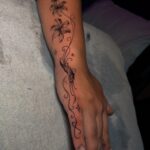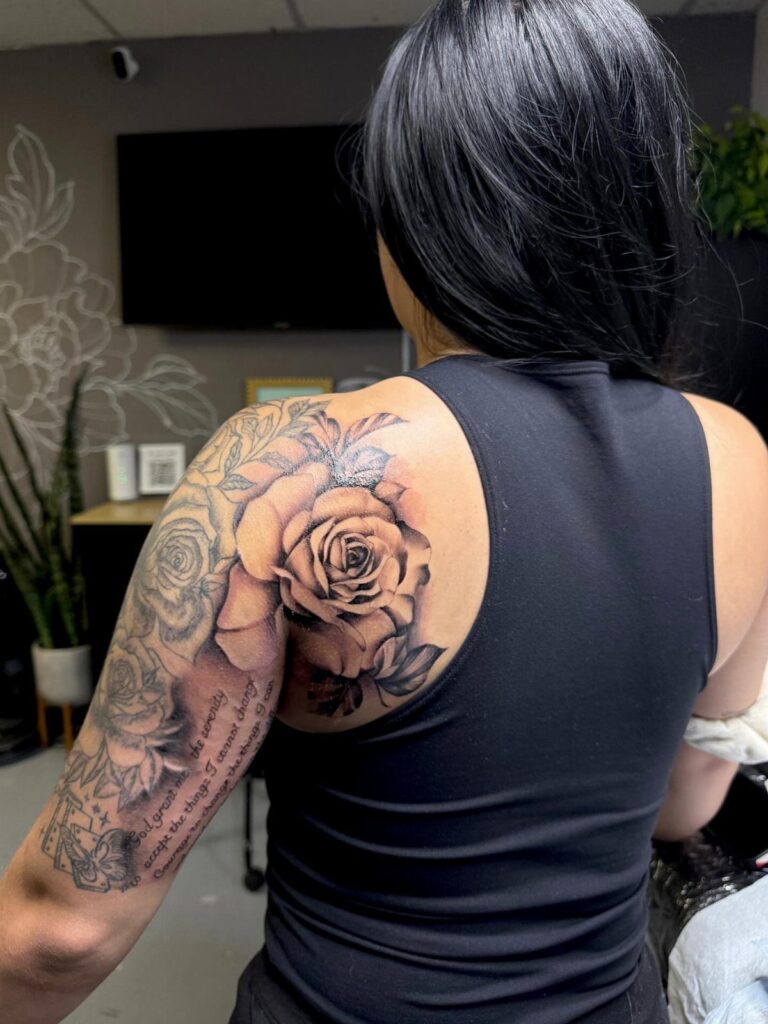
The side of the arm can hold a single line of script, a small animal or a dreamcatcher, or grow into a half sleeve, so decide how much of your arm you want to commit now and how much you would rather leave open.
Small arm pieces leave room to add on later, while tribal work and large solid areas call for long sittings and an artist with patience.
1. Side Arm Tattoo Ideas
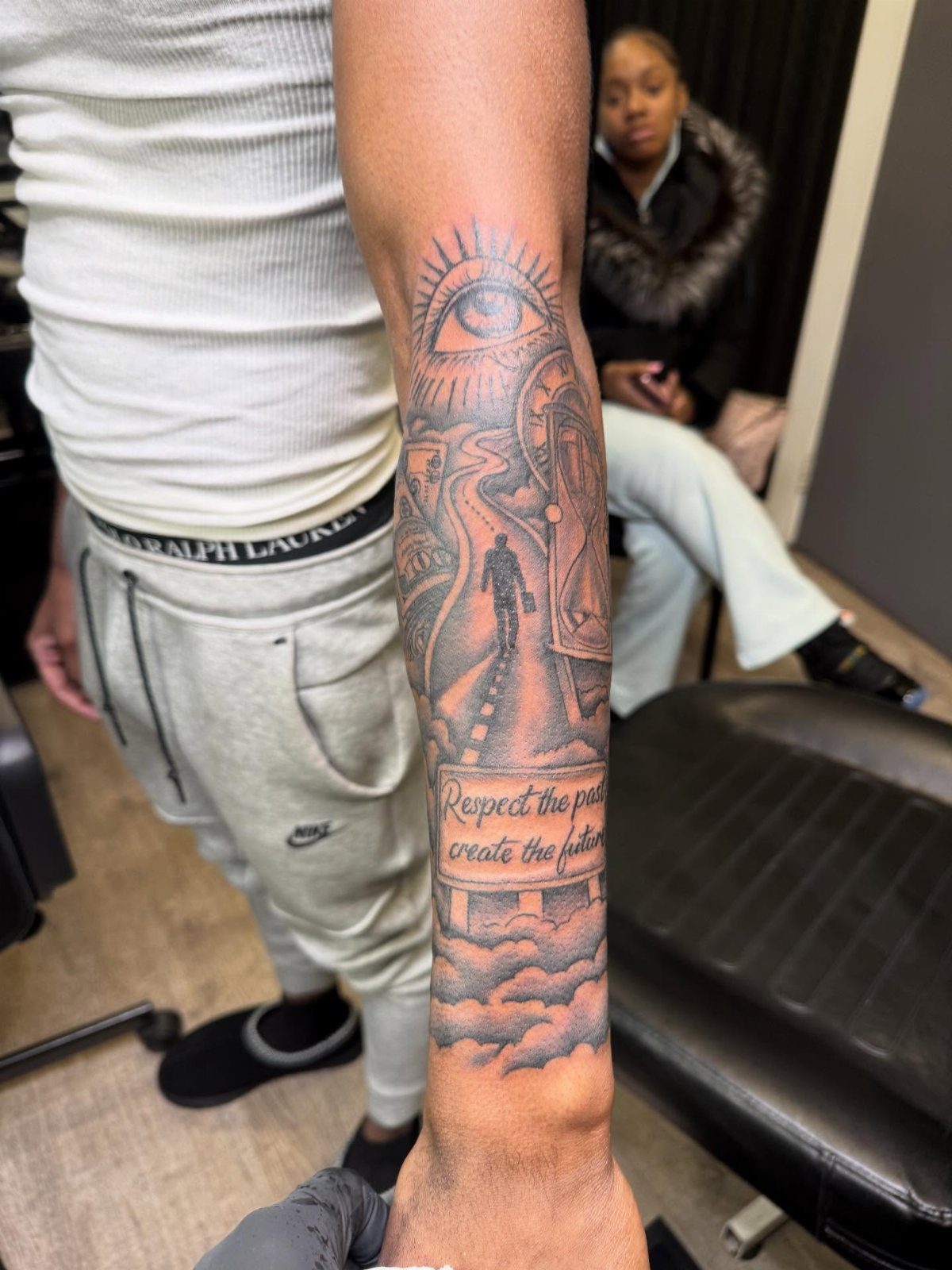
A surreal piece like this one, an eye above a path with a line of script, works because the words and the image argue the same point.
Pick a sentence that means something to you first, then let the artist build the picture around it.
Black and grey keeps the shading soft and the text easy to read. I would leave room around the lettering so it doesn’t crowd the eye.
Sidearm tattoos express personal style, interests, and values. It is a powerful symbol of protection and resilience.
2. Animal Arm Tattoos
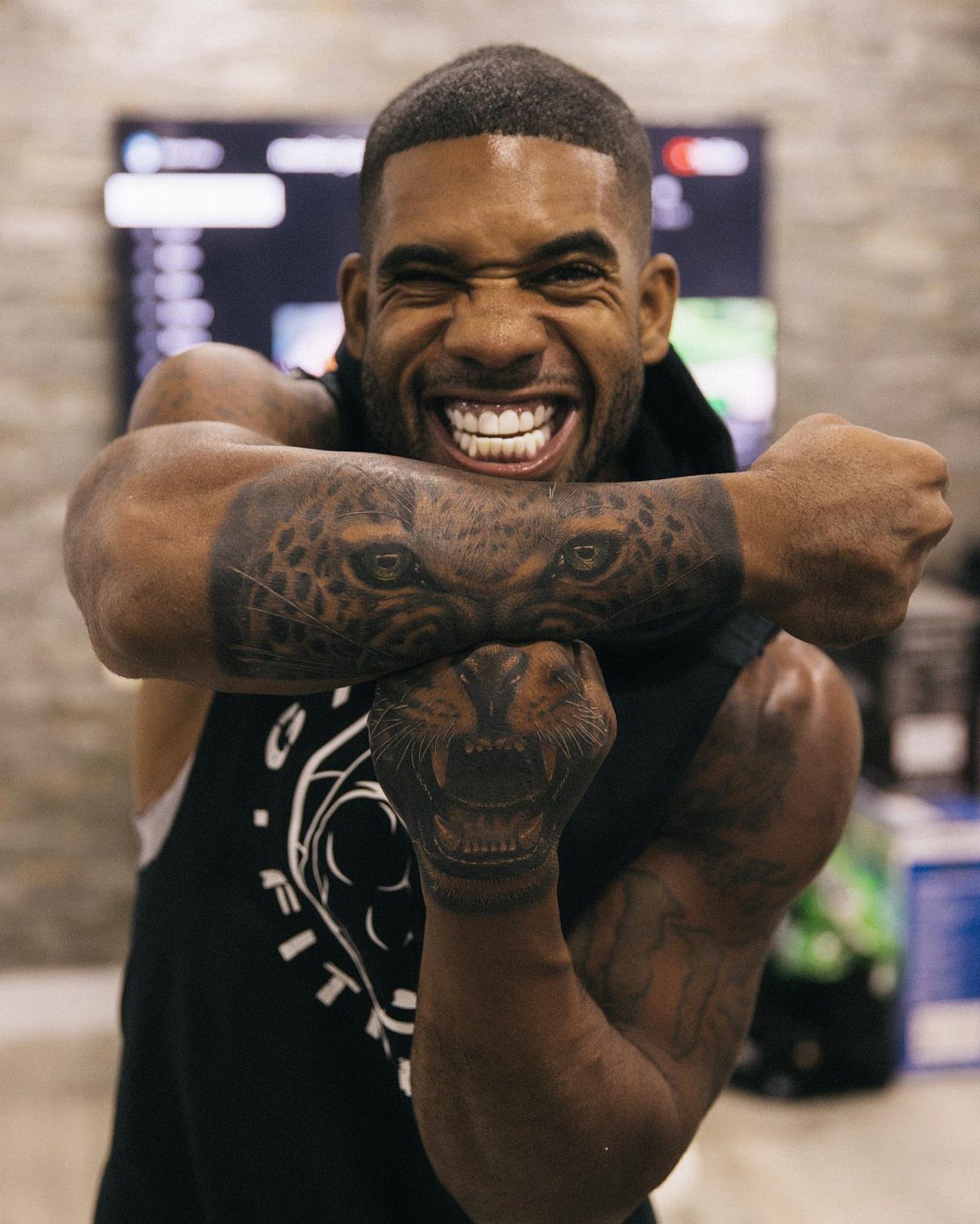
A realistic leopard works on the side of the arm because the body of the cat can follow the forearm’s length, and the spotted coat holds up well in black and gray, which tends to age better than color.
Choose the animal for what it means to you, not for how good it looks in a photo.
Forearms are visible every day, so I would pick one species and commit to it. Ask the artist to show healed work in realistic style before you book, since fine fur detail is where weaker artists show.
3. Script Arm Tattoos
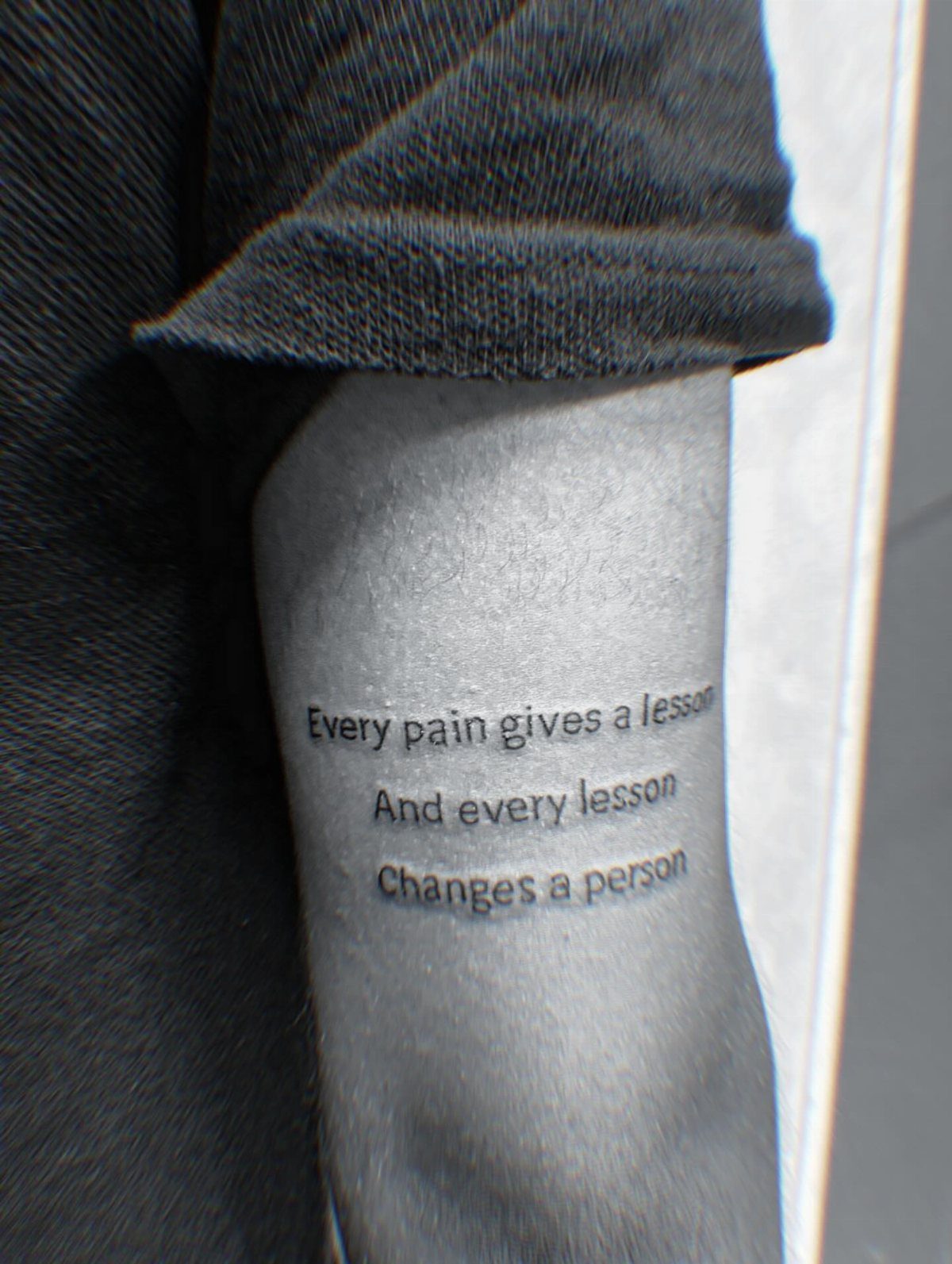
Script is the simplest way to carry a belief on your skin, and a long quote like this one on the upper arm gives the lines room to breathe.
Keep the wording short enough that each line stays large enough to read.
Lettering shows every wobble, so the choice of artist matters more than the choice of font. I would print the exact text and spelling, then check it twice before the stencil goes on.
4. Dreamcatcher Arm Tattoos
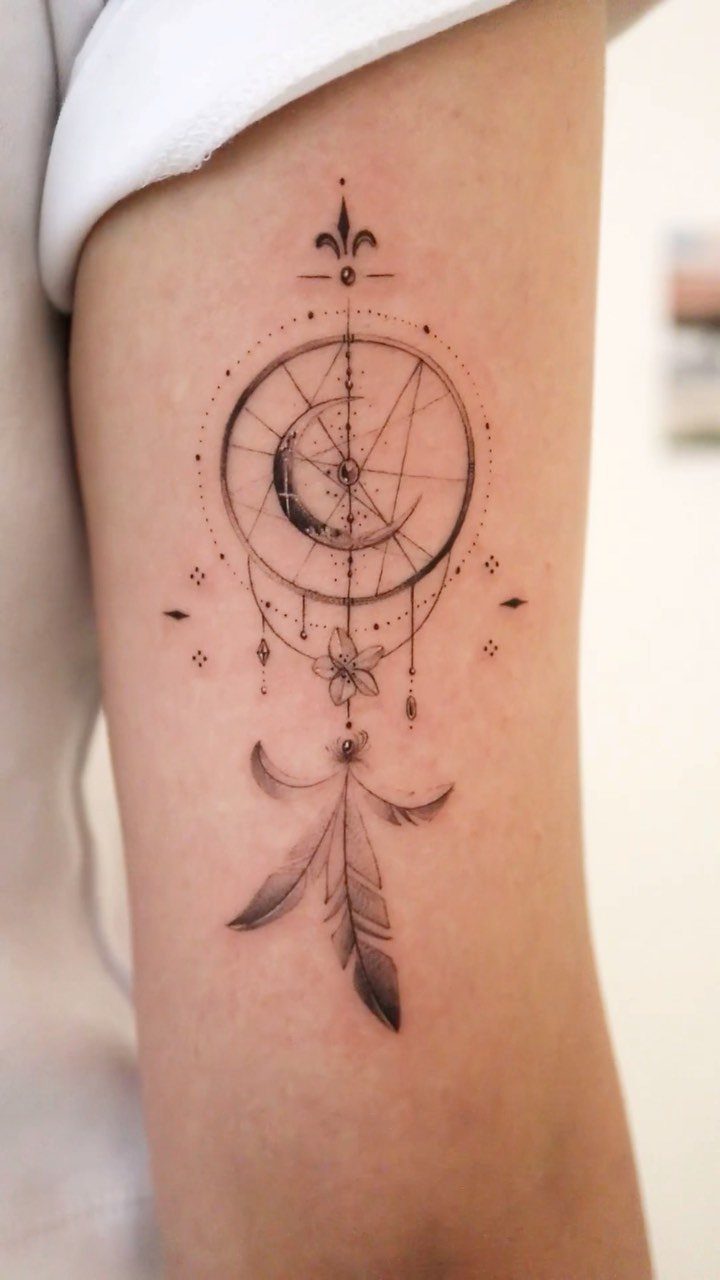
Dreamcatchers in black ink read as protection and resilience, and a crescent moon, a flower or a few feathers add meaning without crowding the small hoop.
I like keeping it to black. Solid linework and clean shading hold their shape better than a design packed with tiny details, and the moon and flower are enough company for the main circle.
5. Half Sleeve Tattoos
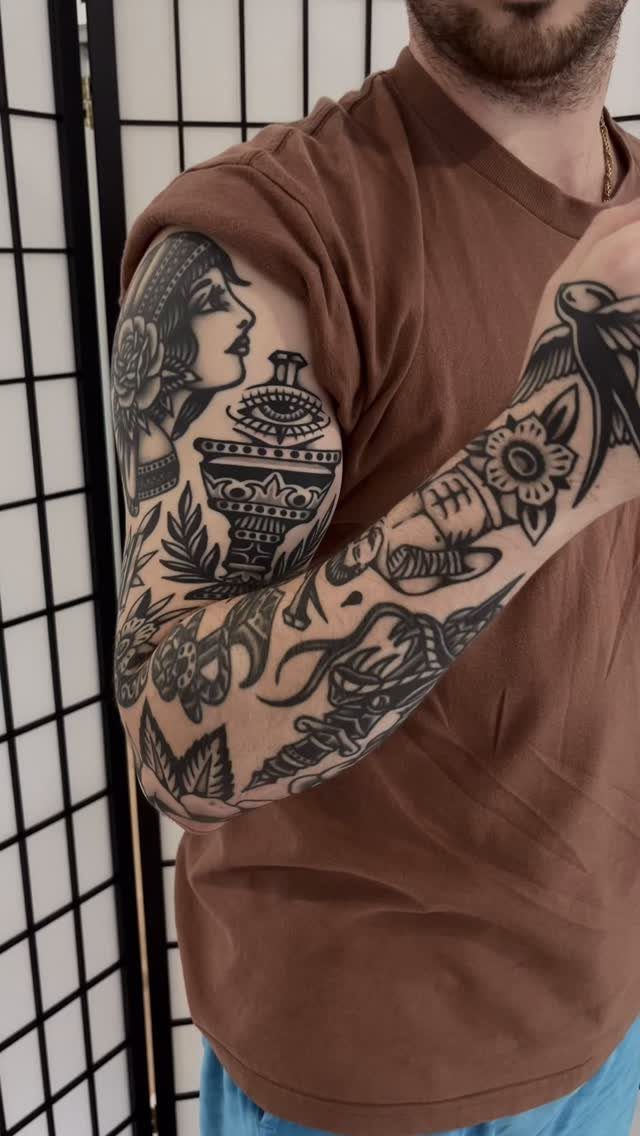
A half sleeve gives you a canvas to build a collection, and a black ink version lets very different pieces, like a woman’s face and a vase, sit together without clashing.
Plan the full layout before the first session, even if you add pieces over time. I would choose one shading style and keep it throughout so the sleeve looks like one work, not a patchwork.
6. Floral Arm Tattoos
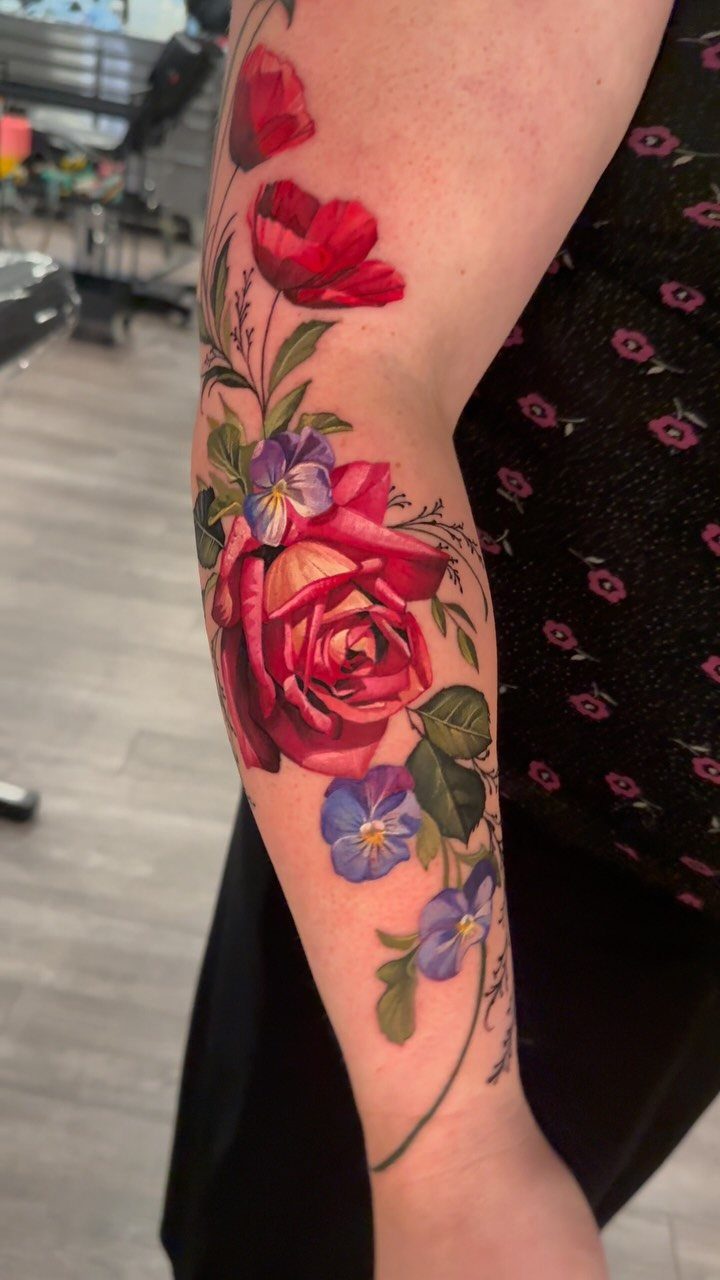
Red roses beside purple flowers give an arm piece color that stays eye-catching, and flowers wrap around the curve of the arm naturally.
Delicate petals need clean lines and smooth blending, so I would choose an artist who does color florals regularly. Color needs touch-ups more often than black, and sunscreen protects it better than anything else you can do.
7. Mythological Design Arm Tattoos
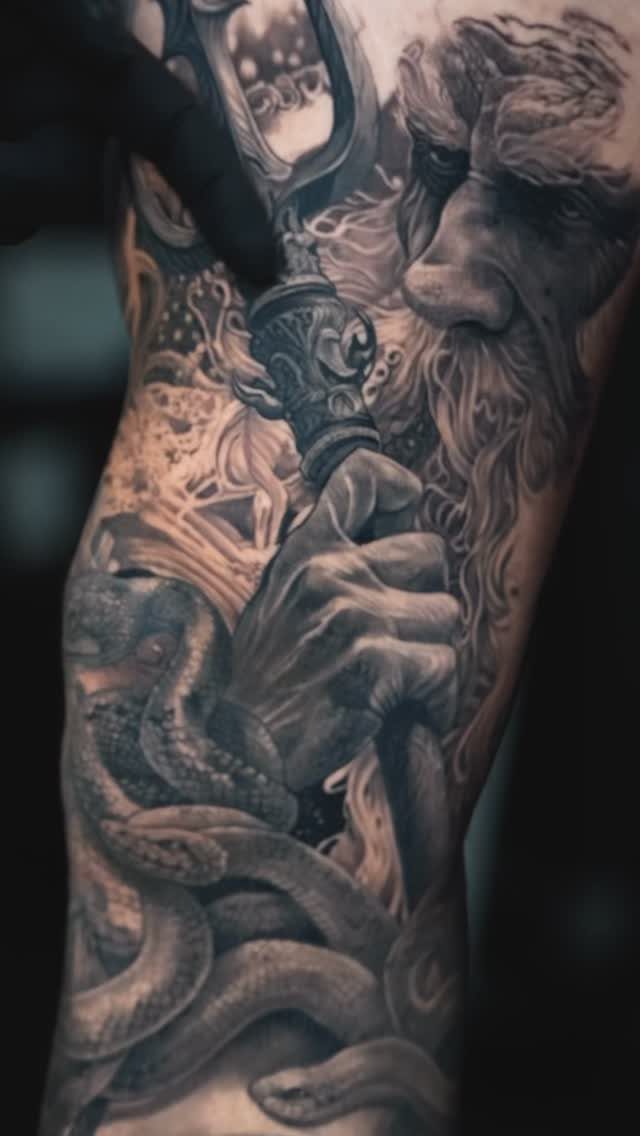
Black and grey suits mythological figures well, since beard hair, coiled snakes and a gripped staff all depend on smooth shading to look carved instead of flat.
A bearded figure with serpents is a story you can read at a glance, and I would pick the myth you can retell in one line.
Choose an artist whose healed realism you have seen. Snakes need clear scales and open space between the coils, or the piece blurs into one dark patch.
8. Tribal Tattoos
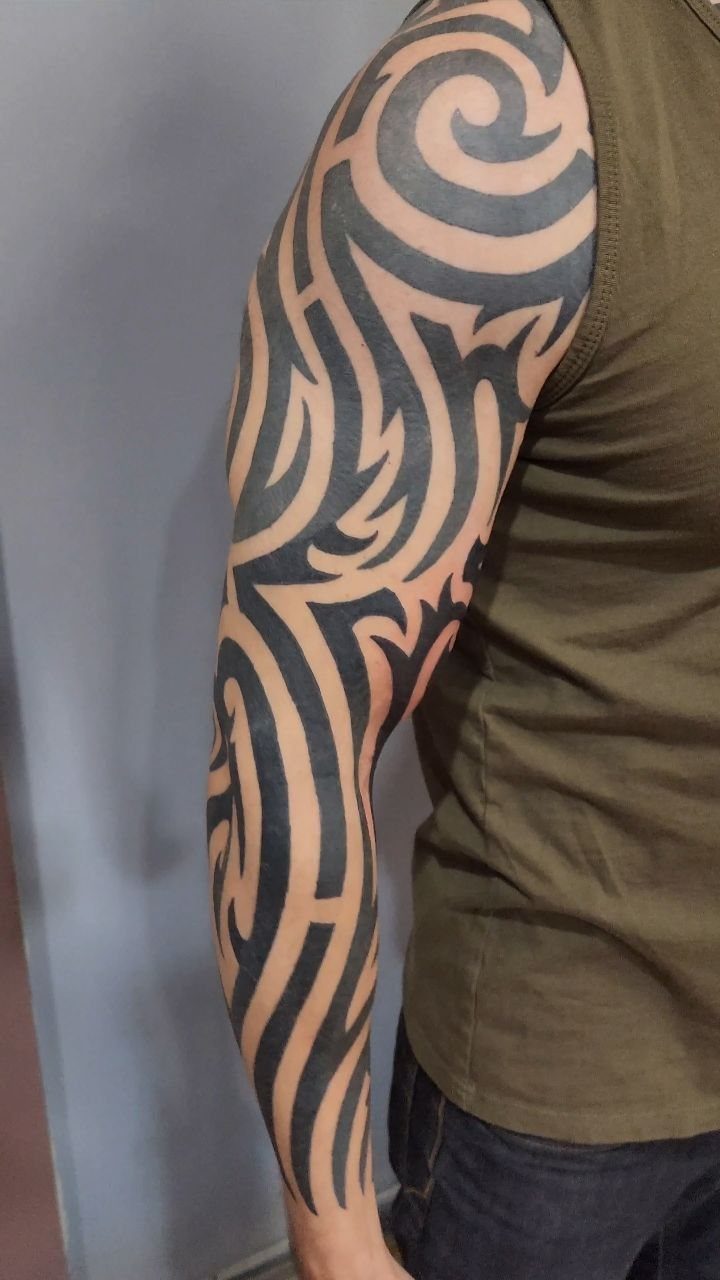
A tribal sleeve runs from shoulder to wrist because bold black swirls look best when they follow the muscle, narrowing at the wrist and widening across the shoulder.
That flow is the whole design, so I would have the artist draw the stencil on your arm, not on paper.
Solid black reads strong and stays readable, but big filled areas ask for a patient artist and a long session. Expect to sit for it.
9. Small Arm Tattoos
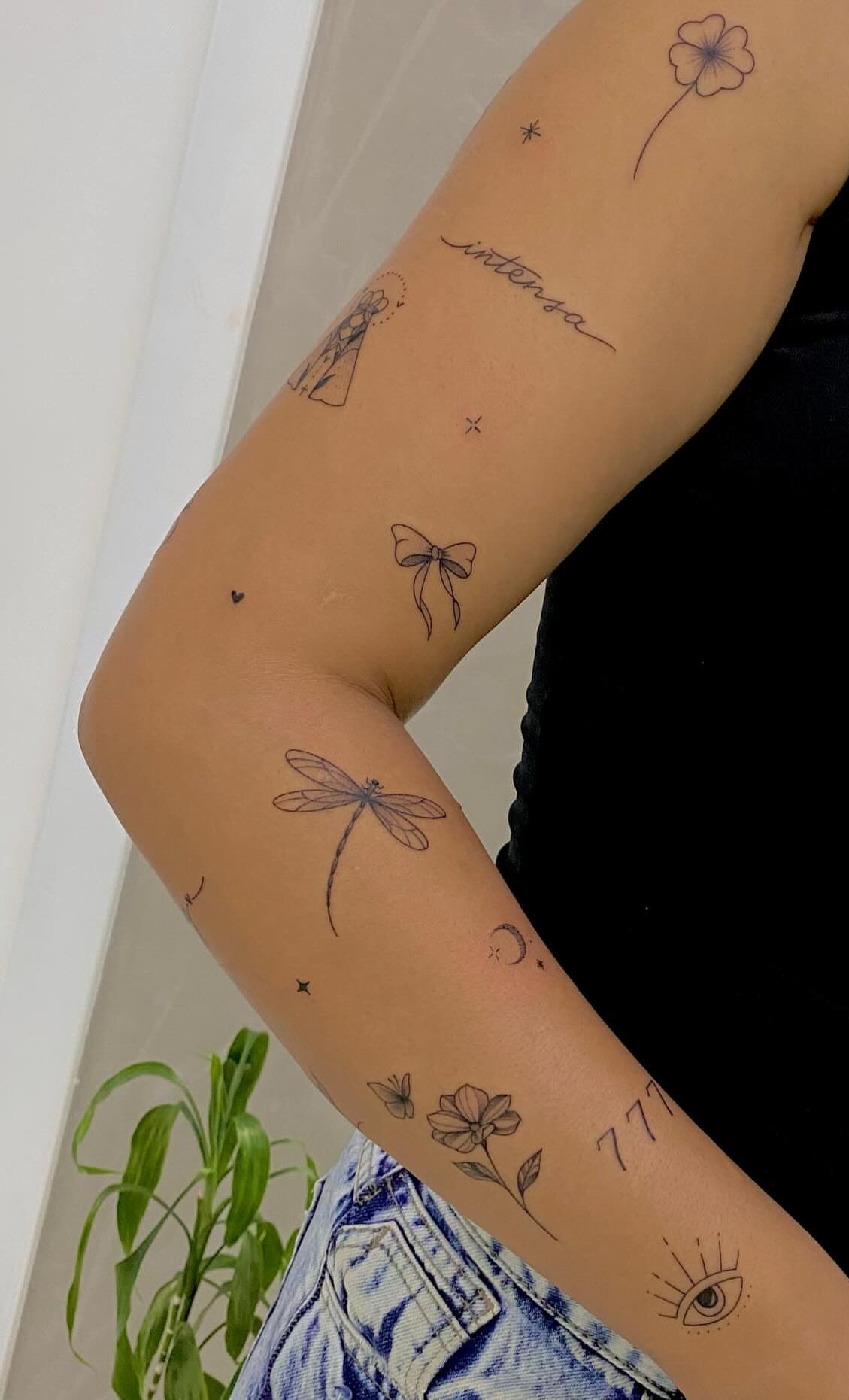
Small tattoos reward restraint: a flower, a bow, a dragonfly and an eye can share one arm because each stays its own size and none competes.
Fine black lines suit that spacing, and I like a single word, like the one here, tucked between the images.
Leave gaps so you can add pieces later. Thin lines can soften over the years, so I would pick designs simple enough to stay clear if they blur a little.
Choosing the Right Tattoo Artist
Start with the portfolio, and read it for range.
Portfolio range tells you less than you might expect, because fine line, blackwork and realism are different crafts, and steady quality comes from an artist who does your style all the time.
Match the style to the artist before you match the design. Each one is its own craft, so I would book the person who does your style every week, not the one who can do it.
Come in knowing which of those styles pulls you. It makes the consultation faster, and the artist can spend that time on placement and sizing instead of guessing your taste.