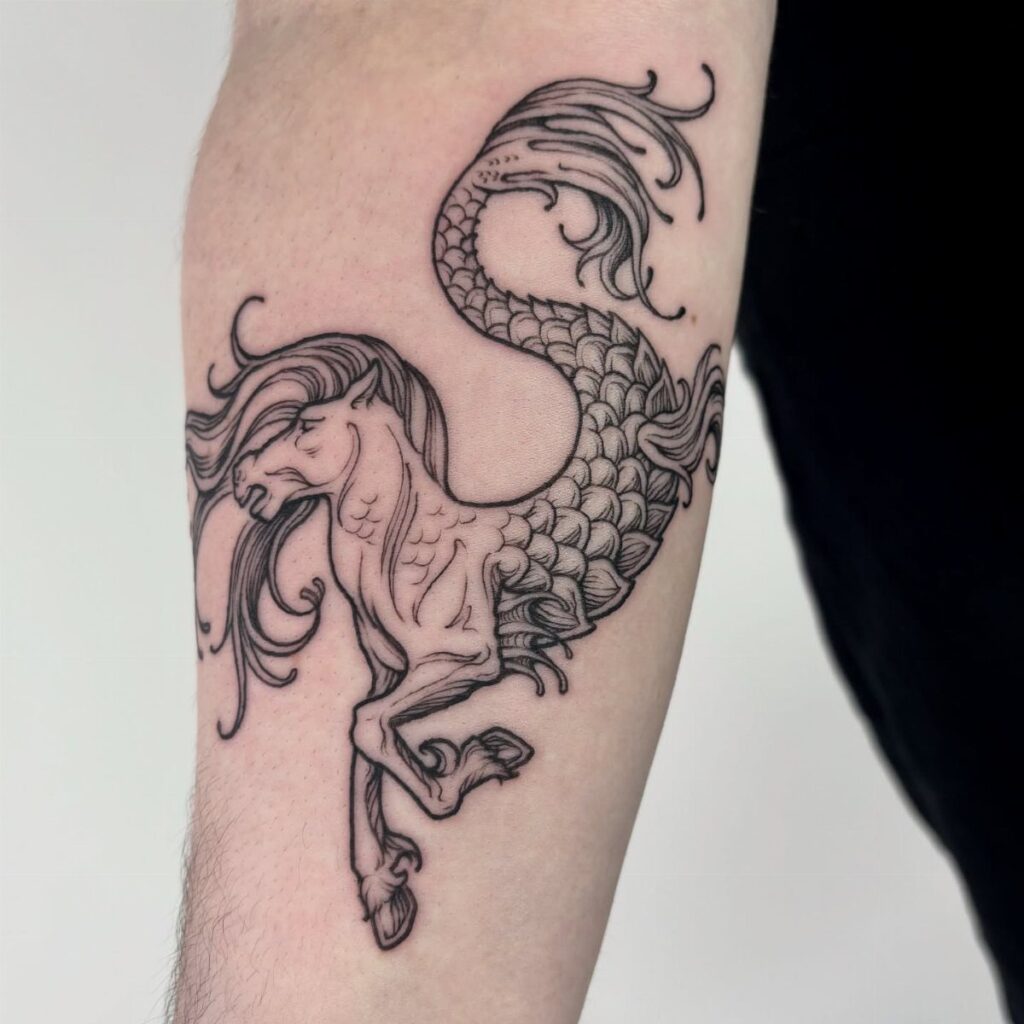
Placement decides more than the design does: it sets how much a tattoo hurts, how long it takes to heal and who sees it in daily life, which the sections on pain tolerance, healing time and visibility cover.
The 13 spots here run from the forearm and upper arm, which clothing covers or shows on your terms, to the sternum, where thin padding over bone puts the sting in the severe group.
Pick by the one limit you can’t bend, whether that’s a dress code, a low pain threshold or a week with no downtime, and the right spot usually narrows to two or three.
1. Forearm
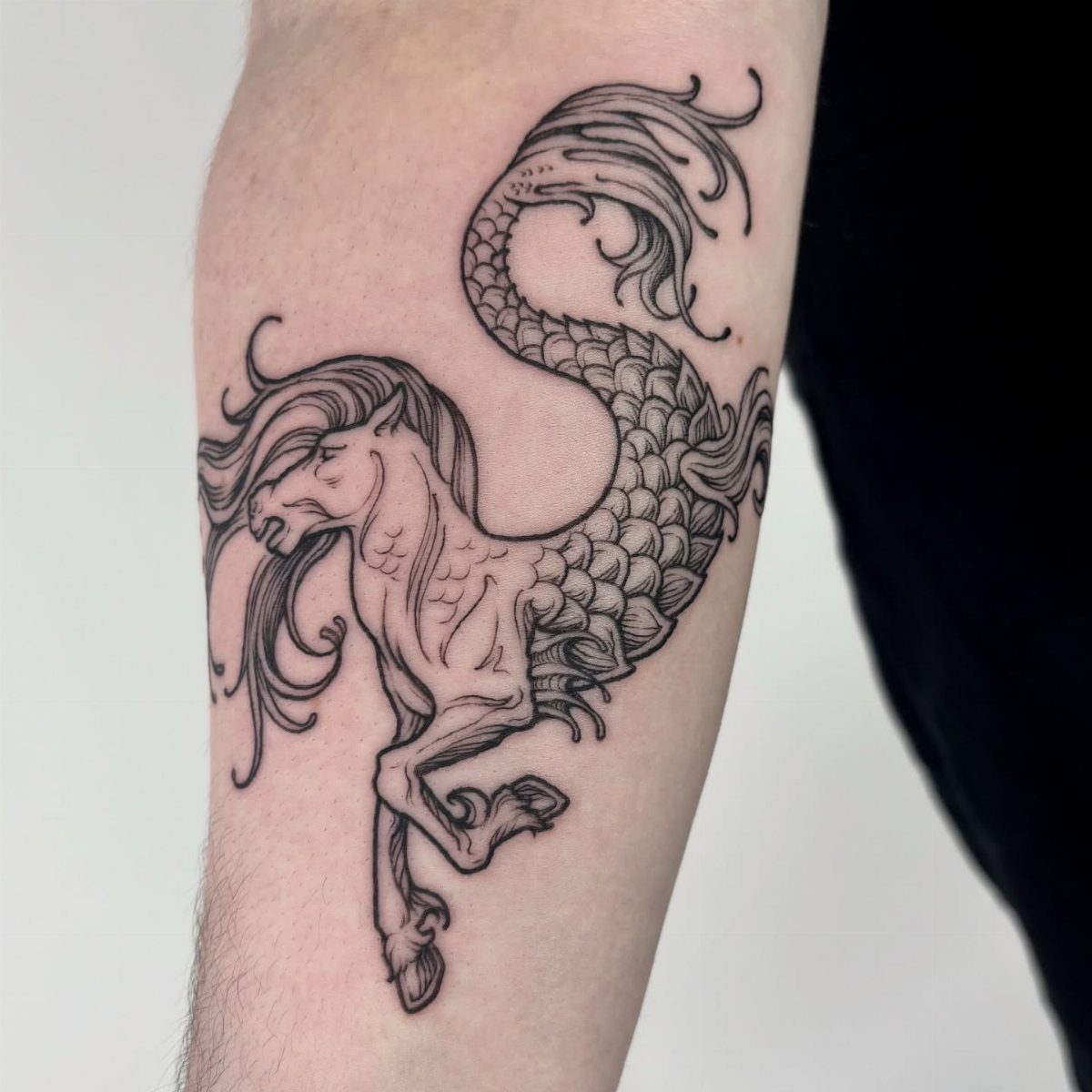
A forearm gives you the easiest call in placement: it shows when you want it to and disappears under a sleeve when you don’t. That flexibility is why I’d send a first-timer here before almost anywhere else.
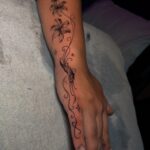
The long, fairly flat surface suits a vertical design like the hippocampus, where fine scale detail can run along the arm’s length.
The forearm suits a piece you want to show off one day and cover the next, since a sleeve handles the hiding.
2. Inner Wrist
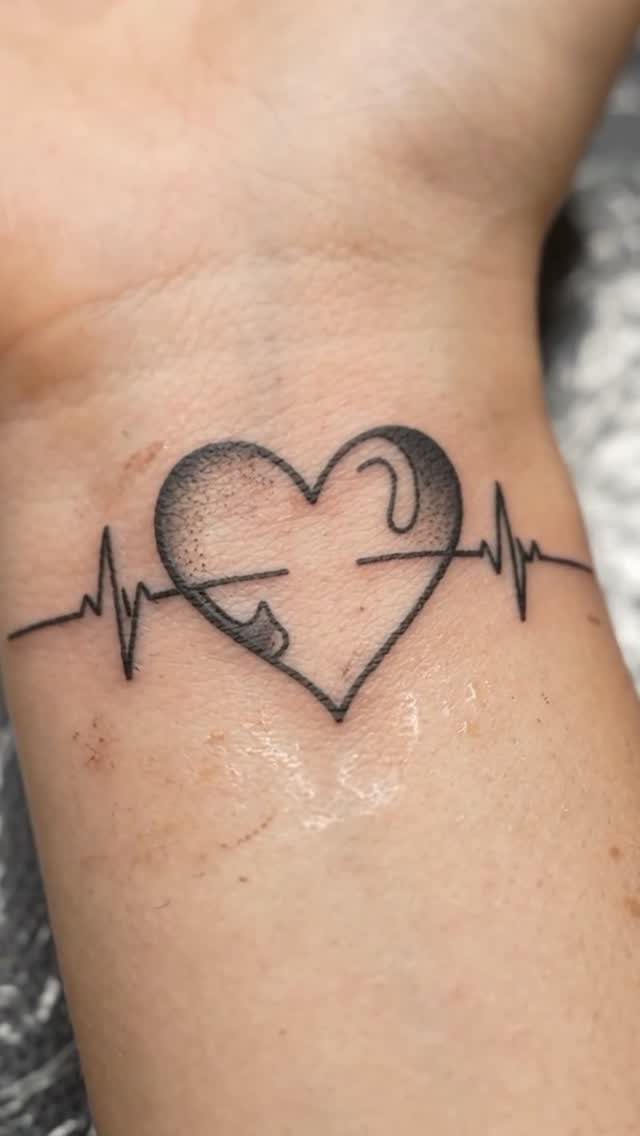
Small and personal is what the inner wrist does best. A heart joined to a heartbeat line fits the narrow strip of skin without crowding it, and a line design like that stays clean when kept simple.
I’d keep the design compact and the lines uncluttered, since a wrist leaves little room to add detail. Anything more intricate will get cramped.
Choose this spot for a meaningful symbol you want to glance at often.
3. Ankle
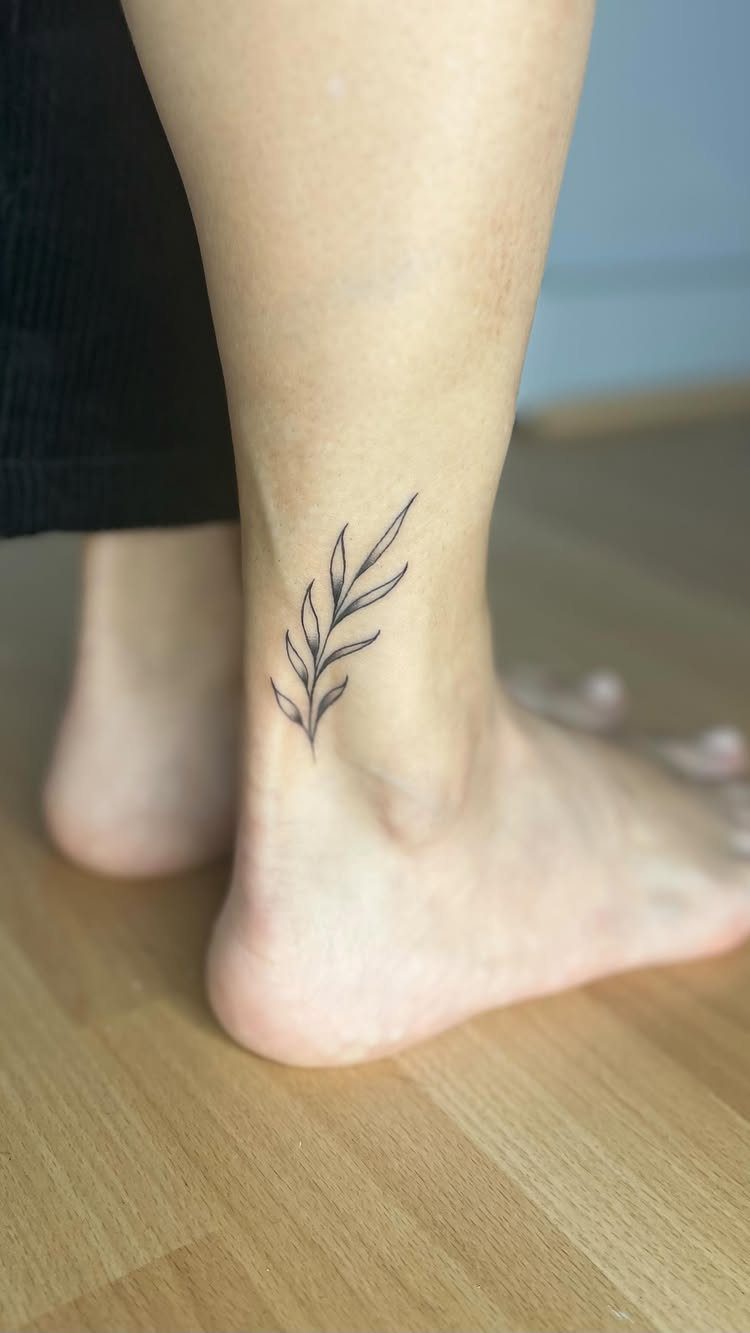
Ankles suit small, light designs, and a single leafy branch follows the line of the leg well. Black ink with plenty of open skin around it keeps the piece delicate.
Expect the spot to be sensitive. I’d treat it as a placement for a short sitting, not a long one, and keep the design modest.
For a bigger design, move up the leg rather than stretching it around the ankle, where the curve distorts anything wide.
4. Thigh
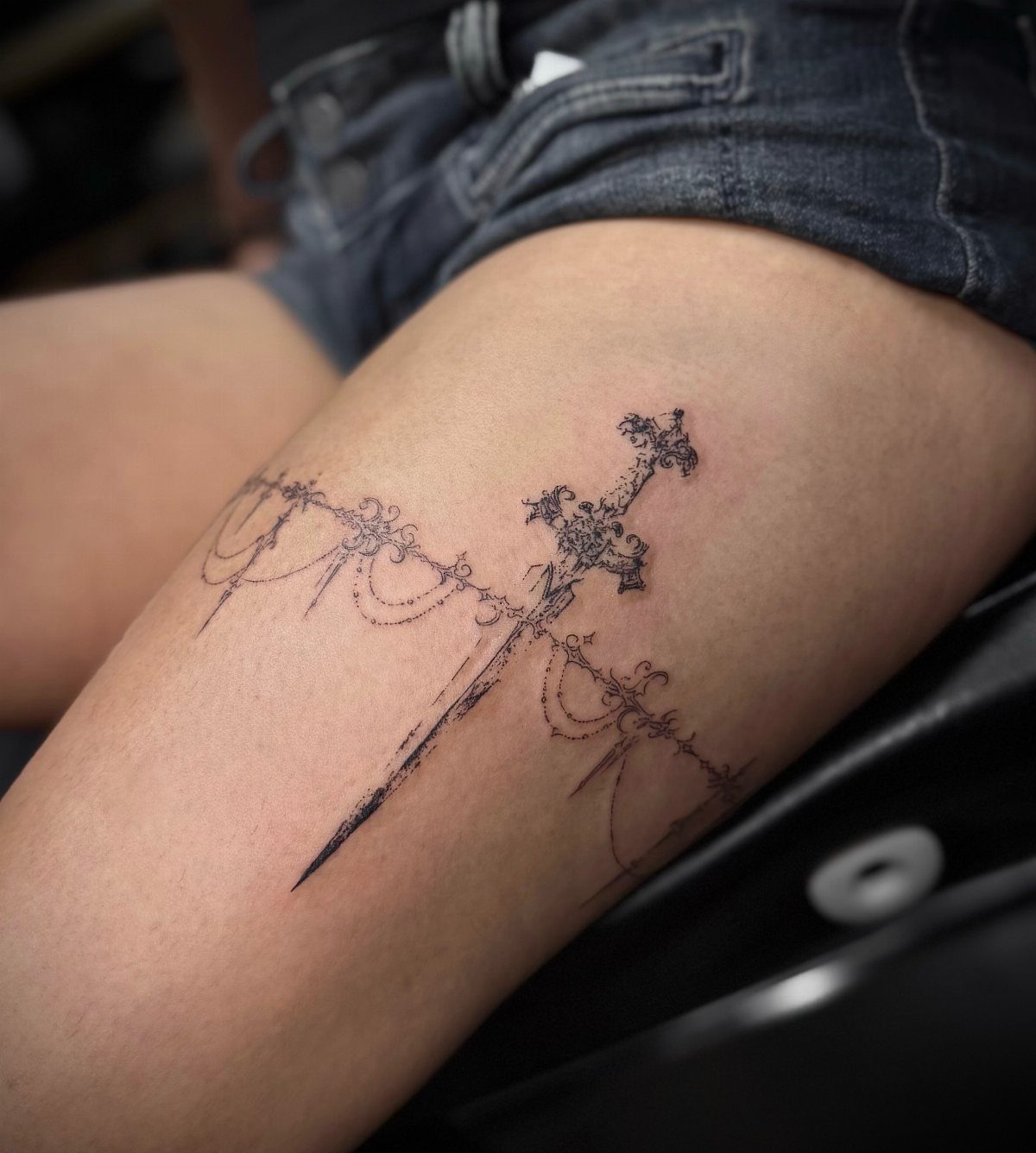
Few spots give you as much room as the thigh.
I’d choose the thigh for any design you want to build up and keep adding to. It’s also easy to cover with shorts or pants when you’d rather it stay private.
Plan the full composition first, so the sword and ornament sit together as one piece.
5. Upper Arm
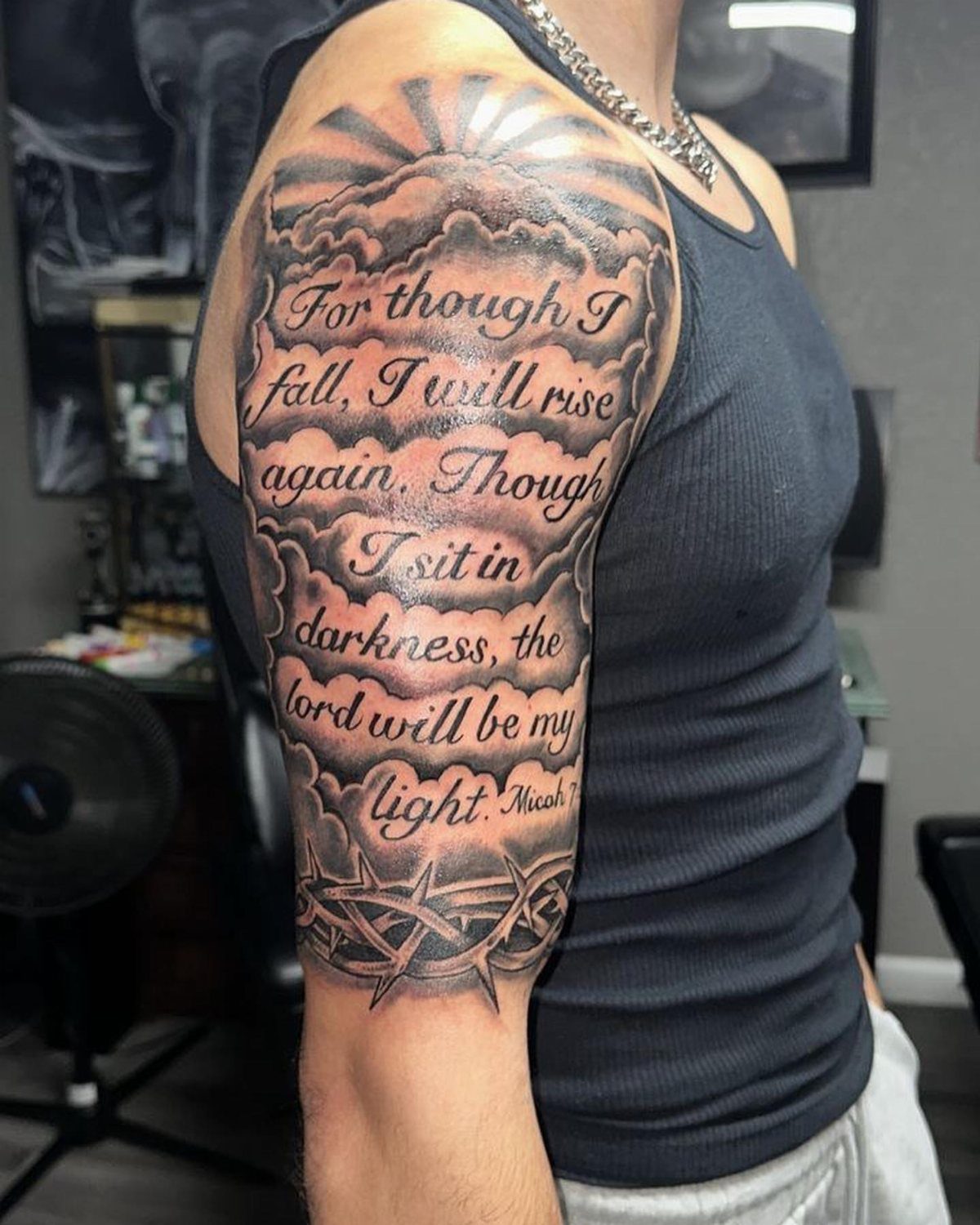
Upper arms handle a mix of drama and discretion. A short sleeve covers the tattoo, while a T-shirt or tank top lets it show, so you decide who sees it.
The rounded surface has room for layered black and grey work, like clouds, barbed wire and a line of scripture stacked together. For text, I’d choose a clear, flat stretch of skin so the words stay easy to read.
Grey shading rewards a bigger area, so don’t squeeze it small.
6. Inner Arm Tattoo Placement
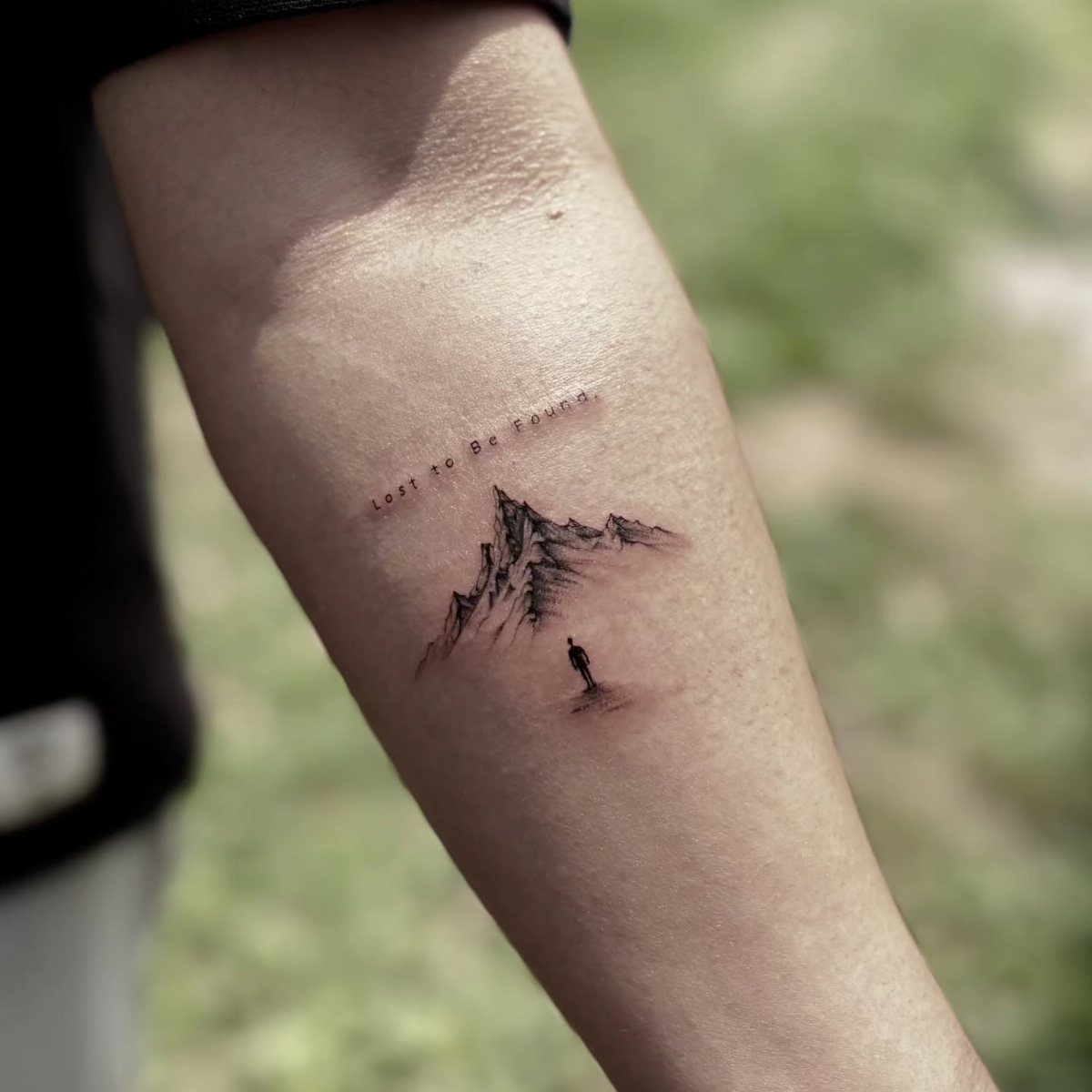
On the inside of the arm, a tattoo disappears under long sleeves and most office dress codes, and a quick turn of the wrist brings it into view.
That makes it my pick for a mountain scene with a tiny figure and a short phrase.
Because the inner forearm is long and narrow, a vertical layout works well. Keep the lettering small but clear, and leave space between the scene and the words.
Choose it if work dress codes matter to you.
7. Lower Back Tattoo Placement
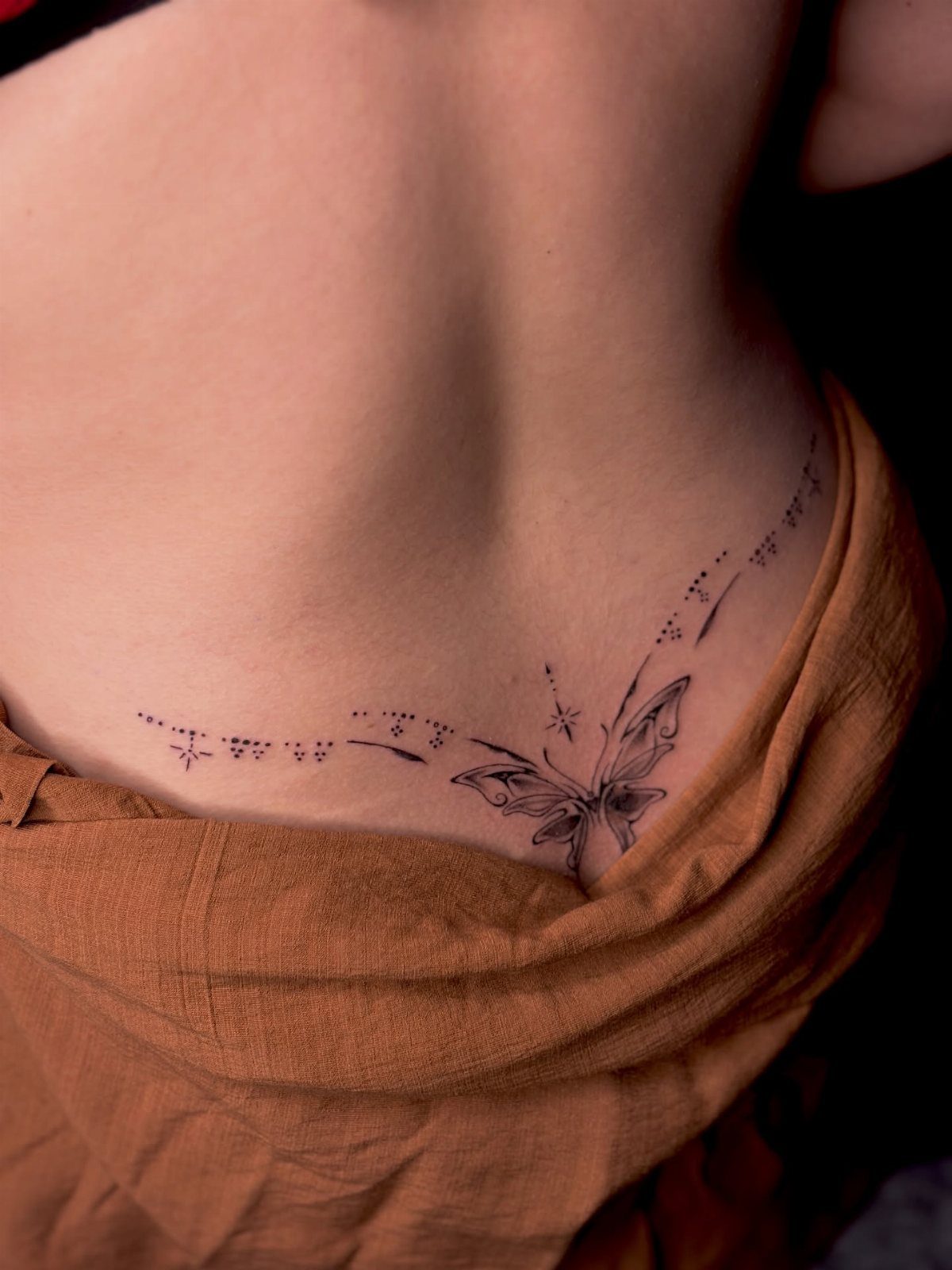
A lower back piece sits where a shirt hem and waistband cover it, so a butterfly with a few stars can stay private or show whenever you choose. The area gives a small design room to breathe.
I like a compact, symmetrical subject here, since the spine’s center line makes balance easy to judge. Keep the surrounding skin open and the black linework stays crisp from across a room.
This spot suits a design that clothing hides in most outfits.
8. Calf
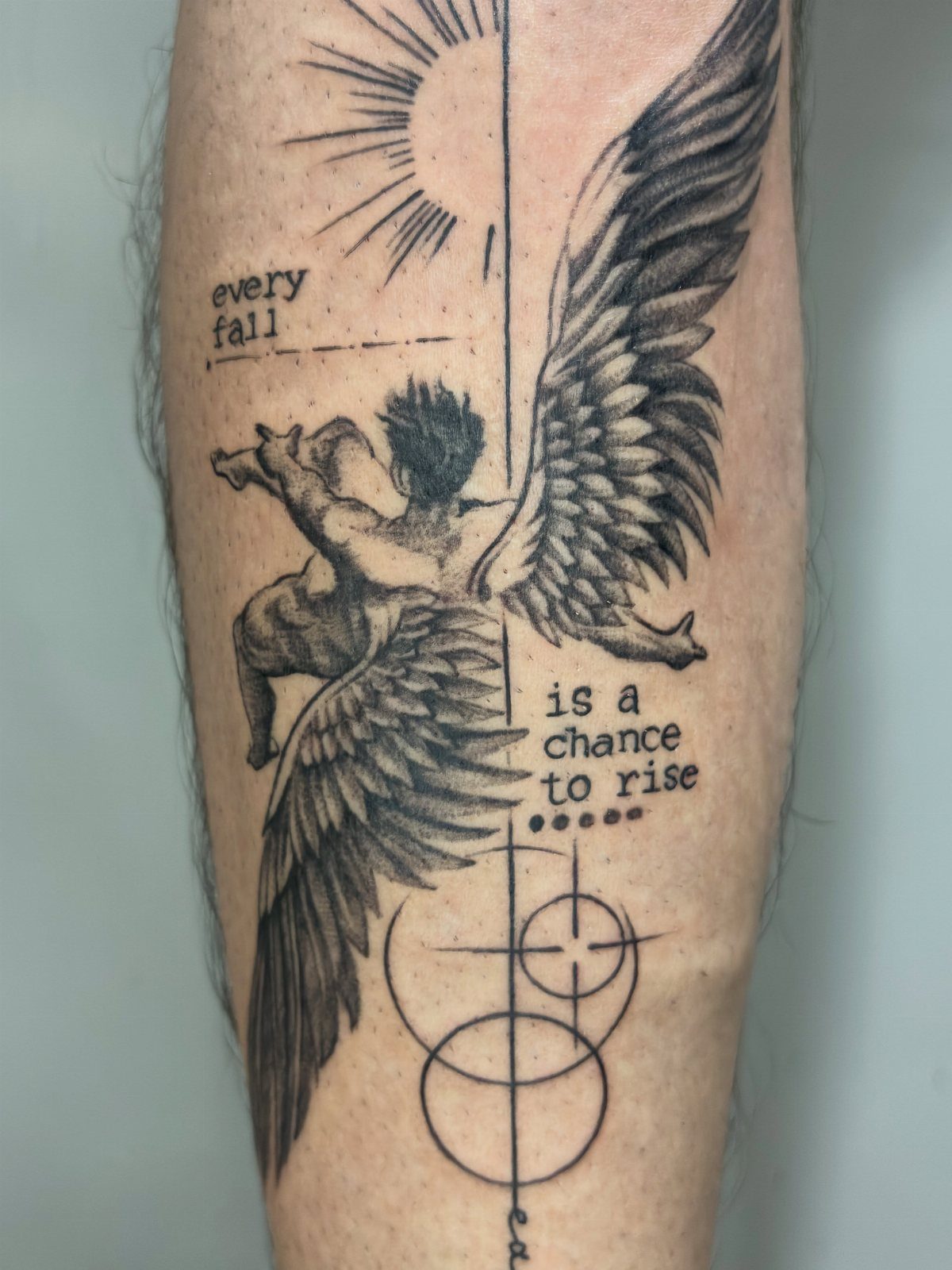
Calves handle bold black and grey work well, since the muscle is long enough to hold a layered piece with a figure, a sun and a line of text. The area is comfortable and the skin stays clean-looking.
Geometric circles need breathing room, so leave space around the main figure instead of crowding it.
Choose the calf for a mid-size design you can see easily while standing.
9. Chest
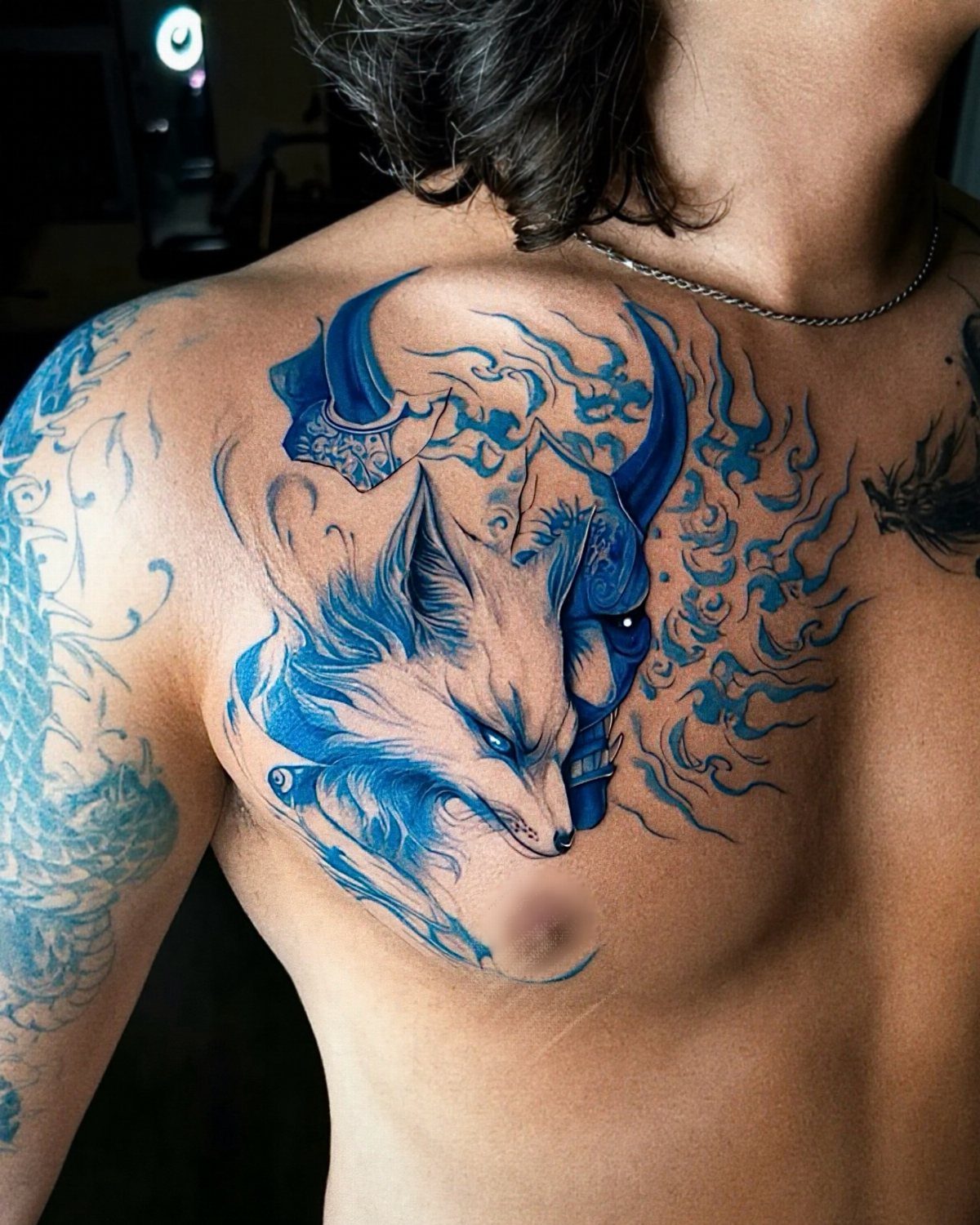
Nothing says "this matters to me" like a chest piece. A fox and horned mask spread from the chest over the shoulder, and blue with white gives the design real presence.
I’d commit to a large, detailed design here instead of a small token. The wide surface wants a subject with weight, and a shirt covers it when you need it to.
This is a bold choice, so settle the idea fully before the first session.
10. Collarbone
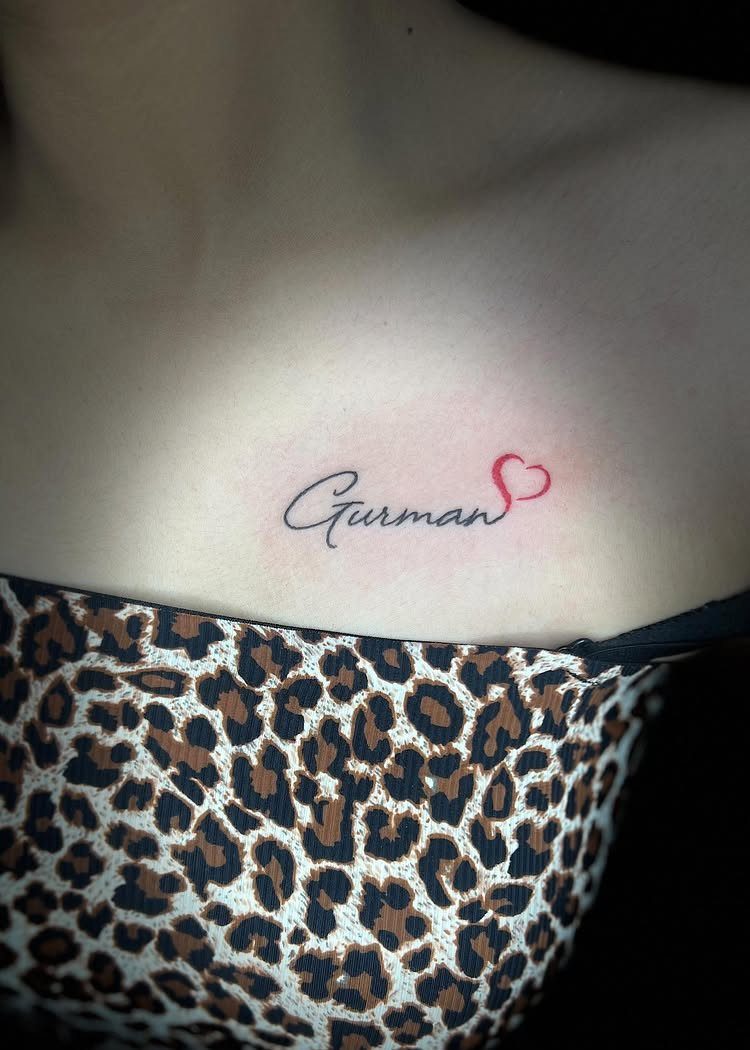
Cursive lettering follows the collarbone’s horizontal line almost on its own, so a short name, maybe with a small accent like a red heart, sits neatly there. Delicate work suits this narrow ridge of skin.
I’d keep the script thin and the heart tiny so the pair reads as one line. A single touch of red does more than a crowded design would.
Pick the collarbone for a short word or name that you want visible at a neckline.
11. Behind the Ear
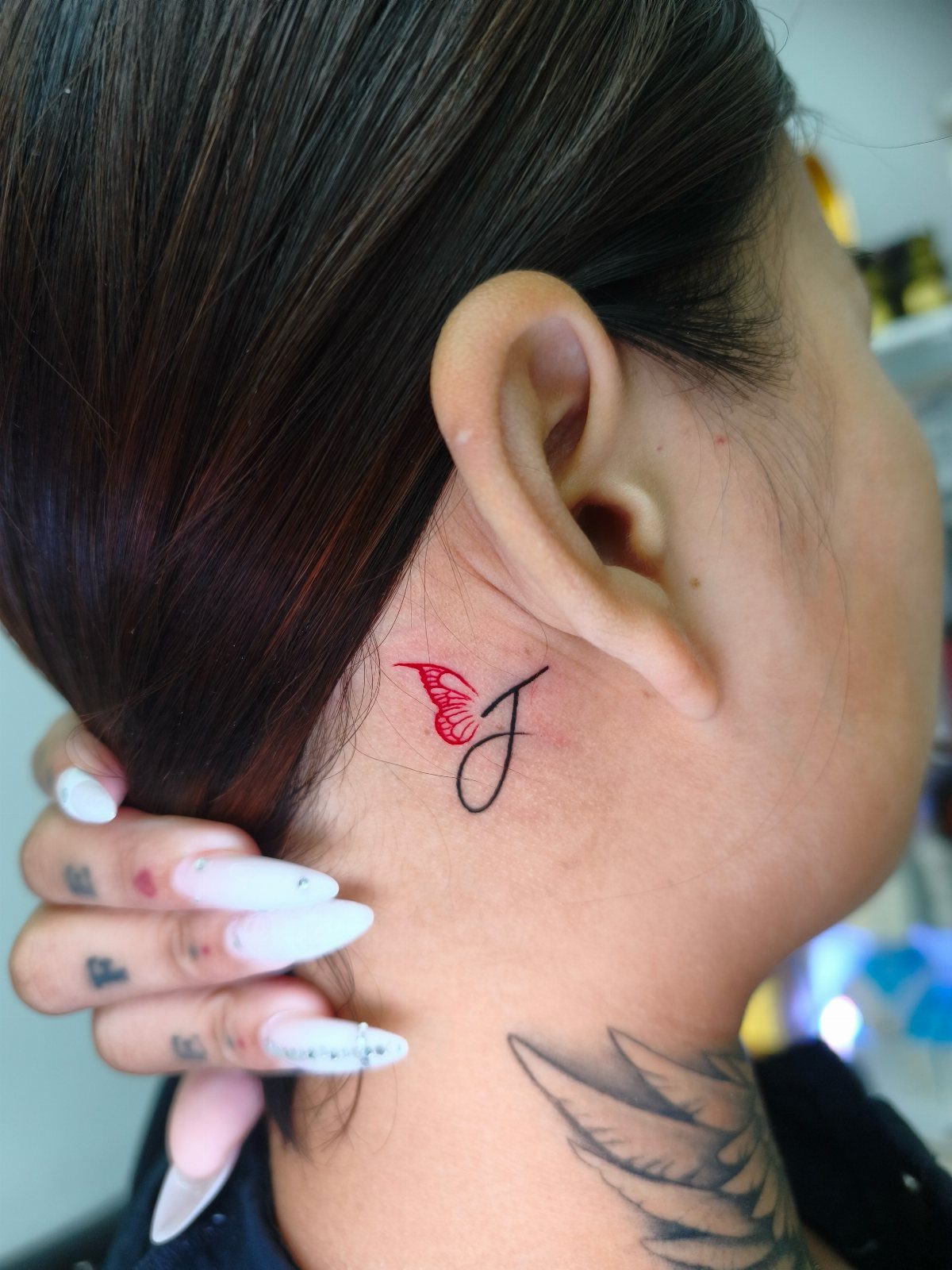
Behind the ear, a small red butterfly wing beside a single black letter stays quiet until you tuck your hair back. It’s a discreet, stylish spot.
The space is tiny, so I’d limit the design to one letter and one small accent. Red against black gives enough contrast that nothing needs added detail.
This works best for a minimal initial or symbol, not anything intricate.
12. Sternum
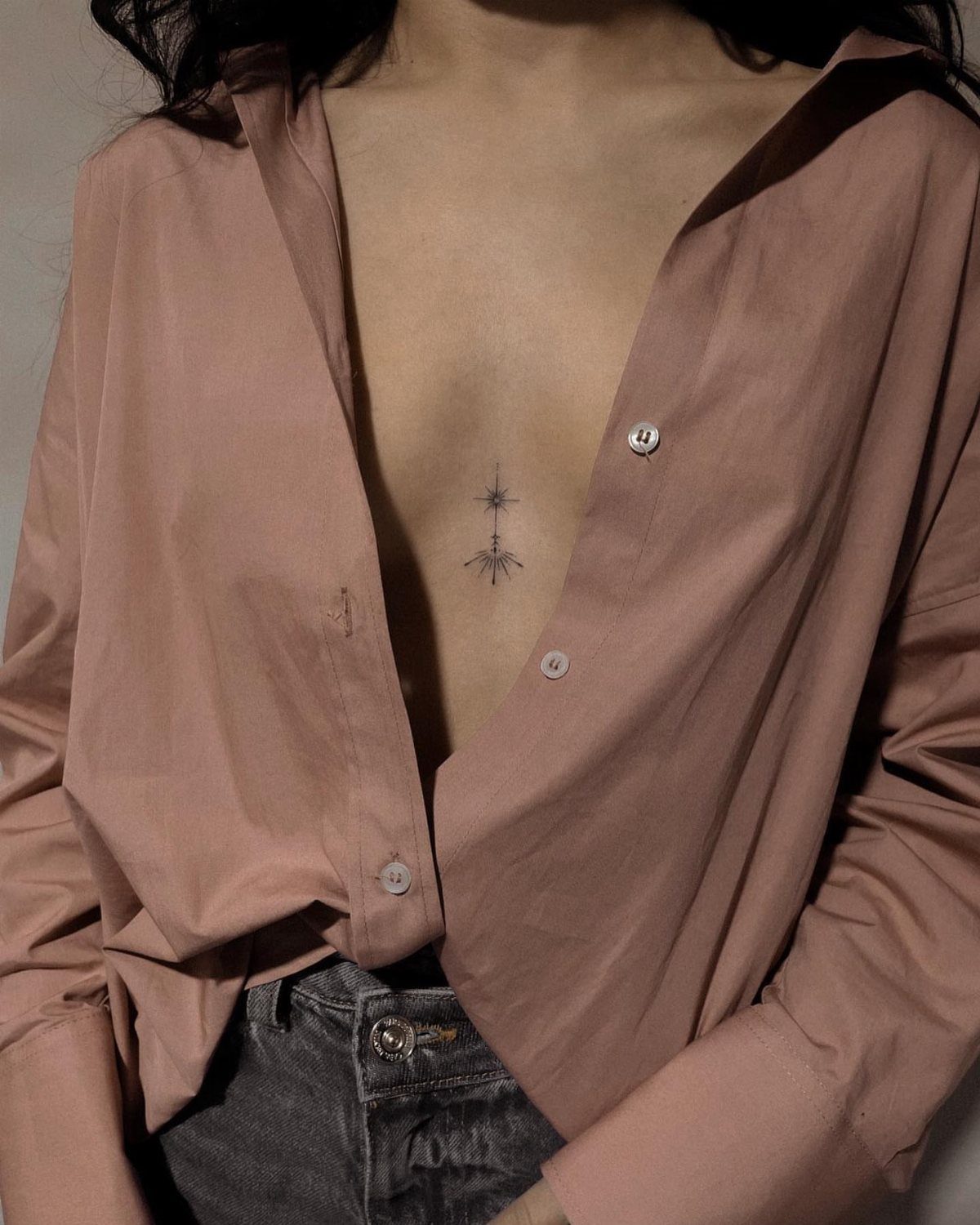
A sternum tattoo lives on the center line of the chest, and a slim vertical line of stars suits that axis. Under a buttoned shirt it stays hidden, and an open collar reveals it.
I’d keep the stars small and the line simple, so the design follows the bone’s straight run. Black ink alone looks crisp.
Choose this placement for a quiet piece that clothing covers easily.
13. Hip
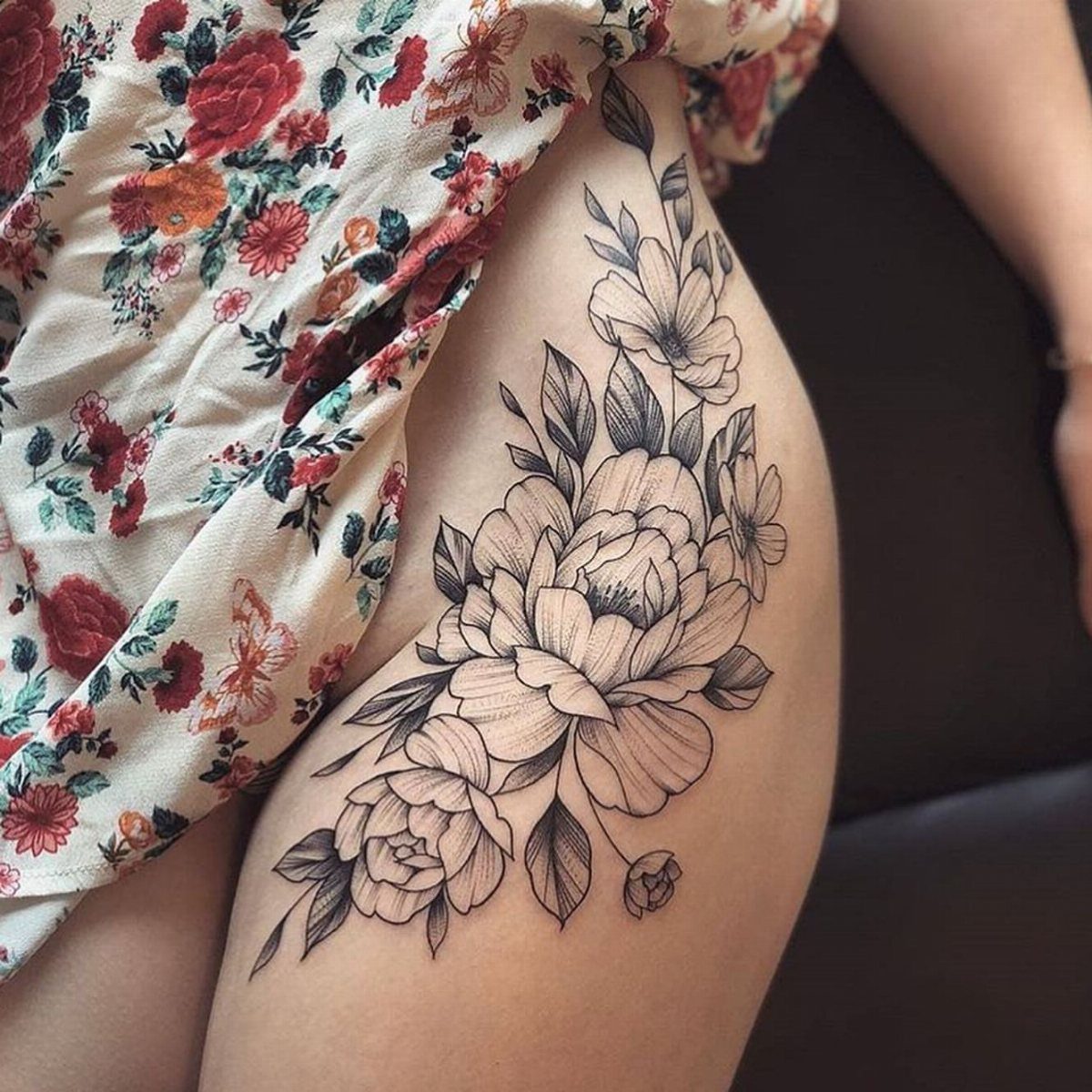
The hip works best for designs that follow a curve, like a peony whose petals wrap from the hip bone onto the upper thigh, because the body’s shape does part of the composition for you.
Soft shading and large petals suit that sweep.
I’d pick a flowing subject like a flower, sized to run along the hip line, since a stiff or perfectly symmetrical design can look bent when you move.
Clothing handles privacy here: a waistband or a dress hides the spot completely, and you choose when it shows.
Choose the hip for a larger floral piece you’d like to keep private.
Pain Tolerance by Body Area
Pain depends heavily on how close the skin sits to bone and how little padding lies under it.
Ribs, spine, sternum, hands and feet land in the severe group. Forearm, outer thigh, calf and upper arm rank low to moderate.
Wrist, ankle, chest and inner bicep fall in the middle: moderate to high.
Every breath moves the ribs and sternum, which adds to the sting there. Thin, sensitive skin makes the armpit and the knee hurt more than their size suggests.
For a first tattoo, I’d start on a lower-pain spot like the outer arm. A comfortable first session makes the second one far easier to book.
Healing Time and Aftercare Needs
Placement changes how a tattoo heals, so plan your aftercare around the spot.
Upper arm and back heal quickly with few problems. Hands, feet, ankles, elbows and knees take longer.
Hands and fingers scab and peel more, and the ink fades faster from constant use, hand-washing and sun.
Shoes and socks keep rubbing the feet and ankles during healing, and that friction can slow the process and blur sharp linework. Elbows and knees keep bending, so the skin may crack before it settles.
A few placement-specific habits help:
- Ribs: skip tight clothing.
- For a leg tattoo, prop the leg up when you’re resting so swelling stays down.
- A foot tattoo heals better in open shoes, since air reaches the skin and nothing presses on it.
If you can’t spare the downtime a slow-healing spot demands, pick a different one.
Visibility in Daily Life
If workplace policy worries you, choose the upper arm, thigh or torso, since clothing covers all three easily.
Forearms and shoulders land somewhere in the middle for visibility.
If a full sleeve might come later, I’d leave empty skin around the first forearm design so the next pieces have room to connect.
The forearm also gets steady sun, so once it has fully healed, I’d wear broad-spectrum sunscreen on it to protect color and contrast. Don’t pick at flakes while it heals, and keep snug cuffs away from the area.
Frequently Asked Questions
How to decide tattoo placement on arm?
Start with how visible you want it, then match the design to the shape of the spot.
Sleeve length decides a lot on the arm: a forearm tattoo is on show unless you wear long sleeves, the upper arm disappears under a short sleeve, and the inner arm stays out of sight at most offices.
Where is the best place to put a quote tattoo?
The inner forearm and the collarbone are my picks for short text.
The inner forearm is long and narrow, so a small, clear phrase fits with space left between it and any scene. The collarbone’s horizontal line carries thin cursive script almost on its own.
Which tattoo placement hurts the least?
For the gentlest sessions, I’d start with the outer thigh, calf, forearm or upper arm, since all four have more muscle and fat over the bone.
These areas have more padding between skin and bone. For a first tattoo, I’d start on the outer arm.
What is the best placement for a small first tattoo?
The outer arm is the best choice for most small first tattoos, since it hurts less than the inner wrist and heals easily.
It’s a narrow strip that suits a compact symbol with simple lines, and you can glance at it often.
The ankle and behind the ear also work for small, light designs, though the ankle is sensitive and better for a short sitting. Keep the design modest in any of these spots, since tiny areas get cramped fast.