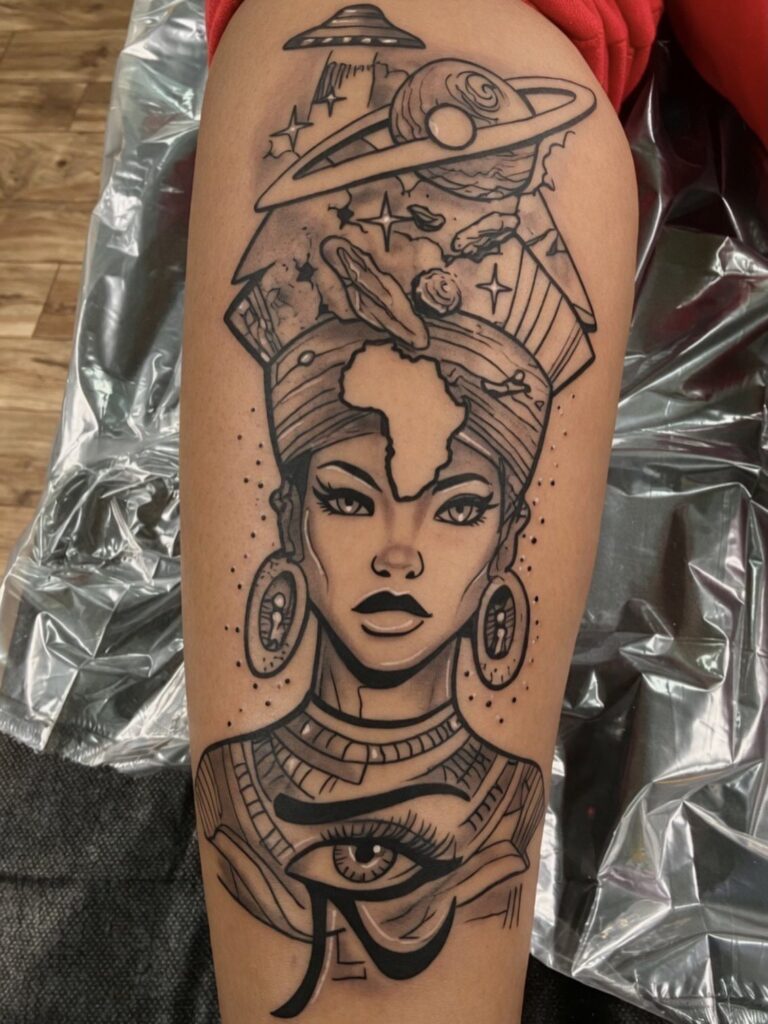
The 8 designs here run from a stylized rose to a blackout sleeve that takes more than one session, and how much bare skin you are willing to leave open decides which one fits you.
Pieces built on solid black, like the forearm panel and the blackout sleeve, need a sharp edge to stay readable, while the hair pick, the portrait, the panther and the profile rely on clean outlines instead.
If you want heavy black, plan the open skin with your artist first; if you want detail, pick the spot on your body that gives it room.
1. Solid Black Ink Covering the Entire Forearm from Elbow to Wrist
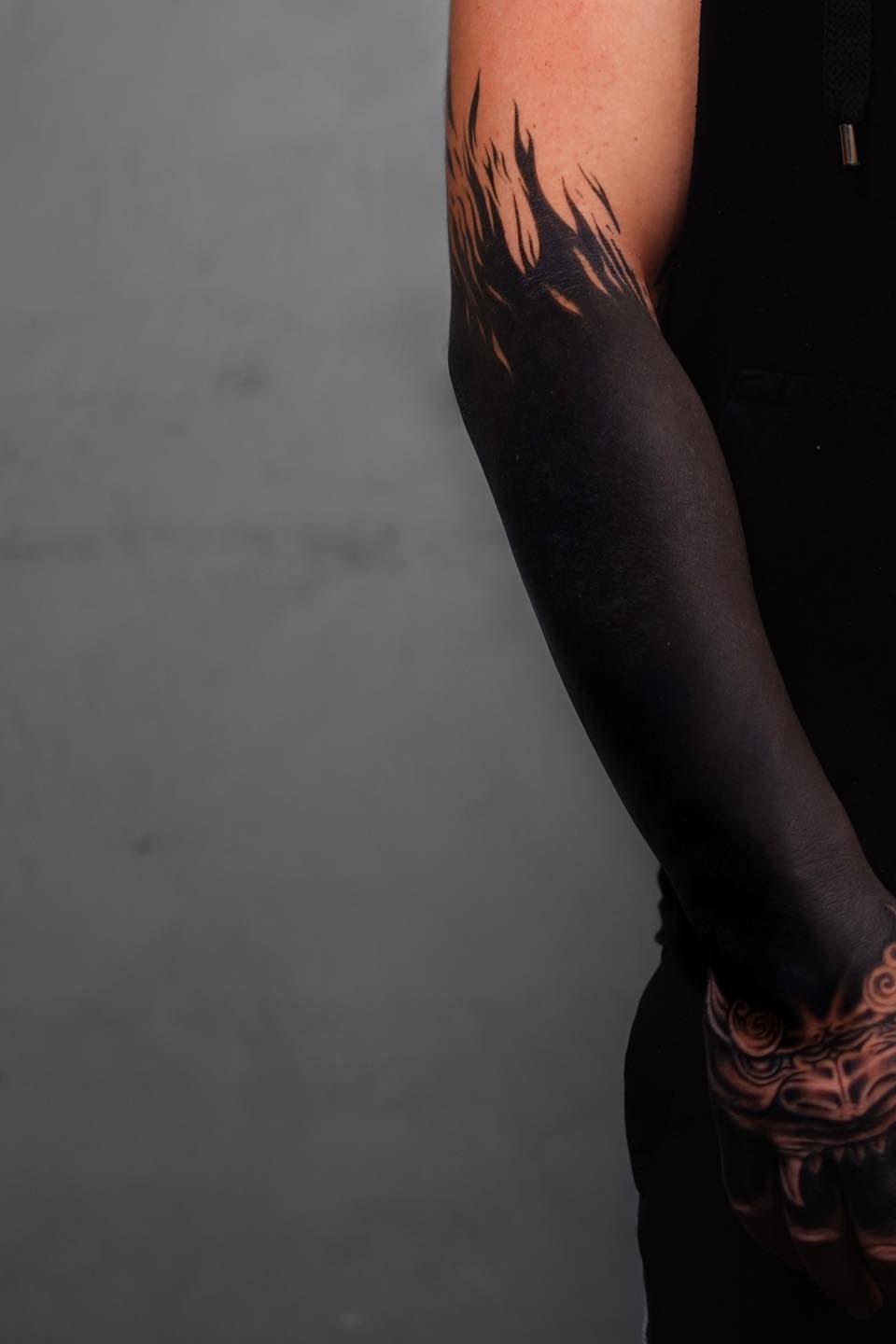
A solid black forearm panel lives or dies by its edges. The jagged line at the top gives it movement that a straight cuff would lack, and it keeps the piece from reading like a bandage.
Choose this if you want maximum contrast with no linework to fade. I would plan the top edge with the artist before anything else, since that line is the whole design.
Expect the packed black to need a patient, careful session.
2. Black Ink Silhouette of a Hair Pick
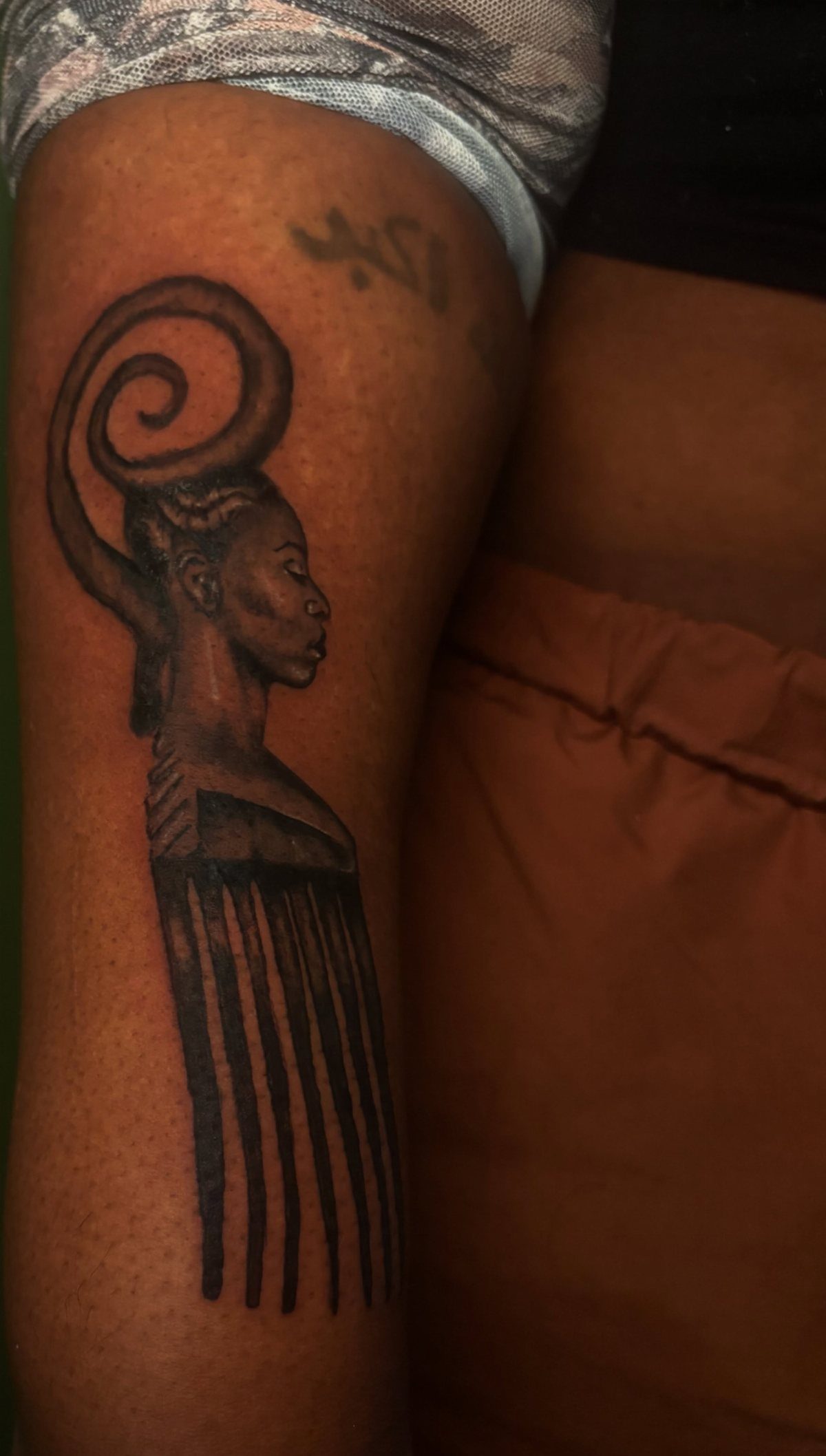
Hair picks carry weight in Black culture, and merging one with a woman’s profile says more than either shape alone. The spiral of hair is what ties the two together.
I like that the silhouette stays simple enough to hold up as the years pass.
Text above the piece, like the Arabic here, adds a second layer; choose words you can read and explain yourself, and have the spelling confirmed with the person doing the stencil before any ink goes in.
A calf or thigh gives the profile room to breathe.
3. Black Ink Panther Tattoo
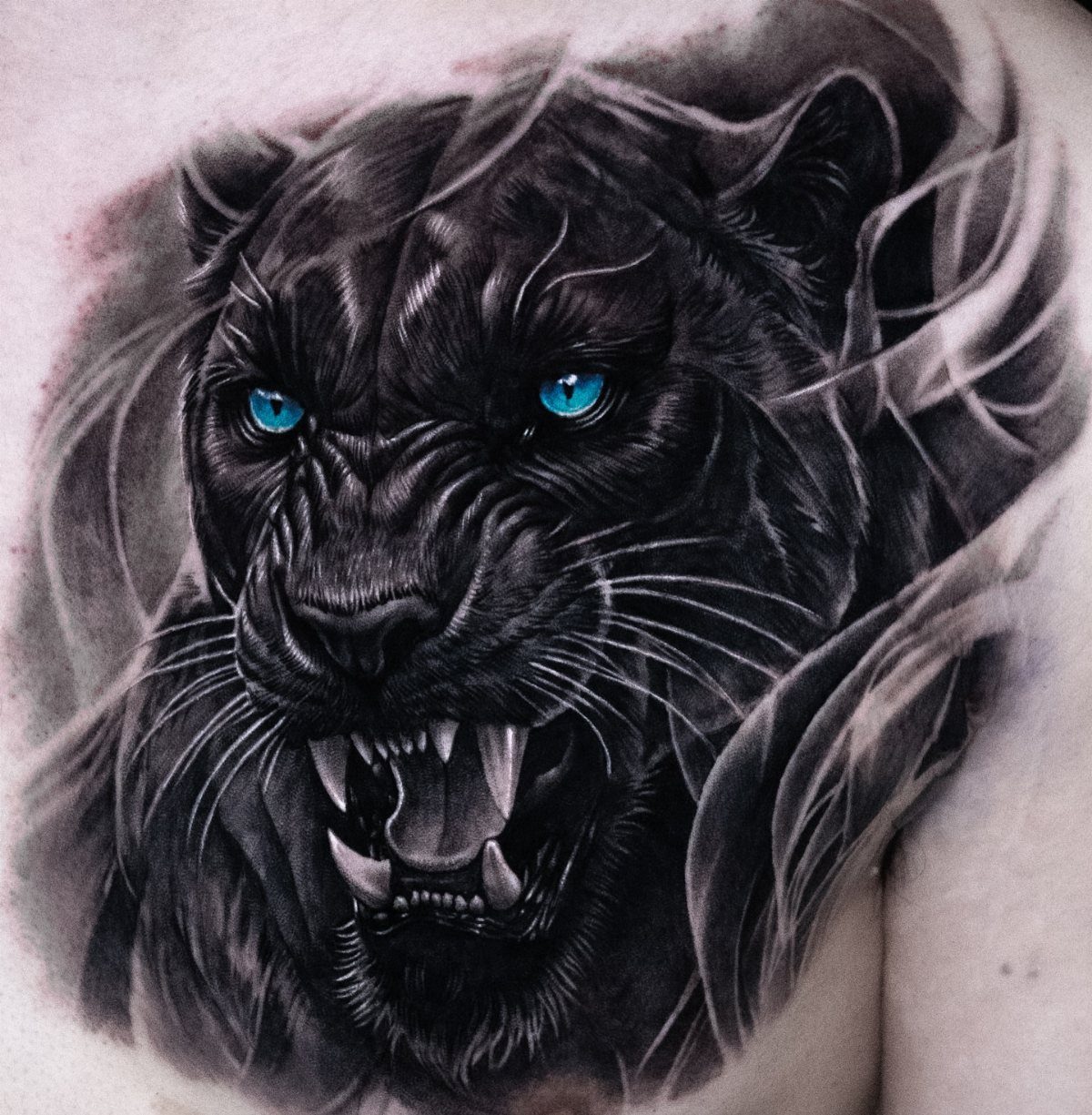
Power and resilience are the reasons people pick a panther, and a snarling mouth full of teeth makes that message loud. Black fur is the natural medium here, since the animal’s own color does most of the work.
Bright blue eyes are the one spot of color, and I’d keep them; they pull the face forward. Chest placement gives the head a flat, wide canvas.
If you want pure black ink, skip the blue and leave the eyes as bare skin highlights.
4. Black and Grey Ink Portraits
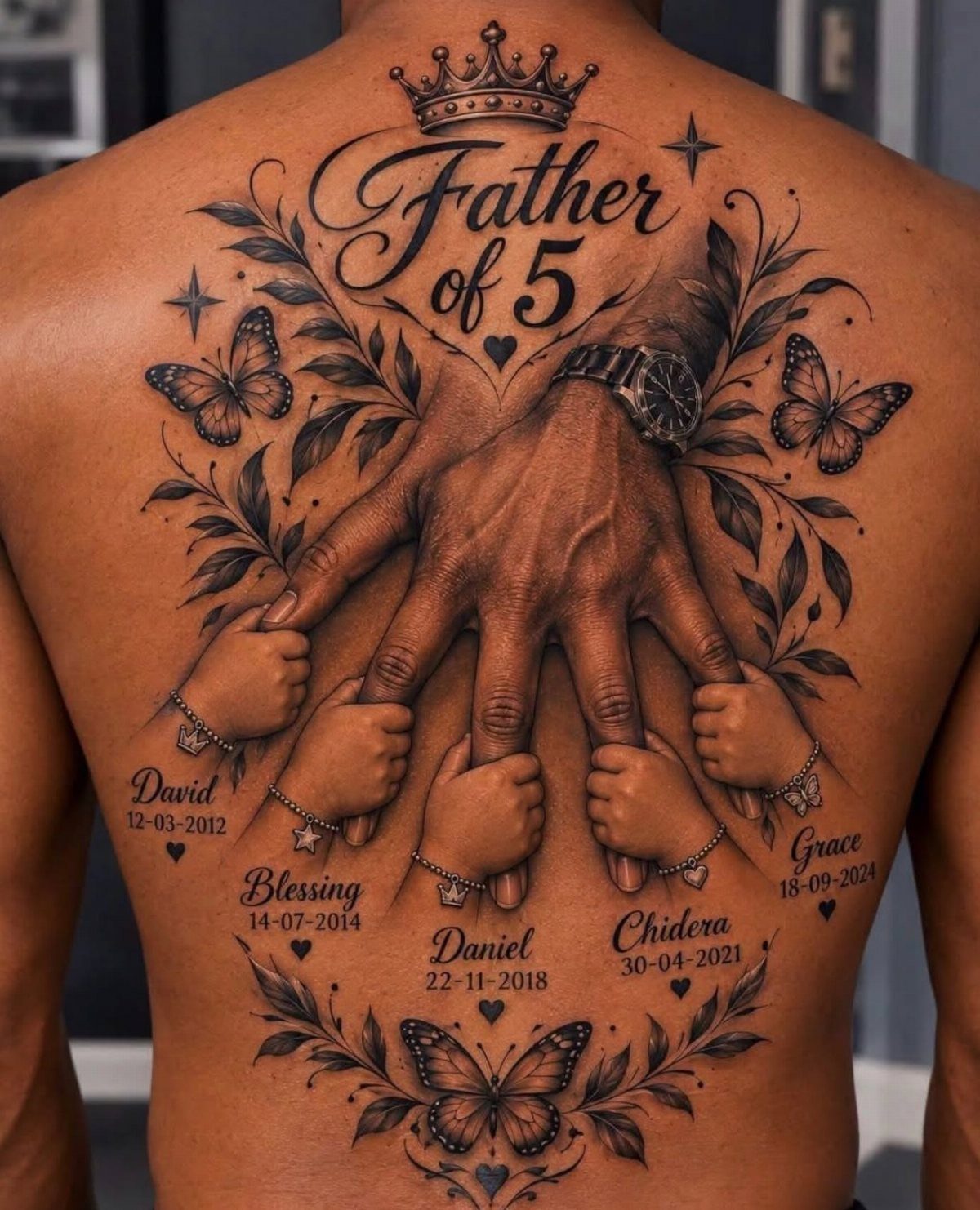
Few tattoos feel as personal as a father’s hand held by 5 small ones. Names and dates turn a portrait idea into a family record, and black and grey ink suits that quiet tone.
Spell every name out for your artist in writing, and double-check each date before the stencil goes on. A back piece gives the hands enough room to stay legible.
If your family grows, leave space beside the lettering so a new name can join without crowding the design.
5. Stylized Rose Tattoo
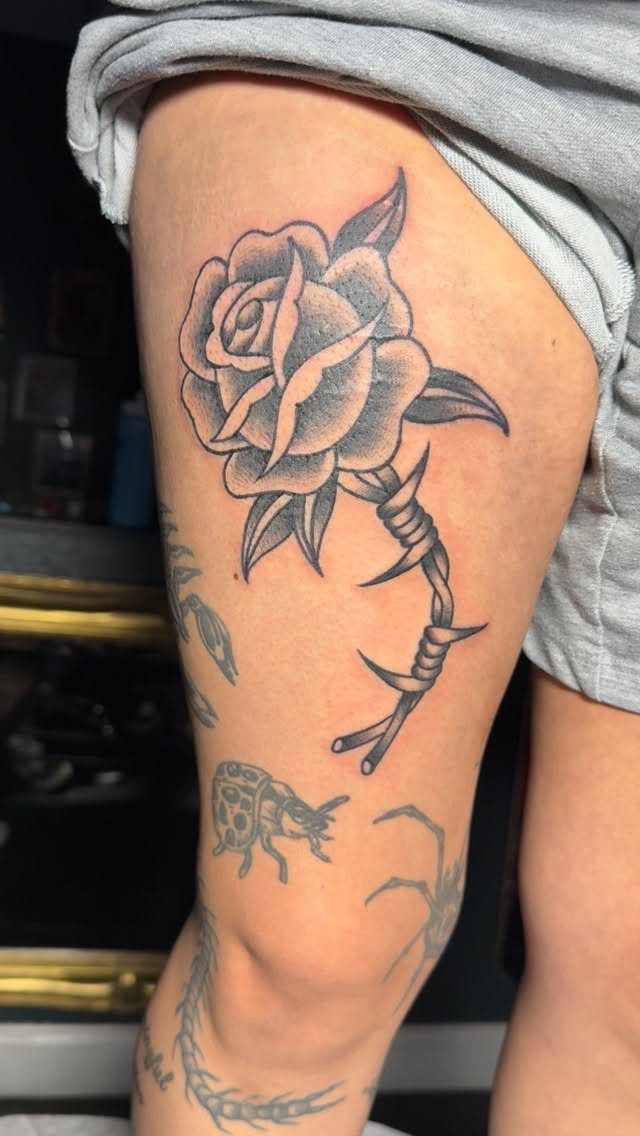
Wrapping a rose in barbed wire pairs softness with threat, which is why this old design keeps its meaning. Black and grey shading lets the petals look soft while the wire stays sharp.
The thigh is a forgiving spot: wide, flat and easy to fill. I would give the wire real contrast so it still reads years from now, because thin lines tend to blur first.
Other small pieces can sit nearby, but leave breathing room around the rose.
6. Black Ink Organic Wave Patterns
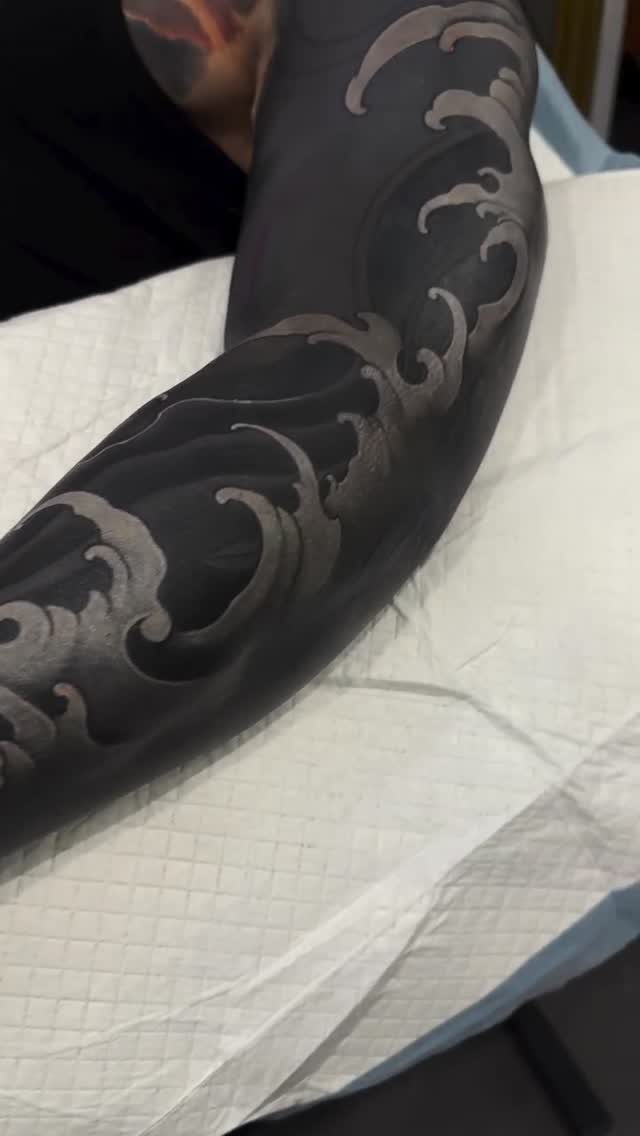
Organic waves read as movement, so they suit an arm better than a flat shape would. Here the dark black mass sits beside grey wave patterns, and that balance of heavy and light is what makes the sleeve work.
I would favor flowing lines that follow the muscle instead of cutting across it. The design can grow later, since waves have no fixed endpoint.
How much grey to leave open is worth settling with your tattooer up front, because skin showing through keeps the black from swallowing the pattern.
7. Blackout Tattoo Sleeve
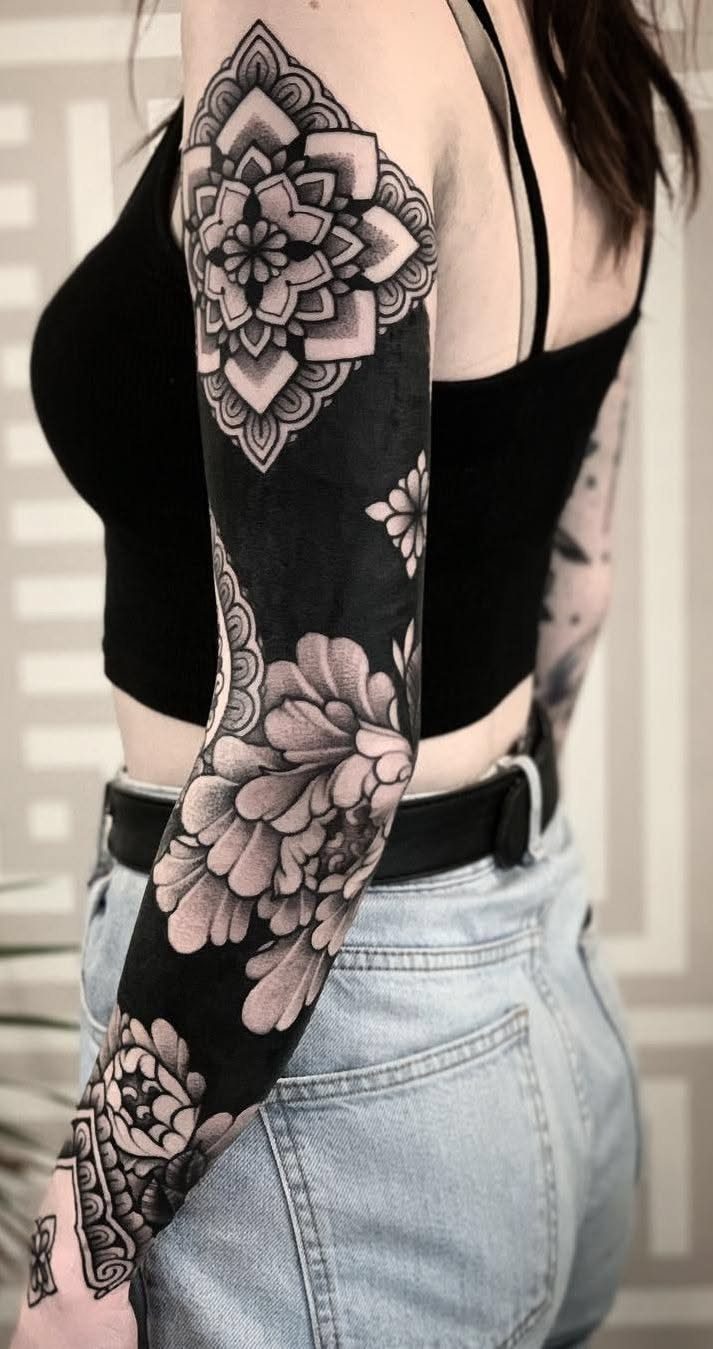
Full blackout coverage works as a backdrop, and here the white and grey mandala and shaded peonies are what you actually read. The solid black makes every light detail pop.
Generous pale areas are what I’d go for here. Peonies need soft grey shading to read as petals, and a mandala needs crisp, clean lines, so settle with the person holding the machine how much skin stays open.
Expect a sleeve like this to take more than one session, since solid black across a whole arm is slow, heavy work.
8. Afro-textured Woman Profile Tattoo
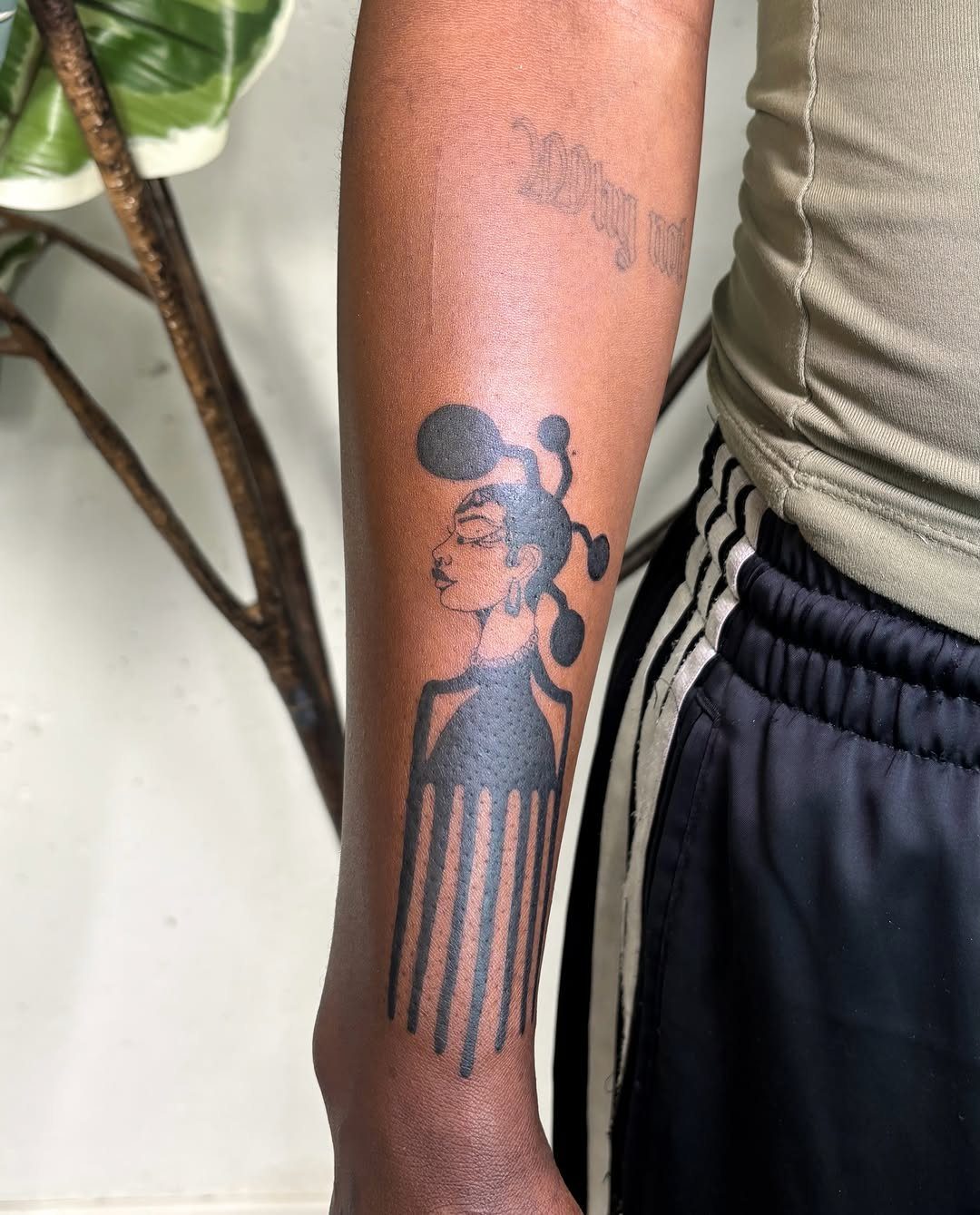
A woman’s profile with an afro, set against geometric patterns, turns hair into the design’s main shape. The rounded crown gives the forearm piece its weight, while the angular patterns around it add structure.
Black ink suits it well. I would ask for firm outlines on the face, because the profile line is what holds the portrait together as the years pass.
The forearm is a good fit for a vertical profile, and the piece stays easy to see. Settle the pattern size with your artist before the stencil goes on.
Frequently Asked Questions
What is a full black tattoo?
A full black tattoo covers a large area with solid, packed black ink, such as a whole forearm from elbow to wrist or an entire sleeve.
Solid black across that much skin is slow, heavy work, so I’d plan on more than one session for a sleeve. The edges decide how the piece looks, so settle the outline, especially the top line, with your artist first.
Are blackout tattoos unhealthy?
Some people worry about skin irritation from blackout work, since a lot of skin gets packed with ink.
I can’t give you a medical verdict, so raise healing and aftercare for a large solid area with a licensed tattooer before you book.
Expect a patient, careful session, because that much coverage takes time and puts more stress on the skin.
What tattoo colors show up best on black skin?
White, bright red and strong blues are the colors commonly said to show up well on black skin.
Black and grey work also reads clearly when the lines have real contrast, and firm outlines on a face or thick wire on a rose hold up better as the years pass.