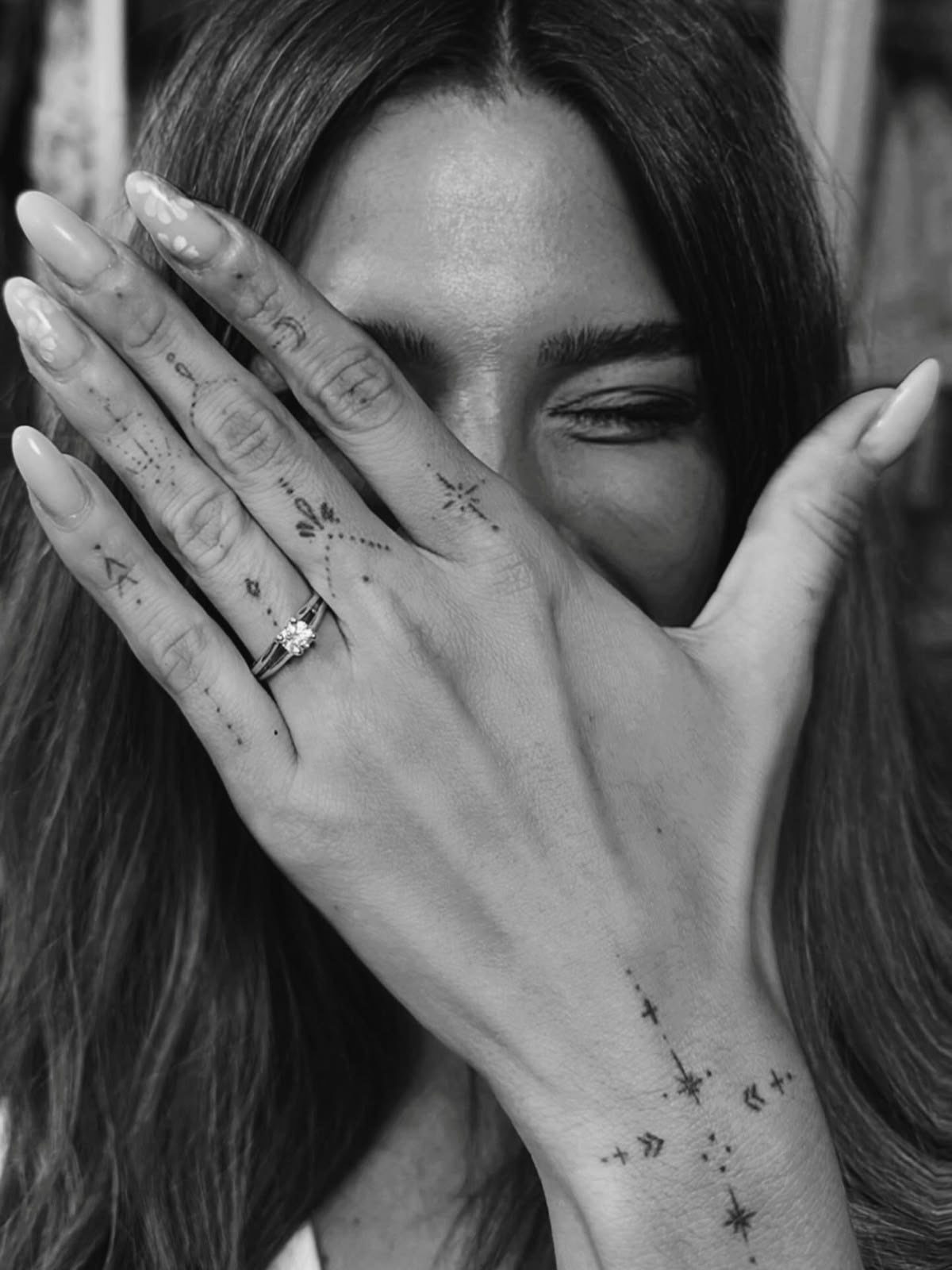
These ideas run from a few hair-thin dots on one finger to a full anatomical skeleton laid over the back of the hand, and the spread is mostly about how much visibility you can live with.
Your job should drive the choice more than the design does, since hands are visible the moment you shake one, and that is the question the Professional Implications and Cultural Acceptance sections below take up.
Skin on the hands is thin and sheds fast, so I would budget for touch-ups on any of these, with Red Ink Hand and Finger Tattoos and Fine Line Tattoos needing them first.
1. Small Finger Tattoos
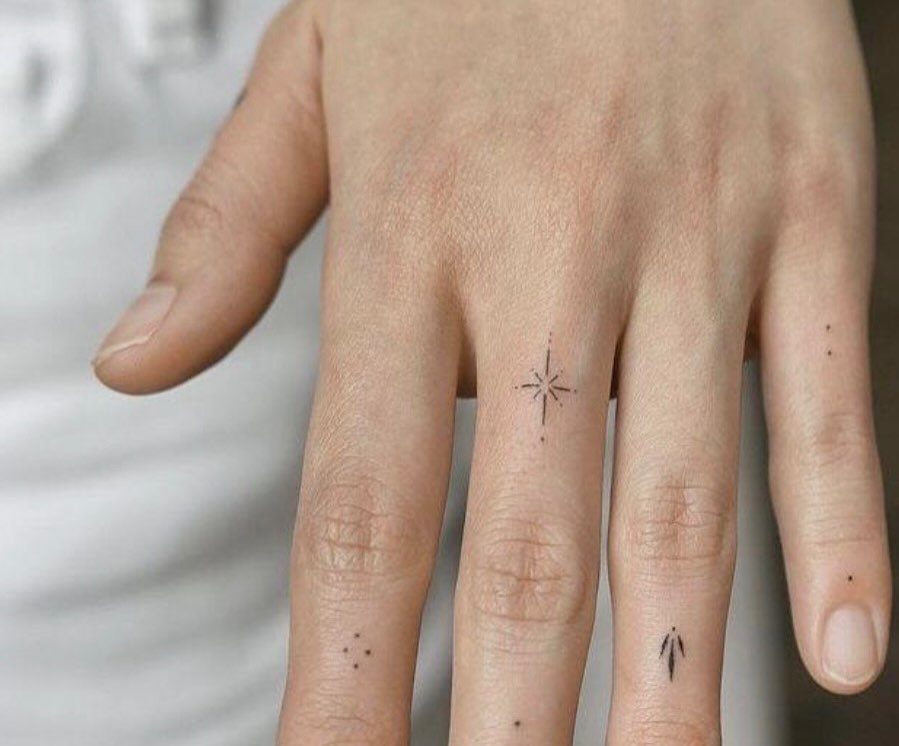
Geometric linework on a finger holds more than its size suggests. A few clean shapes, sized to the width of one finger, can carry as much meaning as a full forearm piece.
I would keep the design simple and let the negative space do the work. Pairing a small finger tattoo with a wrist piece ties the hand together without crowding it.
Fingers are tight real estate, so every line has to earn its place.
2. Fine Line Tattoos
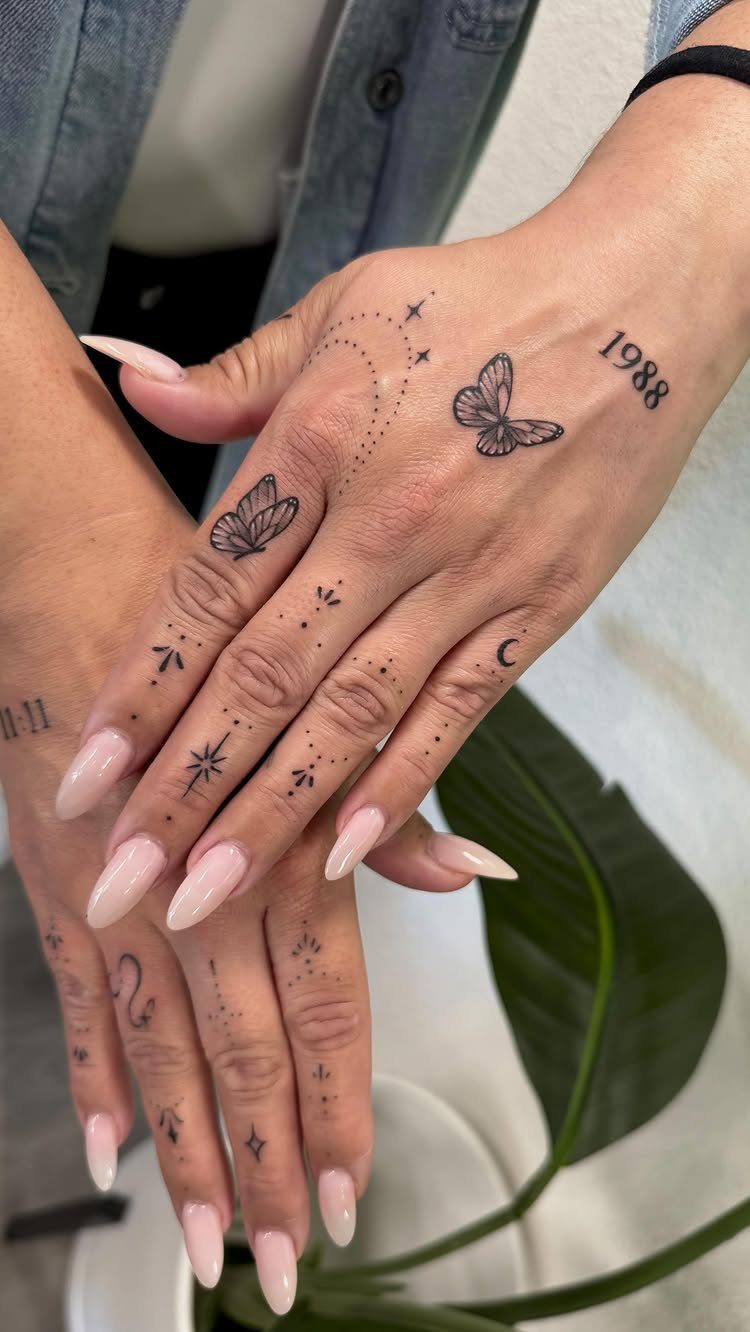
Hair-thin butterflies, dots and a crescent moon look delicate on the hand, and that delicacy is also the risk.
Fine line work on fingers and hands can soften and blur sooner than bolder designs, so I treat it as a design you may need to touch up.
For this look, choose an artist whose healed fine line work you can inspect. Keep the elements few and spaced apart so any blurring doesn’t merge them into a smudge.
A small date like "1988" is a good fit, since numerals stay readable at tiny sizes.
3. Knuckle Tattoos
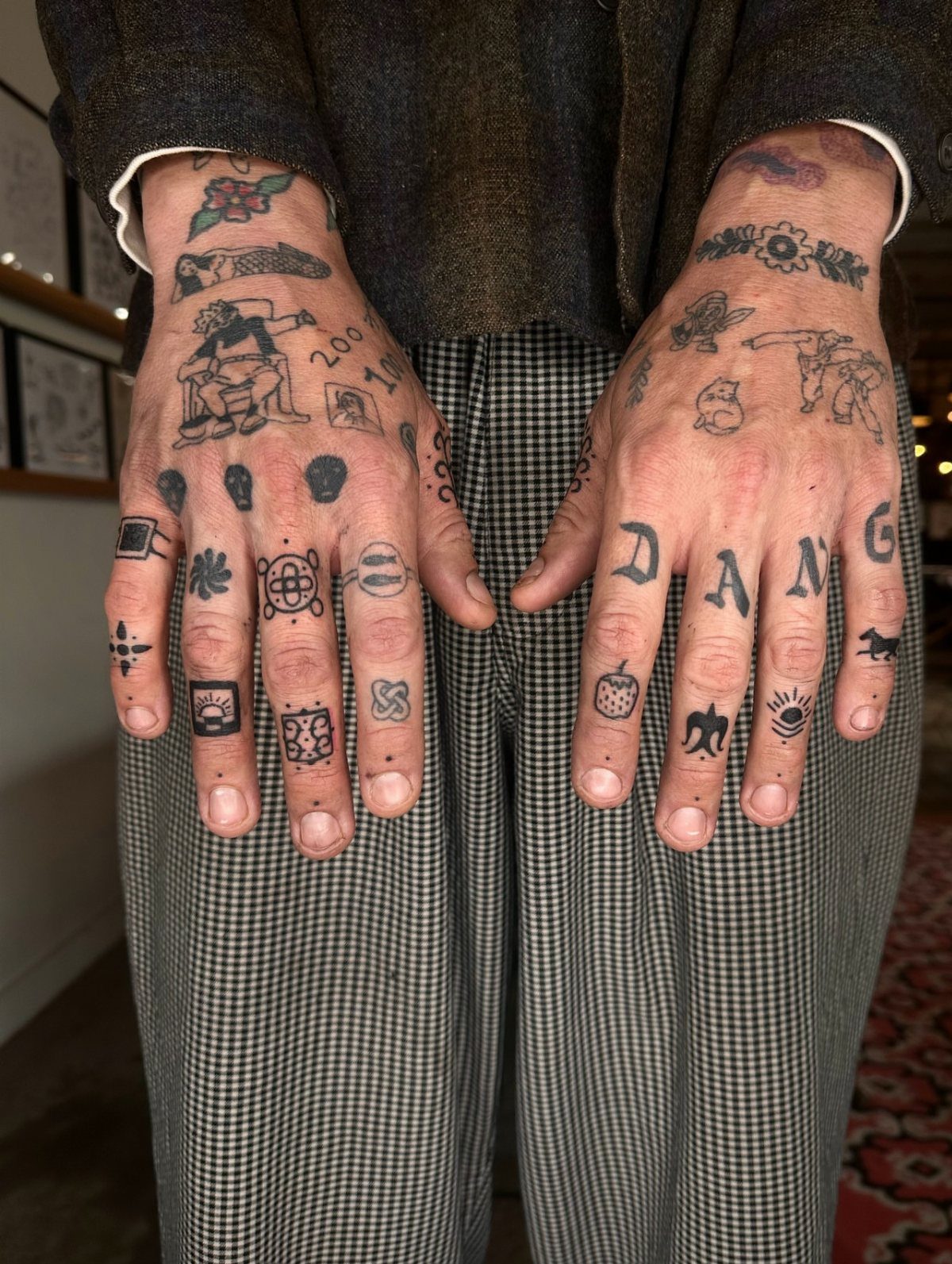
Lettering across the knuckles is the classic hand tattoo, and a short word works best because each letter gets its own knuckle. Four or five letters is where this layout shines.
Block letters in solid black read clearly from a distance and hold their shape better than thin script. Anyone with a job that expects covered skin should think hard first, since hands are nearly impossible to hide.
I would pick the word carefully. You will see it every time you reach for something.
4. Matching Couple Tattoos
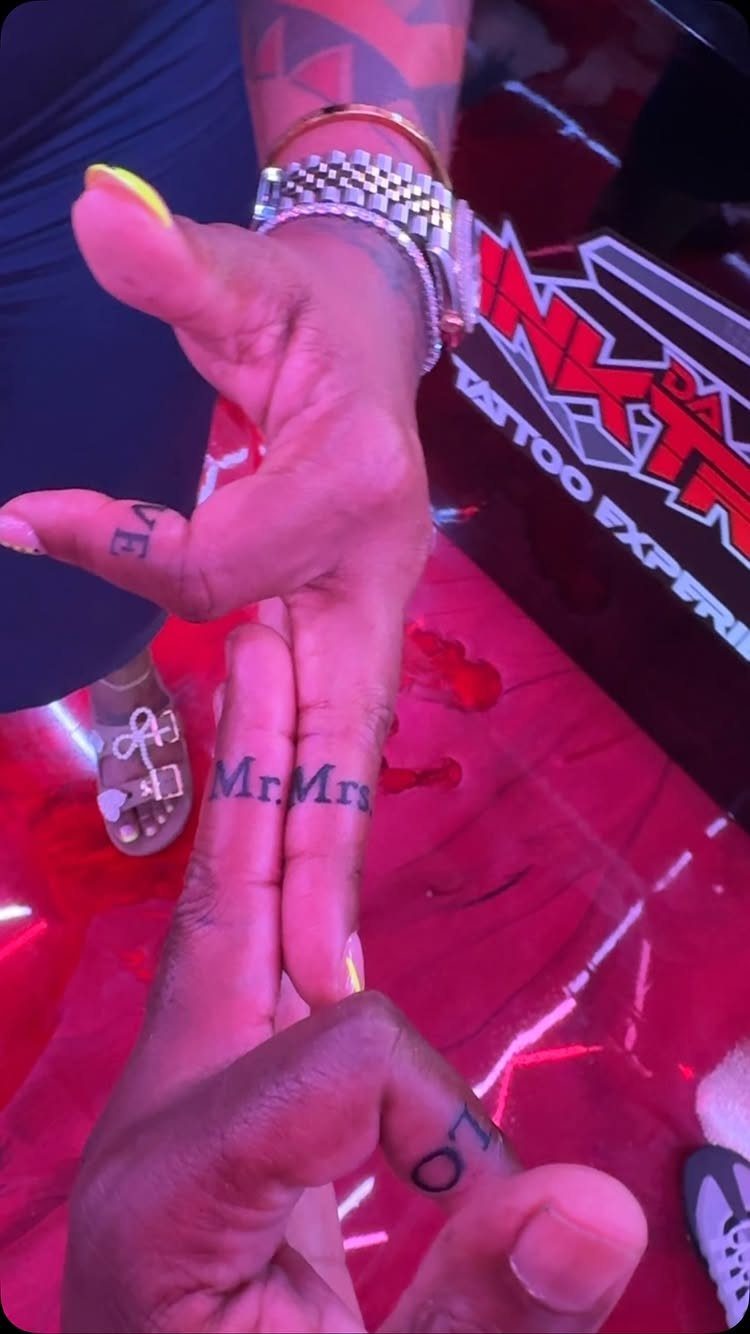
Matching words on adjacent fingers, like "Mr." and "Mrs.", turn a pair of hands into a single image when held together.
Placement matters more than the wording: line both tattoos up on the same finger of each hand so they sit level when the hands meet.
Book both people into the same session so one artist keeps the lettering style identical. I prefer a plain, legible font, since a fussy one will age worse than the relationship jokes ever could.
Hands show everything, so be sure of the pairing.
5. Webbing Tattoos Between Fingers
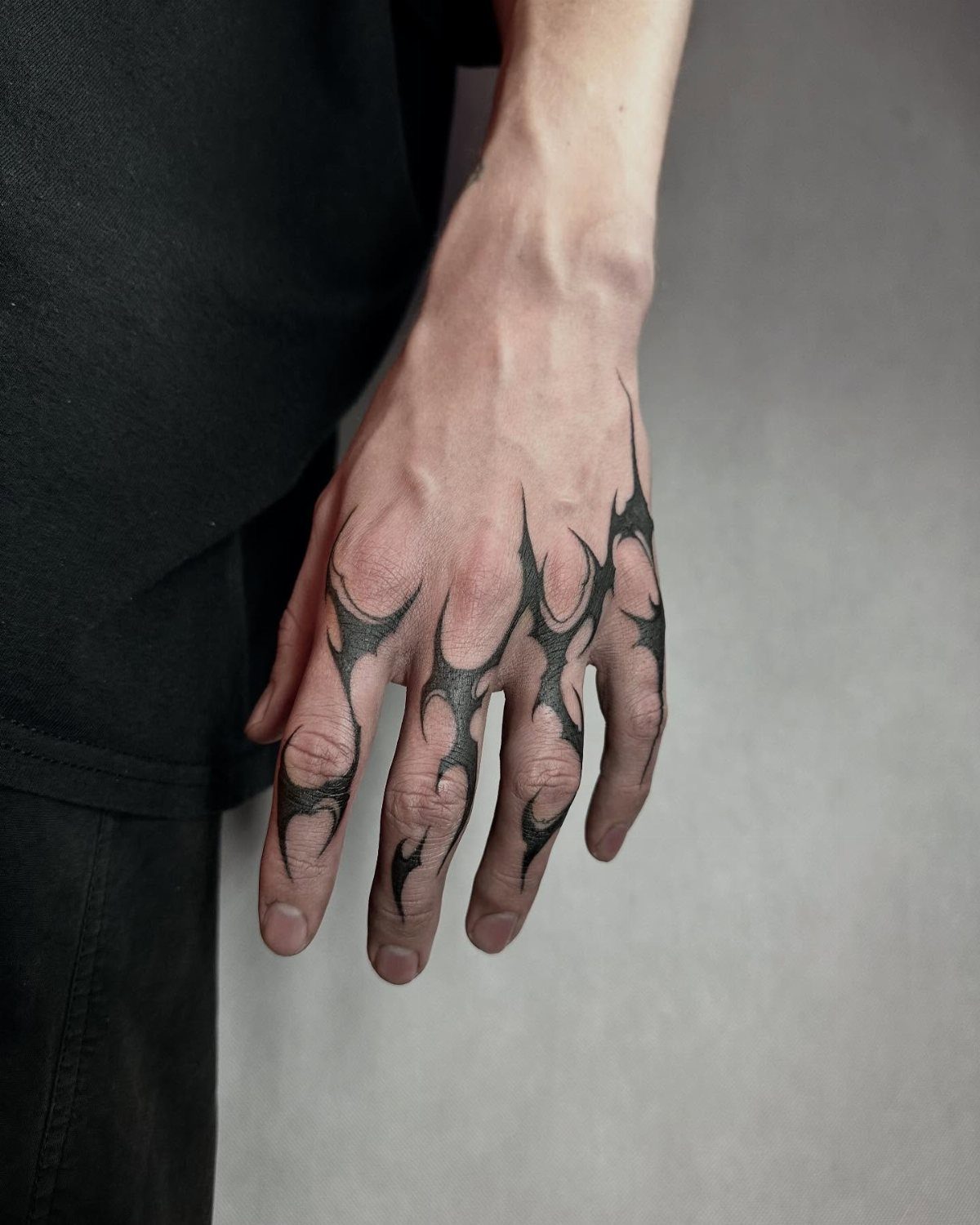
Ink between the fingers is one of the harder spots to wear well.
Webbing designs have to bend with the hand instead of sitting flat on it, so sharp, thorn-like shapes that run from the knuckles into the webbing suit the spot well.
Solid black suits this area best. Skin there flexes constantly, so detailed shading tends to lose definition.
Expect it to be tender. I would look at the design with the fingers spread, not relaxed, before approving a stencil.
6. Full Finger and Hand Patchwork
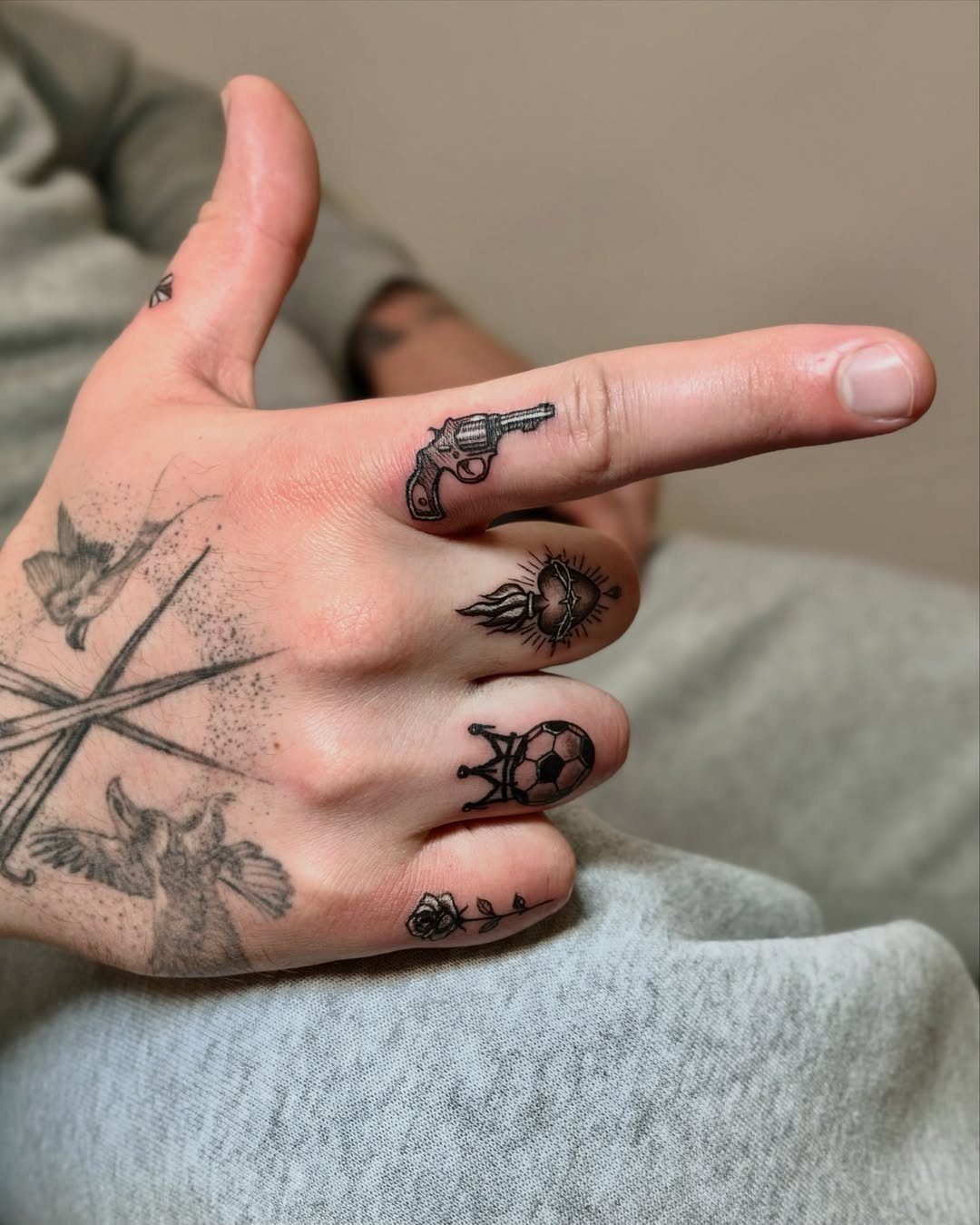
Covering each finger and the back of the hand with unrelated miniature flash, a heart here, a rose there, builds a patchwork you can add to over time. That is its real strength: no piece has to match the others.
Keep every image small and in black ink so the collection feels intentional. Leave gaps of bare skin between designs so each one stays readable.
I like starting with one finger and letting the rest come slowly. A hand filled in a rush rarely looks as good.
7. Tribal Hand and Finger Patterns
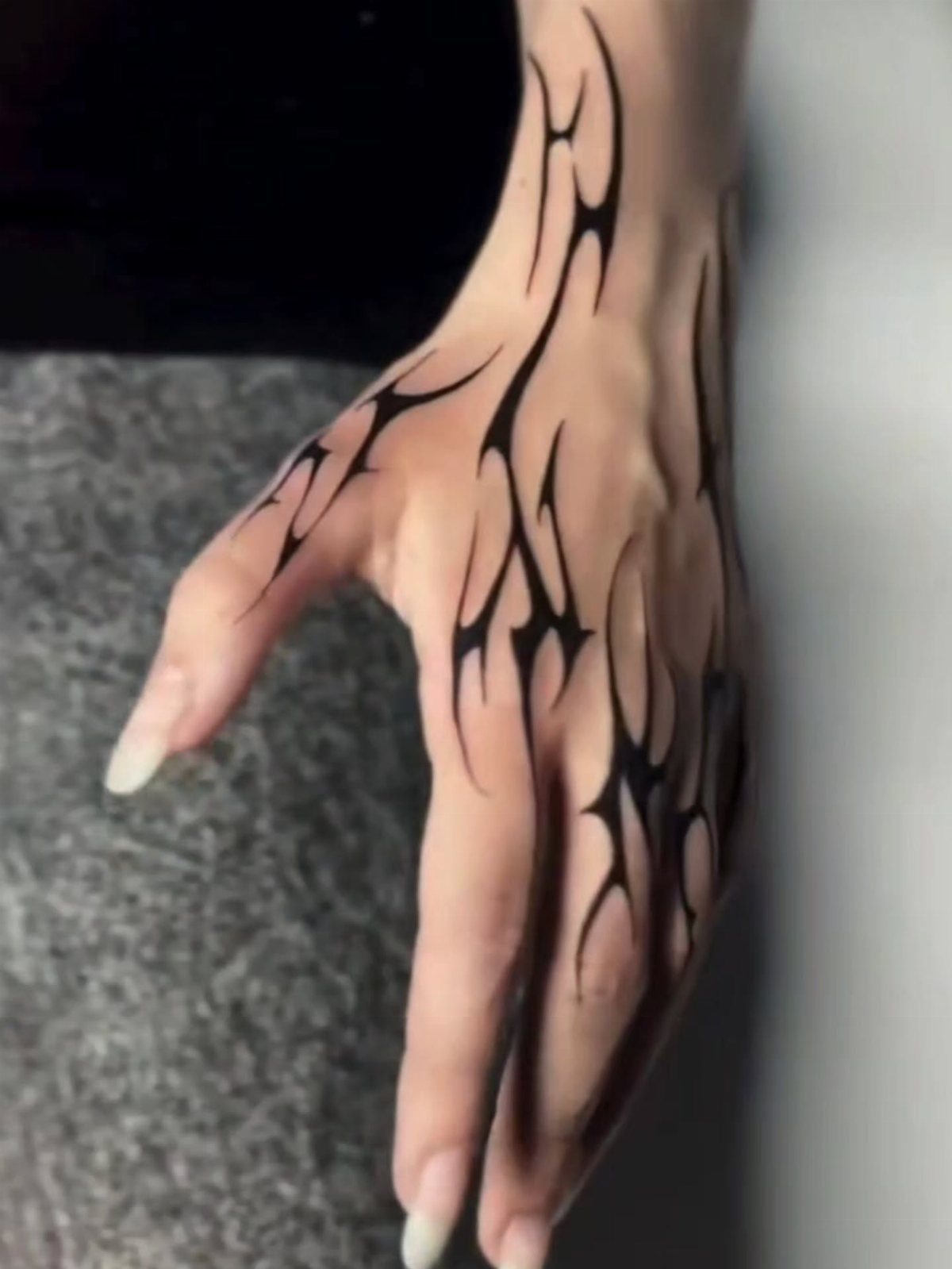
Sharp, flowing black shapes that follow the knuckles and run down the fingers make tribal work one of the better fits for a hand. The lines can curve with the bones instead of fighting them.
I would pick solid black over fine detail, because bold shapes hold up on skin that flexes all day. Before the artist applies it, check the stencil with your fist closed and again with your fingers spread wide.
Hands are hard to hide, so be sure you want the look at work and in photos.
8. Blackout Finger Band Tattoo
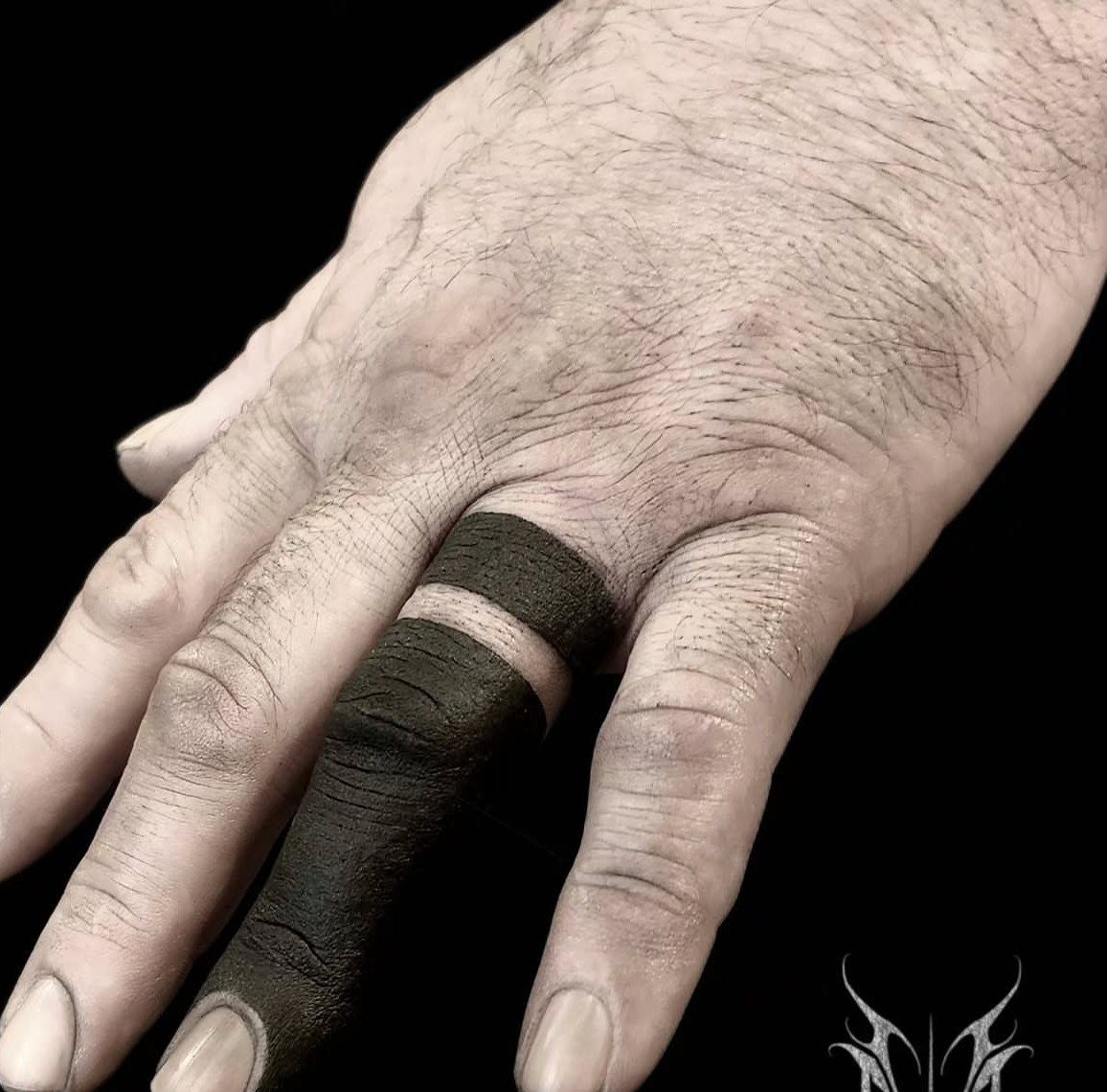
A thick band of solid black around one finger, with the knuckle area filled in, is about as bold as hand work gets. Nothing about it is subtle, and that is the appeal.
Start with the index finger only if you are sure, since heavy blackwork is hard to undo or cover. Crisp edges and bands of even width matter most here, because solid black shows every wobble.
Expect a long, tender session on a finger packed with bone and thin skin.
9. Spiderweb and Halloween Motif Tattoos
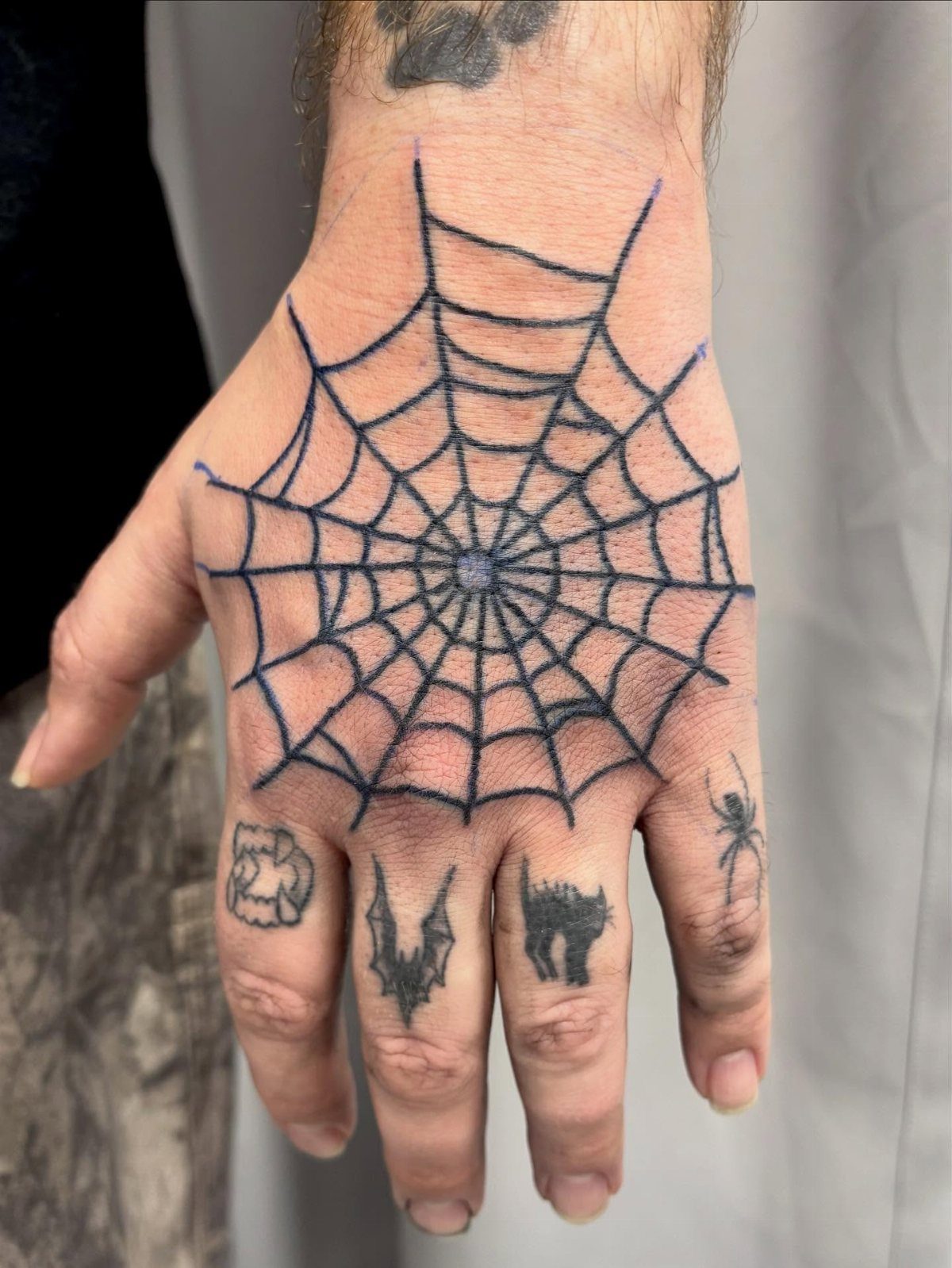
A spiderweb spread across the back of the hand, with a tiny bat and spider on the fingers, gives you one large anchor and several small accents. That mix keeps the hand from looking crowded.
I would let the web take the space and keep the finger motifs small and separate, so each still reads as its own shape. Black ink suits the theme and keeps the lines clear.
Add more critters later if you like; the web leaves room to grow.
10. Botanical Finger Vines and Flowers
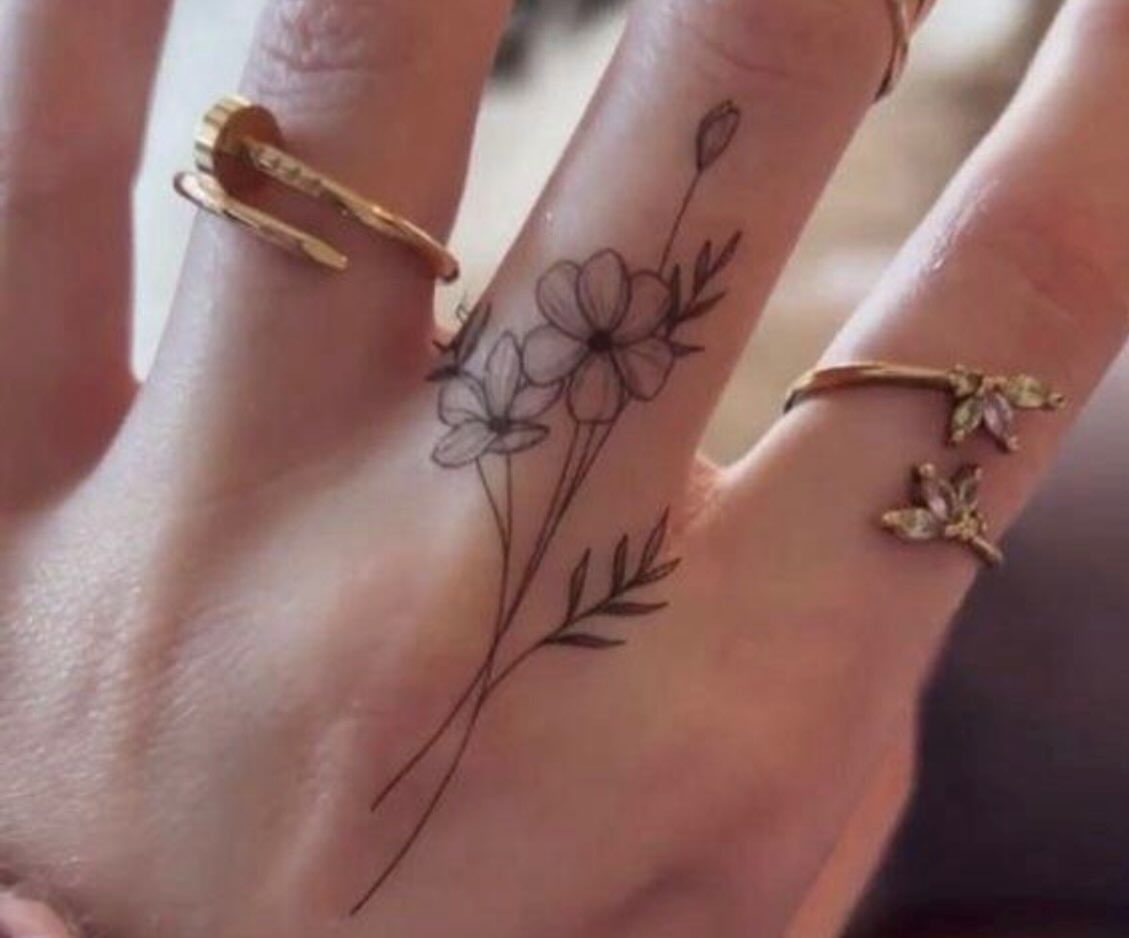
A single vine that starts on the back of the hand and climbs the middle finger, with small flowers along the way, uses the length of the finger well. The stem gives the eye a path to follow.
Keep the black linework delicate but not hair-thin, since very fine lines on fingers can soften sooner. I would space the blooms out so the vine stays legible if it blurs a little over time.
Rings sit nicely over the stem, so plan their placement with your artist.
11. Red Ink Hand and Finger Tattoos
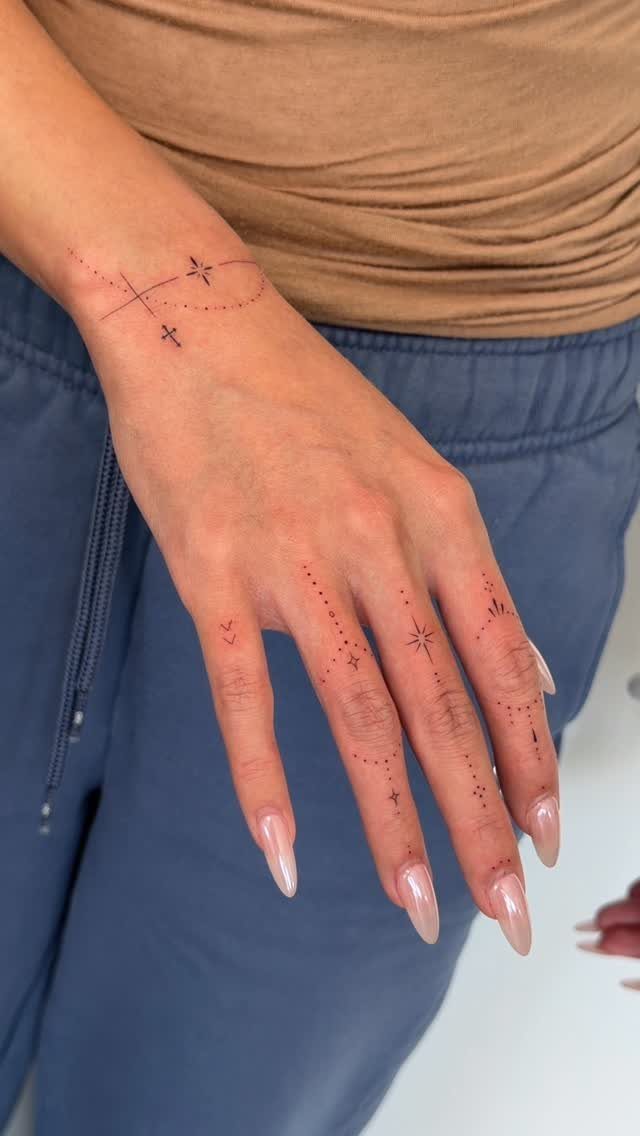
Tiny red dots, stars and symbols scattered across the fingers and hand look lighter than black work, and they suit people who want something quiet. A few well-placed marks do more than a crowded cluster.
I would choose an artist who has healed red work to show you, since you should see how the color settles before committing. Keep every symbol small and give each one space.
Start with three or four marks. Adding later is easy; removing is not.
12. Anatomical Skeleton Hand Tattoo
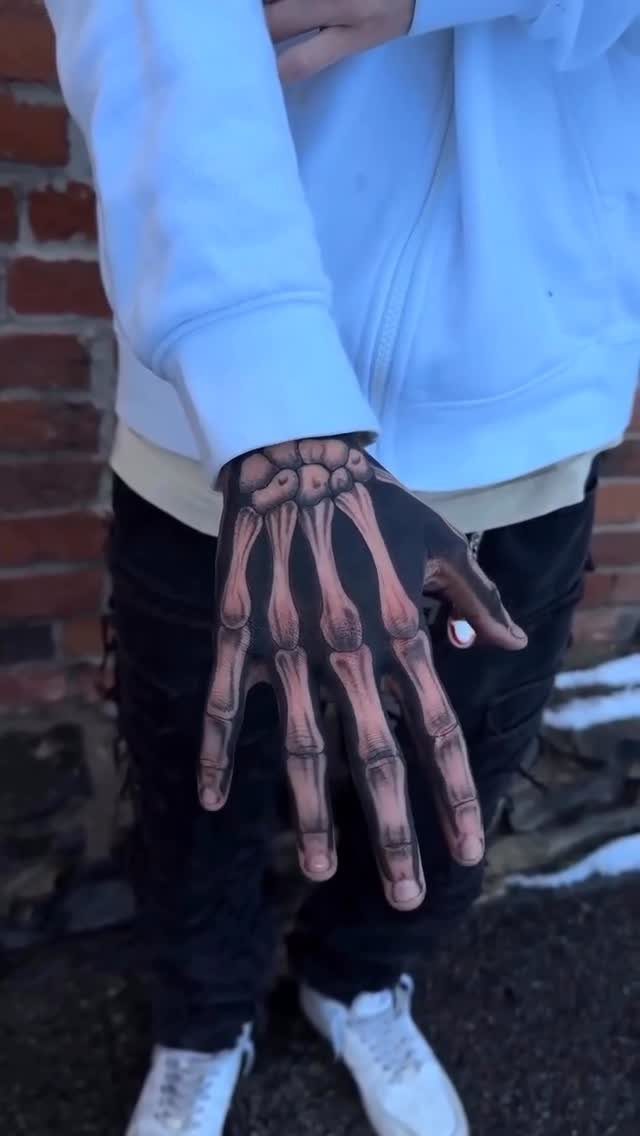
Black-and-grey bones laid over the back of the hand and along each finger turn the hand into an X-ray. It is one of the most committed hand tattoos you can pick.
Grey shading on fingers may soften with time, and I would plan on touch-ups.
Bring a photo of your own hand so the bones are sized to your knuckles, not a generic template.
Maintaining Hand and Finger Tattoos
Hands take more punishment than almost any other tattooed skin, so daily habits matter as much as the artist.
Hands get washed all day, so a fragrance-free lotion worked in a few times daily keeps the skin supple and the lines looking dark and clean.
Sun breaks down ink and softens fine lines faster than most people expect, and hands sit in daylight from breakfast to dinner, so 30 seconds of SPF 30 or higher is cheap protection for work you paid good money for.
Thin skin on the hands and fingers tends to fade and blur sooner than skin elsewhere.
With sun protection and moisturizer, these tattoos can hold their color for years, but I would still budget for touch-ups as normal upkeep, not a sign something went wrong. A healthy lifestyle helps them last too.
Cultural Acceptance
Acceptance of visible hand tattoos depends on where you live and what you do for a living. Workplace attitudes have loosened, but some industries and employers still hold conservative views, and the hands are the first place they look.
If your field has a strict dress code, weigh that before booking. Some people choose a less conspicuous spot for exactly this reason, and that is a sensible call, not a lack of nerve.
Ask yourself where you want to be in 5 years, then check whether that path is friendly to visible ink.
Professional Implications
During hiring, a tattoo on your hand is visible the moment you shake hands.
Attitudes at work vary: some employers don’t blink at visible ink, and others still judge by looks, so check your workplace’s dress code before booking a spot that can’t be covered.
Read the company’s dress code or appearance policy before you apply, and look at how current employees present themselves. If a policy is unclear, ask HR before the interview, not after an offer.
In conservative industries, assume the tattoo will be noticed and decide ahead of time how you will handle the question.
Frequently Asked Questions
How painful is a hand and finger tattoo?
Expect it to hurt more than most spots, and a long blackout band on a finger is a tender session.
The skin is thin and sits tight over bone, with little muscle or fat to cushion the needle, and the fingers are packed with nerve endings.
Pain varies from person to person, but I’d expect the palm side of a finger to hurt more than the back, since the fingertips are packed with nerve endings.
What are the downsides of getting finger tattoos?
Fading and blurring come first. Fingers are also hard for the artist: ink can fall out or blow out under the skin, and a hand is almost impossible to cover at work or in photos.
What is the best finger tattoo?
A small, simple design wins: a few clean geometric shapes, a short word, or a tiny symbol with personal meaning, sized to one finger. Fingers are tight space, and bold or sparse designs stay readable longer than crowded ones.
I’d pick the middle or ring finger first. Each has more room for the design and takes less daily rubbing than the thumb or index finger.
Do fine line tattoos last on hands and fingers?
They tend to soften and blur sooner than bolder work, so plan on touch-ups.
Ask to see healed fine line work from your artist, not just fresh photos, and keep the elements few and spread apart so a little blur can’t run them together.
Numerals like a small date hold up well at tiny sizes.
How do I keep a hand tattoo from fading?
Protect it from the sun and keep it moisturized. Apply SPF 30 or higher to the hands daily, since sun breaks down ink and hands sit in daylight all day.
Work in a fragrance-free lotion a few times a day, because constant washing dries the skin out. Even with good care, expect occasional touch-ups.
Will a hand tattoo affect my job?
Yes, it can, since a hand tattoo shows the moment you reach out to shake someone’s hand. Dress codes and appearance policies differ from one employer to the next, so read yours before you book.
If the wording is vague, I’d email HR before an interview and have a calm answer ready about why you chose the design.